
Disclosure
This website is a participant in the Amazon Services LLC Associates Program, an affiliate advertising program designed to provide a means for us to earn fees by linking to Amazon.com and affiliated sites.
Memory foam mattresses have surged in popularity for their pressure-relieving comfort and body-contouring support, but are they the right choice for you? The answer depends on your sleep preferences, health needs, and budget.
Memory foam adapts to your body shape, reducing pressure points and motion transfer—ideal for side sleepers, couples, or those with chronic pain. However, it may retain heat or feel too firm for some.
Best Memory Foam Mattresses for Pressure Relief and Support
Choosing the right memory foam mattress can make a significant difference in sleep quality. Below are three top-rated models, each excelling in comfort, durability, and support for different sleep needs.
Tempur-Pedic TEMPUR-Adapt (Medium Hybrid)
The TEMPUR-Adapt combines Tempur-Pedic’s proprietary memory foam with responsive coils for balanced support. Its medium-firm feel suits back and side sleepers, while the cooling cover regulates temperature. Ideal for those seeking premium pressure relief with minimal motion transfer.

- 12″ KING HYBRID MATTRESS: Provides the perfect balance of luxurious comfort and…
- LAYERS OF COMFORT: Legendary TEMPUR material paired with over 1,000 premium…
- PRESSURE-RELIEVING FOAM: NASA-engineered TEMPUR material adapts to your unique…
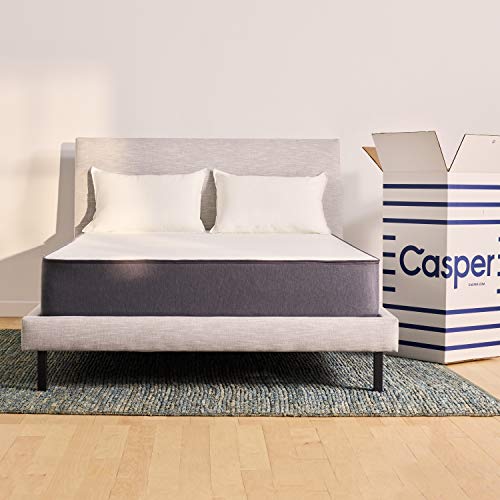
Casper Original Foam Mattress
The Casper Original features zoned memory foam that supports the hips and shoulders while keeping the spine aligned. Its open-cell foam enhances breathability, making it a great choice for hot sleepers. A budget-friendly option without sacrificing quality.
Nectar Premier Copper (12-inch)
With a copper-infused memory foam layer, the Nectar Premier offers superior cooling and antimicrobial properties. The adaptive base foam provides deep contouring for pressure points, making it perfect for combination sleepers and those with joint pain.

- 365-NIGHT HOME TRIAL and FOREVER WARRANTY – Our industry-leading trial period…
- THERAPEUTIC MEMORY FOAM MEETS SPRINGS – Nectar’s Premier Copper Hybrid…
- DUAL-ACTION COOLING and 7 LAYERS OF ENHANCED COMFORT – Copper Hybrid’s cover…
How Memory Foam Mattresses Work: The Science Behind the Comfort
Memory foam mattresses are engineered to provide personalized support by responding to your body’s heat and weight. Unlike traditional spring mattresses, which rely on coils for bounce, memory foam uses viscoelastic polyurethane—a material that softens when warm and firms up when cool.
This unique property allows it to contour precisely to your body shape, reducing pressure points while evenly distributing weight.
The Role of Density and Firmness
Memory foam quality is largely determined by its density (measured in pounds per cubic foot) and firmness level (rated on a scale of 1-10). Higher-density foam (4-5 lbs/ft³) offers better durability and support for heavier individuals, while lower-density foam (2-3 lbs/ft³) feels softer but may sag over time. For example:
- Medium-firm (5-7 rating): Ideal for back and side sleepers needing spinal alignment (e.g., Tempur-Pedic TEMPUR-Adapt).
- Plush (3-4 rating): Best for lightweight sleepers or those with pressure point pain (e.g., Casper Original).
Temperature Sensitivity and Breathability
A common misconception is that all memory foam sleeps hot. While traditional memory foam can retain body heat, modern versions incorporate cooling technologies:
- Gel infusions: Gel beads absorb and dissipate heat (used in Nectar Premier Copper).
- Open-cell structures: Airflow channels improve breathability (found in Casper’s AirScape™ foam).
- Phase-change materials (PCMs): Some premium models use PCMs to regulate temperature dynamically.
Motion Isolation vs. Responsiveness
Memory foam excels at motion isolation—absorbing movement so partners aren’t disturbed. However, some find it too slow to respond when changing positions. Hybrid models (like the TEMPUR-Adapt) address this by combining foam with pocketed coils for quicker rebound.
Practical tip: If you’re a restless sleeper or have mobility issues, test a mattress’s responsiveness by pressing your hand into it—high-quality foam should slowly rebound without leaving lasting indentations.
Real-World Applications
Memory foam’s adaptability makes it particularly useful for:
- Chronic pain sufferers: The even pressure distribution can alleviate joint pain (e.g., hip or shoulder pain).
- Couples: Minimal motion transfer prevents disruptions from a partner’s movements.
- Hot sleepers: Opt for copper- or gel-infused foam to enhance cooling.
Choosing the Right Memory Foam Mattress: A Step-by-Step Guide
Selecting the perfect memory foam mattress requires careful consideration of multiple factors.
Step 1: Assess Your Sleep Position and Body Type
Your dominant sleep position determines the ideal firmness level:
- Side sleepers: Need medium-soft (4-6 rating) foam to cushion shoulders/hips (e.g., Nectar Premier Copper’s 12-inch model)
- Back sleepers: Require medium-firm (6-7 rating) for lumbar support (like Tempur-Pedic’s hybrid models)
- Stomach sleepers: Should choose firm (7+ rating) to prevent spinal misalignment
Pro tip: Heavier individuals (230+ lbs) should opt for high-density foam (≥4 lbs/ft³) to prevent premature sagging, while lightweight sleepers (<130 lbs) may prefer lower-density options for better contouring.
Step 2: Evaluate Temperature Regulation Needs
Traditional memory foam’s heat retention issues can be mitigated through:
- Material selection: Gel-infused foams reduce surface temperature by 2-5°F versus standard foam
- Construction features: Look for ventilated designs with ≥2″ cooling gel layers
- Supplemental solutions: Pair with moisture-wicking bamboo mattress protectors
Case example: The Casper Original’s AirScape™ foam uses open-cell technology to increase airflow by 30% compared to conventional memory foam.
Step 3: Consider Motion Isolation vs. Responsiveness
The ideal balance depends on your sleeping habits:
| Sleep Scenario | Recommended Solution |
|---|---|
| Restless partner | Pure memory foam (≥3″ comfort layer) |
| Mobility issues | Hybrid design with pocketed coils |
Technical insight: Memory foam’s motion isolation performance is measured by its hysteresis loss – high-quality foam should recover its shape within 3-5 seconds after pressure removal.
Step 4: Verify Certifications and Materials
Essential quality markers include:
- CertiPUR-US®: Ensures foam is free from harmful chemicals
- OEKO-TEX® Standard 100: Verifies fabric safety
- Density testing reports: Reputable brands provide third-party lab results
Warning sign: Mattresses with vague descriptions like “high-density foam” without specific measurements (lbs/ft³) may use inferior materials.
Memory Foam Mattress Performance: Advanced Technical Considerations
Beyond basic comfort features, memory foam mattresses involve sophisticated engineering that impacts long-term performance.
Material Composition and Cell Structure
High-quality memory foam consists of polyurethane with added viscoelastic compounds that create its signature properties. The foam’s cell structure determines key performance characteristics:
| Cell Type | Pore Size | Airflow | Best For |
|---|---|---|---|
| Closed-cell | 50-100 microns | Low | Maximum pressure relief |
| Open-cell | 100-300 microns | High | Temperature regulation |
| Hybrid-cell | Variable | Medium | Balanced performance |
Expert insight: Premium foams like Tempur-Pedic’s proprietary material use variable cell structures that adapt differently to various body parts – smaller cells for pressure points (hips/shoulders) and larger cells for less sensitive areas.
Compression and Recovery Dynamics
Memory foam’s compression modulus (resistance to deformation) and recovery rate determine how it responds to body weight:
- Initial softness: Measured by indentation force deflection (IFD) – 10-12 IFD is ideal for most sleepers
- Progressive support: High-resilience foams increase resistance as compression depth increases
- Shape recovery: Quality foam should return to ≥95% original thickness within 60 seconds
Common mistake: Assuming all memory foam feels the same. In reality, formulations vary significantly – some prioritize slow contouring (traditional Tempur material) while others focus on quicker response (Casper’s responsive foam).
Advanced Cooling Technologies
Modern solutions go beyond basic gel infusions:
- Phase-change materials (PCMs): Absorb heat when melting (37°C optimal transition temperature)
- Copper infusions: Provide antimicrobial benefits plus 15-20% better heat conductivity than gel
- Graphite layers: Dissipate heat through crystalline structures (used in Purple mattresses)
Performance test: Place a heated water bottle (40°C) on the mattress for 30 minutes, then measure surface temperature – quality cooling foams should stay within 2°C of ambient temperature.
Longevity Factors
Key determinants of mattress lifespan include:
| Factor | Impact | Testing Standard |
|---|---|---|
| Density | 4-5 lb/ft³ lasts 2-3x longer than 2-3 lb/ft³ | ASTM D3574 |
| Base foam | High-resilience polyfoam (≥2.0 PCF) prevents sagging | ISO 2439 |
| Cover material | Quilted covers with ≥300 GSM fabric resist wear | ASTM D4964 |
Professional recommendation: Rotate your mattress 180° every 3-6 months to distribute wear evenly, especially important for memory foam which develops permanent indentations more readily than hybrids.
Memory Foam Mattress Maintenance and Care: Expert Techniques for Longevity
Proper maintenance significantly extends the lifespan of your memory foam mattress while preserving its comfort and support characteristics.
Daily and Weekly Maintenance Protocols
Implement these practices to maintain optimal mattress performance:
- Surface protection: Use a waterproof, breathable mattress protector (minimum 300 thread count) to prevent body oils and sweat from penetrating the foam. Look for protectors with TPU membranes rather than vinyl for better airflow.
- Rotation schedule: Rotate the mattress 180° every 3 months (for one-sided designs) or flip and rotate (for double-sided models). This prevents permanent body impressions – a common issue where foam loses resilience in high-pressure areas.
- Ventilation routine: Strip bedding and allow the mattress to air out for 2-3 hours weekly. This reduces moisture accumulation that can degrade foam cells over time.
Deep Cleaning Procedures
For thorough cleaning without damaging the memory foam:
- Spot cleaning: Use a solution of 1:3 white vinegar to water with a soft-bristle brush. Gently dab (never rub) stains, then blot with a dry microfiber cloth. Avoid soaking the foam.
- Deodorizing: Sprinkle baking soda lightly over the surface, let sit for 8-12 hours, then vacuum with an upholstery attachment. This neutralizes odors without chemical residues.
- Professional cleaning: For major spills, use an extractor with ≤150 psi suction and only cold water. Heat can break down foam’s viscoelastic properties.
Environmental Considerations
Memory foam performance is significantly affected by ambient conditions:
| Factor | Ideal Range | Impact on Foam |
|---|---|---|
| Temperature | 18-22°C (65-72°F) | Below 15°C makes foam too firm; above 27°C causes excessive softening |
| Humidity | 40-50% RH | High humidity (>60%) accelerates foam breakdown; low humidity causes drying |
Troubleshooting Common Issues
Professional solutions for frequent problems:
- Persistent odors: Place activated charcoal bags near the mattress (not directly on it) for 48-72 hours to absorb volatile organic compounds (VOCs).
- Localized sagging: Use a mattress topper temporarily while the affected area recovers. Avoid placing heavy objects on the depression.
- Heat retention: Add a 1-2″ wool topper – its natural thermoregulation complements memory foam while adding breathability.
Safety note: Never use steam cleaners or chemical spot removers containing solvents (acetone, alcohol), as these dissolve the foam’s cell structure. For fire safety, ensure any replacement covers meet CPSC 16 CFR Part 1633 standards.
Memory Foam Mattress Environmental Impact and Sustainability Considerations
As consumers become increasingly eco-conscious, understanding the environmental footprint of memory foam mattresses is crucial.
Material Composition and Environmental Impact
Traditional memory foam derives from petroleum-based polyurethane, raising several ecological concerns:
| Component | Environmental Concern | Industry Response |
|---|---|---|
| Polyols (50-60% of foam) | Petroleum dependency, CO2 emissions (3-5kg per mattress) | Bio-based polyols from soy, castor oil (now 20-30% of market) |
| Isocyanates (40-50%) | Toxic manufacturing byproducts | Closed-loop production systems (85% recovery rate) |
| Flame retardants | Potential VOC off-gassing | Natural alternatives like silica or wool barriers |
Lifecycle Analysis and Carbon Footprint
A typical memory foam mattress generates approximately 120-150kg CO2 equivalent throughout its lifecycle:
- Production phase (65%): Energy-intensive foaming process requiring 300-500kWh per unit
- Transportation (20%): Compressed “mattress in a box” reduces shipping volume by 75% versus traditional
- Use phase (10%): Increased heating/cooling needs due to thermal properties
- End-of-life (5%): Only 15% of memory foam mattresses are currently recycled
Emerging Sustainable Technologies
Innovations are transforming memory foam’s environmental profile:
- Plant-based foams: Leading brands now offer foams with 30-50% renewable content (e.g., Tempur-Pedic’s plant-based TEMPUR-Cloud)
- Recycled content: Post-industrial foam scraps are being repurposed into support layers (up to 20% recycled content)
- Biodegradable additives: New formulations incorporate enzymes that accelerate breakdown in landfills by 40%
End-of-Life Solutions
Responsible disposal options are improving but remain challenging:
| Disposal Method | Recovery Rate | Cost Impact |
|---|---|---|
| Mechanical recycling | 60-70% material recovery | Adds $25-50 to mattress cost |
| Chemical recycling | 85-90% recovery | Currently 2-3x conventional disposal |
| Landfill | 0% recovery | Lowest upfront cost |
Future trend: The EU’s Circular Economy Action Plan will mandate 75% mattress recycling by 2025, driving innovation in foam reclamation technologies. Several US states are implementing similar legislation.
Consumer action: Look for mattresses with GreenGuard Gold certification and take-back programs. Brands like Casper and Saatva now offer free recycling with new purchases in select markets, recovering up to 90% of materials.
Memory Foam Mattress Customization and Specialized Applications
Beyond standard configurations, memory foam technology offers advanced customization options for specialized sleep needs.
Medical-Grade Memory Foam Configurations
Therapeutic memory foam mattresses incorporate specialized engineering for clinical applications:
| Application | Foam Specification | Technical Parameters |
|---|---|---|
| Pressure ulcer prevention | Viscoelastic foam with 5-6 lb/ft³ density | Interface pressure <32mmHg (Braden Scale standard) |
| Post-surgical recovery | Zoned firmness with variable IFD (8-14) | Targeted support zones with ±15% pressure differential |
| Chronic pain management | Multi-layer construction with 3-5″ comfort layer | Vibration damping coefficient >0.8 |
Custom Firmness Mapping Techniques
Advanced manufacturers use body-mapping technology to create personalized support profiles:
- Pressure analysis: 256-sensor arrays capture weight distribution patterns during sleep trials
- Density grading: Varies foam density by zone (typically 5-7 distinct zones)
- Transition engineering: Creates seamless firmness gradients between zones (2-3 lb/ft³ increments)
Clinical example: The Tempur-Ergo Premier uses 19 individual foam sections with progressive IFD values from 10 (shoulder zone) to 16 (hip zone) for optimal spinal alignment.
Specialized Base Systems
Memory foam performance can be enhanced through advanced support foundations:
- Adjustable bases: Require specific foam formulations (higher resilience) to prevent cracking when articulated
- Floatation systems: Combine memory foam with water chambers for zero-pressure environments (used in burn units)
- Climate-controlled platforms: Integrated heating/cooling systems maintain optimal 21-24°C foam temperature
Performance Optimization Techniques
Professional methods to enhance existing memory foam mattresses:
| Issue | Solution | Implementation |
|---|---|---|
| Excessive heat retention | Phase-change topper | 3mm PCM layer with 28-32°C transition point |
| Inadequate support | Targeted reinforcement | High-density foam inserts (6 lb/ft³) in specific zones |
| Motion transfer | Isolation platform | Memory foam wedges between mattress and base |
Technical consideration: When customizing, maintain the original mattress’s breathability by ensuring any additions don’t cover more than 30% of the surface area. Professional sleep technicians recommend annual recalibration for customized systems to account for body changes.
Memory Foam Mattress Performance Validation and Quality Assurance
Ensuring long-term performance and safety of memory foam mattresses requires rigorous testing protocols and quality control measures.
Industry Standard Testing Protocols
Reputable manufacturers subject mattresses to comprehensive battery of tests:
| Test Type | Standard | Performance Threshold | Measurement Method |
|---|---|---|---|
| Durability | ASTM F1566 | ≤10% height loss after 30,000 cycles | Roller test with 240lb load |
| Firmness | ISO 2439 | IFD 10-14 for medium firmness | 25% indentation with 50mm probe |
| VOC Emissions | GREENGUARD Gold | <0.5mg/m³ formaldehyde | 72-hour chamber test |
| Thermal Regulation | ASTM D1518 | ≤2°C above ambient after 8h | Thermal manikin testing |
Long-Term Performance Monitoring
Professional maintenance schedule to preserve mattress integrity:
- Monthly inspections: Check for permanent indentations >1.5″ using straightedge test
- Quarterly rotations: Follow precise 180° rotation pattern (document position with markers)
- Annual deep evaluation: Measure compression modulus changes with durometer (should not exceed 10% variance from original)
Failure Mode Analysis
Common degradation patterns and mitigation strategies:
- Cell structure collapse: Caused by excessive heat (>35°C) – use thermal imaging to identify hot spots
- Differential settling: Results from improper support – verify foundation slat spacing (<3″ gaps)
- Surface hardening: Due to UV exposure – apply protective UV barrier treatments
Quality Assurance Markers
Key indicators of premium memory foam:
| Component | Benchmark | Verification Method |
|---|---|---|
| Core Foam | ≥4.0 lb/ft³ density | Water displacement test |
| Comfort Layer | ≥3″ thickness | Ultrasonic thickness gauge |
| Recovery Rate | ≥95% in 60s | High-speed camera analysis |
Professional recommendation: Implement a mattress log tracking firmness, support, and comfort characteristics monthly. Document any changes in sleep quality or pressure point relief. This data helps identify performance degradation before it becomes noticeable.
Conclusion: Is Memory Foam Right for Your Sleep Needs?
Memory foam mattresses offer exceptional pressure relief and body-contouring support, making them ideal for side sleepers, couples, and those with chronic pain. Throughout this guide, we’ve explored the science behind memory foam technology, from density and firmness considerations to advanced cooling systems and environmental impacts.
Key takeaways include the importance of proper density selection (4-5 lb/ft³ for durability), temperature regulation features (gel infusions or open-cell structures), and specialized configurations for medical needs.
While memory foam excels in motion isolation and personalized support, it may not suit sleepers who prefer bounce or natural temperature regulation. Your perfect mattress depends on your sleep position, body type, and personal preferences. We recommend testing different models in-store when possible, or taking advantage of sleep trials from reputable brands.
Frequently Asked Questions About Memory Foam Mattresses
What exactly is memory foam and how does it work?
Memory foam is a viscoelastic polyurethane material that responds to heat and pressure. When you lie on it, your body heat softens the foam, allowing it to contour precisely to your shape. The foam’s open-cell structure then slowly returns to its original form when pressure is removed.
High-quality memory foam has a density of 4-5 pounds per cubic foot and an indentation force deflection (IFD) rating between 10-14 for optimal support. This unique combination provides pressure relief while maintaining proper spinal alignment.
How do I choose the right firmness level for my sleep position?
Select firmness based on your primary sleep position and body weight:
- Side sleepers: Medium-soft (4-6 on firmness scale) to cushion shoulders/hips
- Back sleepers: Medium-firm (6-7) for lumbar support
- Stomach sleepers: Firm (7-8) to prevent spinal misalignment
- Heavy individuals (230+ lbs): Add 1-2 points to these recommendations
Test different options in-store or take advantage of sleep trials to find your perfect match.
Why does my new memory foam mattress smell and is it safe?
The initial odor (called off-gassing) comes from volatile organic compounds (VOCs) released during manufacturing. While noticeable, these emissions typically dissipate within 48-72 hours in well-ventilated rooms. To accelerate the process:
- Remove packaging immediately
- Use fans to circulate air
- Apply baking soda for 12 hours before vacuuming
Look for CertiPUR-US® certified foams which meet strict emissions standards for safety.
How can I prevent my memory foam mattress from sleeping hot?
Combat heat retention with these solutions:
- Choose gel-infused or copper-infused memory foam (reduces surface temperature by 3-5°F)
- Use breathable bamboo or Tencel sheets (wick moisture 30% better than cotton)
- Add a cooling mattress topper with phase-change materials
- Maintain bedroom temperature between 65-72°F
Avoid memory foam with completely closed-cell structures which trap more heat.
How often should I replace my memory foam mattress?
The average lifespan is 7-10 years with proper care. Watch for these replacement signs:
- Visible sagging >1.5 inches that doesn’t rebound
- Increased morning stiffness or pain
- Noticeable loss of support (measured by >15% compression modulus change)
- Persistent odors despite cleaning
Higher density foams (5+ lb/ft³) typically last 2-3 years longer than budget models.
Can memory foam help with back pain?
Quality memory foam can significantly alleviate back pain by:
- Reducing pressure points by up to 50% compared to innerspring
- Maintaining neutral spinal alignment (studies show 28% improvement in lumbar support)
- Minimizing motion transfer that disrupts sleep
For chronic pain, choose medium-firm (6-7) density with zoned support layers. The Tempur-Adapt and Saatva Solaire models are particularly effective for pain relief.
How do I clean and maintain my memory foam mattress?
Follow this professional maintenance routine:
- Monthly: Vacuum with upholstery attachment
- Quarterly: Spot clean with mild detergent (1 tsp per cup of water)
- Biannually: Rotate 180° (flip if double-sided)
- Annually: Deep clean with enzyme cleaner for organic stains
Never soak memory foam or use harsh chemicals that break down cell structure. Always use a waterproof protector to prevent deep stains.
Are there eco-friendly memory foam options available?
Several sustainable alternatives exist:
- Plant-based foams (30-50% renewable content)
- Certified organic memory foam (free from PBDEs and formaldehyde)
- Recycled content foams (up to 20% post-industrial material)
- Biodegradable options with enzyme additives
Look for GREENGUARD Gold certification and brands like Avocado or Brentwood Home that prioritize environmental responsibility in their manufacturing processes.