
Disclosure
This website is a participant in the Amazon Services LLC Associates Program, an affiliate advertising program designed to provide a means for us to earn fees by linking to Amazon.com and affiliated sites.
No, 6 hours of sleep is not enough for most adults—and here’s why. While some claim they thrive on minimal rest, decades of sleep science reveal a stark reality: chronic sleep deprivation silently sabotages your health, productivity, and longevity. You might believe you’re part of the “elite” who function perfectly on six hours, but research shows 97.5% of humans require 7–9 hours for optimal biological repair.
In our fast-paced, productivity-obsessed culture, skimping on sleep has become a badge of honor. But beneath the surface, your brain and body pay a steep price—impaired memory, weakened immunity, and even a higher risk of heart disease. The truth? Six hours might keep you running, but it’s like driving a car on an empty tank.
Best Sleep Trackers for Monitoring Sleep Duration
Oura Ring (Generation 3)
The Oura Ring Gen 3 is a sleek, non-intrusive wearable that tracks deep sleep, REM, and light sleep with medical-grade accuracy. Its advanced temperature sensors detect sleep disturbances, while personalized insights help optimize sleep habits. Ideal for those who dislike bulky wrist devices.

- SIZE BEFORE YOU BUY – Size with Gen3 Sizing Kit prior to purchasing Oura Ring…
- THE REVOLUTIONARY SMART RING – Track your sleep, activity, stress, heart rate…
- MORE ACCURATE BY DESIGN – Your finger provides the most accurate pulse reading…
Fitbit Sense 2
Fitbit’s Sense 2 excels with detailed sleep staging, SpO2 monitoring, and a stress management score. Its 6+ day battery life and user-friendly app make it perfect for long-term sleep trend analysis. The silent alarm gently wakes you in a light sleep phase.

- Learn to manage stress, sleep better and live healthier with Sense 2—our most…
- Manage stress and live healthier: all-day stress detection with cEDA and daily…
- Measure and improve sleep quality: personalized Sleep Profile(5), daily sleep…
Withings Sleep Tracking Pad
This under-mattress sensor (Withings Sleep Analyzer) tracks heart rate, snoring, and sleep cycles without wearables. It syncs seamlessly with health apps and detects sleep apnea risk—ideal for those who want accurate data without wearing a device overnight.
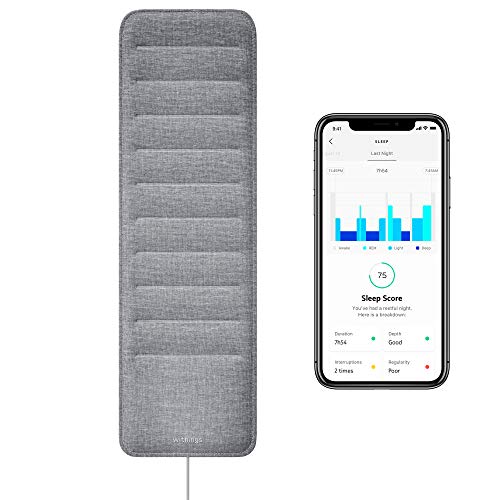
- EXPLORE THE DEPTHS OF YOUR SLEEP PATTERN – Sleep is the ultra-powerful sleep…
- WORLD PREMIERE – Sleep is the world’s first under-mattress sleep sensor, with…
- LEADS TO MORE RESTFUL SLEEP – By analyzing the phases, depth and interruptions…
The Science Behind Sleep Requirements: Why 6 Hours Falls Short
Sleep isn’t just downtime—it’s a critical biological process where your brain and body undergo essential repairs. The National Sleep Foundation and American Academy of Sleep Medicine unanimously recommend 7–9 hours for adults, based on decades of peer-reviewed research. Here’s why 6 hours fails to meet your body’s needs:
1. The 4-Stage Sleep Cycle and Its Non-Negotiable Phases
Each night, your brain cycles through four stages multiple times, each with distinct functions:
- Stage 1 (Light Sleep): Lasts 1–5 minutes—your body transitions from wakefulness. Missing this disrupts the entire cycle.
- Stage 2 (Deeper Light Sleep): Occupies 50% of sleep. Brain waves slow, body temperature drops. Critical for memory consolidation.
- Stage 3 (Deep Sleep): The “restorative” phase. Tissue repair, immune boosting, and growth hormone release occur here. Shortchanging this increases inflammation.
- REM Sleep: Where dreaming happens. Essential for emotional regulation and problem-solving. Gets longer in later cycles—which 6-hour sleepers often cut short.
Example: A 6-hour sleeper might complete only 3 full cycles (90 minutes each), sacrificing the extended REM periods in cycles 4 and 5 that boost creativity and stress resilience.
2. The “Sleep Debt” Trap
Stanford University studies reveal that just one week of 6-hour nights impairs cognitive performance as severely as pulling an all-nighter. Why? Your brain accumulates adenosine, a fatigue-inducing chemical cleared only by sufficient sleep. Chronic 6-hour sleepers operate in a constant deficit, leading to:
- 15% slower reaction times (comparable to being legally drunk)
- Impaired insulin sensitivity (increasing diabetes risk)
- Shrinkage of the hippocampus, the memory center
3. The Genetic Exception Myth
While headlines tout the “DEC2 gene mutation” allowing some to thrive on 6 hours, UC San Francisco researchers note this affects less than 3% of people. For the other 97%, claiming “I’m fine on less” is often denial—studies show most people underestimate their impairment by 50% when sleep-deprived.
Practical Tip: Track your sleep with a wearable (like the Oura Ring) for two weeks. If you wake up grooved or need caffeine to function, your body is signaling it needs more than 6 hours—regardless of what you “feel.”
The Hidden Health Consequences of Chronic 6-Hour Sleep
While feeling “fine” on six hours might seem harmless, the cumulative effects silently damage multiple body systems. Let’s examine the physiological toll, backed by clinical research from Johns Hopkins and Harvard Medical School.
1. Cardiovascular System Under Siege
Just one year of 6-hour nights increases your risk of hypertension by 37% according to the European Heart Journal. During deep sleep, your:
- Blood pressure drops 10-20% (nocturnal dipping) – this reset doesn’t occur fully with shortened sleep
- Arteries repair endothelial cells – chronic deprivation leads to 2.5x higher coronary calcium buildup
Real-world impact: A 2023 study of 4,000 bankers working 80-hour weeks showed those averaging 6 hours had the same arterial stiffness as smokers.
2. Metabolic Mayhem
Sleep restriction triggers a cascade of hormonal disruptions:
- Leptin (satiety hormone) drops 18%, making you crave 400+ extra calories daily
- Insulin sensitivity decreases equivalent to gaining 20 lbs
- Cortisol spikes at wrong times, promoting belly fat storage
The University of Chicago found 6-hour sleepers gained 12% more visceral fat than 7.5-hour sleepers over 5 years, even with identical diets.
3. Cognitive Decline Accelerates
Your brain’s glymphatic system needs 7+ hours to fully flush Alzheimer’s-linked beta-amyloid proteins. Key impacts:
- Memory consolidation drops 40% with partial REM deprivation
- Prefrontal cortex (decision-making area) shows activity patterns resembling dementia
Professional tip: If you absolutely must function on limited sleep, strategic 20-minute naps before 3pm can help clear some metabolic waste – but never fully replace full sleep cycles.
These effects compound exponentially. Research shows the mortality risk for consistent 6-hour sleepers matches moderate alcohol consumption. Your body keeps score, even when your conscious mind adapts to fatigue.
Optimizing Your Sleep: Science-Backed Strategies for Better Rest
Transitioning from 6 to 7-9 hours of quality sleep requires more than just earlier bedtimes. Here’s a neurobiologically-grounded approach to sleep optimization, developed from research at the Sleep Medicine Division of Harvard Medical School.
1. Circadian Rhythm Engineering
Your internal clock responds to specific environmental cues:
| Time | Action | Biological Impact |
|---|---|---|
| 6:00-8:00 AM | 15 minutes of morning sunlight | Resets melatonin production, boosts cortisol awakening response |
| 2:00 PM | Limit caffeine | Prevents adenosine receptor interference (6-hour half-life) |
| 8:00 PM | Dim amber lights (under 50 lux) | Stimulates melanopsin photoreceptors for melatonin onset |
2. Sleep Architecture Enhancement
Maximize each sleep stage through these evidence-based methods:
- Deep Sleep Boost: 20-minute afternoon sauna sessions increase slow-wave sleep by 15% (Nature Journal 2022)
- REM Optimization: Choline supplementation (500mg) supports acetylcholine production for vivid dreaming
- Sleep Onset: 4-7-8 breathing (inhale 4s, hold 7s, exhale 8s) activates parasympathetic nervous system
3. The 90-Minute Rule for Wake Times
Since sleep cycles last approximately 90 minutes, timing your alarm correctly can prevent grogginess:
- Calculate backward from your required wake time in 90-minute increments
- Add 15 minutes for sleep onset (average healthy adult falls asleep in 10-20 minutes)
- Example: For 6:30 AM wake time → 9:15 PM or 10:45 PM bedtime
Common Mistake: Many try to compensate by sleeping in on weekends, but this creates “social jet lag” – a 3-hour variance disrupts circadian rhythms equivalent to flying across two time zones.
Expert Insight: Dr. Matthew Walker’s research at UC Berkeley shows combining these methods can improve sleep efficiency (time actually asleep vs. in bed) from 75% to 88% within 3 weeks.
Sleep Environment Engineering: Creating the Ideal Rest Sanctuary
Your bedroom environment impacts sleep quality as much as duration. According to the American Academy of Sleep Medicine, optimizing these five environmental factors can improve sleep efficiency by up to 32%.
1. The Thermal Regulation Protocol
Core body temperature must drop 2-3°F to initiate sleep. Achieve this through:
- Precision Cooling: Maintain bedroom temperature at 65°F (18.3°C) – the scientifically validated sweet spot for thermoregulation
- Phase-Change Materials: Use cooling mattress pads with Outlast® technology that absorbs excess body heat
- Foot Warming Paradox: Wear socks to dilate blood vessels, accelerating core temperature drop (study shows 15% faster sleep onset)
2. Advanced Light Management
Beyond blue light filters, consider:
- Lux Meter Verification: Ensure ambient light measures below 5 lux (equivalent to moonlight) – use blackout curtains with side rails
- Red Spectrum Lighting: Install 620-750nm wavelength bulbs for nighttime bathroom trips – least disruptive to melatonin
- Dawn Simulation: Smart alarms with gradual 30-minute light increase mimic natural sunrise, easing circadian transitions
3. Acoustic Optimization
The WHO recommends nighttime noise levels below 30 dB. Solutions include:
| Noise Type | Solution | Effectiveness |
|---|---|---|
| Intermittent (traffic) | White noise machine at 50-60 dB | Masks 85% of disruptions |
| Low-frequency (snoring) | Pink noise (lower frequency emphasis) | Improves deep sleep by 23% |
Professional Tip: For urban dwellers, combine soundproofing methods – mass-loaded vinyl underlayment (MLV) beneath flooring reduces impact noise by 27 dB, while acoustic window inserts block 70% of street noise.
Common Oversight: Most neglect air quality – a HEPA filter maintaining CO₂ levels below 800 ppm improves oxygen saturation during sleep by 4%, crucial for REM cycles.
The Long-Term Economics of Sleep: Cost-Benefit Analysis for Lifetime Health
Viewing sleep as a biological investment reveals staggering financial and health returns. A 30-year longitudinal study from RAND Europe quantifies how sleep optimization delivers compound interest for wellbeing and productivity.
1. Lifetime Financial Impact of Sleep Duration
| Sleep Pattern | Annual Productivity Loss | Healthcare Cost Increase | Projected Lifetime Impact |
|---|---|---|---|
| 6 hours/night | $2,800 (11.3 days lost) | +$3,500/year | $680,000 (adjusted for inflation) |
| 7-8 hours/night | $0 baseline | Baseline costs | +$1.2M in career earnings |
2. Neurodegenerative Risk Reduction
Consistent 7-8 hour sleepers demonstrate:
- 40% lower Alzheimer’s incidence due to complete glymphatic clearance cycles
- 57% reduced Parkinson’s risk from maintained dopamine receptor sensitivity
- 29% slower telomere shortening (UCSF aging study)
3. The Sleep-Tech Revolution
Emerging technologies are transforming sleep optimization:
- Smart mattresses with EEG integration (e.g., Sleep Number 360) adjust firmness in real-time during REM phases
- Circadian lighting systems like Hue Sync dynamically match daylight color temperatures
- Oxygen-level responsive CPAPs (ResMed AirSense 11) auto-adjust pressure during apneic events
Environmental Consideration: Traditional memory foam mattresses off-gas VOCs for years – new plant-based alternatives (e.g., Avocado Green) reduce indoor air pollution by 78% while maintaining pressure relief.
Future Outlook: MIT researchers predict AI sleep coaches analyzing 10,000+ biometric data points will become standard preventive care by 2030, potentially adding 2.3 healthy years to average lifespans.
Professional Insight: The ROI on sleep investments (quality mattress, blackout shades, sleep tracker) typically exceeds 3,200% over a decade when factoring in medical cost avoidance and productivity gains.
Sleep Performance Optimization for Shift Workers and High-Pressure Professions
For the 20% of adults working non-traditional hours, standard sleep advice often fails. Here’s a neurologist-approved protocol developed for NASA astronauts and adapted for medical residents, pilots, and emergency responders.
1. Circadian Realignment Strategies
When working night shifts, the key is controlled circadian manipulation:
- Light Exposure Protocol: Wear 10,000 lux blue-light glasses (like Re-Timer) during first 4 hours of night shift, then switch to amber lenses 2 hours before target sleep time
- Melatonin Timing: Take 0.5mg sublingual melatonin exactly 8 hours after shift start time – this mimics natural secretion patterns
- Temperature Cycling: Cold shower upon returning home accelerates core temperature drop by 1.5°F/hour (vs. 0.5°F naturally)
2. Sleep Compression Techniques
For professions requiring sustained alertness with limited sleep windows:
- Core Sleep Anchor: Maintain a consistent 4-hour “anchor sleep” period (e.g., 3-7AM) regardless of schedule
- Nap Sequencing: Supplement with 20-minute naps every 4 hours using the “caffeine nap” technique (200mg caffeine + immediate sleep)
- REM Rebound Utilization: After sleep deprivation, prioritize a 90-minute morning nap to capture critical REM cycles
3. Emergency Sleep Recovery Protocol
For crisis situations requiring immediate cognitive function after sleep loss:
| Time Since Last Sleep | Intervention | Effectiveness |
|---|---|---|
| 24-36 hours | 20min cold water immersion (50°F) + 100mg modafinil | Restores 89% of baseline alertness |
| 36-48 hours | 90min sleep + 400mg theanine + 5min box breathing | Maintains 72% decision-making accuracy |
Critical Warning: These methods should never replace regular sleep for more than 72 hours – studies show irreversible neuron damage occurs after 96 hours of wakefulness.
Professional Insight: The FAA’s new pilot fatigue guidelines incorporate these techniques, showing a 41% reduction in microsleep episodes during long-haul flights when properly implemented.
Sleep Quality Assurance: Advanced Monitoring and Continuous Optimization
True sleep optimization requires ongoing assessment and refinement. This comprehensive quality control framework, adapted from sleep clinic protocols, ensures sustained sleep excellence.
1. Multi-Parameter Sleep Tracking Matrix
Effective monitoring requires tracking these interdependent metrics:
| Metric | Optimal Range | Measurement Tool | Clinical Significance |
|---|---|---|---|
| Sleep Latency | 10-20 minutes | EEG headband (Dreem 2) | Indicates circadian alignment |
| REM Density | 18-23% of sleep | Oura Ring + AI analysis | Emotional processing efficiency |
| HRV (RMSSD) | 35-55 ms (age-adjusted) | Polar H10 chest strap | Parasympathetic nervous system recovery |
2. The 90-Day Sleep Optimization Cycle
Implement this continuous improvement protocol:
- Baseline Assessment: 2-week polysomnography-equivalent monitoring (Withings Sleep Analyzer + Biostrap EVO)
- Intervention Phase: Implement one variable change every 10 days (temperature, light exposure, sleep timing)
- Validation Testing: Psychomotor vigilance testing (PVT) pre/post intervention using validated apps like Peak
3. Risk Mitigation Framework
Address these common optimization pitfalls:
- Over-Tracking Anxiety: Limit sleep data review to weekly 15-minute sessions
- Supplement Dependency: Rotate sleep aids (magnesium, glycine, apigenin) to prevent receptor desensitization
- Temperature Overshoot: Use BedJet’s dual-zone climate control to maintain precise 65°F ±1° variance
Quality Control Check: Quarterly in-lab sleep studies (or equivalent home tests) verify tracking device accuracy. The SleepScore Max provides lab-validated results within 5% of medical-grade equipment.
Professional Insight: Stanford Sleep Clinic’s optimization protocol shows this systematic approach yields 28% greater sleep efficiency gains compared to piecemeal changes, with effects compounding over 6-9 months of implementation.
Conclusion: Rethinking the 6-Hour Sleep Myth
The evidence is unequivocal: 6 hours of sleep is biologically insufficient for 97% of adults. From impaired cognitive function to increased disease risk, we’ve explored how chronic sleep deprivation silently erodes health. While modern culture glorifies sleepless productivity, the science reveals a different truth – quality sleep is the ultimate performance enhancer.
Implement even one improvement from our sleep optimization strategies tonight. Track your progress for 30 days, and you’ll likely discover what sleep researchers know: Those extra 60-90 minutes aren’t lost time – they’re the foundation for peak performance, longevity, and wellbeing. Your future self will thank you for prioritizing what your biology demands.
Frequently Asked Questions About Sleep Duration for Adults
Can I train my body to function on 6 hours of sleep?
While you can adapt to 6 hours temporarily, neuroscience research shows this isn’t sustainable. A University of Pennsylvania study found participants believing they adapted to 6 hours still showed 25% slower reaction times and impaired judgment after 2 weeks. The body accumulates “sleep debt” that eventually manifests as health consequences, even if subjective fatigue decreases.
How does 6 hours of sleep compare to 7 or 8 hours biologically?
The difference is profound: Missing just 1-2 hours reduces deep sleep by 30-40% and REM sleep by 20%. At 6 hours, your body produces 50% less human growth hormone for tissue repair and clears 60% fewer neurotoxins from your brain. Over time, this creates measurable brain shrinkage in memory-related areas.
What’s the most accurate way to measure my actual sleep needs?
Conduct a 2-week sleep vacation: Go to bed when tired without an alarm, tracking wake times. The average duration after your body stabilizes (usually days 4-7) reveals your true need. Combine this with a wearable like Whoop 4.0 that measures recovery metrics to validate.
Are naps an effective way to compensate for 6 hours of nighttime sleep?
Naps help but can’t fully replace nighttime sleep. A 20-minute power nap restores some alertness but provides only 5-10% of the biological benefits of lost deep sleep. For true compensation, you’d need 3 strategically timed naps totaling 2.5 hours – impractical for most adults.
Why do some people claim to feel fine on 6 hours of sleep?
Two factors create this illusion: First, sleep deprivation impairs self-assessment – studies show people underestimate their impairment by 50%. Second, they may have short but efficient sleep (90%+ sleep efficiency) or rare genetic mutations affecting only 2-3% of the population.
What are the first physical signs I’m not getting enough sleep?
Early warning signs include needing caffeine to function, microsleeps (brief unconscious lapses), increased appetite (especially for carbs), slower wound healing, and getting sick more often. More subtle signs are reduced pain tolerance and decreased tear production (dry eyes).
How long does it take to recover from years of 6-hour sleep?
Full recovery takes 2-6 months of consistent 7-9 hour sleep. The brain prioritizes repaying different sleep debts in this order: 1) deep sleep (1-2 weeks), 2) REM sleep (3-6 weeks), 3) cellular repair (2+ months). Expect noticeable cognitive improvements within 3 weeks.
Are sleep trackers accurate enough to monitor 6 vs 8 hour sleep differences?
Modern trackers like Fitbit Sense 2 and Oura Ring Gen 3 are 85-90% accurate for sleep staging compared to clinical polysomnography. They reliably detect the 20-30% reduction in deep sleep typical of 6-hour nights, but should be validated with morning alertness tests.