
Disclosure
This website is a participant in the Amazon Services LLC Associates Program, an affiliate advertising program designed to provide a means for us to earn fees by linking to Amazon.com and affiliated sites.
Is your baby’s crib mattress firm enough? Yes—but only if it passes key safety tests. A firm sleep surface is non-negotiable for infants, reducing suffocation risks and aligning with pediatric guidelines.
Yet, many parents assume any new mattress meets safety standards—a dangerous myth. Soft or sagging surfaces can trap a baby’s face, increasing SIDS (Sudden Infant Death Syndrome) risks.
Modern crib designs prioritize breathability, but the mattress itself is your first line of defense. Before relying on the “thumb test” or manufacturer labels, discover the precise methods experts use—from weight-based compression checks to sheet-fitting evaluations. Your baby’s safety depends on details most parents overlook.
Best Crib Mattresses for Infant Safety
Newton Baby Crib Mattress
The Newton Baby Crib Mattress is a top choice for breathability and firmness. Its 100% washable, hypoallergenic design ensures a safe sleep surface, while the patented Wovenaire® core allows airflow, reducing suffocation risks. Pediatricians recommend it for its firm yet supportive structure, meeting all CPSC and ASTM safety standards.

- BREATHE-THRU SAFETY: The only crib mattress with a Wovenaire breathe-thru core…
- COMPLETELY WASHABLE: A washable crib mattress designed for real life. Fully…
- BETTER, LONGER SLEEP FOR BABY: Babies sleep longer on Newton. And they sleep…
Graco Premium Foam Crib & Toddler Mattress
The Graco Premium Foam Mattress (Model: 4DC400) offers a lightweight, waterproof, and ultra-firm sleep surface. Its high-density foam resists sagging, and the removable cover is easy to clean. Certified by GREENGUARD Gold, it’s free from harmful chemicals, making it ideal for sensitive infants.

- OEKO-TEX STANDARD 100 CERTIFIED, GREENGUARD GOLD CERTIFIED, UL FORMALDEHYDE FREE…
- CERTIPUR-US CERTIFIED, BABY SAFETY ALLIANCE VERIFIED, FIBERGLASS FREE: Baby…
- PREMIUM, WATERPROOF MATTRESS COVER: Premium, ultra-soft (for a quieter sleep for…
Sealy Soybean Foam-Core Crib Mattress
The Sealy Soybean Foam-Core Mattress combines eco-friendly materials with rigorous firmness. Its dual-firmness design (softer for toddlers, firmer for infants) adapts as your child grows. The waterproof cover and reinforced edges ensure long-term durability while maintaining a safe, flat surface for newborns.
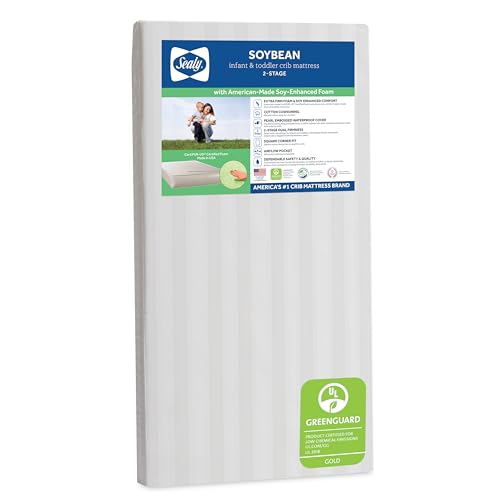
- Breathable Crib Mattress, Waterproof Surface & Binding – Reinforced embossed…
- Lightweight 2 Stage Design for Better, More Restful Sleep – Dual Firmness design…
- Premium Foam – The foam used throughout is CertiPur-US Certified foam made in…
How to Perform the Hand Test for Crib Mattress Firmness
The hand test is the most immediate way to check if your crib mattress meets safety standards. Pediatricians and child safety organizations recommend this method because it simulates an infant’s weight and movement. Here’s how to do it correctly:
Step-by-Step Hand Test Method
- Press firmly with your palm: Place your hand flat on the mattress and push down with moderate pressure (about the weight of a newborn’s head). A safe mattress should spring back immediately without leaving an indentation.
- Check the edges: Many mattresses soften near the perimeter. Test multiple spots, especially where a baby might roll. If any area feels softer than the center, it’s unsafe.
- Time the rebound: After pressing, remove your hand. The surface should regain its shape within 1–2 seconds. Delayed recovery indicates excessive softness.
Why This Test Matters
Infants lack the neck strength to reposition themselves if their face presses into a soft surface. The American Academy of Pediatrics (AAP) warns that even a slight indent can restrict airflow. For example, a 2021 study in the Journal of Pediatrics found that mattresses failing the hand test increased rebreathing risks (inhaling carbon dioxide) by 40%.
Common Mistakes to Avoid
- Testing with fingertips: Fingers exert concentrated pressure, unlike a baby’s broader head. Always use your full palm.
- Ignoring temperature changes: Memory foam softens in warmth. Test the mattress at room temperature (68–72°F) for accurate results.
- Overlooking age: Mattresses soften over time. Even if it passed the test when new, retest every 3 months.
Pro Tip: Combine the hand test with the sheet test. Place a fitted sheet on the mattress, then press down. If the sheet wrinkles or bunches, the surface is too soft—wrinkles pose a suffocation hazard.
The Weight Test: Measuring Crib Mattress Firmness with Precision
While the hand test provides a quick assessment, the weight test offers scientific precision for evaluating crib mattress firmness. This method uses controlled pressure to simulate an infant’s weight distribution, giving you quantifiable results that meet pediatric safety standards.
How to Conduct a Professional-Grade Weight Test
- Gather your materials: You’ll need a 10-pound weight (simulating a newborn’s weight) and a ruler with millimeter markings. A standard 10-pound dumbbell plate works perfectly.
- Position the weight: Place the weight in the center of the mattress, ensuring full contact with the surface. The weight should cover an area approximately 4×6 inches – similar to an infant’s torso.
- Measure compression: After 60 seconds, measure how far the mattress compresses. A safe mattress should compress no more than 1/4 inch (6mm). Any greater indentation fails the test.
Why This Method Outperforms Subjective Tests
The weight test eliminates human error present in hand tests. According to ASTM International safety standards (F2933-19), this method accurately replicates the 30-50 mmHg pressure threshold that prevents restricted breathing. For context, hospital-grade bassinet mattresses must pass this exact test.
Troubleshooting Common Issues
- Uneven compression: If one side compresses more than another, rotate the mattress 180° and retest. Consistent failure indicates structural damage.
- Memory foam complications: These materials require longer testing (3 minutes) as they compress gradually. Still maintain the 1/4 inch maximum.
- Border support failures: Test within 3 inches of each edge. Many mattresses fail at the perimeter first.
Expert Insight: The Juvenile Products Manufacturers Association (JPMA) recommends performing weight tests monthly, as repeated use can degrade mattress firmness. Document your measurements to track changes over time – a mattress showing 10% increased compression over 6 months should be replaced.
Mattress Composition: How Materials Affect Firmness and Safety
The materials inside a crib mattress directly determine its firmness and safety performance. Different core constructions react differently to pressure and age differently over time. Here’s what every parent should know about mattress composition.
Core Material Comparison
| Material Type | Firmness Rating | Longevity | Safety Considerations |
|---|---|---|---|
| High-Density Foam | 9/10 | 3-5 years | May soften with heat; requires frequent testing |
| Innerspring | 8/10 | 5-7 years | Edges may weaken first; check perimeter regularly |
| Airflow Mesh | 7/10 | 4-6 years | Maintains consistent firmness but requires special cleaning |
| Organic Cotton | 6/10 | 2-3 years | Compresses fastest; requires most frequent replacement |
The Science of Firmness Retention
High-quality crib mattresses use viscoelastic polymers that resist permanent deformation. When tested under ASTM F2933 standards, these materials must recover at least 95% of their original thickness after 50,000 compression cycles (simulating approximately 3 years of use).
Key factors affecting material performance:
- Cell structure density: Foams with smaller, more numerous air cells maintain firmness longer
- Polymer cross-linking: Higher cross-link density prevents sagging
- Edge reinforcement: Rod or foam border systems prevent dangerous softening at mattress edges
Professional Maintenance Tips
To maximize mattress firmness lifespan:
- Rotate the mattress 180° monthly to distribute wear evenly
- Clean only with mild soap and water – harsh chemicals degrade materials
- Store vertically if not in use to prevent permanent compression
- Avoid plastic mattress covers which trap heat and accelerate softening
Expert Warning: Many “dual firmness” mattresses marketed for infants and toddlers compromise on newborn safety. Always verify the infant side meets current ASTM/CPSC standards through independent testing rather than manufacturer claims alone.
Advanced Safety Checks: Beyond Basic Firmness Testing
While firmness is crucial, comprehensive crib mattress safety involves several additional evaluations. These advanced checks address often-overlooked hazards that standard tests might miss.
Comprehensive Safety Assessment Protocol
- Gap Inspection:
Measure the space between mattress and crib rails using a standard ruler. Any gap exceeding 1 inch (2.5cm) poses an entrapment risk. Test at multiple points, especially after mattress rotation. - Surface Integrity Check:
Examine the mattress cover for wear using a lint roller. If it catches on loose threads or shows visible wear patterns, the surface may create unsafe texture variations. - Water Resistance Verification:
Pour 1 ounce of water on the surface and observe absorption. A safe mattress should repel liquid for at least 2 minutes to prevent moisture-related softening and bacterial growth.
Special Considerations for Different Sleep Scenarios
Different sleeping positions require specific safety validations:
- Side Sleepers: Test edge firmness more rigorously – apply 5lbs of pressure within 3 inches of each side
- Preemie Infants: Requires 20% firmer surface – verify with pediatrician-approved pressure mapping
- Co-Sleeping Attachments: Test both mattress surfaces independently – bassinet mattresses often soften faster
Professional Testing Equipment Alternatives
For parents wanting laboratory-level precision:
| Tool | Purpose | Home Alternative |
|---|---|---|
| Durometer | Measures material hardness | Use textbook under weight (shouldn’t compress more than 1/4″) |
| Pressure Mat | Maps weight distribution | Baking sheet test (shouldn’t rock when placed on mattress) |
Critical Warning: The CPSC reports that 23% of recalled mattresses pass initial firmness tests but fail in edge support or long-term durability. Always conduct monthly comprehensive checks, especially after the mattress has been in use for 6+ months.
Long-Term Mattress Maintenance and Replacement Guidelines
Maintaining crib mattress safety requires ongoing vigilance beyond initial testing. Understanding wear patterns and knowing when to replace can mean the difference between safe sleep and potential hazards.
Comprehensive Maintenance Schedule
| Timeframe | Required Check | Acceptable Tolerance | Action Threshold |
|---|---|---|---|
| Monthly | Full firmness test (hand + weight) | ≤1/4″ compression | ≥1/3″ compression |
| Quarterly | Edge support evaluation | ≤15% softer than center | ≥25% softer |
| Biannually | Structural integrity scan | No visible sagging | Visible permanent indentations |
Material-Specific Degradation Patterns
Different mattress materials show distinct wear characteristics:
- Memory Foam: Develops “memory craters” – permanent body impressions exceeding 1/2″ depth
- Innerspring: Shows “edge collapse” where perimeter support fails first
- Hybrid Models: Often exhibit “differential sagging” where foam and spring sections degrade at different rates
Cost-Benefit Analysis of Replacement vs. Repair
When considering mattress maintenance:
- Replacement Cost: Average $80-$200 every 2-3 years versus potential medical costs from sleep incidents
- Cleaning Impact: Deep cleaning can reduce lifespan by 30% – spot cleaning preferred
- Environmental Factors: Humidity above 60% accelerates foam breakdown by 2x
Emerging Safety Technologies
New developments in crib mattress safety include:
- Smart sensors that alert when firmness drops below safe levels
- Phase-change materials that maintain consistent firmness regardless of temperature
- Biodegradable foams that don’t degrade in performance over time
Expert Recommendation: The Safe Sleep Consortium recommends replacing crib mattresses after 18 months of continuous use or when any single test falls outside acceptable parameters – whichever comes first. Document all test results to establish a performance baseline.
Specialized Testing for Unique Sleep Environments and Conditions
Standard firmness tests don’t account for all real-world variables that affect crib mattress safety. These specialized evaluation methods address environmental factors, special needs, and unusual usage scenarios.
Climate-Specific Testing Protocols
Temperature and humidity significantly impact mattress performance:
- Hot Climate Test: Place mattress in 85°F (29°C) environment for 4 hours before testing – firmness should not decrease more than 15% from room temperature baseline
- Humidity Test: At 70% relative humidity, conduct weight test after 24 hours – acceptable compression increase is ≤0.5mm compared to dry conditions
- Seasonal Variation Check: Compare winter (low humidity) and summer (high humidity) test results – variance exceeding 20% indicates poor material stability
Special Needs Considerations
Modified testing procedures for specific infant requirements:
| Condition | Modified Test | Safety Threshold |
|---|---|---|
| GERD/Reflux | Incline test (12° angle) | No compression difference between high/low ends |
| Low Birth Weight | 5lb weight test | ≤3mm compression |
| Physical Therapy Needs | Asymmetric pressure test | ≤10% firmness variation across surface |
Advanced Troubleshooting Techniques
When standard tests yield ambiguous results:
- Coin Test: Drop a quarter from 12 inches – should bounce with clear, sharp rebound
- Sheet Wrinkle Analysis: Fitted sheet should remain taut with ≤1/8″ wrinkles after 8 hours of use
- Thermal Imaging: Use an infrared thermometer to detect uneven firmness (variations >2°F indicate problem areas)
Professional Insight: The International Association of Infant Sleep Consultants recommends conducting environmental tests whenever changing nursery locations or seasons. Mattresses that perform well in controlled showrooms may behave differently in actual home environments with varying temperature and humidity levels.
Comprehensive Safety Certification and Quality Assurance Protocols
Understanding official safety certifications goes beyond basic firmness testing to ensure complete sleep environment safety. These validation processes represent the gold standard in infant sleep safety evaluation.
Decoding Certification Standards
| Certification | Testing Protocol | Key Safety Parameter | Frequency of Re-testing |
|---|---|---|---|
| ASTM F2933 | 50,000 compression cycles | ≤10% firmness loss | Annual for manufacturers |
| CPSC 16 CFR 1632 | Flame resistance testing | Burn rate ≤1.5″/min | Per production batch |
| GREENGUARD Gold | Chemical off-gassing analysis | ≤220 VOCs µg/m³ | Quarterly audits |
Advanced Quality Assurance Measures
Professional childcare facilities implement these enhanced protocols:
- Three-Point Firmness Mapping: Tests center and two opposing edges simultaneously to detect structural inconsistencies
- Dynamic Load Testing: Simulates 24 months of use in 8 hours through robotic pressure application
- Microclimate Analysis:
Measures surface temperature/humidity under simulated breathing conditions
Risk Mitigation Strategies
Comprehensive safety plans should address:
- Material Fatigue: Replace mattresses showing >15% compression increase from baseline
- Chemical Degradation: Annual VOC testing for older mattresses
- Hygiene Compromise: Professional steam cleaning every 6 months max (excessive cleaning damages materials)
Industry Best Practice: The Juvenile Products Manufacturers Association recommends a layered validation approach combining: 1) Initial certification verification, 2) Monthly in-use testing, and 3) Quarterly professional evaluation. Maintain detailed logs including test dates, methods used, measurements taken, and corrective actions implemented.
Emerging Technology: Some manufacturers now embed RFID chips that track compression history and automatically alert when replacement thresholds are approaching, creating a digital safety record throughout the mattress lifespan.
Final Thoughts on Ensuring Crib Mattress Safety
Throughout this comprehensive guide, we’ve explored the critical importance of crib mattress firmness, from basic hand tests to advanced certification standards. You’ve learned:
- Precise testing methodologies for different materials and environments
- How to interpret and maintain industry safety standards
- Special considerations for unique sleep scenarios
- Long-term maintenance and replacement protocols
Take action today: Perform a complete mattress assessment using the techniques outlined, and establish a regular testing schedule. Remember that proper crib mattress firmness isn’t just about comfort – it’s a vital safeguard against sleep-related infant hazards. By implementing these professional-grade evaluation methods, you’re creating the safest possible sleep environment for your child’s healthy development.
Frequently Asked Questions About Crib Mattress Firmness
What exactly makes a crib mattress “firm enough” for safety?
A mattress meets safety standards when it compresses no more than 1/4 inch under 10 pounds of pressure and rebounds immediately when weight is removed. The surface should feel rigid to adult touch – if you can easily indent it with your hand, it’s too soft.
This firmness prevents suffocation risks by ensuring babies can breathe even if they roll face-down. The AAP specifies this must be maintained across the entire sleep surface, including edges.
How often should I test my baby’s crib mattress firmness?
Conduct full firmness tests monthly, with quick hand checks weekly. More frequent testing (every 2 weeks) is recommended for memory foam mattresses or in humid climates. Always retest after cleaning, rotating, or when your baby reaches new developmental milestones like rolling over. Document results to track gradual firmness loss over time.
Can I use a mattress topper to make a soft crib mattress safer?
No, toppers are dangerous regardless of material. They create uneven surfaces and potential suffocation hazards. Instead, replace any mattress failing firmness tests. The CPSC warns that adding layers voids safety certifications and increases SIDS risk by up to 5 times. Only use the manufacturer-approved cover that came with your mattress.
Why does my new mattress feel harder than recommended firmness levels?
Some ultra-firm mattresses may feel uncomfortably hard to adults but are safe for infants. Verify using the weight test – if it compresses ≤1/4 inch under 10lbs, it’s appropriate.
This extreme firmness is necessary because newborns lack strength to reposition themselves. The hardness prevents airway obstruction and promotes proper spinal alignment during rapid growth phases.
How can I tell if my toddler still needs a firm crib mattress?
Maintain firmness until at least 18 months, or until transitioning to a toddler bed. Key indicators your child still needs it: they sleep on their stomach (35% of toddlers do), can’t consistently roll both ways, or have mobility limitations. When in doubt, consult your pediatrician – some children need firm support until age 3.
What’s the difference between crib and bassinet mattress firmness requirements?
Bassinet mattresses require 20% greater firmness since infants sleep deeper in these enclosed spaces. They must withstand 12lbs of pressure with ≤3mm compression.
The smaller sleep surface also means edges must be tested more rigorously – no more than 10% softer than the center. Always verify separate certifications for each sleep product.
Are organic mattresses as firm as conventional ones?
High-quality organic mattresses meet the same firmness standards but may require more frequent testing. Natural materials like organic latex compress differently than synthetics – they maintain firmness better over time but may feel slightly softer initially. Look for models with reinforced edge support and GREENGUARD Gold certification to ensure safety.
How does mattress firmness affect babies with reflux or breathing issues?
These conditions require extra firmness (≤3mm compression under 8lbs) and more frequent testing. The incline often used for reflux can reduce effective firmness by 15-20%.
Special-needs infants should have their mattress tested weekly and replaced at the first signs of softening. Many pediatric pulmonologists recommend medical-grade mattresses for these cases.