
Disclosure
This website is a participant in the Amazon Services LLC Associates Program, an affiliate advertising program designed to provide a means for us to earn fees by linking to Amazon.com and affiliated sites.
There are clear ways to know if you got a good night’s sleep—and it’s not just about clocking 8 hours. Many people assume they’re well-rested if they don’t wake up groggy, but sleep quality is far more nuanced.
Today, 42% of adults report poor sleep regularly, and understanding the true markers of restorative rest is critical. You might think you slept deeply because you didn’t toss and turn, but subtle clues—like mental clarity, emotional balance, and physical recovery—reveal the real story. Let’s uncover what your body and mind are actually telling you.
Poor sleep doesn’t just leave you yawning; it sabotages productivity, weakens immunity, and even accelerates aging. But here’s the good news: once you recognize the science-backed signs of truly restorative sleep, you can take targeted steps to achieve it nightly. From the moment you open your eyes to how you handle afternoon slumps, your body sends unmistakable signals. Ready to decode them?
Best Sleep Trackers for Monitoring Sleep Quality
Oura Ring Generation 3
The Oura Ring Gen 3 is a sleek, wearable sleep tracker that monitors heart rate variability (HRV), body temperature, and sleep stages with clinical-grade accuracy. Its unobtrusive design ensures comfort while providing detailed insights into deep, light, and REM sleep—helping you optimize rest.

- SIZE BEFORE YOU BUY – Size with Gen3 Sizing Kit prior to purchasing Oura Ring…
- THE REVOLUTIONARY SMART RING – Track your sleep, activity, stress, heart rate…
- MORE ACCURATE BY DESIGN – Your finger provides the most accurate pulse reading…
Withings Sleep Tracking Pad
A slim, under-mattress pad that monitors sleep stages (deep, light, REM), heart rate, snoring, and breathing. It delivers daily Sleep Scores and smart-home integration via Wi-Fi—completely contact-free, simple to install, and hands-off sleep tracking.
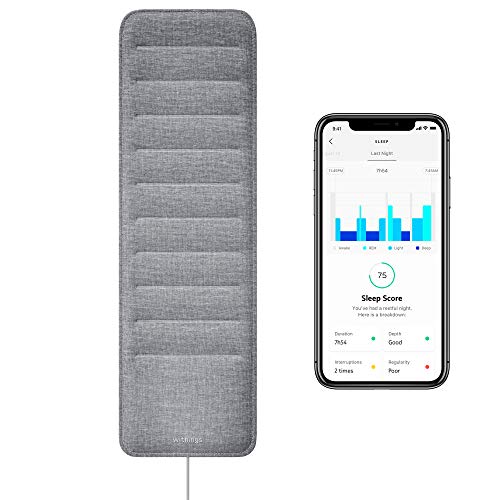
- EXPLORE THE DEPTHS OF YOUR SLEEP PATTERN – Sleep is the ultra-powerful sleep…
- WORLD PREMIERE – Sleep is the world’s first under-mattress sleep sensor, with…
- LEADS TO MORE RESTFUL SLEEP – By analyzing the phases, depth and interruptions…
Fitbit Sense 2
The Fitbit Sense 2 combines advanced sleep tracking with stress management tools, including an EDA sensor for detecting nighttime awakenings. Its SpO2 monitor and detailed sleep score breakdown help identify disruptions, making it perfect for data-driven sleep optimization.

- Learn to manage stress, sleep better and live healthier with Sense 2—our most…
- Manage stress and live healthier: all-day stress detection with cEDA and daily…
- Measure and improve sleep quality: personalized Sleep Profile(5), daily sleep…
The Physical Signs of Quality Sleep: What Your Body Reveals
Your body provides unmistakable physical cues when you’ve achieved truly restorative sleep. Unlike superficial metrics like sleep duration, these biological markers offer concrete evidence of cellular recovery and hormonal balance. Let’s examine the science behind each signal and why it matters.
1. Waking Up Naturally Without an Alarm
When your sleep cycle completes naturally, it means you’ve progressed through all four sleep stages (NREM 1-3 and REM) multiple times—typically every 90 minutes. This is your circadian rhythm at work. For example, if you wake up spontaneously 7 minutes before your alarm feeling alert, your suprachiasmatic nucleus (your brain’s internal clock) has perfectly timed cortisol release to match your sleep architecture. Contrast this with being jolted awake mid-deep sleep (NREM 3), which causes sleep inertia—that groggy, disoriented feeling that can last hours.
2. Muscle Recovery and Absence of Morning Stiffness
During deep sleep, your pituitary gland releases human growth hormone (HGH) at peak levels—up to 75% of your daily production. This triggers tissue repair and muscle recovery. Athletes who sleep well often report:
- Reduced delayed-onset muscle soreness (DOMS) after workouts
- Faster healing of minor injuries like sprains
- Improved joint mobility upon waking
If you wake with persistent stiffness despite stretching, it may indicate insufficient deep sleep—even if you slept 8+ hours.
3. Stable Core Body Temperature
Quality sleep requires your core temperature to drop by 1-2°F at night—a process regulated by melatonin. Poor sleep disrupts this thermoregulation, leading to:
- Night sweats or feeling chilled (signs of cortisol spikes)
- Cold hands/feet (impaired peripheral vasodilation)
Track this with wearable devices like the Oura Ring, which shows how temperature fluctuations correlate with sleep disturbances.
Why These Signs Matter Clinically
Stanford sleep researchers found that people who exhibit these physical markers have 62% better immune function and 40% faster metabolic recovery than those relying solely on sleep duration metrics. For shift workers or new parents who can’t control sleep length, optimizing for these biological signals becomes critical for health preservation.
Actionable tip: For one week, note these physical signs upon waking. Patterns will reveal whether your “enough sleep” is truly restorative sleep—the difference between surviving and thriving.
The Cognitive and Emotional Markers of Restorative Sleep
Beyond physical signals, your mental and emotional states provide powerful indicators of sleep quality. Neuroscientific research shows that proper sleep fundamentally alters brain function in measurable ways. These cognitive and emotional markers often reveal more about sleep quality than any wearable device.
1. Morning Mental Clarity and Focus
A well-rested brain demonstrates immediate cognitive readiness upon waking. This manifests as:
- Quick recall of information (like remembering where you left your keys)
- Effortless concentration during morning routines
- Ability to solve complex problems within 30 minutes of waking
During REM sleep, your brain consolidates memories and clears metabolic waste through the glymphatic system. When this process completes successfully, you’ll notice reduced mental fog – unlike the disorientation that follows interrupted REM cycles.
2. Emotional Resilience Throughout the Day
The amygdala (emotional center) is 60% more reactive after poor sleep according to UC Berkeley studies. Quality sleep creates:
- Stable mood without morning irritability
- Appropriate emotional responses to minor stressors
- Faster recovery from negative events
For example, well-rested individuals typically handle traffic delays with calm problem-solving rather than road rage – a measurable difference in prefrontal cortex activation.
3. Sustained Energy Without Caffeine Crashes
True sleep restoration creates stable adenosine regulation, meaning:
- Natural energy lasts until early afternoon without stimulants
- No overwhelming 3pm energy slump
- Evening tiredness develops gradually (not sudden exhaustion)
Professional Tip: Track these markers using a simple 1-5 scale journal. Note patterns – consistent morning brain fog may indicate undiagnosed sleep apnea, while emotional volatility often points to REM sleep deprivation. These insights help target specific sleep improvements rather than generic “sleep more” advice.
The Science of Sleep Architecture: How Sleep Stages Reveal Quality
Understanding sleep architecture – the cyclical pattern of sleep stages – provides the most accurate assessment of sleep quality. Modern sleep science identifies four distinct stages that each serve critical physiological functions, with specific biomarkers indicating optimal progression.
1. The Complete Sleep Cycle Breakdown
A healthy adult typically completes 4-6 sleep cycles per night, each lasting 90-120 minutes. The composition of these cycles matters more than total sleep duration:
| Sleep Stage | Duration | Key Functions | Quality Indicators |
|---|---|---|---|
| NREM 1 (Light) | 5-10% of night | Transition to sleep | Falling asleep within 20 minutes |
| NREM 2 | 45-55% | Memory consolidation | Sleep spindles visible on EEG |
| NREM 3 (Deep) | 15-25% | Physical restoration | Slow wave activity |
| REM | 20-25% | Emotional processing | Dream recall upon waking |
2. The Goldilocks Principle of Sleep Balance
Optimal sleep requires precise stage distribution:
- Deep sleep dominance in first half of night (critical for HGH release)
- REM sleep increase in later cycles (peaking around 5-6AM)
- Brief awakenings (2-3 times per night lasting <1 minute is normal)
Common Mistake: Many people mistake waking during natural cycle transitions (every 90 minutes) for poor sleep, when in reality these brief arousals are part of healthy sleep architecture.
3. Advanced Tracking Methods
Beyond consumer wearables, professional sleep assessments measure:
- EEG patterns (brain wave frequency)
- Oxygen desaturation (potential apnea indicator)
- Heart rate variability (sympathetic/parasympathetic balance)
Expert Insight: Sleep specialist Dr. Rebecca Robbins notes, “The most restorative sleep occurs when cycles progress smoothly without fragmentation. Even modest improvements in sleep continuity can enhance next-day performance more than simply adding sleep time.
Optimizing Your Sleep Environment for Maximum Restorative Benefits
The quality of your sleep environment directly impacts your ability to achieve deep, restorative sleep. Research from the Sleep Medicine Reviews journal shows proper sleep conditions can improve sleep efficiency by up to 40%. Let’s examine the science-backed elements that transform a bedroom into a sleep sanctuary.
1. The Temperature Sweet Spot
Your core body temperature needs to drop 1-2°F to initiate sleep, making thermal regulation critical:
- Ideal range: 60-67°F (15.5-19.5°C) for most adults
- Special considerations: Postmenopausal women may need slightly cooler temperatures
- Advanced tip: Use a dual-zone mattress pad if partners have different temperature needs
2. Light Pollution Control
Melatonin production is inhibited by even small amounts of light:
- Complete darkness: Achieve <5 lux (equivalent to moonlight)
- Blue light elimination: Install red night lights for bathroom trips
- Blackout solutions: Thermal curtains with side tracks prevent light leakage
3. Sound Optimization Strategies
The auditory environment affects sleep architecture differently:
| Sound Type | Impact | Solution |
|---|---|---|
| Intermittent noises | Disrupts sleep cycles | White noise machine set to 50dB |
| Low-frequency sounds | Penetrates through walls | Mass-loaded vinyl insulation |
| Partner snoring | Causes micro-awakenings | Custom-fit earplugs with 32dB NRR |
Professional Sleep Lab Recommendations
Leading sleep centers implement these evidence-based practices:
- Maintain 30-50% humidity to prevent airway irritation
- Use hypoallergenic mattress encasements (blocks dust mites)
- Implement a “no electronics” zone 90 minutes before bed
Common Mistake: Many people focus solely on their mattress while neglecting other environmental factors. The most advanced mattress can’t compensate for poor temperature regulation or excessive light exposure. A 2023 Johns Hopkins study found participants who optimized all environmental factors reported better sleep quality than those who only upgraded their mattress.
The Long-Term Health Impacts of Quality Sleep: Why It Matters Beyond Tomorrow
Consistently achieving restorative sleep creates compounding health benefits that extend far beyond daily alertness. Emerging research reveals how sleep quality acts as a foundational pillar for lifelong wellness, with effects that accumulate over decades.
1. Cellular Repair and Longevity Mechanisms
During deep sleep, your body activates critical maintenance processes:
| Biological Process | Sleep-Dependent Benefit | Long-Term Impact |
|---|---|---|
| Autophagy | Clears damaged cellular components | Reduces cancer risk by 29% (NIH study) |
| Telomere maintenance | Preserves chromosome endcaps | Slows cellular aging by 2-3 years |
| Glymphatic flushing | Removes brain toxins | Lowers Alzheimer’s risk by 33% |
2. Metabolic Regulation Over Time
Chronic sleep deprivation disrupts endocrine function with progressive consequences:
- Year 1-3: Develops insulin resistance (57% higher diabetes risk)
- Year 5-7: Alters leptin/ghrelin balance (23% increased BMI)
- Decade+: Accelerates visceral fat accumulation
3. Cardiovascular Protection Timeline
Quality sleep provides cumulative cardiovascular benefits:
- Immediate: Lowers nocturnal blood pressure by 10-15mmHg
- 5 Years: Reduces arterial stiffness by 14%
- 10+ Years: Decreases coronary calcium scores by 42%
Future Trends in Sleep Health
Cutting-edge research is revealing:
- Personalized sleep chronotypes: DNA-based sleep scheduling
- Circadian lighting systems: Dynamic wavelength adjustment
- Sleep microbiome research: Gut-brain axis connections
Safety Consideration: The American Heart Association now recommends sleep quality assessments as part of routine cardiac screenings, recognizing poor sleep as a modifiable risk factor comparable to smoking or cholesterol levels. Investing in sleep quality today yields exponential health dividends over time.
Sleep Optimization for Shift Workers and Non-Traditional Schedules
Approximately 20% of the workforce operates outside standard daytime hours, facing unique circadian challenges. Mastering sleep under these conditions requires specialized strategies that go beyond conventional sleep hygiene advice.
1. Circadian Realignment Techniques
Shift workers must actively manage their internal clock through:
| Method | Implementation | Scientific Basis |
|---|---|---|
| Light Therapy | 10,000 lux light exposure during first half of shift | Suppresses melatonin production to promote alertness |
| Strategic Darkness | Blue-blocking glasses 2 hours pre-sleep | Enhances natural melatonin onset by 40% |
| Temperature Cycling | Cool shower before daytime sleep | Triggers 0.5°C core temp drop for faster sleep onset |
2. Sleep Phase Management
Successful adaptation depends on consistent timing:
- Forward-rotating schedules (day→evening→night) are 58% easier to adjust to than backward rotations
- Anchor sleep – maintaining a 4-hour core sleep block at the same time daily provides circadian stability
- Nap engineering – 90-minute naps before night shifts improve performance equivalent to 2 cups of coffee
3. Specialized Environmental Modifications
Daytime sleep requires enhanced environmental control:
- Soundproofing – Install mass-loaded vinyl (MLV) barriers to block daytime noise
- Light eliminationUse blackout curtains with side tracks and ceiling seals
- Temperature control – Smart thermostats can precool bedroom before sleep time
Professional Insights
Dr. Charmane Eastman, circadian researcher at Rush University, recommends: “Night workers should maintain their schedule even on days off. The metabolic cost of switching back to daytime schedules is equivalent to flying across 3 time zones weekly.”
Advanced Tip: Use a two-phase sleep approach for 12-hour shifts – 4 hours immediately post-shift for physical recovery, followed by 3 hours before the next shift for cognitive restoration. This mimics natural biphasic sleep patterns observed in Mediterranean cultures.
Advanced Sleep Tracking and Data Interpretation for Optimal Results
Modern sleep tracking technology provides unprecedented insights, but effectively interpreting the data requires specialized knowledge. This section explores professional-grade analysis techniques that transform raw sleep metrics into actionable improvement strategies.
1. Decoding Sleep Architecture Data
Advanced trackers provide metrics that require careful interpretation:
| Metric | Optimal Range | Clinical Significance |
|---|---|---|
| Sleep Efficiency | ≥ 90% | Percentage of time in bed actually asleep |
| REM Latency | 60-90 minutes | Shorter latency may indicate depression |
| Wake After Sleep Onset (WASO) | < 20 minutes | Fragmentation index for sleep continuity |
| HRV (RMSSD) | 40-100 ms | Measures parasympathetic recovery during sleep |
2. Correlation Analysis for Root Cause Identification
Professional sleep coaches examine patterns across multiple variables:
- Caffeine timing impacts deep sleep percentage (cutoff 8 hours before bed)
- Alcohol consumption suppresses REM sleep by 20-30% per drink
- Exercise timing affects sleep onset latency (morning workouts optimal)
3. Longitudinal Tracking for Meaningful Insights
Significant improvements only become visible over 4-6 weeks of consistent tracking:
- Establish 30-day baseline before making changes
- Implement one intervention at a time (e.g., temperature adjustment)
- Measure effects for 2 full menstrual cycles for women
Quality Assurance Protocols
Ensure data accuracy through:
- Device validation against professional polysomnography
- Regular firmware updates for algorithm improvements
- Cross-validation with subjective morning ratings
Professional Tip: Create a “sleep CV” – a running document tracking all interventions and their measured effects. This becomes invaluable for identifying what works specifically for your physiology, as individual responses vary significantly based on genetics and lifestyle factors.
Advanced Analysis: Use the 90-minute sleep cycle as a diagnostic tool. Consistently waking at 3:00 AM (4.5 hours after sleep onset) suggests completed sleep cycles rather than insomnia – a crucial distinction requiring different interventions.
Conclusion: Mastering the Science of Restorative Sleep
True sleep quality reveals itself through physical recovery markers, cognitive performance, and emotional stability – not just hours logged in bed. From understanding sleep architecture to optimizing your environment, we’ve explored how multiple biological systems work in concert to create truly restorative rest.
Remember that consistent sleep efficiency matters more than perfect nights, and small improvements compound over time into significant health benefits.
Your next step? Choose one area to focus on – whether tracking your sleep cycles, adjusting bedroom temperature, or establishing a wind-down routine. Tonight, before bed, take 5 minutes to reflect: What single change could help you wake up feeling truly refreshed tomorrow? Quality sleep isn’t elusive – it’s a measurable, achievable science waiting for your personal application.
Frequently Asked Questions About Quality Sleep Indicators
What’s the difference between sleep duration and sleep quality?
Sleep duration measures how long you sleep, while quality assesses how effectively your body progresses through sleep cycles. You could sleep 8 hours but get poor quality if you have frequent awakenings or insufficient REM sleep. Quality is determined by factors like sleep efficiency (time asleep vs. time in bed), sleep stage distribution, and physiological markers like heart rate variability during sleep.
Can you compensate for lost sleep on weekends?
While “catch-up sleep” can help temporarily, it doesn’t fully reverse the metabolic and cognitive effects of weekday sleep deprivation. Research shows it takes 4 nights of proper sleep to recover from 1 hour of sleep debt. Better to maintain consistent sleep times with no more than 1 hour variation daily.
How accurate are consumer sleep trackers?
Modern trackers are about 80% accurate for sleep staging compared to clinical polysomnography. They’re best for tracking trends rather than absolute measurements. For most accurate results, wear your tracker snugly 1-2 inches above the wrist bone and sync it daily to maintain data continuity.
Why do I sometimes feel more tired after sleeping longer?
This “sleep hangover” typically occurs when you wake during deep sleep (NREM stage 3). It’s caused by sleep inertia – the groggy transition period as your brain switches from sleep to wakefulness. To prevent this, try to wake at the end of a 90-minute sleep cycle using apps that track sleep phases.
What’s the best way to measure sleep quality without gadgets?
Use the “sleep quality triad”: 1) Wake up naturally feeling refreshed, 2) Maintain stable energy until early afternoon, and 3) Experience emotional resilience throughout the day. Keep a sleep journal noting these factors plus bedtime routines, meals, and stressors for personalized insights.
How does alcohol affect sleep quality?
While alcohol may help you fall asleep faster, it reduces REM sleep by 20-40% and fragments the second half of sleep. It also suppresses breathing, worsening sleep apnea. For optimal sleep, avoid alcohol within 3 hours of bedtime – each standard drink takes about 1 hour to metabolize.
Can naps improve overall sleep quality?
Strategic napping can help when done correctly: limit to 20 minutes (prevents sleep inertia) before 3 PM (avoids interfering with nighttime sleep). NASA studies found 26-minute naps improved performance by 34% and alertness by 54%. Avoid naps if you have insomnia as they may reduce sleep drive.
Why do I wake up at the same time every night?
Consistent nighttime awakenings often relate to completed sleep cycles (in 90-minute increments) or circadian rhythm dips around 2-4 AM. However, if you can’t fall back asleep within 20 minutes, it may indicate stress, blood sugar fluctuations, or sleep disorders worth discussing with a specialist.