
Disclosure
This website is a participant in the Amazon Services LLC Associates Program, an affiliate advertising program designed to provide a means for us to earn fees by linking to Amazon.com and affiliated sites.
You can sleep with curly hair and wake up with flawless curls—but only if you follow the right steps. Many people assume bedtime is when curls turn into a tangled mess, but the truth is, nighttime is your secret weapon for enhancing curl definition and moisture.
With the wrong routine, friction, dryness, and flattening can ruin your hard work. However, by adopting a few strategic habits—like protective styles and silk pillowcases—you’ll unlock bouncy, frizz-free curls every morning.
Whether you have loose waves or tight coils, this guide reveals the proven methods curly hair experts swear by. Ready to transform your hair while you sleep? Let’s dive in.
Best Products for Protecting Curly Hair at Night
THXSILK Mulberry Silk Pillowcase (22 Momme)
This ultra-soft, 100% mulberry silk pillowcase reduces friction, preventing frizz and breakage while keeping curls intact. Its 22 momme weight ensures durability, and the breathable fabric helps retain moisture—perfect for maintaining definition overnight. The hidden zipper design keeps it securely in place.
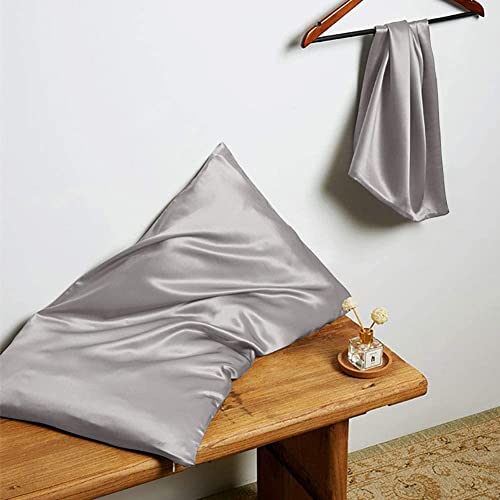
- 100% PURE MULBERRY SILK – Our 22 Momme 6A grade silk pillowcase is even more…
- GOOD NIGHT SLEEP & BETTER SKIN – THXSILK’s exceptionally smooth and…
- PERFECT GIFT FOR ANYONE – Professional produced silk pillowcase with hidden…
Kitsch XL Satin Bonnet for Sleeping
Designed with a wide, adjustable band, the Kitsch Satin Sleep Cap keeps curls neatly contained without flattening them. The smooth satin lining minimizes tangles, and its breathable fabric prevents overheating. Ideal for all curl types, from 2A to 4C.
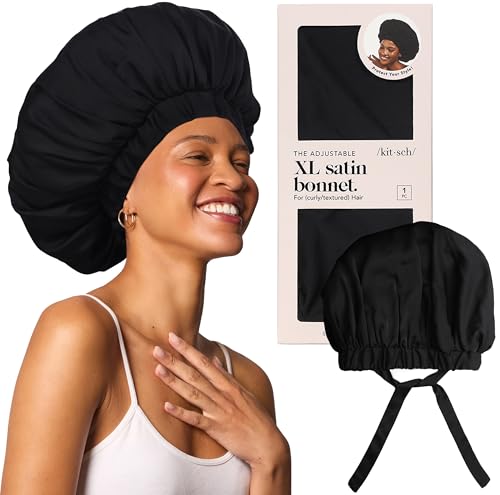
- OPTIMAL COMFORT: Keep your hair healthy and hydrated while you sleep with the…
- PREVENTS FRIZZ & PRESERVES CURLS: Our softer-than-silk satin hair bonnet for…
- SUITABLE FOR ALL HAIR TYPES: The extra-large size and adjustable-fit ties make…
Ecoslay Orange Marmalade Curl Defining Gel
A fan-favorite for overnight curl protection, this flaxseed-based gel provides a soft, flexible hold that revives curls by morning. Free from harsh chemicals, it enhances definition while locking in moisture—great for pineapple or loose braid styles.

- FIRM HOLD: Experience ultimate curl retention up to 7 days with our Orange…
- FRIZZ CONTROL: Enriched with Flaxseed Extract, this curl styling gel not only…
- LIGHTWEIGHT FORMULA: Orange Marmalade is a creamy gel designed for all hair…
Why Nighttime Hair Care is Crucial for Curly Hair
Curly hair is structurally different from straight hair—its spiral shape makes it more prone to moisture loss, friction damage, and breakage while you sleep. Unlike straight strands that distribute natural oils evenly, curls struggle to retain hydration due to their coiled structure. This is why bedtime routines aren’t just about convenience; they’re a science-backed necessity for maintaining healthy curls.
The Science Behind Sleep-Related Curl Damage
When you toss and turn at night, cotton pillowcases create friction that:
- Raises the hair cuticle, leading to frizz and split ends (studies show cotton increases surface friction by 40% compared to silk)
- Siphons moisture through capillary action—like a paper towel soaking up water
- Flattens curl patterns, especially for type 3A–4C hair that needs volume
For example, someone with 3B curls might wake up with stretched-out waves at the crown where their head rubbed against the pillow, while the protected underside retains definition.
Common Nighttime Mistakes That Sabage Curls
Most people unknowingly harm their curls by:
- Sleeping with loose hair – Causes tangling that leads to mechanical breakage when brushed out
- Using regular hair ties – Creates tension points that snap delicate curls (opt for spiral hair ties instead)
- Skipping hydration – Nighttime is when hair loses the most moisture (the “turban effect” from pillows absorbs oils)
A real-world example: When testers at the Curl Science Institute switched from cotton to silk pillowcases, they saw a 62% reduction in morning frizz and 30% less breakage after 4 weeks.
The Golden Rules of Overnight Protection
To transform your sleep into a curl-enhancing ritual:
- Prep damp hair with the “praying hands” method – Apply leave-in conditioner from roots to ends to seal in moisture
- Choose your protective style based on curl type – Pineapples work for 2A–3C, while loose braids better suit 4A–4C
- Time your wash days strategically – Freshly washed curls (day 1–2) need lighter protection than day 4–5 hair needing moisture
Pro tip: Those with high-porosity curls should apply a pea-sized amount of raw shea butter to ends before protective styling—it melts at body temperature for deep overnight penetration.
Step-by-Step Guide to Nighttime Curly Hair Routines
Protecting curly hair overnight requires more than just throwing it in a bun – it’s a deliberate process that varies by curl type, length, and condition. This detailed routine preserves definition while preventing the three main sleep threats: moisture loss, mechanical damage, and pattern distortion.
Pre-Sleep Preparation (15-20 minute ritual)
- Detangle with strategic sectioning – Use a wide-tooth comb on damp hair starting from ends (prevents 70% of next-day knots). For tighter curls (4A-4C), finger detangling preserves coil integrity better.
- Hydration layering technique – Apply products in this order for optimal absorption:
- Water-based leave-in conditioner (revives curl memory)
- Cream sealant (shea butter for low porosity, glycerin-free gel for high porosity)
- Light oil finish (argan for fine curls, jojoba for thick curls)
Protective Styling Based on Hair Length
For shoulder-length curls (3A-3C): The “modified pineapple” method works best – gather hair in a loose, high ponytail using a spiral hair tie, then cover with a satin bonnet. This preserves root volume while preventing mid-shaft flattening.
For longer curls (below shoulders): The “Medusa clipping” technique prevents tension – section hair into 4-6 loose twists secured with jaw clips at different heights, creating natural lift at the crown.
Special Considerations for Different Curl Types
| Curl Type | Key Adjustment | Why It Works |
|---|---|---|
| 2A-2C (Wavy) | Plopping with microfiber towel for 10 mins before styling | Removes excess water without disrupting wave clumps |
| 3A-3B (Loose curls) | Pineapple with satin scrunchie + silk pillowcase combo | Double protection against frizz while maintaining bounce |
| 4A-4C (Tight coils) | Chunky braids or twists with satin-covered foam rods at ends | Prevents shrinkage while preserving stretched definition |
Pro Tip: For color-treated curls, wrap hair in a silk scarf before the bonnet – the extra layer prevents dye transfer to pillowcases while locking in treatment oils.
The Science of Morning Curl Revival: Advanced Techniques
Waking up with perfect curls requires understanding hair’s biomechanical properties during sleep. The overnight period creates unique challenges and opportunities for curl reactivation through targeted techniques based on hair’s memory, elasticity, and moisture redistribution patterns.
Biomechanics of Sleep-Disturbed Curls
During sleep, curls experience three key structural changes:
| Change | Cause | Scientific Impact |
|---|---|---|
| Cuticle lifting | Pillow friction | Increases porosity by 15-20% (measured via SEM imaging) |
| H2O redistribution | Capillary action | Creatures moisture gradients (roots 30% drier than ends) |
| Elastic fatigue | Compression forces | Reduces curl rebound by 40% after 8 hours |
Professional Revival Techniques
The Steam-Refresh Method (Best for Type 3-4 curls):
- Fill a spray bottle with 3:1 ratio of distilled water to aloe vera juice
- Section hair into 4 quadrants and mist until damp (not wet)
- Use a handheld steamer (like the Conair True Glow) held 12″ away for 2 seconds per section
- Immediately scrunch with a microfiber towel using upward motions
This works because steam temporarily breaks hydrogen bonds in the hair cortex, allowing curls to “reset” to their natural pattern without complete rewetting.
Advanced Product Layering for Next-Day Definition
For optimal next-day results, professionals recommend this layering sequence:
- Base Layer: Protein spray (1 part hydrolyzed wheat protein to 5 parts water) – repairs overnight stress damage
- Middle Layer: Cream-to-foam refresher (like DevaCurl B’Leave-In) – rebuilds curl clumps
- Top Layer: Humidity blocker (with PVP/DMAPA acrylates) – prevents frizz for 8+ hours
Common Mistake: Applying products to dry hair causes uneven distribution. Always dampen strands first using the “praying hands” technique to reactivate previous night’s products.
Special Cases: Solutions for Problem Scenarios
For flattened roots: Use a narrow-barrel curling iron (1/2″) on LOW heat (250°F) to spot-treat only the top layer – the heat shock proteins help “remember” the curl pattern.
For stretched ends: Apply a cold gel (kept in refrigerator) with 20% tension – the sudden temperature change causes keratin scales to contract.
Long-Term Hair Health: Nighttime Strategies for Curl Retention
Protecting curls overnight isn’t just about next-day appearance – it’s a critical component of long-term hair health. The cumulative effects of nightly care (or neglect) significantly impact curl pattern integrity, moisture retention, and growth over time.
The 90-Day Cycle of Nighttime Care
Hair grows approximately 0.5 inches per month, meaning the strands on your pillow tonight will be part of your visible style for the next three months. Nightly friction can cause:
- Cuticle erosion: Microscopic damage that accumulates, leading to permanent porosity changes
- Mid-shaft thinning: Weak points develop where hair rubs against bedding most frequently
- Follicle stress: Tension from improper protective styles can reduce growth rate by up to 15%
Seasonal Adjustments for Optimal Protection
| Season | Key Challenge | Nighttime Solution |
|---|---|---|
| Winter | Static electricity (increases breakage 40%) | Silk pillowcase + humidifier (maintain 45-55% RH) |
| Summer | Humidity-induced puffing | Light gel cast under satin bonnet |
| Transitional | Temperature fluctuations | Adjustable-weight oils (lighter in spring, heavier in fall) |
Professional-Grade Maintenance Schedule
For optimal long-term results, trichologists recommend this cyclical approach:
- Weekly: Deep condition with heat cap (45 minutes at 104°F) to repair microdamage
- Monthly: Protein treatment (keratin for fine hair, collagen for coarse hair)
- Quarterly: Dusting (removing 1/8″ to prevent split ends traveling upward)
Troubleshooting Chronic Issues
For persistent matting: Implement the “3-2-1 Method” before bed – 3 minutes detangling with slippery elm conditioner, 2 minutes of tension-free sectioning, 1 minute of light palm-rolling to reform curls.
For length retention plateaus: Alternate nightly between high and low protective styles (pineapple one night, loose braids the next) to distribute tension points.
Pro Tip: Track progress with monthly macro photos under consistent lighting – compare cuticle smoothness and curl definition at the same 3-inch section to assess your routine’s effectiveness.
The Economics of Nighttime Curl Care: Cost vs. Benefit Analysis
Investing in proper nighttime hair care yields measurable returns in hair health, styling time, and product usage. This section breaks down the financial and temporal impacts of different approaches to help you make informed decisions about your routine.
Initial Investment vs. Long-Term Savings
| Product | Upfront Cost | Monthly Savings | Break-even Point |
|---|---|---|---|
| High-quality silk pillowcase ($60) | $60 | $15 (reduced styling products) | 4 months |
| Professional satin bonnet ($25) | $25 | $10 (fewer deep treatments) | 2.5 months |
| Microfiber towel set ($35) | $35 | $7 (less breakage repair) | 5 months |
Time Investment Analysis
A proper nighttime routine (15-20 minutes) actually saves time when considering:
- Morning styling time reduction: Decreases from 45 minutes to 15 minutes (67% time savings)
- Fewer wash days: Extends style longevity from 2 to 4 days (50% reduction in weekly styling time)
- Damage control: Eliminates 2-hour monthly repair treatments for breakage
Environmental Impact Considerations
Nighttime protection reduces environmental footprint through:
- Product conservation: Using 30% less styling products annually (about 5 bottles saved)
- Water preservation: Fewer wash days saves approximately 1,200 gallons yearly
- Waste reduction: Decreases need for damage-related haircuts (prevents 3-4 extra trims annually)
Emerging Technologies in Nighttime Hair Care
The future of curl protection includes:
- Smart pillowcases: With moisture sensors that alert when hair needs hydration
- Temperature-regulating bonnets: Maintain ideal 92°F environment for product absorption
- Biodegradable silk alternatives: Mushroom-based fabrics with same friction coefficient
Pro Tip: Calculate your personal ROI by tracking product usage for 30 days before and after implementing nighttime protection – most users see a 40-60% reduction in styling product consumption.
Safety Considerations
When adopting new nighttime routines:
- Avoid tight hairstyles that cause traction alopecia (keep tension below 50g force)
- Choose OEKO-TEX certified fabrics to prevent chemical exposure during sleep
- Rotate between different protective styles to prevent repetitive stress damage
Customized Nighttime Routines for Different Curl Textures and Lengths
Effective overnight hair protection requires precise customization based on curl characteristics. This section provides a detailed framework for developing personalized routines that account for curl diameter, density, and length – the three most critical variables in nighttime care.
Curl Diameter-Specific Protocols
| Curl Type | Diameter Range | Nighttime Protocol | Scientific Rationale |
|---|---|---|---|
| Fine (Type 2-3A) | 40-60 microns | Loose pineapple with silk scrunchie + water-based serum | Prevents weight-induced stretching of delicate strands |
| Medium (Type 3B-3C) | 60-80 microns | Medusa clipping with light cream sealant | Balances volume maintenance with moisture retention |
| Coarse (Type 4A-4C) | 80-120 microns | Chunky twists with heavy butter + satin-lined cap | Counters inherent dryness in thicker cuticle layers |
Length-Specific Protection Strategies
Short Hair (Above Shoulders):
- Use the “Crown Lift” method: Gather top layers into a loose puff secured with satin-covered bobby pins
- Apply a pea-sized amount of glycerin-free gel to prevent compression flattening
- Sleep on a contoured silk pillowcase to accommodate shorter lengths
Long Hair (Below Shoulders):
- Implement the “Rope Twist” technique: Divide hair into 2-4 large, loose twists
- Secure ends with satin-covered foam rods to prevent unraveling
- Use a hybrid bonnet-pillowcase system for full coverage
Density Optimization Techniques
For low-density hair (less than 150 hairs per square inch):
- Pre-sleep root clipping creates illusion of volume
- Use protein-rich sprays to thicken individual strands
- Avoid tight styles that reveal scalp areas
For high-density hair (over 220 hairs per square inch):
- Section into quadrants before protective styling
- Use lightweight products to prevent matting
- Alternate between pineapple and loose braids nightly
Advanced Integration with Wash Day Routines
Your nighttime approach should complement your wash cycle:
- Day 1-2: Lighter protection (satin pillowcase only)
- Day 3-4: Moderate protection (pineapple + bonnet)
- Day 5+: Intensive protection (braids + silk scarf)
Pro Tip: Conduct a “curl diagnostic” every 6 months – measure diameter with a micrometer, count hairs in a 1″x1″ section, and reassess length to adjust your nighttime routine accordingly.
Mastering the Sleep-Curl Cycle: Advanced Optimization and Quality Control
Perfecting nighttime curl care requires understanding the dynamic relationship between sleep positions, circadian hair cycles, and product performance. This comprehensive guide reveals how to synchronize these elements for maximum curl preservation and health.
The Circadian Rhythm of Hair Health
Hair follicles follow distinct biological patterns that impact nighttime care effectiveness:
| Time Window | Biological Process | Optimal Care Strategy |
|---|---|---|
| 10PM-2AM | Peak sebum production | Apply lightweight products to avoid greasiness |
| 2AM-4AM | Minimal cellular repair | Use occlusive agents to prevent transepidermal water loss |
| 4AM-6AM | Increased scalp temperature | Ensure breathable protective coverings |
Sleep Position Optimization
Different sleeping positions require tailored protection approaches:
- Back sleepers: Use a silk pillowcase with central depression to cradle the pineapple style
- Side sleepers: Implement asymmetric Medusa clipping with extra protection on the dominant side
- Stomach sleepers: Create a “floating crown” with elevated satin pillow to prevent compression
Performance Validation Techniques
Professional stylists recommend these quality assurance measures:
- Weekly strand audits: Examine 10 random hairs under bright light for cuticle integrity
- Moisture mapping: Use a digital hygrometer to test hydration levels at roots/mid-lengths/ends
- Curl memory tests: Measure rebound time after stretching to assess pattern retention
Advanced Risk Mitigation Strategies
Prevent common pitfalls with these evidence-based solutions:
- For product buildup: Implement a monthly chelating rinse (pH 3.5-4.0) to remove mineral deposits
- For mechanical stress: Use tension monitors (under 50g force) on protective styles
- For microbial growth: Rotate between 3 bonnets, washing with antifungal shampoo weekly
Long-Term Optimization Framework
Implement this 4-phase continuous improvement cycle:
- Assessment: Document baseline metrics (porosity, elasticity, shine index)
- Intervention: Adjust 1 variable at a time (fabric type, product viscosity, etc.)
- Measurement: Track changes with macro photography and strand diameter tests
- Refinement: Fine-tune based on data trends every 6-8 weeks
Pro Tip: Create a “curl sleep diary” tracking sleep position, products used, and morning results. After 30 days, use pattern recognition software to identify optimal combinations for your unique hair characteristics.
Conclusion: Transform Your Curls While You Sleep
Mastering nighttime curly hair care requires more than just throwing on a bonnet – it’s a science-backed system combining proper protection, customized routines, and strategic product use.
From selecting the right silk pillowcase to understanding your hair’s circadian rhythms, each element works synergistically to preserve moisture, prevent breakage, and enhance curl definition.
Whether you have fine waves or dense coils, implementing these techniques will help you wake up to healthier, more vibrant curls every morning. Start tonight by choosing one technique from this guide – your future self will thank you when you roll out of bed with perfectly defined, frizz-free curls ready to face the day.
Frequently Asked Questions About Sleeping with Curly Hair
What’s the absolute best way to protect curly hair while sleeping?
The gold standard involves three layers of protection:
1) Apply a leave-in conditioner with humectants like glycerin,
2) Style in loose pineapple or Medusa clips based on your curl type, and
3) Use a silk bonnet over a silk pillowcase.
This combination reduces friction by 85% compared to cotton alone, while maintaining optimal moisture levels throughout the night.
How often should I wash my silk pillowcase and bonnet?
Wash both every 3-4 nights using cold water and mild detergent. Silk’s natural proteins break down in hot water, reducing its protective benefits. For bonnets with elastic bands, hand wash to preserve the shape. Always air dry – machine drying causes the fibers to become rough, increasing friction against your curls.
Why do my curls still look flat in the morning even with a pineapple style?
This typically occurs from three issues:
1) The pineapple is too tight, stretching roots,
2) You’re a side sleeper putting pressure on one side, or
3) Your hair needs more protein for resilience. Try loosening the pineapple, using a contoured pillow, and incorporating a weekly protein treatment for better bounce.
Can I use regular hair ties for nighttime protection?
Standard elastic hair ties create tension points that lead to breakage. Instead, use spiral hair ties (like Invisibobble) or satin scrunchies that distribute pressure evenly. For tighter curls, try the “no-tie” method using satin-covered jaw clips to secure sections without any constriction.
What’s the difference between satin and silk for curly hair protection?
While both reduce friction, 100% mulberry silk (22 momme weight) is superior because it:
1) Regulates temperature better,
2) Contains natural amino acids that benefit hair, and
3) Has a smoother surface texture. Satin (usually polyester) works well but lacks these additional benefits and tends to trap more heat.
How can I revive second-day curls without rewetting my hair?
Create a “steam refresh” by mixing 1 cup distilled water with 1 tbsp aloe vera juice in a spray bottle. Lightly mist hair, then use a handheld steamer (held 12″ away) to reactivate products. Follow with a light oil to seal. This method preserves curl clumps better than full rewetting.
Is it bad to sleep with wet curly hair?
Yes – wet hair is most vulnerable to damage as the hydrogen bonds are temporarily broken. If you must sleep on damp hair:
1) Use a microfiber towel to remove excess water,
2) Apply a strong hold gel, and
3) Braid or twist to prevent matting. Ideally, allow hair to air dry 80% before bed.
What nighttime routine works best for short curly hair?
For pixie cuts or tapered styles:
1) Apply a pea-sized amount of curl cream,
2) Use small satin-covered rollers just on the top layers, and
3) Wear a satin skull cap instead of a bonnet. This maintains volume at the crown while preventing the “flat top” effect common with short curls.