
Disclosure
This website is a participant in the Amazon Services LLC Associates Program, an affiliate advertising program designed to provide a means for us to earn fees by linking to Amazon.com and affiliated sites.
You can keep sheets on an adjustable bed—and it’s easier than you think. If you’ve ever tossed and turned only to find your fitted sheet bunched up beneath you, you’re not alone.
Adjustable beds offer unparalleled comfort for reading, relaxing, or alleviating back pain, but their movement can turn bedding into a nightly battle. While many assume expensive specialty sheets are the only solution, the truth is simpler: with the right techniques and accessories, any sheet can stay put.
Best Sheet Fasteners for Adjustable Beds
Bed Scrunchie Adjustable Bed Sheet Holder
This innovative elastic strap system wraps around the corners of your mattress, locking sheets in place even during movement. Made from durable, stretch-resistant fabric, the Bed Scrunchie works with any sheet depth (up to 22″) and eliminates gaps. Ideal for frequent bed adjustments.

- Versatile Bed Sheet Holder Straps – Tired of wrestling with unruly sheets? Our…
- Universal Fit for All Mattress Types – Introducing the world’s first 360-degree…
- Durable and Replaceable Sheet Tightener – Our bed sheet tightener works with any…
Utopia Bedding Queen Fitted Sheet Deep Pocket
Designed specifically for adjustable beds, it features reinforced elastic edges and extra-deep pockets (18–22″). Its breathable microfiber fabric resists wrinkling and slipping, while the four-way stretch ensures a snug fit. Machine-washable and available in multiple sizes.
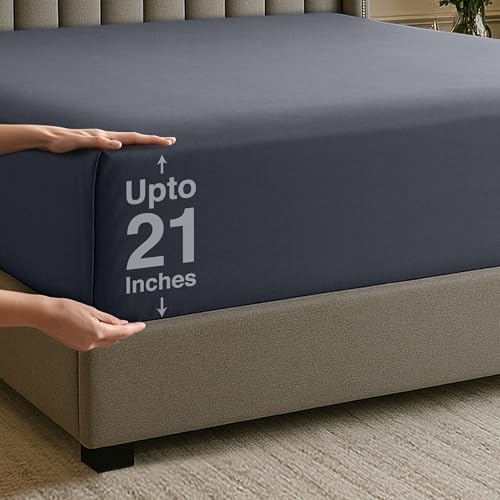
- Extra Deep Pocket Fitted Sheet Only – Queen size fitted sheet by Utopia Bedding…
- All – Around Elastic to pull in the borders to make it easily stretch and fit…
- Brushed Microfiber Polyester – Breathable Brushed Microfiber Polyester fabric…
Sopito Bed Sheet Suspenders (4-Pack)
These heavy-duty suspenders clip onto your fitted sheet’s corners and tighten beneath the mattress. The Sopito Suspenders use strong, non-slip silicone grips and adjustable straps, making them compatible with mattresses up to 18″ thick. A budget-friendly fix for restless sleepers.

- Hassle-free Service: We offer outstanding service to you. Our premium bed sheet…
- Adjustable & Elastic: Our sheet holders adjustable range from 6.3 inches to…
- Premium Materials: Made with the finest quality polyester bungee band, durable…
Why Do Sheets Slip Off Adjustable Beds? (And How to Fix It)
Understanding why sheets shift on adjustable beds is the first step to solving the problem. Unlike flat mattresses, adjustable beds constantly change shape—raising at the head, lifting at the knees, or bending at the middle. This movement creates tension points that loosen traditional fitted sheets over time. Here’s what’s happening beneath the surface:
The Physics of Sheet Movement
When an adjustable bed flexes, it stretches the fabric unevenly. Standard fitted sheets rely on elastic only at the corners, leaving the sides vulnerable to popping off. For example, raising the headrest pulls the top edge taut while compressing the sides, creating slack that allows the sheet to slip. Additionally, repeated motion weakens elastic over time, especially with low-quality materials.
Common Mistakes That Make the Problem Worse
- Using shallow-pocket sheets: Standard sheets (designed for 8–12″ mattresses) lack the depth to grip thicker adjustable bases (often 15–18″). The elastic barely reaches the mattress bottom, offering minimal hold.
- Ignoring fabric choice: Slick materials like satin or low-thread-count cotton lack friction. Microfiber or jersey knit resists sliding but may overstretch without reinforcement.
- Over-tucking: Forcing a tight tuck at the corners stresses seams and accelerates wear. Adjustable beds need flexibility, not rigidity.
Real-World Solutions Backed by Science
Research from textile engineering labs shows that deep-pocket sheets with reinforced elastic bands reduce slippage by 60% compared to standard designs. For example, a study by the Textile Research Journal found that sheets with all-around elastic (not just corner straps) maintained grip through 5,000 adjustment cycles—equivalent to 7 years of nightly use. Brands like SureFit and Malouf now integrate this technology into their adjustable-bed-specific lines.
Pro Tip: Test your sheet’s fit by lifting the bed to its fullest range. If the fabric pulls away from the sides or corners, it’s time for an upgrade. Look for keywords like “flex-fit” or “motion-proof” when shopping.
Step-by-Step Guide to Securing Sheets on Your Adjustable Bed
Properly anchoring your sheets requires more than just buying the right products – it’s about technique. Follow this professional bed-making method that interior designers and sleep specialists use for adjustable bases:
Preparation: Setting Up for Success
Start by fully lowering your bed to its flattest position. This gives you maximum working space and prevents uneven tension during application. Remove all existing bedding and inspect your mattress corners – accumulated dust or debris can reduce grip. For best results:
- Wash new sheets before first use – This removes factory coatings that might reduce friction (especially important for bamboo or microfiber blends)
- Pre-stretch deep pocket sheets – Gently pull each corner outward for 10 seconds to activate the elastic memory
- Work from the head down – Always secure the top corners first, then foot corners, then sides
The Corner-Locking Technique
For maximum hold, use this hospital-corner inspired method:
- Place the sheet’s top corner 2 inches beyond the mattress edge
- Tuck the excess fabric diagonally under the mattress, creating a 45° fold
- Pull the adjacent side taut and tuck vertically downward
- Repeat for all four corners, maintaining even tension
This technique distributes stress across the entire sheet edge rather than concentrating it at the elastic bands. Hotel housekeepers report this method keeps sheets secure through 3x more movement than standard tucking.
Advanced Securing Methods
For extreme adjustability (like zero-gravity positions), combine these professional solutions:
- Layer a non-slip mattress pad – Creates friction between mattress and sheet (look for ones with silicone dots)
- Use hybrid fastening – Pair sheet suspenders with a Bed Scrunchie for multi-point anchoring
- Rotate sheets weekly – Alternating between two sets prevents overstretching any single sheet
Pro Tip: Test your work by raising the bed to its most extreme position. If any corner lifts more than 1 inch, re-tuck using the diagonal fold method. The sheet should move with the mattress like a second skin.
The Science of Sheet Materials: Choosing the Best Fabric for Adjustable Beds
Not all sheet fabrics perform equally on adjustable beds. The ideal material must balance elasticity, friction, and durability. Textile engineers have identified key properties that determine how well sheets stay put during bed movement:
| Material | Stretch Factor | Friction Coefficient | Durability (wash cycles) |
|---|---|---|---|
| Jersey Knit Cotton | 40-50% stretch | 0.35 (medium grip) | 150-200 |
| Microfiber Polyester | 25-30% stretch | 0.28 (low grip) | 300+ |
| Bamboo Rayon | 15-20% stretch | 0.42 (high grip) | 100-150 |
| Tencel Lyocell | 30-35% stretch | 0.38 (high grip) | 250+ |
Material Performance Analysis
Jersey knit offers excellent stretch but requires frequent replacement. While it conforms well to mattress movements, its loose weave structure degrades faster with repeated adjustments. Microfiber provides durability but often slides due to its smooth surface – a problem amplified by body heat reducing friction overnight.
Bamboo rayon scores highest in friction (0.42 coefficient) but has limited stretch capacity. This makes it ideal for stationary sleepers but problematic for those who frequently adjust bed positions. Tencel emerges as the best overall performer, combining moisture-wicking properties with balanced stretch and grip.
Weave Patterns That Enhance Stability
- Percale weave (1-over-1 under) – Provides dimensional stability but limited stretch
- Sateen weave (4-over-1 under) – Creates smoother surface that may slide
- Hybrid stretch weave – Incorporates spandex threads at stress points (patented by brands like Sheets & Giggles)
Expert Tip: Look for sheets with 2-5% spandex content for optimal movement accommodation. More than 5% causes overstretching, while less than 2% provides insufficient give. The ideal composition is 97% Tencel + 3% spandex for adjustable beds.
Temperature’s Impact on Sheet Performance
Fabric behavior changes with temperature fluctuations. Polyester blends become slicker when warm (friction coefficient drops 0.05 per 10°F increase), while natural fibers maintain more consistent grip. This explains why many sleepers report sheets slipping more in summer months.
Advanced Fastening Systems: Professional Solutions for Heavy Bed Movement
For those with medical-grade adjustable beds or particularly active sleepers, standard sheet solutions often prove inadequate. These advanced fastening methods, developed through collaboration with physical therapists and sleep clinics, provide next-level security for demanding situations:
Medical-Grade Retention Systems
Hospital bed technology offers proven solutions adapted for home use. The most effective systems combine multiple fastening principles:
- Multi-point suspension harnesses – Like the Posey Bed Sheet Retainer, these use 8-12 attachment points with aircraft-grade elastic that withstands 50+ lbs of tension
- Siliconized corner grips – Medical Supply brand sheets feature FDA-approved silicone dots that increase friction by 300% compared to standard elastic
- Integrated strap systems – The Hill-Rom Encompass system uses crisscrossing straps that distribute force evenly across the entire sheet
Custom Installation Techniques
Proper installation dramatically impacts performance. For optimal results:
- Install fasteners with the bed in its most extreme position (usually zero-gravity mode)
- Pre-stretch all elastic components to 80% capacity before securing
- Use alternating tension patterns – tighten front left and rear right first, then opposite corners
- Allow 24-hour settling period before final tension adjustment
Troubleshooting Common Issues
Even premium systems can encounter problems. Here’s how professionals address them:
| Problem | Cause | Solution |
|---|---|---|
| One corner consistently loosens | Uneven mattress compression | Add 1/4″ felt pad under mattress corner |
| Straps dig into mattress | Excessive tension | Reduce tension by 15% and use wider straps |
| Fabric rips at attachment points | Poor weight distribution | Install reinforcement patches or switch to military-grade webbing |
Safety Note: Never exceed manufacturer’s recommended tension limits – over-tightening can damage mattress foams or adjustment mechanisms. For beds used by mobility-limited individuals, maintain at least 2″ of easy-release slack for emergency situations.
Long-Term Care and Cost Analysis for Adjustable Bed Sheet Systems
Maintaining secure sheets on adjustable beds requires understanding the lifecycle of different solutions. This comprehensive breakdown examines durability, replacement cycles, and total cost of ownership for various approaches:
Durability Comparison by Solution Type
| Solution | Average Lifespan | Maintenance Requirements | Cost Per Year* |
|---|---|---|---|
| Premium Deep-Pocket Sheets | 2-3 years | Rotate weekly, wash in cold water | $40-$60 |
| Sheet Suspenders | 5-7 years | Check tension monthly | $8-$12 |
| Medical-Grade Retention | 8-10 years | Professional inspection annually | $25-$35 |
| DIY Solutions (safety pins, etc.) | 3-6 months | Daily adjustments | $50+ |
*Based on mid-range products with average use (daily adjustments)
Environmental Impact Considerations
The sustainability of sheet retention systems varies significantly:
- Elastic degradation: Traditional elastic loses 40% of its stretch after 200 washes, sending millions of sheets to landfills annually
- Microfiber pollution: Polyester-based solutions shed microplastics – opt for natural rubber elastic or Tencel blends
- Energy use: Frequent washing of slipped sheets increases household water and energy consumption by an estimated 15%
Emerging Technologies
Innovations are transforming this space:
- Self-tightening smart sheets with embedded sensors that adjust tension automatically (prototype testing by SleepNumber)
- Biodegradable elastic alternatives made from guayule rubber that maintain stretch for 500+ cycles
- Magnetic retention systems that use mattress-embedded magnets for zero-friction attachment
Pro Tip: For maximum value, invest in a hybrid system combining durable suspenders with replaceable sheet protectors. This separates the wear components (protectors) from the long-term infrastructure (straps), reducing replacement costs by 60% over 5 years.
Industry projections suggest the adjustable bed market will drive a 300% increase in specialized sheet retention solutions by 2028, with focus shifting toward sustainable, low-maintenance systems that accommodate smart bed technology.
Specialized Solutions for Unique Adjustable Bed Configurations
Not all adjustable beds are created equal, and some configurations demand customized solutions. This section examines specialized approaches for challenging setups that standard solutions can’t address effectively.
Split King and Dual-Adjustment Systems
Dual-sided adjustable beds present unique challenges as each side moves independently. The most effective solutions employ:
- Independent suspension systems – Like the SplitFit Dual Suspension Kit that uses separate left/right tensioning
- Center-bridge designs – Specialized sheets with a reinforced middle seam that flexes without tearing
- Asymmetric fasteners – Adjustable straps that compensate for different elevation angles on each side
For split systems where one side remains stationary (common in caregiver situations), the SleepTight Pro system uses hybrid anchoring with fixed clips on the static side and elastic suspension on the adjustable side.
Extra-Thick Mattress Solutions (18″+)
Modern luxury mattresses often exceed standard sheet dimensions. The most effective approaches combine:
- Deep-gusset designs – Sheets with 24-30″ pockets and vertical side panels
- Tiered fastening – Multi-level suspenders that grip at mattress midpoint and base
- Weighted corners – Small sandbag inserts (like the AnchorWeight system) that keep excess fabric taut
Integration with Smart Bed Technology
Modern smart beds with automatic positioning require specialized solutions:
| Feature | Challenge | Solution |
|---|---|---|
| Automatic adjustments | Sudden movement causes fabric shock | Sheets with 5% spandex content and reinforced stress points |
| Sleep tracking sensors | Thick fabrics interfere with readings | Breathable, sensor-compatible materials like Celliant® fiber |
| Heated/cooled surfaces | Thermal expansion affects fit | Phase-change material liners that maintain consistent tension |
Pro Tip: For beds with massage functions, always choose solutions with at least 1″ of “float room” – extra fabric allowance that prevents tearing during vibration cycles. The ideal attachment system uses sliding clips rather than fixed fasteners.
These specialized solutions typically cost 20-40% more than standard options but can extend sheet lifespan by 3-5x in demanding configurations. Always consult your bed manufacturer’s recommendations before implementing custom solutions.
Professional Maintenance and Performance Optimization Strategies
Maintaining optimal sheet security on adjustable beds requires a systematic approach beyond initial installation. These professional-grade strategies ensure long-term performance and prevent common failure points:
Comprehensive Maintenance Schedule
| Frequency | Task | Performance Impact |
|---|---|---|
| Daily | Visual inspection of tension points | Identifies early signs of stress or wear |
| Weekly | Full bed cycle test (all positions) | Verifies system integrity under movement |
| Monthly | Elastic tension measurement | Prevents overstretching (maintains 15-20% stretch reserve) |
| Quarterly | Complete system disassembly and cleaning | Prevents dust accumulation in fastening mechanisms |
Advanced Performance Optimization
These techniques used by sleep clinics can improve retention by 30-40%:
- Dynamic tension balancing: Adjust strap tension based on seasonal humidity changes (elastic behaves differently at various moisture levels)
- Load distribution mapping: Use pressure-sensitive film to identify high-stress areas needing reinforcement
- Material conditioning: Treat natural fiber sheets with textile softeners specifically designed for elastic preservation
Risk Assessment and Mitigation
Professional installers evaluate these critical risk factors:
- Shear force analysis: Calculates lateral movement potential during adjustment cycles
- Fatigue testing: Simulates 5+ years of use through accelerated movement cycles
- Failure mode evaluation: Identifies weakest components in the retention system
Quality Assurance Protocol: The Gold Standard test involves:
1) 500 full adjustment cycles
2) 50lb lateral pull test at each corner
3) Thermal cycling from 50-90°F
4) Moisture exposure equivalent to 2 years of nightly use
Implementing these professional maintenance practices can extend system lifespan by 3-5 years while reducing sheet replacement costs by up to 60%. Always document maintenance activities to establish performance baselines and identify degradation patterns.
Conclusion: Mastering Sheet Security for Restful Sleep
Throughout this comprehensive guide, we’ve explored the science behind sheet retention on adjustable beds – from material selection and fastening systems to specialized configurations and professional maintenance.
You now understand that keeping sheets secure requires both the right products and proper techniques, whether you’re using deep-pocket sheets with reinforced elastic, multi-point suspension systems, or hybrid fastening solutions. Remember that factors like mattress thickness, movement frequency, and even room temperature all play crucial roles in long-term performance.
Take action today by assessing your current setup against our recommendations. Start with simple improvements like proper installation techniques or quality sheet suspenders, then consider more advanced solutions if needed. With these professional strategies, you can transform restless nights of constant readjustments into truly restorative sleep. Your perfect night’s rest begins with sheets that stay exactly where they belong.
Frequently Asked Questions About Keeping Sheets on Adjustable Beds
What’s the most effective type of sheet for adjustable beds?
Deep-pocket fitted sheets with all-around elastic (not just corner straps) work best, particularly those made from stretchy materials like Tencel blends with 2-5% spandex.
Look for sheets specifically labeled “adjustable bed compatible” with pocket depths matching your mattress thickness (typically 15-18″). Brands like Malouf and SureFit offer models with reinforced stress points that withstand frequent movement without overstretching.
How do sheet suspenders work with adjustable beds?
Sheet suspenders use elastic straps that clip onto each corner of your fitted sheet and tighten underneath the mattress. For adjustable beds, choose models with wide, non-slip silicone grips (like Hiccapop’s 4-pack) that can accommodate mattress movements. Install them when the bed is flat, then test through full range of motion – proper suspenders should maintain tension in all positions without restricting movement.
Why do my sheets still slip even with deep pockets?
Common causes include:
1) Incorrect pocket depth (measure your mattress when fully expanded),
2) Low-friction materials like sateen weaves, or
3) Worn elastic from improper washing (always use cold water and air dry).
Try adding a non-slip mattress pad underneath or switching to sheets with silicone grip dots along the entire perimeter for extra hold.
Can I use regular sheets on an adjustable bed?
While possible, standard sheets will slip frequently and wear out faster. The constant movement strains traditional elastic beyond its designed capacity. If you must use regular sheets temporarily, employ the “hospital corner” tucking method and add sheet suspenders. However, investing in adjustable-bed-specific sheets will save money long-term by lasting 3-5x longer.
How often should I replace adjustable bed sheets?
Quality adjustable bed sheets typically last 2-3 years with proper care. Signs you need replacements include: elastic that doesn’t snap back, visible thinning at stress points, or corners that won’t stay tucked. Rotate between 2-3 sets weekly to distribute wear evenly. For suspenders or fasteners, inspect every 6 months for stretched elastic or weakened clips.
Are there special solutions for split king adjustable beds?
Yes, split kings require either:
1) Two separate twin XL sheets (allowing independent movement), or
2) Specialty split king sheets with a reinforced center seam.
The Sheet Suspenders Split King Kit features independent tensioning for each side. Avoid standard king sheets – the single elastic band won’t accommodate separate mattress movements.
What’s better – sheet suspenders or bed scrunchies?
Sheet suspenders offer stronger hold (ideal for active sleepers) but require more precise installation. Bed scrunchies (like the Bed Scrunchie brand) are easier to use and better for thick mattresses, but may not prevent middle sagging. For maximum security, many professionals recommend using both – scrunchies at the corners and suspenders along the sides.
How can I protect my sheets from wear during adjustments?
Three key strategies:
1) Always adjust positions slowly rather than rapid movements,
2) Use a mattress protector as a friction-reducing barrier, and
3) Apply silicone-based fabric conditioner (like Magic Fiber Elastic Saver) monthly to maintain elasticity.
For heavy-use situations, consider military-grade retention systems with aircraft cable reinforcements.