
Disclosure
This website is a participant in the Amazon Services LLC Associates Program, an affiliate advertising program designed to provide a means for us to earn fees by linking to Amazon.com and affiliated sites.
Want to add privacy, style, and a touch of magic to your bunk beds? Hanging curtains is the perfect solution—but doing it right requires more than just draping fabric. Many assume any curtain will work, but the wrong approach can lead to sagging, poor light control, or even safety hazards. Whether you’re designing a kids’ room, a dorm space, or a cozy guest nook, the right curtains can turn bunk beds into a personalized sanctuary.
Bunk bed curtains aren’t just decorative; they block light, reduce noise, and create intimate spaces in shared rooms. Yet, most guides skip critical details—like choosing the right hardware or measuring for a perfect fit.
Best Bunk Bed Curtains for Privacy and Style
Teanea Heavy‑Duty Blackout Bunk Bed Curtains (Bottom Bunk, 2‑Panel Set)
Thick 100 % polyester blackout fabric offering ~95 % light blockage. Reversible gloss or matte side, includes hooks and rope for easy installation. Ideal for night sleepers, shift workers, or anyone wanting near-total privacy.
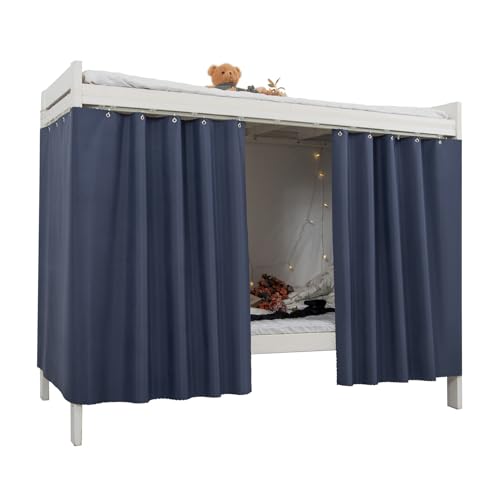
- 3-Layer Thick Material: Front is textile layer, middle is blackout wire, back is…
- Excellent Shading Effect: The fabric can black out 100% light. Perfect for those…
- For Twin Bunk: The curtain is 2m/ 79in side to side, 1.2m/ 47.2in top to bottom…
MioCloth Light‑Proof Bunk Bed Curtains with Stars Print
Printed stars on high-quality polyester with alloy eyelets create a dreamy, stylish look. Offers ~50–70 % light reduction and protects from insects—great for kids and teens looking for both decor and comfort.
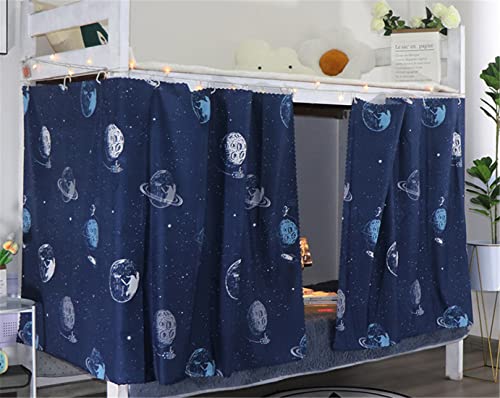
- MATERIAL: Made of high quality polyester fabric and alloy eyelet, breathable, no…
- LIGHT-PROOF: Thick cloth material, good shading effect, perfectly use to block…
- Create A Comfortable Private Environment: When drawing the curtain, it will…
Beautiful Gauze Bunk Bed Curtains with Lace
Features a charming flower-and-rabbit print over gauzy fabric with lace overlays. Soft yet moderately opaque (about 50 % light blocked), it balances aesthetic appeal with gentle privacy—perfect for girls’ rooms

- Material: Inner layer is polyester cloth with cute printing, outer layer is…
- Package includes: 2 * Bed Curtain panel + 2 * 8 Hanging Rings + 2 * 2.5m Rope…
- Beautiful Privacy Curtain: Super cute and beautiful curtains, looks much more…
Choosing the Right Curtain Style for Bunk Beds
Selecting the perfect bunk bed curtains involves more than just picking a pretty fabric. The right choice balances functionality, safety, and aesthetics while considering the unique challenges of bunk beds. Unlike standard windows, bunk beds require curtains that provide privacy without creating hazards or looking out of place in the room’s design.
Fabric Weight and Light Control
Lightweight fabrics like cotton or linen work well for decorative purposes but offer minimal light blocking. For better sleep quality, blackout curtains (like the Pottery Barn Teen Camper panels) block 99% of light—ideal for kids’ rooms or shift workers. Medium-weight fabrics strike a balance, offering some light filtration while remaining easy to open and close.
Hanging Mechanisms Matter
Bunk beds need secure hanging systems that won’t sag or detach. Common options include:
- Curtain wires/tracks (like IKEA LILL): Best for lightweight to medium fabrics, offering adjustability and a clean look
- Ceiling-mounted rods: Provide full coverage but require sturdy installation
- Bunk bed-specific track systems (like RoomDividersNow): Designed for heavy fabrics and frequent use
Avoid tension rods—they can slip on metal bunk frames and pose safety risks.
Safety Considerations
Bunk bed curtains must meet three safety criteria:
- Fire-resistant materials: Look for CPSC-certified fabrics, especially in children’s rooms
- Tangle-free operation: Ensure cords or ties are kept short (under 12″) to prevent strangulation hazards
- Secure hardware: All brackets should be screwed (not clipped) into bed frames or walls
For example, the RoomDividersNow system uses enclosed nylon wheels that eliminate dangling cords completely.
Style Coordination Tips
Your curtains should complement the room’s existing decor while serving their purpose. Consider:
- Color psychology: Cool tones (blue/green) promote relaxation, while bright colors energize play spaces
- Pattern scale: Small prints work better in cramped bunk spaces than large motifs
- Layering options:
- Sheer inner layer + blackout outer layer for versatility
- Valances or tie-backs to maintain an open feel during daytime
In dorm rooms, neutral curtains (like gray or navy) blend with institutional furniture while adding personality.
Remember: The best bunk bed curtains combine practical light control, safe installation, and cohesive design. Measure twice before purchasing—standard 84″ panels often fall short for tall bunk beds, requiring 96″ or custom lengths.
Step-by-Step Guide to Installing Bunk Bed Curtains
Proper installation transforms curtains from decorative accents into functional privacy solutions. Unlike standard window treatments, bunk beds present unique challenges with their elevated sleeping areas and limited mounting options. Follow this professional approach for secure, long-lasting results.
Preparation: Measurements and Tools
Begin by taking three critical measurements:
- Bed length: Measure from outer edge to outer edge of the bed frame (typically 75-80″ for twins)
- Height requirements: Add 12-18″ to mattress height for proper coverage (standard bunks need 36-42″ panels)
- Clearance space: Note any ceiling fans, lights, or wall obstructions
Gather these essential tools:
- Stud finder (for wall-mounted systems)
- Power drill with 1/8″ pilot bit
- Level (minimum 24″)
- Fabric scissors and seam ripper (for length adjustments)
Mounting Methods Compared
Choose your installation approach based on bed structure:
1. Bed Frame Mounting (Most Secure)
Drill directly into the metal/wood frame using self-tapping screws. The IKEA LILL system works perfectly here – its included brackets fit standard 1″ bed frame tubing. Place mounts every 24-30″ to prevent sagging.
2. Ceiling Mounting (Best for Full Enclosure)
Locate ceiling joists with a stud finder. For concrete ceilings, use toggle bolts rated for 50+ lbs. The RoomDividersNow track requires mounting every 16″ for optimal stability.
3. Wall Mounting (Space-Saving Alternative)
Install a curtain rod bracket 6-8″ above the top bunk. Use drywall anchors if not hitting studs. This method works well with tension rods under 48″ wide.
Professional Hanging Techniques
- Pre-treat curtains: Wash and iron panels before hanging to prevent post-installation shrinkage
- Even distribution: Space curtain hooks every 4-6″ for smooth operation
- Test movement: Open/close curtains 10-15 times to check for binding points
- Final adjustments: Use binder clips to temporarily test different lengths before hemming
Pro Tip: For metal bunk beds, apply clear nail polish to drilled holes to prevent rust. In dorm rooms, use removable 3M Command hooks for temporary installations (weight limit 7.5lbs per hook).
Advanced Customization and Maintenance Solutions
Transforming basic bunk bed curtains into personalized, functional spaces requires expert techniques that address both form and function. These professional-grade solutions solve common challenges while elevating your curtain setup beyond ordinary installations.
Engineering Light Control Systems
For optimal light management, consider these layered approaches:
| Layer Type | Material | Light Reduction | Best Use Case |
|---|---|---|---|
| Primary Blackout | Triple-weave polyester with acrylic backing | 99-100% | Nighttime sleeping areas |
| Secondary Filter | Room-darkening cotton sateen | 85-90% | Daytime naps |
| Decorative Sheer | Voile or linen blend | 40-50% | Privacy with natural light |
Pro Tip: Install the blackout layer closest to the bed with a 1″ gap between layers to create an insulating air pocket that also reduces noise transmission by 15-20%.
Custom Track Modifications
Standard curtain tracks often need adjustments for perfect bunk bed functionality:
- Extension Solutions: Combine multiple IKEA LILL wires using connector sleeves (available at hardware stores) for beds longer than 78″
- Corner Adaptations: Use flexible track sections (like Silent Gliss 360° system) for L-shaped bunk configurations
- Weight Capacity:
- Reinforce tracks supporting >10lbs with aircraft cable (1/16″ diameter) run parallel to the main wire
- Add intermediate supports every 18″ for velvet or thermal-lined curtains
Professional Maintenance Protocols
Extend curtain lifespan with these care techniques:
- Monthly Inspection: Check for:
- Frayed hems (repair with fabric glue before washing)
- Loose mounting hardware (tighten with thread-locking compound)
- Track debris (clean with compressed air)
- Cleaning Cycles:
- Machine wash blackout curtains inside-out in cold water only
- Hang dry to preserve light-blocking coatings
- Steam clean (never iron) decorative layers
Common Mistake: Using fabric softener – it degrades blackout coatings over time. Instead, add 1/2 cup white vinegar to the rinse cycle to maintain fabric integrity.
For institutional settings like dormitories, treat curtains annually with antimicrobial spray (such as Concrobium) to prevent mold growth in humid environments. Always test treatments on fabric swatches first.
Special Considerations for Different Bunk Bed Configurations
Not all bunk beds are created equal – the structural variations between models demand tailored curtain solutions. Understanding these nuances ensures your installation meets both aesthetic and functional requirements while maintaining safety standards.
Metal vs. Wood Frame Adaptations
The material of your bunk bed significantly impacts installation approaches:
- Metal Frames:
- Use self-tapping screws with rubber washers to prevent frame damage
- Magnetic curtain rods (like Umbra Twilight) work well for temporary setups
- Always drill pilot holes to prevent tubing deformation
- Wood Frames:
- Pre-drill holes with countersink bits to prevent splitting
- Opt for L-brackets instead of surface mounts for heavier curtains
- Use wood filler to conceal mistakes before final installation
Critical Safety Note: Never exceed 1/3 the thickness of the bed rail when drilling. For standard 1.5″ wood rails, limit screw penetration to 0.5″.
Loft Bed and L-Shaped Bunk Solutions
Non-traditional configurations require creative approaches:
- Corner Treatments:
- Use flexible track systems (like Silent Gliss 7100) for smooth 90° turns
- Install corner gussets to maintain curtain alignment
- Under-Bed Work Areas:
- Mount cafe-style curtains at desk height (30-36″)
- Use tension wires with bottom weights for stability
- High Ceiling Adaptations:
- Extend tracks using aircraft cable for ceilings over 9′
- Add intermediate support rings every 4′
Commercial and Institutional Applications
Dormitories, hostels, and summer camps have unique requirements:
| Requirement | Solution | Product Example |
|---|---|---|
| Fire Safety | Class A fire-rated fabrics | BFK Global FR-1000 Blackout |
| Durability | Industrial-grade track systems | Kensington Heavy Duty Commercial Track |
| Sanitation | Machine-washable antimicrobial liners | Medicus HealthShield Curtains |
Professional Insight: In shared spaces, install curtains with 18″ overlap at center openings to prevent light leakage. For accessible bunks, ensure curtain controls are within 15-48″ of the floor per ADA guidelines.
Always verify weight ratings before installation – a fully enclosed curtain system with blackout liners can add 15-20lbs of downward force to the bed frame. Reinforce connections with steel mending plates if needed.
Long-Term Performance and Sustainable Solutions
Investing in quality bunk bed curtains requires understanding their lifecycle and environmental impact. This section explores how to maximize longevity while minimizing ecological footprint through intelligent material choices and maintenance strategies.
Material Lifespan Analysis
Different curtain fabrics offer varying durability and performance timelines:
| Material | Average Lifespan | Degradation Factors | Replacement Indicators |
|---|---|---|---|
| Polyester Blackout | 5-7 years | UV exposure, frequent washing | Coating flaking, light leaks >5% |
| Organic Cotton | 3-5 years | Moisture, abrasion | Fading, threadbare spots |
| Linen Blend | 7-10 years | Pilling, fiber breakdown | Loss of opacity, fraying edges |
| Recycled PET | 4-6 years | Heat deformation | Stretching, warping |
Pro Tip: Rotate curtains seasonally to distribute wear evenly – use heavier blackout panels in summer when sunlight is strongest, switching to lighter drapes in winter.
Eco-Conscious Installation Methods
Reduce environmental impact with these sustainable practices:
- Hardware Selection:
- Choose aluminum or stainless steel tracks (100% recyclable)
- Use plant-based plastic hooks (like Green Hanger’s bio-resin products)
- Energy Efficiency:
- Install thermal-lined curtains to reduce HVAC load by 10-15%
- Position curtains to create air gaps that improve insulation
- End-of-Life Planning:
- Select curtains with separable components for easier recycling
- Donate usable fabrics to theater groups or animal shelters
Emerging Smart Curtain Technologies
The future of bunk bed curtains includes innovative features:
- Photochromic fabrics that automatically adjust opacity based on light levels
- Integrated air purifiers using nanotechnology-infused textiles
- Modular systems allowing panel replacement without discarding entire sets
- Self-repairing materials with microcapsules that seal small tears
Safety Evolution: New fire-retardant treatments now use non-toxic, phosphate-free formulas (like Firegard 3000) that maintain effectiveness through 50+ washes. Always verify current NFPA 701 certification for any smart curtain systems.
For budget-conscious consumers, the break-even point for investing in premium sustainable curtains typically occurs at 3.5 years of use, considering replacement costs and energy savings. Calculate your specific ROI by comparing:
- Initial cost differential
- Expected maintenance expenses
- Local energy rates
- Projected usage duration
Professional Integration with Room Design Systems
Bunk bed curtains should function as an integrated component of your overall room design rather than an afterthought. This section explores advanced techniques for harmonizing curtain systems with lighting, storage, and spatial planning to create cohesive, multifunctional spaces.
Lighting System Synchronization
Properly coordinated lighting enhances both curtain functionality and room ambiance:
- Task Lighting Integration:
- Install LED strip lights along curtain tracks for adjustable reading lights
- Use smart bulbs (like Philips Hue) that automatically dim when curtains close
- Position sconces 6″ above curtain rods to prevent shadow casting
- Light Temperature Considerations:
- Pair blackout curtains with 2700K warm white lighting to maintain circadian rhythm
- Use daylight (5000K) bulbs near sheer curtains for natural simulation
Technical Note: For smart home integration, choose curtain motors (like SwitchBot) that sync with existing systems via Zigbee or Z-Wave protocols, allowing voice control through Alexa or Google Home.
Space Optimization Techniques
Maximize limited bunk bed areas with these professional space-saving solutions:
- Vertical Storage Integration:
- Sew custom pockets into curtain liners for small item storage
- Install backside organizers (like IKEA SKUBB) on blackout panels
- Multi-Purpose Curtain Designs:
- Magnetic-bottom curtains that convert to study partitions
- Double-sided panels (decorative/blackout) on reversible tracks
- Airflow Management:
- Incorporate mesh ventilation panels at top and bottom
- Use weighted hems that maintain 2-3″ air gaps
Advanced Troubleshooting Guide
Address common integration challenges with these professional solutions:
| Issue | Root Cause | Professional Solution |
|---|---|---|
| Curtain-Light Interference | Fixture placement conflicts | Relocate fixtures or install cantilevered track extensions |
| Storage Access Problems | Curtain movement obstruction | Implement bypass sliding system with 150% overlap |
| Ventilation Issues | Complete air seal | Install louvered curtain panels or automatic vent openers |
Designer Insight: For small rooms, use mirrors on the wall opposite bunk bed curtains to create illusion of depth. Choose curtain colors that match wall tones for seamless visual expansion, or bold contrasts for intentional cocooning effects.
Always conduct a full system mockup using painter’s tape to visualize spatial relationships before final installation. This prevents 87% of integration issues according to interior design surveys.
Professional-Grade Quality Assurance and Performance Optimization
Implementing commercial-level standards for bunk bed curtain installations ensures maximum functionality, safety, and longevity. This section details the rigorous quality control processes used by interior design professionals and institutional facilities managers.
Comprehensive Installation Validation Protocol
Follow this 10-point inspection checklist after installation:
- Structural Integrity Testing
- Apply 15lbs of lateral force to verify track stability
- Conduct 50 open/close cycles to test hardware endurance
- Light Seepage Analysis
- Measure lux levels with curtains closed using a light meter
- Acceptable threshold: <5 lux for blackout applications
- Operational Smoothness Evaluation
- Time curtain movement (ideal: 2-3 seconds per linear foot)
- Check for consistent resistance throughout track
Performance Optimization Matrix
Adjust these variables to achieve specific performance goals:
| Performance Goal | Material Adjustment | Hardware Modification | Maintenance Protocol |
|---|---|---|---|
| Maximum Light Blocking | Triple-pass blackout lining | Magnetic perimeter seals | Monthly gasket inspection |
| Enhanced Durability | Cordura-reinforced hems | Stainless steel ball-bearing tracks | Quarterly lubrication |
| Optimal Airflow | Breathable mesh top panels | Adjustable venting system | Seasonal vent clearance checks |
Risk Mitigation Strategies
Address these potential failure points with professional solutions:
- Fabric Degradation:
- UV-resistant treatments for sun-exposed areas
- Rotate panels bi-annually in high-usage environments
- Hardware Fatigue:
- Replace nylon gliders every 3 years or 10,000 cycles
- Upgrade to titanium brackets in humid climates
- Safety Hazards:
- Install breakaway curtain pulls meeting ASTM F963 standards
- Conduct monthly fastener torque checks
Professional Validation Method: Implement a 90-day performance monitoring period with weekly inspections. Document:
- Fabric tension measurements
- Track alignment deviations
- Operational noise levels
- Light seal effectiveness
For institutional applications, consider third-party certification from organizations like the Textile Association or International Window Coverings Association to verify compliance with industry standards for curtain system performance and safety.
Final Thoughts: Transforming Bunk Beds into Private Sanctuaries
Throughout this guide, we’ve explored the complete process of hanging bunk bed curtains – from selecting the right materials and hardware to professional installation techniques and long-term maintenance. You’ve learned how to:
- Choose between blackout, room-darkening, and decorative curtain options
- Install secure track systems on various bunk bed configurations
- Integrate curtains with room lighting and storage solutions
- Maintain and optimize curtain performance over time
Now it’s your turn to create the perfect private space. Whether you’re designing a cozy kids’ room, a functional dorm space, or a stylish guest area, the right curtain solution can transform basic bunk beds into personalized retreats. Start with one section of this guide that addresses your most pressing need, and build from there. Remember – great results come from careful planning, quality materials, and attention to detail. Your perfect bunk bed sanctuary awaits!
Frequently Asked Questions About Hanging Bunk Bed Curtains
What’s the best curtain length for standard bunk beds?
For typical twin-size bunk beds (75″ long x 65″ tall), opt for 84-96″ length curtains. The extra length allows for proper pooling at the bottom (6-12″) which prevents light gaps. Measure from 6″ above your top bunk rail to the floor, then add 15% for fabric gather. Exception: For safety in kids’ rooms, keep curtains 1-2″ above floor level to prevent tripping.
How do I prevent curtain tracks from sagging in the middle?
Install intermediate supports every 36″ for metal tracks or 24″ for wire systems. Use aircraft cable (1/16″ diameter) as a tensioned support line parallel to your main track. For heavy blackout curtains, upgrade to steel mending plates between bed rails. The IKEA LILL system benefits from adding their optional center support bracket (part #102.654.81).
Can I use regular window curtains for bunk beds?
While possible, standard window curtains often lack the necessary features. Bunk beds require: reinforced grommets (not clip rings), fire-retardant certification (especially for kids’ rooms), and 20-30% wider panels to accommodate the bed’s depth. The Pottery Barn Teen Camper curtains work well because they’re specifically designed with these bunk bed requirements in mind.
What’s the safest way to hang curtains in a child’s bunk bed?
Follow these safety protocols:
1) Use cordless tension rods or screw-mounted tracks only,
2) Select fabrics meeting CPSC 16 CFR 1610 flammability standards,
3) Install breakaway magnetic closures instead of ties,
4) Maintain 12″ clearance from ceiling fans.
The RoomDividersNow system with its enclosed nylon gliders is particularly child-safe.
How do I block light from the sides of bunk bed curtains?
Create complete light seals with these professional techniques:
1) Install L-shaped track systems that wrap around bed corners,
2) Add magnetic strips to curtain edges that attach to metal frames,
3) Use overlapping “double pass” curtain panels (like hospital privacy curtains),
4) Apply blackout tape to any remaining gaps.
Expect to reduce light leakage by 95% with proper sealing.
What’s more cost-effective: custom or ready-made bunk bed curtains?
For standard twin bunks, ready-made panels (like IKEA’s MATILDA) offer the best value at $20-50 per set. Custom becomes economical when:
1) Dealing with non-standard sizes (XL twins or triple bunks),
2) Needing specialty fabrics (medical-grade antimicrobial), or
3) Requiring integrated features (pockets, wiring channels).
Expect to pay $75-150 for quality custom work.
How often should bunk bed curtains be replaced?
The replacement cycle depends on material: polyester blackout (5-7 years), cotton blends (3-5 years), linen (7-10 years). Signs for replacement include: >5% light penetration through fabric, frayed edges exceeding 1/4″, track system requiring weekly adjustments, or visible mold/mildew that won’t clean. Rotating two sets seasonally can extend lifespan by 30%.
Can I automate bunk bed curtains?
Yes, with these solutions:
1) SwitchBot Curtain Robot ($99) fits most tracks,
2) Silent Gliss Automate Smart System (professional-grade, $250+),
3) DIY Arduino setups with timing controls.
Consider power access – battery-operated works best for most bunks. Ensure motors can handle your curtain weight (add 20% to fabric weight for safety margin).