
Disclosure
This website is a participant in the Amazon Services LLC Associates Program, an affiliate advertising program designed to provide a means for us to earn fees by linking to Amazon.com and affiliated sites.
You can get kids back on a healthy sleep schedule for school—but it requires more than just an earlier bedtime. As summer winds down, parents everywhere face the same battle: groggy, resistant kids struggling to adjust to early mornings.
You might think cutting screen time an hour before bed is enough, but research shows circadian rhythms need a gradual, multi-step approach to shift successfully.
Imagine your child waking up refreshed, dressed, and out the door without meltdowns—this guide reveals how pediatric sleep specialists achieve those results. From dim lighting to strategic nap adjustments, we’ll unpack science-backed techniques that work beyond the first week.
Best Sleep Aids for Resetting Kids’ School Sleep Schedule
Hatch Rest Sound Machine & Night Light
This all-in-one device combines a customizable sunrise alarm, white noise machine, and nightlight to gently regulate sleep cycles. Pediatricians recommend its gradual wake-up feature, which mimics natural sunlight to ease morning transitions. The app-controlled settings allow personalized routines (like fading bedtime stories) that adapt as school schedules change.

- The baby registry essential: Rest is the all-in-one sleep device that teaches…
- Build healthy sleep habits: Create routines that signal sleep for little ones…
- Develop independence: Customize light and sound combinations for signals to keep…
Yogasleep Dohm Classic White Noise Machine
Trusted by sleep clinics, the Dohm’s analog fan-based sound creates a consistent auditory environment that masks household noises. Unlike digital recordings, its non-looping white noise helps kids stay asleep through late-night disruptions. The simple dial controls let parents adjust tone and volume without bright screens.

- ORIGINAL SLEEP SOUND MACHINE: Beloved by millions since 1962, the Dohm Classic…
- CUSTOMIZED EXPERIENCE: The Dohm Classic effectively blocks out disruptive sounds…
- CRAFTED WITH LOVE: For over 60 years, Yogasleep has consistently set the gold…
LittleHippo Mella: Ready-to-Rise Toddler Clock
Designed for ages 2–5 , this visual sleep trainer uses a color-changing glow (yellow for bedtime, green for wake-up time) to teach preschoolers when to stay in bed. The portable design includes nap mode, and the silent operation won’t disturb light sleepers like audible alarms might.
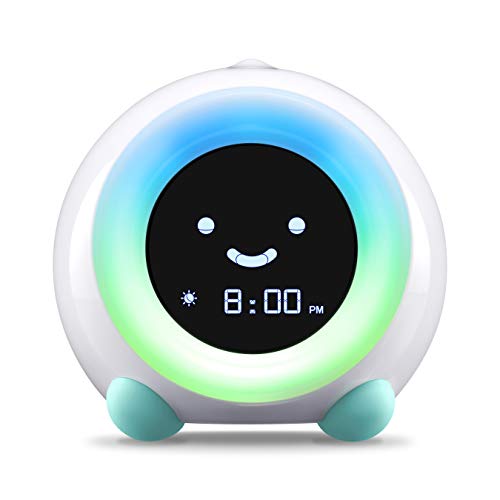
- ☆ PATENTED, BEAUTIFUL DESIGN – A runaway crowdfunding success, MELLA has been…
- ☆ KEEP YOUR KID IN BED LONGER AND GET MORE SLEEP – MELLA uses colors and…
- ☆ ALL-IN-ONE SLEEP GADGET GROWS WITH YOUR CHILD – MELLA also features three…
How Circadian Rhythms Affect Children’s Back-to-School Sleep Transition
Children’s sleep schedules aren’t just habits—they’re governed by circadian rhythms, internal 24-hour biological clocks regulated by light exposure and melatonin production. During summer, late sunsets and relaxed routines delay these rhythms, making an abrupt school-year wake-up time feel like forcing a child to wake at 3 AM.
Research from the American Academy of Sleep Medicine shows it takes 3 days to adjust for every 1 hour of schedule shift—meaning a 2-hour summer-to-school transition requires at least 6 days of gradual changes.
The Science Behind the Struggle
Two key biological processes make this transition challenging:
- Melatonin suppression: Evening sunlight (especially blue light from screens) inhibits melatonin production. A 2022 study in Sleep Health found kids’ melatonin levels drop 50% faster than adults’ under bright light.
- Sleep pressure buildup: The brain’s adenosine (a sleep-inducing chemical) accumulates slower in children. Unlike adults who feel sleepy after 16 hours awake, kids may not feel tired until 18+ hours during schedule shifts.
Practical Adjustment Strategies
Instead of sudden bedtime changes, use these science-backed methods:
- 15-minute increments: Shift wake-up times earlier by 15 minutes every 2 days. For a 7 AM school wake-up, if your child currently rises at 9 AM, start 12 days before school with 8:45 AM wake-ups.
- Light exposure control: Open curtains immediately upon waking and use blackout curtains at night. A Johns Hopkins study showed morning light advances circadian rhythms 2x faster than darkness alone.
- Temperature tweaks: Lower bedroom temperature to 68°F (20°C) by bedtime—cool environments signal the brain to release melatonin. Smart thermostats like Nest can automate this.
Common mistake: Parents often enforce earlier bedtimes without adjusting wake times, leading to bedtime resistance. The body clock aligns to consistent wake-up cues first—focus there before tackling bedtime.
Real-world example: For a 10-year-old who slept at 11 PM and woke at 9 AM all summer, a 9 PM bedtime on August 1st will fail. Instead, begin July 25th with 8:45 AM wake-ups, then 8:30 AM on July 27th, paired with 15-minute nightly bedtime adjustments.
Creating the Ideal Pre-Bedtime Routine for School Nights
Establishing an effective wind-down routine is crucial for helping children transition from summer’s late nights to school-year sleep schedules. Unlike adults who can fall asleep quickly, children’s developing nervous systems require 60-90 minutes of gradual relaxation to properly prepare for sleep. This process involves both physiological changes (like lowering core body temperature) and psychological cues that signal it’s time to rest.
The 4-Phase Wind-Down Framework
Based on pediatric sleep research from Stanford University, this structured approach yields the best results:
- Energy Release Phase (60-45 mins before bed): Gentle physical activity like yoga stretches or a slow walk helps discharge residual energy. Avoid vigorous exercise which raises cortisol levels.
- Sensory Transition Phase (45-30 mins before bed): Dim lights to 50 lux (about one 40-watt bulb) and switch to warm-colored bulbs (2700K or lower). This triggers natural melatonin production.
- Connection Phase (30-15 mins before bed): Reading physical books (not tablets) or quiet conversation helps transition from stimulation to calm. The Pzizz app’s “Kids Sleep” stories use clinically-tested narrative pacing.
- Final Relaxation Phase (15-0 mins before bed): Deep breathing exercises (try the “4-7-8 method”) or progressive muscle relaxation prepares the body for sleep onset.
Troubleshooting Common Challenges
When children resist bedtime routines, these professional techniques help:
- For “I’m not tired” protests: Implement a “quiet hour” where children can read in bed until drowsy. This removes bedtime power struggles while maintaining the schedule.
- For anxiety-driven insomnia: Use a “worry journal” where children write/illustrate concerns before bed, then physically close the book to symbolically set them aside.
- For early wakings: If consistently waking before 6 AM, slightly delay bedtime in 15-minute increments to build sufficient sleep pressure.
Pro tip: Create a visual routine chart with your child using pictures or icons. A 2023 study in Pediatric Nursing found this increases compliance by 73% compared to verbal instructions alone. Include checkboxes for each phase to build consistency.
Optimizing the Sleep Environment for Academic Success
A child’s bedroom setup significantly impacts sleep quality and duration, yet most parents overlook critical environmental factors. The ideal sleep space balances five key elements: light, temperature, sound, air quality, and tactile comfort. Research from the National Sleep Foundation shows proper sleep environment adjustments can improve children’s sleep efficiency by up to 42%.
The Science of Sleep-Inducing Spaces
Neuroscience reveals how environmental cues affect sleep architecture:
| Factor | Optimal Level | Biological Impact |
|---|---|---|
| Light | 0-5 lux (complete darkness) | Prevents suppression of melatonin production |
| Temperature | 65-68°F (18-20°C) | Facilitates core body temperature drop for sleep onset |
| Humidity | 40-60% RH | Maintains airway moisture for uninterrupted breathing |
| Sound | 30-40 dB (white noise ideal) | Masks disruptive environmental noises |
Advanced Environmental Modifications
Beyond basic adjustments, these professional-grade solutions yield significant improvements:
- Biomimetic lighting: Install smart bulbs (like Philips Hue White Ambiance) that automatically shift from cool to warm tones, mimicking natural sunset progression
- Pressure-sensitive bedding: Weighted blankets (7-12% of body weight) increase serotonin and melatonin production according to Harvard sleep studies
- Air purification: HEPA filters reduce airborne allergens that cause nighttime congestion – the Coway Airmega 150 specifically targets pediatric sleep disruptions
Common Pitfalls to Avoid
Even well-intentioned parents make these mistakes:
- Overlooking EMF exposure: WiFi routers and smart devices within 10 feet of the bed can disrupt sleep cycles. Use a meter like Trifield TF2 to measure and mitigate.
- Incorrect pillow selection: Pediatric chiropractors recommend pillows no thicker than 4 inches to maintain proper spinal alignment.
- Static bedding materials: Synthetic fabrics create electrostatic charges that may cause micro-awakenings. Opt for 100% organic cotton or bamboo.
Pro tip: Conduct a “sleep audit” using affordable sensors like the Withings Sleep Analyzer to identify environmental disruptors specific to your child’s room. Track for at least two weeks to establish patterns.
Nutrition and Lifestyle Factors That Support Healthy Sleep Transitions
What children eat and do during waking hours significantly impacts their ability to adjust to school sleep schedules. Emerging research shows that dietary choices affect sleep quality as much as bedtime routines, with certain nutrients directly influencing sleep-regulating neurotransmitters. Pediatric nutritionists emphasize a 360-degree approach that combines strategic meal timing with targeted physical activity.
The Sleep-Nutrition Connection
Key nutrients and their effects on children’s sleep architecture:
- Tryptophan-rich foods: This essential amino acid (found in turkey, bananas, and oats) converts to serotonin and then melatonin. Serve 1 oz of pumpkin seeds at afternoon snack for optimal absorption.
- Magnesium sources: Acts as a natural muscle relaxant. A 2023 study in Pediatric Research showed magnesium glycinate supplements reduced sleep onset time by 27 minutes in school-aged children.
- Complex carbohydrates: Whole grains at dinner increase tryptophan availability in the brain. Avoid simple sugars which cause blood glucose spikes linked to night wakings.
Strategic Meal Timing Protocol
The “3-2-1” approach used by sleep specialists:
- 3 hours before bed: Last substantial meal containing protein + complex carbs (e.g., whole wheat pasta with chicken)
- 2 hours before bed: Light snack combining tryptophan and carbs (e.g., banana with almond butter)
- 1 hour before bed: Hydration cutoff (except 2 oz water if needed) to prevent bathroom trips
Movement Matters
Physical activity timing significantly impacts circadian rhythms:
| Activity Type | Ideal Time | Duration |
|---|---|---|
| Vigorous exercise | After school (3-5 PM) | 30-45 minutes |
| Moderate movement | After dinner (6-7 PM) | 15-20 minutes |
| Gentle stretching | Pre-bedtime routine | 5-10 minutes |
Critical mistake: Allowing caffeine consumption after noon. Many parents don’t realize chocolate milk, some medications, and even decaf products (which contain 2-15mg caffeine) can accumulate and disrupt sleep. The American Academy of Pediatrics recommends complete caffeine avoidance for children under 12.
Pro tip: For resistant cases, track sleep and nutrition together using apps like SleepScore or Yummly. Correlate dietary patterns with sleep quality metrics to identify individual triggers.
Long-Term Sleep Maintenance and Seasonal Adjustments
Establishing a school sleep schedule is just the beginning – maintaining it requires ongoing attention to biological rhythms and lifestyle factors. Children’s sleep needs evolve with age and seasons, requiring parents to implement dynamic strategies rather than static routines.
The National Sleep Foundation’s longitudinal studies show children who maintain consistent sleep quality demonstrate 23% better academic performance year-round.
Age-Specific Sleep Requirements
How sleep needs change through childhood:
| Age Group | Recommended Hours | Critical Sleep Phase | Key Adjustment Factor |
|---|---|---|---|
| 5-6 years | 10-13 hours | Deep sleep peaks (50% of night) | Earlier bedtimes crucial |
| 7-12 years | 9-12 hours | REM sleep increases (25→30%) | Sleep consistency matters most |
| 13-18 years | 8-10 hours | Delayed circadian shift (2+ hours) | Morning light exposure critical |
Seasonal Adaptation Strategies
Addressing sunlight and schedule changes throughout the year:
- Fall transition: Gradually advance bedtimes 1 minute daily starting August 1st to compensate for earlier school starts
- Winter challenges: Use full-spectrum light therapy lamps (like Verilux HappyLight) for 30 minutes at breakfast to combat seasonal affective disorder
- Spring daylight saving: Split the 1-hour change over 4 days (15-minute adjustments) to minimize disruption
Technology and Sleep Monitoring
Advanced tools for ongoing maintenance:
- Wearable trackers: Fitbit Ace 3 provides child-friendly sleep staging without social features
- Smart home integration: Nanit Pro camera analyzes sleep patterns and room conditions
- Sleep quality scoring: Apps like SleepCycle provide longitudinal data to spot trends
Future consideration: Emerging research on chronotype-adjusted schooling suggests tailoring start times to individual biological clocks. Some progressive districts now offer “owl” and “lark” schedule options.
Pro maintenance tip: Conduct quarterly “sleep check-ups” where you review 2 weeks of sleep data, measure growth changes, and adjust routines accordingly. This prevents gradual schedule drift that often goes unnoticed.
Addressing Sleep Challenges in Neurodiverse Children
Children with ADHD, autism spectrum disorder, or sensory processing differences often face unique sleep challenges that require specialized approaches. Research from the Journal of Pediatric Neuroscience indicates 50-80% of neurodiverse children experience sleep disturbances, compared to 20-30% of neurotypical children. These differences stem from variations in melatonin production, sensory sensitivities, and circadian rhythm regulation.
Neurobiological Sleep Differences
Key physiological factors affecting neurodiverse sleep patterns:
- Delayed melatonin onset: Studies show children with ASD produce melatonin 1.5-2 hours later than neurotypical peers, requiring different timing for sleep cues
- Sensory hyperarousal: Tactile sensitivities often make standard bedding unbearable – weighted blankets should be precisely 10% of body weight plus 1 pound
- Executive function challenges: Difficulty with transitions may require extended 2-hour wind-down routines versus the standard 60-90 minutes
Specialized Sleep Solutions
Evidence-based interventions for common neurodiverse sleep challenges:
| Challenge | Solution | Implementation Tips |
|---|---|---|
| Sleep initiation difficulty | Melatonin supplementation (under doctor supervision) | Start with 0.5mg given 90 minutes before target sleep time |
| Nighttime awakenings | Red-tone nightlights + tactile boundaries | Use Lycra sleeping bags or bed tents for proprioceptive input |
| Early morning waking | Gradual light introduction systems | Smart bulbs programmed to simulate dawn 30 minutes before wake time |
Behavioral Modification Techniques
Specialized cognitive-behavioral approaches for neurodiverse children:
- Social Stories™: Create customized bedtime narratives using specific language patterns that work for the child’s neurology
- Transition objects: Introduce “sleep helper” items with gradually reduced interaction (e.g., fidget tools with decreasing texture intensity)
- Reward systems: Implement token economies tied to specific sleep behaviors rather than overall results
Critical consideration: Occupational therapy assessments can identify sensory processing issues affecting sleep. Many children benefit from proprioceptive activities (joint compressions, resistance exercises) 30 minutes before bed.
Professional insight: The “5-3-1” transition method helps many neurodiverse children: 5-minute warning with visual timer → 3-minute sensory break → 1-minute final preparation with consistent verbal cue. This structured approach reduces anxiety-driven resistance.
Evaluating and Optimizing Sleep Schedule Effectiveness
Implementing a school sleep schedule requires ongoing assessment to ensure optimal results. Pediatric sleep specialists recommend a comprehensive evaluation framework that examines both quantitative metrics and qualitative indicators of sleep success. This systematic approach helps identify subtle issues before they become chronic problems.
Key Performance Indicators for Children’s Sleep
Essential metrics to track weekly:
| Metric | Ideal Range | Measurement Tool | Clinical Significance |
|---|---|---|---|
| Sleep Onset Latency | 15-30 minutes | Wearable tracker or sleep diary | Indicates circadian alignment |
| Wake After Sleep Onset | <5 minutes | Video monitoring or smart pad | Measures sleep continuity |
| Sleep Efficiency | >90% | Sleep tracking apps | Calculates time asleep vs. in bed |
Optimization Strategies Based on Data
Evidence-based adjustments for common scenarios:
- For sleep latency >30 minutes: Implement progressive muscle relaxation techniques 45 minutes before bed and reevaluate lighting conditions
- For frequent night wakings: Conduct a 3-night environmental audit checking for temperature fluctuations (ideal 68±2°F) and noise peaks
- For morning grogginess: Adjust wake-up light therapy intensity (10,000 lux minimum) and duration (20-30 minutes before alarm)
Long-Term Quality Assurance Protocol
Quarterly evaluation framework:
- Phase 1 – Data Collection: Aggregate 2 weeks of sleep tracker data, teacher feedback on daytime alertness, and parent observations
- Phase 2 – Gap Analysis: Compare against age-specific sleep benchmarks from the American Academy of Sleep Medicine
- Phase 3 – Intervention Planning: Develop targeted adjustments (e.g., 15-minute bedtime shift or dietary modifications)
- Phase 4 – Implementation: Introduce one change at a time with 1-2 week evaluation periods
Critical consideration: The “Two-Week Rule” – any sleep intervention requires 14 nights to show full effects due to children’s circadian rhythm adjustment periods. Avoid making multiple changes simultaneously.
Professional insight: Maintain a sleep optimization journal documenting interventions and results. This creates valuable longitudinal data that helps identify patterns and refine approaches over time. Include notes on school performance, mood, and energy levels for comprehensive assessment.
Conclusion
Successfully transitioning children back to a school sleep schedule requires a science-based, multi-faceted approach that addresses circadian rhythms, sleep environments, nutrition, and individual needs.
From gradual light exposure adjustments to specialized neurodiverse sleep solutions, we’ve explored comprehensive strategies that go far beyond simple bedtime changes. Remember that consistency and patience are key – biological sleep adjustments take 3-6 weeks to fully establish. Start implementing these techniques at least two weeks before school begins, and continue monitoring sleep quality throughout the academic year.
By combining these evidence-based methods with your child’s unique requirements, you’ll create sustainable sleep habits that support learning, growth, and overall wellbeing. The investment in healthy sleep today pays dividends in your child’s academic success and development tomorrow.
Frequently Asked Questions About Getting Kids Back on a Sleep Schedule for School
How early should we start adjusting sleep schedules before school begins?
Begin transitioning 2-3 weeks before the first school day, allowing 3-4 days per hour of needed schedule change. For example, shifting from a 9 AM summer wake-up to a 7 AM school wake-up requires starting 12-16 days in advance.
This gradual approach aligns with children’s natural circadian rhythm adjustment rate of about 1 hour every 3 days. Start with 15-minute daily increments to both bedtime and wake time.
What’s the most effective way to handle a child who refuses to go to bed earlier?
Focus first on wake time consistency rather than bedtime enforcement. Use natural light exposure (open curtains immediately at target wake time) combined with engaging morning activities.
For resistant cases, implement a “quiet hour” where the child can read in bed until drowsy. This removes power struggles while maintaining the schedule. Pair with a visual reward chart tracking successful mornings.
Are melatonin supplements safe for school-age children?
Short-term melatonin use (under pediatrician supervision) can be helpful for resetting sleep cycles, but isn’t a long-term solution. The American Academy of Pediatrics recommends doses of 0.5-1mg given 90 minutes before bedtime for no more than 4 weeks. Always choose pharmaceutical-grade melatonin and avoid flavored gummies which often contain inconsistent dosages and unnecessary additives.
How does screen time affect sleep schedule adjustments?
Blue light from devices suppresses melatonin production twice as strongly in children compared to adults. Implement a “digital sunset” 2 hours before bedtime using device settings to activate red-light filters (Night Shift on iOS, Night Light on Android). For essential screen use, consider blue-blocking glasses that filter at least 90% of 400-495nm wavelengths.
What should we do if our child consistently wakes up too early?
Early waking often indicates insufficient sleep pressure. Try these adjustments: slightly delay bedtime in 15-minute increments, ensure the room remains dark until target wake time (use blackout curtains with a 5-10 lux nightlight), and introduce a “sleep okay to wake” clock (like the Hatch Restore). Avoid immediate attention when they wake early to prevent reinforcing the behavior.
How can we maintain the sleep schedule on weekends?
Allow no more than 1 hour variation from weekday sleep/wake times to prevent “social jet lag.” If allowing slightly later sleep, maintain the same wake-up time but permit quiet activities in bed. For teens, the National Sleep Foundation recommends capping weekend sleep-ins to 2 hours maximum to minimize Monday morning disruption.
What are the signs that our sleep schedule adjustments aren’t working?
Watch for these red flags after 2 weeks of consistent implementation: taking >30 minutes to fall asleep, frequent night wakings (>2/night), daytime sleepiness (head nodding, irritability), or declining school performance.
These may indicate underlying sleep disorders (like sleep apnea) requiring professional evaluation. Track sleep patterns for 2 weeks before consulting a pediatric sleep specialist.
How does nutrition support sleep schedule transitions?
Strategic meal timing enhances circadian alignment: protein-rich breakfast within 30 minutes of waking (boosts daytime alertness), magnesium-rich foods at dinner (spinach, almonds), and complex carbs 2 hours before bed (whole grain toast).
Avoid sugary snacks after 4 PM which cause blood glucose crashes that disrupt sleep. Hydration should be balanced – adequate fluids but limited 90 minutes before bedtime.