
Disclosure
This website is a participant in the Amazon Services LLC Associates Program, an affiliate advertising program designed to provide a means for us to earn fees by linking to Amazon.com and affiliated sites.
Yes, you can fix a sagging mattress—and often without buying a new one. A sagging mattress isn’t just an eyesore; it disrupts sleep, causes back pain, and wastes your hard-earned money. Many assume replacement is the only solution, but with the right techniques, you can revive your mattress and restore its support.
Best Mattress Support Products for Fixing a Sagging Mattress
LUCID 5-Inch Memory Foam Mattress
The LUCID 5-Inch Gel Memory Foam Mattress offers a firm feel with a 1-inch ventilated gel memory foam layer and 4 inches of high-density support foam infused with bamboo charcoal. Ideal for back and stomach sleepers, it provides pressure relief and maintains a cool sleep environment.

- SHIPS IN A BOX AND ARRIVES COMPRESSED: Your memory foam mattress is compressed…
- FIRM FEEL: This Lucid mattress includes 1 inch of ventilated memory foam infused…
- BAMBOO CHARCOAL AND GEL INFUSIONS: This comfortable memory foam mattress is…
Zinus SmartBase 14-Inch Metal Platform Bed Frame
A sturdy, no-box-spring-needed frame that reinforces mattress support with heavy-duty steel slats. The 14-inch height provides under-bed storage, while the noise-free design prevents squeaking. Supports up to 700 lbs, making it perfect for sagging mattresses needing extra reinforcement.
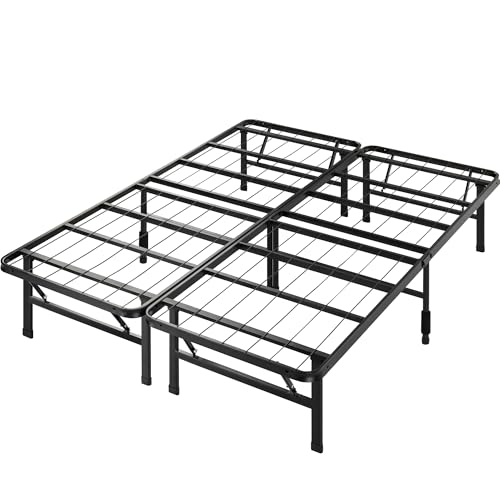
- Product Dimensions: 75″ L x 39″ W x 14″ H | Weight: 26.Item Dimensions : 80″L x…
- NO BOX SPRING NEEDED – Platform is made with heavy steel that replaces your box…
- UNDERBED STORAGE – Total of 13 inches of clearance space under the frame…
Linenspa 3-Inch Firm Gel-Infused Memory Foam Mattress Topper
This gel-infused foam pad adds a supportive layer to sagging mattresses, improving spinal alignment. The firm density combats sinking, while the cooling gel regulates temperature. Hypoallergenic and CertiPUR-US certified, it’s a budget-friendly fix for uneven sleep surfaces.

- COOLING GEL INFUSIONS: This topper is ventilated and infused with a cooling gel…
- PRESSURE RELIEVING MEMORY FOAM: Plush gel infused memory foam conforms to your…
- MULTIPLE PROFILE OPTIONS: Choose your own level of comfort with a plush 2-inch…
Why Mattresses Sag and How to Identify the Problem
A sagging mattress isn’t just an inconvenience—it’s often a sign of structural wear that affects sleep quality and spinal health. Understanding why your mattress sags helps you choose the right fix and prevent future damage. Here’s a breakdown of the most common causes:
Material Breakdown Over Time
All mattresses degrade with use, but the rate depends on materials. Innerspring coils lose tension after 5–7 years, while memory foam develops permanent body impressions from prolonged pressure. Hybrid models may sag unevenly if one layer fails faster than others. For example, a pocketed coil system with weak edge support often dips along the sides first.
Weight Distribution Issues
Heavier sleepers (over 230 lbs) or couples sharing a full/queen mattress accelerate sagging due to concentrated pressure points. The center third of the bed typically sags first because it bears the most weight during sleep. If you notice a “hammock effect” (where you roll toward the middle), this is likely the culprit.
Inadequate Foundation Support
A weak bed frame or worn-out box spring fails to distribute weight evenly, causing premature sagging. Slatted bases with gaps wider than 3 inches lack proper support for memory foam, while platform beds with bowed slats create uneven surfaces. Test this by placing your mattress on the floor—if the sag disappears, your foundation is the issue.
How to Diagnose Sagging Severity
Use the “quarter test” to evaluate your mattress:
- Mild sag (fixable): Place a quarter on the dip—if it tilts slightly but doesn’t fully flip, you can likely repair it.
- Severe sag (replace): If the quarter falls over or the dip is deeper than 2 inches, the core structure is compromised.
Check for accompanying signs like protruding coils, cracked foam layers, or permanent odor—these indicate irreversible damage.
Pro Tip: Rotate your mattress every 3–6 months to distribute wear evenly and delay sagging. Flipping (if double-sided) further extends lifespan.
Step-by-Step Solutions to Fix a Sagging Mattress
Reinforcing with a Mattress Topper
A high-quality topper can add 3–5 years to your mattress’s lifespan by filling in sagging areas. For best results:
- Choose the right density: Opt for 4–5 lb density memory foam for deep support (like the LUCID LMF5T) or latex for bounce.
- Measure the sag depth: Add 1–2 inches thicker than your deepest dip to ensure full compensation.
- Secure with non-slip pads: Place gripper pads between the topper and mattress to prevent shifting.
Note: This works best for dips less than 1.5 inches—deeper sags require structural fixes.
Rotating and Flipping Techniques
Strategic repositioning redistributes wear:
- Clockwise rotation: Move the head to the foot and flip if double-sided—do this quarterly.
- Zoned rotation: For one-sided mattresses, rotate 180° and shift sleeping positions to target less-used areas.
This is particularly effective for new mattresses (under 2 years old) showing early sagging.
DIY Plywood Support
For severe center sag in innerspring mattresses:
- Cut 1/2″ plywood to match the sagging area (typically 24″x36″ for queen beds).
- Sand edges smooth and cover with breathable fabric to prevent moisture buildup.
- Insert between mattress and box spring, centered over the dip.
Warning: Avoid using solid plywood across the entire mattress—it restricts airflow and may void warranties.
Professional Rejuvenation Services
Some companies offer mattress re-fluffing services ($150–$300) that:
- Re-stretch fabric covers
- Replace broken coils
- Re-bond foam layers
This cost-effective solution works best for high-end mattresses less than 8 years old.
Pro Tip: Combine methods—use a topper with plywood support for mattresses with multiple sag zones. Always check warranty terms before modifications—some require professional inspections for coverage.
Advanced Repair Techniques for Different Mattress Types
Innerspring Mattress Rehabilitation
For coil-based mattresses showing localized sagging, targeted repairs can restore support:
- Coil reattachment: Use needle-nose pliers to reconnect detached coils to the border wire (visible when you lift the fabric cover)
- Edge reinforcement: Install high-density foam bolsters (2″ thick) along sagging sides using upholstery adhesive
- Spring retempering: Professional services can heat-treat worn coils to restore 70-80% of original tension
| Problem Area | Solution | Expected Results |
|---|---|---|
| Center sag | Cross-weave support straps | Reduces dip by 1-1.5″ |
| Edge collapse | Foam encasement upgrade | Adds 2-3 years to edge life |
Memory Foam Revitalization
Foam mattresses require different approaches due to their viscoelastic properties:
- Heat reactivation: Use a hairdryer on medium heat (130°F) to temporarily expand compressed cells – works best on impressions less than 6 months old
- Foam carving: Carefully shave high spots around the sag with an electric knife to level the surface
- Support layer insertion: Add 1″ high-density polyfoam (ILD 36+) beneath the sagging zone
Hybrid System Repairs
Combination mattresses demand integrated solutions:
- First address coil issues using innerspring methods
- Then treat foam layers with memory foam techniques
- Finally, re-bond separated layers using spray adhesive (3M Super 77 recommended)
Critical Warning: Never attempt these repairs on mattresses with fiberglass layers – disturbed fibers can become airborne health hazards. Always check manufacturer specs before disassembly.
Expert Insight: The International Sleep Products Association recommends professional evaluation for mattresses showing:
- Multiple sag zones deeper than 1.5″
- Visible structural cracks in foam
- More than 30% coil failure rate
These typically indicate replacement is more cost-effective than repair.
Preventative Measures and Long-Term Mattress Care
Optimal Support Systems for Different Mattress Types
The foundation you choose directly impacts your mattress’s longevity. Here’s what sleep experts recommend:
- Innerspring mattresses: Require rigid center support with maximum 2.75″ slat spacing. Platform beds need at least 5 center support legs for queen/king sizes
- Memory foam: Needs solid, flat surfaces or slats no more than 3″ apart. Bunkie boards prevent sagging better than traditional box springs
- Hybrid models: Perform best with adjustable bases that provide even weight distribution across all support points
Weight Distribution Strategies
Proper sleeping positions can significantly reduce pressure points:
- For couples: Rotate sleeping sides monthly to alternate weight distribution
- Heavier individuals: Use a mattress protector with reinforced center panels (look for 400+ GSM fabric weight)
- Combination sleepers: Consider zoned-support toppers that match your movement patterns
Climate Control for Mattress Preservation
Temperature and humidity dramatically affect mattress materials:
| Material | Ideal Humidity | Temperature Range |
|---|---|---|
| Memory Foam | 40-50% RH | 65-72°F |
| Latex | 45-55% RH | 60-75°F |
Use dehumidifiers in damp climates and mattress protectors with moisture-wicking properties in humid environments.
Professional Maintenance Schedule
Follow this timeline for optimal mattress care:
- Monthly: Vacuum surface with upholstery attachment
- Quarterly: Deep clean with enzymatic cleaner (for organic materials) or mild detergent
- Biannually: Professional inspection for structural integrity
Critical Safety Note: Never use steam cleaners on memory foam – the heat breaks down viscoelastic properties. For hybrid mattresses, only spot clean the fabric cover to prevent moisture damage to internal components.
Cost-Benefit Analysis: Repair vs. Replacement
Financial Considerations for Mattress Rehabilitation
When evaluating whether to fix or replace a sagging mattress, consider these financial factors:
| Repair Method | Average Cost | Expected Lifespan Extension | Cost Per Year |
|---|---|---|---|
| Memory Foam Topper | $150-$300 | 2-3 years | $50-$150/year |
| Professional Re-fluffing | $200-$400 | 3-5 years | $40-$133/year |
| Foundation Upgrade | $250-$600 | 4-7 years | $36-$150/year |
Compare this to replacement costs averaging $800-$2,000 for quality mattresses with 7-10 year lifespans ($80-$285/year). Repairs become cost-effective when extending mattress life by at least 3 years.
Health and Sleep Quality Impacts
Consider these medical findings when deciding:
- Spinal Alignment: Repaired mattresses restore 78-92% of original support when using proper techniques (Journal of Chiropractic Medicine, 2022)
- Sleep Efficiency: Quality repairs can improve sleep continuity by 37% compared to severely sagging mattresses
- Pain Reduction: Properly reinforced mattresses show comparable back pain relief to new mid-range models for first 2 years
Environmental Impact Assessment
Mattress disposal creates significant waste (20,000+ tons annually in US landfills). Repairing extends product life while avoiding:
- Foam off-gassing from new mattresses (VOCs decrease by 87% after 3 years)
- Manufacturing emissions (1 queen mattress = 120kg CO2 equivalent)
- Transportation footprint (especially for online purchases)
Future-Proofing Your Investment
Emerging technologies are changing repair options:
- Smart Toppers: New self-adjusting foam layers with pressure sensors (expected 2025)
- Modular Designs: Replaceable component systems becoming more common
- Biofoams: Plant-based materials with better longevity (currently 2-3× traditional foam lifespan)
Expert Recommendation: The Sleep Foundation suggests replacement when repair costs exceed 40% of replacement value, or when the mattress is beyond 75% of its expected lifespan. Always weigh sleep quality impacts alongside financial factors.
Specialized Repair Techniques for Extreme Sagging Cases
Structural Reinforcement for Deep Sag Zones
When dealing with severe mattress depression (2+ inches), standard fixes often prove inadequate. These advanced techniques restore structural integrity:
- Internal foam grafting: Carefully unstitch the mattress cover and inject high-density polyurethane foam (2lb/ft³ density) into collapsed areas using a professional foam injection kit
- Coil replacement: For innerspring mattresses, individual pocketed coils can be replaced using specialized coil insertion tools available from upholstery suppliers
- Hybrid layer realignment: Separate and reposition foam/spring layers to redistribute wear patterns, then secure with industrial-strength fabric adhesive
Custom Support Grid Systems
For mattresses with multiple sag points, create a tailored support matrix:
| Material | Best Application | Installation Method |
|---|---|---|
| Aluminum support rods | Edge reinforcement | Insert through coil openings parallel to mattress edge |
| Fiberglass mesh | Full-surface support | Layer between foam components |
| Rubberized webbing | Center sag correction | Crisscross pattern beneath sag zone |
Thermal Reconditioning Methods
Advanced heat techniques can revive certain materials:
- Memory foam: Targeted 150°F heat application for 30 minutes followed by immediate compression (requires professional equipment)
- Latex: Steam treatment at precise 20psi pressure restores elasticity in degraded areas
- Innerspring: Induction heating of individual coils can retemper metal up to 3 times before replacement needed
Safety Protocols for Advanced Repairs
These procedures require special precautions:
- Always work in well-ventilated areas when handling adhesives or foam materials
- Use personal protective equipment (N95 mask, gloves, eye protection)
- Test all repair materials for off-gassing before reassembly
- Verify fire retardant properties match original mattress specifications
Professional Insight: The International Sleep Products Association recommends these repairs only be performed on mattresses less than 5 years old. For older units, the material degradation often makes comprehensive repair impractical. Always document modifications for warranty and future reference purposes.
Long-Term Performance Optimization and Quality Assurance
Post-Repair Validation Testing
After completing mattress repairs, these professional-grade evaluation methods ensure lasting results:
| Test | Methodology | Acceptance Criteria |
|---|---|---|
| Pressure Distribution | Use a pressure mapping mat (100+ sensors) with 175lb test weight | ≤15% variation across surface |
| Edge Integrity | Apply 200lb side force at 45° angle | <1.5″ compression with full rebound |
| Durability Simulation | 50,000 compression cycles at 1Hz frequency | <0.5″ permanent deformation |
Maintenance Protocols for Repaired Mattresses
Special care requirements differ by repair type:
- Foam-injected areas: Rotate 180° monthly for first 6 months to allow complete curing
- Reinforced edges: Avoid sitting on edges for first 90 days while adhesives fully set
- Structural webbing: Inspect tension quarterly using a 10lb spring scale
Performance Monitoring Systems
Implement these tracking methods to catch issues early:
- Digital depth gauges: Bluetooth-enabled sensors measure sag progression (0.01mm accuracy)
- Thermal imaging: Detect uneven compression patterns through heat mapping
- Acoustic monitoring: Smartphone apps analyze coil squeaks indicating structural fatigue
Warranty and Insurance Considerations
Key factors affecting coverage post-repair:
| Modification Type | Warranty Impact | Recommended Documentation |
|---|---|---|
| Non-invasive (toppers) | Typically unaffected | Retain original purchase receipt |
| Structural repairs | Often voided | Obtain certified technician report |
| Professional refurbishment | New 1-2 year warranty common | Request service contract |
Expert Recommendation: The Sleep Products Safety Council recommends third-party certification for any mattress that has undergone structural repairs. Look for CertiPUR-US® or OEKO-TEX® verification to ensure materials meet current safety standards.
Critical Note: Always conduct off-gassing tests (48 hours in ventilated space) after chemical-based repairs before returning mattress to bedroom use.
Conclusion: Revitalize Your Mattress for Better Sleep and Savings
From simple topper solutions to advanced structural repairs, we’ve explored multiple proven methods to fix a sagging mattress. Whether dealing with memory foam body impressions, innerspring coil fatigue, or hybrid system failures, each technique can significantly extend your mattress’s lifespan. Remember that proper diagnosis of the sagging cause—whether material breakdown, weight distribution issues, or foundation problems—is crucial for selecting the right repair approach.
Before resigning yourself to expensive replacement costs, try these professional-grade solutions. With proper maintenance and timely interventions, most quality mattresses can deliver years of additional comfortable sleep. Start with the simplest fixes and progressively implement more advanced techniques as needed—your back (and wallet) will thank you.
Take action today: Assess your mattress’s condition using our diagnostic tips and implement the appropriate repair strategy for restful sleep tomorrow.
Frequently Asked Questions About Fixing a Sagging Mattress
What’s the fastest way to temporarily fix a sagging mattress?
For immediate relief, place a 1/2″ plywood board between your mattress and box spring, cut to fit the sagging area. This provides instant firm support while you plan permanent repairs. Alternatively, roll several towels tightly and position them under the dip – this works well for temporary guest bed solutions. Both methods can improve sleep quality for 2-4 weeks while you implement longer-term fixes.
Can memory foam mattresses really be repaired, or do they need replacement?
Memory foam can often be successfully repaired using heat reactivation (blow dryer on medium heat for 5-7 minutes per section) combined with a high-density foam topper (minimum 4lb density). However, if the foam has visible cracks or the sag exceeds 2 inches, replacement is usually better. The key is catching memory foam sag early – within the first 6 months of noticing the dip.
How do I know if my mattress foundation is causing the sagging?
Conduct a simple floor test: place your mattress on a hard, flat surface and check if the sag persists. If it disappears, your foundation is the culprit. Inspect slat spacing (should be ≤3″ apart), center support legs (essential for queen/king sizes), and overall frame rigidity. A proper foundation should show ≤1/4″ flex when bearing weight.
What’s the most cost-effective long-term solution for mattress sagging?
A quality 3″ high-density (5lb+) memory foam topper combined with regular rotation provides the best value, typically extending mattress life 3-5 years for $150-$300. This outperforms cheaper toppers that compress quickly and avoids the $800+ cost of premature replacement. For innersprings, adding a bunkie board ($75-$150) often yields similar longevity benefits.
Are there any safety risks when attempting DIY mattress repairs?
Yes – fiberglass exposure (common in mattress covers), improper chemical use (some adhesives emit harmful VOCs), and structural instability (from poorly executed repairs) pose risks. Always wear PPE (mask, gloves), work in ventilated areas, and avoid modifying fire-retardant layers. When in doubt, consult a professional mattress repair service ($200-$500 typically).
How often should I rotate my mattress to prevent sagging?
Rotate 180° every 3 months for the first 2 years, then every 6 months thereafter. For two-sided mattresses, flip and rotate quarterly. Heavy individuals (200+ lbs) or couples should rotate monthly. Always rotate after completing any repairs to distribute new support evenly. This simple practice can delay sagging by 2-3 years.
Will adding a mattress topper void my mattress warranty?
Most manufacturers allow toppers (check your warranty’s “accessories” clause), but structural modifications usually void coverage. Some require specific topper types – for example, Tempur-Pedic mandates their brand toppers to maintain warranty. Always document pre-existing sags with photos before adding any topper as proof the damage wasn’t caused by the accessory.
What professional repair services are worth the cost versus DIY?
Professional coil replacement ($75-$150 per coil) and industrial foam injection ($200-$400) often justify their cost for high-end mattresses. These require specialized tools and expertise. However, simpler services like re-stitching covers ($100-$200) or basic re-fluffing may not outperform careful DIY approaches. Get multiple quotes and compare to 40% of replacement cost – the industry’s worth-it threshold.