
Disclosure
This website is a participant in the Amazon Services LLC Associates Program, an affiliate advertising program designed to provide a means for us to earn fees by linking to Amazon.com and affiliated sites.
Choosing the right pillow for your sleep position is essential for spinal alignment, comfort, and quality rest. The ideal pillow supports your head, neck, and shoulders while keeping your spine in a neutral position—whether you sleep on your back, side, or stomach. A mismatched pillow can lead to stiffness, pain, and poor sleep quality.
In this guide, we’ll break down the key factors to consider—such as loft (height), firmness, and material—and provide tailored recommendations for each sleep position.
Best Pillows for Your Sleep Position
Coop Home Goods Eden Pillow
Perfect for side sleepers, the Coop Home Goods Eden Pillow features adjustable shredded memory foam, allowing you to customize loft and firmness. Its breathable cover and hypoallergenic fill provide excellent support for neck alignment while preventing overheating.
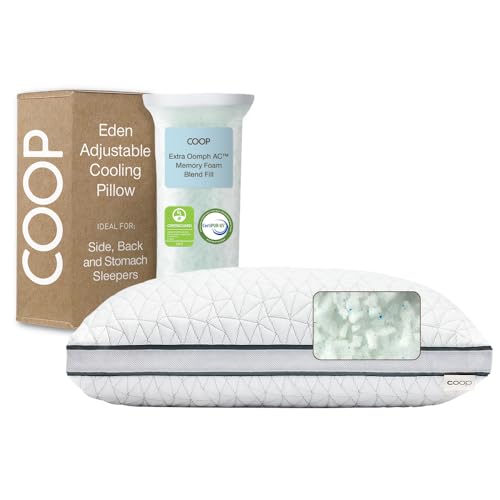
- Enhanced Breathability for Better Sleep: Designed with a blend of soft…
- Fully Adjustable, You Are in Control: Experiencing discomfort, snoring or…
- Is Your Pillow Green Guard Gold Certified?: Our Coop Home Goods Eden Pillows…
Tempur-Pedic TEMPUR-Neck Pillow
Ideal for back sleepers, the Tempur-Pedic TEMPUR-Neck Pillow offers medium-firm support with contoured ergonomics. Its TEMPUR material conforms to your head and neck, reducing pressure points and maintaining spinal alignment for a restful night’s sleep.

- Helps relieve aches and pains: TEMPUR-Material precisely adapts to your head…
- TEMPUR-Material: Formed TEMPUR-Material in an extra-firm feel maintains its…
- Premium Cover: A [100%] polyester knit and hypoallergenic cover is removable and…
Beckham Hotel Collection Gel Pillow
Best for stomach sleepers, the Beckham Hotel Collection Gel Pillow (Model: BHC-GP) is ultra-soft and low-profile, preventing neck strain. The gel-infused memory foam keeps you cool, while the plush design ensures minimal elevation for proper spinal alignment.

- SUPERIOR COMFORT – Queen pillows have a 250 thread count Cotton Cover filled…
- SOFT FEEL (HOTEL STYLE) PILLOWS – Bring the luxurious soft and plush experience…
- EASY CLEAN – Unlike memory foam pillows, our pillow for side sleepers is…
How Sleep Position Affects Pillow Choice
Your sleep position directly impacts the type of pillow you need for optimal comfort and spinal alignment. The wrong pillow can lead to neck pain, stiffness, and even long-term postural issues.
Why Pillow Support Varies by Sleep Position
Your head and neck require different levels of support depending on whether you sleep on your back, side, or stomach. The key factor is maintaining neutral spinal alignment—keeping your head level with your shoulders and hips. A misaligned spine can strain muscles, restrict airflow, and disrupt sleep quality.
- Side Sleepers: Need the highest loft (4-6 inches) to fill the gap between head and mattress. Memory foam or latex pillows work best to prevent shoulder compression.
- Back Sleepers: Require medium loft (3-5 inches) with slight contouring to support the neck’s natural curve without pushing the head forward.
- Stomach Sleepers: Should use the thinnest pillows (under 3 inches) or none at all to avoid hyperextending the neck. Soft down alternatives are ideal.
Material Matters: How Fill Type Impacts Performance
Pillow materials behave differently under pressure and heat, which affects their suitability for specific sleep positions:
- Memory Foam: Conforms precisely to your head shape, making it perfect for side sleepers who need consistent support. High-density varieties prevent bottoming out.
- Latex: Offers responsive bounce that’s excellent for combination sleepers. Its natural breathability helps regulate temperature for hot sleepers.
- Down/Feather: Provides malleable softness ideal for stomach sleepers who need minimal elevation. However, it requires frequent fluffing to maintain shape.
Common Mistakes to Avoid
Many people choose pillows based solely on comfort without considering alignment needs. A pillow that feels cozy initially might cause problems over time. For example:
Example: Side sleepers often select pillows that are too soft, causing their head to sink too far down. This creates a 45-degree neck angle that strains cervical vertebrae. Similarly, back sleepers using overly thick pillows may experience forward head tilt, leading to morning headaches.
Pro Tip: Test pillows by lying in your natural sleep position for at least 10 minutes in-store, or take advantage of sleep trials from online retailers. Observe whether your chin tilts up (pillow too low) or down (pillow too high).
How to Test and Adjust Your Pillow for Perfect Alignment
Finding the right pillow involves more than just selecting the correct type – you need to properly test and adjust it to your body’s unique requirements.
The Mirror Test: Assessing Your Spinal Alignment
This simple yet effective method helps visualize your sleeping posture and identify alignment issues:
- Preparation: Have someone photograph you from the side while lying in your natural sleep position, or set up a mirror beside your bed.
- Evaluation Points: Check if your ears align vertically with your shoulders (side sleeping) or if your chin tilts up/down (back sleeping). Your nose should be roughly parallel with your sternum.
- Troubleshooting: If your head tilts upward, your pillow is too thick. If your chin drops toward your chest, you need more loft. Side sleepers should see a straight line from nose to belly button.
Pressure Point Analysis
Different sleep positions create distinct pressure patterns that your pillow should address:
- Side Sleepers: Check for shoulder compression after 30 minutes. If your arm tingles or feels numb, your pillow isn’t providing enough support to keep your shoulder properly aligned with your spine.
- Back Sleepers: Notice if you wake with neck stiffness. This often indicates your pillow isn’t properly supporting the cervical curve, causing muscles to overwork during the night.
- Stomach Sleepers: Pay attention to lower back pain, which suggests your pillow is forcing your neck into excessive rotation, creating torque through your entire spine.
Adjustment Techniques for Common Materials
Each pillow type requires different adjustment approaches:
Memory Foam: For adjustable shredded foam pillows, remove or add filling in small increments (about ½ cup at a time). Allow 2-3 nights between adjustments for your body to adapt. Solid memory foam can be tempered by placing a folded towel underneath for minor height adjustments.
Down/Feather: These require daily fluffing to maintain loft. For permanent adjustments, consider inserting a thin foam topper inside the pillowcase beneath your down pillow to add consistent support without compromising softness.
Professional Tip: Keep a sleep journal for 1-2 weeks when testing new pillows. Note waking pain points, frequency of position changes, and morning stiffness patterns. This data helps identify whether alignment issues stem from your pillow or other factors like mattress firmness.
The Science of Pillow Materials: Performance Characteristics and Selection Guide
Material Density and Support Mechanics
Pillow support depends on two key physical properties: density (measured in pounds per cubic foot) and compression modulus (resistance to deformation).
| Material | Density Range | Compression Recovery | Ideal Sleep Position |
|---|---|---|---|
| Memory Foam | 3.0-5.0 lb/ft³ | Slow (5-10 sec) | Side, Back |
| Latex | 4.5-6.5 lb/ft³ | Fast (1-2 sec) | Combination |
| Shredded Foam | 2.5-3.5 lb/ft³ | Variable | All positions |
Technical Insight: Higher density foams provide more resistance to bottoming out but may retain more heat. The viscoelastic properties of memory foam allow it to distribute pressure evenly across contact points, reducing peak pressure by up to 50% compared to traditional fills.
Thermal Regulation Properties
Pillow materials vary significantly in their heat retention and dissipation characteristics:
- Phase Change Materials (PCM): Advanced pillows incorporate microencapsulated PCMs that absorb excess body heat when warm and release it when cool, maintaining a consistent 32-34°C surface temperature.
- Natural Latex: Contains open-cell structure with pinholes that enhance airflow, providing 3-5 times better breathability than standard memory foam.
- Gel Infusions: Gel beads or layers conduct heat away from the body, typically reducing surface temperature by 2-3°C compared to traditional materials.
Advanced Material Combinations
Modern hybrid pillows combine multiple materials to optimize performance:
Example: A premium hybrid pillow might feature a shredded latex core for support, surrounded by a layer of gel-infused memory foam for pressure relief, all encased in a phase-change fabric cover. This combination provides:
- Immediate comfort from the memory foam layer
- Responsive support from the latex core
- Temperature regulation from both gel and phase-change elements
Expert Tip: When testing advanced materials, pay attention to the break-in period. Some high-performance foams require 48-72 hours to fully expand and reach their intended support characteristics after unpacking.
Common Material Selection Mistakes
Many consumers choose materials based solely on initial comfort rather than long-term performance:
Case Study: A side sleeper selecting a low-density memory foam pillow may experience excellent initial comfort, but after 6-8 months the material will compress beyond its useful support range, leading to neck strain. Higher density foams (4.5lb+) maintain their support characteristics 3-5 times longer.
Special Considerations: Pillow Selection for Unique Sleep Needs
Beyond standard sleep positions, various health conditions and lifestyle factors require specialized pillow considerations.
Medical Condition Accommodations
Certain health conditions dramatically impact pillow requirements:
- Sleep Apnea/CPAP Users: Require contoured pillows with cutouts (like the Contour Products CPAPMax 2.0) to prevent mask displacement while maintaining neck support. The ideal pillow has a medium-firm center with softer edges to reduce pressure points from headgear.
- Chronic Neck Pain: Best served by orthopedic pillows with precise cervical support (such as the Core Products Tri-Core). These feature a central depression for head placement with raised edges supporting the cervical curve at 15-20° of flexion.
- Acid Reflux: Need wedge pillows with a 30-45° incline (like the MedSlant 7″) to elevate the upper torso. Memory foam wedges maintain their shape better than fiberfill for consistent elevation throughout the night.
Lifestyle and Environmental Factors
External conditions significantly influence pillow performance:
| Factor | Consideration | Recommended Solution |
|---|---|---|
| Hot Sleepers | Need enhanced breathability and heat dissipation | Percale-covered latex or gel-grid pillows (e.g., Purple Harmony) |
| Allergy Sufferers | Require hypoallergenic materials and easy cleaning | Certified organic latex with removable, washable bamboo cover |
| Combination Sleepers | Need adaptable support for position changes | Adjustable shredded foam with quilted zones (e.g., Saatva Latex Pillow) |
Professional Maintenance Guidelines
Proper care extends pillow lifespan and maintains performance:
- Cleaning Frequency: Wash protectors weekly, pillows every 3-6 months depending on material. Memory foam requires spot cleaning only, while down needs professional washing.
- Rotation Schedule: Rotate pillows 180° weekly and flip monthly to ensure even wear. This prevents permanent compression in frequently used areas.
- Replacement Indicators: Replace when visible flattening exceeds 1″ from original height, or if the pillow fails to regain shape within 2 hours of fluffing.
Expert Tip: For chronic pain sufferers, consider a 30-day pillow trial with multiple options. Track pain levels and sleep quality daily using a 1-10 scale to objectively compare different support systems before committing to a long-term solution.
Safety and Certification Standards
Quality pillows should meet recognized safety benchmarks:
- CERTIPUR-US®: Certifies foam is made without ozone depleters, heavy metals, or formaldehyde
- OEKO-TEX® Standard 100: Ensures textiles are free from harmful substances
- GOLS Certification: Verifies organic latex content (minimum 95% organic raw material)
Long-Term Pillow Performance and Sustainability Considerations
Selecting a pillow involves more than immediate comfort – understanding long-term durability, environmental impact, and evolving sleep science ensures your choice remains optimal for years.
Material Lifespan and Degradation Patterns
Different pillow materials exhibit distinct aging characteristics that affect their functional longevity:
| Material | Average Lifespan | Degradation Signs | Performance Maintenance Tips |
|---|---|---|---|
| Memory Foam | 2-3 years | Permanent body impressions >1″, loss of resilience | Monthly rotation, avoid direct sunlight |
| Latex | 4-5 years | Surface cracking, >15% height reduction | Quarterly airing, gentle vacuuming |
| Down/Feather | 5-7 years | Clumping, persistent odors | Professional cleaning every 12-18 months |
Technical Insight: High-density memory foam (≥4.0 lb/ft³) maintains its indentation force deflection (IFD) rating 40-50% longer than standard density foams. The IFD measures how much force (in pounds) is required to compress the foam by 25% of its height – a critical factor in long-term support.
Environmental Impact Analysis
Pillow materials vary significantly in their ecological footprint across production, use, and disposal phases:
- Natural Latex: Sustainable harvesting from rubber trees but energy-intensive processing. Biodegradable but requires proper composting facilities.
- Memory Foam: Petroleum-based with high embodied energy. Some manufacturers now offer plant-based alternatives (20-30% renewable content).
- Buckwheat Hull: Fully biodegradable and renewable but may harbor dust mites without proper maintenance.
Emerging Technologies in Sleep Support
The pillow industry is evolving with advanced material science and smart technologies:
- Phase-Change Materials: Microencapsulated temperature regulators that actively respond to body heat, maintaining optimal sleeping microclimate
- Smart Pillows: Integrated sensors (like the ZEEQ Smart Pillow) track sleep patterns and provide biofeedback for position correction
- 3D Spacer Fabrics: Engineered textile structures that provide variable support zones while enhancing airflow by 300% over traditional materials
Cost-Per-Use Analysis
Evaluating pillow value requires considering both initial cost and functional lifespan:
| Pillow Type | Initial Cost | Years of Service | Cost/Year | Sleep Hours/¢ |
|---|---|---|---|---|
| Budget Polyester | $20 | 1.5 | $13.33 | 5.5 |
| Premium Latex | $150 | 5 | $30 | 12.2 |
| Adjustable Hybrid | $200 | 7 | $28.57 | 11.6 |
Expert Recommendation: For sustainable choices, look for Global Organic Textile Standard (GOTS) certified organic materials and pillows with replaceable components (like interchangeable inserts) that extend usable life while reducing waste.
Optimizing Your Sleep System: Pillow Integration with Mattress and Bedding
Achieving perfect sleep posture requires harmonizing your pillow with your entire sleep environment.
The Pillow-Mattress Interface
Your pillow and mattress must work together to maintain spinal alignment. Consider these critical interaction points:
- Mattress Firmness: Softer mattresses (5-6 on firmness scale) require slightly thicker pillows as your body sinks deeper, while firmer surfaces (7-8) need thinner pillows to prevent neck overextension.
- Sleep Surface Contour: Adjustable bases or mattresses with zoning (like latex or hybrid designs) may require pillow height adjustments of 0.5-1.5″ compared to flat surfaces.
- Edge Support: For those who sleep near bed edges, consider pillows with reinforced side support to compensate for mattress roll-off tendencies.
Pillow-to-Bedding Compatibility
Your bedding choices significantly impact pillow performance:
| Bedding Component | Pillow Consideration | Optimization Technique |
|---|---|---|
| Sheets | Thread count affects friction | Use 300-400 TC sateen for memory foam pillows to reduce sticking |
| Blankets | Weight impacts head position | Heavier blankets may require firmer pillow support |
| Protectors | Barrier effectiveness | Choose breathable protectors that don’t compress pillow loft |
Advanced Positioning Techniques
For specialized sleep needs, consider these professional positioning methods:
- The 30-Degree Rule: When using wedge pillows, maintain a precise 30° torso elevation for optimal GERD relief without creating neck strain.
- Layered Support: Combine a thin memory foam base layer with an adjustable down topper for customizable support that accommodates position changes.
- Gap Filling: Use small bolster pillows between primary pillow and shoulders to eliminate pressure points for side sleepers.
System-Wide Troubleshooting
Common integrated sleep system issues and solutions:
- Morning Neck Pain: Usually indicates a pillow-mattress firmness mismatch. Try adjusting pillow height by 0.5″ increments over 1-2 weeks.
- Frequent Position Changes: May signal inadequate support. Consider a dual-zone pillow with different firmness on each side.
- Overheating: Often results from incompatible materials. Pair breathable latex pillows with moisture-wicking bamboo sheets.
Expert Tip: Conduct a full sleep system evaluation every 12-18 months. As materials age, their interaction changes – your perfect pillow at 6 months may need adjustment after your mattress breaks in fully at 12-15 months.
Advanced Pillow Performance Optimization and Quality Assurance
Material Performance Benchmarks
Understanding key performance indicators helps objectively evaluate pillow quality:
| Performance Metric | Measurement Standard | Ideal Range | Testing Methodology |
|---|---|---|---|
| Compression Recovery | ASTM D3574 | >90% after 8h compression | 25% compression for 8h, measure height recovery after 30m |
| Heat Retention | ISO 11092 | <0.15 m²·K/W | Thermal manikin testing at 34°C skin temp |
| Durability Cycles | ISO 3385 | >50,000 compressions | Roller test with 25kg weight, 100 compressions/min |
Professional Validation Techniques
Implement these quality assurance protocols for optimal performance:
- Support Validation: Use a cervical spine alignment tool to verify neutral positioning in your primary sleep position. The tragus of your ear should align vertically with your acromion process (shoulder bone).
- Pressure Mapping: For chronic pain sufferers, conduct pressure tests using thin pressure-sensitive films to identify areas exceeding 30mmHg (the capillary closure threshold).
- Microclimate Analysis: Monitor sleep surface temperature/humidity with infrared thermography to ensure proper thermal regulation (ideal range: 30-34°C, 40-60% RH).
Long-Term Performance Maintenance
Extend your pillow’s functional lifespan with these professional care techniques:
- Seasonal Adjustments: Humidity changes affect material properties. Increase fill by 10% in winter (materials contract in cold), reduce by 5% in summer.
- Deep Cleaning Cycles: For memory foam, use a 3-step process: vacuum with upholstery attachment, spot clean with mild detergent, sun-dry for ≤30 minutes to kill microbes.
- Support Reinforcement: Add a 1″ high-density foam underlay after 18-24 months to compensate for material compression.
Risk Assessment and Mitigation
Identify and address potential pillow-related health risks:
| Risk Factor | Early Warning Signs | Mitigation Strategy |
|---|---|---|
| Neck Hyperextension | Morning headaches, jaw pain | Reduce loft by 0.5″ increments |
| Material Off-Gassing | Persistent chemical odor >72h | Air out in well-ventilated area for 48h |
| Allergen Accumulation | Increased morning congestion | Use allergen-proof encasement, wash biweekly |
Expert Recommendation: Maintain a pillow performance log tracking support quality, comfort levels, and any physical symptoms. This data-driven approach helps identify degradation patterns and optimal replacement timing, typically every 2-3 years for premium materials.
Conclusion: Finding Your Perfect Pillow Match
Choosing the right pillow for your sleep position is a science that combines anatomical support with material engineering.
Throughout this guide, we’ve explored how side sleepers need firm, high-loft support (4-6 inches), back sleepers require medium contouring (3-5 inches), and stomach sleepers benefit from ultra-soft, low-profile designs (under 3 inches).
We’ve examined advanced material properties, from memory foam’s pressure relief to latex’s breathability, and provided detailed selection criteria including density measurements, thermal regulation, and spinal alignment verification techniques.
Your next step: Conduct a thorough sleep position analysis using our mirror test method, then select from our recommended pillows based on your specific needs. Remember that proper pillow maintenance can extend its functional lifespan by 40-60%. Invest in quality sleep support today – your neck and back will thank you every morning.
Frequently Asked Questions About Choosing the Right Pillow for Your Sleep Position
How often should I replace my pillow?
Most pillows should be replaced every 1-2 years, but high-quality memory foam or latex can last 3-5 years with proper care. Key replacement indicators include visible flattening beyond 1″ of original height, persistent odors after cleaning, or waking up with neck pain.
For example, a side sleeper’s pillow that no longer fills the head-to-shoulder gap needs replacement. Rotating your pillow weekly can extend its lifespan by 20-30%.
Can one pillow work for all sleep positions?
While adjustable pillows (like the Coop Home Goods Eden) attempt to accommodate multiple positions, they rarely provide ideal support for all.
Side sleepers typically need 50% more loft than back sleepers, while stomach sleepers require much less. Combination sleepers might compromise with a medium-loft (4-5″) shredded memory foam pillow that offers some adaptability during position changes.
How do I know if my pillow is causing my neck pain?
Perform this diagnostic test: if you wake with stiffness that improves within 1-2 hours, your pillow is likely the culprit. Specifically, back sleepers experiencing chin-to-chest positioning need more support, while side sleepers with ear-to-shoulder misalignment require higher loft. Try placing a rolled towel under your neck for temporary relief while testing new options.
What’s better: memory foam or latex pillows?
Memory foam excels in pressure relief (ideal for side sleepers) but retains more heat. Natural latex provides better airflow and bounce (better for back sleepers and hot sleepers), with 3x the lifespan.
For example, the Tempur-Neck memory foam pillow contours precisely, while the Saatva Latex Pillow offers responsive support with superior breathability.
How can stomach sleepers avoid neck strain?
Stomach sleepers should use the thinnest possible pillow (1-2″ max) or sleep without one. The Beckham Hotel Collection Gel Pillow works well because its low profile prevents neck rotation beyond 45 degrees. Additionally, placing a thin pillow under your hips can help maintain better spinal alignment in this position.
Are expensive pillows worth the investment?
High-end pillows ($100+) typically use premium materials that last 3-5x longer than budget options. For example, a $150 latex pillow lasting 5 years costs $0.08 per night, versus a $30 polyester pillow replaced annually at $0.10/night. The superior support also reduces potential chiropractic costs from poor spinal alignment.
How do I clean different types of pillows properly?
Memory foam: Spot clean only with mild detergent. Latex: Hand wash in cool water, air dry. Down: Professional cleaning every 12-18 months.
For all types, use a protective cover washed weekly. Never machine wash memory foam or latex – it destroys the cellular structure and support properties.
Can pillows help with snoring or sleep apnea?
Elevation pillows like the MedSlant Wedge (7″ incline) can reduce snoring by 30-40% by keeping airways open. CPAP users need specialized pillows with cutouts (like the Contour CPAPMax) to prevent mask displacement. However, severe apnea requires medical treatment – pillows alone won’t resolve it.