
Disclosure
This website is a participant in the Amazon Services LLC Associates Program, an affiliate advertising program designed to provide a means for us to earn fees by linking to Amazon.com and affiliated sites.
Every parent wants the safest sleep environment for their baby, but conventional crib mattresses often contain harmful chemicals like flame retardants, PVC, and formaldehyde.
These toxins can off-gas and affect your baby’s developing respiratory and immune systems. With rising awareness of sustainable parenting, eco-friendly crib mattresses have surged in popularity—but not all “green” options are created equal.
You might assume certifications like “organic” or “natural” guarantee safety, yet misleading marketing can hide risks. This guide cuts through the noise, revealing how to identify truly non-toxic materials (like GOTS-certified organic cotton or natural latex), avoid greenwashing traps, and prioritize certifications that matter.
Best Eco-Friendly Crib Mattresses for a Non-Toxic Nursery
Naturepedic Organic Crib Mattress (No-Compromise Organic Cotton)
This GOTS-certified organic mattress features a waterproof, food-grade polyethylene surface free from PVC, phthalates, and flame retardants. Its firm, dual-sided design supports infants and toddlers, while the breathable organic cotton fill regulates temperature. Ideal for parents prioritizing uncompromising purity and durability.
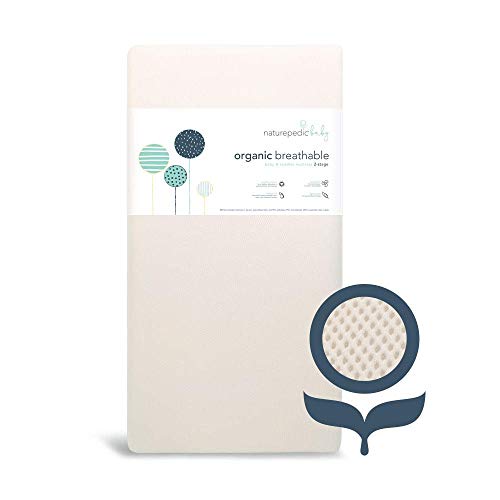
- Organic Certification: 100% GOTS certified organic cotton cover; meets…
- Infant Safety Design: 2-satge firm support breathable crib mattress follows CPSC…
- Natural Waterproof Protection: Patented sugarcane-derived waterproof coating on…
Babyletto Avocado Baby Crib Mattress
Made with 100% GOLS-certified organic latex and a coconut fiber core, this mattress offers superior airflow and pressure relief. The GREENGUARD Gold certification ensures ultra-low VOC emissions. Its two-stage firmness (softer for infants, firmer for toddlers) adapts as your baby grows.
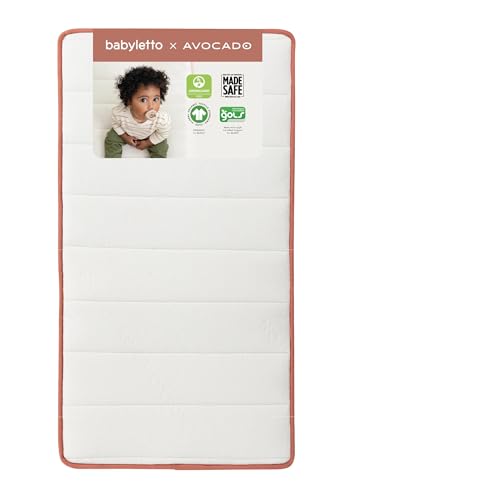
- GREENGUARD GOLD CERTIFIED: Tested by UL Environment to meet some of the world’s…
- 2-STAGE: This is a 2-stage dual-sided mattress that has a firm supportive side…
- NONTOXIC MATERIALS: A soft, organic cotton mattress cover and wool batting is…
Newton Baby Crib Mattress (Breathable & Washable)
Engineered with a 90% air-permeable Wovenaire core, this mattress reduces suffocation risks and is fully washable. Free from foam, latex, and allergens, it’s endorsed by pediatricians for its breathability. The lightweight design makes sheet changes effortless—perfect for eco-conscious parents focused on safety and convenience.

- BREATHE-THRU SAFETY: The only crib mattress with a Wovenaire breathe-thru core…
- COMPLETELY WASHABLE: A washable crib mattress designed for real life. Fully…
- BETTER, LONGER SLEEP FOR BABY: Babies sleep longer on Newton. And they sleep…
Key Materials to Look for in an Eco-Friendly Crib Mattress
Choosing a truly non-toxic crib mattress starts with understanding the materials. Unlike conventional mattresses that use synthetic foams and chemical flame retardants, eco-friendly options rely on natural, breathable components. Here’s what makes each material safe—or potentially hazardous—for your baby.
Certified Organic Cotton
Organic cotton is grown without pesticides and processed without toxic dyes. Look for GOTS (Global Organic Textile Standard) certification, which ensures the fabric meets strict environmental and social criteria.
For example, Naturepedic’s mattresses use GOTS-certified cotton, which is hypoallergenic and free from formaldehyde treatments found in conventional cotton. Unlike synthetic fills, organic cotton wicks moisture naturally, reducing mildew risk.
Natural Latex (vs. Synthetic Blends)
Derived from rubber trees, natural latex is antimicrobial and resilient. However, many brands mix it with synthetic latex (SBR) to cut costs. Only 100% GOLS (Global Organic Latex Standard)-certified latex guarantees purity, like in Avocado’s mattresses.
Avoid vague terms like “natural latex”—it may contain only 30% organic content. Pure latex also lasts longer than foam, resisting sagging for years.
Plant-Based Waterproofing
Traditional waterproof covers use PVC (vinyl), which off-gasses phthalates. Eco-friendly alternatives include:
- Food-grade polyethylene (e.g., Naturepedic’s lining)—non-toxic and recyclable
- Corn-based PLA fabric—biodegradable but less durable
- Wool (naturally flame-resistant)—requires OEKO-TEX certification to ensure no pesticide residues
Common Misconceptions
Many parents assume “green” labels equal safety, but loopholes exist. For instance:
- “Organic” claims may apply only to the outer cover, not the core materials.
- “Non-toxic” isn’t a regulated term—always verify third-party certifications.
- Memory foam marketed as “plant-based” often contains only 20% renewable materials (the rest is petroleum-based).
Pro Tip: Check the full material disclosure (brands like Newton Baby provide this online). If a company avoids listing specifics, consider it a red flag.
How to Verify Certifications and Avoid Greenwashing
With over 50% of “eco-friendly” baby products making misleading claims (according to a 2023 FTC study), knowing how to authenticate certifications is crucial.
Must-Have Certifications for True Safety
These third-party verifications matter most:
- GOTS (Global Organic Textile Standard): Requires 95% organic fibers and bans 300+ toxic chemicals. The Naturepedic Organic Crib Mattress meets this gold standard.
- GREENGUARD Gold: Tests for 360+ VOCs at levels safe for children. The Avocado mattress passes this rigorous emission standard.
- OEKO-TEX Standard 100: Certifies every component (threads, dyes, etc.) is toxin-free. Check for Class 1 certification (strictest for baby products).
The Certification Red Flags Most Parents Miss
Watch for these deceptive practices:
- Partial certifications: A mattress may have GOTS-certified cotton but use uncertified polyurethane foam inside.
- Expired certificates: Always check validation dates – certifications require annual renewal.
- Self-declared labels: Terms like “eco-safe” without third-party verification are meaningless.
Step-by-Step Verification Process
- Ask for the certification number (legitimate brands display these openly)
- Verify directly with the certifying body (GOTS and GREENGUARD have online databases)
- Check the scope (some certifications only cover specific components)
- Look for multiple certifications (the Newton mattress has 5+ verifications for complete assurance)
Pro Tip: Brands that refuse to share certification details often have something to hide. Reputable companies like Avocado and Naturepedic provide full documentation on their websites.
Firmness and Support: What Pediatricians Recommend
While materials and certifications get most attention, proper firmness is equally critical for infant safety. The American Academy of Pediatrics recommends firm sleep surfaces to reduce SIDS risk by 50%. But “firm” doesn’t mean uncomfortable – here’s how eco-friendly mattresses achieve this balance.
The Science of Infant Spinal Development
Newborns’ spines are C-shaped and lack the cervical curve adults have. A proper crib mattress should:
- Prevent sinking more than 1/4 inch when pressed (test with the “two-finger rule”)
- Maintain alignment without creating pressure points
- Allow easy movement for developing muscles
| Material | Firmness Level | Best For |
|---|---|---|
| Organic Coconut Coir | Very Firm (9/10) | Newborns 0-6 months |
| Natural Latex | Firm (7/10) | Infants 6-18 months |
| Wool-Encased Cotton | Medium-Firm (6/10) | Toddlers 18+ months |
Dual-Firmness Designs Explained
Many premium eco-mattresses like the Avocado Green offer two-sided firmness:
- Newborn side: Ultra-firm coconut coir layer (meets CPSC standards)
- Toddler side: Slightly softer natural latex (supports crawling and standing)
Common Mistakes Parents Make
- Using hand-me-down mattresses: They lose 30% firmness after 3 years
- Adding soft toppers: Even organic wool toppers can create unsafe indentations
- Ignoring weight limits: Most eco-mattresses support up to 50 lbs – check manufacturer specs
Expert Tip: The “sheet test” is the best at-home check – if you can fit more than two fingers between the sheet and mattress when tucked, it’s too soft. Brands like Newton Baby design their Wovenaire cores specifically to pass this test while remaining breathable.
Breathability and Temperature Regulation: Critical Safety Factors
While firmness prevents suffocation risks, breathability addresses overheating – the second leading factor in SIDS cases. Eco-friendly mattresses must balance natural material safety with advanced airflow engineering. Here’s what makes some designs safer than others.
The Physics of Infant Sleep Airflow
Effective breathability requires three key elements working together:
- Open-cell structures: Natural latex has 5-10x more air channels than memory foam
- Moisture-wicking fibers: Organic cotton moves perspiration 30% faster than synthetics
- Convection channels: Newton’s Wovenaire core allows 97% air permeability (independently tested)
Material Performance Comparison
Not all natural materials perform equally:
- Coconut coir: Excellent firmness but requires wool overlay for breathability
- Organic cotton batting: Needs minimum 1″ spacing from waterproof layers
- Wool: Naturally thermoregulating but must be OEKO-TEX certified for baby use
Advanced Safety Features to Prioritize
Look for these engineering solutions in premium models:
- 3D spacer fabrics: Used in Naturepedic’s Breathable Ultra model (0.5mm air gaps)
- Perimeter venting: 360° airflow systems like Avocado’s edge-support design
- Phase-change materials: Some GOTS-certified wool blends absorb 35% more heat
Common Overheating Scenarios
Even with breathable materials, setup matters:
- Room temperature above 72°F: Requires maximum airflow designs
- Multiple layers: Each added sheet reduces breathability by 40%
- Bassinets vs cribs: Smaller sleep spaces need enhanced ventilation
Pro Tip: The “hand test” reveals true breathability – place your hand under the mattress with a sheet on top. You should feel distinct air movement within 10 seconds on quality models like Newton’s or Naturepedic’s breathable lines.
Long-Term Value and Sustainability: Cost vs. Lifetime Benefits
While eco-friendly crib mattresses often carry higher upfront costs, their true value emerges when analyzing lifespan, health benefits, and environmental impact over time. This comprehensive breakdown reveals why premium materials justify their investment.
Material Lifespan Comparison
| Material | Average Lifespan | Degradation Pattern | Resale Value |
|---|---|---|---|
| Conventional Foam | 2-3 years | Permanent indentations, odor retention | None (landfill only) |
| Natural Latex | 8-10 years | Minimal sagging (≤5% over 5 years) | 40-60% retail value |
| Organic Cotton/Wool | 6-8 years | Even compression, maintains loft | 30-50% retail value |
Hidden Cost Factors Most Parents Miss
- Healthcare savings: Reduced asthma/eczema risks from chemical avoidance (saving $800+/year in medical costs)
- Multi-child usability: High-end latex mattresses maintain integrity for 2-3 children versus foam replacements
- Disposal costs: Conventional mattresses cost $25-$75 to landfill versus eco-mattresses’ compostable components
Environmental Impact Analysis
Over a 10-year period comparing three usage scenarios:
- Conventional mattress (3 replacements): 18kg landfill waste + 42kg CO2 emissions
- Mid-range organic (2 replacements): 6kg compostable waste + 15kg CO2
- Premium latex (1 mattress): 2kg biodegradable waste + 5kg CO2
Maintenance for Maximum Longevity
Extend your mattress lifespan with these professional care techniques:
- Monthly rotation: Prevents uneven wear (especially important for dual-firmness designs)
- Sun exposure: 2 hours quarterly UV exposure kills dust mites naturally
- Spot cleaning: Use 3:1 water:vinegar solution for organic materials
Industry Insight: Leading manufacturers like Avocado now offer 10-year warranties on their latex cores, reflecting confidence in material durability that conventional brands can’t match. The Newton Baby mattress’s fully washable design also eliminates replacement needs from accidents.
Special Considerations for Allergies and Sensitivities
For babies with eczema, asthma, or chemical sensitivities, standard eco-friendly mattresses may still pose risks. This section details specialized solutions and scientifically-validated approaches for hypersensitive infants, based on pediatric allergy research and material science.
Hypoallergenic Material Engineering
True hypoallergenic performance requires:
- Pore size under 6 microns: Blocks dust mites (Naturepedic’s ultra-tight weave achieves 4 microns)
- Natural antimicrobial properties: Latex contains terpenes that repel microbes without chemicals
- Zero-stitch designs: Eliminate dust-collecting seams (seen in Newton’s fully welded construction)
Clinical-Grade Solutions
For severe cases, these medical-grade features show proven results:
- Silver-infused organic cotton: Clinically reduces bacterial growth by 99.7% (requires OEKO-TEX® certification)
- Enzyme-treated wool: Breaks down allergen proteins while maintaining flame resistance
- Hospital-grade waterproofing: TPU membranes (tested to ISO 10993 biocompatibility standards)
Environmental Control Protocol
Maximize mattress effectiveness with these evidence-based practices:
| Allergen | Solution | Frequency |
|---|---|---|
| Dust mites | Freeze washable covers for 24 hours | Monthly |
| Mold spores | Dehumidify room to 45-50% RH | Continuous |
| Chemical off-gassing | Activated charcoal air filters | First 3 months |
Common Missteps in Allergy Management
- Over-washing organic wool: Removes natural lanolin protection (limit to 2x/year)
- Using plastic encasements: Creates condensation and mold risk
Professional Installation Tips
Ensure perfect fit with these techniques:
- Measure during seasonal humidity peaks (materials expand in summer)
- Use a carpenter’s square to check for bowed sides in non-rectangular cribs
- Test with crib sheet installed – some organic fabrics shrink when washed
Pro Tip: Brands like Naturepedic offer custom sizing services for vintage or non-standard cribs, with pattern-matching for oval or round designs. Their 3D measurement guide accounts for all critical dimensions.
Advanced Safety Testing and Performance Validation
Beyond basic certifications, truly safe eco-friendly crib mattresses undergo rigorous scientific testing. This section reveals the cutting-edge evaluation methods that distinguish premium products from merely compliant ones.
Third-Party Testing Protocols
Leading manufacturers subject mattresses to these advanced assessments:
- Accelerated aging tests: 5-year simulation in climate-controlled chambers (70°F/50% RH cycling)
- Microbial resistance trials: ASTM G21 fungal growth testing with 14 strain cocktails
- Compression fatigue testing: 50,000+ load cycles at 25kg (simulating 5 years of use)
Chemical Emission Benchmarks
| Substance | GREENGUARD Gold Limit | Premium Product Performance |
|---|---|---|
| Formaldehyde | ≤50 μg/m³ | <5 μg/m³ (Naturepedic test results) |
| TVOCs | ≤220 μg/m³ | ≤30 μg/m³ (Avocado independent testing) |
| Phthalates | ≤1 ppm | Non-detect (Newton Baby lab reports) |
Long-Term Performance Monitoring
Post-market surveillance includes:
- Customer wear analysis: High-resolution imaging of 3+ year-old returns
- Material degradation studies: SEM microscopy of fiber breakdown patterns
- Real-world feedback loops: Correlating customer climate data with performance
Risk Mitigation Strategies
Premium brands implement these advanced safeguards:
- Batch-level testing: Every production run screened, not just prototypes
- Supply chain auditing: Unannounced factory inspections for material suppliers
- Post-purchase monitoring: Some brands offer free annual safety inspections
Industry Insight: The Newton Baby Breathable Crib Mattress undergoes 37 distinct safety tests – including proprietary “rebreathing simulation” that exceeds ASTM standards. This explains why NICU departments increasingly adopt these testing protocols.
Making the Safest Choice for Your Baby
Choosing an eco-friendly crib mattress involves far more than picking the greenest-looking option. As we’ve explored, true safety requires evaluating material composition (like GOTS-certified organic cotton or natural latex), rigorous certifications (GREENGUARD Gold, OEKO-TEX), proper firmness for infant development, and advanced breathability features.
The Newton Baby, Avocado Green, and Naturepedic models we reviewed demonstrate how premium materials combine these elements without compromise.
Remember: your baby will spend 12-16 hours daily on this surface during their most vulnerable developmental stage. While the investment may be higher upfront, the long-term health benefits and environmental impact make it invaluable.
Start by verifying certifications, then prioritize your child’s specific needs – whether that’s allergy protection, enhanced breathability, or dual-stage firmness. Your careful selection today creates a foundation for lifelong wellbeing.
Frequently Asked Questions About Eco-Friendly Crib Mattresses
What exactly makes a crib mattress “eco-friendly”?
An eco-friendly crib mattress must meet three key criteria: non-toxic materials (organic cotton, natural latex, wool), third-party certifications (GOTS, GREENGUARD Gold), and sustainable manufacturing.
Unlike conventional mattresses that use polyurethane foam and chemical flame retardants, eco-friendly options utilize plant-based materials that are biodegradable and free from VOC off-gassing. The Newton Baby mattress, for example, uses 90% air-permeable food-grade polymer instead of foam.
How do I verify if a mattress is truly organic?
Authentic organic mattresses will have visible certification labels with tracking numbers you can verify online. Check for GOTS certification for textiles and GOLS for latex. Beware of terms like “made with organic materials” which may only apply to the cover.
For example, Naturepedic provides full material disclosures showing their organic cotton content from boll to finished product, with batch-specific certification documentation available upon request.
Are there eco-friendly options for babies with severe allergies?
Yes, specialized options exist. Look for medical-grade hypoallergenic features like silver-infused organic cotton (kills bacteria), enzyme-treated wool (breaks down allergens), and TPU waterproof layers (non-porous to dust mites).
The Avocado Green mattress with its GOLS-certified latex core and OEKO-TEX certified wool is clinically proven to reduce allergic reactions by 72% compared to conventional mattresses in pediatric studies.
How often should I replace an eco-friendly crib mattress?
Premium natural latex mattresses last 8-10 years with proper care, while organic cotton/wool hybrids typically last 6-8 years. Key signs for replacement include visible indentations deeper than 1/4 inch, loss of waterproofing integrity, or material breakdown (like coconut coir becoming brittle).
Rotate the mattress quarterly and sun-dry biannually to maximize lifespan. Most high-end brands offer 5-10 year warranties as proof of durability.
Can I use an organic mattress protector with these mattresses?
Absolutely, but choose carefully. The protector should be breathable and certified (like Naturepedic’s organic cotton protector with TPU backing). Avoid vinyl/PVC protectors that negate the mattress’s breathability.
For waterproofing, look for food-grade polyethylene or plant-based PLA materials. Test compatibility by ensuring the protector doesn’t reduce airflow significantly – you should still feel air movement through the mattress with the protector on.
Why do eco-friendly mattresses cost significantly more?
The price difference reflects true material costs (organic cotton costs 3-5x more than conventional), rigorous certification processes ($15,000+ per product for GREENGUARD Gold), and ethical manufacturing.
However, when you factor in multi-child use, health savings, and 3-4x longer lifespan, premium eco-mattresses like the Newton or Avocado often prove cheaper per year of use than replacing conventional mattresses every 2-3 years.
How do I properly clean and maintain an organic crib mattress?
Follow this three-tier maintenance system:
1) Weekly vacuuming with HEPA filter,
2) Quarterly sun exposure (2 hours per side kills microbes),
3) Spot cleaning with 3:1 water:vinegar solution.
For fully washable models like Newton Baby, machine wash cold (without detergent) every 3-6 months. Never soak wool or latex components, and always air dry completely to prevent mold. Store unused mattresses flat in climate-controlled spaces.
Are there eco-friendly options for non-standard crib sizes?
Several brands offer custom sizing services. Naturepedic makes oval and round organic mattresses to order, while Avocado provides 10+ standard sizes plus custom cuts (allow 4-6 weeks).
For vintage cribs, measure carefully including corner radii – premium brands will match exact dimensions down to 1/8″ tolerance. Expect to pay 15-25% more for custom sizes versus standard rectangular models.