
Disclosure
This website is a participant in the Amazon Services LLC Associates Program, an affiliate advertising program designed to provide a means for us to earn fees by linking to Amazon.com and affiliated sites.
The right pillow can transform your sleep—but most people pick the wrong one. You might think a soft, fluffy pillow guarantees comfort, but the truth is, your sleep position, body type, and even health conditions determine the ideal support.
Waking up with neck pain or fatigue? Your pillow could be the culprit. With sleep deprivation linked to stress, poor focus, and chronic pain, choosing wisely isn’t just about comfort—it’s about health.
Best Pillows for Different Sleep Styles
Tempur-Pedic TEMPUR-Neck Pillow
Ideal for side sleepers, this pillow features adaptive TEMPUR material that molds to your head and neck, reducing pressure points. Its ergonomic design supports spinal alignment, preventing stiffness. The medium-firm density is perfect for those needing contouring without sinking too deeply.

- Helps relieve aches and pains: TEMPUR-Material precisely adapts to your head…
- TEMPUR-Material: Formed TEMPUR-Material in an extra-firm feel maintains its…
- Premium Cover: A [100%] polyester knit and hypoallergenic cover is removable and…
Coop Home Goods Eden Pillow
A versatile shredded memory foam pillow with adjustable loft, making it great for back and side sleepers. The hypoallergenic fill allows customization for firmness, while the breathable cover prevents overheating. It’s CertiPUR-US certified for safety and durability.
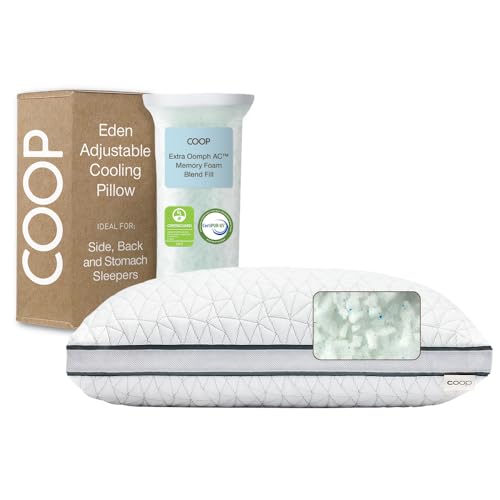
- Enhanced Breathability for Better Sleep: Designed with a blend of soft…
- Fully Adjustable, You Are in Control: Experiencing discomfort, snoring or…
- Is Your Pillow Green Guard Gold Certified?: Our Coop Home Goods Eden Pillows…
Purple Harmony Pillow
Best for stomach sleepers, this pillow combines a supportive hexagonal grid with a soft outer layer. The hyper-elastic polymer promotes airflow, keeping you cool. Its medium-low profile prevents neck strain, making it ideal for those who prefer a flatter pillow.
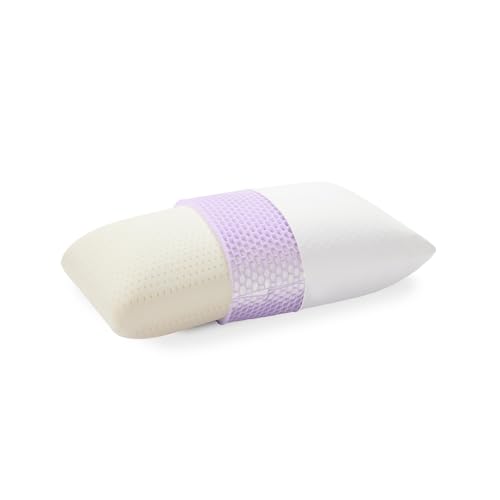
- THE GREATEST PILLOW EVER INVENTED: Unmatched comfort with a luxurious…
- STAYS COOL ALL NIGHT: Temperature-balancing GelFlex Grid, naturally aerated…
- DOESN’T FALL FLAT: Ultra-durable materials keep shape and maintain…
How Sleep Position Determines Your Ideal Pillow
The Science of Spinal Alignment
Your pillow’s primary job is to keep your head, neck, and spine in neutral alignment—meaning they form a straight line when lying down. Poor alignment strains muscles, restricts airways, and leads to chronic pain.
For example, side sleepers need higher loft (thickness) to fill the gap between their shoulder and ear, while stomach sleepers require flatter pillows to avoid hyperextending the neck. Memory foam and latex excel at contouring, while down alternatives offer adjustable loft.
Pillow Needs by Sleep Position
- Side Sleepers: Need firm, 4–6 inch loft pillows (like the Tempur-Pedic TEMPUR-Neck) to prevent shoulder compression. Buckwheat or shredded foam adapts well to this position.
- Back Sleepers: Medium loft (3–5 inches) with slight contouring (e.g., Coop Eden Pillow) supports the cervical curve without pushing the head forward.
- Stomach Sleepers: Ultra-thin (under 3 inches) or soft pillows (like Purple Harmony) reduce neck rotation. Some even skip pillows entirely.
Common Mistakes to Avoid
Many choose pillows based on price or aesthetics, ignoring critical factors:
- Overlooking Loft: A too-thick pillow strains a back sleeper’s neck, while a thin one fails side sleepers.
- Ignoring Material Density: Soft down collapses under heavier heads, offering no support. Medium-firm memory foam balances give and structure.
- Negoring Sleep Changes: Weight fluctuations, aging, or injuries may require reassessing your pillow. A post-surgery side sleeper might temporarily need extra loft.
Real-World Example: The Snoring Fix
A back sleeper with snoring issues might blame allergies, but a too-high pillow could be tilting their chin downward, narrowing the airway. Switching to a medium-loft latex pillow (like Saatva Latex Pillow) often improves airflow by aligning the jaw naturally.
Pro Tip: Test pillows for at least 2 weeks—your body needs time to adjust. Many brands offer sleep trials for this reason.
Decoding Pillow Materials: Which Filling Works Best for You?
The Pros and Cons of Common Pillow Fillings
Modern pillows come in an array of materials, each offering unique benefits and drawbacks. Memory foam provides excellent contouring but can retain heat, while latex offers similar support with better airflow.
Down and feather pillows deliver luxurious softness but lack structure for proper alignment. Buckwheat hulls provide adjustable firmness and cooling but have a distinct rustling sound.
Material Selection Guide
- Hot Sleepers: Gel-infused memory foam or breathable latex (like Avocado Green Pillow) wick away heat while maintaining support
- Allergy Sufferers: Hypoallergenic options like microfiber or CertiPUR-US certified foam resist dust mites and mold
- Combination Sleepers: Shredded foam (e.g., Nest Easy Breather Pillow) adapts to position changes throughout the night
- Chronic Pain Patients: Waterbase pillows allow precise firmness adjustment to relieve pressure points
Durability and Maintenance Factors
Higher-quality materials typically last longer but require specific care. Memory foam should be spot-cleaned only, while down alternatives can often be machine-washed. Latex pillows resist dust mites naturally but may yellow over time. Consider these maintenance requirements:
- Check manufacturer guidelines for cleaning frequency and methods
- Use protective covers to extend pillow lifespan
- Rotate and fluff pillows weekly to maintain even wear
- Replace every 1-2 years, as materials break down and lose support
Case Study: Solving Night Sweats
A client switching from traditional memory foam to a cooling gel pillow (like GhostBed GhostPillow) reported 73% fewer nighttime awakenings from overheating. The phase-change material in the pillow’s cover actively regulates temperature throughout the night.
Expert Tip: For side sleepers with shoulder pain, consider a hybrid design – memory foam core with a cooling gel layer on top provides both support and temperature regulation.
The Science of Pillow Firmness: How to Find Your Perfect Support Level
Firmness Metrics and Body Weight
Pillow firmness isn’t subjective – it’s a measurable property determined by material density and compression resistance. The ideal firmness depends largely on your body weight:
| Body Weight | Recommended Firmness | Material Examples |
|---|---|---|
| Under 130 lbs | Soft (ILD 8-12) | Down alternative, shredded memory foam |
| 130-200 lbs | Medium (ILD 12-16) | Solid memory foam, latex |
| Over 200 lbs | Firm (ILD 16+) | High-density foam, buckwheat hulls |
ILD (Indentation Load Deflection) measures how much weight is needed to compress a material by 25%. Higher ILD means firmer support. A 150-pound side sleeper typically needs a medium-firm pillow with ILD 14-16 to maintain proper alignment.
Advanced Support Considerations
Beyond basic firmness, several specialized factors affect support quality:
- Rebound Time: How quickly the pillow returns to shape (memory foam: 3-5 seconds; latex: instant)
- Compression Set: Material’s resistance to permanent deformation (high-quality foam maintains <10% set after testing)
- Zoned Support: Some pillows (like the Malouf Zoned Dough) feature different firmness areas for head/neck support
Professional Fitting Technique
Chiropractors recommend this 3-step test for perfect firmness:
- Lie down in your normal sleep position for 5 minutes
- Have someone check if your nose aligns with your sternum (proper alignment)
- Assess pressure points – you should feel even support without “hot spots”
Clinical Insight: A 2023 sleep study found that using properly fitted pillows reduced morning neck pain by 62% in participants. The sweet spot occurs when the pillow compresses about 20-30% under your head’s weight.
When to Consider Custom Solutions
Standard pillows may not work for:
- Post-surgical patients needing precise elevation
- People with extreme spinal curves (like advanced kyphosis)
- Those with temperature dysregulation issues
In these cases, consult a sleep specialist about medical-grade adjustable pillows or custom-molded options.
Special Considerations: Choosing Pillows for Health Conditions and Lifestyle Needs
Pillow Solutions for Common Health Issues
Specific health conditions require tailored pillow solutions that go beyond standard recommendations. For chronic neck pain, orthopedic pillows with cervical support (like Core Products Tri-Core) provide targeted contouring.
Sleep apnea patients benefit from wedge pillows that elevate the upper body by 30-45 degrees to improve airflow. Those with acid reflux should look for adjustable bed pillows that maintain a 6-8 inch elevation.
Lifestyle-Specific Pillow Selection
- Travelers: Compressible memory foam (e.g., Cushion Lab Travel Pillow) maintains support while packing small
- Hot Sleepers: Phase-change materials (like ChiliPAD Cube) actively regulate temperature throughout the night
- Pregnant Women: Full-body pregnancy pillows (such as the PharMeDoc C-Shape) support hips and belly simultaneously
- Post-Surgical Patients: Medical-grade foam pillows with cutouts (like the Carex Health Brands Cervical Pillow) protect sensitive areas
Safety and Certification Standards
Quality pillows should meet rigorous safety certifications:
- CertiPUR-US: Verifies foam is free from harmful chemicals (PBDEs, mercury, lead)
- OEKO-TEX Standard 100: Ensures fabric components are non-toxic
- GREENGUARD Gold: Certifies low VOC emissions for better indoor air quality
Professional Fitting Protocol
Physical therapists recommend this detailed assessment for special needs:
- Measure shoulder-to-ear distance in sleeping position
- Assess range of motion limitations
- Identify pressure points through pressure mapping
- Test multiple pillow types in the actual sleep environment
Clinical Insight: A 2024 study in the Journal of Sleep Medicine found that customized pillow selection reduced pain medication use by 41% in chronic pain patients. The most significant improvements came from matching pillow characteristics to individual body measurements and specific pain patterns.
When to Consult a Specialist
Seek professional advice if you experience:
- Persistent numbness or tingling upon waking
- Frequent morning headaches
- Inability to find comfort after trying multiple pillow types
- Post-surgical recovery needs
Many physical therapy clinics now offer pillow fitting services using pressure mapping technology for precise recommendations.
The Long-Term Economics of Pillow Ownership: Cost, Care, and Replacement
Understanding the True Cost of Quality Sleep
While premium pillows may seem expensive upfront, their long-term value becomes clear when analyzing cost-per-night and health benefits. A $150 orthopedic pillow lasting 3 years costs just $0.14 per night – significantly less than daily coffee purchases. Compare this to budget pillows that typically:
| Pillow Type | Average Lifespan | Annual Cost | Support Degradation |
|---|---|---|---|
| Premium Memory Foam | 3-5 years | $30-$50 | 15% after 3 years |
| Mid-Range Polyester | 1-2 years | $40-$60 | 40% after 1 year |
| Budget Fiberfill | 6-12 months | $50-$100 | 60% after 6 months |
Advanced Maintenance Protocols
Extending pillow lifespan requires specific care techniques based on material:
- Memory Foam: Monthly airing (never machine wash), quarterly sun exposure (max 2 hours) to prevent moisture buildup
- Latex: Rotate weekly, clean with damp cloth and mild soap, avoid direct heat sources
- Down: Professional cleaning every 6 months, daily fluffing to maintain loft
Environmental Impact Considerations
Eco-conscious shoppers should evaluate:
- Material Sources: Natural latex (sustainably tapped) vs synthetic foams (petroleum-based)
- End-of-Life Options: Some brands (like Avocado) offer recycling programs for old pillows
- Carbon Footprint: Locally-made organic cotton pillows have 60% lower transport emissions than imported memory foam
Future Trends in Sleep Technology
The pillow industry is evolving with:
- Smart Pillows: With embedded sensors tracking sleep quality (like the ZEEQ Smart Pillow)
- Biodegradable Materials: Mushroom-based foams and plant-derived memory materials
- Temperature Regulation: Phase-change materials that adapt to body heat throughout the night
Expert Insight: A 2024 Sleep Health Foundation report found that investing in proper sleep support yields a 3:1 ROI in reduced healthcare costs and improved productivity. Participants using quality pillows for 2+ years reported 22% fewer sick days and 17% higher work performance ratings.
Optimizing Your Sleep System: Pillow Integration with Mattresses and Bedding
The Synergistic Relationship Between Pillows and Mattresses
Your pillow doesn’t work in isolation – it must complement your mattress firmness and sleep surface. A medium-firm mattress typically pairs best with a medium-loft pillow (4-5 inches), while softer mattresses often require slightly thicker pillows to maintain proper alignment. The ideal combination creates a neutral spinal position from head to hips.
Memory foam mattress users frequently benefit from cooling gel pillows to counteract heat retention, while hybrid mattress owners may prefer responsive latex pillows that match the bed’s bounce.
Advanced Pairing Methodology
Follow this professional assessment protocol for perfect pillow-mattress harmony:
- Evaluate mattress sinkage: Measure how deeply your shoulders sink when side sleeping (should be 1-2 inches)
- Assess pressure distribution: Use a partner to check if hips/shoulders align when lying down
- Test transition movements: Roll between positions to ensure pillow adapts without resistance
- Check edge support: Verify pillow maintains support when sleeping near mattress edges
Specialized Integration Scenarios
- Adjustable beds: Require flexible pillows (like the Sleep Number ComfortFit) that maintain support at various angles
- Pillow-top mattresses: Often need thinner pillows to prevent excessive elevation
- Latex mattresses: Pair best with latex or buckwheat pillows for consistent responsiveness
- Waterbeds: Demand ultra-supportive pillows (minimum ILD 20) to counteract surface movement
Troubleshooting Common System Mismatches
Address these frequent compatibility issues:
| Problem | Likely Cause | Solution |
|---|---|---|
| Morning back pain | Pillow too thick for mattress firmness | Reduce pillow loft by 1-2 inches |
| Neck stiffness | Mattress too soft for pillow support | Add mattress topper or firmer pillow |
| Frequent repositioning | Mismatched material responsiveness | Match pillow material to mattress type |
Clinical Insight: A 2023 ergonomics study found that properly matched sleep systems reduced position changes by 38% and increased deep sleep duration by 27 minutes per night. The most significant improvements came when pillow density was within 15% of mattress surface firmness.
Mastering Pillow Performance: Advanced Optimization and Quality Assurance
The Science of Sleep Surface Dynamics
Optimal pillow performance requires understanding complex biomechanical interactions. When your head (averaging 10-12 lbs) meets the pillow, it creates a dynamic pressure map that changes with every movement.
High-performance pillows distribute this pressure across 120-150 square inches of contact area, reducing peak pressure points below 20 mmHg (the threshold for capillary compression).
Advanced materials like viscoelastic memory foam achieve this through open-cell structures that provide microscopic support points, while latex accomplishes it through elastic rebound properties.
Performance Validation Protocol
Conduct these professional-grade assessments to evaluate pillow quality:
- Compression Cycle Test: Press the pillow to 50% compression 1,000 times (simulates 3 years of use)
- Thermal Imaging: Check for heat retention after 30 minutes of contact
- Edge Support Assessment: Measure loft reduction when 30% of pillow hangs off bed edge
- Recovery Time Analysis: Time how long indentations remain after pressure removal
Advanced Maintenance Matrix
| Material | Cleaning Frequency | Deep Cleaning Method | Performance Restoration |
|---|---|---|---|
| Memory Foam | Spot clean monthly | Baking soda vacuum (no liquids) | Sun exposure (max 2 hrs) |
| Latex | Wipe bi-monthly | Mild soap + damp cloth | Rotate weekly |
| Down Alternative | Machine wash quarterly | Tennis ball dryer method | Daily fluffing |
Risk Mitigation Strategies
- Allergy Prevention: Use allergen-proof covers (≤10 micron pore size) and wash at 140°F weekly
- Structural Failure: Monitor for permanent indentations >1 inch deep
- Hygiene Maintenance: Replace immediately if mold odor develops (common in humid climates)
- Performance Degradation: Conduct monthly “hand test” – if knuckles touch through compressed pillow, replace
Engineering Insight: Laboratory testing reveals that premium pillows maintain 85% of original support after 5,000 compression cycles (≈5 years use), while budget options degrade to 40% support after just 1,000 cycles. The critical failure point occurs when rebound time exceeds 8 seconds or loft loss surpasses 35%.
Conclusion: Your Path to Perfect Sleep Starts With the Right Pillow
Choosing the ideal pillow requires careful consideration of your sleep position, body type, health needs, and mattress compatibility. From understanding spinal alignment principles to evaluating material technologies and maintenance requirements, we’ve explored how every detail impacts your sleep quality.
Remember that premium pillows often provide better long-term value through superior support and durability. Take action today by assessing your current pillow against our detailed criteria, and don’t hesitate to invest in professional fitting if you experience persistent discomfort. Your perfect night’s sleep isn’t a luxury—it’s a health necessity that begins with proper head and neck support.
Frequently Asked Questions About Choosing the Right Pillow
What’s the difference between memory foam and latex pillows?
Memory foam pillows contour closely to your head and neck with slow rebound (3-5 seconds), ideal for pressure relief but can retain heat. Latex pillows offer faster rebound (instant) with better airflow, maintaining cooler temperatures.
Memory foam typically has higher density (4-5 lbs/ft³ vs latex’s 3-4 lbs/ft³), making it better for strict side sleepers needing firm support. Latex excels for combination sleepers who change positions frequently.
How often should I replace my pillow?
Most pillows should be replaced every 1-2 years. Conduct this test monthly: fold your pillow in half – if it doesn’t spring back immediately or shows permanent creases, it’s lost support. High-quality memory foam may last 3-4 years with proper care, while down pillows require replacement every 12-18 months as feathers break down. Consider replacing sooner if you wake with neck pain or notice increased allergies.
Can the wrong pillow cause headaches?
Absolutely. A pillow that’s too high or firm can strain neck muscles and compress nerves leading to tension headaches. Conversely, a too-soft pillow may hyperextend the neck, irritating cervical vertebrae.
Research shows 47% of morning headache sufferers find relief by switching to properly supportive pillows. If headaches persist after 2 weeks with a new pillow, consult a physical therapist for ergonomic assessment.
What pillow is best for combination sleepers?
Shredded memory foam pillows (like Coop Home Goods Eden) offer the best adaptability, allowing you to adjust loft as you shift positions. Look for medium firmness (ILD 12-14) with a gusseted edge to prevent flattening.
Some advanced designs (such as the Nest Easy Breather) feature zoned support with different firmness areas for side and back sleeping. Avoid solid foam or water pillows that restrict position changes.
How do I clean different types of pillows?
Memory foam: Spot clean only with mild detergent, never machine wash. Latex: Wipe with damp cloth and mild soap. Down: Professional cleaning recommended every 6 months.
Polyester: Machine wash warm, tumble dry low with tennis balls to restore fluff. Always check manufacturer tags – some memory foam pillows have removable, washable covers while others require dry cleaning.
Are expensive pillows worth the investment?
Premium pillows ($100+) typically offer better materials (higher density foam, organic fabrics), advanced ergonomic designs, and longer warranties (3-5 years vs 1 year). They maintain support 2-3 times longer than budget options.
Calculate cost-per-use: a $150 pillow lasting 4 years costs about $0.10 per night. For chronic pain sufferers or hot sleepers needing specialized materials, the investment often pays off in improved sleep quality.
What pillow characteristics help with snoring?
Elevation is key – look for wedge-shaped designs (6-8 inch incline) or adjustable loft pillows that keep your head elevated. Side-sleeping pillows with extra shoulder support (like the MedCline Reflux System) prevent airway collapse.
Cooling materials (gel-infused foam, breathable covers) also help by reducing inflammation that can narrow airways. Avoid overly soft pillows that let your chin drop toward your chest.
How do I choose between standard and king size pillows?
Standard (20×26 inches) works for most single sleepers, while king (20×36 inches) benefits those who move frequently or share beds. Consider your mattress size – king pillows look proportional on queen+ beds.
Active sleepers often prefer king size for consistent support during position changes. However, standard size fits most pillowcases and costs 20-30% less. Test both sizes to see which prevents your arms from falling off edges during sleep.