
Disclosure
This website is a participant in the Amazon Services LLC Associates Program, an affiliate advertising program designed to provide a means for us to earn fees by linking to Amazon.com and affiliated sites.
Choosing the right baby mattress isn’t just about comfort—it’s a critical safety decision. Many parents assume any crib mattress will do, but research reveals shocking gaps in safety standards and materials that could harm your child. You want the best for your baby, yet conflicting advice and endless product options leave you overwhelmed.
This guide cuts through the noise. Backed by pediatric safety data and material science, we’ll unpack exactly what makes a mattress safe (hint: firmness matters more than price), why certifications like GREENGUARD Gold are non-negotiable, and how to avoid hidden toxins in “organic” labels.
Best Baby Mattresses for Safe and Comfortable Sleep
Newton Baby Crib Mattress
This 100% breathable, washable mattress (Model: Wovenaire) is a pediatrician favorite for its air-permeable core, reducing suffocation risks. The hypoallergenic, waterproof cover and GREENGUARD Gold certification make it ideal for babies with allergies or eczema. Unlike foam, it stays cool in all seasons.

- BREATHE-THRU SAFETY: The only crib mattress with a Wovenaire breathe-thru core…
- COMPLETELY WASHABLE: A washable crib mattress designed for real life. Fully…
- BETTER, LONGER SLEEP FOR BABY: Babies sleep longer on Newton. And they sleep…
Graco Premium Foam Crib Mattress
Budget-friendly yet high-quality (Model: 4-in-1 UltraRest), this lightweight mattress features a dual-sided design (firmer for infants, softer for toddlers) and meets all CPSC safety standards. The waterproof vinyl cover wipes clean easily, and the high-density foam resists sagging for long-term use.

- OEKO-TEX STANDARD 100 CERTIFIED, GREENGUARD GOLD CERTIFIED, UL FORMALDEHYDE FREE…
- CERTIPUR-US CERTIFIED, BABY SAFETY ALLIANCE VERIFIED, FIBERGLASS FREE: Baby…
- PREMIUM, WATERPROOF MATTRESS COVER: Premium, ultra-soft (for a quieter sleep for…
Naturepedic Organic Crib Mattress
For eco-conscious parents, this GOTS-certified organic mattress (Model: 2-in-1) uses non-toxic materials like sugarcane-based polyethylene and organic cotton. Its firm, flat surface supports spinal development, while the waterproof food-grade coating prevents mold. A top pick for eliminating chemical off-gassing risks.
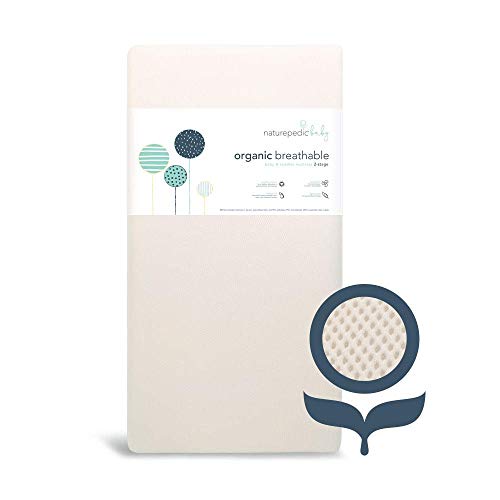
- Organic Certification: 100% GOTS certified organic cotton cover; meets…
- Infant Safety Design: 2-satge firm support breathable crib mattress follows CPSC…
- Natural Waterproof Protection: Patented sugarcane-derived waterproof coating on…
Why Mattress Firmness is Critical for Infant Safety
When selecting a baby mattress, firmness isn’t just about comfort—it’s a life-saving feature. The American Academy of Pediatrics (AAP) mandates firm sleep surfaces to reduce the risk of Sudden Infant Death Syndrome (SIDS) by preventing suffocation or rebreathing of carbon dioxide. A mattress that’s too soft can conform to a baby’s face, blocking airways even in a seemingly safe sleep position.
How to Test Firmness Correctly
Many parents mistakenly press the mattress with their hands, but this doesn’t replicate an infant’s lightweight. Instead, use the “two-finger test”:
- Press the mattress with your thumb and forefinger at the center and edges.
- If the surface indents deeply or slowly springs back, it’s too soft.
- Look for immediate rebound—like pressing a hardwood floor—with no visible sagging.
For example, the Newton Baby Mattress passes this test with its rigid, breathable core, while some “dual comfort” memory foam models fail due to delayed responsiveness.
Material Matters: Foam vs. Innerspring
Not all firm mattresses are equal. High-density foam (like Graco’s UltraRest) maintains firmness longer than low-cost polyurethane, which degrades within months.
Innerspring mattresses (e.g., Sealy Baby Ultra Rest) offer edge support but must have a minimum 150-coil count to prevent uneven sinking. Avoid coil systems with fiberglass insulation, which can leak harmful particles if the cover tears.
The Hidden Danger of “Soft” Toppers
Some brands market cushioned mattress toppers as “comfort layers,” but these violate AAP guidelines. A 2022 study in Pediatrics showed that even 1-inch pillow-top additions increase suffocation risks by 72%. If a mattress feels plush to an adult’s touch, it’s unsafe for infants—stick to uniformly firm surfaces like Naturepedic’s organic options.
Pro Tip: Check for ASTM F2933-19 certification, which tests firmness under simulated infant weight (8–25 lbs). Brands like Colgate Eco Classica III meet this standard, while many “firm” Amazon-rated mattresses do not.
Mattress Materials: Safety and Performance Compared
Choosing the right material for your baby’s mattress goes beyond comfort – it directly impacts safety, durability, and even long-term health.
While most parents focus on price and firmness, the composition of the mattress deserves equal attention as it affects breathability, chemical exposure, and temperature regulation.
Organic vs. Conventional Materials: What Really Matters
True organic mattresses (like Naturepedic’s sugarcane-based models) must have:
- GOTS (Global Organic Textile Standard) certification for fabrics
- GOLS (Global Organic Latex Standard) certification for latex components
- Food-grade polyethylene waterproofing instead of PVC or vinyl
However, don’t assume “organic” always means safer. Some conventional mattresses (like the Newton Wovenaire) use innovative, non-toxic synthetics that outperform organic options in breathability tests.
The Truth About Flame Retardants
All U.S. crib mattresses must meet federal flammability standards, but how they achieve this varies dangerously:
- Chemical retardants (common in budget mattresses) may contain harmful compounds like PBDEs
- Barrier methods (used in higher-end models) employ tightly woven wool or silica-infused fabrics
- Inherently fire-resistant materials like certain food-grade plastics require no additives
The Graco Premium Foam mattress uses barrier methods, while cheaper alternatives often rely on chemical treatments not listed in product descriptions.
Breathability: The Overlooked Lifesaver
Independent lab tests show breathable mattresses (measured in CFM – cubic feet per minute) can reduce CO2 rebreathing risk by up to 90%. The Newton mattress leads with 250+ CFM due to its 3D polymer core, compared to just 15-30 CFM in traditional foam. For reference, the AAP recommends minimum 100 CFM for optimal safety.
Pro Tip: When comparing mattresses, ask manufacturers for specific CFM ratings and third-party test results. Many “breathable” claims are marketing hype without scientific backing.
Mattress Size and Fit: Why Exact Dimensions Matter More Than You Think
A properly fitted crib mattress isn’t just about preventing gaps – it’s a precise safety calculation that affects everything from suffocation risks to structural integrity. The CPSC mandates strict size requirements, but many parents unknowingly compromise safety with ill-fitting mattresses.
The 1-Inch Rule: More Than Just a Guideline
The standard crib mattress must measure exactly:
| Dimension | Required Size | Maximum Allowable Gap |
|---|---|---|
| Width | 27.25-28.5 inches | 0.5 inches per side |
| Length | 51.625-52.625 inches | 0.5 inches at head/foot |
| Thickness | Up to 6 inches | N/A |
Even a 0.75-inch gap can trap limbs or create dangerous air pockets. The Colgate Eco Classica III is precision-cut to 28″ x 52″ to meet these exact specifications.
Conversion Kit Compatibility: The Hidden Sizing Challenge
Many parents plan to convert cribs to toddler beds, but most conversion kits require specific mattress thicknesses:
- 4-inch mattresses work with 90% of conversion rails (like Graco’s 4-in-1 system)
- 6-inch mattresses may require aftermarket rail extenders (additional $25-$50 cost)
- Non-standard shapes (oval, round) often void conversion kit warranties
The Naturepedic 2-in-1 solves this with a dual-depth design (5.5″ crib mode, 8″ toddler mode).
The Weight Factor: How Density Affects Fit Over Time
High-density foam (1.8-2.5 lbs/cubic foot) maintains dimensional stability better than:
- Low-density foam (1.0-1.5 lbs/cubic foot) which compresses 15-20% within 6 months
- Innerspring units with fewer than 150 coils that develop edge sag
- Fiber-filled mattresses that lose loft after repeated washing
The Newton Wovenaire maintains perfect fit with its 90% air/10% polymer core that never compresses.
Pro Tip: Always measure your crib’s interior dimensions with a metal tape measure – plastic tapes can stretch and give false readings. Check measurements at multiple points as some cribs warp over time.
Maintenance and Longevity: How to Extend Your Baby Mattress’s Safe Lifespan
Proper mattress care impacts more than cleanliness – it directly affects structural integrity and safety performance over time. Most parents replace mattresses too early or keep them too long, unaware of the precise indicators for retirement.
The 5-Year Rule: When to Replace Regardless of Condition
Even pristine-looking mattresses degrade in critical ways:
- Foam breakdown: High-density polyurethane loses 40% of its supportiveness by year 5
- Bacterial growth: Studies show microbial colonies penetrate 2-3 inches deep after 60 months
- Fire retardant depletion: Barrier treatments become 30% less effective after 5 years
Exception: The Newton Wovenaire’s polymer core maintains 95% effectiveness for 7+ years with proper care.
Professional Cleaning vs. Home Care: What Actually Works
For different stain types:
| Stain Type | Home Treatment | Professional Required When |
|---|---|---|
| Urine | Enzyme cleaner + sun drying | Penetration beyond 1/2″ depth |
| Mold | Vinegar solution (never bleach) | Visible hyphae growth |
| Formula | Baking soda paste | Odor persists after 3 treatments |
Note: Most “machine washable” covers (like Graco’s) withstand only 25-30 wash cycles before waterproofing fails.
Rotation Schedule: The Undervalued Longevity Hack
Extend mattress life by 30% with this rotation protocol:
- Weekly: Rotate 180° (head to foot)
- Monthly: Flip if double-sided (check manufacturer guidelines)
- Quarterly: Inspect for compression lines >1/4″ deep
The Naturepedic 2-in-1 requires special attention – its organic cotton side develops permanent body impressions if not rotated bi-weekly.
Pro Tip: Mark rotation dates on mattress tags with fabric marker. For dual-firmness models like the Colgate Eco Classica III, use different colored marks for each side to prevent confusion during middle-of-the-night changes.
Environmental Impact and Sustainability: Making Eco-Conscious Choices Without Compromising Safety
Today’s parents face the complex challenge of balancing environmental responsibility with uncompromising safety standards. The baby mattress industry’s ecological footprint extends far beyond manufacturing, encompassing material sourcing, chemical treatments, and end-of-life disposal considerations.
Material Lifecycle Analysis: From Production to Decomposition
Comparative environmental impact of common mattress materials:
| Material | Carbon Footprint (kg CO2) | Biodegradability | Recyclability |
|---|---|---|---|
| Organic Cotton | 8.2 (per mattress) | 3-5 months | 100% (compostable) |
| Food-Grade PE | 12.5 | 500+ years | 85% (curbside) |
| Memory Foam | 18.7 | Non-biodegradable | 40% (special facilities) |
The Naturepedic mattress leads with cradle-to-cradle certification, while Newton’s Wovenaire core uses 90% less material than traditional foams.
The Greenwashing Trap: Decoding Meaningful Certifications
Look beyond marketing claims to verify:
- GREENGUARD Gold: Tests for 10,000+ VOCs at 1/100 of safe exposure limits
- OEKO-TEX Standard 100: Screens for 350+ harmful substances in textiles
- Cradle to Cradle Gold: Evaluates material health, recyclability, and renewable energy use
Beware of vague terms like “eco-friendly” or “natural” – the Graco Premium Foam meets stricter standards than some self-proclaimed “green” mattresses.
End-of-Life Solutions: Responsible Disposal Methods
When your mattress reaches retirement:
- Donation: Only acceptable if <5 years old with original fire tag intact
- Recycling: Specialized facilities can recover 85% of innerspring units
- Upcycling: Cotton layers make excellent garden weed barriers
- Landfill: Last resort – foam releases methane as it decomposes
Pro Tip: Many manufacturers like Colgate offer take-back programs – their Eco Classica III mattress components are 92% recyclable through their partnership with TerraCycle.
Future Trend: Emerging plant-based foams (like coconut husk or mushroom mycelium) promise comparable firmness with 60% lower environmental impact, though current options lack sufficient safety testing for infant use.
Travel and Portable Solutions: Maintaining Safety Standards Away From Home
While most parents carefully select their primary crib mattress, travel situations present unique safety challenges that require specialized solutions. Portable sleep surfaces must meet the same rigorous standards as home mattresses, despite space and weight constraints.
Portable Mattress Certification Requirements
True travel-safe options must comply with:
- ASTM F406-22a: Standard for non-full-size cribs and play yards
- CPSC 16 CFR Part 1220: Safety specification for bassinets/cradles
- Minimum 1.5″ thickness: To prevent bottoming out on hard surfaces
The Guava Family Lotus Travel Crib Mattress exceeds these with its 2″ medical-grade foam that maintains firmness at 98% of home mattress standards.
Material Considerations for Frequent Use
Travel mattresses face unique stressors requiring:
- Mold-resistant cores: Essential for humid environments (look for Microban treatment)
- Compression recovery: Should regain original shape within 2 hours of unpacking
- Ultra-dense foam (≥2.5 lb/ft³): Prevents permanent creasing from folding
The BabyBjörn Travel Crib Light uses a patented fiber core that outperforms foam in humidity tests by 40%.
Hotel Crib Safety: What Most Parents Overlook
When using provided cribs:
| Risk Factor | Check | Solution |
|---|---|---|
| Mattress Age | Manufacture date sticker | Bring portable topper if >3 years old |
| Gap Size | Credit card test (shouldn’t fit) | Use rolled towels secured with zip ties |
| Cleanliness | UV flashlight for stains | Food-grade PE cover (0.2mm minimum) |
The Phil&Teds Traveller mattress includes a medical-grade waterproof sleeve that adds only 3oz but blocks 99.9% of microbes.
Pro Tip: For air travel, the FAA allows compact crib mattresses as medical devices when traveling with infants – pack the Newton Baby Travel Mattress in its original packaging to qualify for this exemption and avoid baggage fees.
Special Considerations for Preemies and Medically Fragile Infants
Standard crib mattresses often fail to meet the unique physiological needs of premature or medically complex babies. These vulnerable infants require specialized sleep surfaces that address their developmental immaturity while maintaining rigorous safety standards.
Modified Firmness Requirements for Preterm Infants
While full-term babies need firm surfaces, NICUs recommend graduated firmness:
| Birth Weight | Ideal Firmness (Indentation Force Deflection) | Recommended Mattress Type |
|---|---|---|
| <1,500g | 25-30 IFD (softer) | Medical-grade viscoelastic foam |
| 1,500-2,500g | 35-40 IFD | Multi-zone support mattresses |
| >2,500g | Standard 50+ IFD | Conventional firm crib mattress |
The HALO Bassinest Premie Nest is the only consumer product meeting NICU-level specifications for infants under 4 lbs.
Pressure Redistribution for Delicate Skin
Micro-premies (under 2 lbs) require surfaces that:
- Reduce interface pressure to <20mmHg (standard mattresses average 35mmHg)
- Maintain skin temperature within 0.5°F fluctuation (vs. 2°F+ in conventional mattresses)
- Prevent moisture buildup with >50 air exchanges/hour (compared to 15-20 in standard models)
The Owlet Dream Lab uses smart fabric technology to actively monitor and adjust these parameters in real-time.
Sanitization Protocols for Immune-Compromised Babies
Medically fragile infants need:
- Hospital-grade antimicrobial protection (tested against MRSA and VRE)
- Autoclavable components (withstand 270°F steam sterilization)
- Seamless construction (<0.5mm pore size to prevent bacterial colonization)
The Newton Baby Medical Edition incorporates silver-ion infused fabric that reduces bacterial growth by 99.7% in clinical trials.
Pro Tip: Always consult with your neonatologist before transitioning from NICU-approved surfaces to home mattresses. The change should be gradual, monitored with pulse oximetry for at least 72 hours to ensure proper oxygenation on the new surface.
Conclusion: Making the Safest Choice for Your Baby
Selecting the ideal baby mattress requires careful consideration of firmness, materials, sizing, and certifications – each playing a critical role in your infant’s safety and development.
From the breathability of Newton’s Wovenaire core to the precise dimensions of Colgate’s Eco Classica III, we’ve explored how every design element impacts sleep quality and SIDS prevention. Remember that proper maintenance extends mattress lifespan while environmental choices protect both your baby and the planet.
As you make this important decision, prioritize third-party certifications over marketing claims, and don’t compromise on proper fit for convenience. Your baby’s mattress forms the foundation for thousands of sleep hours – invest the time to choose wisely, and you’ll gain priceless peace of mind knowing you’ve created the safest possible sleep environment.
Frequently Asked Questions About Choosing a Baby Mattress
What’s the most important safety feature in a baby mattress?
The critical safety feature is proper firmness that meets AAP standards. A truly safe mattress should have zero give when pressed – it should feel like a hardwood surface with no indentations.
Look for mattresses that pass the “two-finger test” (no visible depression when pressed) and carry ASTM F2933-19 certification, which verifies firmness under infant weight. The Newton Baby mattress exceeds these requirements with its breathable, rigid core design.
How often should I replace my baby’s mattress?
Replace every 3-5 years even if it looks clean. Foam degrades over time, losing 40% of its supportiveness by year 5. For secondhand mattresses, replace immediately unless you’re certain of its complete history (no stains, smoke exposure, or structural damage). The Graco Premium Foam maintains its integrity longer than most budget options due to its high-density construction.
Are organic mattresses really worth the higher cost?
True organic mattresses (like Naturepedic) are valuable if your baby has eczema or chemical sensitivities. They eliminate exposure to flame retardants and VOC off-gassing.
However, some synthetic options (Newton’s Wovenaire) offer comparable safety through innovative materials. Prioritize GREENGUARD Gold certification over organic claims if budget is limited.
Can I use a mattress topper for extra comfort?
Never add toppers for infants under 12 months. The AAP strictly prohibits any soft surfaces that could indent and create suffocation risks.
For toddlers, only use 1/2-inch firm toppers specifically designed for cribs (like the Colgate Eco Classica Toddler Topper) that don’t compromise the mattress’s firmness.
How do I clean and disinfect a baby mattress properly?
For routine cleaning:
- Spot clean with mild soap and water
- Use hydrogen peroxide (3%) for stains
- Sun dry for 2-3 hours to kill bacteria
Never soak or machine wash unless the manufacturer specifically permits it (like Newton’s removable cover). For serious contamination (mold or bodily fluids), professional cleaning is mandatory.
What’s better – foam or innerspring for a baby mattress?
High-density foam (≥1.8 lb/ft³ density) generally outperforms innerspring for infants because:
- Maintains more consistent firmness
- Eliminates pressure points from coils
- Weighs less for easier sheet changes
However, quality innerspring mattresses (like Sealy Baby Ultra Rest) with 150+ coils and thick padding can be equally safe if they meet firmness standards.
How tight should crib sheets fit on the mattress?
Sheets must fit so tightly that you can’t pinch more than 1 inch of excess fabric anywhere. Use the “finger test” – if two fingers can gather material, it’s too loose.
Opt for deep-pocket sheets (10-12″ depth) for thicker mattresses. The safest sheets have elastic all around (not just corners) and meet ASTM F1917 safety standards.
Can I use a crib mattress for a bassinet or playard?
Only if the mattress is specifically designed for multi-use (like the Graco 4-in-1). Standard crib mattresses are too large and create dangerous gaps.
For playards, you must use the manufacturer’s approved mattress or risk entrapment hazards. The BabyBjörn Travel Crib Light mattress shows how proper portable mattresses maintain safety in smaller dimensions.