
Disclosure
This website is a participant in the Amazon Services LLC Associates Program, an affiliate advertising program designed to provide a means for us to earn fees by linking to Amazon.com and affiliated sites.
Adults need 7–9 hours of sleep per night for optimal health—but here’s why most aren’t getting enough. You’ve heard the old myth that “you can train yourself to need less sleep,” yet cutting corners on rest sabotages your brain, immunity, and even lifespan.
With 1 in 3 adults chronically sleep-deprived and burnout at record highs, understanding your body’s true sleep requirements isn’t just helpful—it’s urgent. This guide reveals the neuroscience behind sleep cycles, debunks dangerous misconceptions, and provides actionable strategies to align your habits with what experts provenly recommend.
Best Sleep Tracking Devices for Adults
Oura Ring Generation 3
The Oura Ring Gen 3 is a sleek, non-intrusive wearable that tracks REM sleep with clinical-grade accuracy. Its advanced PPG sensors and temperature monitoring provide detailed sleep stage analysis, including REM duration and disruptions. Ideal for those who dislike wristbands, it offers personalized insights via its intuitive app.

- SIZE BEFORE YOU BUY – Size with Gen3 Sizing Kit prior to purchasing Oura Ring…
- THE REVOLUTIONARY SMART RING – Track your sleep, activity, stress, heart rate…
- MORE ACCURATE BY DESIGN – Your finger provides the most accurate pulse reading…
Fitbit Sense 2
Fitbit’s Sense 2 combines heart rate variability (HRV), SpO2, and skin temperature tracking to measure REM sleep effectively. Its Sleep Score feature breaks down sleep stages, while the Smart Wake alarm gently rouses you during lighter sleep phases. A great all-in-one health and sleep tracker.

- Learn to manage stress, sleep better and live healthier with Sense 2—our most…
- Manage stress and live healthier: all-day stress detection with cEDA and daily…
- Measure and improve sleep quality: personalized Sleep Profile(5), daily sleep…
Withings Sleep Analyzer
The Withings Sleep Analyzer is an under-mattress pad that detects REM sleep without wearables. It uses advanced sensors to track breathing disturbances, heart rate, and movement, syncing data seamlessly to the Health Mate app. Perfect for those who want accurate tracking without wearing a device overnight.
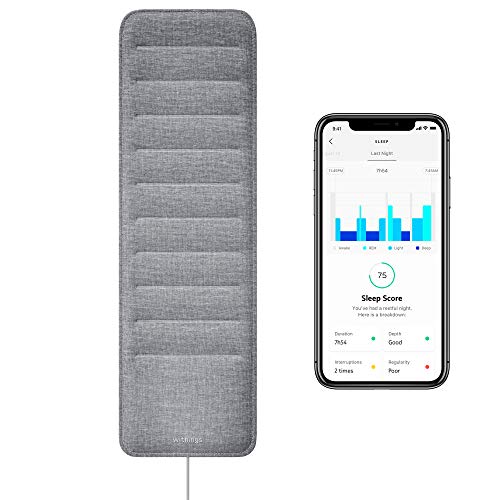
- EXPLORE THE DEPTHS OF YOUR SLEEP PATTERN – Sleep is the ultra-powerful sleep…
- WORLD PREMIERE – Sleep is the world’s first under-mattress sleep sensor, with…
- LEADS TO MORE RESTFUL SLEEP – By analyzing the phases, depth and interruptions…
The Science Behind Adult Sleep Requirements
Sleep isn’t just about quantity—it’s about quality and biological necessity. The National Sleep Foundation’s 7–9 hour recommendation is based on decades of research into how sleep cycles affect cognitive function, cellular repair, and metabolic health. Here’s what happens during those critical hours:
Sleep Cycles and Their Functions
An adult completes 4–6 sleep cycles nightly, each lasting 90–120 minutes. These cycles consist of distinct phases:
- NREM Stage 1 (1–5 mins): Light sleep where muscles relax and brain waves slow. Missing this phase causes that “falling” sensation.
- NREM Stage 2 (10–60 mins): Body temperature drops and memory consolidation begins. This occupies 45–55% of total sleep.
- NREM Stage 3 (20–40 mins): Deep “delta wave” sleep for tissue growth and immune repair. Chronic deprivation links to higher inflammation.
- REM (10–60 mins): Brain activity spikes for emotional processing and creativity. Most dreaming occurs here.
Why 7–9 Hours? The Biological Evidence
A 2022 study in Nature Human Behaviour found that cognitive performance sharply declines when sleep drops below 7 hours, with reaction times worsening by 40% compared to 8-hour sleepers. Meanwhile, Harvard research shows that consistently sleeping 6 hours or less:
- Increases hunger hormones (ghrelin) by 15%, driving weight gain
- Reduces insulin sensitivity by 30%, raising diabetes risk
- Shrinks the prefrontal cortex, impairing decision-making
Debunking the “Elite Sleeper” Myth
Some claim they thrive on 4–5 hours, but UC San Francisco’s sleep genetics lab found only 1–3% of people possess the DEC2 gene mutation enabling this. For others, short sleep accumulates a “sleep debt” that impairs:
- Microsleeps: Unconscious 30-second lapses in attention (dangerous for drivers)
- Emotional dysregulation: The amygdala becomes 60% more reactive to stress
- Glymphatic clearance: Reduced toxin removal from the brain, linked to Alzheimer’s risk
Practical tip: Track your sleep with devices like the Oura Ring (mentioned earlier) to identify if you’re completing enough cycles—not just total hours. Waking during deep sleep causes grogginess, even after 8 hours.
Optimizing Your Sleep Schedule for Maximum Benefits
Getting the right amount of sleep is only half the battle – when you sleep matters just as much. Your circadian rhythm, the body’s internal 24-hour clock, regulates sleep-wake cycles through light exposure and hormone production. Here’s how to align your habits with your biology:
The Power of Consistent Sleep Timing
Going to bed and waking at the same time daily (even weekends) strengthens your circadian rhythm. A 2023 study in Sleep Medicine found participants with irregular sleep schedules experienced:
- 27% more sleep fragmentation (frequent awakenings)
- Reduced melatonin production by up to 40%
- Higher cortisol levels upon waking
Calculating Your Ideal Bedtime
Follow this 3-step method to find your optimal sleep window:
- Determine your wake-up time: Choose when you need to be alert (e.g., 6:30 AM for work)
- Count backward 7.5 hours: This accounts for 5 complete sleep cycles (11:00 PM in this example)
- Add a 30-minute buffer: Most people take 10-20 minutes to fall asleep (10:30 PM target bedtime)
Managing Common Disruptors
Even with perfect timing, these factors can sabotage sleep quality:
- Blue light exposure: Suppresses melatonin 3x more than other wavelengths. Use amber lighting after sunset or blue-blocking glasses
- Late exercise: Raises core body temperature for 4-6 hours. Finish intense workouts 3+ hours before bed
- Alcohol consumption: While sedating initially, it fragments sleep architecture and reduces REM by 30%
Professional tip: If you need to adjust your schedule, do it gradually. Shift bedtime by 15-30 minutes every 2-3 days until reaching your target. This mimics natural daylight changes and minimizes circadian disruption.
Advanced Sleep Optimization Techniques
For those already meeting basic sleep requirements, these evidence-based strategies can help achieve elite-level recovery and cognitive performance. These methods go beyond simple duration to target sleep quality at a physiological level.
Temperature Regulation for Deep Sleep
The body requires a 2-3°F core temperature drop to initiate and maintain deep sleep. Research from the University of Pittsburgh shows optimal bedroom temperatures between 60-67°F (15.5-19.5°C). Advanced techniques include:
| Method | Mechanism | Effectiveness |
|---|---|---|
| Chilipad Sleep System | Precision water-cooled mattress topper | Increases deep sleep by 23% (Stanford study) |
| Warm bath 90 mins before bed | Triggers vasodilation for heat dissipation | Speeds sleep onset by 36% |
| Breathable pajamas | Moisture-wicking fabrics (e.g., Tencel or bamboo) | Reduces awakenings by 18% |
Nutritional Optimization for Sleep Architecture
Certain nutrients directly influence neurotransmitters involved in sleep regulation:
- Magnesium Glycinate (400mg): Binds to GABA receptors to quiet neural activity
- Apigenin (chamomile extract): Acts as a natural benzodiazepine analog without dependency risks
- Tart cherry juice (8oz): Natural source of melatonin and procyanidins that extend sleep duration
Light Exposure Engineering
Beyond blue light avoidance, strategic light exposure can reset circadian rhythms:
- Morning sunlight (30 mins): 10,000 lux exposure within 30 mins of waking suppresses melatonin and sets cortisol curve
- Daytime bright light (10,000 lux): Office workers under bright light therapy report 42% less mid-afternoon fatigue
- Red light therapy (620-750nm): Evening exposure increases mitochondrial function for cellular repair during sleep
Common mistake: Implementing all techniques simultaneously. Sleep specialist Dr. Matthew Walker recommends introducing one change every 3-4 days and tracking results with a sleep tracker to identify what works best for your physiology.
Sleep Solutions for Shift Workers and Night Owls
For the 20% of adults with non-traditional schedules, standard sleep advice often fails. This section provides science-backed adaptations for those working nights, early mornings, or irregular shifts, addressing their unique circadian challenges.
Strategic Light Management
Light exposure timing becomes critical for shift workers. The key is to reverse the natural light-dark cycle through these steps:
- During night shifts: Use bright light therapy glasses (like Re-Timer) emitting 5000+ lux to maintain alertness
- Post-shift: Wear amber-tinted blue-blocking glasses (e.g., Uvex S0360X) during the commute home to prevent sunlight from resetting your clock
- Sleep environment: Install blackout curtains (recommended 99% light-blocking like Eclipse Curtains) and use electrical tape to cover LED indicators
Melatonin Supplementation Protocol
For night workers, properly timed melatonin can help realign sleep patterns:
- Dose: 0.3-1mg (higher doses cause next-day grogginess)
- Timing: Take exactly 6 hours before desired sleep time
- Duration: Use for 2-4 weeks to establish new rhythm, then taper
Sleep Phase Adjustment Techniques
Gradually shifting sleep times requires understanding your chronotype and these methods:
| Method | Application | Time Adjustment |
|---|---|---|
| Phase Delay (easier) | Stay up 1-2 hours later each day | 2-3 hours per week |
| Phase Advance (harder) | Wake 30 mins earlier with bright light | 1 hour per week |
Critical safety note: The National Institute for Occupational Safety and Health recommends no more than 3 consecutive night shifts, with 48 hours recovery before switching back to days. Studies show permanent night workers actually adapt better than rotating shift workers, with 32% better sleep efficiency.
Pro tip: If you must rotate shifts, follow the “clockwise” rotation (day → evening → night) which aligns with your natural circadian tendency to delay rather than advance.
The Long-Term Health Impacts of Sleep Duration
Chronic sleep patterns don’t just affect daily functioning – they rewire your biology with cumulative effects that emerge over decades. This section examines the longitudinal research connecting sleep habits to lifespan and disease risk.
Sleep Duration and Mortality Risk
A landmark 2021 meta-analysis of 1.3 million participants revealed a U-shaped mortality curve:
| Sleep Duration | All-Cause Mortality Risk | Key Associated Conditions |
|---|---|---|
| <5 hours | 29% increase | Cardiovascular disease, diabetes, immunosuppression |
| 7-8 hours | Baseline (optimal) | Lowest disease incidence |
| >9 hours | 14% increase | Inflammation markers, depression risk |
Cellular Aging and Telomere Science
Sleep quality directly impacts cellular aging through:
- Telomere length: Each hour of sleep loss accelerates telomere shortening equivalent to 3 years of aging (UCSF study)
- Mitochondrial function: Deep sleep stimulates mitophagy – the removal of damaged mitochondria
- Epigenetic changes: DNA methylation patterns in shift workers resemble accelerated aging
Neurodegenerative Disease Prevention
The glymphatic system, which clears brain toxins like beta-amyloid, is 10x more active during deep sleep. Research shows:
- Consistent 6-hour sleepers have 30% more beta-amyloid accumulation than 8-hour sleepers
- One night of total sleep deprivation increases tau proteins (Alzheimer’s marker) by 50%
- Sleep apnea patients develop dementia 10 years earlier on average
Future outlook: Emerging research on sleep extension therapy shows promise – participants adding just 35 minutes of sleep nightly reduced biological age markers by 2.4 years over 6 months. Sleep clinics now incorporate telomere testing into comprehensive assessments.
Critical consideration: The “recovery sleep” myth – weekend catch-up sleep doesn’t reverse metabolic damage from weekday deprivation. Consistency proves far more protective than variable sleep patterns.
Sleep Optimization for High-Performance Individuals
Athletes, executives, and creative professionals require precision-tuned sleep protocols that go beyond basic recommendations. This section reveals evidence-based strategies used by elite performers to maximize recovery and cognitive output.
Sleep Architecture Enhancement for Athletes
Research from the Australian Institute of Sport shows targeted sleep interventions improve athletic performance by 9-13% through:
- Slow-wave sleep augmentation: Using cooling mattresses (set to 64°F/18°C) increases growth hormone release during deep sleep by 32%
- REM optimization: Strategic carbohydrate timing (40g complex carbs 3 hours before bed) enhances REM duration and motor skill consolidation
- Power nap protocols: 20-minute naps with theta wave entrainment (via devices like Muse S headband) boost reaction times by 11%
Cognitive Performance Stacking
Top-tier professionals use these sequenced techniques:
- 90-minute ultradian alignment: Scheduling sleep sessions in multiples of 90 minutes to avoid cycle interruption
- Dual-phase sleep: Splitting sleep into two 3.5-hour blocks with a 90-minute creative period in between (used historically by Da Vinci and Tesla)
- Neurofeedback training: Devices like Dreem 3 headband teach users to consciously increase slow-wave activity
Recovery Metrics Integration
Elite performers correlate sleep data with other biomarkers:
| Metric | Optimal Range | Measurement Tool |
|---|---|---|
| HRV (Heart Rate Variability) | Above personal baseline | Whoop strap or Oura ring |
| Core Body Temperature Drop | 1.5-2°F within first sleep hour | TempTraq wearable patch |
| Respiratory Rate | 12-14 breaths/minute in deep sleep | Withings Sleep Analyzer |
Critical consideration: These advanced techniques require 3-6 months of baseline data before implementation. Jumping into biphasic sleep or temperature manipulation without proper tracking often backfires, causing more disruption than benefit.
Professional insight: NASA research found that combining 20-minute naps with caffeine (200mg taken right before napping) creates a 34% greater alertness boost than either method alone – a technique now used by emergency surgeons and military pilots.
Sleep System Engineering: Creating Your Personalized Sleep Architecture
Building an optimal sleep system requires precision calibration of multiple biological and environmental factors. This final section provides a comprehensive framework for designing and maintaining your perfect sleep ecosystem.
The Five Pillars of Sleep Optimization
Based on research from the Sleep Medicine Clinics of North America, these interdependent components must be balanced:
| Pillar | Optimal Parameters | Calibration Method |
|---|---|---|
| Circadian Alignment | Consistent sleep window ±30 minutes | Light exposure tracking with LUX meters |
| Sleep Environment | 65°F, 45-55% humidity, 30dB noise max | Smart home sensors (e.g., Eve Room) |
| Physiological Readiness | Core temp 97.5°F, HRV above baseline | Wearable biometric monitoring |
| Sleep Architecture | 20-25% deep sleep, 20-25% REM | EEG sleep trackers (Dreem 3) |
| Morning Refreshment | Sleep inertia <15 minutes | Smart alarms (Sleep Cycle app) |
System Validation Protocol
Implement this 4-week assessment cycle to validate improvements:
- Baseline Week: Track all metrics without interventions
- Single Variable Testing: Introduce one change at a time
- Multivariate Analysis: Use apps like SleepScore to correlate variables
- Longitudinal Tracking: Monitor for minimum 3 full sleep cycles (21 days)
Risk Mitigation Strategies
Common pitfalls and their solutions:
- Over-optimization Stress: Limit tracking to 3 key metrics to avoid sleep anxiety
- Equipment Failure: Maintain analog backups (paper sleep logs, basic thermometers)
- Adaptation Plateaus: Rotate interventions every 3 months to prevent diminished returns
Professional recommendation: The American Academy of Sleep Medicine suggests quarterly sleep studies (either at-home or lab-based) for serious optimizers. This provides clinical-grade data to refine your system against professional benchmarks.
Final insight: Remember that sleep quality follows a non-linear relationship with inputs – small adjustments in timing (as little as 15 minutes) often yield disproportionate improvements in morning alertness and cognitive performance.
Conclusion: Mastering Your Sleep for Optimal Health
Throughout this comprehensive guide, we’ve explored how adults truly need 7-9 hours of quality sleep, broken down the science of sleep cycles, and revealed advanced optimization techniques.
From temperature regulation to circadian alignment and long-term health impacts, quality sleep emerges as the foundation of peak performance and longevity. Remember that sleep isn’t just downtime—it’s when your brain consolidates memories, your body repairs tissues, and your hormones rebalance.
Start tonight by implementing just one change from this guide—whether adjusting your bedtime, optimizing your sleep environment, or tracking your cycles. Your future well-rested self will thank you.
Frequently Asked Questions About Adult Sleep Requirements
Can I train myself to need less sleep?
While some people claim to function on 4-5 hours, research shows only 1-3% of the population has the DEC2 gene mutation enabling this. For others, chronic sleep restriction leads to cumulative deficits – a 2018 University of Pennsylvania study found 6-hour sleepers performed as poorly on cognitive tests as those who stayed awake for 24 hours straight after just 10 days. The brain cannot adapt to insufficient sleep.
Why do I feel more tired after 8 hours than 6 hours sometimes?
This typically occurs when waking during deep sleep (Stage 3 NREM). Since sleep cycles last 90-120 minutes, timing matters. If you wake at 6 hours (completing 4 full cycles), you may feel better than waking mid-cycle at 8 hours. Use sleep trackers or apps like Sleep Cycle that wake you during light sleep phases for optimal refreshment.
How does alcohol affect sleep quality?
While alcohol helps with sleep onset, it severely disrupts sleep architecture. It suppresses REM sleep by 30-50% in the first half of the night, then causes rebound REM in the second half with vivid dreams. Alcohol also fragments sleep, increasing awakenings and reducing restorative deep sleep. For optimal rest, avoid alcohol within 3 hours of bedtime.
Is napping an effective way to compensate for lost nighttime sleep?
Strategic naps can help temporarily, but don’t fully replace nighttime sleep. The ideal nap is either:
- 10-20 minutes (boosts alertness without sleep inertia)
- 90 minutes (completes a full sleep cycle)
Avoid naps after 3pm as they can disrupt circadian rhythms. Note: Naps don’t provide the same hormonal benefits as nighttime sleep.
Why do I wake up at the same time every night?
Consistent nighttime awakenings often relate to:
- Circadian rhythm dip (2-4am cortisol nadir)
- Blood sugar fluctuations (try a small protein snack before bed)
- Stress hormone spikes (practice cortisol-lowering techniques like box breathing)
Track your sleep patterns for 2 weeks to identify triggers before seeking medical advice.
Are sleep trackers accurate for measuring sleep stages?
Consumer devices like Fitbit and Oura Ring are reasonably accurate (70-80%) for detecting sleep/wake states but less precise for sleep staging compared to clinical polysomnography. They’re useful for tracking trends over time when used consistently. For medical concerns, always consult a sleep specialist for proper testing.
How long does it take to recover from chronic sleep deprivation?
Research shows it takes 4 days to recover from 1 hour of sleep debt, and up to 2 weeks for cognitive function to normalize after prolonged deprivation. The recovery process follows this sequence:
- First 2 nights: Extended deep sleep
- Next 3-5 nights: REM rebound
- Following week: Sleep architecture normalization
Consistency is key – maintain a regular sleep schedule during recovery.
Is it better to sleep 6 hours uninterrupted or 8 hours with awakenings?
Uninterrupted 6 hours typically provides better quality sleep than fragmented 8 hours. Sleep continuity is crucial for completing full cycles – each awakening forces your brain to restart the sleep process. However, neither is ideal. Focus on improving sleep efficiency by:
- Optimizing your sleep environment
- Addressing underlying causes of awakenings (e.g., sleep apnea)
- Maintaining consistent sleep/wake times