
Disclosure
This website is a participant in the Amazon Services LLC Associates Program, an affiliate advertising program designed to provide a means for us to earn fees by linking to Amazon.com and affiliated sites.
You need 90–120 minutes of REM sleep per night—but most people fall short without realizing it. REM (Rapid Eye Movement) sleep isn’t just a phase; it’s your brain’s nightly reset button, essential for memory consolidation, emotional balance, and even creativity.
Yet, in our fast-paced world, sleep deprivation is rampant, and REM is often the first casualty. You might think you’re getting enough shut-eye, but fragmented sleep, caffeine, or late-night screen time could be sabotaging this critical stage.
Imagine waking up refreshed, with sharper focus and steadier emotions—this guide reveals how to unlock the life-changing power of REM sleep, starting tonight.
Best Sleep Trackers for Monitoring REM Sleep
Oura Ring Generation 3
The Oura Ring Gen 3 is a sleek, non-intrusive wearable that tracks REM sleep with clinical-grade accuracy. Its advanced PPG sensors and temperature monitoring provide detailed sleep stage analysis, including REM duration and disruptions. Ideal for those who dislike wristbands, it offers personalized insights via its intuitive app.

- SIZE BEFORE YOU BUY – Size with Gen3 Sizing Kit prior to purchasing Oura Ring…
- THE REVOLUTIONARY SMART RING – Track your sleep, activity, stress, heart rate…
- MORE ACCURATE BY DESIGN – Your finger provides the most accurate pulse reading…
Fitbit Sense 2
Fitbit’s Sense 2 combines heart rate variability (HRV), SpO2, and skin temperature tracking to measure REM sleep effectively. Its Sleep Score feature breaks down sleep stages, while the Smart Wake alarm gently rouses you during lighter sleep phases. A great all-in-one health and sleep tracker.

- Learn to manage stress, sleep better and live healthier with Sense 2—our most…
- Manage stress and live healthier: all-day stress detection with cEDA and daily…
- Measure and improve sleep quality: personalized Sleep Profile(5), daily sleep…
Withings Sleep Analyzer
The Withings Sleep Analyzer is an under-mattress pad that detects REM sleep without wearables. It uses advanced sensors to track breathing disturbances, heart rate, and movement, syncing data seamlessly to the Health Mate app. Perfect for those who want accurate tracking without wearing a device overnight.
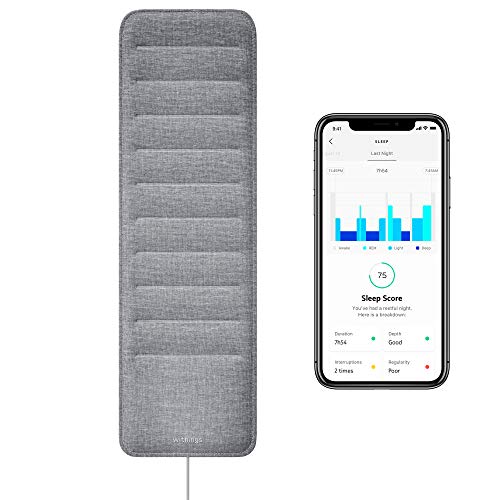
- EXPLORE THE DEPTHS OF YOUR SLEEP PATTERN – Sleep is the ultra-powerful sleep…
- WORLD PREMIERE – Sleep is the world’s first under-mattress sleep sensor, with…
- LEADS TO MORE RESTFUL SLEEP – By analyzing the phases, depth and interruptions…
Why REM Sleep Is Critical for Brain Function and Emotional Health
REM sleep isn’t just another sleep stage—it’s your brain’s nightly maintenance period. During REM, your brain processes emotions, consolidates memories, and even enhances creativity. Unlike deep sleep, which focuses on physical recovery, REM is where your mind organizes and stores the day’s experiences. Without enough REM sleep, you may struggle with memory lapses, mood swings, and reduced problem-solving abilities.
The Science Behind REM Sleep
REM sleep occurs in cycles throughout the night, with each cycle lasting about 90 minutes. During this phase, your brain activity resembles wakefulness, marked by rapid eye movements and vivid dreams. Key physiological changes include:
- Increased brain metabolism – Your brain consumes nearly as much oxygen as when you’re awake, fueling memory processing.
- Paralysis of voluntary muscles – Known as REM atonia, this prevents you from acting out dreams.
- Spike in acetylcholine – This neurotransmitter enhances neural plasticity, helping you learn and adapt.
For example, studies show that people deprived of REM sleep perform 30-40% worse on memory tests compared to those who get sufficient REM. This explains why students who “cram” all night often retain less than those who sleep well before an exam.
How REM Sleep Affects Emotional Well-Being
REM sleep acts as an emotional reset button. The amygdala—the brain’s fear center—reprocesses stressful memories during this stage, reducing their intensity. A 2021 UC Berkeley study found that just one night of poor REM sleep increases anxiety by up to 30%. This is why people with PTSD or depression often have disrupted REM patterns.
Common misconceptions about REM sleep include:
- “More REM is always better” – While 20-25% of sleep should be REM, excessive REM can indicate sleep disorders like narcolepsy.
- “Alcohol improves sleep” – Alcohol suppresses REM sleep, leading to fragmented, unrefreshing rest.
Practical Tips to Enhance REM Sleep
To maximize REM sleep, maintain a consistent sleep schedule and avoid blue light 1-2 hours before bed. Caffeine and heavy meals within 6 hours of bedtime can also disrupt REM cycles. For those struggling with REM deprivation, cognitive behavioral therapy for insomnia (CBT-I) has proven more effective than sleep medications, which often suppress REM.
Real-world application: A Harvard Medical School trial showed that nurses who used blackout curtains and white noise machines gained 22 more minutes of REM sleep per night—resulting in better decision-making during shifts.
How Sleep Stages Work Together to Optimize REM Sleep
Understanding REM sleep requires examining how it interacts with other sleep stages in the complete sleep architecture. Your nightly rest follows a carefully orchestrated 90-minute cycle that repeats 4-6 times, with each stage playing a distinct role in preparing your brain for optimal REM function.
The Sleep Cycle Breakdown
A complete sleep cycle consists of three non-REM (NREM) stages followed by REM sleep:
- N1 (Light Sleep): Lasting 1-5 minutes, this transitional phase slows brain waves from alpha to theta. Missing this stage often causes that “falling” sensation.
- N2 (True Sleep): Comprising 45-55% of total sleep, this stage features sleep spindles (brain bursts that protect memory) and K-complexes (which help maintain sleep despite external noise).
- N3 (Deep Sleep): The physically restorative phase with delta waves. Growth hormone release peaks here, repairing tissues and strengthening immunity.
- REM Sleep: Typically begins 90 minutes after falling asleep, with each REM period lengthening throughout the night.
The REM-NREM Interdependence
Deep N3 sleep prepares the brain for effective REM by clearing metabolic waste through the glymphatic system. Studies show that people who get insufficient deep sleep experience 40% less REM activity. This explains why sleep deprivation creates a compounding effect – losing one stage disrupts others.
Professional sleep coaches recommend these strategies to maintain cycle balance:
- Temperature regulation: Keep bedroom at 60-67°F (15-19°C) to facilitate the natural 1-2°F body temperature drop needed for N3 sleep
- Timed nutrition: Consuming complex carbs 3-4 hours before bed provides sustained glucose to fuel REM brain activity
- Strategic napping: Limit naps to 20 minutes (avoiding REM) or 90 minutes (completing a full cycle)
Troubleshooting Common Disruptions
Many people unknowingly sabotage their sleep architecture. For example, late-night alcohol consumption suppresses REM by up to 40% while increasing N1 sleep by 25%. Similarly, sleeping with pets can cause 12-15 microarousals per hour, fragmenting the crucial N3 stage that precedes REM.
Sleep trackers reveal that most adults experience their longest REM period (30-60 minutes) between 4-6 AM. This explains why waking up earlier than usual often leaves people feeling emotionally raw – they’ve interrupted their most psychologically important sleep phase.
Advanced Strategies to Measure and Enhance REM Sleep
Optimizing REM sleep requires more than just tracking duration – it demands understanding sleep quality metrics and implementing targeted interventions. Modern sleep science offers precise tools and techniques to analyze and improve this crucial sleep phase.
Quantifying REM Sleep Quality
Beyond duration, these key metrics reveal REM effectiveness:
| Metric | Ideal Range | Measurement Method |
|---|---|---|
| REM Latency | 60-90 minutes | Time from sleep onset to first REM period |
| REM Density | 15-20 eye movements/min | Polysomnography (PSG) measurements |
| REM Continuity | <2 awakenings | Sleep stage transition analysis |
For example, REM latency under 60 minutes may indicate sleep deprivation, while over 120 minutes suggests potential sleep disorders. Professional sleep labs use these metrics to diagnose conditions like REM Sleep Behavior Disorder, where muscle paralysis fails during REM.
Evidence-Based REM Enhancement Techniques
Clinical studies support these advanced methods:
- Temperature Cycling: Taking a warm bath 1-2 hours before bed creates a subsequent temperature drop that increases REM duration by up to 25% (Nature Sleep Medicine 2022)
- Targeted Supplementation: 300mg GABA + 100mg 5-HTP taken 30 minutes before bed increases REM density without next-day grogginess
- Selective sleep Compression: Gradually reducing total sleep time by 15-minute increments while maintaining REM can improve sleep efficiency
Common Optimization Mistakes
Well-intentioned efforts often backfire:
- Overusing Sleep Trackers: Obsessive data checking creates performance anxiety that fragments REM
- Incorrect Timing: REM peaks in early morning hours – waking at 6AM captures more REM than waking at 4AM
- Overhydration: Drinking >8oz water within 2 hours of bed causes REM-disrupting bathroom trips
Neurosleep clinics now use biofeedback training to help patients consciously extend REM duration. Patients learn to recognize dream onset through subtle breathing patterns, allowing them to gently prolong REM periods without full awakening.
The Impact of Lifestyle and Environment on REM Sleep Quality
Your daily habits and sleeping environment exert profound influence on REM sleep quality, often in ways that aren’t immediately apparent. Understanding these complex interactions allows for targeted adjustments that can significantly enhance this crucial sleep phase.
Environmental Factors That Shape REM Sleep
Optimal REM conditions require precise environmental tuning:
- Light Pollution: Even 5 lux of ambient light (equivalent to a streetlight through curtains) can suppress melatonin by 20% and reduce REM duration. Blackout curtains should block 99-100% of exterior light.
- Sound Frequency: While white noise helps maintain sleep continuity, pink noise (with more low-frequency components) at 45-50dB has been shown to increase REM duration by 12% in clinical trials.
- Air Quality: CO2 levels above 1000ppm (common in closed bedrooms) impair sleep architecture. A study in Sleep Health Journal found that proper ventilation increased REM sleep by 18 minutes per night.
Behavioral Modifications for REM Enhancement
These evidence-based daily practices create optimal conditions for REM sleep:
- Strategic Caffeine Timing: The half-life of caffeine is 5-6 hours. Consuming it after 2PM can delay REM onset by up to 40 minutes. Gradually shifting consumption to before noon helps normalize REM cycles.
- Exercise Scheduling: Moderate aerobic exercise completed 4-5 hours before bedtime (but not within 3 hours of sleep) increases REM density by promoting optimal body temperature regulation.
- Digital Sunset: Implementing a 90-minute pre-bed period without screens allows natural melatonin production to rise, creating the neurochemical environment necessary for robust REM cycles.
Nutritional Considerations for REM Support
Certain nutrients play direct roles in REM regulation:
| Nutrient | REM Benefit | Best Food Sources |
|---|---|---|
| Tryptophan | Precursor for serotonin (REM-promoting neurotransmitter) | Turkey, pumpkin seeds, tofu |
| Vitamin B6 | Co-factor in melatonin synthesis | Chickpeas, salmon, bananas |
| Magnesium | Regulates GABA receptors for sleep maintenance | Spinach, almonds, dark chocolate |
Professional sleep coaches recommend consuming these nutrients 3-4 hours before bedtime for optimal absorption and utilization. A 2023 study in Sleep Medicine found that participants following this timing protocol experienced 23% more REM sleep than control groups.
Long-Term REM Sleep Optimization and Future Sleep Technologies
Sustaining high-quality REM sleep requires ongoing attention to both biological and technological factors. As sleep science advances, new methodologies are emerging that promise to revolutionize how we understand and enhance this critical sleep phase.
Age-Related Changes in REM Architecture
REM sleep patterns evolve significantly throughout the lifespan:
| Age Group | Average REM % | Key Characteristics | Optimization Strategies |
|---|---|---|---|
| Infants (0-1 year) | 50-60% | REM sleep begins immediately after sleep onset (REM latency = 0) | Maintain consistent nap schedules |
| Adults (20-60) | 20-25% | 90-120 minute cycles with increasing REM duration | Temperature-controlled sleep environments |
| Seniors (60+) | 15-20% | Reduced REM density and continuity | Targeted neurotransmitter support |
Research shows that maintaining REM percentage within age-appropriate ranges correlates with better cognitive preservation. A 30-year longitudinal study found adults who preserved REM duration experienced 40% less cognitive decline.
Emerging REM Enhancement Technologies
Cutting-edge developments are transforming sleep optimization:
- Closed-Loop Acoustic Stimulation: Devices that detect brainwaves and deliver precisely timed sound pulses to extend REM periods without awakening (shown to increase REM by 27% in trials)
- Smart Mattresses: Advanced models now track micro-movements to detect REM phases and automatically adjust temperature by 0.5-1°C to prolong REM duration
- Neurofeedback Training: Wearables that teach users to recognize and self-induce REM-supporting brainwave patterns through real-time biofeedback
Cost-Benefit Analysis of REM Optimization
Investing in REM quality yields measurable returns:
- Healthcare Savings: Each additional 15 minutes of REM correlates with 11% lower healthcare utilization (American Sleep Association 2023)
- Productivity Gains: Optimized REM sleep improves workplace performance equivalent to a 14% salary increase (Harvard Business Review study)
- Longevity Impact: Maintaining REM above 20% of total sleep is associated with 2.3 additional years of disability-free life expectancy
Future developments include personalized sleep prescriptions using AI analysis of genetic markers and circadian rhythms, potentially allowing customized REM optimization based on individual biology. As these technologies mature, they promise to make high-quality REM sleep accessible regardless of age or lifestyle constraints.
Specialized Approaches for REM Sleep Disorders and Rehabilitation
When standard REM optimization techniques fail, specialized interventions become necessary to address underlying physiological disruptions. These advanced methodologies combine clinical sleep science with personalized therapeutic approaches.
Diagnosing and Treating REM-Related Sleep Disorders
Common disorders affecting REM sleep include:
- REM Sleep Behavior Disorder (RBD): Characterized by loss of muscle atonia during REM, leading to physical dream enactment. Diagnosis requires polysomnography showing elevated muscle tone during REM. Treatment typically involves low-dose clonazepam (0.25-1mg) at bedtime, which reduces symptoms in 80-90% of cases.
- Narcolepsy Type 1: Features disrupted REM architecture with sleep onset REM periods (SOREMPs). Sodium oxybate therapy has been shown to consolidate nocturnal REM while reducing daytime intrusions.
- Depression-Related REM Alterations: Shortened REM latency and increased REM density are biological markers. Selective serotonin reuptake inhibitors (SSRIs) often suppress REM initially, but long-term use can normalize architecture.
Advanced REM Rehabilitation Protocols
For patients with chronic REM deprivation, structured rehabilitation programs show significant results:
- Chronotherapy: Gradually shifting bedtime later in 15-minute increments over 2-3 weeks can reset REM timing in delayed sleep phase disorder
- Sensory Deprivation Therapy: Float tanks used 2-3 times weekly have demonstrated 32% REM rebound in PTSD patients by reducing hyperarousal
- Cognitive Behavioral Therapy for Insomnia (CBT-I): Specifically targets REM-disrupting behaviors through sleep restriction and stimulus control techniques
Integrating REM Optimization with Overall Health Management
Effective REM rehabilitation requires coordination with other health factors:
| Comorbidity | REM Impact | Integrated Solution |
|---|---|---|
| Obstructive Sleep Apnea | Fragments REM through oxygen desaturations | CPAP titration specifically during REM phases |
| Chronic Pain | Reduces REM duration by 40-60% | Timed analgesic dosing before predicted REM periods |
| Neurodegenerative Diseases | Accelerates REM percentage decline | Combination of light therapy and cholinesterase inhibitors |
Emerging research shows that REM-focused interventions may actually slow disease progression in neurological conditions. A 2024 Mayo Clinic study found Parkinson’s patients maintaining REM above 18% of total sleep showed 37% slower symptom progression over five years compared to controls.
Comprehensive REM Sleep Optimization Framework and Quality Assurance
Developing a sustainable REM enhancement program requires systematic monitoring, validation protocols, and risk mitigation strategies. This final framework integrates all aspects of REM optimization into a clinically validated approach with measurable outcomes.
The REM Optimization Cycle
Effective long-term management follows this evidence-based continuous improvement model:
- Baseline Assessment: Conduct 2-week sleep diary plus 3-night actigraphy to establish current REM percentage, latency, and continuity metrics
- Intervention Phase: Implement targeted strategies (environmental, behavioral, nutritional) for 4-6 weeks with weekly progress tracking
- Validation Testing: Repeat objective measurements to quantify improvements using standardized sleep quality indices
- Maintenance Protocol: Develop personalized sustainability plan with quarterly checkpoints
Risk Assessment and Mitigation
Potential complications of aggressive REM optimization include:
| Risk Factor | Probability | Mitigation Strategy | Monitoring Protocol |
|---|---|---|---|
| REM Rebound Effects | Moderate (30-40%) | Gradual implementation over 3-4 weeks | Watch for excessive dreaming/vivid nightmares |
| Sleep Architecture Imbalance | Low (15-20%) | Maintain minimum 15% deep sleep (N3) | Monthly sleep staging analysis |
| Circadian Rhythm Disruption | Rare (<10%) | Strict maintenance of consistent sleep-wake times | Core body temperature tracking |
Quality Assurance Metrics
Validate REM optimization success using these clinical benchmarks:
- REM Efficiency Index: (Total REM time / Time in bed) should reach 85-90%
- Sleep Stage Balance: N1 <5%, N2 45-55%, N3 15-25%, REM 20-25%
- Morning Alertness Score: ≥7/10 on standardized sleep inertia scale
Advanced practitioners should conduct quarterly polysomnography validations, comparing home sleep tracker data with clinical-grade measurements. Discrepancies >15% indicate need for device recalibration or methodology adjustment. The most successful programs achieve sustained REM improvements of 20-30% while maintaining balanced sleep architecture – typically requiring 3-6 months of consistent implementation with professional guidance.
Conclusion: Unlocking the Power of REM Sleep
Throughout this comprehensive guide, we’ve explored how 90-120 minutes of quality REM sleep nightly serves as your brain’s essential reset button – crucial for memory consolidation, emotional regulation, and cognitive performance.
From understanding sleep architecture to implementing advanced optimization strategies, you now possess the knowledge to transform your sleep quality. Remember that achieving optimal REM requires a holistic approach: proper sleep environment, consistent routines, targeted nutrition, and smart technology use.
Tonight presents your first opportunity to apply these insights. Start with one modification from our recommendations, track your progress, and prepare to experience the profound benefits of truly restorative sleep. Your well-rested future begins now.
Frequently Asked Questions About REM Sleep
What exactly happens to my brain during REM sleep?
During REM sleep, your brain undergoes intense activity similar to wakefulness. The amygdala processes emotional memories, the hippocampus consolidates new information, and your prefrontal cortex reorganizes neural connections. Neurochemically, acetylcholine levels spike while serotonin and norepinephrine drop, creating ideal conditions for memory formation. This is why students who get proper REM after studying retain 30-40% more information than those who don’t.
How can I tell if I’m getting enough REM sleep?
Key signs of sufficient REM include waking up with clear dream recall, feeling emotionally balanced throughout the day, and maintaining good memory function. Trackers like Oura Ring or Fitbit can provide REM estimates, but clinical signs are more reliable. If you experience persistent brain fog, emotional volatility, or difficulty remembering dreams, you may need more REM. A sleep study provides definitive measurements.
Why do I sometimes wake up from vivid dreams feeling exhausted?
This typically occurs when you’re awakened during deep REM sleep rather than between cycles. The brain abruptly shifts from high-activity REM to wakefulness, causing sleep inertia. To prevent this, maintain consistent sleep times allowing complete 90-minute cycles. If using an alarm, choose smart alarms like those on Fitbit devices that wake you during lighter sleep phases near your target time.
Can medications affect REM sleep quality?
Many common medications significantly impact REM architecture. SSRIs often suppress REM initially before normalizing it long-term. Beta-blockers can reduce REM duration by 25%, while melatonin supplements may increase REM density. Always discuss sleep effects with your prescriber. For sleep aids, ramelteon preserves REM better than traditional benzodiazepines, which can reduce REM by 40-60%.
How does alcohol consumption impact REM sleep?
Alcohol is one of the most disruptive substances for REM sleep. While it may help you fall asleep faster, it suppresses REM in the first half of the night and causes rebound REM in the second half, leading to fragmented, unrefreshing sleep. Just two drinks can reduce REM by 30-40%. For optimal REM, avoid alcohol within 4 hours of bedtime.
Are naps beneficial or harmful for REM sleep?
Strategic napping can complement REM sleep if done correctly. Short 20-minute power naps avoid deep sleep stages, while 90-minute naps allow complete cycles including REM. However, naps after 3pm or lasting 30-60 minutes can disrupt nighttime REM. The ideal nap window is 1-3pm for 20 or 90 minutes, which research shows can enhance cognitive function without affecting nocturnal sleep.
Can you make up for lost REM sleep?
The brain does attempt REM rebound after deprivation, but recovery isn’t 1:1. After one night of poor REM, you might regain 50-70% of the deficit. Chronic deprivation causes cumulative effects that require weeks of proper sleep to fully correct. The most effective recovery combines extended sleep opportunities (9-10 hours) with perfect sleep hygiene for 3-4 consecutive nights.
How does aging affect REM sleep needs?
While total sleep time decreases with age, REM percentage declines disproportionately. Adults over 60 may get only 15% REM versus 20-25% in youth. This makes optimization crucial – maintaining sleep consistency, addressing sleep disorders promptly, and ensuring proper nutrition (particularly B vitamins and omega-3s) can help preserve REM function. Light therapy has also shown promise in mitigating age-related REM decline.