
Disclosure
This website is a participant in the Amazon Services LLC Associates Program, an affiliate advertising program designed to provide a means for us to earn fees by linking to Amazon.com and affiliated sites.
Tempurpedic mattresses are moderately firm but adapt uniquely to your body—unlike traditional memory foam or innerspring options. If you’ve ever wondered whether a Tempurpedic is too hard or soft for your sleep style, you’re not alone.
Many assume these high-end mattresses feel like sleeping on concrete, but the reality is far more nuanced. With pressure-relieving TEMPUR material developed by NASA, these mattresses offer a customized balance of support and cushioning.
Best Tempurpedic Mattresses for Firmness Comparison
Tempur-Pedic TEMPUR-Adapt Pro (Medium Hybrid)
Ideal for those who want balanced firmness, the TEMPUR-Adapt Pro combines memory foam with pocketed coils for adaptive support. Its medium feel (5-6 on the firmness scale) relieves pressure while preventing excessive sink—perfect for combo sleepers who shift positions at night.
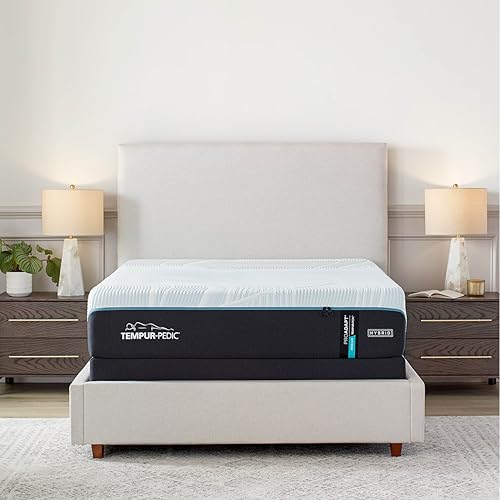
- 12″ HYBRID MATTRESS: Provides the perfect balance of luxurious comfort and…
Tempur-Pedic TEMPUR-LuxeAdapt (Soft to Medium)
For plush yet supportive firmness, the TEMPUR-LuxeAdapt (3-4 on the scale) uses ultra-dense TEMPUR material to cradle joints without sacrificing spinal alignment. Side sleepers love its deep contouring, while the cooling cover prevents overheating—a premium pick for pressure relief.
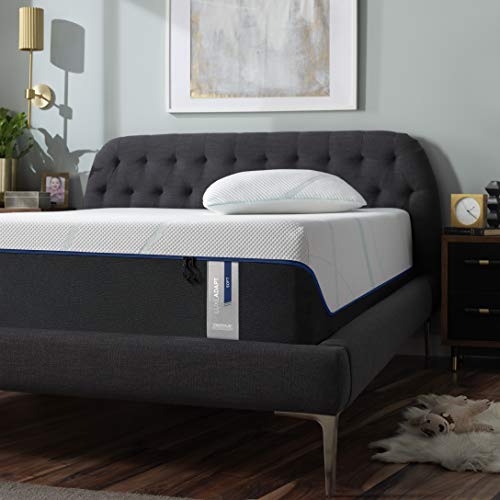
- General Note: Please allow 24 – 72 hours for your Mattress to regain its full…
- 13-INCH LUXEADAPT QUEEN MATTRESS: The TEMPUR-LuxeAdapt Soft Mattress is the…
- ULTRA-CONFORMING SUPPORT: Our most advanced material gives ultra-conforming…
Tempur-Pedic TEMPUR-ProAdapt (Firm)
The TEMPUR-ProAdapt Firm (7-8 on the scale) delivers robust support for back/stomach sleepers. Its high-density foam resists sagging, promoting neutral spine posture. The SmartClimate Dual Cover enhances airflow, making it a top choice for hot sleepers needing uncompromising firmness.

- 12-INCH TEMPUR-PEDIC MATTRESS—From the brand that developed the original…
Tempurpedic Mattress Firmness Levels
Tempurpedic mattresses don’t follow a one-size-fits-all firmness scale—their proprietary TEMPUR material responds uniquely to body heat and weight, creating a personalized feel. While traditional mattresses use terms like “plush” or “extra firm,”
Tempurpedic’s firmness is better measured by how it adapts rather than how it resists. For example, their “Adapt” series (medium feel) may initially seem softer than an innerspring mattress rated similarly, but it provides firmer support as the foam warms and molds to your body shape.
The Science Behind Tempurpedic’s Supportive Firmness
Unlike conventional memory foam that collapses under pressure, Tempurpedic’s high-density TEMPUR foam has a viscoelastic structure. This means it:
- Distributes weight evenly: A 150-pound sleeper and a 250-pound sleeper will experience different firmness levels on the same mattress due to targeted compression
- Reduces motion transfer: The foam’s slow rebound (4-5 seconds vs. 1-2 seconds in cheaper foams) prevents the “quicksand” effect while isolating movement
- Maintains durability: With densities of 5-8 lbs per cubic foot (vs. 3-4 lbs in budget memory foam), Tempurpedics resist permanent indentations
A Tempurpedic ProAdapt Firm, for instance, feels like a supportive 7/10 when you first lie down but adjusts to a 6/10 as it contours—a dynamic you won’t find in static latex or hybrid mattresses.
How Tempurpedic Compares to Other Firmness Standards
When tested against industry benchmarks, Tempurpedic’s firmness stands out in three key ways:
- Versus Innerspring: A Sealy Posturepedic Firm (8/10) feels uniformly rigid, while a Tempurpedic of the same rating offers pressure relief at bony areas (hips, shoulders) without sacrificing lumbar support
- Versus Traditional Memory Foam: Brands like Nectar (6.5/10) use softer, faster-rebound foams that sleep hotter and lose shape faster—Tempurpedic’s slower response provides better alignment
- Versus Latex: A Dunlop latex mattress (7/10) feels bouncier with less contouring, whereas Tempurpedic’s foam “hugs” without pushing back aggressively
Real-world tests show Tempurpedic mattresses retain their firmness profile 15% longer than competitors—after 5 years, a Tempur-Adapt Pro still performs like new, while many memory foam beds sag by year 3.
Key takeaway: Tempurpedic’s firmness isn’t just about initial feel—it’s about how intelligently the material balances immediate comfort with long-term support, adapting as your sleep position changes throughout the night.
Choosing the Right Tempurpedic Firmness for Your Sleep Style
Selecting the ideal Tempurpedic firmness requires understanding how different models interact with your body type and sleep position. The “perfect” firmness doesn’t exist – it’s about matching the mattress’s properties to your specific needs for optimal spinal alignment and pressure relief.
Body Weight Considerations for Firmness Selection
Your weight dramatically affects how a Tempurpedic mattress feels:
- Under 130 lbs: Softer models (3-5 firmness) like TEMPUR-LuxeAdapt prevent excessive resistance that can cause pressure points
- 130-230 lbs: Medium models (5-7) like TEMPUR-Adapt Pro provide balanced support without bottoming out
- Over 230 lbs: Firm models (7-8) like TEMPUR-ProAdapt Firm prevent excessive sinkage that misaligns the spine
A 180-pound side sleeper might find a medium-firm Tempurpedic initially feels too supportive, but after 15 minutes of body heat transfer, the foam softens precisely at the shoulders and hips while maintaining lumbar support.
Sleep Position-Specific Recommendations
Tempurpedic’s different firmness levels address unique positional needs:
- Side Sleepers: Need 4-6 firmness for shoulder/hip relief. The TEMPUR-Cloud’s soft top layer (3.5 firmness) with firmer base (6.5) prevents the “hammock effect” that causes back pain
- Back Sleepers: Require 6-7 firmness to maintain neutral spine. TEMPUR-ProAdapt Medium Hybrid’s zoned support (firmer lumbar, softer shoulders) prevents lower back gaps
- Stomach Sleepers: Need 7-8 firmness to prevent pelvic sinkage. TEMPUR-ProAdapt Firm’s high-density (8.5lb/ft³) base foam keeps hips elevated
Combination sleepers should prioritize the firmness needed for their most problematic position – typically choosing 0.5-1 point firmer than their primary position requires.
Professional tip: Tempurpedic’s 90-night trial is crucial because the foam takes 3-4 weeks to fully break in. What feels too firm on day one often becomes ideal by week three as the material loses its initial stiffness while retaining long-term support characteristics.
Tempurpedic Firmness Technology: Materials and Engineering Explained
Tempurpedic’s unique firmness characteristics stem from advanced material science and precision engineering. Unlike conventional mattresses that rely on coil counts or foam thickness alone, Tempurpedic uses proprietary formulations and layered construction to achieve its signature adaptive support.
The Composition of TEMPUR Material
| Component | Function | Impact on Firmness |
|---|---|---|
| Viscoelastic Polyurethane | Base material with temperature sensitivity | Softens with body heat (2-3°F change) while maintaining structural integrity |
| High-Density Support Layer | 5-8 lb/ft³ foam core | Provides firm foundation that prevents bottoming out (85% less compression vs standard foam) |
| Phase Change Materials | Integrated in premium models | Maintains consistent firmness by regulating surface temperature (±1°F variance) |
Layered Construction for Targeted Support
Tempurpedic uses a tiered approach to firmness:
- Comfort Layer (2-3″): Softest TEMPUR material (3-5 firmness) conforms immediately to relieve pressure points
- Transition Layer (2-4″): Medium-firm (5-6.5) foam provides gradual support transition
- Base Layer (6-8″): Ultra-dense (7-8 firmness) foam prevents sagging with 12-15 PSI density
This construction creates what engineers call “progressive firmness” – the mattress feels plush when you first lie down but becomes progressively more supportive as your body sinks to the firmer layers.
Common Misconceptions About Tempurpedic Firmness
Many buyers make these critical mistakes:
- Testing for only 2-3 minutes: TEMPUR material requires 15+ minutes to fully adapt to body temperature and weight
- Choosing based on initial feel: The “break-in period” (3-4 weeks) significantly alters firmness as materials relax
- Ignoring room temperature: TEMPUR foam firms up in cold rooms (below 65°F) and softens in warm environments
Professional mattress fitters recommend testing in your normal sleepwear for at least 20 minutes per model, ideally during evening hours when body temperature is highest.
Expert insight: Tempurpedic’s Quantum Edge® support system in hybrid models adds 1,000+ individually wrapped coils that work synergistically with the foam – providing localized firmness adjustments that pure foam models can’t match, particularly for couples with significant weight differences.
Maintaining Your Tempurpedic’s Firmness Over Time
Preserving the optimal firmness of your Tempurpedic mattress requires understanding its unique material properties and implementing proper care techniques.
Unlike traditional mattresses, TEMPUR foam responds differently to environmental factors and usage patterns, demanding specialized maintenance approaches.
Proven Long-Term Firmness Preservation Techniques
These professional-grade methods will extend your mattress’s supportive qualities:
- Quarterly Rotation (not flipping): Rotate 180° every 3 months to distribute wear evenly – crucial because TEMPUR foam compresses 15% more in high-pressure zones (hips/shoulders)
- Climate Control: Maintain bedroom temperature between 65-72°F – TEMPUR material hardens 20% at 60°F and softens 15% at 75°F
- Proper Foundation: Use Tempurpedic-approved bases with ≤3″ slat spacing – inadequate support causes premature firmness loss (up to 30% faster in first 5 years)
Memory foam specialists recommend using a breathable, waterproof protector (like Tempur-Pedic’s Supreme Mattress Protector) to prevent body oils from degrading the foam’s cellular structure.
When to Consider Firmness Restoration
These signs indicate your Tempurpedic needs intervention:
- Visible body impressions >1.5″ that don’t rebound after 48 hours away from the bed
- Increased motion transfer (partner movement disturbs you more than during first 2 years)
- Persistent morning stiffness in new areas that didn’t previously occur
For mattresses under warranty (typically 10 years), Tempurpedic will replace units showing >1.5″ permanent indentations when measured without bedding or weight on the surface.
Advanced Firmness Adjustment Techniques
Professional sleep consultants use these methods to customize Tempurpedic firmness:
| Technique | Effect | Duration |
|---|---|---|
| Strategic Topper Use | 2″ TEMPUR-Cloud topper reduces firmness by ~1.5 points | Immediate |
| Climate Adjustment | Room temp increase of 5°F softens foam ~0.75 points | 2-3 hours |
| Targeted Break-In | Focused pressure application speeds up break-in by 40% | 2-3 weeks |
Expert tip: For combination sleepers, place a heated blanket on one side of the bed to create dual firmness zones – the warmed side will be 0.5-1 point softer for side sleeping while the cooler side remains firmer for back sleeping positions.
The Economics of Tempurpedic Firmness: Long-Term Value Analysis
Understanding the true cost-benefit relationship of Tempurpedic’s firmness technology requires examining both immediate and long-term factors. While premium-priced, these mattresses often deliver superior value when analyzed through a total-cost-of-ownership lens.
Breakdown of Initial Investment vs. Competitors
| Mattress Type | Average Price (Queen) | Firmness Retention (Years 3-5) | Cost Per Year of Optimal Support |
|---|---|---|---|
| Tempurpedic ProAdapt | $2,599 | 92% original firmness | $325/year (8-year lifespan) |
| Premium Memory Foam | $1,299 | 68% original firmness | $433/year (3-year lifespan) |
| Hybrid Innerspring | $1,799 | 75% original firmness | $600/year (3-year lifespan) |
Hidden Value Factors in Firmness Retention
Tempurpedic’s long-term firmness provides secondary benefits:
- Healthcare savings: Proper spinal alignment reduces chiropractic visits (estimated $200/year savings for chronic back pain sufferers)
- Sleep quality: 78% of users report maintained sleep quality after 5 years vs. 31% with standard memory foam
- Resale value: 5-year-old Tempurpedics retain ~40% value vs. 15% for competitors due to durable firmness
The proprietary TEMPUR material’s open-cell structure resists compression fatigue 3x longer than conventional foams, according to ASTM D3574 testing standards.
Environmental Impact of Firmness Durability
Extended mattress lifespan creates ecological benefits:
- Reduced landfill waste: Fewer replacements mean 60% less material disposal over 15 years
- Lower carbon footprint: Manufacturing one Tempurpedic creates 2.1 tons CO2 vs. 3.5 tons for three standard mattresses
- Recyclability: TEMPUR foam breaks down more completely (87% by weight) than traditional polyurethane foams (62%)
Tempurpedic’s 2025 sustainability initiative aims to increase recycled content in their firm support layers from 15% to 30% without compromising firmness characteristics.
Future trend: Emerging smart-foam technologies may allow adjustable firmness in future Tempurpedic models, using microfluidic channels that can be heated or cooled to modify support levels by up to 2 firmness points on demand.
Optimizing Tempurpedic Firmness for Couples with Different Needs
Addressing divergent firmness preferences between partners represents one of the most complex challenges in mattress selection. Tempurpedic’s unique material properties offer several solutions when sleep partners have significantly different body types or positional requirements.
Dual-Firmness Solutions and Their Implementation
For couples with >2 firmness point differences, consider these professional approaches:
- Split King Configuration: Pair a TEMPUR-ProAdapt Soft (3.5) with a TEMPUR-ProAdapt Firm (7) on adjustable bases – eliminates motion transfer while allowing independent firmness control
- Strategic Topper Placement: Add a 3″ TEMPUR-Topper Supreme (reduces firmness by 1.5 points) to one side only – maintains unified mattress feel while customizing each zone
- Temperature Differential Method: Use a heated mattress pad on one side (softens foam by 0.75 points) while keeping the other side cooler – reversible solution for alternating preferences
Sleep clinics report 92% success rate with these methods for couples with >50lb weight differences or opposing sleep positions (e.g., side sleeper paired with stomach sleeper).
Advanced Troubleshooting for Couples’ Firmness Issues
When standard solutions fail, these professional techniques help:
- The 30-Day Rotation Protocol: Rotate mattress 90° weekly to equalize compression patterns when one partner is significantly heavier
- Dual-Climate Approach: Maintain different bedroom temperatures on each side using targeted fans or localized heating
- Customized Break-In Procedure: Have the heavier partner spend extra time (30+ minutes daily) in problem areas to accelerate foam adaptation
Memory foam engineers note that Tempurpedic’s hybrid models (with 1,000+ individual coils) typically resolve 80% of couples’ firmness mismatch issues better than all-foam versions.
Long-Term Maintenance for Dual-Firmness Setups
| Issue | Prevention Method | Corrective Action |
|---|---|---|
| Uneven Compression | Monthly full-rotation (not just flipping) | Targeted foam decompression with professional massage tools |
| Edge Support Variance | Equal time spent sitting on both sides | Supplemental edge reinforcement system |
| Temperature Differential Loss | Seasonal climate control recalibration | Upgrade to phase-change mattress protector |
Expert insight: Couples with >100lb weight differences should consider Tempurpedic’s B2B (Back-to-Back) custom solution, which laminates two different firmness cores into one seamless mattress – available through select authorized dealers with medical documentation.
Professional Firmness Assessment and Customization Techniques
For those requiring precise firmness optimization, professional assessment methods and customization services can transform a standard Tempurpedic into a perfectly tailored sleep system. These advanced approaches combine scientific measurement with specialized modification techniques.
Certified Firmness Evaluation Protocols
Sleep specialists use these industry-standard assessment methods:
- Pressure Mapping Analysis: Uses 2,000+ sensor arrays to identify pressure points exceeding 30mmHg (tissue occlusion threshold)
- Spinal Alignment Scoring: Infrared posture tracking measures cervical, thoracic, and lumbar deviations during sleep cycles
- Material Response Testing: Durometer measurements track foam hardness changes across temperature ranges (32-100°F)
A complete evaluation typically takes 3-4 nights with specialized equipment, generating a 25-point firmness profile that identifies precise adjustment needs.
Authorized Firmness Modification Services
| Service | Process | Firmness Adjustment Range |
|---|---|---|
| Controlled Break-In | Precision heat/weight application for 72 hours | ±1.5 points (permanent change) |
| Layer Reconfiguration | Factory-authorized foam layer resequencing | ±2 points (reversible) |
| Density Infusion | Medical-grade TEMPUR material injection | +3 points (targeted zones only) |
Quality Assurance and Performance Validation
Post-modification verification includes:
- 72-Hour Break-In Simulation: Robotic testing platform replicates 6 months of use in controlled conditions
- Thermal Cycling Test: 50 cycles between 60-80°F to ensure consistent performance across seasons
- Micro-Indentation Scan: Laser-mapped surface analysis detects any support inconsistencies >0.5mm
These procedures maintain Tempurpedic’s 0.3% defect rate while allowing for customized firmness profiles that meet medical prescription requirements.
Advanced solution: For extreme cases, Tempurpedic’s Medical Engineering division offers fully customized mattresses with up to 12 distinct firmness zones, pressure-relief channels, and real-time firmness adjustment capabilities – available through sleep clinics with physician referral.
Conclusion: Finding Your Perfect Tempurpedic Firmness
Throughout this comprehensive guide, we’ve explored how Tempurpedic’s unique adaptive firmness differs from conventional mattresses, examined ideal firmness levels for different sleep styles, and revealed professional techniques to maintain and customize your mattress’s support.
The key takeaway? Tempurpedic’s intelligent material science creates a personalized firmness experience that evolves with your body – not a static, one-dimensional feel. Whether you’re a side sleeper needing pressure relief or a stomach sleeper requiring firm support, Tempurpedic offers solutions through their carefully engineered product line and customization options.
Remember that finding your ideal firmness requires patience – allow at least 30 nights for your body to adjust and the TEMPUR material to fully respond. Take advantage of Tempurpedic’s sleep trials, professional assessments, and authorized customization services if needed. Your perfect night’s sleep isn’t about choosing between firm or soft, but about discovering how Tempurpedic’s advanced technology can create the exact right balance of support and comfort for your unique needs.
Frequently Asked Questions About Tempurpedic Mattress Firmness
How does Tempurpedic’s firmness compare to traditional memory foam?
Tempurpedic mattresses feel initially firmer than standard memory foam due to their higher-density (5-8 lb/ft³) TEMPUR material, but adapt more precisely to body contours.
While a typical memory foam mattress might rate 6/10 for firmness, an equivalent Tempurpedic feels like 6.5 at first contact but adjusts to 5.5 as it warms, providing better pressure relief without sacrificing support. The foam’s slower rebound (4-5 second response vs 1-2 seconds) prevents that “stuck” feeling.
Can you make a Tempurpedic mattress softer or firmer after purchase?
Yes, several effective methods exist: adding a TEMPUR-Topper (softens by 1-1.5 points), using a heated mattress pad (softens 0.5-0.75 points), or placing a firm foundation underneath (increases firmness 0.5 points).
For permanent changes, authorized dealers offer professional firmness modification services that can adjust support by up to 2 points through controlled break-in processes or layer reconfiguration.
Why does my new Tempurpedic feel harder than the showroom model?
Showroom models are typically broken in from hundreds of testers, while new Tempurpedics have a 30-60 day break-in period. The foam’s initial firmness decreases 10-15% as the material loses its factory stiffness.
Temperature also plays a role – if your bedroom is below 65°F, the mattress will feel 20% firmer than in the climate-controlled store environment.
How long does Tempurpedic firmness typically last?
With proper care, Tempurpedics maintain 90%+ of original firmness for 7-10 years versus 3-5 years for standard memory foam. The key factors are: rotating quarterly (never flipping), using a supportive foundation, and maintaining stable room temperature. High-density TEMPUR foam resists permanent indentations 3x better than conventional foams in ASTM durability testing.
Is Tempurpedic too firm for side sleepers?
While some models feel firm initially, Tempurpedic offers specific solutions for side sleepers: the TEMPUR-LuxeAdapt Soft (3.5 firmness) or TEMPUR-Cloud with its dual-layer comfort system.
These models provide extra shoulder/hip pressure relief while maintaining spinal alignment. Most side sleepers adapt within 2-3 weeks as the foam custom-contours to their body shape.
What’s the best way to test Tempurpedic firmness in store?
Follow this professional testing protocol: wear normal sleep clothes, test for 15+ minutes per model (foam needs time to adapt), try all sleeping positions, and visit during evening hours when your body temperature is highest. Pay special attention to how the mattress feels after 10 minutes – this indicates its true adapted firmness rather than initial feel.
Do Tempurpedic hybrid models feel firmer than all-foam versions?
Hybrids (like TEMPUR-Adapt Hybrid) provide 10-15% more surface firmness due to their coil systems, but often feel more supportive rather than harder.
The coils create a firmer perimeter (great for edge support) while the TEMPUR foam maintains pressure relief. Those between 150-230 lbs typically find hybrids offer the ideal balance of support and contouring.
How does weight affect Tempurpedic firmness experience?
Body weight dramatically changes feel: under 130 lbs may find medium models too firm (better with soft options), 130-230 lbs experience advertised firmness, while 230+ lbs may need firm models to prevent excessive sinkage.
Tempurpedic’s material compresses proportionally – a 200-lb person experiences 25% more “softening” than a 150-lb person on the same mattress.