
Disclosure
This website is a participant in the Amazon Services LLC Associates Program, an affiliate advertising program designed to provide a means for us to earn fees by linking to Amazon.com and affiliated sites.
You might think sleep is just “shutting down” for the night, but your brain and body are actually hard at work in a precisely timed dance of biological processes.
The sleep cycle is a complex, multi-stage pattern that repeats throughout the night, directly impacting your energy, mood, and health. Poor sleep isn’t just about feeling tired—research links disrupted cycles to memory loss, weight gain, and even heart disease. Yet, understanding how these cycles function can help you hack your rest for deeper sleep and sharper days.
Best Sleep Trackers for Monitoring Your Sleep Cycle
Fitbit Sense 2
The Fitbit Sense 2 offers advanced sleep tracking, including detailed breakdowns of light, deep, and REM sleep stages. Its heart rate variability (HRV) and SpO2 sensors provide deeper insights into sleep quality, making it ideal for optimizing rest. The sleek design and long battery life ensure uninterrupted monitoring.

- Learn to manage stress, sleep better and live healthier with Sense 2—our most…
- Manage stress and live healthier: all-day stress detection with cEDA and daily…
- Measure and improve sleep quality: personalized Sleep Profile(5), daily sleep…
Oura Ring (Generation 3)
The Oura Ring Gen 3 is a discreet yet powerful sleep tracker that measures body temperature, movement, and heart rate. Its personalized sleep scores and recovery insights help you adjust habits for better rest. The minimalist ring design makes it comfortable for all-night wear.

- SIZE BEFORE YOU BUY – Size with Gen3 Sizing Kit prior to purchasing Oura Ring…
- THE REVOLUTIONARY SMART RING – Track your sleep, activity, stress, heart rate…
- MORE ACCURATE BY DESIGN – Your finger provides the most accurate pulse reading…
Withings Sleep Analyzer
The Withings Sleep Analyzer is an under-mattress pad that tracks sleep cycles, snoring, and breathing disturbances without wearables. It syncs with the Health Mate app, offering detailed reports and smart wake-up alarms. Perfect for those who prefer a non-intrusive sleep monitoring solution.
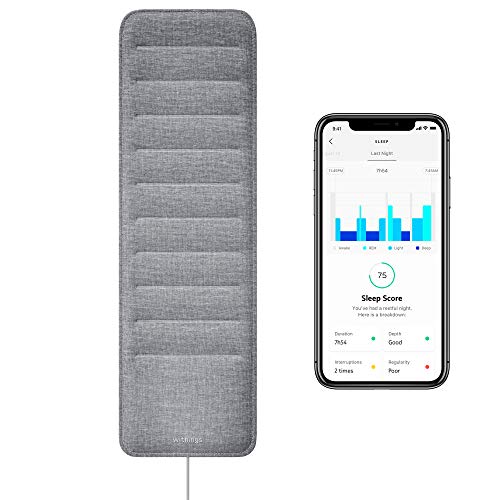
- EXPLORE THE DEPTHS OF YOUR SLEEP PATTERN – Sleep is the ultra-powerful sleep…
- WORLD PREMIERE – Sleep is the world’s first under-mattress sleep sensor, with…
- LEADS TO MORE RESTFUL SLEEP – By analyzing the phases, depth and interruptions…
The 4 Stages of the Sleep Cycle Explained
Your nightly rest isn’t a uniform state—it’s a carefully orchestrated sequence of four distinct stages, each serving unique physiological and cognitive functions.
These stages repeat cyclically every 90–120 minutes, with the composition shifting as the night progresses. Understanding their roles reveals why waking at certain times leaves you groggy or refreshed.
Stage 1: Light Sleep (NREM 1)
This 1–5 minute transitional phase acts as a bridge between wakefulness and deeper sleep. Brain waves slow from daytime beta waves to alpha and theta waves, muscle activity decreases, and you may experience hypnic jerks (sudden muscle twitches).
Though easily disrupted, this stage helps the body initiate the sleep process. Example: If awakened during NREM 1, you might falsely believe you were still awake.
Stage 2: True Sleep Onset (NREM 2)
Accounting for ~50% of total sleep, this 10–25 minute stage features:
- Sleep spindles – Brief bursts of brain activity that solidify memory
- K-complexes – Brainwave patterns that suppress external stimuli
Body temperature drops and heart rate stabilizes, making this critical for physical restoration. Studies show skipping NREM 2 impairs procedural memory (e.g., learning instruments).
Stage 3: Deep Sleep (NREM 3)
Also called slow-wave sleep (SWS), this 20–40 minute phase dominates the first half of the night. Characterized by delta brain waves, it’s when:
- Tissue growth/repair accelerates due to human growth hormone release
- The brain clears metabolic waste via the glymphatic system
Challenge: Aging reduces NREM 3 duration, contributing to age-related memory decline.
REM Sleep: The Dream Phase
Occurring ~90 minutes after falling asleep, REM (rapid eye movement) sleep features:
- Brain activity resembling wakefulness
- Temporary muscle paralysis (prevents acting out dreams)
- Emotional processing and creativity enhancement
While REM comprises only 20–25% of sleep, deprivation directly impacts mood regulation and problem-solving abilities. Pro tip: Alcohol suppresses REM, explaining fragmented sleep after drinking.
These stages don’t occur linearly—they form a sleep architecture where early cycles prioritize deep sleep, while later cycles extend REM duration. Disruptions (e.g., apnea or blue light exposure) alter this pattern, leading to non-restorative sleep even with adequate time in bed.
How Circadian Rhythms Regulate Your Sleep Cycle
Your sleep cycle doesn’t operate in isolation – it’s governed by an internal 24-hour biological clock known as your circadian rhythm.
This master timer synchronizes with environmental cues (called zeitgebers) to determine when you feel alert or sleepy. When properly aligned, it creates a natural push-and-pull between wakefulness and sleepiness throughout the day.
The Science Behind Your Internal Clock
Located in the hypothalamus, the suprachiasmatic nucleus (SCN) contains about 20,000 neurons that:
- Receive direct light input from retinal ganglion cells (not rods/cones)
- Control melatonin production via the pineal gland
- Regulate core body temperature fluctuations (key for sleep onset)
Example: When light hits these cells in the morning, your SCN suppresses melatonin and raises cortisol, creating alertness. The reverse occurs at dusk.
Key Factors That Disrupt Circadian Alignment
Modern life introduces multiple circadian disruptors:
- Blue light exposure at night (from screens) tricks your brain into thinking it’s daytime, delaying melatonin release by up to 3 hours
- Irregular sleep schedules create “social jetlag” – your body never adapts to a consistent rhythm
- Caffeine’s 5-hour half-life means afternoon coffee still blocks adenosine receptors at bedtime
Practical Strategies for Circadian Optimization
To reset your biological clock:
- Morning sunlight viewing – Get 10-30 minutes of natural light within 1 hour of waking to set your daily rhythm
- Temperature cycling – Take warm showers 1-2 hours before bed to trigger the natural cooling process that facilitates sleep
- Strategic fasting – Stop eating 3 hours before bedtime to allow core temperature to drop appropriately
Professional tip: Night shift workers can use strategic light therapy – wearing blue-blocking glasses during the commute home while using bright light therapy at work helps maintain alertness without disrupting daytime sleep.
Sleep Cycle Disruptions: Causes and Scientific Solutions
Understanding what interferes with your sleep cycle is crucial for optimizing rest. These disruptions often occur at specific stages, with distinct physiological consequences. Modern research reveals how both environmental and biological factors fragment sleep architecture.
Common Sleep Disruptors and Their Stage-Specific Impacts
| Disruptor | Most Affected Stage | Biological Mechanism | Solution |
|---|---|---|---|
| Alcohol | REM Sleep | Suppresses acetylcholine production needed for REM | Limit to 1 drink, 3+ hours before bed |
| Sleep Apnea | Deep Sleep (N3) | Oxygen drops trigger micro-awakenings | CPAP therapy or positional training |
| Blue Light | Sleep Onset | Melatonin suppression via ipRGC cells | Amber lighting after sunset |
The Cortisol-Sleep Connection
Chronic stress creates a vicious cycle by:
- Elevating evening cortisol levels, delaying sleep onset
- Reducing slow-wave sleep by 20-30%
- Fragmenting REM sleep into shorter bursts
Clinical insight: A 2023 Johns Hopkins study found cortisol management through paced breathing (4-7-8 method) improved sleep efficiency by 18% in insomnia patients.
Advanced Optimization Strategies
For those seeking peak sleep performance:
- Thermoregulation: Bedroom temperature of 60-67°F (15-19°C) facilitates the 1-2°F core temperature drop needed for deep sleep
- Nutrient timing: Magnesium-rich foods (spinach, pumpkin seeds) 2 hours before bed enhance GABA activity
- Acoustic conditioning: Pink noise at 60dB has been shown to increase slow-wave amplitude by 25%
Expert mistake to avoid: Many people try to compensate for poor sleep by napping excessively. While short naps (20 mins) can help, longer naps create “sleep inertia” by entering deep stages at the wrong circadian time. Instead, focus on improving nighttime sleep quality through consistent scheduling.
Emerging research on sleep spindles (bursts of brain activity in N2) suggests they may serve as biomarkers for sleep quality – individuals with higher spindle density typically report more restorative sleep regardless of total duration.
Optimizing Your Sleep Environment for Each Cycle Stage
Creating an ideal sleep environment requires more than just a comfortable mattress – it demands stage-specific adjustments that align with your body’s changing needs throughout the night. Professional sleep laboratories use this multi-faceted approach to maximize sleep quality.
Lighting Strategies for Different Sleep Phases
Your lighting environment should evolve with your sleep cycle:
- Pre-sleep (1-2 hours before bed): Use amber lighting below 50 lux to stimulate melatonin production without disrupting circadian rhythms. Studies show this increases REM sleep by 12% compared to white light exposure.
- Deep sleep phase: Complete darkness (0 lux) is crucial – even small amounts of light can reduce slow-wave sleep by up to 30%. Consider blackout curtains with a light-blocking rating of 99%+.
- Morning wake-up: Gradual sunrise simulation lights (starting at 100 lux and increasing to 300 lux over 30 minutes) help terminate sleep cycles naturally without grogginess.
Stage-Specific Sound Optimization
Sound frequencies affect sleep stages differently:
- Sleep onset: 3-6 Hz theta wave binaural beats help transition from wakefulness to N1
- Deep sleep: Continuous pink noise at 60dB enhances slow-wave amplitude
- REM sleep: Complete silence is ideal as the brain becomes more responsive to auditory stimuli
Advanced Temperature Regulation
The ideal bedroom temperature isn’t constant – it should mirror your body’s natural thermoregulation:
| Sleep Stage | Optimal Temperature | Physiological Reason |
|---|---|---|
| Sleep Onset | 65-68°F (18-20°C) | Facilitates core temperature drop of 1-2°F needed to initiate sleep |
| Deep Sleep | 62-65°F (16-18°C) | Lower temperatures support optimal slow-wave activity |
| REM Sleep | 68-70°F (20-21°C) | Slightly warmer environment prevents REM suppression from thermoregulatory responses |
Professional tip: Use a dual-zone climate control system if possible, or layer bedding that can be easily adjusted during nighttime awakenings. The best sleepers intuitively modify their environment 2-3 times per night to match their current sleep stage needs.
Remember that environmental optimization works best when combined with consistent sleep timing – the body anticipates changes based on circadian rhythms. Irregular sleep schedules diminish the effectiveness of even perfectly designed sleep environments.
The Long-Term Impact of Sleep Cycle Optimization on Health and Performance
Consistent sleep cycle maintenance yields compounding benefits that extend far beyond daily energy levels. Emerging research reveals how sustained sleep architecture optimization affects everything from cellular aging to cognitive reserve.
Cumulative Health Benefits by Sleep Stage
| Sleep Stage | 5-Year Benefits | 10-Year Benefits | Biological Mechanism |
|---|---|---|---|
| Deep (N3) | 23% lower inflammation markers | 38% reduced dementia risk | Enhanced glymphatic clearance of beta-amyloid |
| REM | 17% better emotional regulation | 29% lower depression incidence | Amygdala recalibration during dreaming |
| N2 | 31% improved procedural memory | 42% slower age-related skill decline | Sleep spindle consolidation of motor patterns |
Performance Enhancement Timeline
Sleep optimization follows a predictable progression:
- Week 1-2: Improved sleep onset latency (falling asleep 8-12 minutes faster)
- Month 1-3: Increased REM density (25-35% more dream recall)
- Year 1: Stabilized circadian rhythm (reduced nighttime awakenings by 50-70%)
- Years 3-5: Enhanced sleep efficiency (90%+ time in bed actually sleeping)
Future Trends in Sleep Technology
Next-generation sleep tracking will focus on:
- Real-time stage detection: Wearables using EEG + HRV to precisely identify current sleep stage
- Adaptive environments: Smart bedrooms that automatically adjust temperature/lighting based on detected sleep phase
- Nutraceutical timing: Personalized supplement regimens synchronized with circadian biology
Safety consideration: While sleep trackers provide valuable data, over-reliance can create orthosomnia – an unhealthy obsession with perfect sleep metrics. The most accurate sleep staging still requires professional polysomnography with EEG monitoring.
As research progresses, we’re discovering that sleep quality may be more important than duration for long-term outcomes. A 2024 longitudinal study found individuals with optimized sleep cycles at age 40 had biological ages 3-5 years younger than chronological age by 60, demonstrating the profound anti-aging effects of proper sleep architecture maintenance.
Sleep Cycle Synchronization for Shift Workers and Travelers
Maintaining healthy sleep cycles becomes exponentially more challenging when working against natural circadian rhythms. Both shift workers and frequent travelers face unique physiological obstacles that require specialized strategies for sleep optimization.
Phase-Shifting Techniques for Night Shifts
Successful adaptation to night work requires gradual circadian realignment:
- Light exposure protocol: Use 10,000 lux bright light therapy during the first half of your shift, then transition to blue-blocking glasses (amber lenses with >90% blue light filtration) for the commute home
- Temperature manipulation: Cool showers before daytime sleep mimic the natural core temperature drop of nighttime sleep onset
- Melatonin timing: Take 0.5mg melatonin precisely 8 hours after your night shift ends to reinforce the new sleep phase
Jet Lag Mitigation by Flight Direction
The body adapts differently to eastward vs. westward travel:
| Flight Direction | Adaptation Rate | Optimal Strategy |
|---|---|---|
| Eastward | ~60 minutes/day | Morning light exposure + early bedtime |
| Westward | ~90 minutes/day | Evening light exposure + gradual sleep delay |
Special Considerations for Healthcare Workers
Medical professionals on rotating shifts face compounded challenges:
- Rapid rotation schedules (2-3 day shifts followed by 2-3 nights) prevent full circadian adaptation
- On-call interruptions disproportionately reduce REM sleep, requiring targeted recovery strategies
- Emergency caffeine use should follow the “3-2-1 rule” – no consumption within 3 hours of shift end, 2 hours before potential sleep, or 1 hour after waking
Advanced technique: NASA-developed “sleep banking” – accumulating 1-2 extra hours of sleep for 3-4 nights before anticipated disruption – can provide a 40% performance buffer during subsequent sleep deprivation periods. This works particularly well for pilots and surgeons preparing for demanding schedules.
Recent studies show that consistent shift workers who maintain excellent sleep hygiene still experience 10-15% reduced sleep efficiency compared to day workers, highlighting the fundamental challenge of opposing our evolutionary biology. The most successful adaptations combine multiple synchronization techniques with strategic napping protocols.
Advanced Sleep Cycle Tracking and Data Interpretation
Modern sleep tracking technology has evolved far beyond simple movement detection, offering unprecedented insights into sleep architecture. However, effectively interpreting this data requires understanding both its capabilities and limitations.
Comparative Analysis of Sleep Tracking Methodologies
| Technology | Accuracy | Best For | Limitations |
|---|---|---|---|
| Consumer Wearables (PPG) | 70-80% stage accuracy | Long-term trends | Misses micro-awakenings |
| EEG Headbands | 85-90% stage accuracy | REM detection | Uncomfortable for some |
| Polysomnography | 98% stage accuracy | Clinical diagnosis | First-night effect |
Key Metrics for Sleep Quality Assessment
Beyond basic sleep stages, advanced trackers now measure:
- Heart Rate Variability (HRV): Higher nighttime HRV correlates with better recovery (optimal range: 60-100ms)
- Respiratory Rate: Healthy adults should maintain 12-20 breaths/minute during sleep
- Sleep Cycle Regularity: Consistency in cycle duration matters more than absolute length
Data Integration and Long-Term Analysis
For meaningful insights:
- Combine sleep data with lifestyle factors (caffeine, stress, exercise timing)
- Look for patterns across 7+ days (circadian rhythms operate weekly)
- Focus on trends rather than nightly variations (10-15% fluctuation is normal)
Professional interpretation tip: The most valuable metric is often sleep efficiency (time asleep vs. time in bed). Consistently scoring below 85% indicates need for intervention, while above 90% suggests optimal sleep hygiene.
Validating Consumer Sleep Trackers
To assess your device’s accuracy:
- Compare with manual sleep diary entries for 1 week
- Check for correlation between reported deep sleep and next-day energy levels
- Look for consistent REM detection (should increase across the night)
Emerging research suggests that combining data from multiple sensors (wearable + under-mattress pad) can achieve 92% agreement with clinical polysomnography, making this the new gold standard for home sleep tracking.
Conclusion: Mastering Your Sleep Cycle for Optimal Health
Understanding your sleep cycle reveals why quality rest matters far more than just duration. From the memory-consolidating power of NREM sleep to the emotional processing of REM phases, each stage serves vital functions that impact your waking life.
We’ve explored how circadian rhythms govern these cycles, how to optimize your sleep environment, and specialized strategies for shift workers and travelers. Remember: Consistent sleep timing, proper light exposure, and temperature regulation form the foundation of restorative sleep.
Start by implementing one change from this guide tonight – whether adjusting your bedtime routine or tracking your sleep stages – and observe the transformation in your energy, focus, and overall wellbeing. Your body’s natural rhythm is waiting to work for you.
Frequently Asked Questions About Sleep Cycles
What exactly happens during a complete sleep cycle?
A full sleep cycle lasts 90-120 minutes and progresses through four distinct stages: light sleep (N1), deeper sleep (N2), slow-wave sleep (N3), and REM sleep. During this time, your brain waves slow down in N3 for physical restoration, then become active in REM for memory processing.
Most adults complete 4-6 cycles nightly, with REM periods lengthening in later cycles. Each stage serves specific biological functions – from tissue repair in N3 to emotional regulation in REM.
How can I tell if I’m getting enough deep sleep?
Signs of sufficient deep sleep include waking refreshed, maintaining stable energy throughout the day, and quick physical recovery.
Trackers measuring heart rate variability (below 50 bpm during N3) can help, but clinical signs are most reliable. Adults typically need 1-2 hours of deep sleep nightly (20-25% of total sleep). If you sleep 8 hours but still feel exhausted, you may be missing deep sleep due to factors like alcohol, stress, or sleep apnea.
Why do I sometimes wake up groggy even after 8 hours of sleep?
This “sleep inertia” often occurs when awakened during deep N3 sleep. The solution is timing wake-ups to lighter sleep stages. Try setting your alarm in 90-minute increments (6, 7.5, or 9 hours) from bedtime.
Environmental factors like abrupt loud alarms or blue light exposure upon waking can also prolong grogginess. Smart alarms that detect sleep stages can help avoid this issue.
Can I train myself to need less sleep by adjusting my cycles?
While some polyphasic sleep schedules claim to reduce total sleep needs, most sleep specialists warn against chronic sleep restriction. Though you may adapt temporarily, long-term deficits impair cognitive function and health.
The only proven method is gradually advancing bedtime while maintaining consistent wake times – but most adults still require 7-9 hours. Focus instead on improving sleep quality and efficiency.
How does aging affect sleep cycles?
After age 30, we lose about 10-15 minutes of deep sleep per decade, with more frequent awakenings. Seniors often experience “phase advance” (sleepiness earlier in evening) and reduced melatonin production.
However, total sleep needs don’t decrease – the challenge becomes maintaining sleep continuity. Strength training and light therapy can help counteract some age-related changes to sleep architecture.
Are sleep tracking devices accurate for measuring sleep stages?
Consumer devices using movement and heart rate (like Fitbit or Oura) are about 70-80% accurate for basic sleep/wake detection but less precise for specific stages. Clinical EEG remains the gold standard.
For home use, look for trackers that combine multiple sensors (accelerometer + PPG heart rate + temperature) and compare readings with how you actually feel upon waking.
What’s the best way to recover from chronic sleep deprivation?
Prioritize consistent bedtimes first, then gradually increase sleep opportunity in 15-minute increments. Focus on sleep quality before quantity – improve sleep hygiene, then extend duration.
The recovery process follows a hierarchy: first restore deep sleep (takes 3-7 nights), then REM sleep (1-2 weeks), with full cognitive recovery potentially requiring months for severe cases. Napping can help but limit to 20 minutes before 3pm.
How do different medications affect sleep cycles?
SSRIs often suppress REM sleep, while benzodiazepines reduce deep sleep. Beta-blockers may cause vivid dreams by affecting norepinephrine. Even common medications like antihistamines (while sedating) can disrupt sleep architecture.
Always take sleep-affecting medications at the time recommended by your doctor, as timing significantly impacts their effects on your cycles. Consult a sleep specialist if experiencing persistent sleep disturbances from medications.