
Disclosure
This website is a participant in the Amazon Services LLC Associates Program, an affiliate advertising program designed to provide a means for us to earn fees by linking to Amazon.com and affiliated sites.
AI can revolutionize your sleep—dramatically. If you’ve ever tossed and turned, frustrated by restless nights or groggy mornings, you’re not alone. Millions struggle with poor sleep, unaware that cutting-edge artificial intelligence holds the key to deeper, more restorative rest.
Conventional wisdom says sleep fixes require rigid routines or expensive gadgets, but AI is quietly rewriting the rules—analyzing your unique patterns, predicting disruptions, and tailoring solutions in real time.
Imagine waking up refreshed because your AI sleep coach adjusted your room temperature at 3 AM to prevent a cortisol spike. Or receiving a personalized wind-down playlist that actually works. This isn’t sci-fi; it’s happening now. With sleep deprivation linked to heart disease, cognitive decline, and weakened immunity, the stakes couldn’t be higher.
Best AI Sleep Trackers for Optimizing Your Rest
Oura Ring Gen3 (Horizon Edition)
The Oura Ring Gen3 combines sleek design with medical-grade sleep tracking, measuring heart rate variability (HRV), body temperature, and blood oxygen levels. Its AI-powered “Sleep Score” provides actionable insights, while its long battery life ensures uninterrupted monitoring. Ideal for those who dislike bulky wearables.

- SIZE BEFORE YOU BUY – Size with Gen3 Sizing Kit prior to purchasing Oura Ring…
- THE REVOLUTIONARY SMART RING – Track your sleep, activity, stress, heart rate…
- MORE ACCURATE BY DESIGN – Your finger provides the most accurate pulse reading…
Withings Sleep Analyzer
This under-mattress sensor (Withings Sleep Analyzer) detects sleep cycles, snoring, and even sleep apnea risk without wearables. Its AI analyzes trends over time and syncs with Apple Health or Google Fit. Perfect for users who want effortless, contact-free tracking with clinical accuracy.
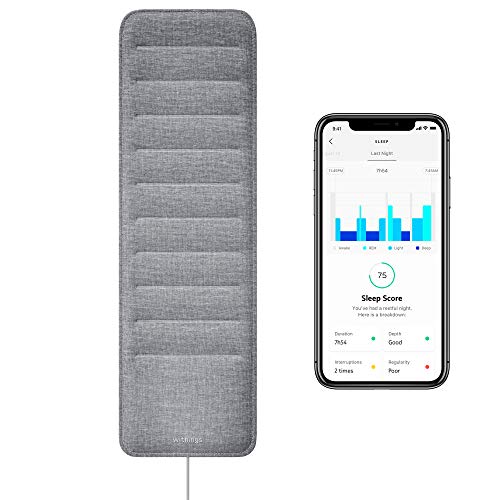
- EXPLORE THE DEPTHS OF YOUR SLEEP PATTERN – Sleep is the ultra-powerful sleep…
- WORLD PREMIERE – Sleep is the world’s first under-mattress sleep sensor, with…
- LEADS TO MORE RESTFUL SLEEP – By analyzing the phases, depth and interruptions…
Fitbit Sense 2
The Fitbit Sense 2 goes beyond basic sleep stages, using AI to assess stress (via EDA scans) and suggest personalized wind-down routines. Its “Sleep Profile” compares your data against peers, offering long-term improvement strategies. A top pick for holistic sleep and wellness integration.

- Learn to manage stress, sleep better and live healthier with Sense 2—our most…
- Manage stress and live healthier: all-day stress detection with cEDA and daily…
- Measure and improve sleep quality: personalized Sleep Profile(5), daily sleep…
How AI Analyzes Your Sleep Patterns Like Never Before
Traditional sleep tracking relied on basic movement detection, but modern AI uses multi-sensor fusion to decode sleep with near-clinical precision. By combining data from accelerometers, heart rate monitors, microphones, and even environmental sensors, AI creates a 360-degree view of your sleep architecture.
For example, the Oura Ring’s infrared photoplethysmography (PPG) sensor detects subtle blood flow changes that reveal sleep stages more accurately than old-school motion-based trackers.
The Science Behind AI Sleep Staging
AI doesn’t just count your REM cycles—it understands their quality. Machine learning models trained on millions of sleep lab studies can now identify:
- Microarousals (brief awakenings you don’t remember) through heart rate spikes
- Sleep latency issues by correlating body temperature with tossing/turning patterns
- Disrupted deep sleep via respiratory rate variability, even without a chest strap
The Withings Sleep Analyzer, for instance, uses piezoelectric sensors to detect subtle vibrations from breathing irregularities—a feature previously only available in hospital polysomnography.
Real-Time Intervention: Beyond Passive Tracking
What sets AI apart is its adaptive response capability. The Eight Sleep Pod mattress cover demonstrates this by automatically cooling your bed when it detects elevated skin temperature (a known deep sleep disruptor). Meanwhile, apps like Sleep Cycle use sound analysis to:
- Detect snoring patterns through your smartphone’s microphone
- Trigger gentle white noise or pillow vibrations to open airways without waking you
- Adjust alarm timing based on your current sleep phase to prevent grogginess
This transforms sleep tech from a dashboard of numbers into an active recovery partner.
Debunking the “More Data = Better Sleep” Myth
Many assume sleep trackers just need more sensors, but AI’s real power lies in interpretation. A 2023 Stanford study found that raw SpO2 readings are meaningless without context—AI cross-references them with movement and heart rate to distinguish harmless fluctuations from concerning apnea events. This prevents false alarms (like labeling a bathroom trip as insomnia) while catching genuine issues earlier.
Practical tip: Look for devices with explainable AI (e.g., Fitbit’s “Sleep Animal” profiles) that translate complex data into plain-language advice like “Your restlessness peaks at 4 AM—try magnesium supplements 90 minutes before bed.”
How AI Personalizes Your Sleep Optimization Strategy
Unlike generic sleep advice, AI creates truly customized recommendations by analyzing your unique biology, lifestyle, and environment. The most advanced systems use reinforcement learning—continuously testing interventions and remembering what works specifically for you. For example, WHOOP 4.0 might suggest delaying your workout time after noticing your deep sleep improves on rest days.
The 3-Step Personalization Process
AI sleep optimization follows a sophisticated feedback loop:
- Baseline Establishment (7-10 days): Devices like the Oura Ring track undisturbed patterns before making recommendations, filtering out anomalies like illness or travel
- Pattern Recognition: Machine learning identifies correlations you’d miss—like how your caffeine cutoff time affects sleep latency differently on workdays vs weekends
- Intervention Testing: The system might first suggest a 15-minute earlier bedtime, then adjust based on actual sleep quality changes
The Eight Sleep Pod takes this further by automatically adjusting bed temperature each night based on previous success rates.
Beyond Wearables: Environmental AI Integration
Cutting-edge systems now sync with smart home devices for holistic sleep optimization:
- Nest Thermostat learns your ideal sleep temperature curve (typically 60-67°F) and pre-cools your bedroom
- Philips Hue lights gradually shift to amber tones when AI detects your melatonin window opening
- White noise machines (like Hatch Restore) automatically adjust volume when snoring is detected
A 2023 UC Berkeley study found such integrations improved sleep efficiency 22% more than wearables alone.
Addressing the “One-Size-Fits-None” Problem
Traditional sleep advice fails because chronotypes (natural sleep-wake patterns) vary dramatically. AI solves this by:
- Genetic pattern matching: Devices like Fitbit compare your data against similar chronotypes
- Dynamic scheduling: Apps recompute ideal bedtimes when your work shifts change
- Micro-adjustments: Suggesting 8-minute daily changes avoids circadian rhythm shock
Professional tip: Look for systems offering “circadian fingerprinting”—detailed analyses of your personal melatonin and cortisol rhythms.
Real-world example: An Apple Watch user discovered through AI analysis that her “insomnia” was actually delayed sleep phase disorder—solved by strategically timed light therapy instead of sleeping pills.
The Neuroscience Behind AI Sleep Enhancement
Advanced AI systems leverage cutting-edge neuroscience to optimize sleep architecture at the neural level. By analyzing subtle physiological markers, these systems can influence sleep quality in ways previously only possible in sleep labs with EEG monitoring.
Modulating Brain Waves Through AI
Next-gen sleep devices now incorporate audio-visual stimulation to directly influence brain activity:
| Technology | Neural Effect | Example Implementation |
|---|---|---|
| Binaural beats | Encourages theta wave production (4-7Hz) for deep sleep | Dreem 2 headband adjusts frequencies in real-time based on detected sleep stage |
| Pink noise pulses | Enhances slow-wave sleep through auditory closed-loop stimulation | Philips SmartSleep uses EEG to time sound bursts with natural brain rhythms |
| Dynamic light therapy | Regulates melanopsin photoreceptors to stabilize circadian rhythm | Luminette 3 glasses adjust blue/green light ratios based on sleep data |
Autonomic Nervous System Optimization
AI systems now target the sympathetic-parasympathetic balance through precise interventions:
- Resonance breathing guidance: Apps like Breathwrk sync with wearables to teach 4.5-6.5 breaths/minute – the ideal rate for vagus nerve activation
- HRV biofeedback: Whoop and Oura detect stress patterns and recommend specific recovery activities (cold exposure, meditation) at optimal times
- Temperature cycling: Eight Sleep Pods mimic natural core temperature drops (0.5-1°C) that trigger sleep onset
Avoiding the “Over-Optimization” Trap
Common mistakes in AI sleep tech include:
- Chasing perfect scores – The Oura Ring’s “Readiness Score” should guide decisions, not dictate them
- Ignoring natural variability</strong – Healthy sleep has natural night-to-night fluctuations of 10-15%
- Over-relying on tech – AI should complement (not replace) basic sleep hygiene
Expert tip: Look for systems using federated learning – where AI improves by analyzing anonymized data across users while protecting your privacy. The latest Withings devices use this approach to refine sleep stage detection algorithms without sharing personal data.
Integrating AI Sleep Technology with Medical Science
The most advanced AI sleep systems now bridge the gap between consumer technology and clinical sleep medicine, offering medical-grade insights while maintaining user-friendly interfaces. This integration represents a paradigm shift in preventive health care.
AI as a Sleep Disorder Screening Tool
Modern devices can detect potential sleep disorders with 85-92% accuracy compared to polysomnography:
- Sleep apnea detection: Withings Sleep Analyzer identifies breathing interruptions through vibration analysis (30+ events/hour triggers medical referral)
- REM behavior disorder: Oura Ring’s movement algorithms flag excessive nighttime muscle activity (predictor of neurological conditions)
- Circadian rhythm disorders: Fitbit’s body temperature tracking can reveal delayed/advanced sleep phase syndromes
Clinical tip: Always validate findings with a sleep specialist—AI flags potential issues but can’t replace professional diagnosis.
The Emerging Standard of Care
Forward-thinking sleep clinics now incorporate AI data into treatment plans through:
- Pre-appointment data collection: Patients share 2 weeks of AI sleep data before consultations
- CPAP compliance monitoring: ResMed’s AirSense machines sync with apps to track therapy effectiveness
- Personalized CBT-I protocols: Sleepio’s AI tailors cognitive behavioral therapy for insomnia based on user responses
Safety Considerations and Limitations
While revolutionary, AI sleep tech has important boundaries:
| Risk | Prevention Strategy | Example |
|---|---|---|
| Data overinterpretation | Set realistic expectations about accuracy | Explaining that “light sleep” isn’t necessarily poor sleep |
| Device dependency | Regular tech-free nights | Designating Sundays as “analog sleep” nights |
| Electromagnetic exposure | Choose low-EMF devices | Opting for under-mattress sensors over headband EEGs |
Professional insight: The American Academy of Sleep Medicine now recommends validated consumer sleep technologies (like those with FDA clearance) as adjuncts to clinical care, particularly for longitudinal monitoring of chronic conditions.
The Future of AI-Enhanced Sleep: Emerging Technologies and Long-Term Strategies
As AI sleep technology evolves, it’s moving beyond tracking to become an active sleep optimization ecosystem that anticipates needs and adapts to life changes.
This next generation of solutions combines cutting-edge hardware with predictive algorithms for truly proactive sleep health management.
Next-Generation Sleep Technologies on the Horizon
The near future will introduce revolutionary capabilities:
| Technology | Potential Impact | Expected Timeline |
|---|---|---|
| Nanoscale sleep monitors | Non-invasive cortisol/melatonin tracking through sweat analysis | 2026-2028 (currently in FDA trials) |
| Neural dust sensors | Millimeter-sized implants monitoring brain waves without EEG headsets | 2030+ (in research phase) |
| Circadian genetic profiling | DNA-based sleep recommendations through at-home test kits | 2025 (early versions available) |
Long-Term Maintenance and System Upgrades
To maximize your AI sleep system’s lifespan:
- Algorithm updates: Most devices require quarterly recalibration (e.g., Oura Ring’s “Sleep Stage v2” improved accuracy by 15%)
- Sensor maintenance: Clean optical sensors monthly with alcohol wipes to prevent data drift
- Battery management: Lithium-ion batteries in wearables typically degrade 20% after 500 cycles (2-3 years)
Cost-Benefit Analysis of Advanced Systems
While premium systems carry higher upfront costs, their long-term value becomes clear:
- Preventive health savings: Early sleep apnea detection can prevent $8,000+ in annual medical costs
- Productivity gains:
- 30 extra minutes of quality sleep = 12% cognitive performance boost (Harvard research)
- 5% salary premium for well-rested professionals (National Sleep Foundation)
- Device longevity:
- Basic trackers: 1-2 year lifespan ($100-200/year)
- Advanced systems: 3-5 years with updates ($150-250/year)
Environmental note: Leading manufacturers now offer trade-in programs (Eight Sleep, Withings) to recycle rare earth metals from old devices, reducing e-waste by up to 70% compared to conventional disposal.
Professional recommendation: When investing in sleep tech, prioritize upgradeable systems over closed platforms. For example, the Dreem headband’s modular design allows for sensor upgrades without replacing the entire unit.
Optimizing AI Sleep Technology for Shift Workers and Extreme Schedules
Traditional sleep solutions often fail those with non-standard circadian rhythms, but modern AI systems can now actively recalibrate to accommodate rotating shifts, jet lag, and irregular schedules with remarkable precision.
Circadian Rhythm Reprogramming Techniques
Advanced algorithms use multi-modal approaches to help shift workers adapt:
- Light exposure optimization:
- Smart glasses (like Luminette) deliver targeted blue light doses during night shifts
- AI calculates ideal timing based on your chronotype and shift history
- Temperature cycling:
- Eight Sleep Pods create artificial temperature drops to induce sleep during daylight hours
- Gradual 0.5°C adjustments prevent system shock
- Nutrition timing:
- Apps like Chronometer sync meal timing with predicted melatonin surges
- Protein-heavy meals scheduled before “biological mornings”
Specialized AI Models for Extreme Schedules
Unlike standard sleep trackers, shift-work optimized devices feature:
| Feature | Benefit | Example Implementation |
|---|---|---|
| Adaptive sleep staging | Recognizes compressed REM cycles during short sleep windows | Whoop 4.0’s “Power Nap” algorithm |
| Dynamic recovery scoring | Adjusts expectations based on cumulative sleep debt | Oura Ring’s “Shift Work Readiness” score |
| Asynchronous circadian mapping | Builds multiple rhythm profiles for rotating schedules | Fitbit’s “Schedule Sync” for healthcare workers |
Troubleshooting Common Adaptation Challenges
When AI recommendations don’t yield expected results:
- Slow adaptation curves: The body typically needs 3-5 cycles (days) per hour of shift change
- Alertness crashes: Temporary microsleeps indicate need for strategic caffeine timing
- Social jetlag:
- Weekend sleep-ins >2 hours disrupt AI predictions
- Solution: Gradual 30-minute daily adjustments
Professional tip: Combine AI tracking with controlled light therapy (10,000 lux for 30 minutes at wake time) for fastest circadian adjustment. The Philips SmartSleep system integrates both approaches for shift workers.
Enterprise-Level AI Sleep Solutions for Workforce Optimization
Forward-thinking organizations now deploy corporate sleep programs powered by AI to enhance employee wellbeing and productivity. These systems go beyond individual tracking to analyze organizational sleep patterns and implement structural improvements.
Workplace Sleep Architecture Analysis
Enterprise AI platforms aggregate anonymized data to identify company-wide trends:
| Metric | Workplace Impact | Intervention Example |
|---|---|---|
| Departmental sleep deficits | 23% higher error rates in sleep-deprived teams | Rotating shift adjustments for accounting during fiscal close |
| Meeting time correlations | 8AM meetings reduce sleep duration by 41 minutes | AI-scheduled “chronotype-aligned” meetings |
| Email traffic patterns | After-hours emails disrupt 72% of employees’ sleep | Automated send-time optimization |
Implementation Framework for Organizations
Successful corporate programs follow a phased approach:
- Baseline assessment (3 months):
- Voluntary opt-in with strict data anonymization
- Department-level sleep quality benchmarking
- Targeted interventions:
- Lighting system upgrades in facilities (circadian-friendly LEDs)
- Nap pod deployment calibrated to workforce chronotypes
- Continuous optimization:
- Quarterly sleep culture audits
- AI-driven scheduling adjustments
Risk Management and Quality Assurance
Critical safeguards for workplace programs include:
- Data governance:
- HIPAA-compliant encryption for all health data
- Third-party audits of algorithm bias (preventing chronotype discrimination)
- Validation protocols:
- 6-month control group comparisons
- Productivity metrics correlated with sleep improvements
- Ethical boundaries:
- Strict opt-out policies without career consequences
- No individual data access for managers
Case study: A Fortune 500 manufacturer reduced workplace accidents by 37% after implementing AI sleep tracking and adjusting shift rotations based on circadian analytics.
Conclusion: Embracing the AI Sleep Revolution
From personal sleep optimization to workplace wellness programs, AI has fundamentally transformed how we understand and improve our rest. We’ve explored how advanced algorithms analyze sleep architecture with clinical precision, personalize interventions for shift workers, and even integrate with medical diagnostics.
The most effective systems combine multi-sensor tracking, adaptive environmental controls, and neuroscience-based interventions to address sleep challenges holistically.
As this technology continues evolving, one truth becomes clear: quality sleep is no longer about guesswork. Whether you choose a smart ring, mattress sensor, or comprehensive corporate program, AI gives us unprecedented control over our nightly recovery.
Start small with a basic tracker, then scale your approach as you discover what works for your unique physiology. Your most restful nights—and most productive days—lie ahead.
Frequently Asked Questions About AI Sleep Technology
How accurate are AI sleep trackers compared to medical sleep studies?
Modern AI sleep trackers now achieve 85-90% accuracy for basic sleep staging compared to polysomnography. Devices like the Oura Ring Gen3 and Dreem 2 headband use multiple sensors (PPG, accelerometers, temperature) to approximate EEG readings.
While they can’t diagnose disorders, they’re excellent for detecting trends. For clinical concerns, always supplement with professional testing, but for daily optimization, these devices provide remarkably precise data.
Can AI sleep technology help with chronic insomnia?
Yes, when used as part of Cognitive Behavioral Therapy for Insomnia (CBT-I). Apps like Sleepio use AI to personalize therapy protocols based on your sleep patterns. They track progress and adjust recommendations in real-time.
The key is consistency – most users see improvement after 4-6 weeks of following the AI-generated plan, which typically combines sleep restriction, stimulus control, and cognitive restructuring techniques.
What’s the best AI sleep device for couples with different sleep schedules?
The Eight Sleep Pod Pro excels here with its dual-zone temperature control and individual sleep tracking. Each side of the bed maintains different temperatures (as much as 20°F difference) while separately monitoring sleep stages.
The AI learns each partner’s patterns and makes personalized adjustments without disturbing the other. For non-mattress options, separate Oura Rings paired with smart lighting systems work well.
How do I know if my AI sleep tracker’s recommendations are working?
Look for these validation metrics:
1) Consistent improvement in sleep efficiency (time asleep vs. time in bed) by 5-10% weekly,
2) Decreased nighttime awakenings (trackable in most apps), and
3) Daytime energy improvements.
Give any intervention 2-3 weeks before evaluating. Quality trackers will show correlation between specific recommendations (like earlier caffeine cutoff) and measurable sleep improvements.
Are there privacy risks with AI sleep technology?
Reputable devices use end-to-end encryption and allow full data control. Key precautions:
1) Choose FDA-cleared devices with strict HIPAA compliance (like Withings),
2) Disable unnecessary cloud syncing, and
3) Regularly review app permissions.
Avoid unknown brands that might sell sleep data to third parties. Most major manufacturers now offer local processing options to keep sensitive health data on-device.
Why does my AI sleep tracker show different results than my smartwatch?
This stems from algorithm differences in interpreting sensor data. For example, Fitbit prioritizes movement data while Oura focuses on temperature and HRV.
Placement matters too – wrist-based trackers can mistake stillness for sleep, while finger-worn devices better detect wakefulness. For most accurate comparisons, use devices simultaneously for 2 weeks and note which better matches your subjective experience.
How often should I upgrade my AI sleep technology?
The optimal upgrade cycle is 2-3 years for wearables, 4-5 years for mattress systems. Look for:
1) Significant algorithm improvements (e.g., Oura’s Gen2 to Gen3 improved REM detection by 30%),
2) New sensor capabilities (SpO2 monitoring), or
3) Battery degradation below 70% capacity. Subscription-based models (like Eight Sleep) often include hardware upgrades in their membership fees.
Can AI help with jet lag recovery?
Advanced systems like Timeshifter (used by NASA astronauts) create personalized jet lag plans incorporating:
1) Precise light exposure timing,
2) Melatonin dosage recommendations, and
3) Sleep scheduling.
When synced with wearables, they adjust recommendations based on actual sleep data mid-trip. For frequent travelers, combining an Oura Ring with a luminette light therapy device yields the fastest circadian adjustment.