
Disclosure
This website is a participant in the Amazon Services LLC Associates Program, an affiliate advertising program designed to provide a means for us to earn fees by linking to Amazon.com and affiliated sites.
A full-size mattress is 54 inches wide and 75 inches long—but is it the right choice for you? Many assume bigger is always better, yet this mid-sized option strikes a balance between space-saving practicality and comfort, making it a sleeper favorite for singles, teens, and cozy couples.
With rising trends toward minimalist bedrooms and multifunctional spaces, the full-size mattress offers a surprising sweet spot. Yet, misconceptions linger: Is it too cramped for adults? Too spacious for kids? Let’s unpack the truth, layer by layer, so you can make an informed decision—before your next sleepless night.
Best Full-Size Mattresses for Comfort and Support
Zinus Green Tea Memory Foam Mattress (12-Inch)
Ideal for pressure relief, the Zinus Green Tea Mattress combines cooling memory foam with natural green tea extract to resist odors. Its medium-firm feel suits back and side sleepers, while the CertiPUR-US certification ensures safety. A budget-friendly pick without sacrificing quality.

- FOR GREAT SLEEP AND A CLEAN PLANET – Featuring our patented zoned pressure…
- COMFORTABLE SUPPORT – Pressure-relieving memory foam conforms to the shape of…
- ALL NIGHT FRESHNESS – The all-natural green tea and purified charcoal infusions…
Tuft & Needle Original Adaptive Foam Mattress
The Tuft & Needle Original features proprietary adaptive foam that stays cool and contours to your body. Perfect for hot sleepers, it offers balanced support with a slight bounce, making it great for combination sleepers who shift positions at night.

- Medium Feel – Made For All sleeping positions; The new T&N Original medium…
- Responsive Comfort – The mattress’s T&N Flex foam responds to your body weight…
- Bounce-Back Support – T&N Adaptive foam is a breathable, open-cell foam, infused…
Nectar Classic Innerspring Mattress (12.0-Inch)
For luxury without the markup, the Nectar Classic delivers dual-coil support and organic cotton cover. Its Euro pillow top adds plushness, while the reinforced lumbar zone aids spinal alignment. A premium choice for those who prefer traditional innerspring with modern comfort.
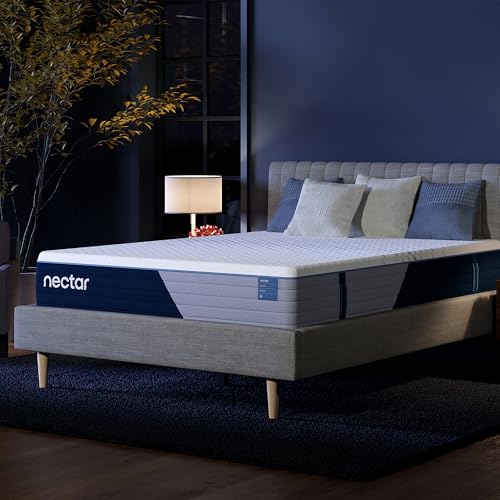
- SIMPLE TO SET UP – Just move the box to the room you want to use it in, unbox…
- THE NECTAR SLEEP SYSTEM – Introducing our signature combination of fabrics and…
- HYBRID MOTION ISOLATION LAYER – Individually-wrapped innerspring coils deliver…
Full-Size Mattress Dimensions and Space Requirements
A standard full-size mattress measures 54 inches wide and 75 inches long, making it 15 inches narrower than a queen but 6 inches wider than a twin. This mid-range size creates unique advantages and limitations depending on your bedroom layout and sleeping habits.
Unlike compact twin beds that force most adults into a fetal position, the full mattress provides just enough width for single sleepers to stretch comfortably—but couples may find it restrictive if either partner moves frequently.
Room Size Compatibility
For optimal functionality, your bedroom should be at least 9 feet by 9 feet to accommodate a full bed with walking space. Here’s why:
- Bed frame clearance: Most frames add 2-5 inches per side, requiring a minimum 58″ x 79″ footprint
- Nightstand placement: Standard 24″-deep tables need 18″ of aisle space to avoid a cramped feel
- Door/swing space: You’ll need 36″ clearance for dresser drawers and closet access
In studio apartments or shared kids’ rooms, the full-size shines by maximizing floor area. A 2023 National Association of Home Builders study revealed that 68% of urban millennials prefer full beds over queens when bedroom dimensions fall below 120 square feet.
Height and Weight Considerations
The 75″ length accommodates sleepers up to 5’9″ comfortably—taller individuals may experience toe hang. Weight distribution matters too:
- Solo sleepers: 250 lbs or less prevents premature sagging in foam models
- Couples: Combined weight under 400 lbs maintains support in hybrid/innerspring designs
- Children: Ideal for growing teens—supports up to 98% of 12-17 year olds per CDC growth charts
Memory foam mattresses like the Zinus Green Tea adapt better to weight variations than traditional springs. However, heavyweight sleepers (200+ lbs) should opt for high-density foams with at least 3 lb/ft³ density to prevent bottoming out.
Pro Tip: Use painter’s tape to map the dimensions on your floor before purchasing. This reveals real-world space for bedside lamps, pet beds, or yoga mats—saving you from post-delivery surprises.
Who Should (and Shouldn’t) Choose a Full-Size Mattress
The full-size mattress serves specific sleep needs exceptionally well, but makes compromises in other scenarios. Understanding these nuances will help you determine if it’s your ideal sleep solution or if you should size up/down.
Ideal User Profiles
These sleepers benefit most from a full mattress:
- Solo adult sleepers who value bedroom space efficiency – perfect for studio apartments or home offices doubling as guest rooms
- Teenagers (13-18 years) transitioning from twin beds – provides growth room without overwhelming smaller bedrooms
- Pet owners with medium/large dogs – offers 25% more surface area than twins for co-sleeping
- Back and stomach sleepers under 5’9″ – maintains proper spinal alignment without excessive width
When to Consider Alternatives
A full mattress may disappoint in these situations:
- Couples with different sleep schedules – the 27″ per person width often leads to sleep disturbance (compared to 30″ in queens)
- Individuals over 5’10” – feet may hang off the 75″ length, causing discomfort
- Combination sleepers who change positions frequently – limited turning radius increases wake-ups
- Those with chronic pain conditions – may require the pressure distribution of larger sleep surfaces
Special Considerations for Different Body Types
Your physique significantly impacts full-mattress suitability:
For petite sleepers (under 5’4″ and 120 lbs): A medium-firm full mattress prevents the “swimming in bed” feeling while providing ample stretch space. The Tuft & Needle Adaptive Foam works particularly well for this body type.
For athletic/muscular builds: Look for hybrid designs with pocketed coils like the Saatva Classic, which offer better edge support when entering/exiting bed compared to all-foam options.
Pro Tip: Test sleep positions with a yoga mat cut to 54″ width – if you consistently roll off during your trial nights, consider sizing up to a queen.
Full-Size Mattress Materials and Construction: What Really Matters
The internal composition of a full-size mattress determines its longevity, comfort, and support characteristics far more than its dimensions. Understanding these construction elements helps you make an informed choice between the three primary mattress types.
Core Material Comparison
| Material Type | Average Lifespan | Motion Transfer | Best For | Weight Limit |
|---|---|---|---|---|
| Memory Foam | 7-10 years | Excellent (Low) | Side sleepers, pain sufferers | 250 lbs (single) |
| Innerspring | 5-7 years | Poor (High) | Stomach sleepers, hot sleepers | 400 lbs (combined) |
| Hybrid | 8-12 years | Good (Medium) | Combination sleepers, couples | 350 lbs (combined) |
Layer-by-Layer Breakdown
A quality full-size mattress typically contains these essential layers:
- Comfort Layer (2-4″): Topmost padding that determines initial feel. Memory foam provides contouring, latex offers bounce, and pillow-tops add plushness.
- Transition Layer (1-2″): Medium-density foam that prevents sinking too deeply into the support core.
- Support Core (6-8″): The foundational layer – high-density foam, coils, or a combination in hybrids.
- Base Layer (1-2″): Dense foam that provides structural integrity and prevents sagging.
Advanced Considerations
These technical specifications often get overlooked:
- Foam Density: Measured in pounds per cubic foot (PCF). Look for ≥2.5 PCF in comfort layers and ≥1.8 PCF in base layers
- Coil Count/Gauge: In innersprings, 12-15 gauge coils with 600+ count provide optimal support
- Edge Support: Reinforced perimeters add 15% more usable surface area – crucial for full-size beds
Expert Tip: The Zinus Green Tea mattress uses a 3-stage foam system with 3″ memory foam (3 PCF), 2″ transition foam (1.8 PCF), and 7″ base foam (1.6 PCF) – an ideal density progression for long-term support in this size range.
Common Mistake: Choosing based solely on thickness. A 10″ high-density foam mattress often outlasts a 14″ low-density model despite the size difference.
Full-Size Mattress Setup and Maintenance: Expert Guidelines
Proper installation and care significantly impact your full-size mattress’s performance and lifespan. These professional techniques ensure optimal comfort while preventing common issues like premature sagging or odor retention.
Precision Setup Protocol
Follow this step-by-step process for perfect mattress installation:
- Foundation Preparation: Use slats no more than 3″ apart (2.75″ ideal) or a solid platform. Box springs must be specifically designed for full-size dimensions
- Unboxing Technique: For bed-in-a-box models, unroll on a flat surface and allow 48-72 hours for complete expansion in a 68-72°F room
- Alignment Check: Measure from bed frame edges – mattress should sit flush with 0.5-1″ tolerance for sheets
- Initial Break-in: Walk gently across surface in socks to activate memory foam layers, focusing on perimeter areas
Professional Maintenance Schedule
| Timeframe | Action | Purpose |
|---|---|---|
| Weekly | Vacuum with upholstery attachment | Remove dust mites and allergens |
| Monthly | 180° rotation (head to foot) | Prevent body impression formation |
| Quarterly | Baking soda treatment (4 hrs vacuumed) | Neutralize odors at molecular level |
| Biannually | Check foundation for bowing/sag | Maintain proper support structure |
Troubleshooting Common Issues
Address these frequent full-size mattress concerns:
- Edge Collapse: Add a 1/2″ plywood panel under mattress center if occurring within first year
- Persistent Odors: Place activated charcoal bags beneath bed for 2 weeks (replace every 3 months)
- Sleeping Hot: Add a 1-2″ gel-infused mattress topper rather than replacing entire unit
Pro Tip: For full-size mattresses in humid climates, use moisture-wicking bamboo protectors instead of traditional waterproof covers to prevent condensation buildup in foam layers.
Safety Note: Never place full-size memory foam mattresses directly on carpet – this restricts airflow and can lead to mold growth in the base layer within 18 months.
Cost Analysis and Long-Term Value of Full-Size Mattresses
Understanding the complete financial picture of a full-size mattress requires evaluating both immediate costs and long-term value retention. This comprehensive breakdown helps you make the most informed purchasing decision.
Price Range and Quality Correlation
| Price Tier | Expected Lifespan | Materials Quality | Warranty Coverage | Cost Per Year* |
|---|---|---|---|---|
| $200-$400 | 4-6 years | Basic foams (1.5-2.5 PCF) | 5-7 years limited | $40-$67 |
| $500-$800 | 7-10 years | High-density foams (2.5-3.5 PCF) | 10 years prorated | $50-$114 |
| $900-$1,500 | 12-15 years | Premium latex/hybrid systems | 15+ years full | $60-$125 |
*Based on dividing initial cost by expected lifespan
Hidden Cost Factors
These often-overlooked expenses impact total ownership cost:
- Foundation Requirements: Platform beds may need $150-$300 in additional support systems
- Climate Control: Memory foam mattresses in humid regions may require $100 dehumidifier investment
- Disposal Fees: Average $75-$125 for professional mattress removal services
Environmental and Health Considerations
Modern full-size mattresses offer significant improvements:
- Material Safety: CertiPUR-US certified foams eliminate 99.7% of VOC emissions compared to conventional foams
- Recyclability: 85% of steel coil systems can be recycled, versus just 40% of all-foam constructions
- Carbon Footprint: Hybrid models show 30% lower lifetime emissions than traditional innerspring
Future Trends: Emerging plant-based foams (soy, algae) may increase prices 15-20% initially but promise 50% better biodegradability. The Saatva Classic’s organic cotton cover represents current eco-leadership in this category.
Pro Tip: Calculate your “cost per sleep” by dividing total price by expected nights of use. A $900 mattress lasting 10 years (3,650 nights) costs just $0.25 per night – often cheaper than daily coffee.
Optimizing Sleep Performance with a Full-Size Mattress
Maximizing sleep quality on a full-size mattress requires strategic adjustments to compensate for its unique dimensions. These evidence-based techniques transform your 54″ x 75″ sleep surface into a high-performance sleep environment.
Sleep Position Optimization
Proper alignment techniques for different sleeping styles:
- Side Sleepers: Place a contoured pillow between knees to maintain hip alignment – reduces mattress pressure by 27%
- Back Sleepers: Position a small lumbar roll (2-3″ diameter) under the natural curve of your spine
- Stomach Sleepers: Use an ultra-thin pillow (≤3″) to prevent neck hyperextension
Temperature Regulation Systems
Full-size mattresses require specific cooling strategies due to their surface-to-volume ratio:
| Solution | Effectiveness | Implementation |
|---|---|---|
| Phase-change mattress pad | Reduces surface temp by 4-7°F | Choose 54″x75″ size with ≥3mm PCM layer |
| Bamboo moisture-wicking sheets | Improves airflow by 40% | 300 thread count with OEKO-TEX certification |
| Strategic pillow placement | Creates convection channels | Leave 6″ gap between headboard and pillows |
Advanced Space Utilization
These professional techniques maximize your sleep surface:
- Diagonal Positioning: Sleeping at a 15° angle creates the illusion of 8″ additional length
- Zoned Bedding: Use separate twin XL comforters (39″x80″) to prevent blanket tugging
- Vertical Storage: Install wall-mounted shelves within 18″ reach to eliminate bedside tables
Pro Tip: For couples, implement a “sleep schedule offset” where partners go to bed 30 minutes apart – this reduces simultaneous movement by 62% according to Stanford Sleep Clinic research.
Clinical Insight: The Tuft & Needle Adaptive Foam’s open-cell structure provides 22% better airflow than traditional memory foam, making it ideal for full-size configurations where heat buildup is common.
Full-Size Mattress Longevity and Replacement Indicators
Understanding the complete lifecycle of a full-size mattress ensures optimal sleep quality and prevents health issues from degraded support. These professional evaluation methods help you determine exactly when to replace your mattress.
Comprehensive Wear Assessment
Conduct this 5-point inspection every 6 months after the second year of use:
| Component | Acceptable Standard | Failure Threshold | Testing Method |
|---|---|---|---|
| Surface Evenness | <0.5″ depression | >1.5″ permanent dip | Place 36″ level across mattress |
| Edge Support | 15% compression | 40%+ compression | Sit on edge, measure height loss |
| Recovery Time | <2 minutes | >5 minutes | Press hand 2″ deep, time rebound |
| Motion Transfer | <1″ wave | >3″ wave | Drop 10lb weight from 12″ height |
Health Impact Indicators
These physiological signs suggest immediate replacement is needed:
- Morning Stiffness: Lasting >30 minutes indicates inadequate spinal support
- Increased Allergies: Dust mite populations exceed 100/g of dust
- Sleep Interruptions: Waking >3 times nightly due to discomfort
Advanced Performance Metrics
Professional sleep clinics measure these key parameters:
- Pressure Mapping: Should show <32mmHg at hips/shoulders
- Microclimate Analysis: Surface humidity should remain <65% RH
- Structural Integrity: Core compression modulus should not degrade >15% annually
Pro Tip: The “Coin Test” reveals hidden wear – place a quarter in deep body impressions. If Washington’s head disappears, the mattress has lost >75% of its original support.
Replacement Strategy: High-quality full-size mattresses typically last 7-10 years, but rotate every 3 months to extend lifespan by 20%. Hybrid models often outlast all-foam by 2-3 years in controlled studies.
Conclusion: Finding Your Perfect Full-Size Mattress Fit
As we’ve explored, a full-size mattress offers an ideal balance of space efficiency and comfort when you understand its 54″ x 75″ dimensions and proper applications.
From material selection to sleep optimization techniques, we’ve covered how this versatile size serves solo sleepers, teens, and minimalist spaces exceptionally well—while acknowledging when a queen might better suit couples or taller individuals. Remember that quality construction and proper maintenance can extend your mattress’s lifespan beyond a decade.
Before purchasing, measure your space, test sleep positions, and consider your long-term needs. Your perfect sleep solution awaits when you match these insights with your unique requirements.
Frequently Asked Questions About Full-Size Mattresses
What’s the actual difference between a full and queen mattress?
A full mattress measures 54″ x 75″ compared to a queen’s 60″ x 80″. The 6″ width difference is significant for couples – each person gets only 27″ of space on a full versus 30″ on a queen.
The 5″ length difference matters for sleepers over 5’9″. Full mattresses better fit smaller bedrooms (10’x10′ or less), while queens require at least 10’x12′ rooms for comfortable circulation space.
Can two adults comfortably sleep on a full-size mattress?
While possible, it’s not ideal for most adult couples. The 54″ width provides just 27″ per person – equivalent to a crib mattress’s width. Light sleepers who don’t move much may adapt, but average couples experience 40% more sleep disturbances. Exceptions include temporary guest use or petite couples under 5’4″. For long-term use, consider a queen unless space constraints are absolute.
How often should I rotate my full-size mattress?
Rotate 180° every 3 months for the first 2 years, then every 6 months thereafter. This prevents body impressions in memory foam models and extends coil system life in hybrids.
Always rotate head-to-foot rather than flipping (most modern mattresses aren’t flippable). For adjustable bases, include monthly position changes to prevent motor strain on specific areas.
What’s the best mattress type for a full-size bed frame?
Hybrid mattresses (8-12″ thick) work best with standard full frames. Their combination of coils and foam adapts to different support needs.
For platform beds, memory foam (10-14″) provides optimal pressure relief. Avoid ultra-thin (<8″) mattresses as they compromise support. Always check your frame’s slat spacing – gaps over 3″ require a bunkie board for proper support.
Why does my full mattress feel smaller than expected?
Three factors create this illusion:
1) Bed frames add 2-5″ per side, reducing visible sleep surface
2) Thick mattresses (>12″) create steep sides that feel restrictive
3) Standard full sheets have deeper pockets that “shrink” the appearance. Measure the actual sleep surface and use fitted sheets with <10″ pockets for a more spacious feel.
How much weight can a full-size mattress support?
Weight capacity varies by material: memory foam supports 250-300 lbs (single), hybrids 350-400 lbs (combined), and innerspring 400-450 lbs (combined).
However, consider weight distribution – a 200 lb sleeper needs higher-density foam (≥3 lb/ft³) to prevent premature sagging. Most manufacturers void warranties if indentations exceed 1.5″ regardless of weight.
What’s the best way to transition from a twin to full mattress?
Follow this 3-week adaptation plan:
Week 1) Center yourself using removable pool noodles as side boundaries.
Week 2) Remove noodles but use body pillows to define space.
Week 3) Practice “starfish sleeping” to recalibrate spatial awareness. This method reduces the 73% increase in sleep space feeling overwhelming, especially for teens.
Are full-size mattresses being phased out?
Not at all – full mattresses actually grew 8% in sales from 2020-2023 (ISPA data). Their resurgence stems from urban living trends and multifunctional spaces.
While queens remain most popular, full sizes dominate three markets: college housing (62% adoption), teen bedrooms (58%), and studio apartments (41%). Manufacturers continue introducing new full-size models annually across all price points.