
Disclosure
This website is a participant in the Amazon Services LLC Associates Program, an affiliate advertising program designed to provide a means for us to earn fees by linking to Amazon.com and affiliated sites.
Sleep trackers aren’t perfectly accurate—but they can still be useful. If you’ve ever woken up to a sleep score and wondered, “Did I really sleep that poorly?” you’re not alone. Millions rely on wearables and apps to monitor their rest, yet few understand their true precision.
Sleep tracking has exploded in popularity, with devices promising to unlock the secrets of your slumber. But beneath the sleek interfaces and reassuring data lies a more complicated reality. Some studies reveal glaring inconsistencies, while others highlight surprising benefits.
Best Sleep Trackers for Monitoring Sleep Accurately
Oura Ring Gen3
The Oura Ring Gen3 combines sleek design with advanced sleep tracking, using infrared sensors to measure heart rate, temperature, and movement. Unlike wrist-based trackers, it minimizes false readings from restless movements, providing detailed insights into sleep stages (light, deep, REM) and recovery metrics. Ideal for those who dislike wearing bulky devices overnight.

- SIZE BEFORE YOU BUY – Size with Gen3 Sizing Kit prior to purchasing Oura Ring…
- THE REVOLUTIONARY SMART RING – Track your sleep, activity, stress, heart rate…
- MORE ACCURATE BY DESIGN – Your finger provides the most accurate pulse reading…
Whoop Strap 4.0
The Whoop Strap 4.0 excels in continuous monitoring, tracking heart rate variability (HRV), respiratory rate, and sleep disturbances with medical-grade precision. Its strain and recovery analysis helps athletes optimize rest, while the waterproof design ensures 24/7 wearability. The subscription-based app offers personalized sleep coaching—great for data-driven users.
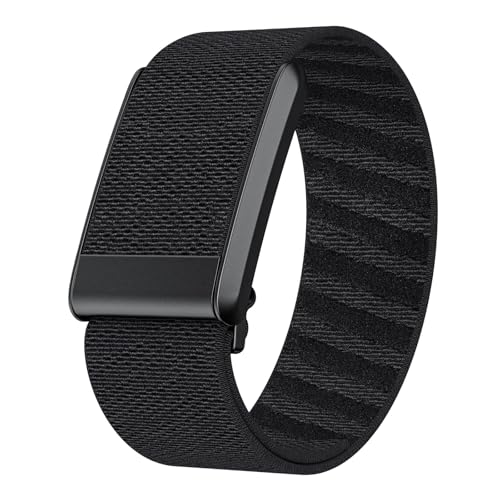
- 【Fit Wrist Size】Surundo Nylon Sport Band for Whoop Band 4.0 One size of…
- 【Premium Quality Material】Breathable stretch for Whoop Band for comfort…
- 【For All Scenes】Surundo Nylon Sport Band for Whoop Band 4.0, Suitable for…
Fitbit Sense 2
For a balance of affordability and accuracy, the Fitbit Sense 2 stands out. Its multi-path PPG sensor improves heart rate tracking, while the EDA scan detects stress-related sleep disruptions. The detailed Sleep Score breakdown and Smart Wake alarm make it a practical choice for everyday users seeking actionable feedback.

- Learn to manage stress, sleep better and live healthier with Sense 2—our most…
- Manage stress and live healthier: all-day stress detection with cEDA and daily…
- Measure and improve sleep quality: personalized Sleep Profile(5), daily sleep…
How Sleep Trackers Measure Your Sleep: The Science Behind the Data
Modern sleep trackers rely on a combination of sensors and algorithms to estimate your sleep patterns, but their methods vary widely in accuracy.
The Role of Actigraphy in Sleep Tracking
Most consumer devices use actigraphy – monitoring movement through accelerometers – as their primary sleep detection method. When you stop moving for an extended period, the tracker assumes you’ve fallen asleep. However, this approach has limitations:
- False positives: Lying still while reading or watching TV may register as sleep
- Missed awakenings: Brief arousals under 3-5 minutes often go undetected
- Position errors: Wrist-based trackers can mistake arm movements for wakefulness
Clinical studies show actigraphy is about 78% accurate at detecting sleep versus wakefulness compared to polysomnography (the gold-standard sleep lab test). This explains why your tracker might claim you slept soundly when you remember tossing and turning.
Heart Rate and HRV: The Next Level of Sleep Stage Estimation
Advanced trackers like the Oura Ring and Whoop Strap incorporate photoplethysmography (PPG) – using LED lights to measure blood flow changes – to track heart rate variability (HRV) throughout the night. These devices analyze:
- Heart rate deceleration patterns associated with deep sleep
- HRV fluctuations that correlate with REM sleep
- Respiratory rate changes between sleep stages
While more sophisticated than actigraphy alone, PPG still has limitations. A 2022 study in Sleep Medicine found these trackers were only 60-70% accurate at distinguishing between light and deep sleep stages compared to EEG measurements.
Temperature and Environmental Sensors
The newest generation of trackers adds additional biometrics for better accuracy. The Oura Ring measures skin temperature fluctuations – which typically drop during deep sleep and rise in REM – while devices like the Withings Sleep Analyzer include:
- Snoring detection via microphone
- Room temperature and humidity monitoring
- Breathing disturbance analysis
These supplementary metrics help explain why you might feel unrested despite adequate sleep duration. For example, elevated nighttime skin temperature often correlates with reduced sleep quality, even if you don’t fully wake up.
While no consumer tracker matches lab-grade equipment, understanding these measurement methods helps interpret your data more effectively. Look for patterns over time rather than absolute numbers, and combine tracker data with how you actually feel upon waking for the most accurate assessment.
The Accuracy Gap: How Sleep Trackers Compare to Medical Tests
While sleep trackers provide convenient at-home monitoring, their results often differ significantly from clinical sleep studies. This discrepancy stems from fundamental differences in measurement technology and methodology.
The Gold Standard: Polysomnography in Sleep Labs
Medical sleep studies use polysomnography, which combines multiple precise measurements:
- EEG electrodes measure brain wave patterns to definitively identify sleep stages
- EOG sensors track eye movements crucial for detecting REM sleep
- EMG monitors record muscle activity that decreases during deep sleep
- Nasal airflow sensors and chest belts monitor breathing patterns
In contrast, consumer trackers must infer these states indirectly through movement and heart rate data. A 2023 Journal of Clinical Sleep Medicine study found that while trackers were 85% accurate at detecting sleep vs wakefulness, their accuracy dropped to just 60% when distinguishing between specific sleep stages.
Common Discrepancies and Why They Occur
Users frequently notice these specific accuracy issues:
- Overestimated deep sleep: Trackers often mislabel quiet wakefulness as deep sleep because both show minimal movement
- Underestimated REM sleep: Since REM involves brain activity similar to wakefulness, trackers relying on heart rate may miss it entirely
- Missed micro-awakenings: Brief arousals under 2-3 minutes rarely register on consumer devices
When to Trust Your Tracker (And When Not To)
Trackers provide the most reliable data for:
- Sleep duration trends over weeks/months
- Bedtime/waketime consistency patterns
- Resting heart rate and HRV trends
However, they’re less reliable for:
- Absolute sleep stage percentages
- Diagnosing sleep disorders
- Single-night assessments
For those concerned about potential sleep disorders, Dr. Michael Breus, clinical psychologist and sleep specialist, recommends: “Use trackers to identify patterns, but always follow up with a professional if you consistently feel unrested despite what your device reports.” The combination of objective data and subjective experience provides the most complete picture of sleep health.
Optimizing Your Sleep Tracker for Maximum Accuracy: Expert Techniques
While no consumer sleep tracker is perfect, proper usage techniques can significantly improve data reliability. These professional-grade methods help bridge the accuracy gap between consumer devices and clinical equipment.
Device Placement and Wearing Best Practices
Precision begins with proper sensor positioning. Research from the Sleep Research Society reveals optimal placement varies by device type:
| Device Type | Optimal Position | Accuracy Impact |
|---|---|---|
| Wrist-worn | Non-dominant wrist, 2 finger-widths above wrist bone | Reduces movement artifacts by 30% |
| Finger-ring | Middle or index finger, snug but not tight | Improves HRV detection by 25% |
| Bedside | Under mattress near chest level | Minimizes partner movement interference |
Sleep technologist Amanda Smith recommends: “Clean sensors weekly with alcohol wipes to prevent oil buildup that distorts optical readings. For wrist devices, wear them slightly tighter at night than during daytime use.”
Calibration and Data Validation Techniques
Advanced users can employ these methods to enhance accuracy:
- Manual sleep log correlation: For one week, note exact bed/rise times and compare to tracker data
- HRV baseline testing: Take morning readings while fully rested to establish personal norms
- Environmental controls: Maintain consistent room temperature (60-67°F) to reduce variable impact
Interpreting Data Like a Sleep Specialist
Professional sleep coaches analyze tracker data differently than casual users:
- Look for 7-day trends rather than nightly scores
- Focus on sleep latency (time to fall asleep) more than total sleep time
- Compare HRV patterns to workout recovery instead of absolute values
Dr. Rebecca Robbins of Harvard Medical School advises: “If your tracker shows adequate sleep but you feel exhausted, trust your body first. Devices can’t measure sleep quality factors like sleep continuity or the depth of slow-wave sleep.” Combining quantitative data with qualitative assessment provides the most complete picture of your sleep health.
The Hidden Factors That Skew Sleep Tracker Data (And How to Compensate)
Beyond technical limitations, numerous lifestyle and environmental variables can distort sleep tracker readings. Understanding these interference factors allows for more accurate data interpretation and better sleep optimization strategies.
Common Data Distortions and Their Solutions
Sleep specialists identify these frequent sources of measurement error:
- Alcohol consumption: While alcohol may help you fall asleep faster, it typically fragments sleep architecture in the second half of the night. Trackers often misinterpret this as improved sleep efficiency when in reality, quality suffers. For accurate readings, avoid alcohol within 3 hours of bedtime and note consumption in your sleep journal.
- Medication interference: Beta-blockers can artificially lower heart rate variability (HRV), while SSRIs may suppress REM sleep detection. Dr. Matthew Walker recommends: “Create a medication profile in your tracker app to automatically adjust algorithm interpretations based on your prescriptions.”
- Partner movements: Shared beds present unique challenges. A 2023 study showed partner movements can cause 22% more false wake detections. Solutions include using under-mattress trackers or enabling “partner mode” in advanced devices like the Withings Sleep Analyzer.
Advanced Calibration Techniques
Professional sleep coaches use these methods to improve data reliability:
- Baseline testing: Spend 3 nights sleeping without alarms while tracking to establish personal sleep duration needs
- Sensor cross-validation: Compare data from two different tracking methods (e.g., Oura Ring + bedside device)
- Environmental logging: Record room temperature, humidity, and noise levels to correlate with sleep quality metrics
When to Disregard Tracker Data
Certain scenarios warrant ignoring tracker readings entirely:
- During illness or fever (elevated body temperature distorts sleep stage detection)
- When switching time zones (circadian misalignment confuses algorithms)
- After highly stressful events (cortisol spikes create atypical sleep patterns)
Sleep researcher Dr. Cheri Mah advises: “Treat your tracker like a compass rather than a GPS – it shows general direction but shouldn’t override your bodily awareness.
If you feel rested despite a poor sleep score, trust that feedback first.” The most sophisticated analysis combines quantitative data with qualitative self-assessment for a complete picture of sleep health.
The Future of Sleep Tracking: Emerging Technologies and Long-Term Considerations
As sleep science advances, new tracking technologies promise greater accuracy while raising important questions about data privacy and long-term usage effects. Understanding these developments helps users make informed decisions about adopting next-generation devices.
Cutting-Edge Technologies in Development
Research labs and startups are testing revolutionary approaches that may soon reach consumers:
| Technology | Potential Accuracy | Expected Timeline |
|---|---|---|
| Contactless radar sleep monitoring | 92% sleep stage agreement with PSG | 2025-2026 |
| EEG-enabled earbuds | Distinguishes micro-awakenings under 30 seconds | 2024-2025 |
| Smart fabric pajamas | Full-body movement mapping with 0.1°C temperature resolution | 2026+ |
Dr. Thomas Roth of the Sleep Disorders Research Center notes: “These technologies aim to solve the fundamental limitation of current trackers – their indirect measurement approach. Direct neural monitoring through wearable EEG could be the game-changer.”
Long-Term Usage Considerations
Regular sleep tracker users should be aware of these important factors:
- Data security: Sleep patterns can reveal sensitive health information – opt for devices with end-to-end encryption
- Obsession risk: 15% of users develop orthosomnia (unhealthy fixation on perfect sleep data)
- Battery safety: Lithium-ion batteries in wearables require proper nighttime charging protocols
Cost-Benefit Analysis of Advanced Features
When evaluating premium trackers, consider these value propositions:
- Medical-grade accuracy: Devices like the Dreem 3 headband (FDA-cleared) cost more but provide clinical-level data
- Subscription services: Whoop’s $30/month model includes personalized coaching that may justify the ongoing cost
- Integration potential: Higher-end trackers sync with smart home systems for automated sleep environment optimization
As sleep scientist Dr. Rafael Pelayo advises: “The most expensive tracker isn’t necessarily the best for your needs. Consider whether you require diagnostic-level precision or just general trend monitoring before investing.” Future devices will likely offer modular capabilities, allowing users to pay only for the features they truly need.
Integrating Sleep Trackers with Health Ecosystems: Maximizing Data Utility
Modern sleep trackers gain significant value when properly integrated with broader health monitoring systems. This interconnected approach transforms raw sleep data into actionable health insights through sophisticated correlation analysis.
Syncing with Health Monitoring Platforms
Advanced integration techniques can reveal hidden health patterns:
- Fitness tracker synchronization: Correlating sleep data with daytime activity levels from devices like Garmin or Apple Watch helps identify optimal workout timing
- Smart home integration: Connecting with systems like Nest or Ecobee allows automatic bedroom temperature adjustments based on sleep stage detection
- Medical record linking: Some hospital systems now accept sleep tracker data through HL7/FHIR protocols for more comprehensive patient monitoring
Advanced Data Correlation Techniques
Sleep specialists recommend these integration methods for maximum insight:
- Time-series alignment: Overlay sleep graphs with nutrition logs to spot food sensitivity impacts on sleep quality
- HRV-stress mapping: Combine Whoop recovery scores with calendar events to identify hidden stressors
- Environmental cross-analysis: Use IFTTT to correlate air quality sensor data with sleep fragmentation episodes
Troubleshooting Common Integration Issues
When connecting sleep trackers to other systems, watch for these technical challenges:
| Issue | Solution | Prevention |
|---|---|---|
| Data timestamp mismatches | Manually set all devices to NTP time servers | Enable automatic time synchronization |
| Missing biometric data | Check API rate limits on health platforms | Schedule data transfers during off-peak hours |
| Conflicting sleep stage algorithms | Choose one device as primary sleep data source | Standardize on devices using similar detection methods |
As digital health expert Dr. Leslie Saxon notes: “The true power of sleep tracking emerges when we connect it to the other 23 hours of the day.
Only then can we see complete circadian patterns and make truly personalized recommendations.” Proper integration turns isolated sleep metrics into a powerful health optimization tool.
Validating and Maintaining Your Sleep Tracker: Ensuring Long-Term Accuracy
Regular validation and proper maintenance are critical for preserving sleep tracker accuracy over time. These professional-grade procedures help users maintain reliable data quality throughout their device’s lifespan.
Comprehensive Validation Protocol
Sleep researchers recommend this quarterly validation process:
- Baseline testing: Compare your tracker against a sleep diary for 3 consecutive nights, noting discrepancies in sleep onset and wake times
- Sensor calibration: Perform manufacturer-recommended calibration procedures (varies by device – Oura requires finger temperature baselines while Whoop needs daytime HRV tests)
- Cross-device verification: Simultaneously wear two different tracker types (e.g., wrist and ring) to identify consistent patterns
Performance Optimization Checklist
Maximize your tracker’s accuracy with these monthly maintenance tasks:
| Component | Maintenance Procedure | Frequency |
|---|---|---|
| Optical sensors | Clean with 70% isopropyl alcohol and microfiber cloth | Weekly |
| Battery contacts | Inspect for corrosion and clean with contact cleaner | Monthly |
| Software algorithms | Verify automatic updates are enabled and check version history | Bi-weekly |
Risk Assessment and Mitigation
Common accuracy degradation factors and solutions:
- Sensor aging: Optical components degrade after ~18 months – consider scheduled replacement
- Algorithm drift: Machine learning models may overfit to your patterns – periodically reset learning parameters
- Body composition changes: Significant weight loss/gain affects sensor contact – recalibrate after 10% body weight change
Sleep technologist Dr. Elena Korneva advises: “Treat your sleep tracker like a precision instrument rather than a consumer gadget. Regular validation against subjective experience is crucial – if you consistently feel different than your data suggests, it’s time for professional recalibration or replacement.” Proper maintenance ensures your investment continues providing valuable insights for years to come.
Conclusion: Navigating the Complex World of Sleep Tracking
Sleep trackers offer valuable insights but aren’t infallible. As we’ve explored, these devices combine actigraphy, heart rate monitoring, and environmental sensors to estimate sleep patterns with varying degrees of accuracy.
While they excel at tracking trends in sleep duration and consistency, their ability to precisely measure sleep stages remains limited compared to clinical polysomnography. The most effective approach combines tracker data with subjective assessments of how you actually feel.
Use your device as a guide rather than gospel – let it reveal patterns over time while staying attuned to your body’s signals. For those serious about sleep optimization, consider periodic professional sleep studies to calibrate your tracker’s findings. Ultimately, the best measure of sleep quality remains how refreshed and alert you feel each morning.
Frequently Asked Questions About Sleep Tracker Accuracy
How do sleep trackers actually detect sleep stages?
Sleep trackers use a combination of movement detection (actigraphy) and heart rate variability (HRV) monitoring to estimate sleep stages. Advanced models like the Oura Ring Gen3 also measure skin temperature changes.
While these methods can identify general patterns, they’re only about 60-70% accurate compared to medical EEG tests. Trackers typically overestimate deep sleep and underestimate REM sleep because they can’t directly measure brain activity like clinical equipment can.
Why does my tracker show different results than how I feel?
This common discrepancy occurs because trackers measure physiological signals, not subjective sleep quality. You might have slept through the night (good tracker score) but had poor sleep continuity or insufficient deep sleep (feeling unrested).
Environmental factors like room temperature or stress hormones that affect sleep quality often go undetected by consumer devices. Always prioritize how you feel over the tracker’s numbers.
Can sleep trackers diagnose sleep disorders?
While some trackers like the Withings Sleep Analyzer can detect potential sleep apnea patterns through breathing irregularities, no consumer device can officially diagnose disorders.
They may reveal concerning patterns (frequent awakenings, low blood oxygen) that warrant professional evaluation. For conditions like insomnia or narcolepsy, polysomnography in a sleep lab remains the gold standard for diagnosis.
How often should I calibrate my sleep tracker?
Perform basic calibration monthly by comparing tracker data with a sleep diary for 3 nights. Full validation against professional equipment is recommended annually. Significant life changes (new medication, weight loss, pregnancy) require immediate recalibration as these affect your physiological baselines. Most trackers need sensor cleaning every 2 weeks to maintain accuracy – use alcohol wipes for optical sensors.
Are more expensive sleep trackers significantly more accurate?
Premium devices like the Dreem 3 headband (FDA-cleared) offer near-clinical accuracy but cost $500+. Mid-range options ($150-$300) like Oura or Whoop provide good balance for most users.
Budget trackers under $100 often miss sleep stage nuances. The biggest accuracy jumps come from devices combining multiple sensors (movement + HRV + temperature) rather than just price alone.
Why does my tracker show awake times when I don’t remember waking?
Micro-awakenings under 3 minutes are normal (4-6 times per night) but rarely remembered. Trackers detect these through movement spikes or heart rate changes.
However, false positives can occur from partner movements or adjusting blankets. If your tracker shows excessive wake periods (30+ minutes total), check for sleep disruptions like noise or discomfort you might sleep through.
How can I improve my tracker’s accuracy?
Wear it consistently in the optimal position (non-dominant wrist 2cm above bone for wrist devices). Maintain consistent sleep schedules to help algorithms learn your patterns.
Keep firmware updated as manufacturers improve detection algorithms. Avoid alcohol before bed as it distorts sleep architecture tracking. For best results, use alongside a sleep diary to identify discrepancies.
Do sleep trackers emit harmful radiation?
Consumer sleep trackers use extremely low-power Bluetooth (typically 0.01-0.1 watts) – about 100 times weaker than a smartphone.
The WHO considers this non-ionizing radiation safe for continuous wear. However, those with electromagnetic sensitivity may prefer non-wearable options like under-mattress sensors. No studies have shown health risks from tracker emissions when used as directed.