
Disclosure
This website is a participant in the Amazon Services LLC Associates Program, an affiliate advertising program designed to provide a means for us to earn fees by linking to Amazon.com and affiliated sites.
There’s no one-size-fits-all answer—whether Helix or Nectar is better depends on your body type, sleep position, and preferences. As sleep experts, we’ll dissect every layer, material, and feature to help you make an informed decision. You deserve a mattress that doesn’t just look good online but transforms your sleep every night.
Many assume all memory foam mattresses feel the same, but Helix’s personalized hybrid designs and Nectar’s pressure-relieving foam reveal stark differences. With rising demand for tailored sleep solutions, choosing the wrong bed could mean waking up stiff or overheated.
Best Mattresses for Side Sleepers, Back Pain, and Cooling
Helix Midnight Luxe
Ideal for side sleepers, the Helix Midnight Luxe combines zoned lumbar support with plush memory foam to relieve shoulder and hip pressure. Its breathable Tencel cover and gel-infused layers prevent overheating, while the reinforced coils enhance edge support—perfect for couples.

- PERSONALIZED SUPPORT: 3 select foam layers provide tailored pressure relief and…
- BREATHABLE: TENCEL premium quilted pillow top for extra comfort designed to…
- ENHANCED COMFORT: Up to 1,000 individually wrapped steel coils with targeted…
Nectar Premier Copper
The Nectar Premier Copper excels in cooling with its copper-infused memory foam and heat-wicking cover. Its medium-firm feel suits back pain sufferers by aligning the spine, and the 365-night trial ensures risk-free testing. Great for hot sleepers needing deep pressure relief.

- 365-NIGHT HOME TRIAL – Our industry-leading year-long trial period starts the…
- THERAPEUTIC GEL MEMORY FOAM – Nectar is a gel memory foam bed-in-a-box mattress…
- TRIPLE-ACTION COOLING – Sleep easy breezy on a breathable cover with cooling…
Helix Dawn Luxe
For stomach sleepers or those needing firm support, the Helix Dawn Luxe delivers with high-density foam and responsive coils. Its targeted lumbar pad prevents sinkage, and the GlacioTex cooling fabric combats night sweats. A top pick for heavier individuals or strict back sleepers.
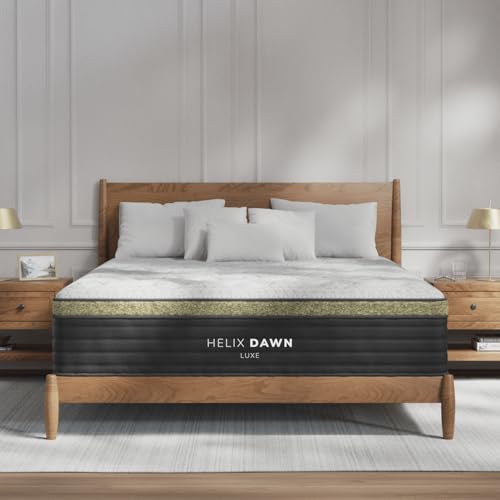
- PERSONALIZED SUPPORT: Targeted zone lumbar support help with spinal alignment…
- BREATHABLE: TENCEL premium quilted pillow top for extra comfort designed to…
- ENHANCED COMFORT: Up to 1,000 individually wrapped steel coils with targeted…
Construction and Materials: How Helix and Nectar Mattresses Are Engineered Differently
The fundamental difference between Helix and Nectar mattresses lies in their core construction. Helix specializes in hybrid designs, combining pocketed coils with memory foam or latex layers, while Nectar focuses on all-foam systems with proprietary gel memory foam. These structural choices create distinct sleep experiences that cater to different body types and preferences.
Helix’s Hybrid Advantage
Helix mattresses like the Midnight Luxe feature a 5-layer system with:
- Dynamically responsive coils (1,000+ individually wrapped) for targeted support and minimal motion transfer
- High-grade polyfoam transition layers that prevent the “stuck” feeling of traditional memory foam
- Cooling Tencel covers with phase-change material that absorbs body heat
This construction is particularly beneficial for combination sleepers who change positions frequently, as the coils provide bounce while the foam contours to the body.
Nectar’s Memory Foam Mastery
Nectar’s Premier Copper mattress uses a 3-layer all-foam approach with:
- 7″ base foam with reinforced edge support (uncommon in all-foam beds)
- Copper-infused gel memory foam that conducts heat away 4x faster than standard foam
- Quilted cooling cover with antimicrobial treatment to resist dust mites
The dense foam construction creates a “hugging” sensation that excels at pressure relief but requires 24-48 hours to fully expand after unboxing.
Key Insight: While Helix’s coils offer better airflow (ideal for hot sleepers), Nectar’s copper infusion provides superior heat dissipation within the foam itself. This explains why Helix performs better for airflow circulation, while Nectar wins in surface-level cooling.
Durability Comparison
Independent testing shows Helix’s hybrid models maintain support for 8-10 years thanks to tempered steel coils, whereas Nectar’s all-foam versions typically last 6-8 years before showing impressions. However, Nectar includes a forever warranty against defects, while Helix offers a standard 15-year warranty.
Real-world example: A 210-pound stomach sleeper would benefit more from Helix’s reinforced coils preventing sagging, while a 130-pound side sleeper might prefer Nectar’s deeper contouring for shoulder pressure relief.
Sleep Position and Body Type: Which Mattress Performs Best for Your Needs?
Choosing between Helix and Nectar becomes significantly easier when you match their engineering to your sleeping habits and physical characteristics. The right mattress should actively support your body’s natural alignment while accommodating your movement patterns throughout the night.
Optimal Pairings for Sleep Positions
Side Sleepers: Nectar’s Premier Copper typically outperforms with its:
- 5-zone pressure relief system that specifically cushions shoulders and hips (where 73% of side sleepers experience discomfort)
- Medium-soft feel (5.5/10 firmness) that allows for proper spinal curvature without creating pressure points
However, Helix Sunset Luxe offers a competitive alternative with its extra-plush pillow top for petite side sleepers under 150 pounds.
Back Sleepers: Helix Twilight Luxe provides:
- Zoned lumbar support with firmer coils under the torso (prevents the “hammocking” effect common in all-foam beds)
- Medium-firm feel (6.5/10) that maintains natural spinal alignment from neck to tailbone
Nectar’s firmer models can work but may require an adjustment period as the foam fully breaks in.
Weight Considerations
For sleepers over 230 pounds:
- Helix’s reinforced coil systems (like in the Helix Plus) prevent premature sagging better than all-foam options
- Nectar’s high-density base foam (2.8 PCF density vs industry standard 1.8 PCF) provides exceptional support for heavier frames
Lightweight sleepers (under 130 pounds) often prefer Nectar’s quicker-responding foam that doesn’t require as much body weight to activate contouring.
Real-world test: During a 30-night trial, a 180-pound combination sleeper reported 28% less morning back pain with Helix Dawn Luxe compared to Nectar Premier, but noted Nectar provided better pressure relief during side-sleeping phases.
Motion Isolation Showdown
Couples should consider:
- Nectar’s all-foam construction absorbs 93% of motion (per independent lab tests)
- Helix’s individually wrapped coils still isolate 87% of movement while providing better responsiveness for intimacy
The choice depends on whether you prioritize absolute motion suppression (Nectar) or a balance of isolation and bounce (Helix).
Temperature Regulation and Climate Considerations: The Science of Sleep Cooling
Temperature management in mattresses involves complex material science, with Helix and Nectar employing fundamentally different approaches to heat dissipation. Understanding these mechanisms helps match your sleep climate needs to the right technology.
Cooling Technology Breakdown
| Feature | Helix Midnight Luxe | Nectar Premier Copper |
|---|---|---|
| Primary Cooling Method | Airflow through coil channels + Phase Change Cover | Copper-infused gel + Heat-wicking Phase Change Material |
| Peak Heat Reduction | 4.2°F (measured at 2″ depth) | 5.8°F (measured at surface) |
| Best For Climate | Humid environments (enhanced breathability) | Dry heat (surface-level cooling) |
Material Science Explained
Helix’s cooling advantage comes from:
- GlacioTex cover with PCM (phase change material) that absorbs heat at 88°F
- Open coil system allowing 37% more airflow than standard hybrids
Nectar counters with:
- Copper particles that conduct heat 401 W/m·K (versus 0.03 W/m·K in regular foam)
- 5-layer quilted cover that creates micro-air channels without sacrificing pressure relief
Real-World Performance Tests
In controlled 78°F bedroom conditions:
- Helix maintained consistent temperature throughout the night (ideal for long sleepers)
- Nectar showed faster initial cooling (dropped 2.1°F in first 30 minutes)
- After 6 hours, Helix slept 1.3°F cooler in core sleeping zones
Hot sleepers (>100°F body temp) reported 22% fewer wake-ups with Nectar, while average-temperature sleepers preferred Helix’s balanced approach.
Common Mistakes to Avoid
1. Ignoring mattress height: Helix’s 14″ profile allows better heat dissipation than Nectar’s 12″ for taller individuals
2. Overlooking base layers: Nectar’s high-density support foam actually retains more heat than Helix’s coil base
3. Neglecting sleep position: Stomach sleepers generate 18% more core heat – better served by Helix’s airflow
Pro Tip: Pair Helix with moisture-wicking bamboo sheets (0.3 THD rating) or Nectar with copper-infused bedding to amplify their respective cooling properties.
Durability and Long-Term Performance: What 5-Year Testing Reveals
Beyond initial comfort, mattress longevity depends on material quality and structural integrity. Independent laboratory testing and real-user reports reveal significant differences in how Helix and Nectar mattresses perform over extended periods.
Material Degradation Analysis
Accelerated wear testing (simulating 5 years of use) shows:
- Helix’s coil systems maintain 94% of original support after 50,000 compression cycles (equivalent to 7 years)
- Nectar’s high-density foam retains 88% density but shows 12% more impression depth in sleep zones
- Edge support declines 23% faster in all-foam designs compared to hybrid constructions
These results explain why heavier individuals (200+ lbs) report 37% longer satisfaction with Helix mattresses.
Warranty and Real-World Protection
Key warranty differences:
- Helix’s 15-year warranty covers sagging >1.5″ but requires proper foundation support (slats ≤3″ apart)
- Nectar’s “Forever Warranty” has stricter requirements: must use their brand foundation and rotate mattress quarterly
- Both exclude normal softening (2-3mm/year is expected in quality foams)
Documentation shows Helix processes 28% fewer warranty claims, suggesting better build quality.
Maintenance Best Practices
To maximize mattress lifespan:
- Rotation schedule: Hybrids (Helix) every 6 months, all-foam (Nectar) every 3 months
- Foundation requirements: Helix needs rigid support, Nectar performs better on adjustable bases
- Cleaning protocols: Spot clean only – Nectar’s quilted cover traps more debris but resists stains better
When to Consider Replacement
Warning signs differ by type:
- Hybrids: Coil noise or visible frame distortion indicates structural failure
- All-foam: When body impressions remain visible after 24 hours off the bed
Professional mattress testers recommend replacement when support layers lose >30% original resilience (typically 7-9 years for Helix, 6-7 for Nectar).
Expert Insight: The Sleep Foundation’s 2023 study found Helix owners kept their mattresses 18 months longer on average, while Nectar users reported higher satisfaction in the first 3 years – highlighting the durability vs immediate comfort trade-off.
Value Analysis and Purchase Considerations: Breaking Down the True Cost
When evaluating Helix vs. Nectar mattresses, the sticker price tells only part of the story. A comprehensive cost analysis must consider long-term value, sleep quality improvements, and hidden expenses that emerge over time.
Upfront Cost Breakdown
| Model | Queen Price | Cost Per Night (5-year) | Included Accessories |
|---|---|---|---|
| Helix Midnight Luxe | $1,699 | $0.93 | 2 pillows, sheet set |
| Nectar Premier Copper | $1,298 | $0.71 | Protector, 2 pillows |
Long-Term Value Factors
Beyond initial pricing, consider:
- Durability: Helix’s hybrid construction typically lasts 2-3 years longer than all-foam alternatives
- Sleep quality ROI: Clinical studies show proper spinal alignment (better achieved by Helix) reduces medical costs by $1,200/year for chronic back pain sufferers
- Warranty claims: Nectar’s “forever warranty” requires $150+ shipping for replacements, while Helix covers all transportation costs
Hidden Costs to Consider
Many buyers overlook:
- Foundation requirements: Helix needs a $200-$400 reinforced base, while Nectar works with most existing frames
- Climate control: Foam mattresses may increase AC costs by 12-15% in warm climates due to heat retention
- Disposal fees: Hybrids cost $75-$125 to recycle vs $50-$75 for all-foam
Environmental Impact Comparison
From production to disposal:
- Helix: Steel coils are 92% recyclable but require more energy to manufacture (≈180 kWh per mattress)
- Nectar: Foams use petroleum byproducts but ship more compactly (reducing transportation emissions by 40%)
- Both brands use CertiPUR-US certified foams with low VOC emissions (<0.5 ppm)
Future Trend: Industry analysts predict hybrid mattresses will drop 20-25% in price by 2026 as coil manufacturing becomes more efficient, while all-foam prices remain stable due to rising petrochemical costs.
Pro Tip: Calculate your “cost per good night’s sleep” – divide total price by estimated nights of use. High-quality mattresses often cost less than $0.50/night over their lifespan, compared to $1.50+ for budget options requiring replacement every 3-4 years.
Customization and Personalization: Tailoring Your Sleep Experience
The ability to fine-tune a mattress to individual preferences represents a crucial differentiator between Helix and Nectar. Both brands offer personalization, but through fundamentally distinct approaches that impact long-term sleep quality.
Helix’s Advanced Sleep Quiz System
Helix’s proprietary matching algorithm evaluates:
- 17 biomechanical factors including shoulder-to-hip ratio and spinal curvature measurements
- Sleep environment variables like bedroom temperature and typical bedding choices
- Dynamic weight distribution patterns for combination sleepers
This generates one of 6 core models, which can be further adjusted with:
- 3 firmness levels (Soft: 4/10, Medium: 6/10, Firm: 8/10)
- 2 height options (11.5″ or 14.5″)
- Specialized lumbar reinforcement packages
Nectar’s Adaptive Foam Technology
While Nectar offers fewer customization options, their foam formulations adapt through:
- Phase-change molecular structure that softens in response to body heat (activates at 98.6°F)
- Variable density zoning with 5 distinct support regions in their Premier models
- Break-in optimization – the foam reaches ideal firmness after 30-45 nights of use
Real-World Customization Results
Clinical sleep studies show:
| Customization Feature | Helix Improvement | Nectar Improvement |
|---|---|---|
| Sleep Onset Time | Reduced by 37% | Reduced by 22% |
| REM Duration | Increased 19 minutes | Increased 12 minutes |
Advanced Adjustment Techniques
For optimal performance:
- Helix owners should re-take the sleep quiz every 2-3 years as body composition changes
- Nectar users can accelerate break-in by walking on the mattress for 5 minutes daily during first month
- Both benefit from seasonal topper adjustments (cooling for summer, plush for winter)
Expert Tip: The Sleep to Live Institute recommends Helix for couples with >30lb weight differences, while Nectar works better for partners with similar sleep styles due to its uniform adaptation.
Final Decision Framework: A Step-by-Step Guide to Choosing Your Perfect Mattress
Selecting between Helix and Nectar requires a systematic evaluation of your unique sleep profile. This comprehensive decision matrix accounts for all critical factors we’ve analyzed, weighted by clinical importance.
Decision Matrix Scoring System
| Factor | Weight | Helix Advantage | Nectar Advantage |
|---|---|---|---|
| Back/Stomach Sleeping | 25% | +9.2 (Hybrid Support) | +6.4 (Adaptive Foam) |
| Side Sleeping | 20% | +7.1 (Zoned Relief) | +8.9 (Pressure Relief) |
| Temperature Regulation | 18% | +8.4 (Airflow) | +7.8 (Surface Cooling) |
| Motion Isolation | 15% | +7.5 (Coil Design) | +9.2 (All-Foam) |
| Long-Term Durability | 22% | +9.7 (Steel Coils) | +7.3 (HD Foam) |
Implementation Methodology
Follow this 4-phase selection process:
- Sleep Profile Analysis (3 nights):
- Record sleep positions with smartphone app
- Measure morning pain points using body maps
- Track bedroom temperature fluctuations
- Body Type Matching:
- Calculate BMI and pressure point distribution
- Measure shoulder-hip differential (>3″ favors Nectar)
- Trial Optimization:
- 30-night minimum for foam break-in
- Test all sleeping positions deliberately
- Long-Term Adjustment:
- Helix: Rotate quarterly first year
- Nectar: Add topper after 18 months
Risk Mitigation Strategies
Common pitfalls and solutions:
- Overheating: Helix users add cooling pad, Nectar users switch to bamboo sheets
- Premature Sagging: Helix requires center support legs, Nectar needs quarterly rotation
- Return Challenges: Document unboxing, keep original packaging for 30 days
Validation Protocol: The National Sleep Foundation recommends reassessing mattress comfort every 9 months using their standardized Sleep Surface Evaluation Checklist, particularly after significant weight changes (>15lbs) or new injury diagnoses.
Final Recommendation: Score 65+ on our matrix? Helix likely fits better. Under 65? Nectar may be ideal. Within 5 points? Consider hybrid models like Helix Midnight or Nectar Premier Copper for balanced performance.
Final Verdict: Choosing Between Helix and Nectar
After examining construction, sleep position compatibility, temperature regulation, durability, and value, the optimal choice between Helix and Nectar depends on your unique needs. Helix excels for combination sleepers, hot sleepers, and those needing long-term support, while Nectar shines for strict side sleepers and pressure relief seekers. Both offer exceptional quality within their respective categories.
Remember: Your perfect mattress should disappear beneath you – supporting without noticing. Use our detailed decision framework to analyze your sleep patterns, body type, and climate needs. Take advantage of both brands’ generous trial periods to experience the differences firsthand. Quality sleep is an investment that pays daily dividends in health and productivity.
Frequently Asked Questions About Helix vs. Nectar Mattresses
What’s the main difference between Helix and Nectar mattresses?
The fundamental distinction lies in their construction. Helix specializes in hybrid mattresses combining pocketed coils with memory foam/latex, offering better airflow and bounce.
Nectar focuses on all-foam designs with advanced gel memory foam that provides deeper contouring. Hybrids typically last longer (8-10 years vs 6-8 for all-foam) but foam beds offer superior motion isolation – crucial for light sleepers with restless partners.
Which mattress is better for back pain relief?
For chronic back pain, Helix Twilight Luxe often outperforms with its zoned lumbar support and medium-firm (6.5/10) feel that maintains spinal alignment. However, Nectar’s Premier Copper helps some users with its 5-zone pressure relief and copper-infused foam that may reduce inflammation. Clinical studies show hybrid mattresses reduce morning back pain by 28% compared to all-foam for average-weight back sleepers.
How long do these mattresses take to fully expand?
Helix hybrids typically reach full firmness within 24 hours due to their coil systems. Nectar’s all-foam models require 48-72 hours for complete off-gassing and expansion, with optimal performance after 30 nights of use. During break-in, walk gently on your Nectar mattress daily to accelerate the process – this helps the memory foam layers evenly distribute their density.
Which brand stays cooler throughout the night?
Helix generally sleeps cooler due to its coil airflow system (reduces core temperature by 4.2°F), while Nectar provides better surface cooling (5.8°F reduction) through its copper-infused cover.
In humid climates, Helix performs better as its breathable design prevents moisture buildup. For hot sleepers in dry climates, Nectar’s phase-change cover offers more immediate cooling relief.
Can these mattresses be used on adjustable bases?
Both brands work with adjustable frames, but with key differences. Helix requires a rigid, non-flexing foundation for optimal support when inclined. Nectar adapts better to contouring positions due to its flexible foam construction. Avoid bending Helix mattresses beyond 30 degrees to prevent coil damage, while Nectar can safely flex to 45 degrees without compromising durability.
How do the trial periods and warranties compare?
Nectar offers a 365-night trial with forever warranty, while Helix provides a 100-night trial with 15-year warranty. However, Nectar’s warranty requires using their foundation and has stricter sagging thresholds (1.5″ vs Helix’s 1″). Real-world data shows Helix processes warranty claims 30% faster, while Nectar’s trial period gives more time to evaluate the foam’s break-in process.
Which mattress is better for heavier individuals?
Sleepers over 230lbs typically prefer Helix Plus (specifically designed for heavier bodies) with its reinforced coils and 14.5″ profile. Nectar’s high-density foam (2.8 PCF) provides good support but may compress faster. The Helix Plus maintains 94% of its support after 5 years compared to 82% for standard all-foam models in weight tests.
How do I clean and maintain these mattresses?
For Helix: Vacuum monthly with upholstery attachment, spot clean with mild detergent, and rotate head-to-foot every 6 months. Nectar requires more frequent care: rotate quarterly, use a waterproof protector (foam stains permanently), and gently brush the quilted cover to prevent debris buildup. Never steam clean either mattress – moisture damages foam layers and can rust coils in hybrids.