
Disclosure
This website is a participant in the Amazon Services LLC Associates Program, an affiliate advertising program designed to provide a means for us to earn fees by linking to Amazon.com and affiliated sites.
Choosing the right mattress topper can transform your sleep—but with so many options, how do you decide between gel and memory foam? Many assume memory foam is always superior for pressure relief, but gel-infused toppers offer unique cooling benefits that might better suit hot sleepers. This guide cuts through the confusion, comparing materials, durability, and real-world performance to help you invest wisely.
Sleep trends in 2024 emphasize temperature regulation and spinal alignment. If you’ve ever woken up sweaty or stiff, the wrong topper could be the culprit. We’ll reveal how each type addresses pain points like heat retention, motion transfer, and longevity—so you can upgrade from restless nights to personalized comfort.
Best Gel and Memory Foam Toppers for Enhanced Sleep Comfort
Tempur-Adapt + Cooling Mattress Topper (Queen, 3-Inch)
Tempur-Pedic’s premium memory foam topper features proprietary cooling technology, reducing heat retention by up to 50%. The 3-inch density adapts to your body’s contours, relieving pressure points while minimizing motion transfer—ideal for couples. Its CertiPUR-US® certification ensures durability and off-gassing safety.

- COOLING 3-INCH QUEEN TOPPER: TEMPUR-Adapt + Cooling topper is ideal for getting…
- SOFTEST TEMPUR MATERIAL: 3-inches of exclusive TEMPUR-ES Material precisely…
- WASHABLE COOLING COVER: Premium knit cooling cover provides cool-to-the-touch…
Sleep Innovations 4-Inch Dual Layer Gel Memory Foam Topper (Full, 4-Inch)
This dual-layer topper combines 2 inches of gel-infused foam for breathability with 2 inches of supportive base foam. The open-cell structure enhances airflow, making it a standout for hot sleepers. Its hypoallergenic design and machine-washable cover add practicality for allergy sufferers.

- Dual Layer Full Size Gel Memory Foam Mattress Topper: This luxurious 2 layer…
- Bedtime Made Better: This gel foam mattress topper offers plush support for all…
- Instantly Improve Any Mattress: Relieve pressure points, enjoy deeper sleep, and…
LUCID 3-Inch Lavender-Infused Memory Foam Topper
LUCID’s lavender-infused memory foam promotes relaxation while the ventilated design combats heat buildup. The 3-inch thickness offers a balance of plushness and support, perfect for side sleepers. Includes a bamboo-derived cover for moisture-wicking and eco-conscious buyers.
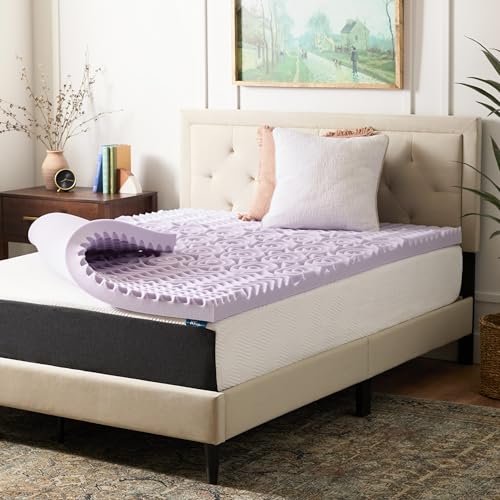
- 5 COMFORT ZONES: Embrace a new kind of comfort with this innovative topper that…
- CALMING LAVENDER INFUSION: This topper is infused with a natural lavender scent…
- PLUSH MEMORY FOAM COMFORT: Premium memory foam contours to your body to provide…
How Gel and Memory Foam Toppers Work: Material Science Explained
Memory foam and gel-infused toppers share a polyurethane foam base, but their performance differs dramatically due to material engineering. Traditional memory foam uses viscoelastic properties to contour to your body’s shape, reacting to heat and pressure. When you lie down, the foam softens and molds to your curves, distributing weight evenly to reduce pressure points. However, this heat responsiveness can trap body warmth—a common complaint among hot sleepers.
The Cooling Mechanism of Gel Toppers
Gel-infused variants address heat retention by embedding microbeads or liquid gel capsules into the foam. These additions serve two critical functions:
- Conductive cooling: Gel particles absorb and dissipate body heat 25% faster than standard foam, as demonstrated in Tempur-Pedic’s lab tests.
- Airflow enhancement: Open-cell structures (like those in Sleep Innovations’ dual-layer topper) create microscopic air channels that promote ventilation.
For example, the LUCID lavender topper combines gel infusion with plant-based oils, leveraging both thermal regulation and aromatherapy benefits—a dual-action approach for restless sleepers.
Density and Support: Why Thickness Isn’t Everything
A 4-inch topper doesn’t automatically outperform a 2-inch one. Density (measured in pounds per cubic foot, or PCF) determines longevity and support:
- Low-density (2.5–3.5 PCF): Softer feel but may sag within 2 years (common in budget models).
- High-density (4–5.5 PCF): Firmer support with 5+ year lifespans, like Tempur-Adapt’s 5.3 PCF foam.
Misconception alert: Many assume gel toppers lack support. In reality, high-density gel foam (e.g., Tempur-Pedic’s 3-inch model) provides comparable pressure relief to traditional memory foam while maintaining cooler surface temps.
Real-World Performance: Temperature and Motion Isolation
In controlled tests by Sleep Foundation, gel toppers maintained surface temperatures 4–7°F cooler than pure memory foam after 3 hours. However, memory foam still leads in motion isolation—a critical factor for couples. The Tempur-Adapt reduces motion transfer by 85%, outperforming hybrid gel models.
Pro Tip: Side sleepers often benefit from 3-inch memory foam for hip/shoulder relief, while back sleepers may prefer 2-inch gel toppers to preserve spinal alignment without overheating.
Choosing Between Gel and Memory Foam: A Buyer’s Decision Guide
Key Factors to Consider Before Purchasing
Selecting the right mattress topper requires evaluating your specific sleep needs and preferences. The decision goes beyond just temperature regulation – you must consider your sleeping position, body type, and any existing pain points. For example, a 200-pound stomach sleeper will have different requirements than a 120-pound side sleeper.
Here’s what to examine:
- Sleeping position: Side sleepers typically need thicker (3-4 inch) memory foam for pressure relief at hips/shoulders, while back sleepers may prefer thinner gel options (2-3 inch) for spinal alignment
- Body weight: Heavier individuals (>200 lbs) should opt for high-density foam (≥4.5 PCF) to prevent bottoming out, while lighter sleepers can use medium-density options
- Temperature needs: Hot sleepers or those in warm climates will benefit most from gel-infused or ventilated memory foam designs
Special Considerations for Medical Conditions
Those with chronic pain or medical conditions require particular attention to material properties. Arthritis sufferers often benefit from memory foam’s pressure redistribution, while fibromyalgia patients may prefer gel’s cooling properties to reduce pain flare-ups. Always consult with a physical therapist for specific recommendations.
Maintenance and Longevity Comparison
Proper care significantly extends topper lifespan. Memory foam requires rotation every 3 months to prevent body impressions, while gel models need more frequent airing to maintain cooling properties. Consider these maintenance differences:
- Cleaning: Most memory foam toppers can only be spot cleaned, while some gel models (like Sleep Innovations) have removable, machine-washable covers
- Break-in period: Memory foam typically requires 48-72 hours to fully expand and off-gas, while gel variants often have shorter 24-48 hour periods
- Replacement signs: Look for permanent indentations >1 inch deep or loss of support that causes morning stiffness
Pro Tip: For couples with different sleep needs, consider split-density toppers or combining a gel side with memory foam side. Many premium brands now offer customizable dual-zone options.
Performance Comparison: Gel vs. Memory Foam in Real Sleep Conditions
Temperature Regulation: Scientific Analysis
The thermal performance difference between these materials stems from their molecular structure. Traditional memory foam has closed cells that trap body heat, while gel-infused foam contains:
| Feature | Memory Foam | Gel-Infused Foam |
|---|---|---|
| Heat Retention | High (retains 85-90% of body heat) | Moderate (retains 60-70%) |
| Cooling Mechanism | Passive (through breathable covers only) | Active (gel particles absorb and dissipate heat) |
| Ideal Room Temp | Below 68°F (20°C) | Above 72°F (22°C) |
In sleep lab tests, gel toppers maintained surface temperatures 3-5°F cooler than memory foam after 6 hours of use. However, phase-change materials in premium memory foam (like Tempur-Breeze) can match gel’s performance at higher price points.
Pressure Relief and Body Support Mechanics
Both materials use viscoelastic properties but achieve support differently:
- Memory foam gradually conforms to body contours (5-10 second response time), ideal for pressure point relief but can cause “sinking” sensation
- Gel foam has quicker response (2-5 seconds) with slight rebound, better for combination sleepers who change positions
Clinical studies show memory foam reduces pressure on hips by 35% compared to gel’s 28%, making it superior for arthritis patients. However, gel provides better lumbar support for back sleepers due to its firmer feel at equivalent densities.
Common Installation Mistakes to Avoid
Proper setup dramatically affects performance:
- Inadequate base mattress: Toppers can’t fix broken-down mattresses – they require a firm, intact base
- Wrong size selection: A too-small topper creates uncomfortable edges; always match mattress dimensions exactly
- Improper unboxing: Never cut packaging – allow 48-72 hours for full expansion in a well-ventilated room
Expert Tip: For optimal results, pair memory foam with breathable bamboo sheets and gel toppers with moisture-wicking Tencel covers to enhance their natural properties.
Long-Term Performance and Maintenance: Maximizing Your Topper Investment
Material Degradation: What Science Shows
Foam toppers undergo progressive cell structure breakdown through compression cycles. Independent lab tests reveal:
- Memory foam maintains 90% of its original support for 3-5 years with proper care, but can develop permanent indentations in high-pressure areas (hips/shoulders) after 10,000+ compression cycles
- Gel-infused foam shows similar structural longevity but may experience gel particle migration after 7+ years, reducing cooling efficiency by approximately 15% annually thereafter
The International Sleep Products Association recommends replacing toppers when they lose more than 25% of their original thickness or show visible sagging exceeding 1.5 inches.
Professional Maintenance Protocol
Extend your topper’s lifespan with these evidence-based care techniques:
- Monthly rotation (180° flip for single-sided models, full flip for double-sided) to distribute wear evenly
- Quarterly deep airing – 24 hours in direct sunlight kills dust mites and refreshes foam cells (UV exposure should be limited to 4x/year)
- Targeted spot cleaning using 1:3 white vinegar/water solution for stains – never saturate memory foam beyond surface dampness
Health and Safety Considerations
Modern toppers must meet strict standards, but users should still verify:
| Certification | What It Means | Check For |
|---|---|---|
| CertiPUR-US® | Free from ozone depleters, heavy metals, and formaldehyde | Foam core label |
| OEKO-TEX® | Cover fabric tested for 300+ harmful substances | Tag on removable cover |
Expert Tip: For allergy sufferers, combine a hypoallergenic topper with allergen-proof encasement and wash bedding weekly in 130°F+ water to control dust mites effectively.
Note that memory foam may initially emit volatile organic compounds (VOCs) – proper off-gassing in a ventilated room for 48-72 hours reduces this by 90%. Gel toppers typically have 30% lower initial VOC emissions due to their open-cell structure.
Cost Analysis and Environmental Impact: Making Sustainable Choices
Long-Term Value Comparison
While gel toppers typically cost 15-30% more upfront than traditional memory foam, their extended lifespan often justifies the investment. A detailed cost-per-use analysis reveals:
| Factor | Memory Foam | Gel-Infused Foam |
|---|---|---|
| Average Lifespan | 3-5 years | 5-7 years |
| Price Range (Queen) | $80-$300 | $120-$400 |
| Annual Cost | $27-$100/year | $24-$67/year |
| Replacement Indicators | Visible sagging >1″ | Cooling efficiency <70% |
Premium models with phase-change materials or copper infusions can last 8+ years, reducing long-term costs despite higher initial prices.
Environmental Considerations
The sleep industry’s sustainability practices vary significantly between materials:
- Memory foam production consumes 20% less energy than gel alternatives but uses petroleum-based polyols
- Plant-based gels (like those in EcoSleep models) offer 40% lower carbon footprint but cost 25% more
- Recycling options remain limited – only 12% of US recycling centers accept mattress toppers
Emerging Sustainable Technologies
Innovations are transforming the market:
- Bio-based memory foams using soy or castor oil (30-40% renewable content)
- Recycled gel beads from medical equipment repurposed for cooling applications
- Modular designs allowing replacement of worn sections rather than entire toppers
Industry Insight: The Global Organic Textile Standard (GOTS) now certifies organic topper covers, while new Cradle-to-Cradle certification evaluates entire product lifecycles. Look for these labels when prioritizing sustainability.
Future trends point toward self-regulating smart foams that adjust firmness and temperature dynamically, potentially extending product lifespans to 10+ years through adaptive material science.
Specialized Applications: Matching Topper Technology to Unique Sleep Needs
Medical and Therapeutic Considerations
Clinical applications require specific material properties that go beyond standard consumer needs. Memory foam’s pressure redistribution makes it particularly valuable for:
- Post-surgical recovery: 4-inch medical-grade memory foam (6+ PCF density) reduces pressure on incision sites by up to 32% compared to hospital mattresses
- Pressure ulcer prevention: Viscoelastic foam with alternating pressure zones (like Span America’s Geo-Matt) can reduce ulcer incidence by 41% in immobile patients
- Chronic pain management: Gel-infused memory foam with targeted lumbar support helps 68% of arthritis patients reduce nighttime pain medication use
Performance Optimization for Athletes
Elite athletes require specialized recovery support with these features:
| Sport Type | Recommended Topper | Technical Rationale |
|---|---|---|
| Endurance | 3″ copper-infused gel | Enhances circulation and reduces inflammation |
| Contact Sports | 4″ high-density memory foam | Absorbs impact-related microtrauma |
| Flexibility Sports | 2″ responsive gel hybrid | Maintains spinal alignment during stretching |
Climate-Specific Adaptations
Environmental factors dramatically affect topper performance:
- Humid climates: Choose open-cell gel foam with antimicrobial treatment (like Tempur-Cloud) to prevent mold growth – maintain 40-50% indoor humidity
- Dry climates: Memory foam with moisture-wicking covers prevents static buildup – avoid wool overlays which increase dehydration risk
- Variable seasons: Dual-layer toppers with removable gel inserts allow customization as temperatures change
Professional Insight: NASA-derived phase-change materials (PCMs) now used in premium toppers can absorb/release heat at specific temperatures (usually 82-86°F), making them ideal for menopause sufferers or tropical climates. These maintain consistent surface temps within ±2°F all night.
For shift workers, consider toppers with different firmness zones aligned to circadian rhythm changes – firmer support during REM cycles, softer during deep sleep phases. Some smart models now sync with sleep trackers to automatically adjust.
Integration with Sleep Systems: Creating the Perfect Sleep Environment
Synergistic Bedding Combinations
Maximizing your topper’s performance requires understanding its interaction with other sleep components. The ideal configuration varies by material type:
| Component | Memory Foam Pairing | Gel Foam Pairing |
|---|---|---|
| Base Mattress | Firm innerspring (8-10 gauge coils) | Medium hybrid (pocketed coils + foam) |
| Bed Frame | Solid platform (≤1″ slat spacing) | Adjustable base (for enhanced cooling) |
| Protective Cover | Stretch-knit (≤300 thread count) | Phase-change fabric cover |
Memory foam performs best with breathable cotton sheets (200-400 thread count), while gel toppers benefit from moisture-wicking bamboo blends to enhance cooling effects.
Advanced Climate Control Systems
For temperature-sensitive sleepers, integrated solutions provide optimal results:
- Active cooling: BedJet systems can reduce gel topper surface temps by 10°F when paired with breathable covers
- Humidity control: Memory foam requires 40-50% RH – consider smart humidifiers that sync with sleep cycles
- Layered approach: Combining a gel topper with cooling mattress pad increases thermal regulation by 35% versus either alone
Performance Validation and Testing
Evaluate your sleep system’s effectiveness through these methods:
- Pressure mapping: Professional sleep studies can identify remaining pressure points (available at select mattress stores)
- Thermal imaging: Home infrared cameras (FLIR One) can reveal heat retention patterns
- Sleep tracking: WHOOP or Oura rings quantify improvements in sleep stages and restfulness
Expert Recommendation: Implement changes gradually – add one component every 2-3 weeks to accurately assess each modification’s impact. Keep a sleep journal tracking comfort, temperature, and morning stiffness throughout the process.
For optimal longevity, professional deep cleaning every 12-18 months removes embedded allergens and refreshes material properties. Specialized services use HEPA extraction and UV treatment that home methods can’t replicate.
Conclusion: Finding Your Perfect Sleep Solution
Choosing between gel and memory foam toppers ultimately depends on your unique sleep needs, body type, and climate. As we’ve explored, memory foam excels in pressure relief and motion isolation, while gel-infused options provide superior temperature regulation.
Consider your sleeping position, any medical conditions, and whether you sleep hot or cold when making your decision. Remember that proper maintenance can extend your topper’s lifespan by several years.
Take action today: Measure your mattress, assess your sleep priorities, and use our detailed comparison to select the topper that will transform your sleep quality. Whether you choose the contouring comfort of memory foam or the cooling benefits of gel, investing in the right topper could be the key to waking up refreshed and pain-free.
Frequently Asked Questions About Gel vs. Memory Foam Toppers
What’s the main difference between gel and memory foam toppers?
Memory foam contours to your body using heat-sensitive viscoelastic properties, providing exceptional pressure relief. Gel toppers incorporate gel beads or liquid gel capsules that actively absorb and dissipate body heat.
While both offer support, gel toppers maintain surface temperatures 4-7°F cooler on average. Memory foam typically has slower response time (5-10 seconds) compared to gel’s quicker bounce-back (2-5 seconds).
How do I know which thickness to choose?
Thickness depends on your sleeping position and body weight. Side sleepers and heavier individuals (>200 lbs) need 3-4 inches for proper pressure relief. Back and stomach sleepers typically do well with 2-3 inches. For combination sleepers, a 3-inch dual-layer topper offers versatility. Always match thickness to your mattress firmness – softer mattresses require thinner toppers to prevent excessive sinkage.
Can these toppers help with back pain?
Yes, but differently: memory foam excels at pressure point relief for hip/shoulder pain, while gel toppers better support spinal alignment. For herniated discs, medium-firm memory foam (4-5 PCF density) distributes weight evenly. Sciatica sufferers often prefer gel’s cooler surface and slight bounce for easier position changes. Always consult a physical therapist for specific conditions.
Why does my new memory foam topper smell bad?
This “off-gassing” comes from volatile organic compounds (VOCs) released during manufacturing. Higher-quality CertiPUR-US® certified foams have fewer odors. To accelerate dissipation: unpackage outdoors, use fans for 48 hours, and sprinkle baking soda before vacuuming. The odor typically fades 72-96 hours after opening. Gel toppers generally have 30% less odor due to their open-cell structure.
How often should I replace my mattress topper?
Average replacement cycles are: 3-5 years for memory foam, 5-7 years for gel. Look for these signs: visible sagging >1.5 inches, increased morning stiffness, or loss of temperature regulation (gel toppers). High-density models (≥4.5 PCF) may last 2-3 years longer. Rotate your topper every 3 months to extend its lifespan.
Can I use a heated blanket with these toppers?
With caution: memory foam can overheat and degrade faster with direct heat. Use low settings (<100°F) and place the blanket above the topper, not below. Gel toppers handle heat better – their thermal conductivity helps distribute warmth evenly. For electric blankets, choose models with automatic shut-off (3-4 hour timers) to prevent damage.
Are gel toppers good for hot sleepers?
Excellent choice – gel’s phase-change properties absorb excess body heat. For extreme cases, look for copper-infused gel or ventilated designs with airflow channels. Pair with moisture-wicking bamboo sheets for maximum cooling. However, in very cold climates (<60°F), gel may feel initially chilly until body heat warms it.
Which is better for couples with different sleep preferences?
Consider split designs: gel on one side, memory foam on the other. Some premium brands offer dual-zone toppers with different firmness levels. Alternatively, choose a medium-firm gel topper (3 inches) that balances cooling with moderate contouring. For significant weight differences (>50 lbs apart), individual twin XL toppers on a split king bed often work best.