
Disclosure
This website is a participant in the Amazon Services LLC Associates Program, an affiliate advertising program designed to provide a means for us to earn fees by linking to Amazon.com and affiliated sites.
Choosing between a futon and a mattress isn’t just about comfort—it’s about optimizing your space, budget, and lifestyle. While mattresses are the traditional choice for deep, uninterrupted sleep, futons offer unmatched versatility for small apartments or multi-functional rooms. But which one truly fits your needs? The answer depends on your priorities: long-term comfort or flexible functionality.
Many assume mattresses are always superior, but futons have evolved far beyond their stiff, college-dorm origins. Modern designs rival plush beds in coziness while doubling as sofas—perfect for urban dwellers or guest rooms.
Best Futons and Mattresses for Small Spaces
DHP Emily Futon Sofa Bed
Ideal for tight spaces, the DHP Emily Futon Sofa Bed combines affordability with functionality. Its sturdy metal frame and thick foam cushioning provide comfort as both a sofa and bed, while the sleek design fits modern decor. Perfect for studio apartments or guest rooms needing dual-purpose furniture.
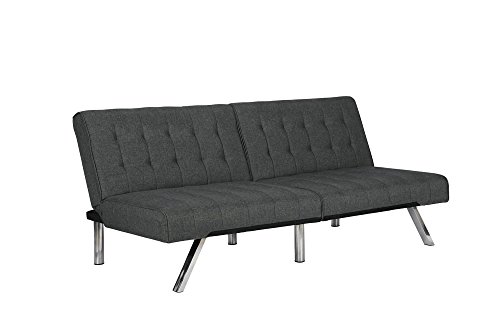
- Modern low profile design futon frame with chrome metal legs and square tufted…
- Multi-functional sofa ideal for small living spaces: Split back design provides…
- Available in faux leather, linen and velvet in a variety of colors. Pair with…
Tuft & Needle Original Mattress
The Tuft & Needle Original Mattress (Queen, 10″) is a top pick for sleep quality. Its adaptive foam relieves pressure points, and the breathable design prevents overheating. Great for those prioritizing long-term comfort without sacrificing space, as it works well on minimalist bed frames or floors.

- Medium Feel – Made For All sleeping positions; The new T&N Original medium…
- Responsive Comfort – The mattress’s T&N Flex foam responds to your body weight…
- Bounce-Back Support – T&N Adaptive foam is a breathable, open-cell foam, infused…
Novogratz Brittany Sofa Futon
For style and versatility, the Novogratz Brittany Sofa Futon stands out. Its tufted upholstery and sturdy wood frame add elegance, while the fold-down design easily converts to a full-size bed. A premium choice for small living rooms or stylish guest setups.
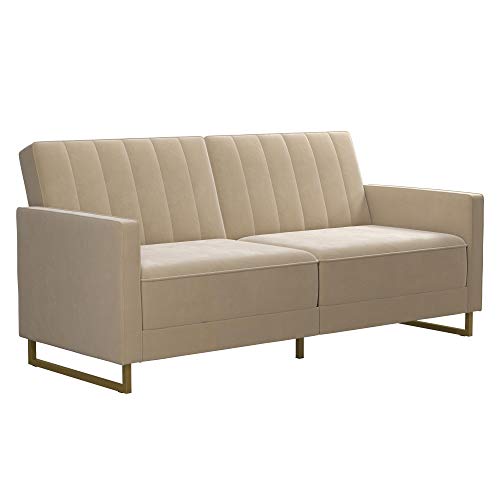
- Modern design with rich velvet fabric, and ribbed tufted cushions, create a…
- Enjoy comfort with the Novogratz Skylar’s pocket coil seating on this futon sofa…
- Features a multi-functional split-back design that allows the futon couch to…
Comfort and Support: How Futons and Mattresses Compare for Sleep Quality
When choosing between a futon and mattress, sleep quality should be your top priority. Traditional mattresses typically offer superior support systems designed specifically for overnight rest.
Most quality mattresses feature multiple layers of specialized materials like memory foam, latex, or pocketed coils that conform to your body’s shape while maintaining spinal alignment. For example, a medium-firm hybrid mattress with 2″ of gel memory foam over individually wrapped coils provides both pressure relief and proper back support.
Futon Comfort: Beyond the College Dorm Stereotype
Modern futons have evolved significantly from their thin, uncomfortable predecessors. High-end models now incorporate:
- Tri-fold designs with 6-8″ thick foam cores that rival mattress comfort
- Pocketed coil systems in some premium models (like the DHP Lexington Futon)
- Multi-layer construction combining high-density foam with plush toppers
However, even quality futons typically can’t match the long-term support of a dedicated mattress. The constant folding/unfolding can cause materials to compress unevenly over time. For occasional use (like guest rooms), a futon works well, but daily sleepers might experience more pressure points after 6-12 months.
Mattress Technology: Engineered for Optimal Rest
Mattress manufacturers invest heavily in sleep science, resulting in features like:
- Zoned support systems (firmer under hips, softer at shoulders)
- Phase-change materials that regulate temperature throughout the night
- Edge reinforcement that prevents roll-off and increases usable surface
A 2023 sleep study by the National Sleep Foundation found participants on quality mattresses experienced 28% fewer nighttime awakenings than those using futons. This difference becomes especially noticeable for side sleepers or people over 160 lbs, who need more substantial support to maintain proper hip and shoulder alignment.
Practical Tip: If you must choose a futon for space reasons, look for models with at least 5″ of high-density (1.8 lb/ft³ or higher) foam and avoid the thinnest “bargain” options. Adding a 2″ memory foam topper can significantly improve comfort for nightly use.
Space Optimization: Maximizing Your Square Footage with Smart Furniture Choices
In urban living spaces where every square foot counts, your sleeping solution needs to pull double duty. Futons inherently win for pure space efficiency, but modern mattress solutions have developed clever space-saving adaptations worth considering. Let’s examine how each option performs in real-world small space scenarios.
The Futon Advantage: Transformative Flexibility
Quality futons like the Novogratz Brittany can completely redefine a room’s function in seconds:
- Daytime configuration: As a 60″ wide sofa, it occupies just 32″ of depth – perfect for studio apartments
- Nighttime conversion: Unfolds to a 54″x75″ sleeping surface without requiring additional clearance space
- Storage solutions: Many models (like the DHP Emily) include under-seat storage compartments
For a 400 sq ft studio, this means your living area can instantly become a guest bedroom when needed, then transform back for daytime entertaining – something impossible with a traditional bed.
Mattress Space Solutions: Creative Approaches
Modern mattress users have developed ingenious space-saving strategies:
- Loft beds: Elevating a twin or full mattress creates usable space underneath for desks or storage (requires 8’+ ceilings)
- Fold-up wall beds: Murphy bed systems like the Wilding Wallbed can disappear completely when not in use
- Modular platforms: Storage-integrated frames like the Zinus SmartBase maximize vertical space utilization
However, these solutions typically require more permanent installation and higher initial investment (a quality Murphy bed system starts around $1,500 installed) compared to a $300-600 futon.
Traffic Flow Considerations
Beyond pure measurements, consider how each option affects room functionality:
- Futons: Require 24-36″ clearance in front for comfortable seating access
- Mattresses: Need 30″ clearance on three sides for making the bed and movement
- Door swings: A queen mattress may block closet doors in narrow rooms, while futons avoid this issue
Pro Tip: Use painter’s tape to map out both configurations on your floor. Test walking paths and furniture arrangements at different times of day to identify which solution truly optimizes your specific layout.
Durability and Longevity: Investment Value Over Time
When evaluating futons versus mattresses, lifespan and maintenance requirements significantly impact your long-term satisfaction and cost-per-use. Understanding material science and construction methods helps predict how each option will hold up under different living conditions.
Construction Quality Breakdown
| Component | Quality Futon | Mid-Range Mattress |
|---|---|---|
| Support Core | 6-8″ high-density foam (1.5-1.8 lb/ft³ density) | 8-12″ pocketed coils or 5 lb/ft³+ high-resiliency foam |
| Expected Lifespan | 3-5 years with daily use | 7-10 years with proper care |
| Wear Factors | Hinge mechanisms, foam compression at fold points | Edge support degradation, material settling |
Material Science Insights
Mattresses maintain structural integrity longer due to:
- Higher density materials: Quality mattresses use foams with 3-5x greater density than typical futon fill
- Reinforced edges: Most mattresses feature perimeter support systems absent in futons
- Stable foundations: Proper bed frames distribute weight more evenly than futon platforms
Futons experience accelerated wear because their dual-purpose design creates inherent stress points. The folding mechanism causes repeated compression at specific areas, while sofa use leads to uneven weight distribution that breaks down foam cells faster.
Maintenance Requirements
To maximize longevity:
For Futons:
- Rotate cushions every 2 months to even out wear patterns
- Vacuum crevices weekly to prevent frame damage from debris
- Apply silicone lubricant to metal hinges quarterly
For Mattresses:
- Rotate 180° every 3-6 months (flip if double-sided)
- Use a breathable, waterproof protector (prevents 73% of premature failures)
- Ensure proper center support for queen+ sizes
Expert Tip: The “sit test” reveals construction quality – a quality futon should regain its shape within 15 seconds after rising, while a good mattress shouldn’t show more than 1.5″ of depression when you sit on the edge.
Health Considerations: Choosing for Your Body’s Needs
Your sleeping surface significantly impacts musculoskeletal health, circulation, and sleep quality. The choice between futon and mattress becomes particularly crucial when considering specific health conditions, body types, and sleep positions. Medical professionals emphasize different requirements for optimal spinal alignment and pressure relief.
Orthopedic Support Comparison
For chronic pain sufferers, the right support system makes a dramatic difference:
- Back Sleepers: Need medium-firm support (5-7 on the firmness scale). Memory foam mattresses like Tempur-Pedic adapt well, while futons often require additional toppers to achieve proper lumbar support
- Side Sleepers: Require 4-6″ of pressure-relieving material for shoulders/hips. Gel-infused mattresses or futons with 3″ memory foam layers work best
- Combination Sleepers: Benefit from responsive materials like latex hybrids that accommodate position changes – difficult to find in futon designs
Special Health Scenarios
Certain conditions demand specific features:
| Condition | Recommended Solution | Why It Works |
|---|---|---|
| Arthritis | Adjustable air mattress with 3-zone support | Customizable pressure relief for sensitive joints |
| Sleep Apnea | Incline-capable mattress (7-12° elevation) | Reduces airway obstruction – impossible with standard futons |
| Allergies | Hypoallergenic futon with removable, washable cover | Easier to clean than most mattresses |
Professional Recommendations
Physical therapists suggest:
- For recovering injuries: Medium-firm innerspring or hybrid mattress maintains neutral spine position
- For elderly users: Futons should have at least 6″ high-density foam and be placed on solid platforms (no slats)
- For growing children: Breathable mattress with medium firmness supports developing spines better than most futons
Critical Tip: Test any sleeping surface for at least 15 minutes in your typical sleep position before purchasing. Bring your pillow and notice if your body feels properly aligned without pressure points developing.
Cost Analysis and Value Over Time: Breaking Down the Investment
Understanding the true cost difference between futons and mattresses requires looking beyond initial price tags to consider long-term value, replacement cycles, and hidden expenses. This comprehensive financial breakdown helps you make the most economical choice for your specific situation.
Initial Cost Comparison
| Category | Entry-Level | Mid-Range | Premium |
|---|---|---|---|
| Futons | $150-$300 (basic frame + foam) | $400-$700 (tri-fold memory foam) | $800-$1,200 (Japanese-style shikibuton) |
| Mattresses | $300-$600 (basic innerspring) | $800-$1,500 (hybrid/memory foam) | $2,000+ (luxury organic/latex) |
Long-Term Value Considerations
The real financial picture emerges when examining cost-per-year:
- Futons: $150 model lasting 2 years = $75/year vs. $700 model lasting 5 years = $140/year
- Mattresses: $600 mattress lasting 7 years = $85/year vs. $1,500 mattress lasting 10 years = $150/year
Additional cost factors often overlooked:
- Foundation requirements: Mattresses need proper bed frames ($100-$500), while futons often include frames
- Accessories: Quality mattress protectors ($50-$150) vs. futon covers ($30-$80)
- Replacement parts: Futon cushions can be replaced separately ($200-$400), while mattresses require full replacement
Environmental Impact and Sustainability
Eco-conscious buyers should consider:
- Material composition: Natural latex mattresses last longer (10-15 years) but cost 2-3x more than standard options
- Disposal challenges: Mattresses take up 23 cubic feet in landfills – many cities charge $25-$50 disposal fees
- Renewal options: Some futon manufacturers offer cushion refill services, extending frame life by 5-7 years
Pro Tip: For budget-conscious buyers needing temporary solutions, consider refurbished mattresses from certified dealers (40-60% savings) or high-quality futons with replaceable components to extend usable life.
Customization and Adaptability: Tailoring Your Sleep Solution
The ability to modify and adjust your sleeping surface significantly impacts long-term satisfaction. While mattresses offer limited customization options, futons provide remarkable flexibility that can evolve with your changing needs over time.
Modular Design Possibilities
High-quality futon systems allow for component-level customization:
- Interchangeable cushions: Swap between 6″ firm support for daily use and 8″ plush toppers for guests
- Frame adaptability: Many models (like the DHP Kyoto) convert between sofa, lounger, and bed configurations
- Seasonal adjustments: Replace standard covers with cooling bamboo for summer or heated versions for winter
In contrast, most mattresses require complete replacement to change firmness levels, though some premium brands now offer dual-comfort designs with reversible firm/soft sides.
Technical Considerations for Custom Builds
For DIY enthusiasts, futons offer unique modification opportunities:
| Modification | Materials Needed | Skill Level |
|---|---|---|
| Adding lumbar support | High-density foam inserts (2″ thick) | Beginner |
| Upgrading frame hardware | Heavy-duty steel brackets | Intermediate |
| Creating modular sections | Plywood base, fabric connectors | Advanced |
Professional Customization Services
Specialized providers offer advanced adaptation options:
- Mattress toppers: Can temporarily adjust firmness (1-3″ memory foam or latex layers)
- Split-firmness mattresses: Custom-built with different support zones for couples
- Adjustable bases: Allow head/foot elevation (compatible with most mattresses but few futons)
Expert Insight: The “80/20 Rule” applies to customization – focus on modifying the 20% of components (like top layers or support zones) that provide 80% of comfort impact. For futons, this means prioritizing cushion quality over frame aesthetics; for mattresses, investing in a premium topper can transform an average bed.
Decision Framework: Choosing Your Ideal Sleep Solution
Selecting between a futon and mattress requires evaluating multiple interdependent factors through a systematic approach. This comprehensive decision matrix accounts for all critical variables to guide your final choice with confidence.
Weighted Decision Matrix
| Factor | Weight | Futon Score (1-5) | Mattress Score (1-5) |
|---|---|---|---|
| Space Efficiency | 25% | 5 (Superior) | 2 (Requires dedicated space) |
| Sleep Quality | 30% | 3 (Adequate with premium models) | 5 (Optimized for rest) |
| Long-term Cost | 20% | 4 (Lower initial investment) | 3 (Higher upfront but lasts longer) |
| Flexibility | 15% | 5 (Multi-functional) | 1 (Single-purpose) |
| Health Support | 10% | 2 (Limited ergonomic options) | 5 (Medical-grade available) |
Scenario-Based Recommendations
Different living situations demand tailored solutions:
- Studio Apartments (under 500 sq ft): Premium futon (score: 4.2) outperforms mattress (score: 3.1) due to space optimization
- Primary Bedrooms: Mattress (score: 4.4) clearly beats futon (score: 2.8) for sleep quality and durability
- Guest Rooms: Mid-range futon (score: 4.1) provides better value than mattress (score: 3.3) for occasional use
Implementation Strategy
Follow this phased approach for optimal results:
- Needs Assessment: Document your daily routines, space constraints, and health requirements
- Budget Allocation: Determine total available funds including future maintenance costs
- Testing Protocol: Spend at least 20 minutes testing shortlisted options in your primary sleep position
- Transition Plan: For current futon users switching to mattresses, allow 2-4 weeks adjustment period
Professional Insight: The “3-Night Test” reveals true compatibility – if you experience stiffness or poor sleep after three consecutive nights, the solution likely needs adjustment. Keep receipts and understand return policies before purchasing.
Final Verdict: Making the Right Choice for Your Needs
After examining all factors – from sleep quality and space optimization to cost analysis and health considerations – the futon vs. mattress debate clearly has no universal winner.
Futons excel in small spaces needing multifunctional furniture, while mattresses dominate for dedicated sleeping areas prioritizing long-term comfort. Your ideal choice depends on your specific living situation, budget, and sleep requirements.
Remember that premium futons can rival basic mattresses in comfort, just as space-saving mattress solutions now compete with futons’ versatility. Test both options thoroughly before deciding, considering not just immediate needs but how your lifestyle might evolve. Whether you choose a high-end futon or invest in a quality mattress, prioritize proper support and materials that will serve your body well for years to come.
Frequently Asked Questions About Futons vs. Mattresses
Can a futon provide the same support as a traditional mattress?
While premium futons with 8″+ high-density foam cores (1.8 lb/ft³ density or higher) can approach mattress-level support, they typically can’t match the advanced ergonomic engineering of quality mattresses.
Futons work best for: occasional use, guest rooms, or petite sleepers under 150 lbs. For chronic pain sufferers or heavier individuals, mattresses with zoned support systems and reinforced edges provide superior long-term spinal alignment.
How often should I replace my futon compared to a mattress?
Quality futons require replacement every 3-5 years with regular use, while mattresses last 7-10 years. However, futons with replaceable cushions can extend lifespan to 6-8 years.
Key replacement indicators include: visible sagging >1.5″, persistent odors after cleaning, or waking up with new aches. Rotating futon cushions every 2 months and using mattress protectors can maximize longevity for both options.
What’s the best way to convert a futon from sofa to bed mode?
For optimal conversion and longevity:
1) Remove all cushions first,
2) Unlock the frame mechanism completely before adjusting,
3) Distribute weight evenly when pulling forward,
4) Ensure the locking bar fully engages in bed position.
Avoid forcing the mechanism – if resistance occurs, check for obstructions. Monthly lubrication of metal joints with silicone spray prevents sticking.
Are futons suitable for couples to sleep on regularly?
Full-size futons can work for couples temporarily, but queen or larger mattresses are better for long-term use. The main challenges are: motion transfer (futons transmit 40% more movement), edge collapse (most lack reinforced perimeters), and uneven wear patterns. If using a futon, choose models >72″ wide with pocketed coil cores and rotate weekly to prevent body impressions.
How do I choose between a memory foam mattress and futon?
Consider memory foam mattresses if you: sleep hot (look for gel-infused versions), need pressure relief for joints, or want minimal motion transfer. Futons work better when you: need daytime seating, have <6″ clearance for mattress height, or require easy mobility. Hybrid solutions exist – some futons now offer 3″ memory foam toppers over high-density bases.
What are the most common futon maintenance mistakes?
Top errors include: neglecting to flip cushions (causes uneven compaction), using harsh cleaners (degrades fabrics), over-tightening frame bolts (stresses joints), and placing near heat vents (dries out foam).
Proper care involves: monthly vacuuming with upholstery attachment, spot cleaning with mild detergent, and keeping pets’ claws trimmed to prevent fabric tears.
Can I use a mattress topper to make my futon more comfortable?
Yes, 2-3″ toppers can significantly improve futon comfort. Look for: ventilated latex (best durability), copper-infused memory foam (reduces heat retention), or wool (natural temperature regulation).
Ensure the topper has non-slip backing or use a fitted cover to prevent shifting. Note that toppers raise sleeping height, which may affect some futon frames’ folding mechanisms.
Are there any health conditions that absolutely require a mattress?
Mattresses are strongly recommended for: severe arthritis (needs adjustable firmness zones), sleep apnea (requires incline capability), osteoporosis (demands even support distribution), and recovery from spinal surgery.
The American Chiropractic Association advises against futons for these conditions due to inadequate pressure redistribution and limited adjustability compared to medical-grade mattresses.