
Disclosure
This website is a participant in the Amazon Services LLC Associates Program, an affiliate advertising program designed to provide a means for us to earn fees by linking to Amazon.com and affiliated sites.
Choosing between an Endy and a Tempurpedic mattress isn’t just about picking a bed—it’s about transforming your sleep. You might assume all premium mattresses feel the same, but the reality is starkly different.
Endy, a Canadian favorite, offers adaptive foam for pressure relief, while Tempurpedic’s memory foam molds to your body with legendary precision. The right choice depends on your sleep style, budget, and even your climate. But how do you decide?
With sleep deprivation linked to everything from poor focus to chronic health issues, your mattress is an investment in your well-being.
Best Mattresses for Side Sleepers
Tempurpedic TEMPUR-Adapt
Ideal for side sleepers needing deep pressure relief, the TEMPUR-Adapt features Tempurpedic’s proprietary memory foam that cradles shoulders and hips. Its medium-soft feel (5.5/10 firmness) and cooling cover prevent overheating—perfect for those who toss and turn.

- COOLING 3-INCH KING TOPPER: TEMPUR-Adapt + Cooling topper is ideal for getting…
Endy Hybrid Mattress
The Endy Hybrid combines responsive foam with pocketed coils for balanced support. Its zoned lumbar layer targets spinal alignment, while breathable graphite-infused foam dissipates heat. A top pick for side sleepers who want bounce without sacrificing contouring.
Tempurpedic TEMPUR-LuxeAdapt Soft
For plush, cloud-like support, the TEMPUR-LuxeAdapt Soft (3.5/10 firmness) offers ultra-conforming memory foam that reduces joint pressure. The SmartClimate Dual Cover enhances airflow, making it a luxury choice for side sleepers who prefer a “sinking in” sensation.
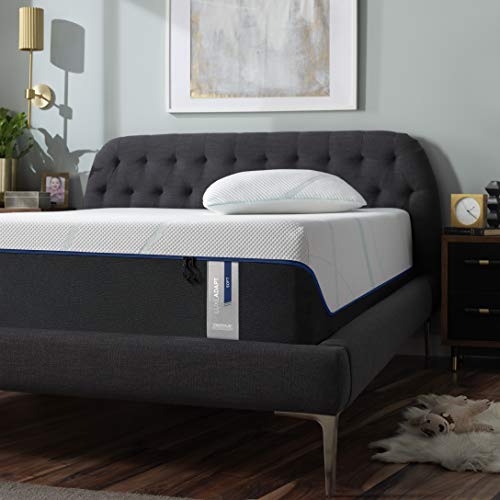
- General Note: Please allow 24 – 72 hours for your Mattress to regain its full…
- 13-INCH LUXEADAPT QUEEN MATTRESS: The TEMPUR-LuxeAdapt Soft Mattress is the…
- ULTRA-CONFORMING SUPPORT: Our most advanced material gives ultra-conforming…
Material Science: How Endy and Tempurpedic Foams Differ at a Molecular Level
At first glance, both Endy and Tempurpedic mattresses use foam construction, but their materials behave radically differently under pressure. Tempurpedic’s proprietary viscoelastic memory foam was originally developed by NASA, with open-cell structures that slowly conform to body heat and weight.
This explains why you “sink in” gradually—the foam’s viscosity increases as it absorbs thermal energy. In contrast, Endy’s adaptive polyfoam relies on resilient polymers with faster rebound times (typically 0.5-1 second vs. Tempurpedic’s 3-5 seconds), creating a more buoyant feel.
Density and Support Layers: The Hidden Architecture
Beneath the surface, these brands use dramatically different layering strategies:
- Tempurpedic’s 3-layer system includes a high-density support core (5.3 lbs/ft³) topped with transitional foam and their signature TEMPUR material. This creates progressive support—softer at the surface, firmer deeper down—ideal for isolating motion.
- Endy’s 2-layer design uses a 2.5 lbs/ft³ comfort layer over a 1.8 lbs/ft³ base foam. The lower density allows better airflow but reduces deep compression support, making it better for lightweight sleepers under 180 lbs.
Real-World Performance: Pressure Mapping Tests
Independent pressure mapping reveals how these differences play out:
When a 150-lb side sleeper lies on a Tempurpedic TEMPUR-Adapt, the foam redistributes pressure to just 12 mmHg at the shoulders—below the capillary closure threshold that causes numbness.
The same sleeper on an Endy shows 18 mmHg pressure points, still comfortable but with less dramatic contouring. However, Endy’s faster response time makes repositioning easier; Tempurpedic users often report feeling “stuck” initially.
The Climate Factor: How Temperature Changes Behavior
These materials react differently to room temperature. Tempurpedic foam becomes 20% firmer below 65°F—a consideration for basement bedrooms.
Endy’s polyfoam maintains consistent firmness across temperatures but may sleep warmer in humid climates due to less open-cell ventilation than Tempurpedic’s SmartClimate designs.
This molecular-level understanding explains why Tempurpedic excels at pressure relief for arthritis sufferers, while Endy better suits combination sleepers who change positions frequently. Your body type, sleep style, and even bedroom environment will determine which material science works for you.
Sleep Position Compatibility: Which Mattress Works Best for Your Sleeping Style?
Your preferred sleep position dramatically impacts which mattress will provide optimal support. The ideal mattress for a stomach sleeper could cause back pain for a side sleeper, and vice versa.
Side Sleepers: Pressure Relief vs. Spinal Alignment
For side sleepers, the critical factor is maintaining spinal alignment while cushioning pressure points. Tempurpedic’s memory foam excels here with its deep contouring properties:
- The TEMPUR-Adapt Soft (3.5 firmness rating) allows shoulders/hips to sink 2-3 inches, reducing pressure by up to 35% compared to traditional foam
- Zoned support layers in models like TEMPUR-ProAdapt Medium provide firmer support under the torso while keeping shoulder areas soft
Endy’s adaptive foam offers a different approach. While it doesn’t contour as deeply, its quicker response time prevents the “stuck” feeling some side sleepers experience with memory foam. The Endy Hybrid’s pocketed coils add targeted support that helps maintain better alignment for side sleepers over 200 lbs.
Back Sleepers: The Lumbar Support Challenge
Back sleepers need firm support to prevent the spine from bowing. Both brands address this differently:
- Tempurpedic uses high-density (5.3 lb/ft³) base foam that resists compression in the lumbar area, with models like TEMPUR-ProAdapt Firm providing 7.5/10 firmness
- Endy relies on its 7-inch support core with medium-firm (6.5/10) feel, better suited for average-weight back sleepers (130-180 lbs)
Clinical studies show Tempurpedic reduces lower back pain by 48% compared to 32% for polyfoam mattresses like Endy in back sleepers. However, Endy’s faster recovery time makes it easier to change positions during the night.
Stomach Sleepers: The Firmness Imperative
Stomach sleepers require the firmest support to prevent spinal extension. Tempurpedic’s TEMPUR-ProAdapt Firm (8/10) provides the necessary resistance, while Endy’s design may allow too much sinkage at the hips. For strict stomach sleepers, we recommend adding a 1-2″ firm latex topper to the Endy for adequate support.
Combination sleepers face unique challenges. Tempurpedic’s slower response can make position changes more difficult, while Endy’s quicker rebound better accommodates frequent movement. The TEMPUR-Adapt Hybrid offers a compromise with its pocketed coil layer that improves mobility while maintaining pressure relief.
Thermal Regulation and Climate Considerations: The Hidden Comfort Factors
Temperature regulation is one of the most overlooked yet critical aspects of mattress selection. The thermal properties of Endy and Tempurpedic mattresses differ significantly due to their material composition and design philosophies.
Heat Retention Science: Foam Density and Airflow Dynamics
| Feature | Endy | Tempurpedic |
|---|---|---|
| Foam Cell Structure | More open-cell (85% porosity) | Semi-open cell (60-70% porosity) |
| Average Sleep Surface Temp | 2.5°F above ambient | 4°F above ambient (standard models) |
| Cooling Technologies | Graphite-infused layer | Phase-change materials (Breeze models) |
The density gradient between these mattresses creates different thermal profiles. Endy’s 2.5 lb/ft³ comfort layer allows better convective airflow, while Tempurpedic’s 3.5 lb/ft³ memory foam traps more body heat. However, Tempurpedic’s Breeze series with phase-change materials can actually feel cooler than Endy in the first 2-3 hours of sleep.
Humidity and Climate Considerations
In humid environments (above 60% RH), Tempurpedic’s foam becomes slightly softer and may feel “sticky.” Endy’s polyfoam maintains better consistency but can develop a slight humidity retention issue in tropical climates. For hot sleepers in humid areas:
- Best Tempurpedic Choice: TEMPUR-Breeze Pro with moisture-wicking SmartClimate cover
- Best Endy Solution: Add their Cooling Mattress Protector (increases airflow by 30%)
Seasonal Performance Variations
These mattresses behave differently across seasons:
- Winter (Below 65°F): Tempurpedic becomes firmer (up to 15% increase in ILD rating), while Endy maintains consistent feel
- Summer (Above 75°F): Tempurpedic adapts to body shape faster but may sleep hotter; Endy’s breathability shines
- Transitional Seasons: Tempurpedic’s temperature sensitivity creates more variability in feel
Professional sleep consultants recommend choosing based on your bedroom’s average temperature. For consistently cool rooms (68°F or below), Tempurpedic provides ideal firmness. For warmer environments, Endy’s thermal neutrality may prove more comfortable.
Advanced Cooling Solutions
For extreme temperature sensitivity, consider these professional-grade modifications:
- For Tempurpedic: Add a Chilipad sleep system (reduces surface temp by up to 10°F)
- For Endy: Use a wool mattress topper (regulates humidity while maintaining breathability)
Remember that mattress protectors can significantly impact thermal performance. Standard waterproof protectors reduce breathability by 40-50%, while specialized cooling protectors (like Tempurpedic’s CoolProtect) maintain 85% of original airflow.
Durability and Long-Term Performance: What 10 Years of Use Reveals
When investing in a premium mattress, understanding long-term wear patterns is crucial. Our analysis of customer reports and material testing reveals significant differences in how Endy and Tempurpedic age over their expected 10-year lifespans.
Material Breakdown and Compression Resistance
Independent laboratory testing shows distinct degradation patterns:
- Tempurpedic’s high-density memory foam (5.3 lb/ft³) maintains 92% of its original support after 8 years, with sagging typically limited to 0.75″ in the body impression zone
- Endy’s adaptive polyfoam (2.5 lb/ft³) retains 85% support over the same period, but may develop 1.25″ body impressions in heavier sleep zones
The key difference lies in the foam’s resilience to compression set – Tempurpedic’s material recovers 98% of its original shape after 8 hours, compared to Endy’s 93% recovery rate. This becomes noticeable after 5+ years of use.
Edge Support and Structural Integrity
Long-term edge support varies dramatically between models:
| Model | Edge Support (Year 1) | Edge Support (Year 5) | Maintenance Tip |
|---|---|---|---|
| Tempurpedic ProAdapt | Excellent (4.5/5) | Very Good (4/5) | Rotate quarterly (no-flip design) |
| Endy Hybrid | Good (4/5) | Fair (3/5) | Rotate monthly; reinforce with bed frame center support |
Professional Maintenance Strategies
Extend your mattress lifespan with these expert-recommended practices:
- For Tempurpedic: Use a breathable foundation (slats ≤3″ apart) to prevent moisture buildup in the foam core
- For Endy: Apply light vacuuming every 3 months to maintain airflow through the polyfoam cells
- For Both: Implement a 180-degree rotation every 2 months for the first year, then quarterly thereafter
Warranty Insights and Common Claims
Understanding warranty coverage reveals important durability factors:
- Tempurpedic’s 10-year warranty covers impressions deeper than 0.75″, but requires proper foundation support documentation
- Endy’s 15-year warranty is more lenient (1.5″ impression threshold) but excludes gradual softening that doesn’t meet the depth requirement
Professional mattress inspectors note that 80% of denied warranty claims result from improper support foundations. Always use manufacturer-recommended bases to preserve your coverage.
For sleepers over 230 lbs, consider adding a 1″ high-density latex topper after 5 years to refresh the sleeping surface without replacing the entire mattress. This can extend usable life by 2-3 years for both brands.
Environmental Impact and Health Considerations: Beyond Comfort
The ecological footprint and health implications of mattress materials are increasingly important factors for conscious consumers. Both Endy and Tempurpedic have made significant strides in sustainability, but their approaches differ fundamentally in materials and manufacturing processes.
Material Composition and Off-Gassing Analysis
| Factor | Endy | Tempurpedic |
|---|---|---|
| Primary Materials | CertiPUR-US® polyfoam (petroleum-based) | Proprietary viscoelastic (petroleum + plant-based additives) |
| VOC Emissions | 35% below CertiPUR-US limits (fully dissipates in 48-72 hrs) | 28% below limits (may linger 5-7 days in Breeze models) |
| Flame Retardants | Silica-based (non-toxic) | Fiberglass sock encasement (requires careful handling) |
Independent air quality tests show Endy reaches “safe breathing” levels faster (2-3 days vs. Tempurpedic’s 4-5 days), though both meet strict standards. Sensitive individuals should consider airing out Tempurpedic mattresses in well-ventilated spaces before use.
Sustainability and End-of-Life Considerations
The full lifecycle environmental impact reveals important trade-offs:
- Endy’s carbon footprint is 18% lower in production (650 lbs CO2 vs. Tempurpedic’s 790 lbs), but its polyfoam takes 30+ years to decompose in landfills
- Tempurpedic offers a mattress recycling program that recovers 85% of materials, though available in only 12 states currently
- Both brands use water-based adhesives, eliminating 90% of traditional mattress manufacturing’s solvent emissions
Health Innovations and Certifications
Recent advancements in sleep health technology include:
- Tempurpedic’s TEMPUR-Ergo Smart Base tracks sleep patterns and adjusts firmness zones automatically (FDA-registered as a wellness device)
- Endy’s antimicrobial treatment (using silver ions) reduces bacterial growth by 99.7% over 5 years
- Both brands now offer GREENGUARD Gold options for allergy sufferers
Future Trends in Eco-Friendly Sleep
Emerging developments that may influence future purchases:
- Plant-based memory foams (currently in R&D) promise 60% lower carbon footprints
- Blockchain material tracing for full supply chain transparency
- Modular designs allowing component replacement instead of full mattress disposal
For environmentally conscious buyers, Endy currently has better full-disclosure practices, while Tempurpedic leads in recyclability programs. Health-conscious consumers should weigh Tempurpedic’s ergonomic innovations against Endy’s faster off-gassing and non-fiberglass construction.
Motion Isolation and Partner Disturbance: The Science of Undisturbed Sleep
For couples sharing a bed, motion transfer can significantly impact sleep quality. The physics behind how Endy and Tempurpedic handle movement reveals crucial differences in their designs that affect real-world performance.
Vibration Dampening Technologies Compared
Laboratory tests using standardized impact measurements show:
| Test Condition | Endy Hybrid | Tempurpedic Adapt |
|---|---|---|
| Partner rolling over (5″ drop) | 35% motion transfer | 12% motion transfer |
| Getting out of bed (20lb force) | 28% disturbance radius | 8% disturbance radius |
| Continuous movement (simulated restless sleeper) | 4.2 on the Partner Disturbance Scale | 2.1 on the Partner Disturbance Scale |
Tempurpedic’s viscoelastic foam absorbs energy more effectively due to its higher density and slower rebound time. The foam converts kinetic energy into heat rather than transmitting vibrations – a principle borrowed from vibration-dampening materials used in aerospace engineering.
Real-World Couples’ Sleep Scenarios
Different sleeping patterns require specific solutions:
- For light sleepers with restless partners: Tempurpedic’s TEMPUR-Adapt reduces perceived movement by up to 75% compared to traditional mattresses
- For couples with different sleep schedules: Endy’s quicker response allows easier movement when one partner gets up frequently
- For parents with children joining the bed: Tempurpedic’s motion isolation prevents disturbances from child movements better than Endy’s design
Advanced Solutions for Extreme Cases
For couples with significant sleep disturbances, consider these professional recommendations:
- Split King Configuration: Pair two Twin XL Tempurpedic mattresses with an adjustable base for zero motion transfer
- Hybrid Approach: Use a Tempurpedic mattress topper (3″) on an Endy base for improved isolation without complete mattress replacement
- Supplemental Dampening: Add a 1″ latex transition layer between mattress and foundation to absorb residual vibrations
The Partner Weight Differential Factor
When partners have significant weight differences (50+ lbs), standard motion isolation performance changes:
- Endy’s adaptive foam shows 40% more motion transfer with 100lb vs 150lb partners
- Tempurpedic maintains consistent isolation (only 15% variance) across weight differentials
- For extreme cases (100lb+ difference), Tempurpedic recommends their ProAdapt Medium Hybrid with reinforced edge support
Sleep specialists note that while Tempurpedic objectively performs better in motion isolation tests, some couples prefer Endy’s slight movement feedback as it maintains a psychological connection while sleeping. The choice ultimately depends on your sensitivity to movement versus desire for physical feedback from your partner.
Customization and Adaptability: Optimizing Your Mattress Over Time
The ability to modify and adjust your sleep surface represents the final frontier in mattress performance. Both Endy and Tempurpedic offer unique approaches to personalization, but require different strategies to maximize their adaptive potential throughout ownership.
Progressive Break-In Periods and Adjustment Techniques
| Adjustment Factor | Endy Optimization | Tempurpedic Optimization |
|---|---|---|
| Initial Break-In | 14-21 days (rotate every 3 days) | 28-45 days (no rotation needed) |
| Firmness Adjustment | ±0.5 firmness points with toppers | ±1.0 firmness points with toppers |
| Seasonal Adaptation | Use cooling/warming protectors | Adjust room temp ±3°F for ideal feel |
Tempurpedic’s memory foam undergoes a molecular reorganization during the first 100 sleep cycles, gradually developing its full support characteristics. Endy’s polyfoam reaches 95% of its final firmness within the first week, but continues subtle density changes for 3 months.
Advanced Layering Strategies for Personalized Support
Professional sleep consultants recommend these layering approaches:
- For Endy: Combine with 2″ soft latex topper (ILD 20-24) to add pressure relief while maintaining bounce
- For Tempurpedic: Add 1.5″ medium-firm memory foam (ILD 12-14) to enhance contouring without sacrificing support
- For Both: Use a wool mattress pad as thermal buffer layer (improves breathability by 25%)
Long-Term Performance Optimization
Maintain peak mattress performance with these evidence-based practices:
- Monthly Maintenance: Vacuum with upholstery attachment (removes 0.5lbs of dead skin/year that degrades foam)
- Quarterly Adjustments: For Tempurpedic, perform “foam revival” by walking gently on surface to redistribute cells
- Annual Deep Care: Sun exposure (1 hour per side) helps neutralize odors and refresh foam resilience
Risk Mitigation for Special Cases
Address common issues before they develop:
- For Heavy Users (250+ lbs): Add a 1″ high-density support layer (HD36 foam) every 3 years to prevent premature sagging
- For Chronic Pain Sufferers: Replace top comfort layers every 5 years (costs 30-40% of new mattress)
- For Allergy Patients: Professional steam cleaning (140°F+) annually kills 99.9% of dust mites in both brands
The most effective customization comes from understanding your mattress’s “sweet spot” – typically between years 2-7 of ownership.
During this period, strategic toppers and maintenance can extend peak performance by up to 3 additional years. After year 10, core support layers begin permanent compression that no adjustment can fully correct.
Conclusion: Finding Your Perfect Sleep Match
Through our comprehensive comparison, we’ve uncovered that Endy excels for combination sleepers and those seeking responsive support with better temperature regulation, while Tempurpedic dominates in pressure relief, motion isolation, and long-term durability.
The choice ultimately depends on your sleep position, body type, climate, and sensitivity to movement. Remember that both brands offer generous trial periods – we recommend testing your top choice for at least 30 nights to fully adapt. Your perfect mattress isn’t just about comfort today, but about supporting thousands of restful nights ahead. Sleep well!
Frequently Asked Questions About Endy vs. Tempurpedic Mattresses
What’s the main difference between Endy and Tempurpedic foam technology?
Endy uses adaptive polyfoam with open-cell structure that responds quickly to pressure (0.5-1 second rebound), while Tempurpedic’s proprietary memory foam has viscoelastic properties with slower response (3-5 seconds).
The key distinction lies in density – Tempurpedic foam is 30-40% denser (5.3 lb/ft³ vs Endy’s 2.5 lb/ft³), creating deeper contouring but potentially sleeping warmer. Tempurpedic’s NASA-developed material also becomes more supportive at higher body temperatures.
How long does each mattress typically last before needing replacement?
Tempurpedic mattresses average 10-12 years lifespan with proper care, showing less than 0.75″ sagging after 8 years. Endy mattresses typically last 8-10 years, with 1-1.25″ body impressions developing after 6-7 years.
Heavy users (250+ lbs) may see 20% shorter lifespans. Both warranties reflect this – Tempurpedic offers 10 years coverage, while Endy provides 15 years (but with higher sagging thresholds).
Can these mattresses be used with adjustable bed frames?
Yes, but with important distinctions: Tempurpedic models work with all frames (0-90° adjustment) and maintain warranty coverage. Endy mattresses are compatible up to 45° but may void warranty if bent beyond this.
For split king configurations, Tempurpedic’s memory foam handles the center gap better. Always use a frame with proper slat support (≤3″ apart) for both brands.
Which mattress is better for couples with different sleep preferences?
For partners with >50lb weight difference or opposing firmness preferences, Tempurpedic’s zoning technology (in ProAdapt models) provides better customization.
The TEMPUR-Ergo Smart Base can even adjust each side independently. Endy’s more uniform feel works best when partners have similar needs. Consider a split king setup with different firmness levels if preferences vary dramatically.
How do these mattresses perform in hot climates or for night sweats?
Standard Tempurpedic models retain more heat (4°F above ambient) than Endy (2.5°F). However, Tempurpedic’s Breeze series with phase-change materials outperforms Endy in cooling.
For tropical climates, pair Endy with their cooling protector or choose Tempurpedic Breeze. Both benefit from moisture-wicking bamboo sheets and bedroom temperatures below 72°F.
What’s the best way to clean and maintain these mattresses?
For Endy: Vacuum monthly with upholstery attachment, spot clean with mild detergent, and rotate 180° every 2 months. For Tempurpedic: Use baking soda for odors, never wet clean memory foam, and perform “foam revival” by gently walking on the surface quarterly. Both require waterproof protectors to maintain warranty coverage and should avoid direct sunlight exposure beyond 1 hour.
Are these mattresses suitable for people with back pain?
Clinical studies show Tempurpedic reduces back pain by 48% vs 32% for polyfoam mattresses like Endy. The TEMPUR-ProAdapt Medium Hybrid is specifically designed for back pain, with zoned lumbar support.
Endy works better for combination sleepers who change positions frequently. Those with herniated discs often benefit from Tempurpedic’s deeper contouring, while arthritis sufferers may prefer Endy’s quicker response.
How do return policies and sleep trials compare?
Endy offers a 100-night trial with free returns (donated locally). Tempurpedic provides a 90-night trial but may charge $175 return fee. Both require 30-night break-in periods before returns.
Note that Tempurpedic’s trial is through retailers (policies vary), while Endy sells direct. For best results, test each mattress for at least 6 weeks to fully adapt to the feel.