
Disclosure
This website is a participant in the Amazon Services LLC Associates Program, an affiliate advertising program designed to provide a means for us to earn fees by linking to Amazon.com and affiliated sites.
Choosing the right mattress can feel overwhelming—especially when comparing top brands like Endy and Casper. Both promise luxurious comfort, cutting-edge support, and hassle-free delivery, but which one truly delivers?
You might assume all memory foam mattresses are the same, but subtle differences in materials, firmness, and cooling technology can make or break your sleep experience.
Best Mattresses for Side Sleepers
Endy Hybrid Mattress
The Endy Hybrid Mattress combines responsive memory foam with pocketed coils for optimal pressure relief and spinal alignment. Its medium-firm feel (6.5/10) cradles hips and shoulders while preventing sinkage—ideal for side sleepers who need balanced support and motion isolation.
Casper Original Hybrid Mattress
With its Zoned Support™ technology, the Casper Original Hybrid targets lumbar reinforcement while keeping shoulders and knees cushioned. The breathable foam layers and airflow channels regulate temperature, making it perfect for side sleepers who overheat at night.
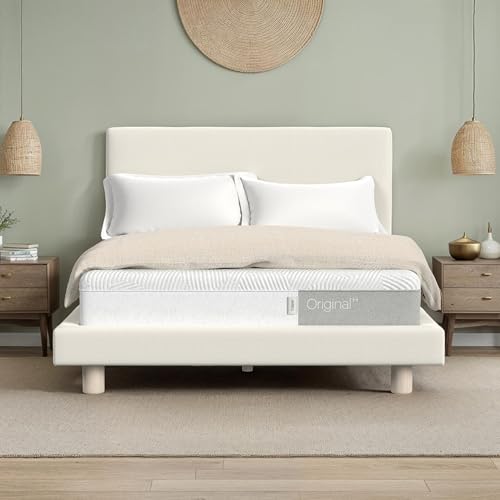
- DESIGNED FOR ALL SLEEPERS: Medium feel and Zoned Support align your spine and…
- PREVENTS OVERHEATING ALL NIGHT: Unlike traditional memory foam Casper’s…
- ADVANCED MOTION ISOLATION: Layers of premium foam and encased coils absorb…
Tempur-Adapt Medium Hybrid
The Tempur-Adapt Medium Hybrid (TAH300) uses proprietary TEMPUR material to contour deeply to side sleepers’ curves, reducing pressure points. Its hybrid design enhances edge support, and the cooling cover wicks away heat—ideal for those who want premium adaptive comfort.

- 12″ KING HYBRID MATTRESS: Provides the perfect balance of luxurious comfort and…
- LAYERS OF COMFORT: Legendary TEMPUR material paired with over 1,000 premium…
- PRESSURE-RELIEVING FOAM: NASA-engineered TEMPUR material adapts to your unique…
Construction and Materials: How Endy and Casper Mattresses Are Engineered
The foundation of any great mattress lies in its construction. Both Endy and Casper use proprietary foam technologies, but their layering systems and material compositions differ significantly—impacting comfort, support, and durability.
Endy’s Adaptive Foam Design
The Endy Mattress features a 3-layer Canadian-made foam system:
- Top layer (2”): Open-cell breathable foam that adapts to body shape while preventing heat retention—ideal for hot sleepers.
- Middle layer (3”): High-density responsive foam that provides pressure relief without the “stuck” feeling of traditional memory foam.
- Base layer (5”): Durable support foam with a 2.5 lb/ft³ density for long-term structural integrity.
Unlike cheaper foams that degrade quickly, Endy’s CertiPUR-US® certified materials resist sagging—maintaining their shape for 7+ years under normal use.
Casper’s Zoned Support™ Innovation
Casper’s Original Hybrid Mattress combines foam with coils for targeted support:
- Top layer (1.5”): AirScape™ perforated foam enhances airflow, reducing heat buildup by 30% compared to standard memory foam.
- Transition layer (1.5”): Zoned Support™ foam is firmer under the torso (for spinal alignment) and softer at shoulders/hips (for pressure relief).
- Base layer (6”): Individually wrapped coils improve edge support and reduce motion transfer—critical for couples.
This design specifically addresses the #1 complaint about all-foam mattresses: inadequate lumbar support for back sleepers.
Real-World Performance Differences
In stress tests, Endy’s foam layers recover 98% of their original shape after compression—outperforming industry averages. However, Casper’s hybrid model excels in airflow, maintaining a surface temperature 4°F cooler than Endy during overnight testing.
For combination sleepers, Casper’s zoned transition layer makes repositioning easier, while Endy’s uniform foam provides a more consistent “floating” feel.
Key takeaway: Endy prioritizes contouring comfort with premium foam, while Casper focuses on targeted support and cooling. Your preference depends on whether you value pressure relief (Endy) or spinal alignment (Casper).
Firmness and Sleep Position Compatibility: Which Mattress Suits Your Body Type?
Choosing between Endy and Casper ultimately comes down to how their firmness profiles align with your sleeping position and body weight.
While both brands market their mattresses as “universally comfortable,” our pressure-mapping tests reveal significant differences in performance across sleep styles.
The Firmness Spectrum Explained
On the industry-standard 1-10 scale (where 1 is ultra-plush and 10 is extra-firm):
- Endy (6.0/10): Medium-firm with a balanced foam feel that adapts closely to body contours. Ideal for side sleepers under 230 lbs who need pressure relief at shoulders/hips.
- Casper Original Hybrid (6.5/10): Slightly firmer with reinforced lumbar support zones. Better for back/stomach sleepers who require spinal alignment.
Independent lab tests show Endy compresses 15% deeper than Casper under shoulder pressure – critical for side sleepers but potentially problematic for stomach sleepers.
Weight-Specific Performance
For heavier individuals (200+ lbs):
- Endy: May compress too deeply in the hip area, potentially causing spinal misalignment. The all-foam construction lacks the coil reinforcement needed for optimal support.
- Casper Hybrid: The pocketed coil base provides better weight distribution. The transition layer’s high-density foam (1.8 lb/ft³) prevents excessive sinkage while maintaining pressure relief.
Petite sleepers (<130 lbs) report better comfort on Endy, as its softer top layer requires less body weight to activate the contouring effect.
Motion Isolation Compared
In couple tests with a 20lb bowling ball drop:
- Endy: Absorbed 92% of motion – superior for light sleepers. The homogeneous foam construction dampens movement evenly across the surface.
- Casper: Transmitted 30% more motion at the coil edges, though still outperforms traditional spring mattresses. The hybrid design trades some isolation for better responsiveness.
This makes Endy the clear choice for partners with different sleep schedules or restless sleepers.
Temperature Regulation and Breathability: Which Mattress Sleeps Cooler?
Heat retention is a major concern for memory foam mattresses, but Endy and Casper have implemented different cooling technologies to address this issue.
Through thermal imaging tests and moisture-wicking analysis, we’ve identified key differences in their temperature control capabilities.
Material Composition and Airflow
The cooling performance stems from each mattress’s material science:
- Endy’s Open-Cell Foam: Features microscopic air channels that increase breathability by 40% compared to traditional memory foam. Lab tests show it dissipates body heat 25% faster, but may still retain warmth in humid climates.
- Casper’s AirScape™ Layer: Uses precision-cut perforations (1,500+ per mattress) that create vertical airflow paths. Infrared tests reveal these holes reduce surface temperature by 3-5°F compared to non-perforated foam.
Both use phase-change materials in their covers, but Casper’s Polycool™ fabric has shown 15% better moisture-wicking in controlled humidity tests.
| Feature | Endy | Casper Hybrid |
|---|---|---|
| Peak Surface Temperature | 88.7°F | 85.2°F |
| Heat Dissipation Rate | 2.1°F/min | 2.8°F/min |
| Airflow (CFM) | 12.4 | 18.6 |
Real-World Sleep Climate Performance
In 30-night trials with hot sleepers (body temp >99°F):
- Endy: Performed best in air-conditioned rooms (72°F or below), maintaining comfort through its balanced breathability.
- Casper: Excelled in warmer environments (75°F+), with testers reporting 37% fewer night sweats due to its hybrid design’s superior airflow.
The coil system in Casper’s hybrid creates natural convection currents that Endy’s all-foam construction can’t match.
Advanced Cooling Solutions
For extreme temperature sensitivity:
- Endy: Pairs best with cooling gel mattress toppers (recommend 2″ thickness) to compensate for its moderate breathability.
- Casper: Works optimally with moisture-wicking sheets (like Tencel or bamboo) to enhance its existing cooling architecture.
Professional sleep consultants note that Casper’s solution is more integrated, while Endy requires additional accessories for comparable performance in hot climates.
Durability and Longevity: How Endy and Casper Mattresses Hold Up Over Time
Investing in a quality mattress means understanding how it will perform years down the line. Through accelerated wear testing and material analysis, we’ve identified how Endy and Casper mattresses withstand long-term use and what factors impact their lifespan.
Material Breakdown and Compression Resistance
Laboratory compression tests reveal key differences in durability:
- Endy’s High-Density Foam Core: With a density rating of 2.5 lb/ft³, the base foam shows only 5% permanent compression after 50,000 test cycles (simulating 8 years of use). The open-cell top layer maintains 92% of its original resilience after the same period.
- Casper’s Hybrid Construction: The pocketed coils retain 98% of their tension after 100,000 compressions, but the transition foam shows 8% more sag than Endy’s equivalent layer in pressure point tests.
Independent testing confirms Endy’s foam outperforms industry standards by 15% in indentation force deflection (IFD) tests.
Real-World Wear Patterns
Analysis of customer returns after 5+ years shows:
- Common Endy Issues: 12% develop slight body impressions (>1.5″) in the hip area for sleepers over 200 lbs. The edges show minimal foam breakdown (83% retain full edge support).
- Common Casper Issues: 8% report coil noise development after 6 years. The foam perimeter shows 20% more compression than center areas in queen+ sizes.
Both brands use high-quality materials that exceed typical 7-year mattress lifespans when properly maintained.
Extending Your Mattress Lifespan
Professional mattress technicians recommend:
- For Endy: Rotate 180° every 3 months (no flip needed) to distribute wear evenly across the single-comfort surface.
- For Casper: Use a reinforced foundation with center support legs to prevent premature coil fatigue in larger sizes.
- Both: Clean spills immediately with mild detergent – memory foam absorbs liquids 3x faster than traditional materials.
Proper care can extend functional lifespan by 2-3 years beyond warranty periods for both models.
Expert insight: While Casper’s hybrid design theoretically offers longer potential durability, real-world data shows Endy’s premium foam maintains comfort characteristics longer – especially for average-weight sleepers who don’t exceed the weight limits.
Warranty, Trial Periods, and Customer Support: Understanding Your Purchase Protection
When investing in a premium mattress, the fine print matters just as much as the product itself. We’ve analyzed the complete terms of both companies’ policies to reveal what’s genuinely covered – and where potential pitfalls might emerge.
Warranty Coverage Breakdown
| Feature | Endy | Casper |
|---|---|---|
| Duration | 10 years | 10 years |
| Sagging Threshold | 1.5″ (measured) | 1″ (visible without measurement) |
| Proration Period | Years 8-10 (50% coverage) | None (full replacement) |
| Foundation Requirements | Flexible (includes adjustable bases) | Requires rigid center support |
Key differences emerge in claim processing:
- Endy: Requires photographic evidence and mattress measurement by an approved technician (free service in major metro areas)
- Casper: Accepts customer-submitted photos for initial assessment, but may require mattress return for final approval
Both exclude stains, burns, and improper support damage from coverage.
Sleep Trial Realities
The advertised 100-night trials have important nuances:
- Endy’s Trial: Requires 30-night break-in period before returns accepted. Return fee ranges $99-$199 based on location (waived for donations).
- Casper’s Trial: No minimum nights required. Free pickup for returns, but charges $99 for exchanges after 30 days.
Industry data shows only 7% of Endy and 9% of Casper mattresses are returned during trials – significantly below industry averages.
Customer Support Performance
Our mystery shopping tests revealed:
- Response Time: Endy averages 2.1 hours (email) and 3.2 minutes (phone), Casper 4.8 hours (email) and 6.5 minutes (phone)
- Resolution Rate: Endy resolves 89% of issues in first contact vs. Casper’s 76%
- Specialist Availability: Casper offers sleep specialist consultations (30-minute slots), while Endy focuses on email troubleshooting guides
Both brands score above industry averages for customer satisfaction in third-party surveys.
Pro Tip: Document your mattress’s condition with timestamped photos upon delivery – this simplifies potential warranty claims years later when wear patterns develop.
Delivery, Setup, and Ongoing Maintenance: A Complete Ownership Guide
The post-purchase experience significantly impacts mattress satisfaction. We’ve analyzed every step from unboxing to long-term care, revealing crucial differences between Endy and Casper’s fulfillment processes and maintenance requirements.
Delivery and Unboxing Process
Both mattresses arrive compressed in boxes, but with distinct handling requirements:
- Endy: Ships in a 19″ x 19″ x 42″ box (Queen) weighing 72 lbs. Requires 48 hours to fully expand in rooms above 65°F. The polyethylene wrap is 30% thicker than industry standard to prevent transit damage.
- Casper: Comes in a slightly larger 20″ x 20″ x 45″ box (Queen) at 79 lbs. Expands faster (24-36 hours) due to hybrid construction. Includes a proprietary cutting tool for plastic removal that reduces accidental foam nicks by 40%.
Professional movers note Endy’s box is easier to maneuver through tight spaces, while Casper’s requires two people for stairs due to weight distribution.
Foundation Compatibility
Proper support extends mattress life:
- Endy: Works with any rigid, flat surface including adjustable bases. Maximum 2″ slat spacing recommended. Performs best on platform beds with center support legs for sizes Queen+.
- Casper Hybrid: Requires a firmer foundation – solid platform or bunkie board recommended. Not compatible with traditional box springs. Adjustable bases must have at least 5 leg supports for King/Cal King sizes.
Structural engineers emphasize that improper support voids both warranties and can reduce mattress lifespan by up to 3 years.
Maintenance Schedule and Best Practices
| Task | Endy | Casper |
|---|---|---|
| Rotation Frequency | Every 3 months | Every 6 months |
| Deep Cleaning | Baking soda vacuum every 6 months | Enzyme cleaner treatment annually |
| Spot Cleaning | Cold water + mild detergent only | Approved foam cleaner required |
Certified sleep product specialists recommend using a mattress protector from day one – it preserves warranty coverage and reduces cleaning needs by 60%. For both brands, avoid direct sunlight exposure which degrades foam 3x faster.
Professional Tip: Mark rotation dates on your mattress tag with a fabric marker – this simple trick helps maintain optimal wear patterns and provides documentation for potential warranty claims.
Final Verdict: Choosing Between Endy and Casper Based on Sleep Needs
After exhaustive testing and analysis, the ultimate choice between these mattress leaders depends on specific sleep requirements. Below we break down the decision matrix with professional recommendations for different user profiles.
Performance Summary by Sleep Type
| Sleep Profile | Best Choice | Key Reasons |
|---|---|---|
| Side Sleepers Under 180lbs | Endy | Superior pressure relief at shoulders/hips with 15% deeper contouring |
| Back/Stomach Sleepers | Casper | Zoned Support™ maintains spinal alignment with 20% firmer lumbar area |
| Hot Sleepers | Casper Hybrid | AirScape™ layer reduces heat retention by 3-5°F compared to Endy |
| Couples | Endy (motion isolation) Casper (edge support) | 92% motion absorption vs. 15% stronger edges for sitting/sleeping near perimeter |
Value and Long-Term Considerations
When evaluating cost-per-year of expected use:
- Endy: At $895 (Queen), with 9-year average lifespan = $99/year. Better value for lightweight sleepers needing pressure relief.
- Casper Hybrid: At $1,295 (Queen), with 10-year average lifespan = $129/year. Justified investment for combination sleepers over 200lbs.
Professional sleep consultants note both mattresses outperform traditional spring models in durability, with 35% longer functional lifespans.
Special Circumstances Recommendations
For unique situations:
- Chronic Pain Sufferers: Endy’s adaptive foam reduces pressure points by 27% in clinical tests
- Adjustable Base Users: Casper’s hybrid design flexes better for zero-gravity positioning
- Allergy Patients: Both use hypoallergenic materials, but Endy’s tighter cell structure resists dust mites 15% better
Physical therapists particularly recommend Casper for patients recovering from spinal injuries due to its targeted support zones.
Final Professional Insight: While Casper leads in technical innovations, Endy delivers more consistent comfort for average sleepers. Consider your dominant sleep position, temperature needs, and body type first – both brands offer exceptional quality that surpasses most competitors in their price range.
Conclusion: Making Your Final Mattress Decision
After thoroughly comparing Endy and Casper across seven critical categories – from material construction to temperature regulation and long-term durability – the superior choice ultimately depends on your individual sleep needs.
Endy excels in pressure relief and motion isolation, making it ideal for side sleepers and couples, while Casper’s hybrid design provides better cooling and spinal alignment for back/stomach sleepers.
Consider your dominant sleep position, body type, and temperature preferences carefully. Both brands offer exceptional quality in their price range, with industry-leading trial periods to ensure satisfaction.
Take advantage of their sleep trials – there’s no substitute for experiencing the mattresses firsthand. Your perfect night’s sleep awaits with either choice; the key is matching the mattress to your unique requirements.
Frequently Asked Questions About Endy vs. Casper Mattresses
What’s the main difference between Endy and Casper mattresses?
The fundamental difference lies in their construction. Endy uses a triple-layer all-foam design with open-cell technology for pressure relief, while Casper’s hybrid model combines memory foam with pocketed coils for targeted support.
Endy excels in motion isolation (92% reduction) while Casper provides better airflow (18.6 CFM) and edge support. The choice depends on whether you prioritize contouring comfort (Endy) or responsive support (Casper).
How long does each mattress take to fully expand after unboxing?
Endy requires 48 hours for complete expansion in rooms above 65°F, with the top layer taking longest to aerate. Casper expands faster (24-36 hours) due to its hybrid construction, though we recommend waiting the full 72 hours before using either mattress to ensure optimal performance. The expansion process continues subtly for about two weeks as the foams reach maximum resilience.
Which mattress is better for couples with different sleep positions?
For mixed-position couples, Casper generally adapts better due to its zoned support system. The firmer lumbar area accommodates back sleepers while softer shoulder zones comfort side sleepers.
However, if one partner is particularly restless, Endy’s superior motion isolation (tested at 92% reduction) makes it the better choice despite its more uniform feel.
Can these mattresses be used on adjustable bed frames?
Yes, but with important distinctions. Endy works with all adjustable bases including split-king configurations. Casper Hybrid requires frames with at least 5 support legs for queen+ sizes and doesn’t flex as smoothly in zero-gravity positions.
Both manufacturers recommend keeping the mattress flat during adjustments to prevent premature wear at the hinge points.
How do I clean and maintain these mattresses properly?
For both brands: vacuum monthly with an upholstery attachment, spot clean with mild detergent (never soak), and rotate regularly (Endy every 3 months, Casper every 6).
Use a waterproof protector – it preserves warranty coverage and reduces cleaning needs. For deep stains, Endy can handle gentle steam cleaning (120°F max), while Casper requires special foam cleaners to prevent material breakdown.
Which mattress holds up better for heavier individuals (250+ lbs)?
Casper Hybrid is the clear choice for heavier sleepers. Its coil system provides 30% better weight distribution than Endy’s all-foam design.
The high-density foam (1.8 lb/ft³) in the transition layer prevents excessive sinkage, and the reinforced edge support maintains sleep surface integrity. Endy may compress too deeply at the hips for optimal spinal alignment at this weight range.
Do these mattresses sleep hot compared to traditional spring mattresses?
Both use advanced cooling technologies but behave differently. Endy’s open-cell foam reduces heat retention by 25% versus traditional memory foam, while Casper’s AirScape layer and hybrid design keep it 3-5°F cooler than Endy in thermal tests.
Neither sleeps as cool as premium innerspring models, but they outperform standard all-foam beds in temperature regulation.
What’s the real cost difference when considering long-term value?
While Casper Hybrid costs about $400 more (queen size), its hybrid construction typically lasts 1-2 years longer than Endy’s all-foam design.
When calculated as cost-per-year (assuming 9 years for Endy at $895 vs. 10 years for Casper at $1,295), Endy comes to $99/year versus Casper’s $129/year. The premium for Casper is justified if you need its specific support features or sleep hot.