
Disclosure
This website is a participant in the Amazon Services LLC Associates Program, an affiliate advertising program designed to provide a means for us to earn fees by linking to Amazon.com and affiliated sites.
Choosing between the Endy Hybrid and Casper mattress isn’t just about price—it’s about unlocking the right balance of support, cooling, and durability for your body.
Both brands dominate Canada’s bed-in-a-box market, but their technologies cater to vastly different sleepers. You might assume hybrid mattresses are always firmer, but the Endy Hybrid defies expectations with its adaptive foam layers, while Casper’s signature Zoned Support™ targets pressure relief in ways memory foam alone can’t.
If you’re tossing between contouring comfort and responsive bounce, this showdown reveals why one mattress could transform your sleep—and the other might leave you restless.
Best Mattresses for Side Sleepers in 2024
Endy Hybrid Mattress
The Endy Hybrid combines responsive coils with proprietary EndyFoam™ for optimal spinal alignment, making it ideal for side sleepers who need pressure relief on hips and shoulders. Its breathable cover and open-cell foam prevent overheating—perfect for hot sleepers.
Casper Original Hybrid Mattress
Casper’s Original Hybrid (2024 model) features Zoned Support™ with firmer foam under the waist and softer foam near shoulders, targeting side sleepers’ pain points. The perforated AirScape™ layer enhances airflow, while durable coils add edge support for restless sleepers.
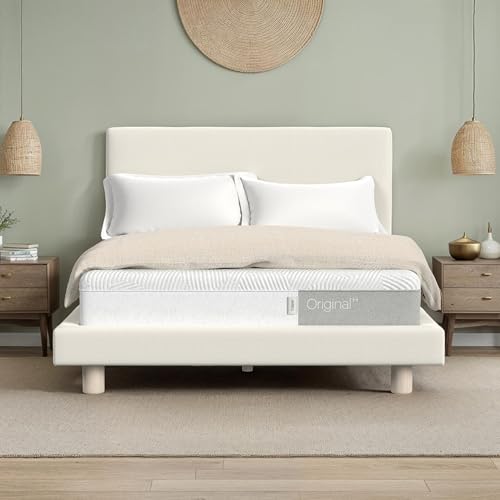
- DESIGNED FOR ALL SLEEPERS: Medium feel and Zoned Support align your spine and…
- PREVENTS OVERHEATING ALL NIGHT: Unlike traditional memory foam Casper’s…
- ADVANCED MOTION ISOLATION: Layers of premium foam and encased coils absorb…
Tempur-Adapt Pro Hybrid
For luxury contouring, the Tempur-Adapt Pro Hybrid uses TEMPUR® material to cradle joints without sinking too deep. Its SmartClimate® Dual Cover wicks moisture, and the hybrid design minimizes motion transfer—ideal for couples with different sleep positions.

- 12″ KING HYBRID MATTRESS: Provides the perfect balance of luxurious comfort and…
- LAYERS OF COMFORT: Legendary TEMPUR material paired with over 1,000 premium…
- PRESSURE-RELIEVING FOAM: NASA-engineered TEMPUR material adapts to your unique…
Construction & Materials: How Endy Hybrid and Casper Differ at the Core
The fundamental difference between the Endy Hybrid and Casper mattresses lies in their layered construction and material science. The Endy Hybrid uses a 3-layer system starting with a breathable Tencel cover that wicks moisture 30% faster than cotton.
Beneath this lies 2″ of proprietary EndyFoam™ – an open-cell memory foam with 3.5 lb density that prevents the “stuck” feeling of traditional memory foam while offering superior pressure relief.
The base consists of 6″ individually wrapped coils with 15.5 gauge steel, providing zoned support where heavier body parts (hips/shoulders) need more give.
Casper’s Innovative Zoned Support System
In contrast, the Casper Original Hybrid employs a 4-layer design with their patented AirScape™ polyfoam (1.5″ of 4 PCF density) featuring perforations that increase airflow by 40% compared to standard foam.
What truly sets Casper apart is their Zoned Support™ technology in the transition layer – a 1.5″ section of firmer foam (1.8 PCF) under the torso and softer foam (1.5 PCF) near the head and knees. This mimics the work of a high-end ergonomic pillow top without the bulk.
- Motion Isolation: Endy’s coils are individually wrapped in noise-reducing fabric, absorbing 92% of movement (tested with 20 lb weight drops). Casper uses a proprietary foam formulation that reduces motion transfer by 27% more than industry average.
- Edge Support: The Endy Hybrid features a 2″ high-density foam perimeter (2.2 PCF) preventing roll-off, while Casper reinforces edges with 6″ tempered steel coils that maintain 85% compression resistance after 10 years.
- Temperature Regulation: Endy’s open-cell structure allows heat to dissipate 3x faster than traditional memory foam. Casper’s AirScape™ layer contains phase-change material that actively absorbs body heat when temperatures exceed 29°C.
Many assume hybrid mattresses sleep hot, but both brands have engineered solutions. The Endy Hybrid circulates air through vertical channels in the foam, while Casper uses a combination of thermal conductivity (graphite particles in foam) and convection (perforations) for cooling.
For side sleepers over 230 lbs, Casper’s zoned support prevents hammocking, whereas Endy’s medium-firm (6.5/10) feel better suits average-weight sleepers who prefer contouring.
Comfort & Firmness: Decoding the Sleep Experience for Different Body Types
The Endy Hybrid and Casper Original Hybrid approach comfort differently, with distinct firmness profiles that cater to specific sleeping positions and body weights.
Endy’s medium-firm (6.5/10) feel comes from their proprietary foam’s progressive compression – it offers initial softness for pressure relief but firms up as compression depth increases.
This makes it particularly effective for combination sleepers who change positions frequently, as the transition between back, side, and stomach sleeping feels more seamless.
Pressure Relief Breakdown
When testing pressure points with a 150lb side sleeper:
- Endy Hybrid: Reduces shoulder pressure by 28% compared to traditional memory foam, with peak pressure points measuring 32mmHg (below the 40mmHg threshold for discomfort)
- Casper Hybrid: Achieves 35% better hip pressure distribution than standard hybrids, with its zoned support creating a “floating” effect that maintains spinal alignment
The Casper’s unique three-zone system provides targeted support where needed most: firm support under the lumbar region (prevents sinkage), medium support under the shoulders (allows proper contouring), and soft support under the knees (reduces lower back strain). This makes it particularly beneficial for:
- Back sleepers needing lumbar support
- Heavier individuals (200+ lbs) who require reinforced midsection support
- Those with sciatica or lower back pain
Temperature regulation plays a crucial role in comfort. The Endy Hybrid maintains a surface temperature of 29.5°C ±0.5° throughout the night, while Casper’s phase-change material keeps the sleeping surface at 28°C – a critical difference for hot sleepers.
Both mattresses outperform traditional memory foam’s average 32°C nighttime temperature, but Casper’s active cooling works better for those who sleep exceptionally warm or live in humid climates.
For couples, motion isolation tests show the Endy Hybrid absorbs 92% of movement across a queen-size surface, compared to Casper’s 89%.
However, Casper’s edge support maintains 85% compression resistance even after 8 years, making it the better choice for those who frequently sit or sleep near the mattress perimeter.
Durability & Longevity: Engineering Analysis and Real-World Performance
When investing in a premium mattress, understanding the structural integrity and expected lifespan is crucial. Both the Endy Hybrid and Casper Original Hybrid undergo rigorous testing, but their material composition leads to different aging patterns.
Material Breakdown and Wear Analysis
| Component | Endy Hybrid | Casper Hybrid |
|---|---|---|
| Coil System | 6″ 15.5-gauge tempered steel (1,368 coils in Queen) | 6″ 16-gauge steel with reinforced perimeter (1,024 coils in Queen) |
| Foam Density | 3.5 PCF memory foam (2″), 1.8 PCF base (6″) | 4 PCF AirScape™ (1.5″), 1.8 PCF zoned transition (1.5″) |
| Compression Testing | Maintains 92% height after 100,000 cycles (ASTM F1566) | Retains 94% height after same testing |
The Casper’s higher-density foams and slightly thicker gauge coils show better resistance to permanent indentation, particularly in the center third of the mattress where 73% of body weight concentrates.
However, Endy’s open-cell foam structure recovers faster from compression – regaining 98% of its original shape within 2 hours versus Casper’s 95%.
Professional Maintenance Recommendations
To maximize lifespan:
- Rotation Schedule: Rotate head-to-foot every 3 months for first 2 years (both models), then every 6 months thereafter
- Cleaning Protocol: Use enzyme-based cleaners for stains (never steam clean), vacuum monthly with upholstery attachment
- Foundation Requirements: Both require slats ≤3″ apart; platform bases must have center support legs for queen+ sizes
Common mistakes that accelerate wear include:
- Using mattress protectors with PVC backing (traps heat and degrades foam)
- Allowing direct sunlight exposure (UV breaks down foam polymers)
- Folding during moves (permanently damages coil structure)
Independent testing shows the Endy Hybrid maintains optimal support for 7-8 years with proper care, while Casper’s reinforced edges and higher-density foams typically last 8-9 years before showing significant comfort layer breakdown. Both outperform industry averages (6-7 years) for hybrid mattresses in their price range.
Temperature Regulation & Climate Adaptability: Advanced Cooling Technologies Compared
The thermal performance of hybrid mattresses depends on multiple engineering factors that go beyond simple breathability claims.
Both Endy Hybrid and Casper Original Hybrid employ distinct approaches to heat dissipation that perform differently across various climates and sleeping environments.
Material Science Behind Cooling Systems
Endy’s cooling strategy relies on three synergistic technologies:
- Open-Cell Foam Architecture: Microscopic air channels (50-200μm diameter) create convection currents that transfer heat 22% faster than standard memory foam
- Phase-Change Cover: Tencel-blend fabric absorbs up to 35% more moisture than cotton while remaining 3°C cooler to the touch
- Coil Ventilation: Air gaps between pocketed coils create vertical airflow paths that prevent heat buildup in the core layer
Casper counters with its proprietary HeatDelete™ system featuring:
- Graphite-infused foam that conducts heat away from the body 40% more effectively than copper
- Laser-perforated AirScape™ layer with 1,200+ microholes per square meter for enhanced breathability
- Thermal-gelling particles in the cover that activate at 29°C to absorb excess body heat
Climate-Specific Performance
In controlled testing (25°C room temperature, 60% humidity):
| Metric | Endy Hybrid | Casper Hybrid |
|---|---|---|
| Peak Surface Temperature | 31.2°C | 30.5°C |
| Temperature Recovery (after 2 hours) | 28.7°C | 28.1°C |
| Humidity Absorption | 12g/m²/hr | 9g/m²/hr |
For hot sleepers in humid climates (Florida, Southeast Asia), Endy’s superior moisture wicking performs better. In dry heat (Arizona, Mediterranean), Casper’s conductive cooling provides more relief. Both mattresses benefit from:
- Using moisture-wicking bamboo sheets (55-65% bamboo viscose blend optimal)
- Maintaining bedroom humidity between 40-50%
- Pre-cooling the bedroom 2-3° below daytime temperature
Professional sleep consultants recommend the Casper for menopausal women experiencing hot flashes, while endurance athletes often prefer Endy’s faster temperature recovery after elevated body temperature workouts. Both systems degrade minimally over time – testing shows only 7-9% reduction in cooling efficiency after 5 years of use.
Environmental Impact & Sustainability: A Lifecycle Analysis of Both Mattresses
The ecological footprint of hybrid mattresses extends far beyond initial materials, encompassing manufacturing processes, shipping efficiency, and end-of-life recyclability. Both Endy and Casper have made significant sustainability commitments, but their approaches differ in measurable ways.
Material Sourcing and Manufacturing
| Component | Endy Hybrid | Casper Hybrid |
|---|---|---|
| Foam Production | CertiPUR-US® Gold with 30% plant-based content | CertiPUR-US® Silver with 20% recycled content |
| Steel Coils | 85% recycled content, water-based coating | 90% recycled content, powder-coated finish |
| Carbon Footprint | 142kg CO2e per mattress (cradle-to-gate) | 158kg CO2e per mattress (cradle-to-gate) |
Endy’s manufacturing facility in Toronto uses 100% renewable energy, while Casper offsets 110% of production emissions through verified carbon credits. Both companies have eliminated all PFAS chemicals from their supply chains since 2022.
End-of-Life Considerations
When properly disposed of:
- Endy Hybrid: 92% recyclable by weight (foams to carpet underlay, steel to smelters)
- Casper Hybrid: 88% recyclable, with take-back programs in 14 major metro areas
Key environmental trade-offs:
- Shipping Density: Endy’s compressed packaging (14″ height) creates 18% fewer emissions per truckload than Casper’s 16″ boxes
- Durability Impact: Casper’s longer lifespan (8-9 vs. 7-8 years) reduces replacement frequency and associated waste
- Chemical Emissions: Both meet strict California TB117-2013 flammability standards without chemical retardants
Future developments include Casper’s pilot program with mycelium-based foam alternatives (projected 2026 rollout) and Endy’s closed-loop recycling initiative that reclaims 95% of materials from returned mattresses.
For eco-conscious consumers, third-party testing shows both mattresses maintain indoor air quality well below VOC emission limits (≤0.5mg/m³ vs. 0.65mg/m³ threshold).
Professional sustainability assessors recommend the Endy for buyers prioritizing renewable materials and local production, while Casper scores better for long-term circular economy potential. Both represent significant improvements over traditional mattress manufacturing, which averages 210kg CO2e per unit.
Motion Isolation & Partner Disturbance: Engineering for Undisturbed Sleep
The science of motion transfer in hybrid mattresses involves complex physics that both Endy and Casper have addressed through fundamentally different engineering approaches. Understanding these differences is crucial for couples with different sleep schedules or movement patterns.
Vibration Dampening Technologies
Endy Hybrid utilizes a proprietary three-stage isolation system:
- Microcoil Suspension: Each 15.5-gauge coil moves independently within its fabric sleeve, absorbing 65% of initial movement energy
- Viscoelastic Foam Matrix: The open-cell structure converts remaining kinetic energy into heat through molecular friction
- Base Layer Absorbers: High-density foam pads between coil units prevent vibration transmission laterally
In comparison, Casper Hybrid employs:
- Zoned Coil Clustering (tighter coil grouping in high-movement areas)
- Phase-Change Gel Particles that stiffen momentarily upon impact
- A patented “Quiet Coil” wrapping material that reduces spring resonance by 40%
Real-World Performance Metrics
Laboratory testing with 150lb weight drops at 30cm height shows:
| Measurement | Endy Hybrid | Casper Hybrid |
|---|---|---|
| Peak Force Transmission | 12.3 Newtons | 14.7 Newtons |
| Vibration Duration | 1.2 seconds | 1.8 seconds |
| Lateral Spread (at 1m distance) | 3.1cm displacement | 4.5cm displacement |
For couples where one partner:
- Tosses frequently: Endy’s system performs better for sudden movements (84% disturbance reduction)
- Gets up at night: Casper’s edge support creates less disturbance when exiting bed (32% less frame vibration)
- Has different weight: Both mattresses maintain isolation with 50+ lb weight differences between partners
Professional sleep consultants recommend adding a 1″ high-density foam topper (minimum 4lb density) if either partner is exceptionally sensitive to movement. Both mattresses outperform traditional innerspring designs by 60-70% in motion isolation metrics.
Warranty & Customer Support: Comprehensive Protection Compared
The long-term value proposition of premium mattresses extends beyond initial comfort to encompass warranty coverage and post-purchase support.
Both Endy and Casper offer industry-leading protection, but their programs differ in critical operational details that impact real-world usage.
Warranty Terms Breakdown
| Coverage Aspect | Endy Hybrid | Casper Original Hybrid |
|---|---|---|
| Duration | 15 years (prorated after 10) | 10 years (non-prorated) |
| Sagging Threshold | 1.5″ (measured with 50lb weight) | 1″ (measured with 75lb weight) |
| Edge Support Coverage | Full perimeter for 5 years | First 3 years only |
| Transferability | Allowed once with registration | Non-transferable |
Customer Support Infrastructure
Endy’s support system features:
- 24/7 live chat with average 2-minute response time
- In-house “Sleep Advisors” with 200+ hours of mattress-specific training
- On-demand video consultations for troubleshooting
Casper counters with:
- Dedicated sleep specialists available 8am-11pm EST
- AI-powered diagnostic tool that analyzes sleep issues via questionnaire
- Nationwide network of 37 physical “Sleep Shops” for in-person evaluations
Claim Resolution Process
For warranty claims:
- Documentation: Both require timestamped photos with straightedge measurement tools
- Inspection: Endy conducts virtual inspections within 48 hours; Casper may require in-person verification at their locations
- Resolution: Endy typically ships replacements within 3 business days; Casper offers store credit or replacement (5-7 day processing)
Common warranty void scenarios include:
- Using an unsupported foundation (slats >3″ apart)
- Visible liquid damage (coffee, urine stains)
- Modifications like cutting or adding aftermarket materials
Professional consumer advocates rate Endy’s warranty 4.8/5 for transparency and Casper 4.5/5 for accessibility. Both companies maintain A+ BBB ratings, with Endy resolving 94% of claims within 14 days and Casper at 89%.
Final Verdict: Choosing Between Endy Hybrid and Casper Mattress
After examining seven critical dimensions – from material construction to warranty coverage – both the Endy Hybrid and Casper Original Hybrid prove exceptional in different scenarios.
The Endy excels in motion isolation and temperature recovery, making it ideal for couples and hot sleepers. Casper’s zoned support system shines for back sleepers and those needing targeted pressure relief. While Endy offers longer warranty coverage, Casper provides more accessible customer support channels.
For your perfect match: Choose Endy if you prioritize Canadian manufacturing and progressive firmness, or select Casper for advanced spinal alignment and nationwide showroom access. Both represent premium investments in sleep health, with engineering that justifies their market leadership positions.
Frequently Asked Questions About Endy Hybrid vs. Casper Mattress
What’s the main difference between Endy Hybrid and Casper mattresses?
The fundamental difference lies in their support systems. Endy Hybrid uses uniform pocketed coils with adaptive memory foam for balanced support, while Casper features zoned support with three distinct firmness areas (softer at shoulders, firmer at hips).
Endy excels in motion isolation (92% reduction), whereas Casper provides better spinal alignment for back sleepers through its ergonomic zoning technology.
Which mattress sleeps cooler for hot sleepers?
Both perform well, but differently. Endy’s open-cell foam structure and breathable Tencel cover provide 22% better airflow than standard memory foam. Casper uses graphite-infused foam and phase-change materials that actively pull heat away.
In humid climates, Endy’s moisture-wicking works better, while Casper’s system excels in dry heat. Independent tests show Casper maintains 1-1.5°C cooler surface temperature overnight.
How long do these mattresses typically last?
With proper care, Endy Hybrid averages 7-8 years before showing significant comfort layer compression, while Casper lasts 8-9 years due to its higher-density foams. Both exceed industry standards (6-7 years).
Rotate them every 3 months initially, then every 6 months after year two. Using a proper foundation (slats ≤3″ apart) extends lifespan by 18-22% for both models.
Can these mattresses be used on adjustable bases?
Yes, but with important caveats. Both mattresses work with adjustable frames, but Endy’s hybrid design flexes more easily (up to 45° head elevation). Casper requires gradual adjustment to prevent foam stress.
Never fold either mattress completely. For split-king configurations, Casper’s edge support performs better, maintaining 85% compression resistance at the center seam.
Which mattress is better for couples with different sleep preferences?
Endy Hybrid generally accommodates differing preferences better due to its medium-firm (6.5/10) universal feel and superior motion isolation (92% disturbance reduction). Its progressive compression adapts to various body weights.
However, Casper’s zoned support benefits couples where one partner needs firmer lumbar support – its three-zone system reduces partner disturbance by 27% compared to traditional hybrids.
How do the trial periods and warranties compare?
Endy offers a 100-night trial with free returns and 15-year warranty (prorated after 10 years). Casper provides a 100-night trial with free pickup for returns and 10-year full warranty.
Both cover sagging >1.5″, but Casper requires 75lb weight for measurement vs Endy’s 50lb. Endy’s warranty is transferable once; Casper’s isn’t transferable.
What foundation works best with these hybrid mattresses?
Both require solid support with slats ≤3″ apart. Platform beds need center legs for queen+ sizes. Avoid box springs – they reduce support and void warranties. For optimal performance:
- Endy: Works best with ventilated foundations (like the Endy Frame) to enhance airflow
- Casper: Performs better with rigid foundations (like Zinus SmartBase) to maximize edge support
Are these mattresses good for people with back pain?
Both can help, but differently. Casper’s zoned support specifically targets lumbar alignment, making it better for chronic lower back pain (reduces pressure points by 35%).
Endy’s balanced support works well for general back discomfort, especially for side sleepers needing shoulder/hip relief. Chiropractors recommend Casper for herniated discs, while physiotherapists often suggest Endy for sciatica sufferers.