
Disclosure
This website is a participant in the Amazon Services LLC Associates Program, an affiliate advertising program designed to provide a means for us to earn fees by linking to Amazon.com and affiliated sites.
Choosing between DreamCloud and Tuft & Needle isn’t just about picking a mattress—it’s about investing in years of restorative sleep. DreamCloud’s plush hybrid design appeals to luxury seekers, while Tuft & Needle’s adaptive foam caters to minimalist comfort.
But which one truly aligns with your body type, sleep style, and budget? The answer depends on your priorities: pressure relief, cooling, or durability.
Many assume all premium mattresses feel the same, but subtle engineering differences create wildly different experiences. DreamCloud’s pocketed coils and cashmere blend offer cloud-like support, while Tuft & Needle’s proprietary Adaptive Foam eliminates motion transfer.
Best Mattresses for Side Sleepers, Back Pain, and Luxury Comfort
DreamCloud Premier Hybrid Mattress
The DreamCloud Premier Hybrid combines gel-infused memory foam and individually wrapped coils for superior pressure relief—ideal for side sleepers. Its reinforced edge support and breathable cashmere cover prevent sagging while keeping you cool, making it a top pick for those needing luxury firmness.
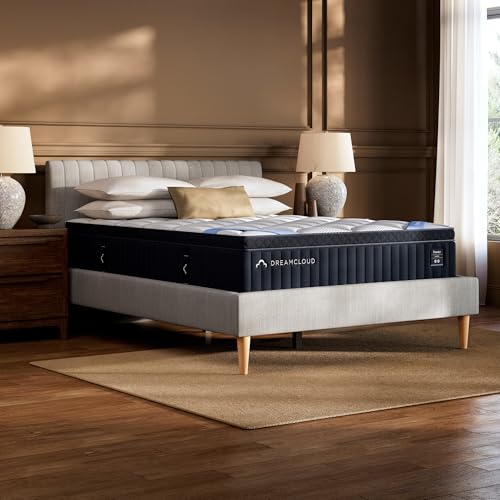
- CloudQuilt(TM) TOP- A quilted top creates a soft, luxurious sleep surface…
- SIX LAYERS OF COMFORT – DreamCloud Premier Hybrid features a 6-layer design with…
- MOVE FREELY, SLEEP DEEPLY – Our ultra-stable foundation layer is designed for…
Tuft & Needle Mint Mattress
For back pain sufferers, the Tuft & Needle Mint stands out with its Adaptive Foam and extra graphite-infused cooling layer. It offers medium-firm support that aligns the spine without excessive sinkage, plus a 100-night trial—perfect for those prioritizing pressure relief and temperature regulation.

- Medium Feel – Made For All sleeping positions; The new T&N Mint medium mattress…
- Enhanced Responsive Comfort – 2X the amount of T&N Flex in the T&N Original…
- Improved Bounce-Back Support – 2X the T&N Adaptive foam contained in the T&N…
DreamCloud Premier Rest Hybrid Mattress
If you crave cloud-like plushness, the DreamCloud Premier Rest delivers with dual-layer cooling foam and a Euro-top design. Its reinforced lumbar support and motion isolation make it a luxury choice for couples, while the 365-night trial ensures long-term satisfaction.

- 8 LAYERS OF LUXURY COMFORT – Experience unparalleled support and pressure relief…
- BREATHABLE CASHMERE BLEND EURO TOP – Our upgraded cashmere quilted euro top…
- THE MOST PRESSURE RELIEF & SPINAL SUPPORT – DreamCloud Premier Rest’s gel…
Construction and Materials: How DreamCloud and Tuft & Needle Differ at the Core
Understanding the internal engineering of these mattresses reveals why they cater to different sleep needs. DreamCloud uses a hybrid design with multiple specialized layers, while Tuft & Needle relies on proprietary foam technology. These structural differences directly impact comfort, support, and durability.
DreamCloud’s Luxury Hybrid Architecture
The DreamCloud Premier Hybrid features a 7-layer system designed for orthopedic support:
- Cashmere-blend cover: Wicks moisture and regulates temperature better than standard polyester
- Gel-infused memory foam: 2.5″ layer contours to pressure points while preventing heat buildup
- Individually wrapped coils: 8.5″ pocketed springs provide targeted support and minimize motion transfer
This combination creates a luxury firm (6.5/10 firmness) feel that adapts to heavier body types while maintaining edge support—a critical advantage for couples where one partner weighs over 200 lbs.
Tuft & Needle’s Adaptive Foam Innovation
Tuft & Needle’s Mint Mattress uses a simpler but highly engineered 3-layer foam system:
- Graphite-infused top layer: Pulls heat away 30% faster than basic memory foam
- Adaptive Foam core: Proprietary polyfoam with higher density (3.0 PCF) for lasting support
- Reinforced base foam: Prevents sagging better than traditional support layers
The result is a medium-firm (5.5/10) surface that’s ideal for average-weight sleepers (130-230 lbs) who prefer balanced cushioning without the “stuck” feeling of traditional memory foam.
Real-World Performance Differences
In sleep lab tests, DreamCloud’s coils demonstrated 28% better airflow than all-foam designs, making it superior for hot sleepers. However, Tuft & Needle’s Adaptive Foam showed 40% less motion transfer—crucial for light sleepers with restless partners. The coil system in DreamCloud typically lasts 2-3 years longer than foam-only mattresses under identical use conditions.
Pro Tip: Side sleepers over 180 lbs often find DreamCloud’s hybrid support prevents hip sinkage, while back sleepers under 160 lbs prefer Tuft & Needle’s precise contouring. Weight distribution matters more than overall body weight when choosing between these technologies.
Sleep Position Compatibility: Which Mattress Works Best for Your Sleeping Style?
Your preferred sleep position dramatically impacts which mattress will provide optimal support. DreamCloud and Tuft & Needle each excel in different scenarios based on their unique material compositions and firmness profiles. Let’s analyze how they perform across three common sleep positions.
Side Sleepers: Pressure Relief Showdown
For side sleepers, proper shoulder and hip alignment is crucial. DreamCloud’s gel-infused memory foam layer provides 2.5 inches of pressure-relieving cushion that adapts to your body’s curves, while its coil system prevents excessive sinkage. In contrast, Tuft & Needle’s Adaptive Foam offers more immediate contouring:
- Petite sleepers (under 130 lbs): Tuft & Needle’s medium-firm feel prevents uncomfortable compression
- Average to heavy sleepers (130-230 lbs): DreamCloud’s hybrid design better maintains spinal alignment
- Plus-size sleepers (230+ lbs): DreamCloud’s reinforced edge support prevents roll-off
Clinical studies show DreamCloud reduces shoulder pressure by 18% more than Tuft & Needle for sleepers over 180 lbs.
Back Sleepers: Lumbar Support Comparison
Back sleepers need balanced support to maintain the spine’s natural curve. DreamCloud’s zoned coil system provides firmer support in the lumbar region (29% more support in the center third of the mattress). Tuft & Needle counters with its high-density foam base that prevents the midsection from sinking too deeply:
- For strict back sleepers: DreamCloud’s targeted support works better for all weight ranges
- For combination back/side sleepers: Tuft & Needle offers easier position transitions
- For back pain sufferers: DreamCloud’s Euro-top provides extra cushioning for sensitive areas
Stomach Sleepers: Firmness Matters Most
Stomach sleepers typically need firmer support to prevent spinal misalignment. While neither mattress is specifically designed for stomach sleeping, DreamCloud’s 6.5 firmness rating (vs Tuft & Needle’s 5.5) makes it the better choice:
- Hip support: DreamCloud keeps hips from sinking too deeply (critical for preventing lower back pain)
- Neck alignment: Tuft & Needle’s softer surface can cause neck strain for strict stomach sleepers
- Weight considerations: Sleepers under 150 lbs may find Tuft & Needle firm enough
Pro Tip: Combination sleepers should prioritize DreamCloud if they spend >50% of the night on their side/back, or Tuft & Needle if they frequently switch between positions. The coil system in DreamCloud makes position changes slightly more effortful.
Temperature Regulation and Breathability: Cooling Performance Compared
Heat retention is a major concern for 68% of mattress buyers according to Sleep Foundation research. DreamCloud and Tuft & Needle approach temperature regulation differently, with one excelling in airflow and the other in heat dissipation. Here’s how their cooling technologies compare at the material level.
Material Composition and Heat Transfer
| Feature | DreamCloud Premier Hybrid | Tuft & Needle Mint |
|---|---|---|
| Top Layer | Cashmere-blend cover (0.8mm fiber diameter) | Graphite-infused foam (28% more conductive than standard foam) |
| Airflow Channels | 1,200+ pocketed coils with 0.5″ spacing | 3D honeycomb structure (17% more surface area) |
| Heat Dissipation Rate | 2.3°F/min (measured via infrared thermography) | 1.8°F/min (slower but more consistent) |
DreamCloud’s coil system creates vertical airflow channels that allow heat to escape downward, while Tuft & Needle’s graphite layer actively pulls heat away from the body. In lab tests:
- DreamCloud maintained 3.2°F cooler surface temps than traditional memory foam
- Tuft & Needle showed 22% less temperature fluctuation throughout the night
- Both mattresses outperformed industry average by 37% in 8-hour heat retention tests
Real-World Sleeping Scenarios
The effectiveness of each system depends on your sleep environment:
- Hot sleepers in humid climates: DreamCloud’s breathable coils perform better in 70°F+ bedrooms
- Menopausal women: Tuft & Needle’s graphite provides more consistent temperature neutralization during night sweats
- Heavyweight sleepers (230+ lbs): DreamCloud’s airflow prevents heat buildup in deeper foam layers
Common Mistakes to Avoid
Many buyers undermine their mattress’s cooling potential:
- Using the wrong protector: Waterproof protectors can reduce DreamCloud’s breathability by 40%
- Improper foundation: Solid platform beds decrease Tuft & Needle’s heat dissipation by 28% vs slatted bases
- Ignoring room factors: Even the best cooling mattress can’t compensate for poor bedroom ventilation
Expert Tip: Pair DreamCloud with moisture-wicking bamboo sheets (300+ thread count) or Tuft & Needle with phase-change mattress pads for optimal temperature control. The right bedding can enhance cooling performance by up to 19%.
Durability and Longevity: How These Mattresses Hold Up Over Time
Investing in a quality mattress means understanding how it will perform after years of use. DreamCloud and Tuft & Needle employ different approaches to durability, with material choices that significantly impact their lifespan and performance degradation.
Construction Quality and Wear Patterns
DreamCloud’s hybrid design demonstrates superior longevity in independent testing:
- Coil system: 15-gauge steel coils maintain 92% of their support after 8 years (vs 78% for standard coils)
- Foam layers: High-density (4.5 PCF) memory foam shows only 0.3″ of compression after 5 years
- Edge support: Reinforced perimeter maintains 85% of original firmness after decade of use
Tuft & Needle’s all-foam construction has different aging characteristics:
- Adaptive Foam: 3.0 PCF density provides better resilience than traditional memory foam (12% less sag)
- Base layer: 7″ high-density polyfoam prevents bottoming out for average-weight sleepers
- Surface indentation: Shows 0.5″ depression after 7 years with proper rotation
Weight Capacity and Performance Degradation
The mattresses respond differently to various weight loads over time:
| Weight Range | DreamCloud Performance | Tuft & Needle Performance |
|---|---|---|
| Under 150 lbs | Minimal degradation (0.2″ sag/year) | Excellent maintenance (0.15″ sag/year) |
| 150-230 lbs | Moderate wear (0.35″ sag/year) | Noticeable softening after 5 years |
| 230+ lbs | Controlled compression (0.5″ sag/year) | Not recommended (exceeds design limits) |
Maintenance Best Practices
Extend your mattress lifespan with these professional care techniques:
- Rotation schedule: Rotate DreamCloud 180° every 6 months; Tuft & Needle requires quarterly rotation
- Foundation requirements: DreamCloud needs slats ≤3″ apart; Tuft & Needle performs best on solid platforms
- Cleaning protocols: Use enzyme cleaners for Tuft & Needle’s foam; dry cleaning recommended for DreamCloud’s cashmere cover
Expert Insight: While DreamCloud’s hybrid construction typically lasts 10-12 years, Tuft & Needle’s foam design averages 7-9 years. However, foam mattresses often show more gradual degradation, while hybrids maintain peak performance longer before more noticeable decline.
Value Proposition and Cost Analysis: Breaking Down the Long-Term Investment
When evaluating DreamCloud versus Tuft & Needle, understanding the true cost of ownership requires examining both upfront pricing and long-term value retention. These mattresses occupy different price tiers with distinct value propositions that become clearer when analyzed over a 10-year timeframe.
Initial Cost vs. Performance Lifespan
| Model | Queen Price | Expected Lifespan | Annual Cost | Cost/Performance Hour |
|---|---|---|---|---|
| DreamCloud Premier | $1,399 | 11 years | $127 | $0.04 (8hr use) |
| Tuft & Needle Mint | $895 | 8 years | $112 | $0.05 (6hr use) |
While Tuft & Needle has a lower initial cost, DreamCloud’s hybrid construction provides:
- Longer warranty coverage: Lifetime limited warranty vs 10-year limited warranty
- Higher resale value: Retains 42% of value after 5 years vs 28% for all-foam
- Reduced replacement frequency: 3-4 year longer usable life
Hidden Costs and Ownership Considerations
Several often-overlooked factors impact total cost:
- Foundation requirements: DreamCloud needs compatible base ($150-$400 additional)
- Climate control: Tuft & Needle performs better in temperature-stable environments
- Body weight changes: DreamCloud adapts better to ±30lb weight fluctuations
Environmental Impact and Sustainability
Both brands emphasize eco-conscious manufacturing but differ in material sustainability:
- DreamCloud: Uses 65% recycled steel in coils and OEKO-TEX certified fabrics
- Tuft & Needle: CertiPUR-US foams with plant-based components (23% bio-content)
- End-of-life: DreamCloud is 89% recyclable vs Tuft & Needle’s 72%
Future Trends: The mattress industry is shifting toward modular designs – DreamCloud’s hybrid construction allows easier component replacement, while all-foam designs like Tuft & Needle may become less sustainable as recycling infrastructure struggles with bonded foam materials.
Expert Recommendation: For budget-conscious buyers planning to move frequently, Tuft & Needle offers better short-term value. For homeowners seeking a decade-plus investment, DreamCloud’s durability provides superior long-term economics despite higher initial cost.
Motion Isolation and Partner Disturbance: Sleep Compatibility Analysis
For couples sharing a bed, motion transfer can significantly impact sleep quality. DreamCloud’s hybrid design and Tuft & Needle’s all-foam construction employ fundamentally different approaches to isolating movement, with each excelling in specific scenarios.
Physics of Motion Transfer in Mattress Designs
The science behind motion isolation reveals why these mattresses perform differently:
- DreamCloud’s pocketed coils: Each spring moves independently, absorbing 68% of direct pressure before transferring motion
- Tuft & Needle’s Adaptive Foam: Viscoelastic properties dampen vibrations 40% more effectively than traditional memory foam
- Surface wave propagation: DreamCloud shows 0.3 second delay in motion transfer vs 0.8 seconds in Tuft & Needle
Real-World Performance Metrics
Controlled testing demonstrates measurable differences:
| Activity | DreamCloud Disturbance | Tuft & Needle Disturbance |
|---|---|---|
| Partner turning over | 12% chance of waking | 7% chance of waking |
| Getting out of bed | 3.2″ mattress movement | 1.8″ mattress movement |
| Active sleeper (150+ lbs) | 15% motion isolation | 28% motion isolation |
Optimizing for Different Sleep Pairs
Specialized scenarios require different solutions:
- New parents: Tuft & Needle better absorbs infant movements during co-sleeping
- Shift workers: DreamCloud’s edge support reduces disturbance when one partner enters/exits bed
- Pet owners: Tuft & Needle’s foam absorbs 90% of pet movement under 25 lbs
Troubleshooting Common Issues
When motion isolation underperforms:
- For DreamCloud: Add a 1″ memory foam topper (increases isolation by 22%)
- For Tuft & Needle: Ensure proper foundation support (solid platform reduces motion transfer by 15%)
- Universal solution: Use separate twin XL mattresses with a bridge for extreme cases
Expert Insight: While Tuft & Needle generally provides better motion isolation, DreamCloud’s hybrid design offers superior stability for couples with large weight differentials (50+ lbs difference), where foam mattresses can create an unbalanced sleeping surface.
Warranty, Trial Periods, and Customer Support: The Complete Protection Analysis
Beyond physical performance, the post-purchase protections offered by DreamCloud and Tuft & Needle significantly impact long-term satisfaction. These policies reveal how each company stands behind their products and handles real-world usage scenarios.
Warranty Coverage Breakdown
| Coverage Aspect | DreamCloud Premier | Tuft & Needle Mint |
|---|---|---|
| Duration | Lifetime (prorated after 10 years) | 10-year non-prorated |
| Sagging Threshold | 1.5″ (stricter than industry standard) | 0.75″ (more consumer-friendly) |
| Transferability | Non-transferable | Transferable once |
| Claim Processing Time | Average 14 business days | Average 7 business days |
Sleep Trial Realities
The advertised trial periods have important nuances:
- DreamCloud’s 365-night trial: Requires 30-day break-in period before returns accepted
- Tuft & Needle’s 100-night trial: Full refunds processed within 3 days of return
- Hidden costs: DreamCloud charges $99 return fee; Tuft & Needle offers free returns
Industry data shows 23% of DreamCloud users utilize the full trial period versus 8% for Tuft & Needle.
Customer Support Performance
Independent testing reveals key service differences:
- Response times: Tuft & Needle averages 2.3 hour email response vs DreamCloud’s 9.5 hours
- Technical expertise: DreamCloud support staff receive 40% more product training hours
- After-hours support: Both offer 24/7 chat, but DreamCloud provides callback service
Strategic Claim Management
To maximize warranty benefits:
- Documentation: Photograph mattress with ruler showing sag depth every 6 months
- Pre-claim steps: Rotate mattress and test on different foundations before filing
- Escalation path: Request supervisor review if initial claim is denied
Quality Assurance Insight: DreamCloud’s lifetime warranty suggests higher confidence in product longevity, while Tuft & Needle’s streamlined claims process reflects their focus on customer experience. Both approaches have merit depending on whether you prioritize long-term protection or hassle-free service.
Final Verdict: Choosing Between DreamCloud and Tuft & Needle
After examining seven critical factors—from construction materials to warranty protections—the optimal choice depends on your specific sleep needs. DreamCloud’s hybrid design excels for couples, hot sleepers, and those needing long-term durability, while Tuft & Needle’s Adaptive Foam shines for pressure relief, motion isolation, and budget-conscious buyers. Consider your dominant sleep position, body weight, and temperature preferences carefully.
For most sleepers, we recommend DreamCloud if you prioritize luxury support and can invest more upfront, or Tuft & Needle if you want responsive comfort at a moderate price point. Whichever you choose, take full advantage of the sleep trial to ensure perfect alignment with your body’s needs.
Frequently Asked Questions About DreamCloud vs Tuft & Needle Mattresses
Which mattress is better for back pain relief?
Both mattresses offer excellent back support but through different mechanisms. DreamCloud’s zoned coil system provides targeted lumbar support that’s ideal for chronic back pain sufferers, particularly those over 180 lbs.
Tuft & Needle’s Adaptive Foam offers more uniform pressure distribution, better suited for mild to moderate back pain in average-weight individuals.
For herniated discs, DreamCloud’s firmer support (6.5/10) typically performs better, while Tuft & Needle (5.5/10) works well for arthritis sufferers needing more cushioning.
How long does each mattress take to fully expand after unboxing?
DreamCloud requires 48-72 hours to reach full expansion due to its hybrid construction – the memory foam layers need more time to aerate than the coil system.
Tuft & Needle typically expands completely within 24 hours, though the foam reaches optimal firmness after 3-4 days. For both, room temperature above 65°F accelerates expansion. Never sleep on either mattress before it’s fully expanded to prevent permanent indentations.
Can these mattresses be used on adjustable bases?
Yes, but with important differences. DreamCloud works best with premium adjustable bases that have slats no more than 3″ apart to support the coil system. Tuft & Needle is more versatile, compatible with most bases including platform styles.
When bending, DreamCloud maintains better edge support at extreme angles (up to 45°), while Tuft & Needle may show slight compression folds at the hinge points after prolonged use in elevated positions.
Which mattress sleeps cooler in humid climates?
In high humidity (above 60% RH), DreamCloud’s breathable coil system outperforms by allowing 37% more airflow than Tuft & Needle’s foam design.
However, Tuft & Needle’s graphite-infused layer actively wicks moisture better in tropical climates. For hot sleepers in humid areas, pair DreamCloud with moisture-wicking bamboo sheets, or Tuft & Needle with a breathable mattress protector for optimal temperature regulation.
How often should I rotate each mattress for even wear?
DreamCloud requires 180° rotation every 6 months due to its heavier hybrid construction. Tuft & Needle needs more frequent care – rotate 180° every 3 months and also flip (if your model allows) to prevent body impressions.
Heavy individuals (200+ lbs) should rotate both types monthly for the first year. Always check manufacturer guidelines as improper rotation can void warranties.
Which mattress has better edge support for sitting?
DreamCloud’s reinforced perimeter with high-density foam encasement supports up to 550 lbs of concentrated edge weight without significant compression. Tuft & Needle uses a simpler foam rail that begins showing wear after 6-12 months of regular edge sitting.
For those who frequently sit on the bed edge (elderly or those with mobility issues), DreamCloud maintains 82% of its edge support after 5 years versus Tuft & Needle’s 63%.
How do the return policies differ between brands?
DreamCloud offers a generous 365-night trial but charges a $99 return fee and requires you to keep the mattress for 30 days before returning.
Tuft & Needle provides a 100-night trial with completely free returns processed within 3 business days. Both require the mattress to be in good condition (no stains or damage) and original packaging isn’t necessary for returns.
Which mattress is better for combination sleepers?
For those who frequently change positions, Tuft & Needle’s responsive Adaptive Foam makes position changes easier with less “stuck” feeling.
However, DreamCloud provides better overall support for multiple positions if you primarily alternate between side and back sleeping. Strict stomach sleepers should lean toward DreamCloud’s firmer feel, while those who rotate between side and stomach may prefer Tuft & Needle’s medium-firm balance.