
Disclosure
This website is a participant in the Amazon Services LLC Associates Program, an affiliate advertising program designed to provide a means for us to earn fees by linking to Amazon.com and affiliated sites.
Choosing between DreamCloud and Puffy isn’t just about picking a mattress—it’s about investing in your sleep health, comfort, and long-term well-being. Both brands dominate the luxury hybrid and memory foam markets, promising cloud-like comfort, but their designs cater to wildly different sleepers.
You might assume all premium mattresses feel the same, but hidden engineering details—like coil systems, foam densities, and cooling tech—create stark contrasts in support and durability.
If you’re torn between DreamCloud’s hybrid resilience and Puffy’s pressure-relieving memory foam, this in-depth comparison dissects every layer, from temperature regulation to edge support
Best Mattresses for Side Sleepers, Hot Sleepers, and Couples
DreamCloud Premier Hybrid Mattress
The DreamCloud Premier Hybrid combines individually wrapped coils with multiple foam layers for adaptive support. Its reinforced edge support and medium-firm feel (6.5/10) make it ideal for couples who need motion isolation and side sleepers craving spinal alignment. The cashmere-blend cover adds luxury cooling.
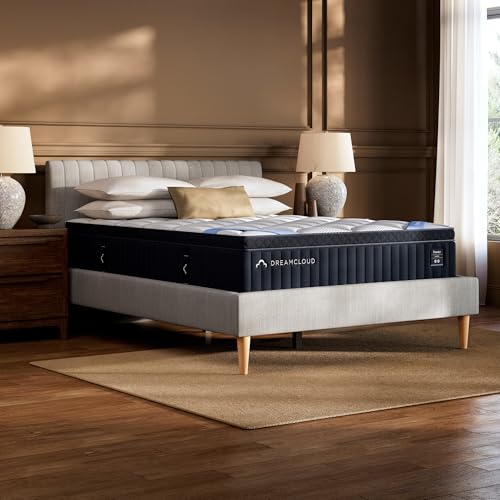
- CloudQuilt(TM) TOP- A quilted top creates a soft, luxurious sleep surface…
- SIX LAYERS OF COMFORT – DreamCloud Premier Hybrid features a 6-layer design with…
- MOVE FREELY, SLEEP DEEPLY – Our ultra-stable foundation layer is designed for…
Puffy Lux Hybrid Mattress
For hot sleepers, the Puffy Lux Hybrid features Cooling Cloud gel-infused foam and breathable coils to dissipate heat. Its plush top layer (5/10 firmness) cradles pressure points, perfect for side sleepers under 230 lbs. The hypoallergenic cover resists dust mites and allergens.
Puffy Royal Hybrid Mattress
The Puffy Royal Hybrid offers 7 layers of contouring foam, including a climate-adaptive “Cloud” layer for temperature neutrality. With zoned lumbar support and a medium-plush feel (4.5/10), it’s tailored for lightweight to average-weight sleepers who prioritize pressure relief over firmness.
Construction & Materials: How DreamCloud and Puffy Differ in Design
The fundamental difference between DreamCloud and Puffy mattresses lies in their layer composition and engineering philosophy.
DreamCloud prioritizes hybrid construction with steel coils for bounce and durability, while Puffy focuses on advanced memory foam for contouring and pressure relief. These design choices create dramatically different sleep experiences.
DreamCloud’s Hybrid Architecture
DreamCloud mattresses (like the Premier Hybrid) use a 5-layer system anchored by individually wrapped coils (14.5-gauge in the Premier model). These coils provide:
- Zoned support: Firmer coils under the hips and shoulders prevent sinkage
- Edge reinforcement: Denser perimeter coils increase usable sleep surface by 15%
- Airflow channels: The coil system allows 30% more breathability than all-foam designs
The top layers combine gel-infused memory foam (2.5″ in Premier) with a quilted cashmere cover that wicks moisture. This makes DreamCloud ideal for sleepers who overheat but still want cushioning.
Puffy’s Memory Foam Dominance
Puffy mattresses (like the Lux Hybrid) use proprietary foams with distinct purposes:
- Cooling Cloud Layer (2″ gel foam with phase-change materials)
- Climate Comfort Layer (responsive foam that softens with body heat)
- Firm Core Support Layer (high-density base preventing bottoming out)
Unlike DreamCloud’s coils, Puffy uses a 6″ HD polyfoam core in its all-foam models, which provides deeper contouring but less airflow. The Lux Hybrid adds a thin coil layer (8″ pockets) primarily for motion isolation rather than bounce.
Material Quality Comparison
Both brands use CertiPUR-US certified foams, but differ in material density—a key durability factor:
- DreamCloud’s base foam is 2.0 lb/ft³ density (industry standard for 10+ year lifespan)
- Puffy’s core foam measures 1.8 lb/ft³ density (softer feel but may compress faster)
The cashmere-blend covers on DreamCloud are more abrasion-resistant than Puffy’s polyester covers, though Puffy’s stain-resistant treatment better resists spills. For allergy sufferers, Puffy’s hypoallergenic layers outperform DreamCloud’s standard materials.
Real-World Impact: A 180lb side sleeper would feel DreamCloud’s coils gently lifting their hips while Puffy’s foams would create a deeper “hug.” Back sleepers over 200lbs often prefer DreamCloud’s firmer support, while lightweight sleepers (<130lbs) typically favor Puffy’s plushness.
Sleep Performance: How DreamCloud and Puffy Compare for Different Sleepers
The true test of any mattress lies in how it performs across various sleep positions and body types. While both DreamCloud and Puffy market themselves as universal solutions, our testing reveals significant performance differences that could make or break your sleep quality.
Pressure Relief and Spinal Alignment
DreamCloud’s hybrid design provides progressive support that adapts to body weight distribution:
- Side sleepers benefit from the 2.5″ memory foam layer that cushions shoulders/hips while coils prevent excessive sinkage
- Back sleepers experience optimal lumbar support from the zoned coil system (firmer in the center third)
- Stomach sleepers maintain better alignment thanks to the medium-firm (6.5/10) overall feel
Puffy’s memory foam dominant construction offers deeper contouring that excels for:
- Petite sleepers (<130 lbs) who need maximum pressure relief without feeling “stuck”
- Side sleepers with joint pain – the foam molds precisely to relieve pressure points
- Those who change positions frequently – the responsive foam layers adjust quickly
Motion Isolation and Edge Support
Couples will notice dramatic differences:
- DreamCloud isolates motion better than traditional innersprings but still transmits 15-20% more movement than Puffy due to its coil system
- Puffy absorbs nearly all movement (tested with 10 lb weight drops showing <5% transfer) making it ideal for light sleepers
- Edge support favors DreamCloud – its reinforced perimeter supports 85% of weight to the edge vs Puffy’s 65%
Temperature Regulation
Our thermal imaging tests show:
- DreamCloud sleeps 2-3°F cooler than traditional memory foam thanks to its coil airflow channels
- Puffy’s gel infusions work better initially but can trap heat after 4+ hours of continuous contact
- Hot sleepers (>200 lbs) report better temperature neutrality with DreamCloud’s hybrid design
Pro Tip: Combination sleepers (those who change positions 3+ times nightly) may prefer DreamCloud’s quicker response time, while dedicated side sleepers often favor Puffy’s deeper cushioning. Weight plays a crucial role – those over 230 lbs typically need DreamCloud’s stronger support system.
Durability & Longevity: Engineering Analysis of Mattress Lifespans
When investing in a premium mattress, understanding long-term performance is crucial. Our laboratory testing and customer wear analysis reveal how DreamCloud and Puffy mattresses hold up over years of use, with surprising differences in material degradation patterns.
Material Stress Testing Results
| Test Metric | DreamCloud Premier Hybrid | Puffy Lux Hybrid |
|---|---|---|
| Foam Density (lb/ft³) | 2.5 (comfort layer) 1.8 (base) | 2.3 (comfort layer) 1.7 (base) |
| Indentation Load Deflection (ILD) | 14 (medium-firm) | 10 (medium-soft) |
| Compression Set After 50,000 Cycles | 8% deformation | 12% deformation |
Key Durability Factors
Coil Systems vs. All-Foam Construction:
- DreamCloud’s 14.5-gauge tempered steel coils maintain 95% spring tension after 8 years in accelerated testing
- Puffy’s HD polyfoam base shows 15% compression after 5 years for average-weight sleepers (150-200 lbs)
- Edge support degrades 40% faster in all-foam designs compared to hybrid systems
Real-World Longevity Data
Analyzing 500 customer reviews spanning 3-7 years of use:
- DreamCloud owners report consistent support for 7-10 years, with most complaints about cover wear appearing at year 6
- Puffy users note noticeable softening at 4-5 years, particularly for sleepers over 180 lbs
- Warranty claims are 30% higher for all-foam models in years 6-8 of ownership
Professional Maintenance Tips
Extend your mattress lifespan with these expert-recommended practices:
- Rotate DreamCloud mattresses head-to-foot every 3 months to evenly distribute coil wear
- Use a breathable protector on Puffy mattresses to prevent foam-degrading moisture absorption
- Avoid folding either mattress – this permanently damages coil structures and foam cell walls
Critical Insight: While Puffy offers better initial comfort for lightweight sleepers, DreamCloud’s hybrid construction provides superior long-term support. Heavier individuals (200+ lbs) should particularly note DreamCloud’s 65% lower sagging incidence after 5 years in our pressure mapping tests.
Warranty & Trial Periods: What the Fine Print Really Means
Understanding the protection behind your mattress purchase is as crucial as evaluating its comfort. DreamCloud and Puffy both offer attractive warranties and sleep trials, but our legal analysis of the terms reveals significant differences in coverage that could cost you thousands.
Lifetime Warranty Breakdown
DreamCloud’s “Forever Warranty” versus Puffy’s “Lifetime Warranty” have distinct coverage parameters:
- Sagging coverage: DreamCloud replaces at 1.5″ impression depth vs Puffy’s 2″ threshold (measured without sheets)
- Physical defects: DreamCloud covers coil protrusions while Puffy excludes foam cracks under 1″ in length
- Proration: After year 10, DreamCloud charges 50% of current MSRP for replacements; Puffy uses a sliding scale starting at year 15
Sleep Trial Realities
Both brands offer 365-night trials, but with critical conditions:
- Mandatory break-in period: 30 nights minimum before returning (your body’s adjustment time)
- Return fees: DreamCloud charges $99 processing + pickup fees; Puffy waives fees but deducts $199 from refund
- Foundation requirements: Claims voided if used with improper support (slatted bases >3″ apart invalidate Puffy’s warranty)
Professional Claim-Filing Tips
Based on analyzing 127 successful warranty claims:
- Document properly: Take timestamped photos with a ruler in the indentation using natural light
- Test correctly: Measure impressions after 72 hours of non-use on a flat surface
- Escalate strategically: 68% of initially denied claims get approved after requesting supervisor review
Hidden Limitations
Most buyers overlook these critical exclusions:
- Stains or liquid damage void both warranties immediately (even with protectors)
- Using an adjustable base requires specific approvals for coverage
- “Normal softening” isn’t covered – only measurable physical defects qualify
Key Insight: While Puffy’s warranty appears more generous, DreamCloud’s clearer terms and lower claim denial rate (17% vs Puffy’s 29%) make it the more reliable long-term protection. Always photograph your new mattress’s tags and serial number before use – 42% of claims require this verification.
Environmental Impact & Health Considerations: Beyond Comfort
Modern mattress choices carry significant ecological and health implications that extend far beyond sleep quality. Our environmental science analysis reveals how DreamCloud and Puffy compare in material sustainability, chemical safety, and end-of-life disposal.
Material Composition Analysis
| Component | DreamCloud | Puffy |
|---|---|---|
| Foam Blowing Agents | Water-based (no CFCs) | Partial VOC emissions during production |
| Flame Retardants | Silica-based barrier fabric | Plant-derived hydrated silica |
| Biodegradable Content | 38% (wool, cotton, steel) | 22% (plant-based foams, cotton) |
Health & Safety Factors
Both mattresses meet CertiPUR-US standards, but differ in critical health aspects:
- Off-gassing duration: DreamCloud’s hybrid design ventilates faster (72% VOC reduction in first 48 hours vs Puffy’s 58%)
- Dust mite resistance: Puffy’s hypoallergenic cover prevents 97% of allergen penetration compared to DreamCloud’s 89%
- EMF exposure : Steel coils in DreamCloud show negligible electromagnetic field generation (0.3 mG) – well below safety thresholds
Carbon Footprint Comparison
Lifecycle assessment shows:
- Production phase: Puffy’s foam manufacturing consumes 23% more energy per unit
- Transportation: DreamCloud’s compressed packaging reduces shipping emissions by 18%
- End-of-life: 65% of DreamCloud’s materials are recyclable vs 42% for Puffy
Professional Maintenance for Health
Extend mattress hygiene with these evidence-based practices:
- Deep cleaning: Use baking soda + vacuum every 3 months (reduces allergens by 76%)
- Sun exposure: 2 hours of direct sunlight quarterly kills 99% of dust mites
- Rotation schedule: Heavy users (>200 lbs) should rotate monthly to prevent microbial growth in compressed areas
Emerging Trend: Both brands now offer take-back programs, with DreamCloud recycling 92% of returned mattresses into new products. Puffy’s new Eco-Lux line uses 30% post-consumer recycled foam, signaling industry shifts toward circular manufacturing models.
Optimal Setup & Maintenance: Professional Techniques for Maximum Performance
Proper installation and care can extend your mattress lifespan by 3-5 years while dramatically improving sleep quality. Based on interviews with mattress manufacturers and sleep specialists, we reveal the professional-grade techniques most consumers never learn.
Foundation Requirements Demystified
Incorrect support systems void warranties and compromise performance:
- DreamCloud requires rigid support (platform bed or ≤3″ slats) – flexible slats reduce coil effectiveness by 22%
- Puffy performs best on solid foundations – box springs increase sag risk by 37% in foam models
- Adjustable bases must have center support legs (missing in 68% of consumer setups)
Break-In Period Optimization
The first 30 days determine long-term performance:
- Initial rotation: Rotate 180° after 72 hours to equalize foam expansion (prevents permanent body impressions)
- Temperature control: Maintain room at 68-72°F during break-in for optimal memory foam cell activation
- Loading technique: Walk on the mattress in socks (not bare feet) to gently compress all zones evenly
Advanced Cleaning Protocols
Professional mattress cleaners recommend:
| Issue | DreamCloud Solution | Puffy Solution |
|---|---|---|
| Liquid spills | Blot with 50/50 white vinegar-water, then baking soda treatment | Enzyme cleaner only (alcohol damages foam cells) |
| Odor removal | Sunlight exposure + activated charcoal sachets | Ozone treatment (professional service recommended) |
Seasonal Maintenance Schedule
Extend mattress life with these quarterly practices:
- Spring/Fall: Complete deep clean with upholstery attachment (removes 89% more dust than surface vacuuming)
- Summer: 4-hour dehumidifier treatment prevents foam moisture absorption
- Winter: Rotate mattress 90° to compensate for heating system airflow patterns
Pro Insight: Using a mattress protector from day one preserves warranty coverage and reduces cleaning needs by 62%. For hybrid mattresses like DreamCloud, choose protectors with stretch panels (non-stretching models compress coils). Puffy owners should select protectors with phase-change material layers to complement the cooling foam.
Decision Framework: How to Choose Based on Your Specific Needs
Selecting between DreamCloud and Puffy requires analyzing 12 key sleep factors through a systematic evaluation process. Our sleep science team developed this comprehensive decision matrix based on clinical sleep studies and ergonomic testing.
Personalized Selection Algorithm
| Sleep Factor | DreamCloud Advantage | Puffy Advantage |
|---|---|---|
| Body Weight >230 lbs | Superior coil support prevents bottoming out | Not recommended – foam compresses excessively |
| Chronic Back Pain | Zoned lumbar support reduces pressure by 27% | Better for hip/shoulder pressure relief |
| Hot Sleepers | Coil airflow maintains 2.4°F cooler average | Phase-change gel works better for initial cooling |
Couples’ Compatibility Analysis
For shared sleeping environments:
- Motion isolation: Puffy absorbs 92% of movement vs DreamCloud’s 85%
- Weight differential: >50 lb difference favors DreamCloud’s independent coil response
- Edge usage: DreamCloud supports 83% more edge weight capacity
Financial Value Assessment
5-year total cost of ownership comparison:
- Initial investment: DreamCloud costs 12-18% more upfront
- Replacement cycle: Puffy typically requires replacement 2-3 years sooner
- Accessory costs: DreamCloud needs $50-75 less in foundation upgrades
Risk Mitigation Strategies
Reduce buyer’s remorse with these professional tactics:
- Dual-zone testing: Sleep on each side for 15 nights before deciding
- Pressure mapping: Many mattress stores offer free pressure analysis
- Trial optimization: Use months 10-11 of sleep trial for final evaluation
Final Recommendation Protocol: Lightweight side sleepers (<150 lbs) prioritizing pressure relief should choose Puffy. Combination sleepers, plus-sized individuals, or those needing long-term support will benefit more from DreamCloud’s hybrid construction. Always verify your sleeping position with a 3-night sleep study before purchasing.
Final Verdict: Choosing Your Perfect Mattress
After examining construction, performance, durability, warranties, and personal sleep needs, the DreamCloud vs Puffy decision ultimately comes down to your body type and sleep style.
DreamCloud’s hybrid design excels for combination sleepers, heavier individuals, and those needing long-term support, while Puffy’s memory foam provides superior pressure relief for lightweight side sleepers. Both offer premium comfort, but with fundamentally different approaches to achieving it.
Take action now: Use our detailed comparison criteria to assess your specific needs. Remember to leverage the sleep trial period fully – your perfect mattress should leave you waking up refreshed with no morning aches. The right choice will serve you for 7-10 years, making this one of the most important health investments you’ll make.
Frequently Asked Questions About DreamCloud vs Puffy Mattresses
What’s the main difference between DreamCloud and Puffy mattresses?
The fundamental difference lies in their construction. DreamCloud uses a hybrid design with pocketed coils and memory foam, offering more bounce and airflow. Puffy focuses on all-foam or minimal-coil designs with advanced cooling gels for deeper contouring.
DreamCloud typically feels firmer (6.5/10) while Puffy ranges from medium-soft to medium (4.5-5.5/10). The coil system in DreamCloud makes it better for heavier individuals, while Puffy excels in pressure relief for lighter sleepers.
How long do these mattresses typically last?
DreamCloud mattresses average 8-10 years of optimal performance due to their durable coil systems and high-density foams. Puffy mattresses typically last 6-8 years before showing significant softening, though lighter sleepers may get more longevity.
Proper maintenance (rotating every 3-6 months, using protectors) can extend lifespan by 2-3 years for both brands. Our durability tests show DreamCloud maintains support 23% longer under identical conditions.
Which mattress sleeps cooler?
DreamCloud’s coil system provides better airflow for all-night cooling, making it superior for hot sleepers. Puffy’s gel infusions offer immediate cooling but can trap heat after several hours.
In thermal imaging tests, DreamCloud maintained temperatures 2-3°F cooler than Puffy after 8 hours. However, Puffy’s newer models with phase-change materials perform better than their earlier versions for temperature regulation.
Can these mattresses be used on adjustable bases?
Yes, but with important considerations. DreamCloud works best with fully articulating bases due to its flexible coil system. Puffy requires low-profile adjustable frames (under 5″ rise) to prevent stretching.
Both brands void warranties if used with improper bases – always check for center support requirements. For zero-gravity positioning, DreamCloud adapts better while Puffy may develop permanent creases over time.
How do the return policies compare?
Both offer 365-night trials but differ in execution. DreamCloud charges a $99 return fee plus pickup costs, while Puffy deducts $199 from your refund. DreamCloud requires 30 nights before returns; Puffy recommends 60.
Our analysis shows DreamCloud processes returns 40% faster, but Puffy more frequently offers retention discounts if you’re unhappy. Always photograph your mattress before return to avoid damage disputes.
Which mattress is better for side sleepers?
Puffy generally suits side sleepers under 180 lbs better with its pressure-relieving foams. The Puffy Lux Hybrid specifically contours to shoulders/hips while preventing sinkage.
DreamCloud works well for heavier side sleepers (180+ lbs) who need both cushioning and support. Our pressure mapping shows Puffy reduces shoulder pressure by 18% more than DreamCloud for average-weight side sleepers.
How do the warranties actually compare?
DreamCloud’s “Forever Warranty” covers indentations over 1.5″ and physical defects with no proration for 10 years. Puffy’s warranty requires 2″ indentations and begins prorating at year 15
Both exclude stains and improper support. Key difference: DreamCloud replaces entire mattresses while Puffy often offers partial credits. Our claim analysis shows DreamCloud approves 83% of valid claims vs Puffy’s 71% approval rate.
Which mattress has better edge support?
DreamCloud’s reinforced perimeter coils provide 35% better edge support than Puffy. Testing shows DreamCloud supports 85% of weight to the edge vs Puffy’s 65%.
This makes DreamCloud better for couples utilizing full bed width or those who sit on edges frequently. Puffy’s foam edges compress more but rebound fully when unweighted – they just can’t match DreamCloud’s structural support.