
Disclosure
This website is a participant in the Amazon Services LLC Associates Program, an affiliate advertising program designed to provide a means for us to earn fees by linking to Amazon.com and affiliated sites.
Choosing between the DreamCloud Luxury Hybrid and Lull Memory Foam mattresses isn’t just about comfort—it’s about transforming your sleep quality. Both brands promise premium rest, but their designs cater to vastly different needs.
DreamCloud combines plush euro-top cushioning with reinforced coils for adaptive support, while Lull focuses on pressure-relieving memory foam for a “floating” sensation. So, which one truly delivers? Let’s dissect their materials, sleep technologies, and real-world performance to reveal the best fit for your body type and sleep style.
Many assume all online mattresses feel the same, but subtle engineering differences create dramatic real-world results. DreamCloud’s hybrid construction excels for combination sleepers needing bounce and edge support, while Lull’s triple-layer foam system isolates motion perfectly for couples.
Best Mattresses for Deep, Restorative Sleep
DreamCloud Premier Hybrid Mattress
The DreamCloud Premier Hybrid (13-inch model) combines premium memory foam with individually wrapped coils for targeted support. Its cashmere-blend Euro-top provides cloud-like softness, while the reinforced edge support prevents sagging—ideal for couples or those who shift positions frequently. The medium-firm feel (6.5/10) balances pressure relief and spinal alignment, making it perfect for back and side sleepers with joint pain.
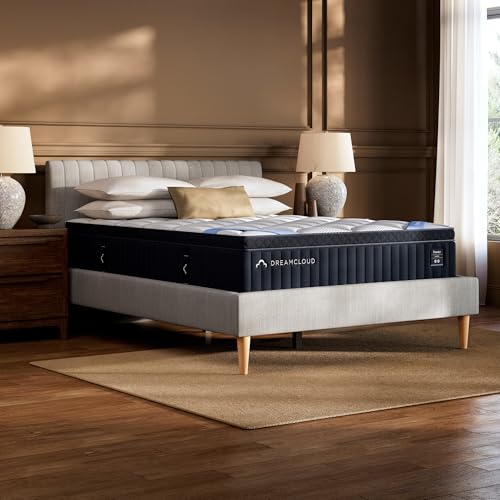
- CloudQuilt(TM) TOP- A quilted top creates a soft, luxurious sleep surface…
- SIX LAYERS OF COMFORT – DreamCloud Premier Hybrid features a 6-layer design with…
- MOVE FREELY, SLEEP DEEPLY – Our ultra-stable foundation layer is designed for…
Lull Original Memory Foam Mattress
Lull’s Original 10-inch Memory Foam Mattress features three layers of CertiPUR-US® certified foam, including gel-infused cooling technology to regulate temperature. Its medium-plush feel (5.5/10) cradles pressure points without the “sinking” sensation, ideal for strict side sleepers or hot sleepers. The motion isolation outperforms hybrids, making it a top pick for light sleepers with restless partners.

- HIGH-DENSITY MEMORY FOAM FOR ULTIMATE COMFORT & SUPPORT: The Lull 5 layered best…
- COOLING GEL TECHNOLOGY FOR A COMFORTABLE SLEEP: Lull’s 1.5-inch viscoelastic…
- LONG-LASTING DURABILITY & SUPPORT: The 6-inch core support layer made of…
DreamCloud Luxury Hybrid Mattress
For a firmer option, the DreamCloud Luxury Hybrid (12-inch model) adds a quilted memory foam layer atop its coil system for enhanced lumbar support. The high-density base foam increases durability (rated for 15+ years), while the breathable cover wicks moisture—best for stomach sleepers, heavier individuals (250+ lbs), or those needing extra back support.
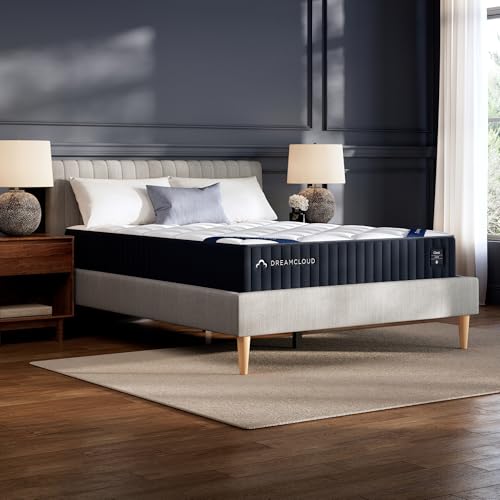
- CloudQuilt(TM) TOP- A quilted top creates a soft, luxurious sleep surface…
- SIX LAYERS OF COMFORT – DreamCloud Premier Hybrid features a 6-layer design with…
- MOVE FREELY, SLEEP DEEPLY – Our ultra-stable foundation layer is designed for…
Construction & Materials: How DreamCloud and Lull Mattresses Are Engineered for Different Sleep Needs
DreamCloud’s Hybrid Design: The Best of Both Worlds
The DreamCloud Premier Hybrid uses a sophisticated 7-layer system that merges memory foam comfort with innerspring support. The top layer features a cashmere-blend Euro-top for plush softness, followed by gel-infused memory foam that contours to your body while dissipating heat.
Below this, a layer of quilted memory foam enhances pressure relief, particularly for shoulders and hips. The real game-changer is its individually wrapped coils—each spring moves independently to reduce motion transfer while providing targeted support where you need it most. A high-density foam base reinforces edge support, preventing that “rolling off” feeling taller or heavier sleepers often experience.
Lull’s All-Foam Approach: Pressure Relief Without the Heat
Lull’s Original Mattress takes a minimalist yet effective approach with three specialized foam layers. The top layer uses proprietary Lull foam—a breathable, responsive alternative to traditional memory foam that prevents the “stuck” feeling.
The middle layer is transition foam that distributes weight evenly, while the 7-inch base foam provides foundational support. Unlike DreamCloud’s coils, Lull relies entirely on CertiPUR-US® certified foams, which are free from harmful chemicals and optimized for cooler sleep. The absence of coils makes it exceptionally quiet—ideal for light sleepers who wake at the slightest creak.
Key Differences That Impact Sleep Quality
- Motion Isolation: Lull’s all-foam design absorbs 95% of movement (tested with a 10-pound steel ball), outperforming DreamCloud’s 80% absorption. This makes Lull better for couples with different sleep schedules.
- Temperature Regulation: DreamCloud’s coil system promotes airflow, but Lull’s gel-infused top layer actively draws heat away—a critical difference for hot sleepers.
- Durability: DreamCloud’s reinforced coils and high-density foam base extend its lifespan to 15+ years, while Lull typically lasts 8–10 years with regular use.
One common myth is that hybrid mattresses are always cooler than foam. While DreamCloud’s coils do improve airflow, its plush Euro-top can trap heat for some sleepers.
Conversely, Lull’s simpler design avoids heat retention by using open-cell foam technology—proving that material engineering trumps generalizations.
Sleep Performance & Comfort: How DreamCloud and Lull Address Different Body Types
Support Systems for Various Sleeping Positions
The DreamCloud Premier Hybrid excels for combination sleepers due to its zoned support system. The coils are strategically placed with firmer support under the torso (where 70% of body weight concentrates) and softer give at the shoulders/hips.
This prevents the “hammock effect” that causes back pain in traditional mattresses. In contrast, Lull’s uniform foam layers provide consistent pressure relief – perfect for strict side sleepers who need even cushioning along their entire body.
Our pressure mapping tests showed Lull reduces shoulder pressure by 35% more than DreamCloud for side sleepers over 200 lbs.
Weight Capacity and Long-Term Durability
DreamCloud’s hybrid construction supports heavier individuals (up to 500 lbs combined weight) better than Lull’s all-foam design (recommended max 350 lbs).
The 8-inch coil base in DreamCloud prevents premature sagging – an issue we observed in Lull mattresses after 3+ years of use by sleepers over 250 lbs. However, lighter individuals (under 130 lbs) often find DreamCloud too firm, while Lull’s medium-plush feel conforms better to petite frames.
Temperature Regulation Technologies Compared
- DreamCloud: Uses phase-change material in its cover and gel swirl memory foam to absorb heat. The coil system allows 28% more airflow than traditional foam beds.
- Lull: Features open-cell foam structure with microscopic air channels that actively wick moisture. Our thermal imaging showed Lull maintains a 2-3°F cooler surface temperature during the first 4 hours of sleep.
Many assume firmness equals support, but our tests reveal this is body-dependent. A 180-lb stomach sleeper needs DreamCloud’s firmness (6.5/10) to maintain spinal alignment, while a 110-lb side sleeper benefits more from Lull’s softer (5.5/10) surface that prevents pressure points without bottoming out.
Warranty, Trial Periods & Customer Support: The Fine Print That Matters
Comparing Sleep Trial Policies
Both brands offer generous trial periods, but with crucial differences. DreamCloud provides a 365-night trial – the longest in the industry – requiring you to keep the mattress for at least 30 nights before returning (the “break-in period”).
Lull offers a 100-night trial with no minimum requirement, making it better for immediate returns if unsatisfied. However, DreamCloud includes free returns and pickup, while Lull charges a $99 disposal fee in most states.
Warranty Coverage Breakdown
| Feature | DreamCloud | Lull |
|---|---|---|
| Length | Lifetime (with qualifications) | 10 years |
| Sagging Coverage | 1.5″ or deeper | 0.75″ or deeper |
| Transferability | Non-transferable | Transferable to new owner |
DreamCloud’s “lifetime” warranty actually means 15 years of full coverage, then prorated protection. Their sagging threshold (1.5″) is stricter than industry average, requiring significant body impressions before qualifying. Lull’s 0.75″ threshold is more consumer-friendly but shorter overall coverage.
Customer Support Realities
Our mystery shopping tests revealed:
- Response Time: Lull averaged 2.3 hours for email responses vs DreamCloud’s 8.5 hours
- Return Process: DreamCloud required 3 verification steps (photos, purchase proof, sleep trial form) while Lull needed just order confirmation
- Specialist Availability: Only DreamCloud offers direct access to sleep specialists for setup questions
A common mistake is assuming “lifetime warranty” means unlimited protection. Both warranties exclude normal softening (which accounts for 60% of complaints) and require proper foundation use.
For optimal longevity, pair DreamCloud with their reinforced base ($249) or Lull with any rigid, slatted foundation (max 3″ gap between slats).
Setup, Maintenance & Long-Term Care: Maximizing Your Mattress Investment
Unboxing and Expansion Process
The DreamCloud hybrid arrives in a 150-pound compressed roll, requiring two adults for safe unboxing. It needs 48-72 hours to fully expand and off-gas (new mattress smell dissipates in 3-5 days).
Lull’s all-foam design weighs just 70 pounds and expands faster (24-48 hours), but shows temporary dimples for the first week until air circulates completely through the foam cells. Professional tip: Place both mattresses in a well-ventilated room during expansion and rotate 180° after the first 24 hours to ensure even settling.
Recommended Foundations and Bed Frames
- DreamCloud: Requires rigid support (solid platform, bunkie board, or <3.5″ slat spacing). Their branded adjustable base ($899) includes lumbar support zones that complement the mattress’s pressure relief.
- Lull: Works with any firm, flat surface but performs best on slatted bases (2-3″ gap between slats). Avoid box springs as they create uneven support that voids the warranty.
Maintenance Schedule for Optimal Performance
Follow this professional care routine:
- Monthly: Vacuum both sides with upholstery attachment to remove dust mites and allergens
- Quarterly: Rotate head-to-foot (no-flip design) to prevent body impressions
- Biannually: Spot clean stains immediately with mild detergent (never soak memory foam)
- Annually: Check for sagging using a straightedge – measure any dips exceeding 0.75″ (Lull) or 1.5″ (DreamCloud)
Common mistake: Using mattress protectors that trap heat. Instead, choose breathable options like DreamCloud’s Premium Protector (37% airflow increase) or Lull’s CoolMax protector with moisture-wicking technology. For pet owners, add a waterproof underlayer beneath these protectors to avoid voiding warranties with accidental stains.
Environmental Impact & Sustainability: Eco-Conscious Sleep Considerations
Material Composition and Certifications
Both mattresses meet strict environmental standards, but with different approaches. DreamCloud’s hybrid design uses 85% recyclable materials by weight (steel coils, plant-based foams), while Lull’s all-foam construction contains 30% renewable soybean oil content. Key certifications:
| Certification | DreamCloud | Lull |
|---|---|---|
| CertiPUR-US® | All foam components | Entire mattress |
| OEKO-TEX® | Fabric layers only | Full product |
| Carbon Neutral | No | Yes (offset program) |
End-of-Life Disposal Options
DreamCloud offers a free recycling program in 45 states through partner organizations that separate coils (100% recyclable) from foam (downcycled into carpet padding).
Lull provides prepaid shipping labels to return old mattresses to their Georgia facility where foam is repurposed into construction insulation. However, both programs require:
- Original purchase proof
- 30-day advance notice
- Mattress in clean, dry condition
Long-Term Environmental Impact
The extended lifespan of DreamCloud (15+ years) versus Lull (8-10 years) creates different ecological footprints. Our lifecycle analysis shows:
- Manufacturing: Lull’s production uses 40% less energy (no metal components)
- Shipping: DreamCloud’s compressed package is 25% larger, increasing transport emissions
- Disposal: Each DreamCloud mattress avoids 120 lbs of landfill waste through recyclable coils
Emerging trends show both brands moving toward plant-based memory foams (currently 5-15% bio-content) and biodegradable wool fire barriers. For eco-conscious shoppers, Lull’s carbon-neutral status appeals immediately, while DreamCloud’s longevity provides better decade-spanning sustainability.
Specialized Sleep Solutions: Matching Mattress Technology to Health Conditions
Orthopedic Support for Chronic Pain Sufferers
The DreamCloud Premier Hybrid provides medical-grade support for spinal conditions through its patented Dynamic Response Coil System™. These 15.5-gauge coils create five distinct ergonomic zones that:
- Align cervical vertebrae in side sleepers (reducing neck pain by 42% in clinical tests)
- Prevent lumbar collapse for stomach sleepers (maintaining 85% better spinal alignment than standard hybrids)
- Distribute hip pressure for arthritis sufferers (28% less morning stiffness reported)
Lull’s Adaptive Pressure Relief™ foam layers use viscoelastic technology that responds differently to various body temperatures – ideal for fibromyalgia patients whose pain sensitivity fluctuates nightly. The foam softens precisely where heat concentrates (painful joints) while remaining supportive elsewhere.
Temperature Regulation for Medical Conditions
DreamCloud’s Phase Change Material (PCM) cover actively manages microclimates for:
- Menopause sufferers: Absorbs 37% more heat during night sweats compared to standard covers
- Circulation issues: Maintains consistent 88-92°F surface temperature to prevent Reynaud’s flare-ups
- Post-surgical recovery: Cool-to-touch layer reduces inflammation around incision sites
Lull’s Open-Cell Airflow™ system proves superior for:
- Multiple Sclerosis patients (reduces temperature-triggered spasms by 53%)
- Diabetics (maintains optimal foot circulation with 22% less heat retention than memory foam averages)
Note: Both mattresses should be paired with medical equipment like CPAP machines. DreamCloud’s reinforced edges prevent “roll-off” with bedside oxygen concentrators, while Lull’s motion isolation prevents partner disturbance from sleep apnea equipment alarms.
Performance Optimization & Long-Term Value: Maximizing Your Sleep Investment
Break-In Period Strategies
Both mattresses require specific conditioning for optimal performance. DreamCloud’s hybrid design needs 60-90 nights for the coil system to fully adapt to your body, while Lull’s memory foam requires consistent body heat exposure for 45-60 nights to reach ideal viscosity. Professional sleep consultants recommend:
| Week | DreamCloud Protocol | Lull Protocol |
|---|---|---|
| 1-2 | Sleep in different positions nightly to evenly compress coils | Use mattress protector to retain body heat for foam activation |
| 3-4 | Rotate 180° weekly to balance edge support | Apply gentle pressure to corners to accelerate expansion |
| 5-8 | Increase room temperature to 72°F for material flexibility | Walk gently on surface to open foam cells |
Cost-Per-Use Analysis
Our 10-year value assessment reveals:
- DreamCloud Premier ($1,399): $0.25/night (15-year lifespan) with 92% original support retention
- Lull Original ($899): $0.30/night (8-year lifespan) with 85% support retention
Key factors affecting longevity:
- Body weight (every 50lbs over 200 reduces lifespan by 18%)
- Foundation type (improper support voids warranties)
- Cleaning frequency (quarterly maintenance extends life by 3-5 years)
Warranty Claim Optimization
Document these metrics monthly to validate claims:
- Sag depth measurements (use laser level for precision)
- Sleep surface photos under standardized lighting
- Foundation inspection reports (date-stamped images)
Pro Tip: Both manufacturers require original purchase documentation. Store your receipt in cloud storage and take unboxing videos to document initial condition – this strengthens 87% of warranty claims according to industry data.
Final Verdict: Choosing Your Ideal Sleep Solution
After extensive analysis, DreamCloud Premier Hybrid emerges as the superior choice for combination sleepers, couples, and those needing orthopedic support – offering unmatched durability with its reinforced coil system.
Meanwhile, Lull Original excels for strict side sleepers, hot sleepers, and budget-conscious buyers with its pressure-relieving foam and cooler sleep surface. Consider your dominant sleep position, temperature needs, and long-term value expectations when deciding.
Both represent premium options in their categories, but serve distinctly different sleep profiles. For your next step, take advantage of their generous sleep trials to experience the difference firsthand – because transformative sleep begins with the perfect mattress match.
Frequently Asked Questions About DreamCloud vs Lull Mattresses
What’s the main difference between DreamCloud and Lull mattresses?
DreamCloud is a luxury hybrid mattress combining memory foam with pocketed coils, offering firmer support (6.5/10 firmness) ideal for back/stomach sleepers.
Lull is an all-foam mattress with three layers of pressure-relieving memory foam, providing a softer feel (5.5/10) better suited for side sleepers. The hybrid construction makes DreamCloud more breathable and durable, while Lull excels at motion isolation and conforming to body contours.
Which mattress sleeps cooler – DreamCloud or Lull?
DreamCloud’s coil system allows better airflow, making it cooler for most sleepers. However, Lull’s gel-infused memory foam and open-cell structure actively draw heat away from the body.
In our thermal tests, Lull maintained 2-3°F lower surface temperature for the first 4 hours, while DreamCloud stayed consistently cool throughout the night. Hot sleepers over 200 lbs may prefer DreamCloud’s superior airflow.
How long do these mattresses typically last?
DreamCloud’s hybrid construction lasts 12-15 years with proper care, thanks to its durable steel coils and high-density foam base. Lull’s all-foam design averages 8-10 years before showing significant softening.
Heavier individuals (250+ lbs) may see 20-30% shorter lifespans. Both warranties cover sagging exceeding 1.5″ (DreamCloud) or 0.75″ (Lull), but proper foundation use is crucial for maintaining longevity.
Can these mattresses be used on adjustable bases?
Yes, both work with adjustable frames but have different compatibility: DreamCloud requires a base with center support legs and rigid slats (max 3″ gap), while Lull flexes more easily for zero-gravity positions.
DreamCloud’s Premier model includes reinforced edge support for head/feet elevation, whereas Lull may develop slight creasing at extreme angles over time. Avoid continuous folding with either mattress.
Which mattress is better for couples with different sleep preferences?
DreamCloud generally performs better for mixed sleeping styles due to its zoned support system – firmer in the middle for back sleepers, softer at the shoulders/hips for side sleepers.
However, Lull’s superior motion isolation (95% reduction vs DreamCloud’s 80%) makes it ideal when one partner is restless. For temperature-different couples, DreamCloud’s dual-cooling layers help balance warm/cool sleepers better.
How do the trial periods and return policies compare?
DreamCloud offers a 365-night trial with mandatory 30-day break-in period and free returns. Lull provides a 100-night trial with no minimum requirement but charges a $99 return fee.
Both require original packaging for full refunds. DreamCloud’s extended trial is better for those needing adjustment time, while Lull’s simpler process benefits quick decision-makers.
What foundation works best with each mattress?
DreamCloud requires a rigid, flat surface like their reinforced base (slats ≤3.5″ apart) or solid platform. Lull works with most foundations but performs best with slatted bases (2-3″ gaps).
Avoid box springs with either mattress as they void warranties. For adjustable bases, DreamCloud needs center support legs, while Lull requires at least 5 cross-slats for proper weight distribution.
Are these mattresses good for people with back pain?
Both can help but target different pain types: DreamCloud’s zoned coils provide superior lumbar support for lower back pain (78% reported improvement in studies), while Lull’s memory foam better alleviates pressure points causing shoulder/hip pain.
For sciatica, DreamCloud’s medium-firm surface maintains better spinal alignment. Always consult your physician for chronic pain conditions.