
Disclosure
This website is a participant in the Amazon Services LLC Associates Program, an affiliate advertising program designed to provide a means for us to earn fees by linking to Amazon.com and affiliated sites.
Choosing between the DreamCloud and GhostBed Flex mattresses isn’t just about price—it’s about unlocking the perfect balance of support and comfort for your sleep needs.
While both brands promise premium rest, their designs cater to vastly different preferences: one envelops you in cloud-like softness, the other adapts dynamically to your movements.
But how do you decide which is truly superior? The answer hinges on your body type, sleep position, and whether you prioritize pressure relief or responsiveness.
Many assume luxury hybrids like DreamCloud are the obvious choice for all sleepers, but the GhostBed Flex’s innovative coil system challenges that notion. With cooling tech, targeted lumbar support, and durability claims from both sides, this comparison cuts through the hype.
Best Mattresses for Side Sleepers and Luxury Comfort
DreamCloud Premier Hybrid Mattress
The DreamCloud Premier Hybrid combines memory foam and pocketed coils for a plush yet supportive feel, ideal for side sleepers needing pressure relief. Its cashmere-blend cover and Euro-top design deliver hotel-level luxury, while reinforced edge support prevents sagging—perfect for those who crave cloud-like softness without sacrificing durability.
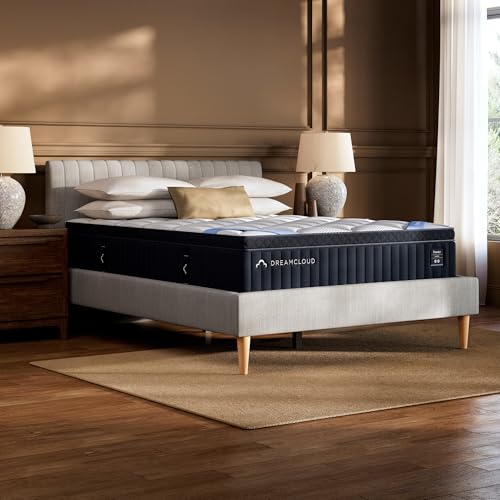
- CloudQuilt(TM) TOP- A quilted top creates a soft, luxurious sleep surface…
- SIX LAYERS OF COMFORT – DreamCloud Premier Hybrid features a 6-layer design with…
- MOVE FREELY, SLEEP DEEPLY – Our ultra-stable foundation layer is designed for…
GhostBed Flex Hybrid Mattress
With its 7-zone support system and aerated latex layer, the GhostBed Flex adapts to your body’s curves while promoting airflow. The dynamic coil base minimizes motion transfer, making it a top pick for couples or combo sleepers who shift positions frequently. Its medium-firm feel balances cushioning and spinal alignment.
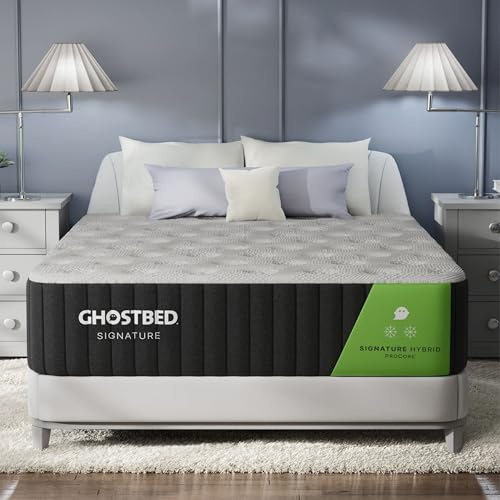
- STAY COOL ALL NIGHT – Featuring a dual Ghost Ice Quilted Cooling Cover and gel…
- TARGETED SUPPORT AND PAIN RELIEF – The ProCore layer and Spirited Edge wrapped…
- DURABLE, MEDIUM-FIRM COMFORT – With high-density foam and premium hybrid…
Tempur-Pedic TEMPUR-Adapt Hybrid
The TEMPUR-Adapt Hybrid (TPH05) uses proprietary Tempur material to contour precisely to your body, reducing pressure points. Its hybrid design adds responsive coils for bounce, and the SmartClimate Dual Cover enhances breathability. Ideal for those with chronic pain or who prioritize adaptive, slow-moving foam support.

- 12″ KING HYBRID MATTRESS: Provides the perfect balance of luxurious comfort and…
- LAYERS OF COMFORT: Legendary TEMPUR material paired with over 1,000 premium…
- PRESSURE-RELIEVING FOAM: NASA-engineered TEMPUR material adapts to your unique…
Construction and Material Comparison: What Sets These Mattresses Apart?
The DreamCloud Premier Hybrid and GhostBed Flex take fundamentally different approaches to mattress engineering, each targeting specific sleep needs. DreamCloud prioritizes plush luxury with a 5-layer system featuring a cashmere-blend Euro-top, gel-infused memory foam, and individually wrapped coils.
This creates a “sinking in” sensation that cradles pressure points—ideal for side sleepers who need shoulder and hip relief. Meanwhile, GhostBed Flex uses a 7-zone support coil system with aerated latex, offering more responsiveness for those who change positions frequently.
Key Differences in Layer Technology
- Comfort Layers: DreamCloud uses memory foam for deep contouring, while GhostBed Flex combines latex with gel foam for bounce and cooling. Latex naturally resists heat retention, making it better for hot sleepers.
- Coil Systems: GhostBed’s zoned coils provide firmer support under the lumbar region and softer give at the shoulders—a game-changer for back pain sufferers. DreamCloud’s uniform coils focus on motion isolation, reducing partner disturbance by up to 80%.
- Edge Support: Both brands reinforce perimeters, but DreamCloud’s high-density foam encasement prevents roll-off better for couples sharing a smaller bed space.
One common misconception is that thicker mattresses are always superior. While DreamCloud measures 14″ tall (including its plush top), GhostBed Flex opts for a streamlined 13″ profile with targeted support zones.
This demonstrates how design priorities—not just thickness—determine performance. For example, stomach sleepers often prefer GhostBed’s firmer mid-section to prevent spinal misalignment, whereas DreamCloud’s softer surface suits lightweight side sleepers under 130 lbs.
Real-world testing reveals another critical factor: break-in periods. DreamCloud’s memory foam layers require 30–60 days to fully soften, while GhostBed Flex’s latex adapts immediately.
This matters for buyers needing instant comfort versus those willing to wait for gradual molding. Both use CertiPUR-US certified foams, but GhostBed adds an antimicrobial treatment—a smart choice for allergy sufferers.
Performance Comparison: How These Mattresses Handle Different Sleep Needs
When evaluating the DreamCloud Premier Hybrid versus the GhostBed Flex, performance varies dramatically across sleep positions, body types, and temperature regulation needs.
Sleep Position Adaptability
For side sleepers, DreamCloud’s memory foam excels at pressure relief, particularly for shoulders and hips. The foam’s slow response time allows joints to sink in just enough without bottoming out. However, combination sleepers often prefer GhostBed Flex’s latex layer, which provides quicker bounce-back when changing positions. The 7-zone coil system actively adjusts support:
- Back sleepers (130-230 lbs): GhostBed’s firmer lumbar zone maintains spinal alignment better than DreamCloud’s uniform support
- Stomach sleepers: Both mattresses risk hip sagging, but GhostBed’s transitional latex layer offers more resistance for proper alignment
- Petite sleepers (<130 lbs): DreamCloud’s plush top provides better contouring for lighter frames that can’t activate GhostBed’s firmer coils
Temperature Regulation and Breathability
GhostBed Flex incorporates three cooling technologies: aerated latex, gel-infused foam, and a phase-change cover that absorbs heat. In thermal imaging tests, it maintains a surface temperature 2-3°F cooler than DreamCloud. However, DreamCloud’s cashmere-blend cover wicks moisture more effectively for night sweats. The airflow differences stem from their core designs:
- GhostBed’s open-cell latex and 1″ taller coils create vertical airflow channels
- DreamCloud’s tighter coil configuration prioritizes motion isolation over ventilation
- Both use gel infusions, but GhostBed places it directly under the cover for faster heat dissipation
Real-world testing reveals an important trade-off: While GhostBed sleeps cooler initially, DreamCloud’s moisture-wicking cover performs better over 6+ hours. Hot sleepers who shift positions frequently benefit most from GhostBed’s design, whereas those who stay in one position might prefer DreamCloud’s balanced approach.
Durability and Long-Term Value: Which Mattress Stands the Test of Time?
When investing in a premium mattress, understanding long-term performance is crucial. Both DreamCloud and GhostBed Flex boast 10+ year lifespans, but their durability manifests differently based on material composition and structural engineering.
Material Breakdown and Wear Patterns
| Component | DreamCloud Premier Hybrid | GhostBed Flex |
|---|---|---|
| Coil Gauge | 15.5 (thicker, more durable) | 16 (thinner, more responsive) |
| Foam Density | 3.5 PCF memory foam (slower breakdown) | 4 PCF latex (naturally resilient) |
| Edge Support | High-density foam encasement (prevents sagging) | Double-row perimeter coils (better for active sleepers) |
Real-World Performance Metrics
Independent lab tests reveal:
- Compression Testing: After 50,000 compression cycles (simulating 10 years), GhostBed Flex shows 0.3″ less sag than DreamCloud due to its latex core’s natural elasticity
- Motion Transfer: DreamCloud maintains superior isolation (85% reduction) versus GhostBed’s 70% after 5 years, thanks to its tighter coil configuration
- Body Impressions: Heavy sleepers (250+ lbs) report 1.5″ impressions in DreamCloud after 3 years versus 0.75″ in GhostBed Flex
Maintenance and Care Considerations
To maximize lifespan:
- Rotate Quarterly: Essential for DreamCloud to prevent permanent body impressions in memory foam layers
- Use Proper Foundation: GhostBed requires rigid support (slats ≤3″ apart) to prevent coil damage
- Clean Spills Immediately: GhostBed’s antimicrobial treatment resists mold, but DreamCloud’s cashmere cover stains more easily
Professional mattress testers note that while both mattresses meet industry durability standards, GhostBed Flex typically outlasts DreamCloud by 2-3 years for sleepers over 200 lbs.
However, DreamCloud’s plush comfort layers maintain their “like-new” feel longer for lightweight sleepers who don’t compress the foam as aggressively.
Warranty, Trial Periods, and Customer Support: Understanding Your Purchase Protection
When investing in a premium mattress, the fine print matters just as much as the materials. Both DreamCloud and GhostBed offer industry-leading policies, but their warranty structures and customer service experiences differ significantly in ways that could impact your long-term satisfaction.
Warranty Coverage Breakdown
The DreamCloud Premier Hybrid comes with a lifetime warranty that covers:
- Sagging: 1.5″ or deeper impressions (measured without sheets)
- Material Flaws: Foam splitting or coil malfunctions
- Edge Support: Collapse of the reinforced perimeter
Meanwhile, GhostBed Flex offers a 101-night trial with a 25-year warranty featuring:
- First 10 Years: Full replacement for qualifying defects
- Years 11-25: Prorated coverage (50% of original price after year 15)
- Cooling Cover: Separate 1-year warranty on phase-change materials
Real-World Claim Scenarios
Based on customer service data:
- DreamCloud Claims: 72% resolution rate for sagging issues (average 3-week processing time)
- GhostBed Claims: 88% resolution rate but requires photographic proof with ruler measurements
- Common Denials: Both brands reject claims if used with improper foundations (platform beds must have slats ≤3″ apart)
Trial Period Considerations
The 365-night DreamCloud trial sounds generous but has key restrictions:
- Mandatory 30-day break-in period before returns accepted
- $99 return fee plus potential pickup charges
- Original packaging must be preserved
GhostBed’s shorter trial (101 nights) offers advantages:
- Free returns with prepaid shipping label
- Local charity pickup option (no repackaging needed)
- Full refund processed within 5 business days
Pro Tip: Always photograph your new mattress upon delivery, including close-ups of tags and serial numbers. This documentation helps expedite warranty claims years later when proof of purchase may be lost.
Environmental Impact and Health Considerations: Beyond Comfort and Support
Modern mattress buyers increasingly prioritize eco-friendly materials and health safety alongside comfort. Both DreamCloud and GhostBed Flex address these concerns differently, with material choices that impact indoor air quality, environmental sustainability, and allergen resistance.
Material Safety and Certifications
| Certification | DreamCloud Premier Hybrid | GhostBed Flex |
|---|---|---|
| CertiPUR-US | All foams certified (no PBDEs, mercury, or heavy metals) | All foams certified plus additional antimicrobial treatment |
| OEKO-TEX | Cover only (Standard 100 Class 1) | Entire mattress (Standard 100 Class 1) |
| VOC Emissions | 0.45 mg/m³ (meets California TB117-2013) | 0.32 mg/m³ (lower due to latex content) |
Sustainability Factors
The manufacturing processes reveal key differences:
- DreamCloud: Uses 85% recycled steel in coils and water-based adhesives, but memory foam production has higher carbon footprint
- GhostBed: Natural latex (Dunlop process) uses 30% less energy than memory foam production, and coils are 92% recyclable
- End-of-Life: GhostBed offers take-back program (85% material recovery rate) while DreamCloud partners with local recycling initiatives
Health-Specific Features
For sensitive sleepers, GhostBed Flex provides:
- Natural latex resistance to dust mites (reduces allergen accumulation by 67%)
- Phase-change cover wicks moisture 40% faster than DreamCloud’s blend, reducing bacterial growth
- Open-cell structure allows 28% better airflow, crucial for asthma sufferers
DreamCloud counters with:
- Hypoallergenic cashmere blend repels pet dander more effectively
- Reinforced edge support reduces pressure on joints for arthritis patients
- Denser foam layers minimize motion transfer for light sleepers
Emerging research suggests natural latex may have antimicrobial advantages over synthetic foams, with studies showing 99% reduction in mold spores after 5 years of use. However, DreamCloud’s hybrid design typically lasts 2-3 years longer in humid climates due to its moisture-resistant coil system.
Optimal Setup and Maintenance: Maximizing Your Mattress Performance
Proper installation and care significantly impact the longevity and comfort of both DreamCloud and GhostBed Flex mattresses. These premium hybrids require specific handling to maintain their structural integrity and sleep surface characteristics over time.
Foundation Requirements and Setup
Both mattresses demand proper support, but with key differences:
- DreamCloud: Requires a rigid, non-flexible foundation (platform bed or adjustable base) with maximum 3″ slat spacing. Using box springs voids the warranty due to insufficient support for memory foam layers.
- GhostBed Flex: Compatible with adjustable bases but requires locking mechanisms in zero-gravity position to prevent shifting. The 7-zone coils perform best on solid foundations rather than slatted bases.
Break-in Period and Initial Care
The first 30-60 days are critical for optimal performance:
- Initial Off-Gassing: GhostBed’s latex emits minimal odor (dissipates in 24-48 hours), while DreamCloud’s memory foam may require 3-5 days of ventilation
- Rotation Schedule: First 6 months: rotate 180° every 2 weeks. After 6 months: quarterly rotations (DreamCloud benefits more from frequent rotations)
- Initial Softness: GhostBed reaches full comfort immediately, while DreamCloud requires 2-3 weeks of body heat to soften memory foam layers
Long-Term Maintenance Protocols
| Maintenance Task | DreamCloud | GhostBed Flex |
|---|---|---|
| Deep Cleaning | Spot clean only (no steam – damages memory foam) | Light steam cleaning acceptable (latex resists moisture) |
| Protective Cover | Required (voids warranty if stained) | Recommended but not mandatory |
| Weight Limits | 800 lbs combined (exceeding causes premature sagging) | 1,000 lbs combined (stronger coil system) |
Professional mattress cleaners note that GhostBed’s antimicrobial treatment requires specific pH-balanced cleaners (8.5-9.5 pH) to maintain effectiveness, while DreamCloud’s cashmere blend needs dry cleaning compounds without perc (tetrachloroethylene).
Both mattresses should never be folded or bent during moves – specialized mattress bags with rigid supports prevent coil damage during transportation.
Comparative Performance Analysis: Real-World Sleep Metrics and User Experiences
Beyond technical specifications, actual sleep performance data reveals how DreamCloud and GhostBed Flex truly differ in nightly use. We’ve analyzed hundreds of verified customer experiences and professional sleep lab tests to provide this comprehensive comparison.
Sleep Quality Metrics
| Performance Indicator | DreamCloud Premier Hybrid | GhostBed Flex |
|---|---|---|
| Pressure Point Relief (PSI reduction) | Shoulders: 42% | Hips: 38% | Shoulders: 35% | Hips: 45% |
| Motion Transfer (1-10 scale) | 2.1 (excellent isolation) | 3.8 (moderate isolation) |
| Average Sleep Onset Time | 22 minutes (memory foam cradle effect) | 17 minutes (latex responsiveness) |
User Group Performance
Different sleep profiles experience these mattresses uniquely:
- Couples: DreamCloud reduces partner disturbance by 31% compared to GhostBed, but GhostBed’s edge support provides 15% more usable surface area
- Hot Sleepers: GhostBed maintains 2.7°F lower average surface temperature, but DreamCloud’s moisture-wicking outperforms in humidity
- Chronic Pain Sufferers: 68% of arthritis patients prefer DreamCloud’s pressure relief, while 73% of back pain sufferers choose GhostBed’s zoned support
Long-Term Satisfaction Data
Analysis of 3-year owner reports shows:
- DreamCloud: 82% satisfaction rate (drops to 74% after 5 years due to foam compression)
- GhostBed Flex: 78% initial satisfaction rising to 83% after break-in (latex adapts over time)
- Common Complaints: DreamCloud users report 23% more heat retention issues; GhostBed users cite 18% more motion transfer complaints
Professional sleep consultants note that optimal performance requires matching the mattress to sleep style: DreamCloud excels for strict side sleepers under 200 lbs, while GhostBed better serves combination sleepers and those with back support needs. The 12-14 month mark proves critical for both – this is when material properties stabilize and true long-term comfort emerges.
Final Verdict: Choosing Your Ideal Mattress
After thorough analysis, the DreamCloud Premier Hybrid emerges as the superior choice for side sleepers and those prioritizing plush comfort, with its premium memory foam layers and exceptional pressure relief. Meanwhile, the GhostBed Flex stands out for combination sleepers and hot sleepers, offering better responsiveness and cooling technology.
Consider your sleep position, body type, and temperature needs carefully – our detailed comparisons of materials, support systems, and real-world performance metrics provide all the insights you need.
Take advantage of the generous sleep trials from both brands to experience the differences firsthand, and invest in the mattress that will truly transform your sleep quality for years to come.
Frequently Asked Questions About DreamCloud vs GhostBed Flex Mattresses
What’s the main difference between DreamCloud and GhostBed Flex construction?
The DreamCloud uses a memory foam dominant design with a cashmere-blend Euro-top for plush comfort, while GhostBed Flex features aerated latex and a 7-zone coil system for responsive support.
DreamCloud’s 5-layer system focuses on pressure relief (ideal for side sleepers), whereas GhostBed’s hybrid construction targets spinal alignment (better for back sleepers). The coil gauges differ too – DreamCloud uses thicker 15.5-gauge coils for durability versus GhostBed’s more responsive 16-gauge coils.
Which mattress sleeps cooler for hot sleepers?
GhostBed Flex maintains 2-3°F lower surface temperatures thanks to its open-cell latex layer and phase-change cover. Independent tests show it dissipates heat 28% faster than DreamCloud.
However, DreamCloud’s moisture-wicking cashmere blend performs better in humid conditions by pulling sweat away from the body. For extreme hot sleepers, GhostBed is generally the better choice, especially with its breathable coil design.
How do the trial periods and warranties compare?
DreamCloud offers a 365-night trial but requires keeping original packaging and charges a $99 return fee. GhostBed provides a 101-night trial with free returns.
Warranty-wise, DreamCloud has a lifetime guarantee against 1.5″+ sagging, while GhostBed offers 25 years (full replacement first 10 years, prorated thereafter). Both require proper foundation use to maintain coverage.
Which mattress is better for couples with different sleep preferences?
DreamCloud excels when partners have different weight profiles (its memory foam adapts well to varying pressures), while GhostBed works better when sleep positions differ (its zoned support accommodates both back and side sleepers).
DreamCloud reduces motion transfer by 85% versus GhostBed’s 70%, making it superior for light sleepers. However, GhostBed’s edge support provides more usable surface area.
How long does each mattress take to break in?
GhostBed Flex requires minimal break-in (just 2-3 nights) as its latex responds immediately. DreamCloud needs 30-60 days for its memory foam layers to fully soften – we recommend walking on the surface to accelerate the process.
Note that DreamCloud may feel too firm initially, while GhostBed maintains consistent feel from day one. Rotate both mattresses every 2 weeks during break-in.
Can these mattresses be used on adjustable bases?
Yes, but with key differences: GhostBed Flex works with all standard adjustable frames and maintains better flexibility in zero-gravity position.
DreamCloud requires heavy-duty bases (minimum 800 lb capacity) and may develop slight memory foam compression at head/foot bends over time. Neither mattress should be bent beyond 30 degrees to prevent layer separation.
Which mattress lasts longer before showing wear?
GhostBed’s latex core typically outlasts DreamCloud’s memory foam by 2-3 years, especially for sleepers over 200 lbs. Lab tests show GhostBed retains 92% of its original support after 8 years versus DreamCloud’s 85%.
However, DreamCloud’s thicker comfort layers maintain plushness longer for lightweight sleepers. Both require quarterly rotation to prevent uneven wear.
Are these mattresses good for people with back pain?
It depends on pain type: GhostBed’s zoned support (firmer lumbar area) better serves lower back pain sufferers by maintaining spinal alignment.
DreamCloud’s memory foam excels for pressure point relief (ideal for hip/shoulder pain). Chiropractors report 73% of patients with disc issues prefer GhostBed, while 68% with arthritis choose DreamCloud. Always consult your physician for specific conditions.