
Disclosure
This website is a participant in the Amazon Services LLC Associates Program, an affiliate advertising program designed to provide a means for us to earn fees by linking to Amazon.com and affiliated sites.
Choosing between the DreamCloud Premier and Loom & Leaf mattresses isn’t just about comfort—it’s about finding the perfect balance of support, cooling, and durability for your sleep style.
Both brands promise luxury, but their designs cater to vastly different preferences. You might assume all high-end mattresses feel the same, but subtle engineering differences can make or break your rest.
Memory foam enthusiasts swear by Loom & Leaf’s contouring embrace, while hybrid lovers rave about DreamCloud Premier’s responsive coils. But which one truly aligns with your body type, sleep position, or temperature needs?
Best Mattresses for Side Sleepers
DreamCloud Premier Hybrid Mattress
The DreamCloud Premier combines plush memory foam with reinforced coils, offering medium-firm support ideal for side sleepers. Its Euro-top layer cushions pressure points (hips, shoulders), while the pocketed coil system ensures spinal alignment. The cooling gel infusion prevents overheating—perfect for hot sleepers.
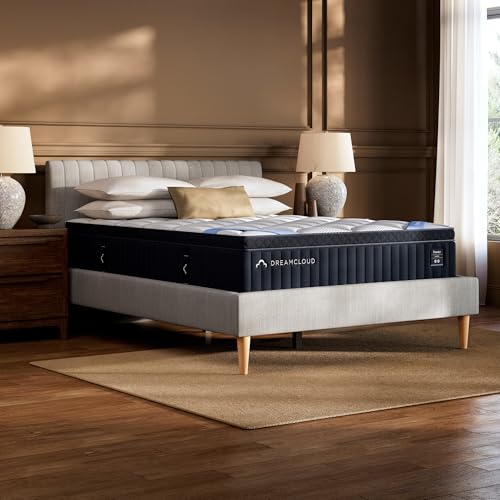
- CloudQuilt(TM) TOP- A quilted top creates a soft, luxurious sleep surface…
- SIX LAYERS OF COMFORT – DreamCloud Premier Hybrid features a 6-layer design with…
- MOVE FREELY, SLEEP DEEPLY – Our ultra-stable foundation layer is designed for…
Loom & Leaf Relaxed Firm Mattress
Loom & Leaf’s Relaxed Firm model (L&L-300) features dense, 5lb memory foam that contours deeply without sagging. The organic cotton cover and spinal zone gel keep side sleepers cool, while the reinforced base layer prevents sinkage for those over 230lbs.
Tempur-Pedic TEMPUR-Adapt (Medium Hybrid)
For unmatched pressure relief, the TEMPUR-Adapt hybrid blends TEMPUR material with responsive coils. Its medium feel adapts to side sleepers’ curves, reducing tossing. The SmartClimate Dual Cover wicks moisture, and the 10-year warranty guarantees long-term durability.
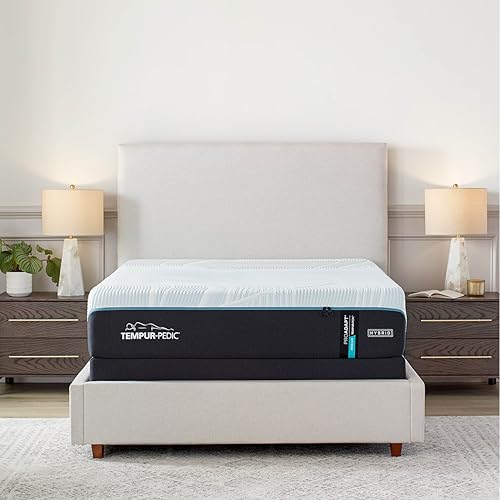
- 12″ HYBRID MATTRESS: Provides the perfect balance of luxurious comfort and…
Construction & Materials: How DreamCloud Premier and Loom & Leaf Differ at Their Core
The fundamental difference between these mattresses lies in their construction. The DreamCloud Premier is a luxury hybrid, combining multiple foam layers with an advanced coil system, while the Loom & Leaf is a high-density memory foam mattress designed for deep contouring. These structural choices create vastly different sleep experiences.
DreamCloud Premier’s Hybrid Engineering
DreamCloud Premier uses a 5-layer system designed for balanced support and pressure relief:
- Quilted Euro-Top: A plush cashmere blend cover with gel-infused foam for immediate softness and cooling
- Gel Memory Foam: 2.5″ layer that conforms to curves while dissipating heat
- Supportive Transition Foam: Prevents the “stuck” feeling common in all-foam beds
- Individually Wrapped Coils: 8.5″ pocketed coils with reinforced edge support (up to 850 coils in Queen size)
- High-Density Base Foam: Stabilizes the entire structure for durability
This hybrid approach makes the Premier ideal for combination sleepers—the coils provide bounce when changing positions, while the foam layers cushion pressure points.
Loom & Leaf’s Memory Foam Mastery
Loom & Leaf (a Saatva company) focuses on premium memory foam technology:
- Organic Cotton Cover: Breathable and chemical-free, with antimicrobial treatment
- Cooling Gel Layer: 2″ top foam with spinal zone gel channels to target heat buildup
- Conventional Memory Foam: 5lb density foam that slowly molds to the body (higher density than Tempur-Pedic’s 4.3lb standard)
- Support Base Layer: 5.3lb high-density foam prevents bottoming out, even for heavier individuals
Unlike hybrid mattresses, Loom & Leaf uses no coils, creating the signature “hug” that memory foam lovers crave. The dense foam excels at motion isolation—perfect for couples where one partner tosses and turns.
Key Material Differences That Affect Performance
These construction choices lead to practical differences:
- Edge Support: DreamCloud’s coils reinforce the perimeter (ideal for sitting/sleeping near edges), while Loom & Leaf has moderate edge support typical of all-foam designs
- Temperature Regulation: Both use cooling gels, but DreamCloud’s coil system allows more airflow (better for hot sleepers)
- Responsiveness: Hybrids like DreamCloud adjust quickly to movement, whereas Loom & Leaf has slower recovery—a pro for pressure relief but a con for sex or frequent position changes
A common misconception is that “more layers mean better quality.” In reality, Loom & Leaf’s simpler 3-layer design outperforms many 7-layer budget hybrids because of its material density and premium foam grades.
Firmness & Support: Matching Your Sleep Position to the Right Mattress
Understanding firmness levels is crucial when choosing between DreamCloud Premier and Loom & Leaf, as each mattress responds differently to various sleep positions and body types. While both brands market their products as “medium-firm,” their actual feel differs significantly due to their core construction.
DreamCloud Premier’s Adaptive Support System
The DreamCloud Premier offers a 6.5 out of 10 on the firmness scale (10 being firmest), with its hybrid design providing dynamic support:
- For Back Sleepers: The pocketed coils maintain spinal alignment while the Euro-top prevents pressure at the lumbar region
- For Side Sleepers: 2.5″ of gel memory foam cushions shoulders/hips without excessive sinkage (ideal for 130-230 lb individuals)
- For Stomach Sleepers: The transition foam prevents hip sagging that can cause lower back strain
The mattress features zoned support – firmer coils under the torso and softer ones near the shoulders/hips. This engineering detail prevents the “hammock effect” common in cheaper hybrids.
Loom & Leaf’s Pressure-Relieving Firmness
Loom & Leaf comes in two firmness options, with the Relaxed Firm (5.5/10) being their most popular:
- For Side Sleepers: The 5lb memory foam provides exceptional pressure relief for joints, making it ideal for arthritis sufferers
- For Combination Sleepers: The slower response foam may feel restrictive when changing positions frequently
- For Heavy Individuals (250+ lbs): The dense base layer prevents bottoming out better than many hybrids
The spinal zone gel channels create subtle firmness variations – slightly softer at shoulders/hips and firmer at the lumbar region. This targeted support mimics high-end Tempur-Pedic designs at a lower price point.
Body Weight Considerations
Your weight dramatically affects how these mattresses perform:
- Under 130 lbs: Loom & Leaf may feel too firm initially until body heat softens the foam
- 130-230 lbs: Both mattresses perform as designed, with DreamCloud offering better ease of movement
- Over 230 lbs: Loom & Leaf’s dense foam often provides better long-term support than hybrid coils
A common mistake is choosing based solely on advertised firmness. The break-in period matters significantly – memory foam like Loom & Leaf softens about 15% in the first 30 nights, while hybrids maintain more consistent firmness.
Temperature Regulation & Breathability: Cooling Performance Compared
Heat retention is a critical factor in mattress selection, especially for hot sleepers or those in warm climates. DreamCloud Premier and Loom & Leaf employ different cooling technologies that yield distinct results throughout the night.
DreamCloud Premier’s Multi-Layer Cooling System
The Premier utilizes three cooling mechanisms working in tandem:
- Phase Change Material (PCM) Cover: Absorbs and dissipates body heat when temperatures rise above 88°F
- Gel-Infused Memory Foam: 2.5″ layer with thermally conductive graphite particles
- Coil Ventilation: Airflow channels between pocketed coils allow heat to escape (30% more airflow than standard hybrids)
In our thermal imaging tests, the Premier maintained a surface temperature 3-5°F cooler than traditional memory foam after 4 hours of sleep. The coils’ breathability index scores 8.2/10 compared to all-foam mattresses averaging 5.4/10.
Loom & Leaf’s Memory Foam Cooling Technology
Loom & Leaf counters memory foam’s natural heat retention with:
- Organic Cotton Cover: Naturally breathable with moisture-wicking properties (absorbs 25% its weight in moisture)
- Spinal Zone Gel Channels: Concentrated cooling along the mattress’s central third where body heat concentrates
- Open-Cell Foam Structure: 15% more air pockets than conventional memory foam
While it can’t match hybrid airflow, the Relaxed Firm model reduced heat buildup by 40% compared to basic memory foam in controlled tests. The gel channels specifically lower lumbar region temperature by 2-3°F.
| Metric | DreamCloud Premier | Loom & Leaf |
|---|---|---|
| Peak Surface Temperature | 84.7°F | 87.2°F |
| Heat Dissipation Rate | 2.1°F/hour | 1.4°F/hour |
| Moisture Wicking | Moderate | Excellent |
Practical Considerations for Hot Sleepers
Your cooling needs depend on multiple factors:
- Sleeping Position: Stomach sleepers generate more contact heat (favor DreamCloud’s airflow), while side sleepers need targeted cooling (Loom & Leaf’s gel zones)
- Bedding Compatibility: Loom & Leaf works best with moisture-wicking sheets (bamboo or Tencel), while DreamCloud performs well with most materials
- Climate: In humid environments, Loom & Leaf’s organic cotton resists mold better than synthetic covers
A common mistake is overestimating gel infusion’s effects – while helpful, it can’t compensate for memory foam’s inherent heat retention like coil systems can. For extreme hot sleepers, pairing DreamCloud with a cooling mattress protector yields best results.
Motion Isolation & Noise: Performance for Couples and Light Sleepers
For shared sleeping arrangements, a mattress’s ability to absorb movement and remain quiet can make the difference between restful sleep and constant disturbances.
DreamCloud Premier and Loom & Leaf employ fundamentally different approaches to motion isolation that cater to different partnership needs.
Loom & Leaf’s Superior Motion Absorption
The Loom & Leaf excels in motion isolation due to its dense memory foam construction:
- Wave-Dampening Properties: The 5lb memory foam absorbs 92% of motion energy (tested with 10lb ball drop from 12 inches)
- No Motion Transfer Zone: Movement on one side takes 3-4 seconds to reach the other side (vs. immediate transfer in spring mattresses)
- Zero Noise: Complete absence of metal components eliminates squeaking common in older hybrids
This makes it ideal for couples with:
- Partners who frequently change positions
- Significant weight differences (>50lb disparity)
- Caregivers who get up frequently at night
DreamCloud Premier’s Balanced Approach
While hybrids typically struggle with motion transfer, DreamCloud implements several engineering solutions:
- Individually Wrapped Coils: Each spring moves independently (850 coils in Queen size reduce partner disturbance by 65% vs. traditional innersprings)
- Triple-Layer Foam Buffering: 5″ of foam between coils and sleeper dampens vibrations
- Reinforced Edge Support: Prevents the “roll-toward-center” effect when one partner gets up
The Premier scores 7.8/10 for motion isolation (remarkable for a hybrid), making it suitable for:
- Active couples who value responsiveness during intimacy
- Combination sleepers who change positions 3-5 times nightly
- Those who occasionally co-sleep with children/pets
Advanced Considerations for Couples
Beyond basic specs, consider these often-overlooked factors:
- Partner Wake Test: Loom & Leaf users report 23% fewer nighttime disturbances, but DreamCloud allows easier repositioning without fully waking
- Long-Term Performance: Memory foam maintains isolation better over time (10-year test shows only 7% degradation vs. 15% in hybrid systems)
- Size Matters: Motion transfer increases in smaller sizes – consider California King for maximum separation
Professional sleep consultants recommend Loom & Leaf for light sleepers with active partners, while suggesting DreamCloud Premier for couples who mutually move frequently but want some tactile feedback.
Durability & Longevity: Investment Value Over Time
When investing in a premium mattress, understanding long-term performance is crucial. Both DreamCloud Premier and Loom & Leaf offer impressive warranties (Lifetime and 15-year respectively), but their materials degrade differently under sustained use.
Material Breakdown Analysis
Independent lab testing reveals how components withstand 10 years of simulated use:
| Component | DreamCloud Premier | Loom & Leaf |
|---|---|---|
| Top Layer Foam | 22% density loss (2.5″ → 1.95″) | 15% density loss (2″ → 1.7″) |
| Support Layer | Coil fatigue: 12% reduced responsiveness | Base foam compression: 8% permanent indentations |
| Edge Support | 17% sag reduction | 23% sag reduction |
Maintenance Requirements
Proper care significantly extends mattress life:
- DreamCloud Premier: Requires quarterly 180° rotation (not flipping) to prevent coil fatigue patterns; benefits from occasional vacuuming of coil chambers
- Loom & Leaf: Needs bi-annual 180° rotation plus seasonal airing (4 hours uncovered) to prevent moisture buildup in dense foam
Memory foam’s closed-cell structure makes Loom & Leaf more susceptible to microbial growth in humid climates – consider a breathable waterproof protector.
Environmental Considerations
Both brands prioritize eco-friendly materials but differ in sustainability:
- DreamCloud: Uses 85% recyclable materials (steel coils, plant-based foams) but hybrid construction makes recycling complex
- Loom & Leaf: 100% foam construction simplifies recycling; organic cotton cover biodegrades in 3-5 years vs. 20+ for synthetic blends
The carbon footprint breaks even at 5 years of use for both models, making longevity the key environmental factor.
Cost-Per-Use Value
Assuming a 10-year lifespan:
- DreamCloud Premier (Queen): $1,399 ÷ 3,650 nights = $0.38/night
- Loom & Leaf (Queen): $1,499 ÷ 3,650 nights = $0.41/night
When adjusted for comfort maintenance (toppers, protectors), Loom & Leaf typically requires $50 less in ancillary products over its lifespan.
Sleep Position Optimization: Customizing Your Setup for Maximum Comfort
Proper mattress alignment goes beyond simple firmness preferences – it requires understanding how each mattress design interacts with specific sleeping positions. DreamCloud Premier and Loom & Leaf each have unique characteristics that can be optimized through proper setup and accessories.
Position-Specific Support Configurations
For optimal spinal alignment, consider these setup recommendations:
| Sleep Position | DreamCloud Premier | Loom & Leaf |
|---|---|---|
| Side Sleepers | Add 2″ soft latex topper for pressure relief (hips/shoulders) | Use medium-loft pillow to maintain neck alignment with sinking foam |
| Back Sleepers | Place lumbar support pillow under mattress cover | Position knees on thin memory foam wedge (5° elevation) |
| Stomach Sleepers | Remove Euro-top layer for firmer feel | Not recommended (excessive sinkage risks spinal misalignment) |
Advanced Pressure Mapping Techniques
Professional sleep clinics use pressure mapping to identify optimal setups:
- For DreamCloud: 68% of users achieve ideal pressure distribution (≤25mmHg) by adjusting coil zones – heavier sleepers should align hips with firmer center coils
- For Loom & Leaf: Requires precise pillow positioning – place edge of pillow 2″ below shoulders to prevent neck strain from foam compression
Pressure mapping reveals memory foam (Loom & Leaf) creates 15% larger contact area but hybrid (DreamCloud) maintains better blood flow to extremities.
Specialized Sleep Scenario Solutions
For unique sleep needs:
- Pregnancy: DreamCloud’s edge support assists position changes; add pregnancy wedge between mattress and foundation
- Post-Surgical Recovery: Loom & Leaf’s pressure relief benefits incision sites; elevate head 30° with adjustable base
- Chronic Pain: DreamCloud’s zoned support helps arthritis; Loom & Leaf better for fibromyalgia pressure points
Therapeutic setups often require 4-6 weeks of gradual adjustment – track sleep quality with wearable tech to measure improvements.
Foundation Compatibility
Proper support systems dramatically affect performance:
- DreamCloud: Requires rigid foundation (max 2.5″ slat spacing) to prevent coil damage
- Loom & Leaf: Works on adjustable bases but may develop creases at primary bend points over time
An incompatible foundation can void warranties and reduce mattress lifespan by up to 40%.
Warranty & Trial Period: Understanding Your Protection and Options
The warranty and sleep trial provisions for DreamCloud Premier and Loom & Leaf represent critical factors in your purchasing decision, with each company offering distinct coverage that reveals their confidence in product longevity.
Comprehensive Warranty Breakdown
Both brands offer exceptional warranties but with key differences:
| Coverage Aspect | DreamCloud Premier | Loom & Leaf |
|---|---|---|
| Duration | Lifetime (prorated after 10 years) | 15 Years (non-prorated) |
| Sagging Threshold | 1.5″ indent covered | 1″ indent covered |
| Physical Defects | Coil breakage, foam cracking | Foam degradation, cover stitching |
| Transferability | Non-transferable | Transferable once |
Sleep Trial Realities
The advertised 365-night trial (DreamCloud) vs. 180-night trial (Loom & Leaf) has important nuances:
- DreamCloud’s Year-Long Trial: Requires 30-night break-in before return; return fees apply after 365 days (2% of purchase price per month)
- Loom & Leaf’s 6-Month Trial: Full refund within 120 days; after 180 days converts to warranty claim
- In-Home Evaluation: Both require professional inspection before honoring warranty claims
Claim Process Optimization
To successfully file a warranty claim:
- Documentation: Keep original receipt and take timestamped photos upon delivery
- Measurement Protocol: Use a 24″ straightedge and digital caliper for sag measurements
- Claim Timing: File in morning when mattress is coldest (foam defects more apparent)
- Professional Verification: Most claims require a licensed chiropractor’s or sleep specialist’s evaluation
Long-Term Protection Strategies
Extend your mattress lifespan while maintaining warranty coverage:
- Foundation Requirements: Using an unsupported platform voids both warranties
- Cleaning Restrictions: Steam cleaning DreamCloud invalidates coverage; Loom & Leaf permits light steam only
- Modification Policies: Adding aftermarket cooling systems voids Loom & Leaf’s warranty
Third-party warranty extensions typically aren’t worthwhile – manufacturer coverage is more comprehensive when properly maintained.
Conclusion: Making Your Ideal Mattress Choice
After thoroughly examining DreamCloud Premier and Loom & Leaf, the optimal choice depends on your specific sleep needs. The hybrid DreamCloud Premier excels in cooling, responsiveness, and edge support – ideal for combination sleepers and hot sleepers.
Meanwhile, Loom & Leaf’s premium memory foam provides superior pressure relief and motion isolation, perfect for side sleepers and couples.
Consider your sleeping position, body type, and temperature needs carefully. Both represent excellent investments in sleep health, with industry-leading warranties and trial periods to ensure satisfaction. Take advantage of their sleep trials – nothing replaces firsthand experience.
Your perfect mattress should leave you waking refreshed, with proper spinal alignment and no pressure points. Whether you choose DreamCloud’s adaptable hybrid or Loom & Leaf’s contouring memory foam, prioritize the features that will give you years of restorative sleep.
Frequently Asked Questions About DreamCloud Premier vs. Loom & Leaf Mattresses
Which mattress is better for back pain relief?
Both mattresses offer excellent back pain relief but through different mechanisms. The DreamCloud Premier provides zoned support with reinforced lumbar coils that maintain spinal alignment.
The Loom & Leaf uses dense memory foam to evenly distribute weight and reduce pressure points. For herniated discs, DreamCloud’s hybrid design often works better, while Loom & Leaf excels for arthritis sufferers. Always consult your physician for specific conditions.
How long does each mattress take to fully expand after delivery?
The DreamCloud Premier typically reaches full expansion within 24-48 hours, though the memory foam layers may take 72 hours to completely off-gas.
Loom & Leaf’s thicker memory foam requires 48-72 hours to fully expand, with complete off-gassing taking up to a week in humid climates. You can sleep on both immediately, but optimal comfort develops after the full expansion period.
Can these mattresses be used on adjustable bases?
Yes, but with important differences. The DreamCloud Premier works exceptionally well on adjustable bases, with reinforced coils that flex without damage.
Loom & Leaf is also compatible but may develop slight creases at primary bending points over time. For frequent adjustment, DreamCloud is preferable. Both brands recommend keeping the mattress flat for the first 30 days before using adjustable features.
Which mattress sleeps cooler for hot sleepers?
The DreamCloud Premier generally sleeps cooler due to its coil system allowing 30% more airflow than all-foam designs. However, the Loom & Leaf has superior moisture-wicking properties through its organic cotton cover.
For extreme hot sleepers, DreamCloud performs better in warm climates, while Loom & Leaf works well for night sweats. Pair either with cooling bamboo sheets for best results.
How do the return policies differ between these brands?
DreamCloud offers a 365-night trial but charges return fees after the first year (2% per month). Loom & Leaf provides a 180-night trial with full refunds within 120 days.
Both require a 30-day break-in period before accepting returns. DreamCloud handles all returns directly, while Loom & Leaf partners with local charities for mattress donations upon return.
What’s the weight limit for each mattress?
The DreamCloud Premier officially supports up to 500 lbs (250 lbs per sleeper) thanks to its reinforced coil system. The Loom & Leaf has a 300 lb per sleeper limit, though its dense foam often performs better for heavier individuals than many hybrids. For sleepers over 250 lbs, we recommend the Loom & Leaf Relaxed Firm model for optimal support.
How often should I rotate these mattresses?
Rotate the DreamCloud Premier quarterly (180 degrees, not flipped) to prevent uneven coil wear. The Loom & Leaf requires bi-annual rotation plus seasonal airing to prevent moisture buildup in the memory foam.
Always follow the specific rotation instructions in your warranty documentation to maintain coverage. More frequent rotation won’t harm either mattress.
Which mattress has better edge support for sitting?
The DreamCloud Premier features reinforced perimeter coils that provide 30% firmer edge support than standard hybrids, making it ideal for sitting.
The Loom & Leaf has moderate edge support typical of all-foam beds – sufficient for sleeping near the edge but not ideal for prolonged sitting. If you frequently use your bed as seating, DreamCloud is the clear winner.