
Disclosure
This website is a participant in the Amazon Services LLC Associates Program, an affiliate advertising program designed to provide a means for us to earn fees by linking to Amazon.com and affiliated sites.
Choosing the right pillow isn’t just about comfort—it’s about unlocking deeper sleep and waking up pain-free. Down and latex pillows are two top contenders, but which one truly delivers? Many assume down is the ultimate luxury, while latex is just for allergy sufferers—but the reality is far more nuanced. Your sleep style, health needs, and even climate play a critical role.
In this guide, we’ll dissect every detail: from temperature regulation and durability to cost and ethical considerations. Whether you’re a side sleeper craving support or a hot sleeper desperate for cooling relief, you’ll leave with a clear winner—backed by science, not marketing hype.
Best Down and Latex Pillows for Restful Sleep
Pacific Coast Double DownFill Pillow (Standard Firmness)
Ideal for those who crave cloud-like softness, this pillow features 650 fill-power white goose down with a double-chamber design for adjustable loft. The 100% cotton shell ensures breathability, making it perfect for hot sleepers who still want luxury.

- Ideal For Back And Side Sleepers: With this perfected shell and our 3-chamber…
- Hypo-Allergenic: One of the most important and expensive components of our…
- Soft, Breathable and Skin-Friendly: We created a naturally down-proof fabric…
PlushBeds Natural Latex Pillow (Medium Firm)
Made with 100% GOLS-certified organic latex, this pillow offers responsive support that cradles your neck without sinking. Its ventilated design promotes airflow, and the hypoallergenic properties make it a top pick for allergy sufferers or eco-conscious buyers.
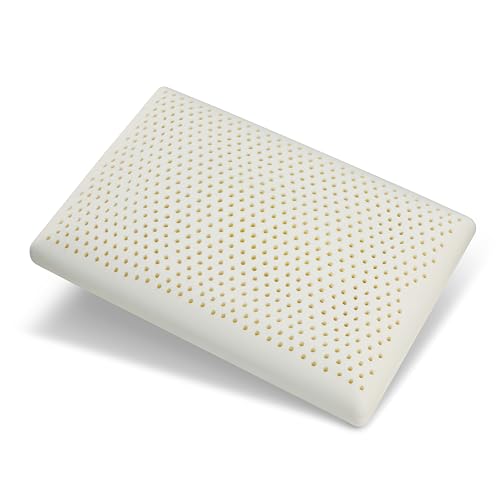
- HIGH QUALITY: We stand behind our products with eco-friendly latex and…
- SOFT BOUNCE-BACK: The foam pillow cradles your head, neck, and shoulders by…
- UNIVERSAL COMFORT: The mid-loft talalay latex foam pillow measures 5 inch high…
Brooklinen Down Pillow (Medium-Fill)
A versatile choice with European white duck down, this pillow strikes a balance between plushness and support. The baffle-box construction prevents shifting, and the 300-thread-count cotton cover adds durability—ideal for back or stomach sleepers needing adaptable comfort.
No products found.
Material Composition: How Down and Latex Pillows Are Made
Understanding the fundamental differences between down and latex pillows begins with their core materials. Down pillows use the soft undercoating of geese or ducks, consisting of delicate clusters that trap air for insulation. The quality is measured by fill power—a number (ranging from 300 to 900) indicating loftiness.
Higher fill power (e.g., 800+) means better fluffiness and longevity, but also a higher price tag. Meanwhile, latex pillows are crafted from either natural rubber tree sap or synthetic blends, processed into a dense yet breathable foam.
Natural latex is prized for its sustainability and hypoallergenic properties, while synthetic versions are more affordable but less durable.
Key Differences in Structure and Support
Down pillows excel in moldability, conforming to your head and neck for a “sinking-in” sensation. However, they lack inherent structure, which can lead to flattening over time—especially with lower fill power. Latex, by contrast, offers responsive support; it gently pushes back to maintain spinal alignment. For example, side sleepers often prefer latex’s firmness to prevent neck strain, while stomach sleepers might find down’s softer profile less restrictive.
Breathability and Temperature Regulation
Down’s natural loft creates air pockets that retain heat, making it cozy for cold climates but potentially stifling for hot sleepers. Premium down pillows address this with moisture-wicking covers. Latex, however, has open-cell structures that promote airflow, and some brands (like PlushBeds) add pinhole perforations to enhance cooling. This makes latex ideal for those prone to night sweats or living in humid areas.
- Down pros: Ultra-soft, adjustable loft, lightweight
- Down cons: Requires fluffing, can trigger allergies if not cleaned properly
- Latex pros: Hypoallergenic, maintains shape, eco-friendly (if natural)
- Latex cons: Heavier, initial “rubber” smell, less malleable
A common myth is that all down pillows are high-maintenance. In reality, models with baffle-box construction (like Brooklinen’s) resist clumping. Similarly, not all latex feels rigid—shredded latex blends (e.g., Saatva’s) offer a softer, down-like feel with better airflow.
Sleep Position Compatibility: Matching Pillows to Your Sleeping Style
Your preferred sleep position dramatically impacts whether down or latex will serve you best. Side sleepers typically need firmer support to maintain neck alignment—a role latex excels at. The material’s natural resilience prevents the head from sinking too deeply, which could otherwise cause shoulder tension. For example, the PlushBeds Natural Latex Pillow’s medium-firm density provides optimal cervical support without feeling rigid.
Tailoring Loft and Firmness to Your Needs
Down pillows offer adjustable loft, but require strategic selection based on sleep style:
- Back sleepers: Choose medium-loft down (like Pacific Coast’s Double DownFill) to gently cradle the neck without pushing the head forward
- Stomach sleepers: Opt for low-loft down (under 3″) to prevent spinal hyperextension—Brooklinen’s Soft Down Pillow works well
- Combination sleepers: Shredded latex blends (e.g., Saatva Latex Pillow) provide adaptable support during position changes
Special Considerations for Pain Relief
Chronic pain sufferers often benefit from latex’s pressure-relieving properties. The material distributes weight evenly, reducing hot spots—particularly valuable for arthritis patients. However, down can be preferable for migraine sufferers who need ultra-soft surface pressure. Some premium latex pillows (like Avocado’s Green Pillow) combine zoned support with a plush wool cover for dual benefits.
An often-overlooked factor is partnered sleeping dynamics. Latex’s motion isolation prevents disturbance when one person tosses/turns, while down’s near-silent compression won’t crinkle like some latex models. For couples with different preferences, layered solutions (latex base + down topper) might be ideal.
Remember that pillow height matters as much as material. A proper test: when lying on your side, your nose should align with your sternum. If it tilts downward, the pillow’s too low; if angled upward, it’s too high—regardless of material type.
Durability and Maintenance: Long-Term Performance Compared
When investing in quality sleep products, understanding their lifespan and care requirements is crucial. Down and latex pillows have fundamentally different aging characteristics that impact their long-term value. High-quality down pillows (650+ fill power) can last 5-7 years with proper care, while natural latex pillows often exceed 10 years without significant degradation.
Material Breakdown and Wear Patterns
| Factor | Down Pillows | Latex Pillows |
|---|---|---|
| Compression Resistance | Loses 15-20% loft annually without proper fluffing | Maintains 95%+ original height with regular use |
| Moisture Impact | Clumping occurs at 65%+ humidity without anti-microbial treatment | Naturally resistant to mold/mildew even in humid climates |
| Structural Failure Points | Seam splitting (especially with baffle-box designs) | Potential edge crumbling after 8+ years |
Professional Care Recommendations
For down pillows, the Gold Standard maintenance protocol includes:
- Monthly airing (4-6 hours in sunlight)
- Biannual professional cleaning (home washing destroys clusters)
- Daily “shake and fluff” ritual to redistribute filling
Latex pillows require different care:
- Quarterly surface vacuuming (use upholstery attachment)
- Spot cleaning only with mild soap (never soak)
- Annual rotation (flip end-to-end to equalize wear)
Common Preservation Mistakes
Most consumers unknowingly reduce their pillow’s lifespan by:
- Using protective cases that don’t breathe (causes moisture buildup in down)
- Storing latex in plastic (accelerates rubber breakdown)
- Over-washing down (more than 2x/year degrades natural oils)
Pro Tip: For down pillows, invest in a cedar storage box during off-seasons – it prevents dust mites while maintaining loft. Latex benefits from breathable cotton storage bags with silica gel packets to control humidity.
Health and Environmental Considerations: Making an Informed Choice
The health and ecological impacts of down versus latex pillows involve complex trade-offs that conscious consumers should carefully evaluate. Both materials have distinct advantages and challenges regarding allergies, sustainability, and chemical exposure.
Allergy and Respiratory Factors
While often marketed as hypoallergenic, down pillows can harbor dust mites if not properly maintained. The key considerations include:
- Down risks: Requires frequent professional cleaning (every 6 months) to prevent allergen buildup
- Latex advantages: Naturally resistant to dust mites and mold due to antimicrobial properties
- Special cases: Some latex allergies (Type I hypersensitivity) may react to natural rubber proteins
For asthma sufferers, certified organic latex (GOLS) with ventilated designs provides the safest option, while down users should look for OEKO-TEX® certified treatments that eliminate harmful processing chemicals.
Sustainability and Ethical Sourcing
The environmental footprint differs significantly between materials:
- Down: Responsible Down Standard (RDS) certification ensures ethical sourcing, but water-intensive cleaning processes remain an issue
- Latex: FSC-certified rubber plantations support sustainable harvesting, though transportation emissions can offset benefits
- End-of-life: Natural latex biodegrades in 6-12 months versus down’s 3-5 year decomposition timeline
Chemical Exposure and Certifications
Understanding material processing is crucial for health-conscious buyers:
- Down concerns: Some manufacturers use formaldehyde-based anti-clumping treatments
- Latex processing: Talcum powder dusting during production may require thorough initial cleaning
- Certifications to seek: GOTS for organic textiles, GREENGUARD Gold for low VOC emissions
Pro Tip: For maximum safety, look for pillows combining both RDS-certified down and GOLS-certified latex in layered designs. These hybrid options from brands like Naturepedic offer balanced benefits while minimizing potential drawbacks of either material alone.
Cost Analysis and Value Over Time: Making a Smart Investment
When comparing down and latex pillows, the initial price tag tells only part of the story. A comprehensive cost-benefit analysis must consider longevity, maintenance expenses, and performance consistency over years of use.
Initial Purchase Price Breakdown
| Pillow Type | Entry-Level Price | Mid-Range Price | Premium Price |
|---|---|---|---|
| Down Pillows | $50-$80 (500-600 fill power) | $120-$180 (650-750 fill power) | $250+ (800+ fill power, RDS certified) |
| Latex Pillows | $80-$120 (blended latex) | $150-$220 (100% natural latex) | $300+ (organic GOLS certified) |
Long-Term Cost Considerations
The true value emerges when examining total cost of ownership:
- Down pillows: Require $25-$50 professional cleanings 2x/year, typically replaced every 5-7 years
- Latex pillows: Need only occasional spot cleaning, often last 10+ years without replacement
- Hidden costs: Down may require $40-$80 protective covers, while latex needs $20-$40 ventilated protectors
Performance Consistency and ROI
Down pillows gradually lose about 15% of their support annually, while latex maintains 90%+ of its original firmness for 8+ years. For the budget-conscious:
- Best value down: Pacific Coast’s 650 fill power ($150) offers 6-year lifespan at $25/year cost
- Best value latex: Sleep On Latex Pure Green ($180) delivers 12-year use at $15/year cost
Emerging Trends and Future Considerations
The market is evolving with hybrid solutions that combine materials:
- Down-core with latex surround ($220-$350) for balanced support
- Shredded latex with down topper layers ($190-$280) for adjustable firmness
- Climate-responsive materials that adapt to seasonal temperature changes
Pro Tip: Calculate your cost-per-night (initial price ÷ [years x 365]) – premium latex often costs less than $0.10/night over its lifespan, outperforming mid-range down options.
Customization and Adjustability: Tailoring Your Sleep Experience
The ability to customize pillow characteristics significantly impacts sleep quality, with down and latex offering fundamentally different approaches to personalization. Understanding these differences helps create your ideal sleep environment.
Material-Specific Adjustment Methods
Down pillows provide natural adjustability through their fill distribution:
- Loft control: Add/remove down clusters (most manufacturers provide extra fill)
- Firmness tuning: Adjust internal baffle box chambers for zoned support
- Seasonal adaptation: Compress for summer use or fluff fully for winter
Latex pillows offer structural customization options:
- Density selection: Choose between 3-5 firmness levels (measured in ILD ratings)
- Cutting modification: Some solid latex models can be carefully trimmed to size
- Layer rearrangement: Shredded latex versions allow fill redistribution
Advanced Customization Techniques
For specialized needs, consider these professional methods:
- Down layering: Combine multiple down pillows in a single case for graduated support
- Latex carving: Use electric bread knives (under expert guidance) to sculpt contours
- Hybrid systems: Layer latex base with down topper for adjustable pressure relief
Specialized Sleep Scenario Solutions
| Sleep Challenge | Down Solution | Latex Solution |
|---|---|---|
| Chronic neck pain | Medium-firm down with cervical support insert | Contoured latex with ergonomic neck curve |
| Frequent position changes | Overfilled down with baffle walls | Shredded latex with adjustable chambers |
| Temperature dysregulation | Lightweight down with cooling gel layer | Perforated latex with bamboo cover |
Pro Tip: For maximum customization, consider modular pillow systems like the Malouf DoughZ adjustable pillow, which combines shredded memory foam with latex support layers, allowing millimeter-precise height adjustments through removable fill.
Performance Optimization: Advanced Strategies for Ideal Sleep Support
Maximizing the benefits of down or latex pillows requires understanding their performance characteristics at a granular level and implementing professional-grade optimization techniques. These advanced methods can transform good sleep into exceptional rest.
Material-Specific Enhancement Methods
| Optimization Goal | Down Pillow Techniques | Latex Pillow Techniques |
|---|---|---|
| Support Precision | Use graduated fill chambers (heavier clusters at base) | Combine 2-3 density layers (firm base/soft top) |
| Temperature Control | Add phase-change material cover (PCM technology) | Incorporate ventilation channels (5-8mm diameter) |
| Motion Isolation | Implement quilted stabilization panels | Use viscoelastic latex blends |
Professional Maintenance Protocols
Extend peak performance with these specialist-approved methods:
- Down revitalization: Annual professional steaming restores cluster elasticity (not DIY)
- Latex surface care: Monthly food-grade silicone treatments prevent drying
- Structural inspections: Check for down migration or latex compression every 6 months
Advanced Hybrid Solutions
Cutting-edge combinations leverage both materials’ strengths:
- Core-shell designs: Latex support core with down comfort layer
- Zoned systems: Latex for cervical support, down for cranial comfort
- Seasonal configurations: Interchangeable down/latex inserts
Quality Assurance Metrics
Evaluate your pillow’s ongoing performance with these benchmarks:
- Down recovery test: Should regain 90%+ loft after compression within 2 minutes
- Latex resilience: 1″ depression should fully rebound in under 3 seconds
- Edge support: Maintains 80% of center support when testing peripheral areas
Pro Tip: For sleep labs or professional athletes, consider instrumented testing with pressure mapping systems to precisely analyze support distribution – the gold standard for optimization.
Conclusion: Finding Your Perfect Pillow Match
Through our comprehensive comparison, we’ve explored how down pillows excel in moldable softness and temperature retention, while latex offers superior support and durability. Your ideal choice depends on sleep position, climate, health considerations, and personal comfort preferences.
Remember that premium materials like 800+ fill power down or GOLS-certified latex deliver the best long-term value despite higher upfront costs.
Take action today: Assess your primary sleep position, measure your shoulder width for proper loft needs, and consider investing in a 30-night trial period from reputable manufacturers. Your perfect pillow – whether down, latex, or a hybrid solution – should leave you waking up refreshed with no neck stiffness, proving it’s worth every penny of your investment in quality sleep.
Frequently Asked Questions About Down vs. Latex Pillows
What’s the main difference in feel between down and latex pillows?
Down pillows offer a cloud-like, plush sensation that molds to your head shape, while latex provides firm, responsive support that gently pushes back. High-quality down (650+ fill power) feels luxurious but requires frequent fluffing, whereas latex maintains its shape consistently. Side sleepers often prefer latex’s neck support, while back sleepers may enjoy down’s softer cradle.
How do I clean and maintain a down pillow properly?
Professional cleaning every 6 months is essential – home washing damages delicate down clusters. Between cleanings, air pillows monthly in direct sunlight and use a protective cover. For daily maintenance, vigorously fluff and shake to redistribute filling. Avoid compression storage, and consider adding tennis balls to dryer cycles to restore loft.
Can latex pillows help with neck pain?
Yes, latex’s firm yet yielding support excels for neck pain relief. The material’s natural elasticity (measured in ILD firmness ratings) cradles cervical vertebrae without collapsing. Look for ergonomic designs with contoured neck rolls or zoned support layers. Medium-firm latex (ILD 25-30) works best for most pain sufferers, providing both support and pressure relief.
Are down pillows bad for allergy sufferers?
Not necessarily. High-quality down undergoes extensive cleaning and sterilization processes. Look for OEKO-TEX® certified down that’s been washed at 140°F+ to kill allergens. However, those with severe allergies may prefer latex’s naturally hypoallergenic properties. Down alternative pillows with synthetic fills can be another solution for allergy-prone individuals.
How long do these pillow types typically last?
Premium down pillows last 5-7 years with proper care, while natural latex can serve you well for 10+ years. Down gradually loses loft (about 15% annually), whereas latex maintains 90% of its original support for 8+ years. Environmental factors matter too – humid climates shorten down’s lifespan, while latex thrives in moisture-rich environments.
What’s better for hot sleepers – down or latex?
Latex generally sleeps cooler due to its open-cell structure and breathability. Look for perforated or channeled latex designs that enhance airflow. Down can trap heat unless you choose a high-loft version with moisture-wicking bamboo or Tencel covers. Some advanced down alternatives now incorporate cooling gel layers for temperature regulation.
Why are some latex pillows much cheaper than others?
Price differences reflect latex quality and origin. Cheap latex often contains synthetic blends or lower-grade Dunlop processing. Premium options use 100% natural Talalay latex with GOLS organic certification. The production method matters too – Talalay’s vacuum process creates more consistent cells than Dunlop’s cake-batter approach, justifying higher costs.
Can I combine down and latex in one pillow setup?
Absolutely. Many sleep specialists recommend layering a firm latex base with a down topper. This hybrid approach gives you latex’s support with down’s adjustability. Some manufacturers now offer “dual-chamber” designs with latex cores and down surrounds. For couples with different preferences, this can be an ideal compromise solution worth exploring.