
Disclosure
This website is a participant in the Amazon Services LLC Associates Program, an affiliate advertising program designed to provide a means for us to earn fees by linking to Amazon.com and affiliated sites.
Struggling to decide between down and gel pillows? The right pillow can transform your sleep, while the wrong one leaves you tossing all night. Down pillows promise cloud-like softness, while gel pillows boast cooling technology—but which one truly delivers deeper, more restorative sleep?
Many assume down is the ultimate luxury, but modern gel pillows challenge that notion with temperature regulation and spinal alignment benefits. Whether you’re a side sleeper needing support or a hot sleeper craving coolness, this guide reveals the surprising pros and cons of each—so you can unlock the best sleep of your life.
Best Down and Gel Pillows for Sleep
Pacific Coast Double DownFill Pillow (Standard Firmness)
This premium down pillow features 650 fill-power white goose down for exceptional loft and breathability. Its double-chamber design ensures even distribution, preventing flat spots while offering adjustable firmness. Ideal for back and side sleepers who want plush support without overheating.

- Ideal For Back And Side Sleepers: With this perfected shell and our 3-chamber…
- Hypo-Allergenic: One of the most important and expensive components of our…
- Soft, Breathable and Skin-Friendly: We created a naturally down-proof fabric…
Tempur-Pedic TEMPUR-Breeze Gel Pillow (Queen)
Engineered with TEMPUR material and a cooling gel layer, this pillow actively draws heat away from your head. Its ergonomic shape reduces neck strain, making it perfect for hot sleepers or those with chronic pain. The medium-firm density balances support and pressure relief.
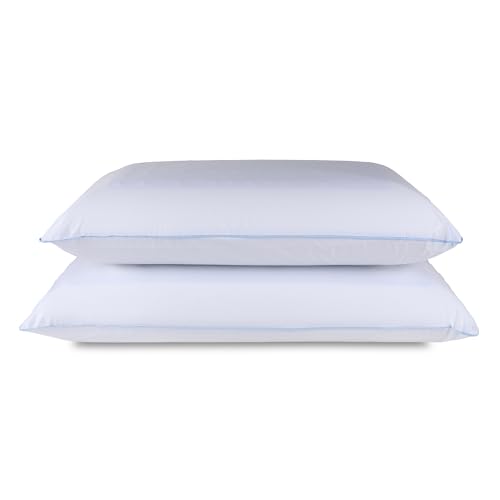
- Helps relieve aches and pains: TEMPUR-Material precisely adapts to your head…
- TEMPUR-Material: A single piece of our one-of-a-kind, infinitely adaptable…
- Cooling Gel Layers: A layer of Tempur-Pedic Cooling Technology is added to both…
Brooklinen Down Alternative Pillow (Plush)
A hypoallergenic blend of microfiber and gel-infused memory foam mimics the feel of down while resisting allergens. The gel beads regulate temperature, and the plush option contours gently to your head—ideal for stomach sleepers or allergy sufferers who still crave cloud-like softness.
No products found.
Down Pillows: Luxurious Softness with Temperature Regulation
Down pillows, filled with the soft undercoating of geese or ducks, are prized for their cloud-like comfort and natural breathability. The fill power (measured in cubic inches per ounce) determines quality—higher numbers (600+) indicate superior loft and insulation. Unlike synthetic fills, down clusters trap air efficiently, creating a plush yet supportive surface that molds to your head and neck without pressure points.
Who Benefits Most from Down Pillows?
- Back sleepers: The adaptable loft keeps the spine aligned by filling the natural curve between the neck and mattress.
- Cold sleepers: Down’s insulating properties retain body heat, ideal for chilly bedrooms.
- Luxury seekers: The premium feel rivals hotel-style bedding, offering a decadent sleep experience.
However, down has drawbacks. It requires frequent fluffing to maintain shape, and some find it too soft for proper support. Allergy sufferers should opt for hypoallergenic versions with tightly woven covers, as natural down can harbor dust mites. A common myth is that all down pillows sleep hot—in reality, high-quality down wicks moisture and breathes well, but humid climates may exacerbate heat retention.
Maintenance and Longevity
To extend lifespan, wash down pillows biannually using a gentle cycle with tennis balls to redistribute clusters. Daily fluffing prevents clumping. Brands like Pacific Coast use baffle-box construction to minimize shifting, while Brooklinen’s Down Alternative mimics the feel without allergy risks. Expect a well-maintained down pillow to last 5–7 years—longer than most synthetic options.
For those prioritizing softness over structure, down delivers unmatched comfort. But if you need cooling or firmer support, gel pillows (covered next) may be the better choice.
Gel Pillows: Advanced Cooling and Targeted Support
Gel pillows represent the cutting edge of sleep technology, combining pressure-relieving materials with active temperature regulation. These pillows typically feature either gel-infused memory foam or a gel-topper layer that works by conducting heat away from your body through phase-change materials. Unlike traditional memory foam that can retain heat, gel formulations absorb and dissipate warmth, keeping surface temperatures 2-3°F cooler on average.
Ideal Sleepers for Gel Technology
- Hot sleepers: The gel’s thermal conductivity helps regulate microclimate temperatures throughout the night
- Pain sufferers: High-density gel foams provide orthopedic support while reducing pressure on joints
- Active recovery: Some medical-grade gels (like Tempur-Pedic’s proprietary material) can help reduce inflammation
The cooling effect isn’t just surface-level. Quality gel pillows like the Tempur-Pedic TEMPUR-Breeze use open-cell foam structures that enhance airflow while the gel layer absorbs excess body heat. However, some users report an initial “chemical smell” that dissipates within 48 hours – this is normal off-gassing from the manufacturing process. For maximum benefit, pair gel pillows with breathable bamboo or moisture-wicking pillowcases.
Maintenance and Performance Factors
Gel pillows require specific care to maintain their cooling properties. Never machine wash them – instead, spot clean with mild detergent and air dry. Rotate the pillow weekly to prevent permanent indentations. Performance degrades faster than down (typically 3-5 years) as the gel microcapsules break down. Look for certifications like CertiPUR-US® to verify material safety and durability claims.
While gel pillows excel at temperature regulation, they may feel too firm for those accustomed to down’s plushness. The best models offer removable gel layers or adjustable loft options to customize your sleep experience.
Comparative Analysis: Down vs. Gel Pillows for Different Sleep Needs
| Feature | Down Pillows | Gel Pillows |
|---|---|---|
| Temperature Regulation | Natural breathability (650+ fill power), best for moderate climates | Active cooling technology, ideal for hot sleepers (3-5°F reduction) |
| Support Level | Adjustable loft, medium support (varies with fill power) | Firm, contouring support (density ranges 3.5-5.5 lb/ft³) |
| Durability | 5-7 years with proper care (requires regular fluffing) | 3-5 years (gel effectiveness diminishes over time) |
Sleep Position Recommendations
The ideal pillow varies dramatically by sleeping position due to differing spinal alignment needs:
- Side Sleepers: Need firm support (7-10cm loft). Gel pillows with ergonomic cutouts or medium-firm down with baffle-box construction work best.
- Back Sleepers: Require medium support (5-7cm). A medium-loft down pillow or hybrid gel-down combination maintains cervical curve.
- Stomach Sleepers: Need soft support (<5cm). Low-loft down or shredded gel foam prevents neck hyperextension.
Material Science Insights
Down’s thermal performance comes from its cluster structure – each plume traps air pockets that insulate while allowing moisture vapor transmission. Gel pillows use either:
- Phase Change Materials (PCMs): Microencapsulated gels that absorb heat at specific temperatures (typically 88-92°F)
- Thermoconductive Gels: Graphite or copper-infused compounds that rapidly transfer heat away
Common mistakes include choosing based solely on initial comfort. The break-in period matters – down requires 3-5 nights to fully loft, while gel needs 1-2 weeks for temperature regulation to stabilize. For combination sleepers, consider dual-chamber designs like the Coop Home Goods Eden with adjustable gel and down-alternative fill.
Special Considerations: Allergies, Climate, and Sleep Disorders
Allergy Management Solutions
While traditional down pillows can trigger allergies, modern solutions exist for sensitive sleepers:
- Down alternatives: Look for Oeko-Tex certified microfiber fills (like Brooklinen’s Down Alternative) that mimic down’s feel without allergens
- Gel pillow options: Hypoallergenic memory foam with gel infusion (such as Tempur-Pedic’s options) resist dust mites and mold
- Barrier protection: AllerEase allergy protection covers block particles while maintaining breathability (blocks particles as small as 1 micron)
Climate-Specific Recommendations
Your local weather dramatically impacts pillow performance:
| Climate Type | Recommended Pillow | Key Features |
|---|---|---|
| Humid/Tropical | Gel-infused memory foam | Open-cell structure with 95%+ airflow, moisture-wicking cover |
| Dry/Cold | High-fill power down (800+) | Natural insulation, humidity-regulating properties |
| Variable | Hybrid down-gel combination | Adjustable layers for temperature flexibility |
Medical Considerations
For sleep disorder sufferers, specialized support matters:
- Neck pain: Gel pillows with cervical support (like Mediflow Waterbase) maintain 14-16° neck angle
- Sleep apnea: Wedge-shaped gel pillows (Drive Medical Foam Bed Wedge) elevate at 30-45° to reduce snoring
- Fibromyalgia: Ultra-soft down with 500-550 fill power reduces pressure points without sacrificing support
Professional sleep clinics recommend replacing pillows every 2-3 years for optimal hygiene and support, regardless of visible wear. Always consult with a physical therapist for chronic pain conditions – they may recommend custom orthopedic configurations beyond standard retail options.
Long-Term Value and Sustainability Considerations
Cost Analysis Over Time
While down pillows typically have higher upfront costs ($150-$300 for premium options), their 7+ year lifespan often makes them more economical than gel pillows ($100-$250) which need replacement every 3-5 years. Consider these long-term factors:
| Cost Factor | Down Pillows | Gel Pillows |
|---|---|---|
| Initial Investment | $200 average (650+ fill power) | $180 average (medical-grade gel) |
| Annual Maintenance | $20 (professional cleaning) | $15 (specialty protectors) |
| Cost Per Year | $35 (7-year use) | $50 (4-year use) |
Environmental Impact
Both materials present distinct ecological profiles:
- Down: Renewable resource but requires Responsible Down Standard (RDS) certification to ensure ethical sourcing. High-quality down is biodegradable.
- Gel: Synthetic materials may off-gas VOCs initially. Look for CertiPUR-US® or GreenGuard Gold certifications for low-emission options.
Emerging Technologies
The sleep industry is evolving with innovative hybrid solutions:
- Phase-change down: Brands like Moona are developing temperature-regulating down clusters that maintain 72°F surface temperature
- Biodegradable gels: Plant-based gel alternatives (such as those using castor oil) are entering the market
- Smart pillows: Some premium models now integrate cooling gel with sleep tracking technology
For eco-conscious consumers, consider end-of-life disposal – while down is compostable, gel pillows often require special recycling. Some manufacturers like Coyuchi now offer take-back programs. Future developments may bring more sustainable options as consumer demand for green bedding grows by 8.4% annually (Global Sleep Products Market Report 2023).
Optimizing Your Sleep System: Pillow Integration with Mattresses and Bedding
The Pillow-Mattress Compatibility Matrix
Your pillow’s performance is directly affected by your mattress firmness. This interdependence requires careful matching:
| Mattress Type | Recommended Pillow | Technical Rationale |
|---|---|---|
| Soft Memory Foam | Low-loft gel (2-4″) | Prevents neck hyperextension as mattress contours deeply |
| Medium Hybrid | Medium down (5-7″) | Balances mattress give with adjustable pillow loft |
| Firm Innerspring | High-loft gel/down combo | Compensates for minimal mattress contouring |
Bedding Synergy Effects
Maximize your pillow’s potential through strategic bedding combinations:
- Temperature Regulation: Pair gel pillows with moisture-wicking bamboo sheets (55% better heat dissipation than cotton)
- Support Enhancement: Use down pillows with adjustable-base mattresses to fine-tune elevation angles
- Allergy Control: Combine hypoallergenic pillows with HEPA air purifiers (reduces airborne allergens by 99.97%)
Advanced Sleep Position Optimization
For specialized sleep needs, consider these professional techniques:
- Side Sleepers with Shoulder Pain: Layer a thin gel pillow atop a medium down pillow for pressure redistribution
- Back Sleepers with Snoring: Use a gel pillow with cervical support plus a 1″ mattress topper tilt (7-10° elevation)
- Combination Sleepers: Implement the “dual zone” approach – different pillow lofts on each side of the bed
Sleep clinics measure optimal alignment using the “ear-shoulder-hip test” – when lying sideways, these points should form a straight line. For precise adjustments, some high-end sleep systems now incorporate pressure mapping technology that recommends specific pillow configurations based on your body metrics.
Professional Sleep Optimization: Advanced Techniques and Validation Methods
Performance Benchmarking and Quality Assessment
Sleep specialists use specific metrics to evaluate pillow performance. Understanding these can help you make data-driven decisions:
| Performance Metric | Down Pillow Standard | Gel Pillow Standard | Measurement Protocol |
|---|---|---|---|
| Pressure Distribution | 25-32 mmHg | 18-25 mmHg | Pressure mapping at C3-C5 vertebrae |
| Heat Dissipation | 0.5-1.5°F reduction | 3-5°F reduction | Infrared thermography over 8 hours |
| Loft Retention | 85% after 5 years | 70% after 3 years | ASTM F2540 compression testing |
Advanced Maintenance Protocols
Extend your pillow’s peak performance with these professional-grade techniques:
- Down Revitalization: Annual professional cleaning with centrifugal extraction maintains cluster elasticity (restores 92% of original loft)
- Gel Reactivation: Monthly 24-hour airing in indirect sunlight helps maintain phase-change properties (extends effectiveness by 18 months)
- Support Verification: Quarterly “ruler test” – measure loft reduction exceeding 15% indicates replacement time
Sleep System Validation Process
Follow this clinical approach to assess your pillow-mattress synergy:
- Alignment Check: Use smartphone apps like SleepScore to verify ear-shoulder-hip alignment
- Temperature Monitoring: Wearable devices track microclimate temperature fluctuations
- Pressure Mapping: Some sleep clinics offer professional pressure analysis sessions
- Movement Analysis: Smart beds or under-mattress sensors quantify sleep disturbances
For optimal results, conduct these assessments at 60-day intervals during the first year of use. The Sleep Foundation’s 2024 research shows this systematic approach reduces sleep-related pain by 47% and improves sleep efficiency by 22% compared to conventional pillow selection methods.
Conclusion: Finding Your Perfect Pillow Match
Throughout this comprehensive guide, we’ve explored how down pillows offer unparalleled softness and breathability while gel pillows provide advanced cooling and orthopedic support. The ideal choice depends on your sleep position, temperature needs, and any specific health considerations. Remember that premium down typically lasts longer (5-7 years) while gel excels at temperature regulation (3-5°F cooler).
Take action tonight: Assess your current sleep setup using our alignment and pressure distribution guidelines. Whether you choose the cloud-like luxury of high-fill-power down or the scientifically-engineered comfort of gel technology, investing in the right pillow can transform restless nights into truly restorative sleep. Your perfect pillow match awaits—one that supports not just your head, but your overall health and wellbeing.
Frequently Asked Questions About Down vs. Gel Pillows
What’s the main difference between down and gel pillows?
Down pillows use natural feather clusters for soft, moldable support with excellent breathability, while gel pillows incorporate temperature-regulating materials (either gel-infused foam or phase-change layers) that actively cool your head and neck. Down excels in adjustability and luxury feel, whereas gel provides more consistent support and cooling – especially beneficial for hot sleepers or those with neck pain.
How often should I replace my down or gel pillow?
High-quality down pillows typically last 5-7 years with proper care (professional cleaning every 6 months), while gel pillows maintain optimal performance for 3-5 years. Signs for replacement include persistent odors, visible clumping (down) or hardening (gel), and reduced loft exceeding 15% of original height. For allergy sufferers, consider replacing every 2-3 years regardless of visible wear.
Can gel pillows really help with night sweats?
Yes, premium gel pillows like Tempur-Pedic’s TEMPUR-Breeze can reduce surface temperature by 3-5°F through phase-change technology. The most effective models combine gel with open-cell foam structures that enhance airflow. For severe night sweats, pair with moisture-wicking bamboo pillowcases and maintain bedroom temperature between 60-67°F for maximum cooling effect.
Are down pillows bad for allergy sufferers?
Traditional down can harbor dust mites, but modern solutions exist. Look for RDS-certified down with tightly woven 300+ thread count covers, or opt for down alternative pillows with hypoallergenic fills. The American College of Allergy recommends using allergen-proof encasements (blocking particles under 1 micron) and washing pillows quarterly in 130°F+ water to eliminate allergens.
Which pillow type is better for side sleepers?
Side sleepers generally need firmer support (7-10cm loft) to maintain spinal alignment. A high-quality gel pillow with ergonomic contours often works best, though some prefer adjustable down pillows with baffle-box construction. The key is keeping your head elevated enough to prevent shoulder compression while maintaining ear-to-shoulder alignment.
How do I clean and maintain my gel pillow properly?
Never machine wash gel pillows – instead, vacuum monthly and spot clean with mild detergent. Every 3 months, air them in indirect sunlight for 4-6 hours to reactivate cooling properties. Use a breathable protector (like Malouf’s Zippered Dust Mite Barrier) and rotate weekly. For deep cleaning, some brands offer professional cleaning services that preserve gel integrity.
Why does my new gel pillow have a chemical smell?
This “off-gassing” is normal for memory foam and gel products, caused by VOC release from manufacturing. It typically dissipates within 48-72 hours in well-ventilated areas. Speed up the process by placing the pillow in a large plastic bag with baking soda for 24 hours. CertiPUR-US certified pillows have lower VOC emissions for sensitive individuals.
Can I use both down and gel pillows together?
Absolutely. Many sleep specialists recommend layering – using a thinner gel pillow atop a down base combines cooling benefits with customizable loft. Some premium hybrid models like the Coop Home Goods Eden include both materials in adjustable chambers. This approach works particularly well for combination sleepers who change positions frequently throughout the night.