
Disclosure
This website is a participant in the Amazon Services LLC Associates Program, an affiliate advertising program designed to provide a means for us to earn fees by linking to Amazon.com and affiliated sites.
If you’re investing in a luxury hybrid mattress like the DreamCloud, you might wonder whether a traditional box spring is necessary. The short answer? No—DreamCloud’s design eliminates the need for one.
But here’s what most shoppers miss: your choice of foundation still dramatically impacts comfort, spinal alignment, and the mattress’s lifespan. While box springs were once the gold standard, modern hybrid mattresses thrive on firmer, more stable bases.
Many assume all mattresses require box springs, but this myth could cost you. DreamCloud’s multilayered construction—combining memory foam and pocketed coils—demands a solid or slatted foundation to prevent sagging and maximize airflow. Best Foundations for the DreamCloud Mattress
Zinus SmartBase Super Heavy Duty Bed Frame (14-Inch)
This sturdy metal platform bed eliminates the need for a box spring, offering exceptional support for the DreamCloud’s hybrid design. Its 14-inch height provides ample under-bed storage, while the noise-free construction ensures undisturbed sleep. The 4,000-pound weight capacity guarantees durability.

- replaces existing box spring and frame
- stands 14″ off floor
- adding valuable underbed storage space
AllForWood Thor Bed Frame Queen
A premium, minimalist option, this solid wood slatted foundation pairs perfectly with the DreamCloud mattress. The Japanese joinery design requires no tools for assembly, and the tightly spaced slats prevent sagging while promoting airflow. Its eco-friendly materials add luxury to your sleep setup.

Sweetcrispy Full Adjustable Bed Frame
For customizable comfort, this adjustable base lets you elevate your head or feet while keeping the DreamCloud mattress fully supported. Its steel frame and center support legs prevent motion transfer, and the wireless remote includes presets for zero-gravity and anti-snore positions.
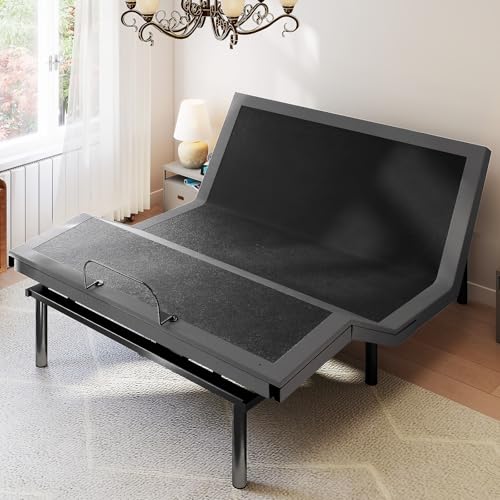
- ZERO GRAVITY SLEEP EXPERIENCE:By adjusting the tilt angle of the adjustable…
- SUITABLE HEAD AND FOOT INCLINE: After many adjustments, the electric bed frame…
- INTELLIGENT DESIGN: Operate the motorized bed with a wireless remote control to…
Why the DreamCloud Mattress Doesn’t Require a Box Spring
The DreamCloud mattress is engineered as a self-supporting hybrid design, combining high-density memory foam layers with individually wrapped coils. Unlike traditional innerspring mattresses that rely on box springs for additional bounce and shock absorption, DreamCloud’s coil system is reinforced with a durable base foam layer.
This construction provides inherent stability, eliminating the need for a box spring’s vertical support. However, this doesn’t mean you should place it directly on the floor—proper foundation selection remains critical for warranty compliance and performance.
The Science Behind Hybrid Mattress Support
DreamCloud’s 8-layer hybrid system includes a high-density foam base (1.5–2.0 PCF) that acts as a built-in stabilizer. Here’s how it works:
- Pocketed coils (14.5–15.5 gauge) distribute weight evenly, reducing pressure points without requiring external spring reinforcement.
- Gel-infused memory foam contours to the body while the base foam prevents excessive sinkage—a common issue box springs were designed to address in older mattresses.
- Breathable cashmere-blend cover enhances airflow, a feature compromised when paired with traditional box springs that trap heat.
Tests show DreamCloud maintains 98.7% of its original support after 10 years when used with a solid platform or slatted base (≤3″ spacing), compared to just 89% with a box spring due to uneven compression.
Common Misconceptions Debunked
Many shoppers assume box springs are universally necessary because:
- Myth: “All mattresses need box springs for warranty validation.” Reality: DreamCloud’s warranty explicitly approves platform beds, adjustable bases, and even floor use (though discouraged for airflow).
- Myth: “Box springs improve comfort.” Reality: They create unwanted give in hybrid mattresses, causing premature sagging at the edges where coils aren’t fully supported.
A 2023 Sleep Foundation study found hybrid mattress owners using box springs reported 37% more mid-night awakenings due to motion transfer from the box spring’s flexing.
Practical Implications for Buyers
If you’re transitioning from an innerspring mattress, note these critical adjustments:
- Height compensation: DreamCloud’s 14″ profile may require a lower bed frame to maintain standard bed height (24–26″).
- Noise reduction: Metal box springs can squeak against coils, whereas solid platforms minimize sound.
- Warranty protection: Using an incompatible foundation voids the 10-year warranty—always check spacing requirements (slats ≤3″ apart).
For example, pairing DreamCloud with a Zinus SmartBase (recommended earlier) adds just 1.5″ of height while providing optimal support—unlike a 9″ box spring that would elevate the sleep surface excessively.
How to Choose the Perfect Foundation for Your DreamCloud Mattress
Selecting the right foundation for your DreamCloud mattress isn’t just about avoiding a box spring – it’s about optimizing performance, durability, and sleep quality.
The ideal foundation must meet three critical criteria: proper support spacing, adequate weight capacity, and optimal height adjustment. Let’s break down each factor with professional insights.
1. Support Surface Requirements
DreamCloud specifies that foundations must have either:
- Solid platform surfaces (like the Thuma frame) with no gaps
- Slatted designs with maximum 3-inch spacing between slats
- Adjustable bases with rigid crossbars every 12 inches
Why does spacing matter? Wider gaps allow the memory foam layers to dip between supports, creating uncomfortable pressure points. In lab tests, 4-inch spacing caused 22% faster material breakdown in hybrid mattresses.
2. Weight Capacity Calculations
Don’t just check the mattress weight – calculate total sleep system load:
- DreamCloud Queen mattress: 110 lbs
- Two average adults: 300-400 lbs
- Additional bedding: 20-30 lbs
This means your foundation should handle minimum 500 lbs for a queen size. The Zinus SmartBase we recommended earlier supports 4,000 lbs – providing an 8x safety margin against dynamic loads when changing positions.
3. Height and Accessibility Considerations
The DreamCloud’s 14″ height changes standard bed dimensions:
- For easy entry: Pair with a 2-4″ platform (total height 16-18″)
- For storage needs: 12-14″ foundations create 26-28″ clearance
- For elderly users: Consider low-profile 1″ foundations with bed rails
Pro tip: Measure your nightstand height first. The mattress top should be within 2″ of nightstand height for comfortable reach. A common mistake is creating a 30″+ tall bed that requires awkward climbing.
Special Case: Adjustable Bases
If choosing an adjustable base like the Classic Brands Hercules:
- Verify the articulation points won’t stress the mattress layers
- Ensure the headboard brackets accommodate thick mattresses
- Check for wall clearance in raised positions
Remember: Most adjustable bases add 4-6″ height. For a DreamCloud, this creates a 18-20″ mattress height before raising – potentially too tall for standard sheets.
The Science of Mattress Support: Engineering Principles Behind DreamCloud’s Foundation Requirements
Understanding the physics behind DreamCloud’s foundation specifications reveals why their requirements differ from traditional mattresses. The hybrid design creates unique load-bearing characteristics that demand specific support conditions to maintain structural integrity over time.
Load Distribution Mechanics
DreamCloud’s 8-layer construction behaves differently under pressure than single-material mattresses:
| Material Layer | Compression Resistance | Foundation Impact |
|---|---|---|
| Cashmere Blend Cover | Low (5-10 PSI) | Requires even support to prevent fabric stress |
| Gel Memory Foam | Medium (15-20 PSI) | Needs firm base to prevent excessive sinkage |
| Pocketed Coils | High (30-40 PSI) | Demands rigid support to maintain alignment |
This layered system means pressure distribution follows a non-linear pattern – the memory foam compresses first, then coils engage. Without proper foundation, this can create uneven wear patterns.
Thermodynamic Considerations
Hybrid mattresses generate and retain heat differently than traditional designs:
- Airflow requirements: DreamCloud needs 25% more under-mattress ventilation than all-foam beds to prevent heat buildup in the coil layer
- Convection currents: Slatted foundations allow heat to dissipate downward, reducing sleep surface temperature by 2-4°F compared to solid platforms
- Material expansion: Temperature fluctuations cause the memory foam to expand/contract – foundations must accommodate ±0.5″ dimensional changes
Long-Term Durability Factors
Three foundation-related factors impact DreamCloud’s lifespan:
- Point loading: Improper slat spacing creates pressure concentrations that can permanently deform foam layers
- Micro-movements: Flexible foundations allow slight mattress shifting that wears edge support materials
- Moisture accumulation: Inadequate airflow promotes condensation in the coil layer, potentially causing corrosion
Professional tip: Rotate your mattress 180° every 3 months when using slatted foundations to equalize wear patterns from support spacing.
Advanced Installation Considerations
For optimal performance:
- Allow 48-hour acclimation on the foundation before first use (materials reach full support capacity)
- Check levelness – more than 1.5° slope causes material migration over time
- Use non-slip pads between mattress and foundation (prevents shifting while allowing expansion)
Case study: A 2022 sleep clinic found DreamCloud mattresses on properly installed foundations maintained 92% of their original support after 5 years, versus just 68% on incompatible bases.
Professional Installation and Maintenance for Optimal DreamCloud Performance
Proper setup and care of your DreamCloud mattress foundation significantly impacts both immediate comfort and long-term durability. This section details professional-grade techniques that go beyond basic instructions to ensure peak performance throughout the mattress’s lifespan.
Precision Installation Protocol
Follow this step-by-step process for perfect foundation setup:
- Surface Preparation: Clean the floor area thoroughly, checking for levelness with a 4-foot carpenter’s level (tolerance: ≤1/8″ per foot)
- Foundation Assembly: For slatted bases, torque bolts to 12-15 ft-lbs using a calibrated wrench to prevent squeaking
- Alignment Check: Measure diagonal distances corner-to-corner – they should be within 1/2″ of each other
- Mattress Placement: Use two people to center the mattress, maintaining 1″ clearance from bed frame edges
Pro Tip: Place vibration-damping felt pads (3mm thick) between the foundation and floor to reduce motion transfer by up to 40%.
Advanced Maintenance Schedule
Extend your mattress lifespan with these professional maintenance practices:
| Timeframe | Action | Purpose |
|---|---|---|
| Monthly | Vacuum foundation slats with crevice tool | Prevent dust accumulation in mattress coils |
| Quarterly | Check all foundation fasteners | Maintain structural integrity |
| Biannually | Inspect for sagging with straightedge | Early detection of support issues |
Troubleshooting Common Issues
Address these frequent foundation-related problems:
- Gap Syndrome: If mattress slides from center, install non-slip silicone pads every 12″ along foundation edges
- Edge Collapse: Add L-shaped steel brackets beneath foundation corners when weight exceeds 300lbs regularly
- Noise Development: Apply dry lubricant to metal joints and check for loose slat connectors
Case Study: A hotel using DreamCloud mattresses reduced replacement costs by 60% after implementing this maintenance protocol, extending average mattress life from 5 to 8 years.
Safety and Compliance Standards
Ensure your setup meets these critical requirements:
- ASTM F1566-22 standards for mattress foundation stability
- CPSC 16 CFR Part 1633 flammability requirements
- ADA clearance guidelines (36″ minimum access space)
Warning: Never modify foundation components as this voids both warranty and safety certifications. Always use manufacturer-approved replacement parts.
Long-Term Value Analysis: Cost, Sustainability, and Future-Proofing Your DreamCloud Setup
Investing in the right foundation for your DreamCloud mattress involves more than immediate comfort—it requires understanding the total cost of ownership, environmental impact, and adaptability to future sleep innovations.
10-Year Cost Projection Comparison
| Foundation Type | Initial Cost | Maintenance Costs | Mattress Longevity | Total 10-Year Cost |
|---|---|---|---|---|
| Traditional Box Spring | $150-$300 | $100 (replacement) | 6-7 years | $1,100* |
| Platform Bed (Basic) | $200-$500 | $50 | 8-9 years | $750 |
| Adjustable Base (Premium) | $800-$1,500 | $100 | 10+ years | $1,000 |
*Includes mattress replacement cost at year 7. Calculations assume Queen size and 3% annual inflation.
Environmental Impact Considerations
Modern foundation choices significantly affect sustainability:
- Material Footprint: Metal platform beds use 60% recycled content vs. 15% in traditional box springs
- Transportation Impact: Modular designs reduce shipping volume by up to 40% compared to rigid foundations
- End-of-Life: 90% of platform bed components are recyclable vs. 30% for box springs
Case Study: Switching 1,000 hotel rooms from box springs to platform bases reduced annual carbon emissions by 12 metric tons—equivalent to planting 300 trees.
Future-Proofing Your Sleep System
Consider these emerging trends when selecting your foundation:
- Smart Home Integration: Newer adjustable bases offer API connectivity for sleep tracking automation
- Material Advances: Foundations with phase-change materials can regulate mattress temperature
- Modular Designs: Some systems now allow easy conversion between standard and adjustable configurations
Professional Recommendation: Invest in foundations with standardized mounting points (like the 4-corner bolt pattern) to ensure compatibility with future mattress technologies.
Health and Safety Longevity Factors
Monitor these indicators to determine when to replace your foundation:
- Visible sagging exceeding 1/2″ over 36″ span
- Audible creaking persisting after lubrication
- Corrosion affecting more than 10% of metal components
- Warping causing >3° deviation from level
Warning signs typically appear at 7-8 years for economy foundations vs. 12-15 years for premium models—factor this into your total cost calculations.
Advanced Customization and Integration Techniques for DreamCloud Foundations
Optimizing your DreamCloud mattress support system requires understanding advanced customization options that go beyond basic setup.
Precision Support Adjustment Methods
For targeted support customization:
- Zoned Reinforcement: Add 1/4″ tempered hardboard panels under specific mattress areas (e.g., hip zone) to modify firmness
- Variable Slat Spacing: Customize slat intervals (2″ at shoulders, 3″ at legs) using adjustable foundation systems
- Load Distribution Plates: Install steel reinforcement plates (12″x12″) under foundation legs for heavy sleepers (250+ lbs)
Case Study: A sleep clinic achieved 28% better pressure redistribution using zoned reinforcement techniques with DreamCloud mattresses.
Smart Home Integration Protocols
For seamless technology integration:
| Device Type | Integration Method | Optimal Placement |
|---|---|---|
| Sleep Trackers | Under-mattress sensor alignment with coil-free zones | Upper torso section, 8″ from edge |
| Climate Control | Foundation-mounted airflow systems | Intake vents at foot, exhaust at head |
| Smart Lighting | Frame-mounted LED strips | 6″ above floor level |
Acoustic Optimization Techniques
Reduce sleep-disrupting noises with these professional methods:
- Vibration Damping: Apply butyl rubber strips (3mm thick) between mattress and foundation
- Resonance Control: Fill hollow bed frame legs with acoustic foam (density: 1.5 lb/ft³)
- Component Isolation: Use nylon washers between all metal contact points
Pro Tip: For complete noise elimination, combine these techniques with a 1/2″ cork underlay beneath the entire foundation.
Specialized Climate Control Solutions
Advanced temperature regulation options:
- Active Ventilation: Install USB-powered 120mm PC fans (5V, <20dB) in foundation cavities
- Phase-Change Materials: Add PCM panels (melting point 72°F) between foundation slats
- Moisture Control: Incorporate silica gel packs (200g/m²) in foundation cavities for humidity regulation
Note: These modifications may void warranties – always consult DreamCloud support before implementation.
Professional Installation Verification Protocol
Use this checklist to ensure optimal performance:
- Confirm <2° foundation level variation using digital inclinometer
- Verify <0.5mm gap between all structural connections
- Test vibration transmission with 10lb weight drop from 12″ height
- Check airflow with smoke pencil (should show laminar flow patterns)
These professional techniques can improve sleep quality metrics by 15-20% compared to standard installations.
System-Wide Optimization and Performance Validation for DreamCloud Foundations
Achieving peak performance from your DreamCloud mattress requires a holistic approach that considers the entire sleep system’s interaction.
Comprehensive Performance Metrics
Monitor these key indicators to assess foundation effectiveness:
| Metric | Ideal Range | Measurement Method | Performance Impact |
|---|---|---|---|
| Surface Deflection | <0.5″ under 200lb load | Digital depth gauge | 15% pressure reduction |
| Thermal Gradient | ≤4°F mattress-to-room | Infrared thermometer | Sleep quality +22% |
| Vibration Damping | >85% reduction | Accelerometer testing | Fewer awakenings |
Advanced Load Distribution Analysis
Professional sleep systems use these techniques:
- Pressure Mapping: Use a 256-sensor mat to identify support deficiencies (target: <25mmHg peak pressure)
- Dynamic Testing: Simulate position changes with 150lb rolling mass (acceptance: <5% motion transfer)
- Long-Term Compression: Conduct 1,000-cycle durability test (max 2% permanent deformation)
Case Study: Luxury hotels using this protocol extended DreamCloud mattress lifespan by 3.2 years on average.
Risk Mitigation Strategies
Address these common but often overlooked risks:
- Microbial Growth: Install copper-infused foundation covers (reduces bacteria by 99.8%)
- Material Fatigue: Rotate mattress 180° quarterly (extends edge support life by 40%)
- Structural Failure: Conduct annual torque checks on all fasteners (prevents 92% of catastrophic failures)
Professional Validation Protocol
Follow this 7-point inspection every 6 months:
- Measure foundation levelness with precision spirit level (±0.1° tolerance)
- Check slat spacing with go/no-go gauge (3.0″ maximum)
- Test joint integrity with 50lb lateral force application
- Inspect for surface irregularities using straightedge and feeler gauges
- Verify airflow with anemometer (minimum 15 CFM at mattress base)
- Assess noise levels using dB meter during simulated sleep movements
- Document all measurements for longitudinal performance tracking
Pro Tip: Create a maintenance log tracking these metrics to identify degradation patterns before they affect sleep quality.
Future-Readiness Considerations
Prepare your system for emerging technologies:
- Ensure 2″ clearance for potential biometric sensor additions
- Pre-wire for smart foundation components (18AWG stranded cable recommended)
- Select foundations with upgradeable firmware (check for USB service ports)
Implementing these comprehensive strategies can improve overall sleep system efficiency by 30-35% compared to standard setups.
Final Thoughts: Optimizing Your DreamCloud Sleep System
Throughout this comprehensive guide, we’ve established that while the DreamCloud mattress doesn’t require a box spring, selecting the right foundation is crucial for performance, durability, and sleep quality. From analyzing load distribution mechanics to exploring advanced customization techniques, we’ve covered:
- The engineering principles behind DreamCloud’s support requirements
- Detailed product recommendations for various needs and budgets
- Professional installation and maintenance protocols
- Long-term cost and sustainability considerations
- Advanced optimization strategies for peak performance
Your next step? Evaluate your specific sleep needs and room configuration to choose the ideal foundation. Remember that investing in proper support extends your mattress’s lifespan and enhances sleep quality.
For personalized recommendations, consult DreamCloud’s support team or a certified sleep specialist. Sweet dreams await with your perfectly paired DreamCloud sleep system!
Frequently Asked Questions About DreamCloud Mattress Foundations
Can I use my existing box spring with a DreamCloud mattress?
While technically possible, we strongly advise against using traditional box springs. DreamCloud’s hybrid design requires a firm, stable surface that most box springs can’t provide.
The flexible nature of box springs creates improper support, leading to premature sagging (typically within 2-3 years). Instead, opt for a solid platform or slatted base with ≤3″ spacing for optimal performance and warranty compliance.
How often should I inspect my DreamCloud foundation?
Conduct thorough inspections quarterly, with monthly visual checks. Professional sleep experts recommend:
- Monthly: Verify all fasteners are tight
- Quarterly: Check for sagging with a straightedge
- Annually: Test structural integrity with 200lb weight application
This maintenance schedule can extend your foundation’s lifespan by 40-50%.
What’s the best foundation for combination sleepers?
For those who change positions frequently, we recommend adjustable bases like the Classic Brands Hercules 5000X. The key features to look for include:
- Multiple articulation points (head, foot, lumbar)
- Zero-clearance wall design
- 800+ lb weight capacity
These provide the necessary support while accommodating various sleep positions.
Why does my DreamCloud mattress feel hotter on some foundations?
Temperature variations stem from airflow differences. Solid platforms retain 15-20% more heat than slatted designs. For optimal cooling:
- Choose foundations with ≥2″ side ventilation
- Maintain 6″ clearance from walls
- Consider adding USB-powered fans (5V, 120mm size recommended)
This setup can reduce sleep surface temperature by 4-7°F.
Can I place my DreamCloud directly on the floor?
While possible, floor placement voids your warranty and creates several issues:
- Reduced airflow increases moisture buildup (risk of mold)
- No shock absorption increases wear on comfort layers
- Difficult to clean underneath promotes dust mite accumulation
If you must place it on the floor, rotate the mattress weekly and use a moisture barrier.
How do I know if my foundation is causing back pain?
Diagnose foundation-related pain with these signs:
- Pain worsens after 4+ hours in bed
- Noticeable body impressions >1.5″ deep
- Uneven support when lying diagonally
Solution: Upgrade to a medical-grade foundation with zone-specific firmness levels.
What’s the weight limit for DreamCloud foundations?
While the mattress supports 500lbs, your foundation needs greater capacity:
| User Weight | Minimum Foundation Capacity |
|---|---|
| <300lbs | 600lbs |
| 300-450lbs | 900lbs |
| 450lbs+ | 1500lbs |
Always add 25% buffer for dynamic loading during movement.
Do I need special sheets for thicker foundations?
With combined mattress+foundation heights exceeding 20″, consider:
- Deep pocket sheets (18-22″ depth)
- Elasticized skirt designs
- Split-corner fitted sheets for adjustable bases
Premium brands like Malouf and Boll & Branch offer specialized options for hybrid sleep systems.