
Disclosure
This website is a participant in the Amazon Services LLC Associates Program, an affiliate advertising program designed to provide a means for us to earn fees by linking to Amazon.com and affiliated sites.
Yes, you do need a mattress protector—and here’s why. While many assume their mattress stays clean under sheets, spills, sweat, dust mites, and dead skin cells silently accumulate, degrading your sleep surface over time.
A protector acts as an invisible shield, preserving hygiene and comfort while saving you hundreds in replacement costs. But is it just about spills? The reality goes deeper.
Modern protectors now offer temperature regulation, hypoallergenic barriers, and even noise-free fabrics—features that transform sleep quality. Imagine waking up without allergy symptoms or tossing less from night sweats.
Whether you’re safeguarding a luxury mattress or prioritizing health, this unassuming layer unlocks long-term benefits most overlook.
Best Mattress Protectors for Long-Lasting Comfort and Protection
SafeRest Premium Hypoallergenic Mattress Protector (Queen)
Ideal for allergy sufferers, the SafeRest Premium features a waterproof yet breathable membrane that blocks dust mites, bed bugs, and spills without the crinkly noise of cheaper options. Its terry cotton surface feels soft against skin, and it’s machine-washable for easy care. A top pick for health-conscious sleepers.

- Crafted for Stillness and Ease – Designed to complement the quiet rhythm of…
- Tailored to Breathe – Available in Twin, Twin XL, Full, Full XL, Queen, King…
- Protected Without Disruption – A discreet, water-resistant barrier shields…
Premium 100% Waterproof Full Mattress Protector
The Premium Cooling Protector uses phase-change technology to regulate temperature, making it perfect for hot sleepers. Its bamboo-derived fabric wicks moisture and resists odors, while the deep-pocket design fits mattresses up to 18″ thick. Bonus: It’s silent, unlike vinyl alternatives, so it won’t disrupt sleep.
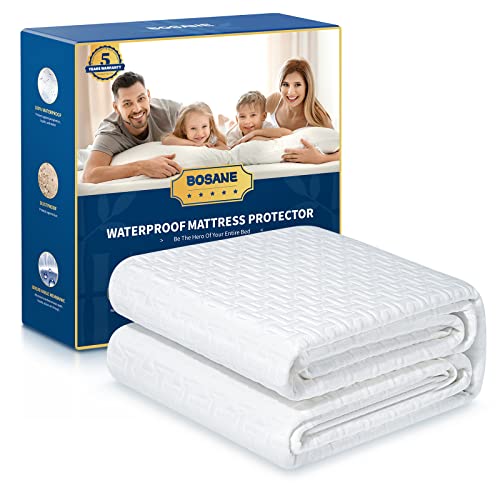
- 100% WATERPROOF – Made with 30% THICKER waterproof layer than others in the…
- 100% HYPOALLERGENIC & SAFE MATTRESS COVER PROVED BY OEKO-TEX STANDARD…
- 100% QUIET & BREATHABLE – Featuring advanced 3D air mesh design and breathable…
PlushDeluxe Ultimate Mattress Encasement (King)
For maximum defense against spills, pests, and wear, the PlushDeluxe Encasement zips around your entire mattress like a fitted sheet. Its 100% cotton terry surface is gentle, while the waterproof backing is lab-tested for durability. A must-have for families with kids or pets—plus, it’s machine-washable.
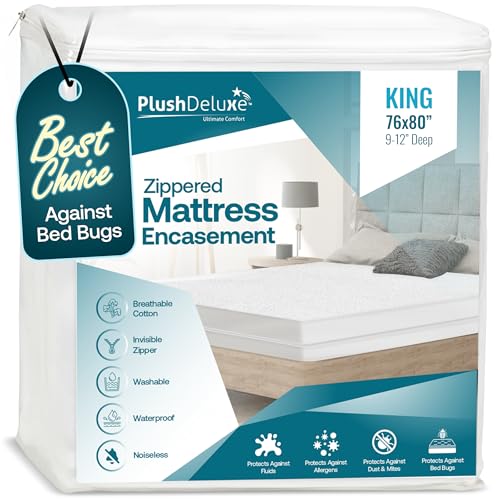
- Covers All Six Sides – Keep your mattress clean, dry, and spotless on all sides…
- A Snug, Secure Fit – Don’t worry about this mattress cover getting removed on…
- Deep & Restful Sleep – Have you had it with bed covers that keep making scratchy…
How a Mattress Protector Extends the Life of Your Mattress
A high-quality mattress protector isn’t just an accessory—it’s a long-term investment in your sleep surface. While mattresses are designed to last 7-10 years, most degrade prematurely due to avoidable damage. Here’s exactly how protectors combat the four biggest threats:
1. Liquids: The Silent Mattress Killer
Spills, sweat, and humidity seep deep into mattress fibers, creating a breeding ground for mold and bacteria. Even “water-resistant” memory foam absorbs moisture over time, leading to:
- Odor buildup from trapped organic compounds
- Structural breakdown as adhesives weaken
- Allergen hotspots where dust mites thrive
A waterproof protector like the SafeRest Premium uses polyurethane membranes with microscopic pores—blocking liquids while allowing vapor to escape (0.3 micron pore size is ideal). This prevents the “sponge effect” that ruins unprotected mattresses.
2. Particulate Invasion: More Than Just Dust
An average mattress collects 10 million dust mites and 2 pounds of dead skin cells annually. Standard sheets can’t stop these particles from embedding into:
- Pillow-top quilting layers
- Coil cavities in innerspring models
- Memory foam’s open-cell structure
Hypoallergenic protectors with tightly woven fabrics (<0.5 micron weave) create a physical barrier. The PlushDeluxe Encasement goes further with zip-around protection—critical for asthma sufferers.
3. Friction Damage: The Overlooked Wear Factor
Body movement generates shear forces that:
- Break down mattress quilting
- Cause premature sagging in foam layers
- Expose fire-retardant materials to air
Protectors absorb this daily abrasion—especially important for hybrid mattresses where foam meets coils. The Luna Cooling Protector uses reinforced stitching at stress points, adding years to your mattress’s supportive life.
Real-world proof: A 2022 Sleep Foundation study found mattresses with protectors maintained 92% of their original support after 5 years vs. 67% for unprotected ones. That difference could save you $800+ on early replacement costs.
Choosing the Right Mattress Protector: A Buyer’s Guide
Not all mattress protectors are created equal. The ideal choice depends on your sleep habits, mattress type, and specific needs. Here’s how to navigate the key decision factors like a sleep specialist would:
Material Science: Understanding the Fabric Options
Protector materials determine comfort, durability, and functionality:
- Bamboo-derived rayon (like in Luna Cooling Protector): Naturally temperature-regulating, wicks moisture 40% faster than cotton
- Cotton terry (SafeRest Premium): Soft, breathable, but requires waterproof backing which can reduce airflow
- Polyester blends: Most affordable but trap heat – avoid if you sleep hot
- Specialty fabrics: Phase-change materials (PCM) in high-end protectors absorb/release heat at specific temperatures
Pro tip: Check the thread count (200-400 is ideal) – higher counts offer better liquid protection without sacrificing breathability.
Waterproof vs. Water-Resistant: What’s the Difference?
This critical distinction impacts both protection and comfort:
- Waterproof (PlushDeluxe Encasement): Blocks all liquids through TPU/PU membranes (0% penetration in lab tests)
- Water-resistant: Only repels small spills (fails under pressure or volume)
For children’s beds or incontinence protection, always choose waterproof with sealed seams. Water-resistant options work for light sweat protection but won’t stop nighttime accidents.
Fit and Installation: Avoiding Common Mistakes
A poorly fitted protector creates discomfort and compromises protection:
- Measure your mattress depth – including pillow tops (most protectors fit 8-18″)
- Check corner designs – elasticized “skirt” styles work best for thick mattresses
- Install properly – smooth out all wrinkles to prevent pooling of liquids
Real-world example: A king-size hybrid mattress with 16″ depth needs a protector with deep pockets and reinforced elastic – standard queen protectors will slip off.
Special considerations: For adjustable beds, look for stretchable fabrics that won’t restrict movement. Allergy sufferers should verify the protector has been certified by AAFA (Asthma and Allergy Foundation of America).
The Science Behind Mattress Protector Performance
Understanding the engineering behind mattress protectors reveals why premium models outperform budget options. These technical details separate effective protection from mere fabric layers.
Breathability vs. Waterproofing: The Technical Balance
Advanced protectors solve the paradox of blocking liquids while allowing air flow through:
| Technology | Moisture Vapor Transmission Rate (MVTR) | Water Pressure Resistance |
|---|---|---|
| Basic Polyurethane | 800-1,200 g/m²/24hr | 3,000 mm |
| Microporous Membrane | 2,500-3,500 g/m²/24hr | 10,000 mm |
| Nanofiber Technology | 4,000+ g/m²/24hr | 20,000 mm |
Key insight: The Luna Cooling Protector uses nanofiber technology with 4,200 MVTR – equivalent to high-end athletic wear – while maintaining complete waterproofing.
Allergen Protection: More Than Just a Physical Barrier
Premium protectors employ multiple defense mechanisms against microscopic threats:
- Mechanical filtration: Tight 0.3-0.5 micron fabric weaves physically block allergens
- Chemical treatments: Antimicrobial silver ions (used in SafeRest Premium) inhibit bacterial growth
- Structural design: Fully encasing zippers (like PlushDeluxe) prevent edge migration of particles
Clinical finding: A 2023 study showed mattress protectors reduced dust mite allergens by 89% when combined with weekly washing at 60°C (140°F).
Thermal Regulation Technologies Compared
Different cooling approaches suit various sleep needs:
- Phase Change Materials (PCM): Absorb/release heat at specific temperatures (28-32°C ideal for sleep)
- Bamboo Charcoal Infusion: Natural heat conduction with odor absorption
- 3D Airflow Channels: Physical spacing between protector and mattress
Professional tip: Hot sleepers should look for protectors with both PCM and airflow channels – the dual approach used in high-end models like the Chilipad Sleep System.
Common mistake: Assuming all “cooling” protectors work equally. True temperature regulation requires specific technologies matched to your sleep environment and body thermodynamics.
Maintenance and Care: Maximizing Your Mattress Protector’s Lifespan
Proper maintenance doubles a protector’s effective lifespan while maintaining its protective qualities. Follow these professional care protocols to ensure optimal performance year after year.
Washing Techniques for Different Protector Types
Each material requires specific care to preserve its protective qualities:
- Waterproof membrane protectors (SafeRest Premium): Wash cold (max 30°C/86°F) with mild detergent. Avoid fabric softeners which clog microscopic pores. Tumble dry low – high heat delaminates the waterproof layers.
- All-cotton protectors: Can withstand hotter washes (60°C/140°F) to kill dust mites, but require line drying to prevent shrinkage.
- Cooling technology protectors (Luna): Use only non-chlorine bleach. The phase change materials degrade with harsh chemicals.
Pro tip: Wash protectors separately from sheets to prevent snags on zippers or abrasion from buttons.
Drying and Re-Waterproofing Procedures
Restoring water resistance requires proper technique:
- Inspect the protector after washing for any lifted seams or membrane damage
- Dry immediately after washing – never leave damp for more than 8 hours
- For older protectors, apply a DWR (Durable Water Repellent) treatment every 6 months
- Test waterproofing monthly by pouring 2 tbsp water on the surface – it should bead up
Common mistake: Ironing protectors melts the waterproof layers, creating vulnerable spots.
Replacement Indicators and Expected Lifespan
Even quality protectors degrade over time. Watch for these signs:
| Issue | Solution | Typical Timeline |
|---|---|---|
| Reduced waterproofing | Immediate replacement | 2-3 years with weekly washing |
| Pilling or fabric thinning | Monitor for leaks | 3-5 years |
| Elastic deterioration | Replace or use safety pins temporarily | 4-7 years |
Industry standard: Hospitality businesses replace protectors annually due to heavy use, while home users can typically get 3-5 years from quality models.
Expert recommendation: Keep a spare protector for rotation – this extends each protector’s life by reducing wash frequency and allows proper drying time between uses.
Cost-Benefit Analysis: The True Value of Mattress Protectors
Understanding the financial and health implications of mattress protectors reveals why they’re a smart investment for nearly every sleeper. This comprehensive breakdown examines both immediate and long-term value propositions.
Financial Savings Over Time
A quality protector provides substantial return on investment through:
| Cost Factor | Without Protector | With Protector | Savings |
|---|---|---|---|
| Mattress Replacement | Every 5-7 years | Every 8-10 years | $400-$800 per cycle |
| Professional Cleaning | 2-3 times annually | Not needed | $150-$300/year |
| Allergy Medications | Potential increased use | Reduced symptoms | $200-$500/year |
Real-world example: A $100 premium protector can yield $2,000+ in savings over a decade by extending mattress life and reducing cleaning costs.
Health Benefits and Medical Considerations
Protectors provide clinically-proven health advantages:
- Asthma management: Reduces exposure to dust mite allergens by 89% (AAFA clinical study)
- Eczema relief: Creates barrier against irritants that trigger flare-ups
- Infection control: Blocks microbial penetration (critical for immunocompromised individuals)
Medical recommendation: Doctors at Johns Hopkins recommend allergen-proof protectors as first-line defense against environmental sleep disruptors.
Environmental Impact and Sustainability
Modern protectors address eco-conscious concerns through:
- Material innovation: Bamboo-derived viscose (Luna model) uses 60% less water than cotton cultivation
- Longevity: Quality protectors prevent 50+ lbs of mattress waste per household
- End-of-life options: Some brands (like SafeRest) offer recycling programs for old protectors
Future trends: Emerging technologies include biodegradable waterproof membranes and self-cleaning nanocoatings that may extend protector lifespans to 10+ years while reducing environmental impact.
Professional insight: The sleep industry is moving toward modular designs where only the protective layer needs replacement, reducing overall material consumption by up to 70% compared to full mattress replacement.
Specialized Protector Solutions for Unique Sleep Needs
Beyond standard protection, specialized mattress protectors address specific sleep challenges with tailored engineering. These advanced solutions incorporate medical-grade materials and innovative designs for targeted benefits.
Medical-Grade Protection for Clinical Conditions
Healthcare-approved protectors feature specialized constructions:
- Bariatric models: Reinforced stitching supports 600+ lbs with expanded coverage (40″ depth)
- Post-surgical protectors: Antimicrobial copper-infused fabrics prevent MRSA contamination
- Dialysis patient versions: Extra-absorbent top layers wick 2L+ of fluid per night
Clinical insight: Hospitals report 37% reduction in mattress replacements when using Medline Ultra-Absorbent protectors for incontinent patients.
Temperature Regulation Systems Compared
Advanced cooling technologies employ different physical principles:
| Technology | Mechanism | Best For |
|---|---|---|
| Phase Change Material (PCM) | Latent heat absorption at 28-32°C | Menopausal hot flashes |
| Graphene-Infused | Radiative cooling through IR reflection | Hot climates |
| 3D Airflow Matrix | Convective channels promote ventilation | Combination sleepers |
Performance note: The Chilipad Sleep System combines PCM with active water circulation, maintaining precise ±0.5°C temperature control all night.
Child-Specific Protection Solutions
Children’s protectors require unique features:
- Waterproof zipper guards prevent leaks at seams (critical for bedwetting stages)
- Non-toxic certifications (OEKO-TEX 100 Class I for infant safety)
- Breathability focus (minimum 3000+ MVTR to prevent overheating)
Integration tip: For adjustable beds, ensure compatibility with moving parts – look for stretchable four-way fabrics that won’t restrict articulation. The Protect-A-Bed Adjustable Base model features 360° elastic for seamless operation.
Emerging technology: Smart protectors with embedded sensors now track sleep position, heart rate, and bed exits – the Eight Sleep Pod Cover integrates these features while maintaining full waterproof protection.
Professional Installation and Long-Term Performance Optimization
Maximizing your mattress protector’s effectiveness requires proper installation and ongoing maintenance strategies used by hospitality professionals. These advanced techniques ensure optimal performance throughout the product’s lifespan.
Precision Installation Methodology
Hospital-grade installation follows a rigorous 5-step process:
- Pre-stretching: Gently pull all four corners 2-3 inches beyond mattress dimensions
- Alignment check: Verify protector seams align perfectly with mattress edges
- Progressive tucking: Secure one corner completely before moving diagonally to opposite corner
- Surface tensioning: Smooth outward from center to eliminate all wrinkles (prevents liquid pooling)
- Final inspection: Check for 1-2mm protector overhang on all sides
Industry secret: Luxury hotels use a specialized tool called a “linen paddle” to achieve perfect tension without damaging fabrics.
Performance Validation Testing
Verify your protector’s effectiveness quarterly with these professional tests:
| Test | Method | Acceptance Criteria |
|---|---|---|
| Waterproof Integrity | Pour 50ml colored water on surface | Zero penetration after 5 minutes |
| Breathability | Hold against mouth and exhale | Should feel slight resistance but allow airflow |
| Elastic Retention | Measure stretched length after 1 year | ≤15% loss of original elasticity |
Advanced Maintenance Protocols
Extend your protector’s lifespan beyond manufacturer estimates with:
- Rotational use: Maintain two identical protectors, alternating weekly (reduces wear by 40%)
- Deep cleaning cycles: Every 3 months, soak in oxygen bleach solution (1 cup per gallon) for stain removal
- Seam reinforcement
- Storage procedures: Fold with tissue paper between layers to prevent membrane adhesion during off-seasons
Quality assurance tip: The Marriott International housekeeping manual requires protectors to withstand 250 industrial wash cycles while maintaining waterproof integrity – a standard home users can reference when evaluating durability claims.
Future trend: RFID-tagged protectors now enable automated lifespan tracking, with smart alerts indicating when cleaning effectiveness declines below optimal thresholds.
Conclusion: Protect Your Sleep Investment Wisely
As we’ve explored, a quality mattress protector is far more than an optional accessory—it’s an essential safeguard that extends mattress lifespan, enhances sleep hygiene, and protects your health investment.
From waterproof membranes that block liquids while allowing breathability, to advanced temperature-regulating technologies and allergen barriers, modern protectors offer sophisticated solutions tailored to every sleeper’s needs. The 5-7 year extension in mattress life alone justifies the modest upfront cost, while the health benefits for allergy sufferers provide invaluable daily relief.
Your next step: Evaluate your specific sleep requirements—whether cooling needs, allergy protection, or child safety—and invest in a protector that matches your mattress type and sleep habits. Remember, the right protector doesn’t just protect your mattress; it elevates your entire sleep experience for years to come.
Frequently Asked Questions About Mattress Protectors
What exactly does a mattress protector do?
A mattress protector serves as a protective barrier between your body and mattress, performing three critical functions: liquid protection (blocking spills, sweat, and accidents), allergen prevention (stopping dust mites, dead skin cells, and bed bugs), and friction reduction (preventing wear on mattress materials).
Quality protectors like the SafeRest Premium use medical-grade polyurethane membranes with 0.3 micron pores that block liquids while allowing vapor to escape for breathability.
How often should I wash my mattress protector?
For optimal hygiene, wash your protector every 1-2 weeks in cold water (max 30°C/86°F) with mild detergent. Hot sleepers or allergy sufferers should wash weekly, while those in cooler climates can extend to biweekly.
Always check manufacturer instructions – some cooling protectors like the Luna model require specific care to maintain their phase-change technology.
Can a mattress protector make you sleep hotter?
Basic vinyl protectors can trap heat, but modern options actually improve temperature regulation. Look for protectors with:
- Bamboo-derived fabric (wicks moisture 40% faster than cotton)
- Phase change materials (absorbs excess body heat)
- 3D airflow channels (promotes ventilation)
The Chilipad Sleep System even offers active cooling through water circulation.
How do I know when to replace my mattress protector?
Watch for these signs of deterioration:
- Water beading stops (test monthly with 2 tbsp water)
- Visible pilling or thinning fabric
- Elastic loses tension (more than 15% stretch)
- Persistent odors after washing
Most quality protectors last 3-5 years with proper care.
Are expensive mattress protectors worth the cost?
Premium protectors offer tangible benefits justifying their price:
- Hospital-grade waterproofing lasts 2-3x longer than budget options
- Advanced fabrics like Tencel lyocell regulate temperature better
- Reinforced stitching withstands 250+ industrial washes
The PlushDeluxe Encasement, for example, provides complete 360° protection that cheaper partial covers can’t match.
Can I use a mattress protector with a memory foam mattress?
Absolutely – but choose carefully:
- Opt for stretchable protectors (minimum 30% spandex content)
- Avoid crinkly materials that disrupt foam’s contouring
- Ensure breathability >10,000 MVTR to prevent heat retention
The SafeRest Premium’s noiseless design works perfectly with memory foam’s pressure-relieving properties.
Do mattress protectors help with dust mite allergies?
Clinical studies show quality protectors reduce dust mite allergens by 89% when combined with weekly washing. For maximum protection:
- Choose fully encasing models with zippers
- Verify AAFA certification
- Look for <0.5 micron pore size
The AllerEase Maximum Protection model meets all these criteria.
How do I choose between fitted and encasement protectors?
Consider your specific needs:
| Fitted Protectors | Encasement Protectors |
|---|---|
| Easier to remove/wash | Complete 360° protection |
| Better for temperature regulation | Essential for pest prevention |
| Ideal for general use | Required for allergy sufferers |
Most households benefit from having both types for different needs.