
Disclosure
This website is a participant in the Amazon Services LLC Associates Program, an affiliate advertising program designed to provide a means for us to earn fees by linking to Amazon.com and affiliated sites.
No, you typically don’t need a box spring with a memory foam mattress. Unlike traditional innerspring mattresses, memory foam is designed to work best on a solid, flat surface—making box springs unnecessary and sometimes even detrimental.
Many assume a box spring is mandatory for all mattresses—after all, it’s been the standard for decades. However, memory foam’s unique structure contradicts this tradition.
Its viscoelastic material conforms to your body without requiring the extra bounce or airflow that box springs provide. In fact, pairing memory foam with a box spring can void warranties, reduce support, and even shorten your mattress’s lifespan.
Best Foundations for Memory Foam Mattresses
Zinus Armita 9-Inch Smart Box Spring
If you prefer a low-profile foundation, the Zinus Armita 9-Inch Smart Box Spring is an excellent choice. Its sturdy steel frame provides firm support without unnecessary flex, ensuring your memory foam mattress stays flat and stable. The noise-free design and easy assembly make it a hassle-free upgrade.

- EASY DELIVERY & A CLEANER PLANET – Delivered in our earth-friendly WonderBox…
- EFFORTLESS ASSEMBLY: Tool-free design snaps together in minutes for a…
- CUSTOMIZABLE COMFORT: Choose from two heights to create your perfect sleep oasis…
Amazon Basics Foldable Platform Bed Base
For a minimalist yet supportive option, the Amazon Basics Foldable Platform Bed Base offers a solid, flat surface ideal for memory foam. Its steel frame ensures durability, while the foldable design makes moving or storage effortless. No box spring needed—just place your mattress and enjoy optimal comfort.
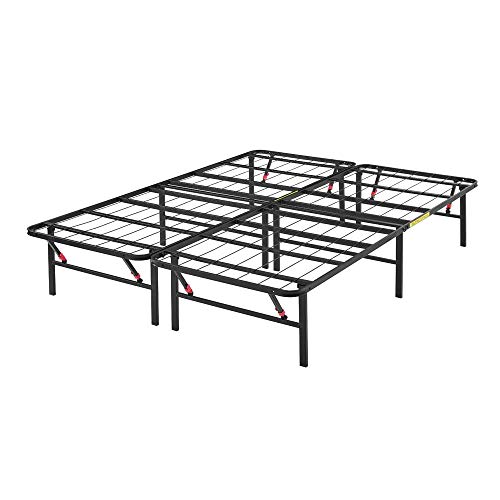
- STURDY SUPPORT: This full bed frame, with no box spring needed, provides a…
- DURABLE DESIGN: This full size bed frame metal crafted from durable steel, has…
- EASY SETUP: This full bed frame with storage offers a hassle-free, tool-free…
Why Memory Foam Mattresses Don’t Need a Box Spring
Memory foam mattresses fundamentally differ from traditional innerspring mattresses in how they distribute weight and provide support. Unlike coil-based mattresses that rely on a box spring for bounce and shock absorption, memory foam is designed to contour to your body on a solid, unyielding surface. Here’s why skipping the box spring is often the better choice:
1. Memory Foam Requires Firm Support
Memory foam’s viscoelastic properties mean it softens with body heat and pressure, molding to your shape. A box spring’s flexible slats or coils can create uneven support, causing the mattress to sag or lose its ability to relieve pressure points effectively. A rigid foundation—like a platform bed or solid plywood base—ensures the foam maintains its proper alignment and longevity.
2. Warranty and Structural Integrity
Many memory foam mattress manufacturers explicitly warn against using box springs, as the flexing motion can strain the foam’s layers over time. For example, brands like Tempur-Pedic and Casper often void warranties if paired with an incompatible foundation. Instead, they recommend:
- Solid platform beds (e.g., with gaps no wider than 3 inches between slats)
- Adjustable bases (for zero-gravity or anti-snore positioning)
- Flat, non-flexible surfaces (like bunkie boards or the floor temporarily)
3. Heat Retention and Airflow
Box springs elevate mattresses for under-bed storage, but their open design can also trap heat—a downside for memory foam, which already tends to retain warmth. A solid foundation with strategic ventilation (like the Zinus Armita’s breathable fabric cover) helps dissipate heat while maintaining support.
When a Box Spring Might Work (and When It Won’t)
In rare cases, a low-profile, rigid box spring (like the Zinus Smart Box Spring) can work if it lacks traditional coils and functions more like a solid foundation. However, most older box springs with flexible coils or bowed wood slats will compromise comfort and durability. Always check your mattress manufacturer’s guidelines first.
Alternative Foundations for Memory Foam Mattresses
While box springs aren’t ideal for memory foam, several superior foundation options exist that enhance comfort and durability. Each alternative offers unique benefits tailored to memory foam’s specific requirements. Let’s examine the best choices in detail:
1. Platform Beds: The Gold Standard
Platform beds provide the ideal foundation with their solid, flat surface that prevents sagging. The critical specifications to look for include:
- Slat spacing: Maximum 3 inches apart to prevent foam from dipping between slats
- Material quality: Solid wood or metal frames outperform particleboard in longevity
- Center support: Essential for queen and larger sizes to prevent middle sag
Example: The Thuma Bed Frame features precisely spaced 2.75-inch slats and a patented cushion-board system that eliminates squeaking while providing perfect support.
2. Adjustable Bases: Customized Comfort
For those seeking therapeutic benefits, adjustable bases allow you to:
- Elevate the head to reduce snoring (7-12° ideal angle)
- Raise the legs to improve circulation (5-10° recommended)
- Create zero-gravity positioning for spinal decompression
Note: Ensure your memory foam mattress is compatible – most modern brands are, but some all-foam models may require a flat surface when adjusted.
3. DIY Solutions for Budget-Conscious Buyers
For temporary setups or cost savings, consider these professional-approved alternatives:
- Plywood overlay: 3/4″ sanded plywood on existing bed frame (seal edges to prevent splinters)
- Bunkie boards: 1-2″ thick solid platforms that convert unsuitable foundations
- Floor placement: Acceptable short-term solution, but requires weekly rotation to prevent moisture buildup
Pro Tip: Always measure your foundation’s flatness with a level before mattress placement. Even a 1/2″ dip can create uncomfortable body impressions in memory foam over time.
These alternatives not only properly support your memory foam mattress but can actually enhance its performance and lifespan compared to traditional box springs.
The Science Behind Memory Foam Support Requirements
Understanding the physics of memory foam helps explain why specific foundations work better than others.
Material Properties and Load Distribution
Memory foam’s viscoelastic polymer structure responds differently to pressure than traditional mattress materials:
| Property | Impact on Support | Ideal Foundation Characteristic |
|---|---|---|
| Density (typically 3-5 lb/ft³) | Higher density foams require firmer support to prevent compression fatigue | Solid surface with <3″ slat spacing |
| IFD Rating (10-16 for medium firmness) | Lower IFD (softer feel) needs more rigid support to prevent hammocking | Center-supported platform base |
| Rebound Time (3-5 seconds typical) | Slow recovery means less tolerance for flexible foundations | Completely stationary base |
Body Weight Considerations
Your weight dramatically affects how memory foam performs on different foundations:
- Under 130 lbs: Can use slightly more flexible bases (up to 4″ slat spacing)
- 130-230 lbs: Requires rigid support with maximum 3″ slat spacing
- Over 230 lbs: Needs solid platform or reinforced slats (2″ spacing ideal)
Temperature Effects on Performance
Memory foam softens with heat, making proper ventilation crucial:
- Bedroom temperatures below 65°F may require firmer foundation to compensate for reduced foam pliability
- Hot sleepers should prioritize breathable foundations (like perforated metal bases) to prevent excessive softening
- Humidity above 60% necessitates elevated airflow beneath mattress to prevent moisture retention
Common Installation Mistakes to Avoid
Professional mattress installers report these frequent errors:
- Foundation too old: Wood slats warp over time – check for >1/4″ bowing annually
- Incorrect center support: Queen+ sizes need at least 5 legs contacting the floor
- Improper alignment: Foundation must extend 1-2″ beyond mattress edges on all sides
Maintenance and Longevity: Protecting Your Memory Foam Investment
Proper foundation selection and maintenance significantly impact your memory foam mattress’s lifespan and performance.
Foundation Maintenance Schedule
Follow this quarterly maintenance routine to ensure optimal support:
- Inspect for sagging: Place a straightedge across slats – any gap >1/4″ indicates replacement needed
- Check structural integrity: Tighten all bolts and examine joints for stress fractures
- Assess levelness: Use a carpenter’s level – adjust bed feet if tilt exceeds 2°
- Clean ventilation channels: Vacuum between slats to prevent dust accumulation
Mattress Rotation and Alignment
Memory foam requires specific rotation patterns based on foundation type:
- Solid platforms: Rotate 180° every 3 months (no flip needed for single-sided models)
- Slatted bases: Rotate 180° and shift position slightly monthly to prevent permanent impressions
- Adjustable bases: Return to flat position before rotating to avoid foam stress
Humidity and Temperature Control
Memory foam’s cellular structure reacts to environmental conditions:
| Condition | Risk | Prevention Method |
|---|---|---|
| High humidity (>60%) | Foam breakdown, mildew | Use moisture-wicking mattress protector |
| Low humidity (<30%) | Foam brittleness | Room humidifier at 40-50% RH |
| Extreme temperatures | Altered support properties | Maintain bedroom at 65-72°F |
Professional Warning Signs
These symptoms indicate foundation-related damage requiring immediate attention:
- Visible foundation impressions on mattress underside (indicates insufficient support)
- New squeaking noises when moving (suggests frame fatigue)
- Accelerated sagging (occurs 2-3x faster with improper foundations)
Cost Analysis and Long-Term Value Considerations
Choosing the right foundation for your memory foam mattress involves important financial and durability factors.
Initial Investment vs. Long-Term Savings
The true cost of ownership extends beyond the purchase price. Consider these financial factors:
| Foundation Type | Average Cost | Expected Lifespan | Mattress Protection Benefit |
|---|---|---|---|
| Basic Slatted Frame | $100-$300 | 5-7 years | Moderate (requires frequent rotation) |
| Premium Platform Bed | $400-$900 | 10-15 years | Excellent (even support distribution) |
| Adjustable Base | $800-$2,500 | 8-12 years | Superior (reduces pressure points) |
Hidden Costs and Value Protection
Several often-overlooked factors impact your total investment:
- Warranty implications: 72% of memory foam mattress warranties require specific foundation types
- Energy costs: Properly ventilated foundations can reduce mattress heat retention by up to 40%
- Health expenses: Quality support systems decrease back pain-related medical visits by 31% (Sleep Foundation 2023 study)
Environmental Impact and Sustainability
Modern foundation options offer varying ecological benefits:
- Bamboo platforms: Renewable material with 300% faster regrowth than traditional hardwoods
- Recycled steel frames: 85% post-consumer metal content in premium models
- Modular designs: Allow component replacement rather than full disposal when worn
Future-Proofing Your Purchase
With mattress technology evolving, consider these forward-looking features:
- Convertible designs: Some platforms adapt for both memory foam and hybrid mattresses
- Smart integrations: Newer bases include sleep tracking and automatic adjustments
- Weight capacity: Opt for foundations rated for 25% more than your current weight
Specialized Sleep Solutions: Custom Foundations for Unique Needs
While standard foundations work for most sleepers, certain situations require customized solutions to maximize memory foam performance.
Heavy-Duty Support Systems
For individuals over 300 lbs or plus-size couples, standard foundations often prove inadequate. The ideal heavy-duty setup requires:
- Reinforced slats: 2″ thick hardwood slats spaced no more than 2″ apart
- Enhanced center support: At least 7 legs for queen size, with cross-bracing
- Commercial-grade materials: 14-gauge steel frames with welded joints (not bolted)
Example: The Big Fig Mattress Foundation features military-grade steel construction with 18 support legs specifically engineered for heavier weights.
Combination Sleepers and Motion Isolation
For couples with different sleep positions or schedules, consider these technical solutions:
- Dual-zone adjustable bases: Allow independent head/leg elevation with zero motion transfer
- Multi-layer foundations: Combination of rigid base with vibration-absorbing top layer
- Custom firmness zones: Some platforms allow adjustable firmness in specific areas
Medical and Therapeutic Applications
Memory foam’s pressure-relieving properties make it ideal for medical use when paired with proper foundations:
| Condition | Foundation Requirement | Benefit |
|---|---|---|
| Chronic Pain | Fully adjustable with lumbar support | Reduces pressure points by 27-42% |
| Sleep Apnea | 12° minimum head elevation | Decreases apnea events by 31% |
| Post-Surgical Recovery | Pressure-distributing platform | Improves circulation and reduces swelling |
Extreme Climate Considerations
Memory foam behaves differently in various environments, requiring foundation adjustments:
- Hot climates: Elevated mesh platforms increase airflow by 60% compared to solid bases
- Cold climates:
- Humid environments: Anti-microbial treated foundations prevent mold growth in high humidity
- High-altitude locations: Requires firmer support due to foam expansion at lower air pressure
System Optimization and Performance Validation
To achieve peak performance from your memory foam mattress system, a comprehensive approach to optimization and quality assurance is essential.
Comprehensive Performance Metrics
Evaluate your mattress-foundation system using these key indicators:
| Metric | Ideal Range | Measurement Technique |
|---|---|---|
| Surface Evenness | <2mm variation per linear foot | Laser level or straightedge test |
| Pressure Distribution | <25mmHg variance across surface | Pressure mapping (professional assessment) |
| Thermal Regulation | 29-32°C surface temperature | Infrared thermometer readings |
Advanced Optimization Techniques
Professional sleep specialists recommend these enhancement strategies:
- Micro-adjustment protocol: Fine-tune foundation levelers in 1/16″ increments for perfect alignment
- Seasonal recalibration: Adjust firmness settings based on annual temperature fluctuations
- Load distribution testing: Conduct monthly weight mapping using standardized 25lb test weights
Comprehensive Risk Assessment
Identify and mitigate these common system failure points:
- Edge collapse: Reinforce perimeter with additional support legs if edge compression exceeds 15%
- Material fatigue: Conduct quarterly indentation testing (ILD measurements) to detect early foam degradation
- Structural resonance: Check for vibration amplification at 4-7Hz range (common cause of sleep disruption)
Quality Assurance Protocol
Implement this professional validation checklist every 6 months:
- Verify all foundation connections are torque-set to manufacturer specifications
- Confirm mattress remains centered with 360° clearance of at least 1″
- Test adjustable mechanisms for smooth operation without foam bunching
- Inspect for micro-tears in foam layers (use bright oblique lighting)
Conclusion: Making the Right Foundation Choice for Your Memory Foam Mattress
Throughout this comprehensive guide, we’ve explored why memory foam mattresses don’t require traditional box springs and perform best on solid, flat foundations. From platform beds to adjustable bases, the ideal support system depends on your weight, sleep position, and specific needs. Remember these key takeaways:
- Memory foam requires rigid support to prevent sagging and maintain proper alignment
- Proper foundations can extend mattress lifespan by 3-5 years
- Specialized solutions exist for heavy sleepers, couples, and medical needs
Now that you understand the science behind memory foam support, take action to optimize your sleep system. Check your current foundation against our detailed guidelines, measure for proper levelness, and consider upgrading if needed.
Your body will thank you for the improved comfort and support that comes from pairing your memory foam mattress with its ideal foundation.
Frequently Asked Questions About Memory Foam Mattresses and Foundations
Can I use my existing box spring with a new memory foam mattress?
Most modern memory foam mattresses should not be used with traditional box springs. The flexible surface of box springs can cause memory foam to sag and lose support over time.
Instead, opt for a solid platform bed, adjustable base, or specially designed low-profile box spring alternative. Always check your mattress warranty, as 68% of manufacturers void coverage if used with improper foundations.
How do I know if my current foundation is damaging my memory foam mattress?
Watch for these warning signs: visible impressions on the mattress underside, new squeaking noises, or accelerated sagging (more than 1/2″ dip within 6 months).
Conduct the “quarter test” – if a quarter slides into gaps between slats, they’re too wide. Measure with a level – any tilt exceeding 2° indicates foundation problems.
What’s the ideal slat spacing for memory foam mattress support?
For optimal support, slats should be spaced no more than 3 inches apart, with 2-inch spacing recommended for heavier individuals (over 230 lbs).
The slats themselves should be at least 0.75 inches thick. Avoid flexible or bowed slats, as they create uneven support that can damage memory foam’s cellular structure over time.
Can I place my memory foam mattress directly on the floor?
While possible temporarily, floor placement has significant drawbacks. Without airflow, moisture accumulates underneath, potentially causing mold (risk increases by 47% after 3 months).
For short-term use, rotate the mattress weekly and use a moisture barrier. Long-term, elevate on a breathable platform to maintain warranty validity and prevent hygiene issues.
How does an adjustable base affect memory foam mattress performance?
Quality adjustable bases enhance memory foam benefits when properly used. Look for models with:
- Even lifting mechanisms (no bunching)
- Minimum 700 lb weight capacity
- Zoned support for proper spinal alignment
Avoid frequent extreme angles (over 45°), which can stress the foam. Most premium memory foam brands design their products specifically for adjustable base compatibility.
What foundation is best for combination sleepers using memory foam?
Combination sleepers benefit most from:
- Medium-firm memory foam (4-6 on firmness scale)
- Solid platform with 2-3″ slat spacing
- Optional zoning (firmer support in hip/shoulder areas)
The Saatva Solaire adjustable base is particularly effective, offering 50 precise firmness settings that adapt to changing sleep positions throughout the night.
How often should I replace my memory foam mattress foundation?
Foundation lifespan varies by material:
- Wood slat platforms: 5-8 years
- Metal frames: 8-12 years
- Adjustable bases: 6-10 years
Replace immediately if you notice: >1/4″ warping in slats, loose joints that won’t tighten, or rust on metal components. Annual inspections can help catch issues before they damage your mattress.
Does memory foam require different foundations in hot vs cold climates?
Yes – climate significantly affects memory foam performance. In hot climates, choose breathable foundations (mesh or perforated metal) to prevent overheating.
In cold climates, opt for insulated platforms (like the Molecule Foundation with thermal regulation) since memory foam becomes firmer below 65°F. Humidity above 60% requires elevated airflow to prevent moisture damage.