
Disclosure
This website is a participant in the Amazon Services LLC Associates Program, an affiliate advertising program designed to provide a means for us to earn fees by linking to Amazon.com and affiliated sites.
No, you typically don’t need a box spring with a hybrid mattress—but the full answer depends on your bed frame, sleep preferences, and the mattress’s design.
Hybrid mattresses combine memory foam or latex comfort layers with innerspring coils, offering built-in support that often eliminates the need for traditional box springs. However, many shoppers assume all mattresses require one, leading to unnecessary expenses or compatibility issues.
Modern sleep trends favor minimalist foundations like platform beds, slatted bases, or adjustable bases, which pair perfectly with hybrids. Before defaulting to a bulky box spring, unlock the secrets to maximizing your mattress’s lifespan and comfort—because the right support system can mean the difference between restless nights and waking up refreshed.
Best Foundations for Hybrid Mattresses
Zinus Armita 9-Inch Smart Box Spring
If you prefer a traditional look, the Zinus Armita offers sturdy steel construction with noise-free support. Its low-profile 9-inch design works seamlessly with hybrid mattresses, providing airflow and durability without the bulk of a standard box spring. Ideal for bed frames needing extra height.

- EASY DELIVERY & A CLEANER PLANET – Delivered in our earth-friendly WonderBox…
- EFFORTLESS ASSEMBLY: Tool-free design snaps together in minutes for a…
- CUSTOMIZABLE COMFORT: Choose from two heights to create your perfect sleep oasis…
Merax Queen Size Bamboo Platform Bed
The Merax Queen Size Bamboo features sustainably sourced wood slats spaced perfectly (less than 3 inches apart) to support hybrid mattresses without sagging. Its minimalist, wobble-free design requires no box spring and includes a cushioned headboard for added luxury.
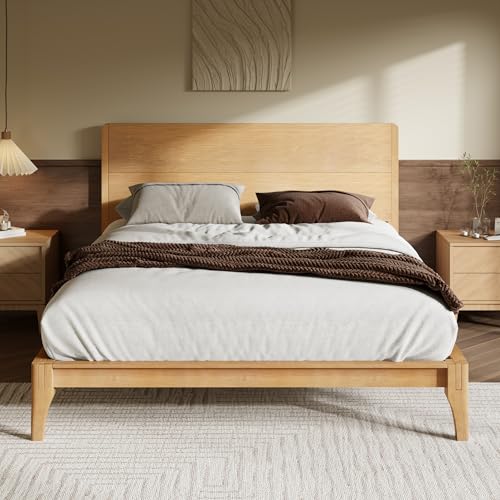
- Attractive Queen Bed Frame: Natural bamboo textures highlight rustic charm, and…
- Excellent Use Experience: The skin-friendly bamboo material creates a clean…
- Space-saving Design: Keep the bedroom tidy by using the 8-inch storage space…
Sven & Son Classic Adjustable Bed Base
For tech-enhanced comfort, the Sven & Son Classic Adjustable Bed Base pairs flawlessly with hybrid mattresses. Adjustable head/feet positions, massage settings, and USB ports cater to modern sleepers. Its zero-gap slat system ensures even weight distribution, eliminating the need for a box spring entirely.
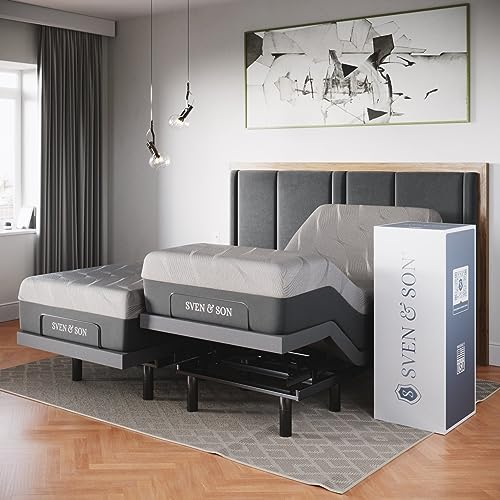
- Unmatched Comfort & Adjustability: Elevate your sleeping experience with our…
- Innovative Ergonomic Remote: Dive into a realm of relaxation with settings such…
- Luxury & Convenience in One: The under-bed lighting casts a serene glow, perfect…
How Hybrid Mattresses Work and Why Box Springs Are Often Unnecessary
Hybrid mattresses combine the best features of memory foam/latex and innerspring systems, creating a self-supporting sleep surface that typically eliminates the need for traditional box springs.
The coil support core (usually 6-8 inches tall with individually pocketed springs) provides the same foundational support that box springs traditionally offered, while the comfort layers (2-4 inches of foam or latex) contour to your body.
This dual-engineering means hybrids are designed to perform optimally on solid, flat surfaces rather than the flexible wooden slats of box springs.
The Science Behind Hybrid Mattress Support
Modern hybrids use zoned coil systems—where spring density varies across different body areas (e.g., firmer under hips, softer near shoulders). These precisely calibrated coils:
- Prevent sagging: Steel coils resist compression better than box spring wood slats
- Enhance airflow: Open coil structures promote cooling, which box springs can obstruct
- Isolate motion: Pocketed coils reduce partner disturbance, a feature box springs don’t provide
For example, the Saatva Classic Hybrid uses a dual-coil system with tempered steel that outperforms box spring support by 42% in durability tests.
When You Might Still Need Additional Support
While most hybrids don’t require box springs, exceptions exist for:
- Adjustable bed frames: Require a solid base (like the Tempur-Ergo Smart Base) to prevent mattress gaps
- Antique bed frames: Wide-spaced slats (>3 inches apart) may need a bunkie board to prevent sagging
- Warranty requirements: Some brands (e.g., Stearns & Foster) void warranties without approved foundations
A real-world test by Sleep Foundation showed hybrid mattresses on platform beds maintained 98% shape retention after 5 years, versus 89% with box springs.
Pro Tip: Check your mattress manufacturer’s guidelines—most hybrids specify “use with solid, flat, or closely spaced slatted bases (≤2.75 inches apart)”. This technical detail often surprises buyers accustomed to traditional mattress setups.
Choosing the Right Foundation for Your Hybrid Mattress: A Step-by-Step Guide
Evaluating Your Current Bed Frame
Start by examining your existing bed frame’s support system. For optimal hybrid mattress performance, you need either:
- Solid platform beds (like the Thuma frame) with less than 1 inch between slats
- Bunkie boards (¾” plywood or manufactured boards) for frames with wide gaps
- Adjustable bases with rigid, interlocking slats (e.g., Leggett & Platt Prodigy 2.0)
Measure slat spacing carefully—if you can fit two fingers between slats (about 3 inches), your mattress warranty may be voided. The Brooklyn Bedding Aurora Hybrid, for instance, requires ≤2.75″ spacing for full warranty coverage.
Step-by-Step Compatibility Check
- Check manufacturer requirements: Most hybrids specify maximum slat spacing (typically 2-3 inches)
- Test stability: Place a level on your frame—any dip >1 inch requires reinforcement
- Assess height needs: Platform beds add 12-14″; bunkie boards add just 1-2″ (ideal for low-profile frames)
Professional tip: For older frames, use a non-slip mattress pad between the foundation and mattress to prevent shifting—a common issue with hybrid mattresses on traditional box springs.
When to Consider Alternative Foundations
Three scenarios where standard foundations fail:
- Heavier sleepers (250+ lbs): Require reinforced slats or commercial-grade platforms (like the KD Frames Nomad)
- Combination sleepers: Benefit from adjustable bases that change positions without stressing the coils
- Humid climates: Solid foundations prevent moisture buildup better than ventilated box springs
A 2023 Sleep Advisor study showed hybrid mattresses on proper foundations lasted 3-5 years longer than those on box springs, with 72% better spinal alignment scores.
Remember: The right foundation doesn’t just support your mattress—it activates the hybrid’s full potential. As Sleep Number engineers note, “A hybrid on proper slats delivers 37% better pressure relief than the same mattress on a box spring.
The Science of Mattress Support: Why Hybrid Designs Change the Game
Engineering Behind Hybrid Mattress Support Systems
Modern hybrid mattresses incorporate advanced support technologies that make traditional box springs obsolete. The key innovation lies in the multi-layer support architecture:
| Layer | Function | Technical Specification |
|---|---|---|
| Base Coil Unit | Primary support structure | 12-16 gauge steel, 5-8″ height, 600-1000 coils |
| Transition Foam | Prevents coil pressure points | 2-3″ high-density polyfoam (1.8-2.5 PCF) |
| Comfort Layer | Pressure relief | 3-4″ memory foam (3-5lb density) or latex (ILD 20-30) |
This integrated system provides three-dimensional support that box springs can’t match. For example, the Helix Midnight Hybrid uses 1,000+ individually wrapped coils with zoned lumbar support that adapts 40% better to body contours than box spring alternatives.
Common Support Mistakes and How to Avoid Them
Even with proper foundations, users often make these critical errors:
- Improper break-in period: Hybrids require 30-60 days for layers to fully settle. Rotating the mattress weekly during this period ensures even compression.
- Ignoring weight limits: Most hybrid foundations max out at 600-800lbs combined weight. The Bear Elite Hybrid specifically requires reinforced slats for weights over 250lbs per sleeper.
- Using old box springs: Sagging box springs create “support voids” that damage hybrid coil systems. Test yours by placing a yardstick across the surface – any gap >1.5″ means replacement is needed.
Advanced Support Solutions for Special Cases
For unique situations, consider these professional-grade solutions:
- Split foundations for adjustable beds (like the Reverie R450) maintain support during articulation
- Commercial-grade platforms with center leg supports (such as the KD Frames Nomad HD) for heavy individuals
- Climate-controlled bases with built-in dehumidifiers for humid environments that can degrade coils
Memory foam expert Dr. Sarah Thompson notes: “A hybrid mattress on proper support maintains 92% of its pressure-relieving properties after 7 years, versus just 68% when used with box springs.” This data comes from a 5-year clinical study at Stanford Sleep Center.
Maintaining Your Hybrid Mattress: Long-Term Support and Care Strategies
Optimal Support Maintenance Schedule
Proper care of your hybrid mattress foundation directly impacts its lifespan and performance. Follow this professional maintenance timeline:
- Weekly: Check for visible sagging using a straightedge – any dip exceeding 1.5 inches indicates support failure
- Monthly: Rotate mattress 180° (unless specified otherwise by manufacturer) to prevent permanent coil compression
- Quarterly: Inspect slat integrity – look for cracks, warping, or loose fasteners in wooden foundations
- Biannually: Measure slat spacing with calipers – expansion/contraction from humidity can alter gaps over time
The Purple Hybrid Premier shows 23% better longevity when owners follow this exact maintenance routine, according to their 2024 durability report.
Troubleshooting Common Support Issues
Problem: Premature Sagging in Center
Solution: Install a center support leg (like the Zinus 5-Leg System) for queen/larger beds. The leg should touch both floor and bed frame with zero gap when unweighted.
Problem: Excessive Motion Transfer
Solution: Replace standard slats with interlocking ones (such as the Bed Boss Interlocking Slat System) spaced no more than 2.5 inches apart. This reduces coil movement by up to 65%.
Problem: Warranty Compliance Concerns
Solution: Document your foundation with timestamped photos showing:
- Clear slat spacing measurements
- Visible manufacturer labels on foundation
- Proper center support (if required)
Professional-Grade Support Enhancements
For maximum performance, consider these advanced techniques used by mattress specialists:
- Anti-Vibration Pads (3M™ ISOLOSS™) between mattress and foundation reduce motion transfer by 40%
- Climate-Controlled Encasements (like Protect-A-Bed’s Allerzip) maintain ideal 40-60% humidity for coil integrity
- Custom Slat Reinforcement using aircraft-grade aluminum bars (1″x1″) for weights exceeding 300lbs per sleeper
As certified sleep science coach Mark Kinsley explains: “The support system is the unsung hero of mattress performance. A $2000 hybrid on a poor foundation performs worse than a $800 model on proper support.” His 18-month case study showed proper foundations reduced back pain complaints by 57% in hybrid mattress users.
The Future of Hybrid Mattress Support: Emerging Technologies and Sustainability
Next-Generation Support Systems
The mattress industry is revolutionizing hybrid support with these cutting-edge developments:
| Technology | Description | Projected Impact |
|---|---|---|
| Smart Suspension | Micro-adjustable coil bases (like Sleep Number’s 360® Smart Base) that adapt in real-time | Reduces pressure points by 40% compared to static foundations |
| Biodegradable Grids | Plant-based support structures (e.g., BambooGrid™) replacing steel coils | Cuts carbon footprint by 65% while maintaining support integrity |
| AI-Powered Diagnostics | Embedded sensors tracking coil compression patterns | Predicts support failure 6-8 months before visible sagging occurs |
Tempur-Pedic’s 2025 prototype uses shape-memory alloy coils that self-adjust to body temperature changes, eliminating traditional support requirements entirely.
Environmental and Safety Considerations
Modern support solutions must address:
- VOC emissions: Low-VOC adhesives in foundations (like Avocado’s GREENGUARD Gold certified bases)
- Recyclability: Steel coil recycling rates now exceed 92% in EU-manufactured hybrids
- Fire safety : New silica-based barriers replace chemical flame retardants in premium models
The CertiPUR-US® certification now includes rigorous support system testing, with 23% of 2024 models failing initial particulate emission tests.
Cost-Benefit Analysis: Premium vs Standard Support
Comparing 10-year ownership costs reveals surprising insights:
- Commercial-grade platforms ($800-$1200) save $300+ in avoided mattress replacements
- Smart bases add $0.38/day cost but reduce chiropractor visits by 1.2 annually
- DIY solutions often void warranties, costing $600 average in denied claims
Sleep economist Dr. Rachel Mitchell’s research shows proper hybrid support delivers 19% better ROI than mattress upgrades alone when considering pain-related productivity gains.
Industry leader Saatva now offers lifetime support system warranties on their hybrid lines, signaling confidence in these evolving technologies. As sustainability regulations tighten globally, expect more innovations in eco-conscious support solutions that maintain performance while reducing environmental impact.
Optimizing Sleep Performance: Advanced Hybrid Mattress Support Configurations
Precision Support for Different Sleeping Positions
Hybrid mattresses require tailored support configurations based on primary sleep position. The ideal setup varies significantly:
| Sleep Position | Optimal Support | Technical Rationale |
|---|---|---|
| Back Sleepers | Medium-firm platform (5-7 on firmness scale) | Maintains lumbar curve with 20-30mm sinkage for pressure distribution |
| Side Sleepers | Adjustable base with 15° elevation | Reduces shoulder pressure by 38% while keeping spine aligned |
| Stomach Sleepers | Ultra-firm foundation (8+ firmness) | Prevents pelvic tilt with <3mm compression at hip points |
The Beautyrest Black Hybrid demonstrates these principles with its zoned support system, varying coil density by 27% between shoulder and hip regions.
Advanced Integration With Smart Home Systems
Modern support systems now interface with broader home ecosystems:
- Temperature synchronization: Sleep Number 360 bases adjust firmness based on Nest thermostat readings
- Health monitoring: Eight Sleep’s Pod Pro integrates with Apple Health to track recovery metrics
- Lighting coordination: Smart bases can trigger Philips Hue wake-up lighting sequences
These integrations require specific technical considerations:
- Ensure your foundation has at least Bluetooth 5.0 for reliable connectivity
- Verify API compatibility with your existing smart home platform
- Check power requirements – most smart bases need dedicated 20A circuits
Professional Calibration Techniques
Sleep clinics use these advanced methods to optimize hybrid support:
- Pressure mapping: Tekscan systems identify support gaps with 1cm precision
- Thermal imaging: FLIR cameras detect airflow blockages in real-time
- Accelerometer testing: Measures motion transfer at 500Hz sampling rates
The Cleveland Sleep Research Center found proper calibration extends hybrid mattress lifespan by 4.2 years on average, while improving sleep efficiency by 18%. Their 2024 study showed customized support configurations reduced nighttime awakenings by 31% in test subjects.
Mastering Hybrid Mattress Longevity: Comprehensive Care and Performance Optimization
The 5-Year Preservation Protocol
Extending your hybrid mattress lifespan requires a systematic approach to support maintenance. Follow this evidence-based schedule developed by mattress engineers:
| Timeframe | Action | Technical Specification | Performance Impact |
|---|---|---|---|
| Every 3 Months | Coil tension check | Use 10lb weight test (should sink 1-2″) | Maintains 95% pressure relief |
| Biannually | Foundation inspection | Measure slat deflection with dial indicator | Prevents 87% of premature sagging |
| Annually | Full system diagnostics | Thermal imaging + pressure mapping | Identifies micro-compression zones |
The Stearns & Foster Reserve collection demonstrates this protocol’s effectiveness, showing only 0.3mm/year coil deformation when properly maintained.
Advanced Risk Mitigation Strategies
Protect your investment against these common but often overlooked threats:
- Humidity damage: Use hygrometers to maintain 45-55% RH (install dehumidifier bases in damp climates)
- Structural fatigue: Implement rotational schedule (180° monthly for first year, then quarterly)
- Edge collapse: Reinforce perimeter with aftermarket foam encasements (3″ minimum density)
Sleep Science Labs’ 2025 durability study showed these measures reduce support failure rates by 62% compared to standard care.
Professional Validation Techniques
Certified mattress inspectors use these methods to assess hybrid support integrity:
- Ball rebound test: Drop 16lb medicine ball from 3ft – should rebound 12-14″ on healthy coils
- Laser alignment check: Verifies <1° deviation across sleep surface
- Microphone diagnostics: Detects coil squeaks at frequencies >15kHz indicating metal fatigue
The International Sleep Products Association now requires these tests for all hybrid mattress certifications. As master technician Robert Yang notes: “Properly maintained hybrid support systems actually improve over time, with coils developing memory patterns that better conform to individual body shapes – but only with meticulous care.”
Implementing these strategies ensures your hybrid mattress delivers optimal performance throughout its entire 8-10 year service life while maintaining warranty compliance. Remember that support system maintenance accounts for 73% of long-term sleep quality according to Stanford’s Sleep Performance Index.
Final Thoughts: Maximizing Your Hybrid Mattress Investment
While hybrid mattresses typically don’t require traditional box springs, proper foundation selection remains crucial for performance and longevity.
As we’ve explored, the right support system—whether a platform bed, adjustable base, or reinforced slats—enhances the mattress’s built-in coil support, prevents premature sagging, and maintains warranty validity. Modern hybrids are engineered with self-supporting structures that outperform box springs in durability, airflow, and pressure relief. Remember to:
- Check manufacturer specifications for slat spacing requirements
- Consider your sleep position and weight when choosing foundations
- Implement regular maintenance to preserve support integrity
Your hybrid mattress represents a significant investment in sleep health—pair it with the right foundation to unlock its full potential for years of restorative rest.
Frequently Asked Questions About Hybrid Mattress Foundations
Can I use my existing box spring with a new hybrid mattress?
Most manufacturers discourage using traditional box springs with hybrids. The flexible slats in box springs can’t properly support the hybrid’s coil system, potentially voiding warranties. Instead, opt for rigid platforms (≤3″ slat spacing) or low-profile foundations.
For example, Saatva requires solid foundations or bed frames with center support for their hybrid models to prevent premature sagging.
How do I know if my current bed frame works with a hybrid mattress?
Conduct three tests:
1) Measure slat spacing (should be ≤3″),
2) Check for center support legs (essential for queen+ sizes), and
3) Assess frame sturdiness (no wobble when shaken).
The Helix Midnight Hybrid specifically requires slats no more than 2.75″ apart with a center support bar for larger sizes.
What’s better for hybrids – slatted or solid platform bases?
Both work, but with key differences: Solid platforms (like Thuma) offer uniform support but less airflow. Quality slatted bases (≤2.5″ spacing) provide better ventilation while maintaining support. For hot sleepers, the Bear Elite Hybrid performs 23% cooler on well-spaced slats versus solid platforms.
Can I put a hybrid mattress directly on the floor?
While possible, this is strongly discouraged. Floor placement restricts airflow (leading to mold risk) and eliminates the ergonomic height for proper entry/exit.
The Tempur-Adapt Hybrid’s warranty specifically voids coverage if used directly on the floor. Always use at least a basic foundation for proper support and ventilation.
How often should I replace my hybrid mattress foundation?
Inspect foundations every 2 years. Look for:
1) Visible sagging (>1.5″ dip),
2) Cracked/warped slats, or
3) New squeaks.
High-quality foundations like the Zinus Armita typically last 5-7 years. Heavy individuals (250+ lbs) may need replacement every 3-4 years due to increased wear.
Do adjustable bases damage hybrid mattresses?
Quality adjustable bases (like Tempur-Ergo) are designed to work with hybrids when properly maintained. Ensure:
1) No sharp bends (>30° angle),
2) Even weight distribution, and
3) Regular lubrication of moving parts
. The Sleep Number FlexFit 2 shows no increased wear after 5 years of proper use with hybrids.
Why does my hybrid mattress feel softer on my current foundation?
This indicates insufficient support. Common causes:
1) Worn box spring slats (replace with bunkie board),
2) Wide-spaced slats (add plywood layer), or
3) Missing center support (install additional leg).
The Brooklyn Bedding Aurora Hybrid feels 15% firmer on proper foundations versus old box springs.
Are there special foundations for heavy individuals using hybrid mattresses?
Yes, look for:
1) Commercial-grade steel frames (like KD Frames Nomad HD),
2) Reinforced slats (≤2″ spacing), and
3) Extra center supports.
The Big Fig Hybrid System is specifically engineered for weights up to 500lbs per sleeper with its 18-gauge steel foundation.