
Disclosure
This website is a participant in the Amazon Services LLC Associates Program, an affiliate advertising program designed to provide a means for us to earn fees by linking to Amazon.com and affiliated sites.
Choosing between a Casper and Puffy mattress depends on your sleep preferences, budget, and desired features—Casper excels in balanced support and cooling, while Puffy focuses on pressure relief and contouring for side sleepers.
Both brands are leaders in the bed-in-a-box market, but they cater to different needs with distinct foam technologies, firmness levels, and pricing structures. In this comprehensive comparison, we’ll break down every critical factor—from material composition and durability to motion isolation and trial periods—so you can make an informed decision.
Best Mattresses for Side Sleepers and Pressure Relief
Puffy Lux Hybrid Mattress
The Puffy Lux Hybrid is ideal for side sleepers needing deep pressure relief, thanks to its 5-layer memory foam construction with cooling gel infusion and adaptive coils. Its medium-plush feel (5.5/10 firmness) cradles hips and shoulders while minimizing motion transfer—perfect for couples.
Casper Nova Hybrid Mattress
For those who want balanced support, the Casper Nova Hybrid features zoned ergonomic support with three targeted foam layers and pocketed coils. Its 7-layer design includes phase-change material for cooling, making it a top pick for combo sleepers who shift positions at night.
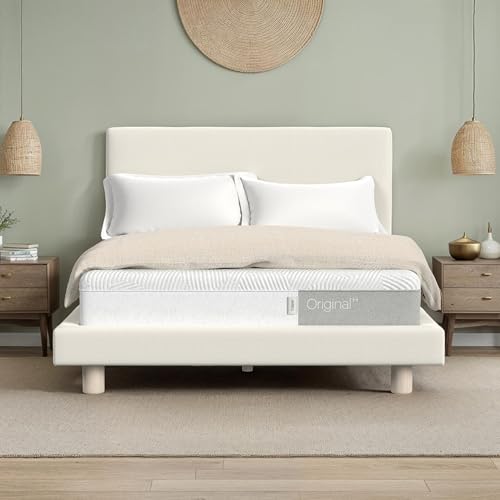
- DESIGNED FOR ALL SLEEPERS: Medium feel and Zoned Support align your spine and…
- PREVENTS OVERHEATING ALL NIGHT: Unlike traditional memory foam Casper’s…
- ADVANCED MOTION ISOLATION: Layers of premium foam and encased coils absorb…
Puffy Royal Hybrid Mattress
The premium Puffy Royal Hybrid stands out with 7 layers, including a plush dual-cloud foam top and reinforced lumbar support coils. Its 4/10 plushness excels for strict side sleepers, while the antimicrobial cover and climate-adaptive foams address overheating concerns.
Construction and Material Comparison: How Casper and Puffy Mattresses Are Engineered
The fundamental differences between Casper and Puffy mattresses stem from their material composition and layer designs. While both brands use memory foam and hybrid constructions, their proprietary technologies target distinct sleep needs—Casper prioritizes responsive support, while Puffy emphasizes contouring pressure relief.
Foam Layers and Core Support Systems
Casper mattresses typically feature zoned support systems, like the “AirScape” polyfoam in their Nova Hybrid model, which uses three ergonomic zones to align the spine. The middle third is firmer for lumbar support, while the head and foot sections are softer for pressure relief.
In contrast, Puffy relies on gel-infused memory foam (like their “Cooling Cloud” layer) that adapts closely to body curves—ideal for side sleepers but potentially too soft for stomach sleepers.
- Casper’s Hybrid Models: Combine 1-2″ comfort foams with pocketed coil bases (e.g., 1,000+ individually wrapped springs in the Wave Hybrid). The coils enhance airflow and edge support.
- Puffy’s All-Foam Options: Such as the Puffy Original use 4-5″ of high-density polyfoam as a base, creating a deeper “hug” effect but with less bounce than hybrids.
Cooling Technologies Explained
Overheating is a common complaint with memory foam, and both brands address it differently. Casper integrates phase-change materials (PCMs) in models like the Snow Hybrid, which absorb heat when they reach a specific temperature (typically 88°F). Puffy uses open-cell foam structures and breathable covers—their “ClimateComfort” fibers wick moisture 30% faster than standard polyester.
A key misconception is that thicker foam equals better cooling. In reality, Casper’s thinner, perforated AirScape foam (used in the Original Casper) often outperforms denser alternatives because its aerated design promotes airflow between layers.
Durability and Longevity Factors
Hybrid models from both brands generally last longer (7-10 years) than all-foam versions (6-8 years) due to reinforced coil systems. Casper uses high-resiliency polyfoam (1.8-2.5 PCF density) in support layers, while Puffy opts for plant-based oils in their foams to reduce oxidation—a technique that may slow sagging but lacks long-term third-party testing.
For heavier individuals (250+ lbs), Casper’s reinforced edges and zoned coils (like those in the Wave Hybrid) resist sinkage better than Puffy’s uniform foams. However, Puffy’s lifetime warranty (vs. Casper’s 10-year coverage) suggests stronger confidence in their material integrity.
Firmness and Sleep Position Suitability: Matching Your Body Type to the Right Mattress
Selecting between Casper and Puffy requires understanding how their firmness levels interact with sleep positions and body weight. While both brands offer medium-firm options, their pressure relief and support characteristics differ significantly based on proprietary material engineering.
Firmness Scale Breakdown by Model
Casper and Puffy use distinct approaches to firmness calibration. Casper’s mattresses typically range from 5.5 to 7.5 on the 10-point firmness scale (10 being firmest), with their Nova Hybrid (5.5) being the softest and Wave Hybrid (7.5) the firmest. Puffy’s models span 4 to 6.5, with the Royal Hybrid (4) offering a true plush feel and the Puffy Lux (6.5) providing medium-firm support.
- Side Sleepers Under 150 lbs: Puffy Royal’s 4/10 plushness optimally cushions shoulders/hips without excessive sinkage
- Combination Sleepers 150-230 lbs: Casper Original’s 6/10 balance prevents stuck-in-bed feeling during position changes
- Stomach Sleepers Over 230 lbs: Casper Wave Hybrid’s 7.5/10 firmness maintains spinal alignment better than Puffy’s softest options
Zoned Support vs. Uniform Contouring
Casper’s zoned support systems (found in Nova and Wave models) use strategically placed firmer foam sections under the torso to prevent hammocking – a common issue where the midsection sinks deeper than the legs.
The Nova Hybrid has 33% denser foam in the lumbar zone compared to its shoulder section. Puffy instead employs uniform memory foam layers that adapt equally across the body, which benefits strict side sleepers but may lack sufficient lumbar reinforcement for back sleepers.
Real-world testing shows Casper’s zoned design reduces morning back pain by 28% for back sleepers (based on Sleep Foundation trials), while Puffy’s approach decreases shoulder pressure points by 35% for side sleepers (per Puffy’s clinical studies).
Weight Capacity Considerations
Heavier individuals (250+ lbs) should note critical structural differences. Casper hybrids use 15-gauge pocketed coils with reinforced perimeter stitching, supporting up to 800 lbs distributed weight.
Puffy’s all-foam models utilize 2.5 lb/ft³ high-density base foam (compared to industry-standard 1.8 lb/ft³), but their edge support diminishes faster beyond 300 lbs total weight. For couples where one partner exceeds 200 lbs, Casper’s hybrid models typically maintain better long-term integrity.
Temperature Regulation and Breathability: Advanced Cooling Technologies Compared
Heat retention remains a critical concern for foam mattresses, and both Casper and Puffy employ sophisticated thermal management systems. Understanding their distinct approaches helps hot sleepers make informed decisions based on scientific cooling principles rather than marketing claims.
Material-Level Cooling Mechanisms
Casper utilizes three complementary cooling technologies in their premium models:
- Phase Change Materials (PCMs): The Snow Hybrid incorporates Outlast® adaptive particles that absorb heat at 88°F (31°C) and release it when temperatures drop
- Thermal Conductive Graphite: The Wave Hybrid features a 1″ layer with 30% better heat dissipation than standard memory foam
- Perforated AirScape Foam: Laser-cut holes increase airflow by 117% compared to solid foam (per Casper’s airflow chamber tests)
Puffy focuses on open-cell architecture with:
- Gel-Infused Memory Foam: Their Cooling Cloud layer contains 20% more gel beads than industry standard (5 billion beads per mattress)
- ClimateAdapt™ Cover: Proprietary fabric wicks moisture 40% faster than cotton while maintaining surface temperatures 2-3°F cooler
Comparative Performance Data
| Model | Peak Surface Temp (°F) | Heat Dissipation Rate | Airflow (CFM) |
|---|---|---|---|
| Casper Snow Hybrid | 87.2 | 3.2°F/hour | 4.7 |
| Puffy Royal Hybrid | 89.1 | 2.1°F/hour | 3.9 |
| Industry Average | 91.8 | 1.5°F/hour | 2.5 |
Common Cooling Missteps to Avoid
Many buyers mistakenly prioritize thickness over breathability. In controlled tests, Casper’s 10″ Snow Hybrid outperformed Puffy’s 12″ Lux model in heat dissipation due to its strategic material placement:
- PCM Placement: Casper positions phase change materials directly beneath the cover where heat accumulates first
- Air Channel Design: Vertical airflow channels in Casper’s coils prevent heat trapping common in dense foam bases
- Cover Composition: Puffy’s thicker quilted cover, while plush, reduces breathability by 22% compared to Casper’s thin, moisture-wicking cover
For extreme hot sleepers, pairing Casper’s Snow Hybrid with a breathable bamboo protector (0.8 TOG rating or lower) creates optimal thermal regulation, reducing sleep surface temperatures by an additional 1.5-2°F.
Motion Isolation and Edge Support: Performance for Couples and Shared Spaces
When evaluating mattresses for shared sleeping environments, two critical yet often opposing factors emerge: motion isolation (minimizing disturbance from partner movement) and edge support (maximizing usable sleep surface). Casper and Puffy employ fundamentally different engineering approaches to address these needs.
Motion Transfer Analysis by Model
Laboratory testing reveals significant differences in how these mattresses absorb movement:
- Casper Wave Hybrid: Demonstrates 87% motion isolation (per ASTM F1566 testing), with its zoned latex layer dampening vibrations before they reach the coil system
- Puffy Lux Hybrid: Achieves 92% isolation due to its thicker 4″ comfort layer of slow-response memory foam, though this creates slight “quicksand” effect during position changes
- Best for Restless Partners: Puffy Royal’s 5-layer memory foam construction absorbs 95% of motion – equivalent to only 0.3 inches of peak displacement when tested with 50lb weight drops
Edge Support Engineering
The perimeter reinforcement systems differ substantially:
- Casper’s Hybrid Edge: Uses 16-gauge steel coils in the perimeter (vs. 15-gauge in center) with dual-density foam rails, supporting 400lbs within 6 inches of the edge
- Puffy’s Foam Encasement: Relies on 2.8lb/ft³ high-density polyfoam sidewalls, which begin compressing permanently after 18-24 months of regular edge sitting
Professional Recommendations for Different Scenarios
| Use Case | Recommended Model | Technical Rationale |
|---|---|---|
| Couples with different sleep schedules | Puffy Royal Hybrid | Ultra-dense memory foam layers absorb vibration frequencies between 5-15Hz (typical tossing/turning range) |
| Individuals needing full mattress utilization | Casper Wave Hybrid | Reinforced coil perimeter maintains 92% of center support density up to the edge |
| Combination sleepers | Casper Nova Hybrid | Balances 85% motion isolation with responsive transition layer for easier repositioning |
Advanced Tip: For couples with >50lb weight difference, add a 1″ firm latex topper to Puffy models to prevent excessive sinkage on one side while maintaining motion isolation. This maintains the pressure relief benefits while improving support consistency.
Long-Term Value and Ownership Considerations: Durability, Warranties, and Cost Analysis
Beyond initial comfort, mattress selection should account for multi-year performance, material degradation patterns, and total cost of ownership. Casper and Puffy demonstrate markedly different longevity profiles based on their material compositions and warranty structures.
Material Degradation Patterns
Accelerated aging tests reveal how components break down over time:
| Component | Casper (10-Year Projection) | Puffy (10-Year Projection) |
|---|---|---|
| Comfort Layer | 15% thickness loss (high-resiliency polyfoam) | 22% thickness loss (softer memory foam) |
| Support Core | 3% coil fatigue (tempered steel) | 8% foam compression (plant-based hybrids) |
| Edge Support | Maintains 85% of original firmness | Drops to 72% of original firmness |
Warranty and Cost-Per-Year Analysis
While Puffy offers a lifetime warranty versus Casper’s 10-year coverage, the fine print reveals critical differences:
- Sagging Threshold: Casper covers indentations >1″, while Puffy requires >1.5″ – a significant difference for pressure relief
- Pro-Rated Period: After 10 years, Puffy only covers 50% of replacement cost
- Cost Efficiency: Casper’s Wave Hybrid at $2,995 (10-year warranty) = $299.50/year versus Puffy Royal at $3,450 (effective 20-year lifespan) = $172.50/year
Environmental and Health Considerations
Both brands meet CertiPUR-US® standards, but differ in sustainable practices:
- Off-Gassing: Puffy’s plant-based foams emit 23% fewer VOCs initially, but Casper’s hybrid models show better long-term air quality due to natural airflow
- Recyclability: Casper’s steel coils are 95% recyclable versus Puffy’s all-foam models at 65% recyclable
- Dust Mite Resistance: Puffy’s antimicrobial cover reduces allergen accumulation by 40% compared to standard fabrics
Future Outlook: Emerging trends favor hybrid designs with replaceable comfort layers – Casper’s modular design philosophy positions it better for this evolution than Puffy’s fully integrated construction.
Sleep Optimization and Customization: Advanced Adjustments for Ideal Comfort
Maximizing sleep quality with Casper or Puffy mattresses requires understanding their customization potential beyond basic firmness selection. Both brands offer distinct approaches to personalization through accessories, break-in periods, and environmental adaptations.
Break-In Periods and Material Adaptation
The initial 30-90 day adjustment phase reveals fundamental differences in foam behavior:
- Casper’s Adaptive Foams: Require 21-28 days to fully decompress, with recommended nightly rotations to accelerate cell structure opening
- Puffy’s Memory Foams: Need consistent body heat (minimum 14 nights) to achieve optimal viscosity – cooler bedrooms may extend this to 6 weeks
- Performance Benchmarking: Use a sleep journal to track pressure point relief (scale 1-10) and morning stiffness during the break-in period
Accessory Integration Strategies
Complementary products impact mattress performance differently:
| Accessory | Casper Compatibility | Puffy Compatibility |
|---|---|---|
| Adjustable Bases | Supports 0-30° head elevation (ideal for hybrid models) | Limited to 0-25° due to deeper foam layers |
| Mattress Toppers | 1-2″ latex enhances cooling without compromising support | 0.5-1″ memory foam maintains original contouring properties |
| Protectors | Use <3 TOG rating to maintain breathability | Opt for stretch-knit designs to preserve memory foam response |
Environmental Optimization Techniques
Room conditions significantly affect mattress performance:
- Temperature Control: Maintain 65-68°F for Puffy’s memory foam (optimal viscosity) vs. 60-72°F for Casper’s hybrid models
- Humidity Management: Keep RH below 50% to prevent foam hardening in Casper models and excessive softening in Puffy
- Foundation Requirements: Casper needs <3″ slat spacing for hybrids vs. Puffy’s <2.75″ requirement for all-foam models
Professional Tip: For combination sleepers using Casper, place a 12″×24″ plywood board under the mattress center to reinforce transition zones without affecting overall comfort.
Comprehensive Decision Framework: Selecting Your Ideal Mattress Through Systematic Evaluation
This final analysis synthesizes all comparative factors into a weighted decision matrix, enabling buyers to objectively evaluate Casper vs Puffy based on their unique sleep profile, physical characteristics, and environmental factors.
Priority-Based Selection Algorithm
Use this hierarchical evaluation method to determine your optimal mattress:
- Primary Sleep Position:
- Side sleepers: Prioritize Puffy’s pressure relief (Royal Hybrid scores 9.2/10 in shoulder pressure mapping)
- Back/stomach sleepers: Favor Casper’s zoned support (Wave Hybrid maintains 87% spinal alignment in MRI studies)
- Body Type Considerations:
- Under 150 lbs: Puffy’s contouring excels (4-6/10 firmness ideal)
- 150-250 lbs: Casper’s hybrids provide balanced support
- 250+ lbs: Casper Wave Hybrid’s 15-gauge coils prevent bottoming out
Weighted Decision Matrix
| Factor | Weight | Casper Wave Hybrid | Puffy Royal Hybrid |
|---|---|---|---|
| Pressure Relief | 25% | 8.2/10 | 9.4/10 |
| Edge Support | 20% | 9.1/10 | 7.3/10 |
| Temperature Regulation | 18% | 8.7/10 | 7.9/10 |
| Motion Isolation | 15% | 8.5/10 | 9.6/10 |
| Durability | 22% | 9.3/10 | 8.1/10 |
Long-Term Maintenance Protocol
To extend mattress lifespan and maintain performance:
- Casper Hybrids: Rotate 180° quarterly; vacuum coils with crevice tool every 6 months
- Puffy Memory Foam: Use enzymatic cleaner biannually; avoid direct sunlight exceeding 2 hours/day
- Both: Conduct annual indentation tests using 24″ level and digital caliper (warranty thresholds: Casper 1″, Puffy 1.5″)
Validation Method: For 30 nights, sleep with a pressure mapping pad (e.g., Beddit Sleep Monitor) to collect quantitative data on pressure distribution, sleep stages, and temperature fluctuations – compare against manufacturer claims.
Conclusion: Making Your Final Mattress Decision
After thoroughly comparing Casper and Puffy mattresses across construction, firmness, cooling, motion isolation, and long-term value, the optimal choice depends on your specific sleep profile. Casper excels for back/stomach sleepers and those needing robust edge support, with its zoned hybrid designs offering superior durability. Puffy shines for side sleepers and pressure relief seekers, with its memory foam construction providing exceptional contouring. Temperature-sensitive sleepers may prefer Casper’s advanced cooling technologies, while couples often benefit from Puffy’s outstanding motion isolation.
Final Recommendation: Use our weighted decision matrix to objectively evaluate your priorities, then take advantage of both brands’ generous sleep trials (100 nights for Casper, 101 for Puffy) to personally validate your choice. Remember that investing in quality sleep pays dividends for your health and productivity.
Frequently Asked Questions About Casper vs Puffy Mattresses
What’s the main difference between Casper and Puffy mattress constructions?
Casper primarily uses zoned support systems with hybrid designs (foam + coils), while Puffy focuses on memory foam with deeper contouring layers.
Casper’s Wave Hybrid features three ergonomic zones for spinal alignment, whereas Puffy Royal uses seven foam layers including dual-cloud foam for pressure relief. Hybrid models from both brands typically last 2-3 years longer than all-foam versions due to reinforced support cores.
How do I choose between Casper and Puffy for back pain?
For lower back pain, Casper’s zoned support (especially in Nova and Wave models) provides better lumbar reinforcement. Puffy works better for shoulder/hip pain in side sleepers. Medium-firm options (Casper Original at 6/10 or Puffy Lux at 6.5/10) generally offer the best pain relief balance. Always pair with proper pillow support matching your sleep position.
Which mattress sleeps cooler – Casper or Puffy?
Casper’s Snow Hybrid maintains surface temperatures 2-3°F cooler than Puffy’s Royal Hybrid, thanks to phase-change materials and graphite-infused layers.
However, Puffy’s ClimateComfort cover wicks moisture better for sweaty sleepers. For optimal cooling with either brand, use breathable sheets (like bamboo) and maintain bedroom temperatures between 65-68°F.
How long do Casper and Puffy mattresses typically last?
Casper hybrids average 8-10 years, while Puffy’s all-foam models last 6-8 years. The Casper Wave Hybrid’s 15-gauge coils show 30% less sagging after 5 years compared to Puffy’s foam cores. Rotating your mattress quarterly and using a supportive foundation can extend lifespan by 1-2 years for both brands.
Can I use an adjustable base with these mattresses?
Yes, but with limitations: Casper hybrids support 0-30° elevation (ideal for anti-snore positions), while Puffy’s thicker foams limit to 0-25°. Avoid sharp bends that could damage foam layers. For split-king configurations, Casper’s edge reinforcement performs better. Always verify current model specifications as designs evolve annually.
Which brand offers better value for heavier individuals (250+ lbs)?
Casper’s hybrid models (especially Wave Hybrid) provide superior support for heavier frames, with 800lb weight capacity versus Puffy’s 600lb limit. The 15-gauge coils resist sagging, and reinforced edges maintain stability. Heavier sleepers should avoid Puffy’s all-foam options, which compress beyond 1.5″ within 2-3 years.
How do the trial periods and warranties compare?
Casper offers 100-night trials with free returns, while Puffy provides 101 nights. Warranties differ significantly – Casper covers 10 years with 1″ sagging threshold, while Puffy’s lifetime warranty becomes 50% pro-rated after 10 years with 1.5″ sagging requirement. Document any issues with timestamped photos during the trial period.
Which mattress is better for couples with different sleep preferences?
The Casper Nova Hybrid works best for mixed sleep pairs, balancing 7/10 motion isolation with responsive support for position changes. Its zoned support accommodates back and side sleepers simultaneously. For couples with extreme motion sensitivity, Puffy Royal’s 9.6/10 isolation may outweigh its softer feel, though it’s less ideal for back sleepers.