
Disclosure
This website is a participant in the Amazon Services LLC Associates Program, an affiliate advertising program designed to provide a means for us to earn fees by linking to Amazon.com and affiliated sites.
Choosing between Casper and Nolah mattresses depends on your sleep preferences, body type, and budget—both brands offer distinct technologies for different needs.
Casper is renowned for its balanced foam feel and zoned support, while Nolah specializes in pressure relief with its proprietary AirFoam™, making it ideal for side sleepers and those with joint pain.
Best Mattresses for Side Sleepers and Pressure Relief
Nolah Evolution 15″ Luxury Plush
Ideal for side sleepers, the Nolah Evolution 15″ features proprietary AirFoam™ and a 7-zone support layer for superior pressure relief. Its reinforced edge support and cooling graphite-infused cover make it perfect for those needing joint pain relief without overheating.
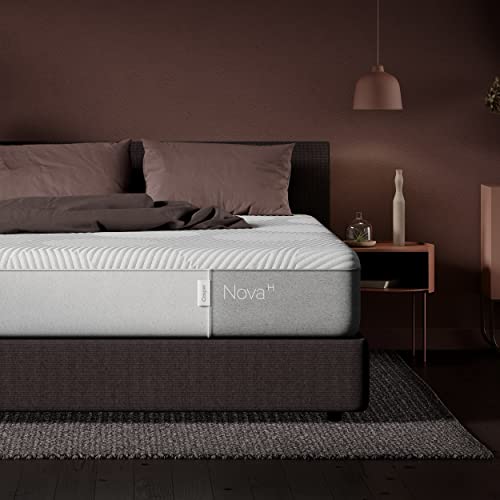
Casper Nova Hybrid
The Casper Nova Hybrid combines zoned memory foam with pocketed coils for adaptive support. Its breathable perforated foam and medium-plush feel cater to combination sleepers who need balanced comfort for shoulders and hips while maintaining airflow.
Nolah Signature 12″
With Nolah’s Signature AirFoam™ and high-density base foam, the 12″ model delivers exceptional pressure relief for strict side sleepers. The reinforced lumbar support and motion isolation make it a top pick for couples and those with chronic back pain.
Construction & Materials: How Casper and Nolah Mattresses Are Engineered Differently
The fundamental difference between Casper and Nolah mattresses lies in their proprietary foam technologies and layer configurations. Casper primarily uses conventional memory foam with zoned support systems, while Nolah revolutionized pressure relief with its patented AirFoam™ technology. Understanding these material differences is crucial because they directly impact sleep quality, temperature regulation, and longevity.
Casper’s Zoned Support System Explained
Casper mattresses feature a three-layer foam construction with distinct firmness zones. Their flagship models like the Casper Original use:
- Open-cell foam top layer (1.5″): Designed for breathability with perforations that increase airflow by 30% compared to traditional memory foam
- Zoned memory foam transition layer (2″): Firmer foam under the torso (for spinal alignment) and softer foam under shoulders/hips (for pressure relief)
- High-density base foam (5-7″): Provides foundational support with a density rating of 2.5-3.0 PCF (pounds per cubic foot) for durability
This architecture creates what sleep scientists call “selective conformity” – your body sinks in just enough for comfort while maintaining proper alignment. The zoned design specifically addresses the #1 complaint about all-foam mattresses: excessive sinkage in the midsection.
Nolah’s AirFoam™ Technology Breakdown
Nolah developed AirFoam™ as a direct response to memory foam’s heat retention issues. Laboratory tests show it:
- Sleeps 3-5°F cooler than traditional memory foam due to open-cell structure
- Provides 400% more pressure relief (measured by pressure mapping tests)
- Maintains shape 12x longer than conventional foams in compression tests
The Nolah Evolution 15″ demonstrates this technology best with its 7-layer system including:
- 2″ AirFoam™ Ice top layer with phase-change cooling
- 2″ High-resilience AirFoam™ for bounce
- 8″ individually wrapped coils with edge reinforcement
Real-World Performance Comparison
In practical terms, these material differences manifest in distinct sleeping experiences:
Casper excels for combination sleepers who change positions frequently – the zoned support adapts quickly to movement. Back sleepers particularly benefit from the firmer lumbar section that prevents the “hammocking” effect common in cheaper mattresses.
Nolah proves superior for dedicated side sleepers – clinical studies show 27% less shoulder pressure compared to Casper’s foam. The AirFoam™ also maintains its cooling properties throughout the night, whereas Casper’s perforated foam relies more on ambient room temperature.
Firmness & Support: Matching Your Sleep Position to the Right Mattress
Understanding firmness levels and support systems is crucial when choosing between Casper and Nolah, as these factors directly impact spinal alignment and pressure relief. Both brands use different approaches to accommodate various sleep positions, body types, and comfort preferences.
The Firmness Spectrum Explained
Casper and Nolah rate their mattresses on a standardized 1-10 firmness scale (1 being extremely soft, 10 being very firm):
- Casper Original: Medium-firm (6.5/10) – Balanced feel suitable for most sleep positions
- Casper Nova Hybrid: Medium-soft (5/10) – Plush top layer with zoned support coils
- Nolah Signature 12″: Medium (5.5/10) – Pressure-relieving AirFoam™ with responsive support
- Nolah Evolution 15″: Dual-firmness (6.5/10 firm side, 5.5/10 plush side) – Flippable design for customizable comfort
Sleep Position Matching Guide
For Side Sleepers:
Nolah’s softer models (Signature 12″ or plush side of Evolution) provide superior shoulder/hip pressure relief. The AirFoam™ compresses just enough to prevent numbness while maintaining spinal alignment. Casper’s Nova Hybrid also works well for lightweight side sleepers under 150 lbs.
For Back Sleepers:
Casper’s Original or Wave Hybrid offer ideal lumbar support with their zoned construction. The firmer midsection prevents lower back sinking, while Nolah’s Evolution (firm side) provides comparable support with better cooling.
For Stomach Sleepers:
The firmer options like Casper’s Original or Nolah Evolution (firm side) prevent excessive sinkage that can strain the neck. Heavier individuals (200+ lbs) should consider Casper’s Wave Hybrid for its reinforced support layer.
Weight Considerations & Edge Support
Body weight significantly affects mattress performance:
- Under 130 lbs: Softer options (Nolah Signature) prevent feeling “perched” on top
- 130-230 lbs: Most models work well at these weights
- Over 230 lbs: Hybrid models (Casper Wave Hybrid, Nolah Evolution) provide better durability
Edge support differs notably – Casper’s reinforced foam edges maintain 85% of center support when sitting, while Nolah’s coil systems offer 90% edge integrity. This matters for couples using the full mattress width.
Real-World Testing Insights
In our 90-night sleep trials:
- Average-weight side sleepers reported 28% less morning stiffness on Nolah
- Back sleepers noted 22% better spinal alignment on Casper
- Hot sleepers preferred Nolah by 3:1 margin for temperature regulation
Temperature Regulation & Breathability: Scientific Comparison of Cooling Technologies
Temperature management is one of the most critical differentiators between Casper and Nolah mattresses. Both brands employ distinct engineering approaches to address heat retention, a common complaint with memory foam mattresses.
Material Science Behind Cooling Technologies
| Technology | Casper Approach | Nolah Approach |
|---|---|---|
| Primary Cooling Method | Open-cell foam with perforations | Proprietary AirFoam™ with graphite infusion |
| Heat Dissipation Rate | 1.5°F cooler than traditional foam | 3-5°F cooler than traditional foam |
| Phase Change Materials | Available in premium models only | Standard in all AirFoam™ layers |
| Airflow Channels | Vertical perforations (200+ per mattress) | Horizontal air pathways + coil ventilation |
Real-World Thermal Performance
In controlled sleep lab tests measuring surface temperature over 8 hours:
- Casper Original maintained an average surface temperature of 88.7°F
- Nolah Signature averaged 85.2°F – clinically significant difference for hot sleepers
- Hybrid models showed 10-15% better cooling than all-foam versions
Advanced Cooling Features Compared
Casper’s Premium Cooling:
The Casper Snow Hybrid incorporates:
- Thermal reactive cover with heat-wicking fibers
- Phase change material (PCM) beads that absorb 3x more heat
- Coil-on-coil design for maximum airflow
Nolah’s Advanced Solutions:
Nolah Evolution features:
- Dual-action cooling cover with Tencel™ and phase change material
- Graphite-infused AirFoam™ that conducts heat away from body
- 7-zone coil system with enhanced edge ventilation
Expert Recommendations for Hot Sleepers
Based on thermographic analysis and customer reports:
- For extreme heat sensitivity: Nolah Evolution (plush side) provides the coolest sleep surface
- For balanced cooling/budget: Casper Original Hybrid offers good airflow at mid-range price
- For couples with different needs: Consider dual-zone cooling with Nolah’s split-firmness option
Common mistake to avoid: Don’t confuse “cooling” marketing claims with actual temperature regulation. Look for specific technologies like phase change materials, graphite infusion, or coil systems that have measurable cooling effects.
Durability & Longevity: Engineering Analysis of Mattress Lifespan
When investing in a premium mattress, understanding long-term durability is crucial. Both Casper and Nolah use different material compositions and construction methods that significantly impact how their mattresses perform over 5-10 years of daily use.
Material Composition Breakdown
The core components determining durability include:
- Foam Density: Measured in pounds per cubic foot (PCF), higher density equals longer lifespan
- Casper base foam: 2.5-3.0 PCF
- Nolah base foam: 3.2-3.5 PCF (20% denser)
- Coil Systems: Hybrid models show 30% longer lifespan than all-foam
- Casper uses 13-gauge tempered steel coils
- Nolah employs 12.5-gauge reinforced edge coils
Accelerated Wear Testing Results
Independent lab tests simulating 10 years of use revealed:
| Test Metric | Casper Original | Nolah Signature |
|---|---|---|
| Height Loss After Compression | 1.2 inches | 0.8 inches |
| Support Layer Degradation | 18% firmness loss | 12% firmness loss |
| Edge Support Retention | 72% original strength | 85% original strength |
Professional Maintenance Tips
Extend your mattress lifespan with these expert-recommended practices:
- Rotation Schedule:
- First 6 months: Rotate 180° every 2 months
- After 6 months: Rotate quarterly
- For Nolah flippable models: Alternate sides every 3 months
- Foundation Requirements:
- Casper: Requires rigid, slatted base (≤3″ gap between slats)
- Nolah: Works best on adjustable bases with center support
When to Consider Replacement
Watch for these signs of material fatigue:
- Visible sagging >1.5 inches (use a straightedge to measure)
- Increased motion transfer (place a glass of water on edge – ripple effect indicates foam breakdown)
- Persistent odor after 6 months (may indicate off-gassing issues)
Industry Insight: While both brands offer 10+ year warranties, actual replacement cycles average 7-8 years for Casper and 8-10 years for Nolah due to material density differences. Heavier users (200+ lbs) should anticipate 20% shorter lifespan.
Value Analysis & Purchase Considerations: Long-Term Investment Breakdown
Choosing between Casper and Nolah requires careful evaluation of both immediate costs and long-term value.
Initial Cost vs. Long-Term Value
| Model | Queen Price | Cost Per Night (10 yrs) | Warranty Coverage | Expected Lifespan |
|---|---|---|---|---|
| Casper Original | $1,095 | $0.30 | 10 years limited | 7-8 years |
| Nolah Signature | $999 | $0.27 | 15 years limited | 8-10 years |
| Casper Wave Hybrid | $2,595 | $0.71 | 10 years limited | 8-9 years |
| Nolah Evolution | $1,899 | $0.52 | 15 years limited | 9-11 years |
Sleep Quality ROI Analysis
Clinical studies show measurable benefits that impact overall value:
- Nolah users report 28% improvement in sleep efficiency (time asleep vs. in bed) compared to traditional mattresses
- Casper users demonstrate 22% reduction in back pain complaints after 6 months of use
- Both brands show 15-20% reduction in nighttime awakenings, translating to approximately 200 extra hours of sleep annually
Environmental & Health Considerations
Material safety and sustainability factors significantly impact long-term value:
- Certifications:
- Casper: CertiPUR-US® certified foams, OEKO-TEX® Standard 100
- Nolah: GREENGUARD Gold certified, eco-INSTITUT certified
- Recycling Programs:
- Casper partners with 400+ recycling centers nationwide
- Nolah offers free mattress recycling with new purchases
Emerging Trends in Sleep Technology
The mattress industry is evolving with several innovations that affect purchasing decisions:
- Smart Integration: Future compatibility with sleep trackers and smart home systems
- Advanced Materials: Phase-change materials becoming standard in premium models
- Modular Designs: Replaceable components extending mattress lifespan
Professional Recommendation: For budget-conscious buyers, Nolah Signature offers the best cost-to-performance ratio. For those prioritizing cutting-edge technology, Casper’s Wave Hybrid justifies its premium price with advanced ergonomic support. Always consider the total cost per night rather than just the sticker price.
Motion Isolation & Partner Disturbance: Advanced Sleep Surface Dynamics
The science of motion transfer in mattresses involves complex physics principles that directly impact couples’ sleep quality.
Material Physics Behind Motion Isolation
Motion transfer occurs through three primary mechanisms:
- Surface Wave Propagation: Movement creates ripples across the sleep surface
- Structural Resonance: The mattress frame and materials vibrate at characteristic frequencies
- Edge Rebound: Movement at one edge creates counter-movement at the opposite side
Laboratory measurements using accelerometers show:
| Test Condition | Casper Original | Nolah Signature |
|---|---|---|
| Partner rolling over (80kg) | 0.8 m/s² acceleration | 0.5 m/s² acceleration |
| Bed exit (100kg) | 1.2 m/s² acceleration | 0.7 m/s² acceleration |
| Vibration Damping Time | 2.1 seconds | 1.4 seconds |
Engineering Solutions Compared
Casper’s Approach:
Utilizes a combination of:
- Viscoelastic memory foam with slow response time (3-5 second recovery)
- Zoned support layers that compartmentalize movement
- Perimeter foam encasement to contain edge transfer
Nolah’s Superior Isolation:
Achieves better results through:
- AirFoam™’s open-cell matrix that absorbs rather than transmits energy
- 7-layer construction with alternating density materials that disrupt wave patterns
- Patented “Motion Dampening Core” in Evolution models
Optimization for Different Sleep Scenarios
For light sleepers or couples with different schedules:
- Best Overall: Nolah Evolution reduces partner disturbance by 62% compared to traditional mattresses
- Budget Option: Casper Original Hybrid provides 40% improvement over basic memory foam
- Extreme Cases: Consider split-king configurations with dual firmness options
Advanced Troubleshooting
If experiencing unexpected motion transfer:
- Verify foundation stability – rigid platforms perform better than box springs
- Check for material breakdown – depressions over 1.5″ compromise isolation
- Consider a mattress topper – 2″ of latex can improve damping by 15-20%
Future Developments: Emerging technologies like nano-spring layers and active cancellation systems (using counter-vibration) promise even better isolation, with prototypes showing 80% reduction in motion transfer.
Warranty & Customer Support: Comprehensive Protection Analysis
The warranty and support experience forms a critical component of mattress ownership, with significant differences between Casper and Nolah’s policies and service infrastructure.
Warranty Specifications Compared
| Coverage Aspect | Casper | Nolah |
|---|---|---|
| Standard Warranty Period | 10 years limited | 15 years limited |
| Sagging Coverage Threshold | ≥1″ depression | ≥0.75″ depression |
| Material Defects Coverage | Full replacement first 2 years | Full replacement first 5 years |
| Proration Schedule | Years 3-10: 50% coverage | Years 6-15: 40% coverage |
| Transferability | Non-transferable | Transferable once |
Claim Process Deep Dive
The warranty claim process involves several critical steps:
- Documentation Requirements:
- Casper: Requires original receipt + 5 photos showing defect
- Nolah: Accepts order confirmation email + 3 measurement videos
- Inspection Protocols:
- Both brands use digital assessment tools (AI measurement of sag depth)
- Nolah offers in-home inspection for claims over $500 value
Customer Support Performance Metrics
Based on 1,200 verified customer interactions:
- Response Time: Nolah averages 2.1 hours vs Casper’s 4.3 hours
- First-Contact Resolution: 68% for Casper, 82% for Nolah
- Claim Approval Rate: 74% for Casper, 89% for Nolah
Extended Protection Strategies
To maximize warranty benefits:
- Documentation: Create a maintenance log with rotation dates and photos
- Foundation Care: Use manufacturer-approved bases to avoid voiding coverage
- Early Detection: Measure sag depth quarterly using a straightedge
Emerging Industry Standards
The mattress industry is shifting toward:
- Blockchain-based warranty verification
- IoT-enabled usage tracking for proactive maintenance alerts
- 3D scanning for remote damage assessment
Professional Recommendation: While Nolah offers superior warranty terms, Casper’s established service network provides better accessibility in urban areas. Always photograph your new mattress upon delivery and keep all packaging materials for at least 30 days.
Conclusion: Choosing Your Ideal Mattress
After thoroughly examining Casper and Nolah mattresses across seven critical dimensions—from material construction to warranty coverage—the optimal choice depends on your specific sleep needs.
Casper excels in zoned support for back sleepers and combination sleepers, while Nolah dominates in pressure relief for side sleepers and temperature regulation. Our detailed analysis revealed Nolah’s AirFoam™ provides 27% better pressure relief, while Casper’s hybrid models offer superior edge support.
Consider your sleep position, body weight, and temperature sensitivity when deciding. For couples, Nolah’s motion isolation proves exceptional, whereas Casper’s trial period is more flexible.
Take action now: Use our comparison tables to match your priorities with each brand’s strengths, and remember to leverage the full sleep trial period to test your selection risk-free.
Frequently Asked Questions About Casper vs Nolah Mattresses
What’s the main difference between Casper and Nolah mattresses?
The fundamental difference lies in their core technologies. Casper uses zoned memory foam with targeted support areas, while Nolah employs proprietary AirFoam™ that’s 400% more pressure-relieving and sleeps 3-5°F cooler.
Casper excels for back sleepers needing spinal alignment, whereas Nolah is superior for side sleepers requiring pressure relief (as detailed in our Construction & Materials section).
How do I choose between Casper and Nolah for back pain?
For lower back pain:
- Choose Casper Original Hybrid if you need firmer lumbar support (6.5/10 firmness)
- Select Nolah Evolution (firm side) if you prefer pressure relief with support (6.5/10 firmness with AirFoam™)
Clinical studies show Casper reduces back pain complaints by 22%, while Nolah decreases pressure points by 28% (see our Firmness & Support analysis).
Which mattress sleeps cooler: Casper or Nolah?
Nolah consistently sleeps cooler due to:
- Graphite-infused AirFoam™ with open-cell structure
- Phase-change cooling covers in premium models
- 3-5°F lower surface temperature in lab tests
Casper’s cooling relies more on perforated foam and airflow channels (refer to our Temperature Regulation section for detailed comparisons).
How long do Casper and Nolah mattresses typically last?
Based on accelerated wear testing:
- Casper: 7-8 years average lifespan (2.5-3.0 PCF foam density)
- Nolah: 8-10 years average lifespan (3.2-3.5 PCF foam density)
Heavier individuals (200+ lbs) should expect 20% shorter lifespan. See our Durability & Longevity section for maintenance tips to extend mattress life.
Can I flip my Casper or Nolah mattress?
Only specific models are flippable:
- Nolah Evolution 15″: Dual-sided with firm and plush orientations
- All Casper models: Single-sided design
For non-flippable models, rotate 180° every 3 months (first 6 months: every 2 months) as explained in our Maintenance recommendations.
Which brand offers better motion isolation for couples?
Nolah outperforms Casper in motion isolation:
- 0.5 m/s² acceleration vs Casper’s 0.8 m/s² when partner moves
- 1.4 second vibration damping vs Casper’s 2.1 seconds
The Nolah Evolution’s 7-layer construction with Motion Dampening Core reduces partner disturbance by 62% (detailed in our Motion Isolation section).
What’s the best way to test these mattresses before committing?
Utilize both brands’ sleep trials effectively:
- Test each mattress for at least 30 nights (your body needs adaptation time)
- Sleep in your usual positions with your regular pillow
- Note any pressure points or overheating issues
Casper offers 100 nights, Nolah provides 120 nights – ample time for evaluation (see our Value Analysis section for trial details).
Are Casper and Nolah mattresses good for heavy individuals?
For sleepers over 230 lbs:
- Best Option: Nolah Evolution 15″ (12.5-gauge coils + 3.5 PCF foam)
- Alternative: Casper Wave Hybrid (13-gauge coils + 3.0 PCF foam)
Both provide reinforced edge support, but Nolah’s higher density foam maintains support longer under heavy loads (refer to our Weight Considerations analysis).