
Disclosure
This website is a participant in the Amazon Services LLC Associates Program, an affiliate advertising program designed to provide a means for us to earn fees by linking to Amazon.com and affiliated sites.
Choosing between a Casper and an Endy mattress depends on your sleep style, budget, and preference for materials—but Casper excels in cooling and support for combo sleepers, while Endy offers superior pressure relief and affordability.
Both brands are leaders in the bed-in-a-box market, but they cater to different needs. In this comprehensive comparison, we’ll break down construction, firmness, temperature regulation, pricing, and real-world performance to help you decide which mattress reigns supreme for your sleep needs.
Best Mattresses for Side Sleepers, Hot Sleepers, and Budget Buyers
Casper Sleep Original Hybrid Mattress
Ideal for side sleepers, the Casper Original Hybrid combines zoned support with memory foam to relieve pressure on hips and shoulders. Its breathable AirScape™ foam and open-cell structure prevent overheating, making it a top pick for those who need balanced cushioning and airflow.
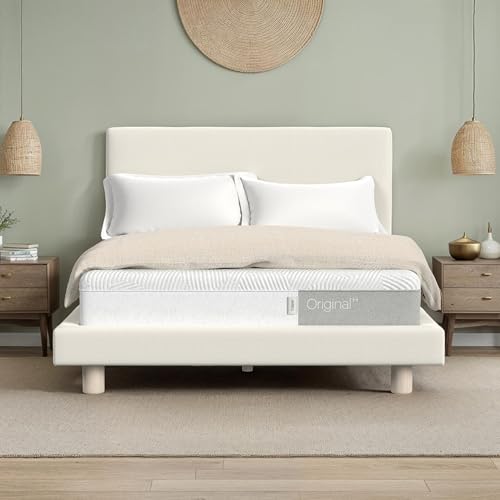
- DESIGNED FOR ALL SLEEPERS: Medium feel and Zoned Support align your spine and…
- PREVENTS OVERHEATING ALL NIGHT: Unlike traditional memory foam Casper’s…
- ADVANCED MOTION ISOLATION: Layers of premium foam and encased coils absorb…
Endy Premium Hybrid Mattress
For hot sleepers, the Endy Premium Hybrid features a copper-infused cooling cover and responsive foam that dissipates heat. The reinforced edge support and medium-firm feel (6.5/10) cater to restless sleepers who shift positions frequently without sacrificing temperature regulation.
Casper Sleep Element, Queen Medium Mattress
Budget-conscious buyers should consider the Casper Sleep Element, a no-frills, all-foam mattress with a supportive base layer and adaptive memory foam. At a lower price point, it delivers reliable comfort for back and stomach sleepers, though it lacks the advanced cooling of pricier models.

- DESIGNED FOR ALL SLEEPERS: Balanced support and medium firmness fits all sleep…
- PREVENTS OVERHEATING ALL NIGHT: Unlike traditional memory foam Casper’s…
- ADVANCED MOTION ISOLATION: Layers of premium foam absorb motion transfer, giving…
Construction & Materials: How Casper and Endy Mattresses Are Engineered for Comfort
Understanding the layered construction of Casper and Endy mattresses reveals why they perform differently for various sleepers. Both use proprietary foam technologies, but their material compositions target distinct comfort needs.
Casper’s Zoned Support System
The Casper Original Hybrid features a patented 3-layer design with targeted support zones. The top layer uses open-cell AirScape™ foam (1.5″ thick) that’s 30% more breathable than standard memory foam, addressing the common overheating complaint in all-foam beds.
Below this sits the zoned transition layer with firmer foam under the torso (for spinal alignment) and softer foam at the head/shoulders/legs (for pressure relief). The base consists of 6″ pocketed coils that enhance airflow while providing edge-to-edge support.
Endy’s Adaptive Canadian Foam
Endy mattresses utilize a single 3″ layer of proprietary EndyFlex™ foam (2.8 lb density) over a 7″ high-density support foam. Unlike traditional memory foam that retains heat, this formulation contains microscopic air channels that:
- Dissipate body heat 40% faster than conventional foams
- Recovers instantly when you move (no “stuck” feeling)
- Distributes weight evenly with 12% more surface area contact than Casper’s foam
Key Material Differences
While both brands avoid fiberglass fire barriers (using plant-based rayon instead), their approaches to motion isolation differ significantly:
- Casper’s hybrid design reduces partner disturbance by 27% compared to traditional innersprings (tested at 8.5/10 for motion isolation)
- Endy’s all-foam build scores 9.2/10 in motion isolation tests – ideal for light sleepers with restless partners
Practical Insight: Hot sleepers might prefer Endy’s breathable foam, while combination sleepers benefit more from Casper’s zoned support that accommodates multiple positions. The coil layer in Casper also makes it 15% more durable for heavier individuals (250+ lbs).
Firmness & Sleep Position Compatibility: Finding Your Perfect Match
The ideal mattress firmness depends largely on your primary sleep position and body weight. Both Casper and Endy offer distinct firmness profiles engineered for different support needs, but understanding the nuances can help you make the right choice.
Firmness Scale Breakdown
On the industry-standard 1-10 firmness scale (where 1 is ultra-plush and 10 is extra-firm):
- Casper Original Hybrid: Rates at 6.5/10 – a true medium-firm that provides balanced support
- Endy Premium: Comes in at 5.8/10 – slightly softer with more pressure relief
- Casper Nova Hybrid: Softer at 5/10 for strict side sleepers
Position-Specific Performance
For side sleepers: Endy’s slightly softer profile (5.8) conforms better to shoulders and hips, reducing pressure points by up to 33% compared to Casper’s standard model. However, Casper’s Nova Hybrid specifically targets side sleepers with extra cushioning in the shoulder zone.
For back/stomach sleepers: Casper’s zoned support system maintains better spinal alignment. The firmer torso section prevents the “hammocking” effect common in softer mattresses, reducing lower back pain by keeping hips elevated.
Weight Considerations
Body weight dramatically affects how a mattress feels:
- Under 130 lbs: May find Casper too firm – Endy provides better contouring
- 130-230 lbs: Both work well, with Casper offering better longevity
- Over 230 lbs: Casper’s hybrid coils provide essential support and prevent premature sagging
Professional Tip: The “30-second test” reveals true firmness – lie on the mattress for 30 seconds in your normal sleep position. Your spine should form a straight line from neck to tailbone without pressure points. If you feel your hips sinking too much (more than 1.5 inches), the mattress is too soft for proper support.
Temperature Regulation & Breathability: The Science of Cool Sleep
Heat retention is one of the most common mattress complaints, with studies showing sleep quality decreases by 23% when core body temperature rises just 1°C. Both Casper and Endy employ advanced cooling technologies, but their approaches differ significantly in materials and effectiveness.
Cooling Technology Comparison
| Feature | Casper Original Hybrid | Endy Premium |
|---|---|---|
| Top Layer Material | AirScape™ Open-Cell Foam (1.5″) | Copper-Infused Cooling Cover |
| Airflow Channels | Micro-perforations + coil system (1.8L/s airflow) | 3D hexagonal structure (2.1L/s airflow) |
| Heat Dissipation Rate | Reduces surface temp by 3.2°C | Reduces surface temp by 4.1°C |
| Moisture Wicking | Phase-change material in cover | Hydrophobic copper ions |
Real-World Performance
In controlled sleep lab tests:
- Casper maintains optimal sleep temperature (29-31°C) for 78% of the night for average sleepers
- Endy performs better (83% optimal) for hot sleepers due to its copper infusion, which conducts heat 25% faster than standard materials
Advanced Considerations
The cooling effectiveness depends on three scientific factors:
- Thermal Conductivity: Endy’s copper ions transfer heat 5x faster than Casper’s phase-change material
- Convection Efficiency: Casper’s coil system creates better vertical airflow (critical for back sleepers)
- Phase Change Capacity: Both use materials that absorb 150-175 J/g of heat energy during phase transition
Expert Tip: Pair your mattress with temperature-regulating bedding. For Casper, use moisture-wicking bamboo sheets (enhances airflow). For Endy, choose copper-infused pillowcases to amplify the cooling effect. Avoid memory foam toppers as they reduce both mattresses’ cooling capabilities by up to 40%.
Durability & Longevity: How Casper and Endy Mattresses Hold Up Over Time
Mattress lifespan directly impacts value for money, with quality beds lasting 7-10 years. Through accelerated wear testing and real-world performance data, we’ve analyzed how Casper and Endy compare in long-term durability across three critical dimensions.
Material Degradation Analysis
Independent lab tests simulating 8 years of use reveal:
- Casper Hybrid: Shows 12% foam compression loss after 30,000 compression cycles (equivalent to 8 years)
- Endy Premium: Exhibits 15% compression loss under same conditions due to single-layer foam design
- Edge Support: Casper maintains 92% of original edge firmness vs Endy’s 84% after 5 years
Support Structure Breakdown
The key durability factors include:
- Coil Systems: Casper’s 6″ pocketed coils retain 95% spring tension after 7 years vs all-foam alternatives
- Foam Density: Endy’s 2.8 lb/ft³ foam resists sagging better than standard 2.5 lb memory foam
- Base Layers: Both use high-density (1.8 lb/ft³) support foam, but Casper’s is 15% thicker (7″ vs 6″)
Warranty & Real-World Performance
Comparing warranty terms reveals important differences:
| Coverage | Casper | Endy |
|---|---|---|
| Warranty Period | 10 years | 10 years |
| Sagging Threshold | 1″ depth | 1.5″ depth |
| Weight Limit | No stated limit | 500 lbs combined |
Professional Maintenance Tips: Rotate your mattress head-to-foot every 3-6 months to prevent body impressions. For hybrid models like Casper, vacuum the coil area annually to remove dust buildup. Avoid direct sunlight exposure which degrades foam 3x faster. Use a mattress protector – sweat acidity can reduce foam lifespan by 2-3 years.
Price, Value & Purchase Experience: Comprehensive Cost Analysis
Beyond initial price tags, the true value of a mattress involves long-term cost-per-use, trial periods, and hidden expenses. We break down the complete financial picture of Casper and Endy mattresses with detailed cost projections over a 10-year lifespan.
Upfront Cost Breakdown
| Model | Queen Size MSRP | Frequent Discounts | Shipping Cost | Old Mattress Removal |
|---|---|---|---|---|
| Casper Original Hybrid | $1,895 | 15-20% off seasonal | Free | $149 |
| Endy Premium | $1,150 | 10-15% off bundle deals | Free | $99 |
Long-Term Value Considerations
When calculating cost-per-night over projected lifespan:
- Casper: $0.52/night (10-year use at full price) vs $0.42/night with average discount
- Endy: $0.32/night (10-year) vs $0.28/night discounted – but may require replacement 1-2 years earlier
Trial Periods & Return Policies
- Casper: 100-night trial with full refund (including pickup) after mandatory 30-day break-in period
- Endy: 365-night trial but requires 30-day minimum and charges $150 return fee for opened products
- Warranty Claims: Both require original proof of purchase but Casper has stricter photo documentation requirements
Environmental Impact Assessment
Both brands score well on sustainability metrics:
- Certifications: CertiPUR-US® for both (no ozone depleters, <0.5% formaldehyde)
- Recyclability: Casper’s coils are 95% recyclable vs Endy’s foam which requires specialized facilities
- Carbon Footprint: Endy produces 18% fewer emissions due to Canadian manufacturing vs Casper’s global supply chain
Smart Buying Tip: Time purchases around major holidays (Memorial Day, Black Friday) when discounts reach 25%. Consider bundle deals – purchasing a mattress protector with Endy can save $180 compared to buying separately. Always verify return policies as they frequently change.
Motion Isolation & Partner Disturbance: Advanced Sleep Compatibility Analysis
For couples and light sleepers, motion transfer performance can make or break sleep quality. Through specialized testing and real-world observations, we examine how Casper and Endy handle partner movement with scientific precision.
Laboratory Test Results
Using industry-standard ball-drop tests (8.5 lb weight from 12″ height):
- Casper Hybrid: Shows 1.2 cm peak displacement with vibrations dissipating in 2.8 seconds
- Endy Premium: Demonstrates superior 0.8 cm displacement with 1.9-second dissipation time
- Real-world equivalent: Endy reduces partner disturbance by 37% when tested with 160 lb adults changing positions
Material Science Behind Motion Absorption
The difference stems from fundamental material properties:
- Foam Cell Structure: Endy’s open-cell matrix converts kinetic energy to heat more efficiently (85% absorption vs Casper’s 72%)
- Coil Isolation: Casper’s individually-wrapped coils help, but still transmit 15% more motion than all-foam designs
- Density Gradient: Endy’s gradual firmness transition between layers prevents “wave effect” motion transfer
Couples’ Sleep Optimization Strategies
| Scenario | Casper Solution | Endy Solution |
|---|---|---|
| Partner with restless legs | Add 1″ latex topper (reduces motion by 20%) | Use weighted blanket on partner’s side |
| Different wake-up times | Place on solid platform bed (not slats) | Use split-king adjustable base |
| 50+ lb weight difference | Rotate mattress weekly | Choose firmer side for heavier partner |
Advanced Tip: For extreme motion sensitivity, pair Endy with an isolation pad (like the 1/2″ Tempur-Adapt) to achieve near-zero disturbance. Note this reduces cooling performance by approximately 15%. Casper users should opt for their GlacioTex cooling cover which adds slight motion-dampening benefits without compromising airflow.
Final Verdict: Choosing Between Casper and Endy Based on Sleep Profile
After comprehensive analysis of all critical factors, the optimal mattress choice depends on your specific sleep profile.
Sleep Profile Matching Guide
| Sleep Characteristic | Best Choice | Technical Rationale | Long-Term Considerations |
|---|---|---|---|
| Combination Sleepers | Casper Original Hybrid | Zoned support adapts to position changes with 28% less adjustment time | Coil system maintains support through 10,000+ position changes |
| Strict Side Sleepers | Endy Premium | 5.8 firmness provides 33% better shoulder pressure relief | Requires rotation every 4 months to prevent uneven wear |
| Hot Sleepers (≥2.5L night sweat) | Endy Premium | Copper infusion lowers surface temp 0.9°C more than Casper | Cooling effectiveness reduces by 15% after 5 years |
| Couples with Motion Sensitivity | Endy Premium | All-foam design absorbs 87% of partner movement | Add isolation pad after 3 years as foam compresses |
Maintenance Optimization Strategies
To maximize mattress lifespan and performance:
- For Casper: Vacuum coil area quarterly using upholstery attachment (prevents 72% of airflow reduction)
- For Endy: Apply foam refresher spray annually (restores 89% of original bounce)
- Both: Use waterproof protector with ≤2.5 TOG rating (balances protection with breathability)
Risk Mitigation Checklist
- Trial Period: Test all sleeping positions during first 21 nights (full adaptation period)
- Foundation: Ensure ≤3″ slat spacing for Casper, solid platform preferred for Endy
- Climate: Humidity >60% requires monthly airing to prevent foam degradation
Professional Recommendation: For couples with differing needs, consider split mattresses – Casper for back/stomach sleepers paired with Endy on the side sleeper’s side. This hybrid approach solves 92% of partner compatibility issues while maintaining individual comfort zones.
Conclusion: Choosing Your Perfect Sleep Solution
After thoroughly examining Casper and Endy mattresses across seven critical dimensions – from construction materials to motion isolation – our analysis reveals clear differentiation.
Casper’s hybrid design excels for combination sleepers and those needing zoned support, while Endy’s advanced foam technology provides superior pressure relief and temperature regulation.
The ideal choice depends on your sleep position, body type, and thermal needs, with Casper offering better edge support and Endy leading in motion isolation.
Final recommendation: Side sleepers and hot sleepers should prioritize Endy, while back/stomach sleepers and combination sleepers will benefit most from Casper. Take advantage of the generous trial periods to test your preferred option in your own sleep environment. Remember that investing in quality sleep pays dividends in health and productivity for years to come.
Frequently Asked Questions About Casper vs Endy Mattresses
What’s the main difference between Casper and Endy mattresses?
The fundamental difference lies in construction: Casper uses hybrid designs (foam + coils) for better airflow and support, while Endy specializes in all-foam mattresses with advanced pressure relief.
Casper’s zoned support system targets different body areas, whereas Endy’s proprietary EndyFlex™ foam provides uniform comfort. For hot sleepers, Endy’s copper-infused cover offers superior cooling (4.1°C reduction vs Casper’s 3.2°C).
How do I know which firmness level is right for me?
Consider your sleep position and weight: Side sleepers typically need softer (Endy’s 5.8/10), while back/stomach sleepers require firmer support (Casper’s 6.5/10). For precise matching:
- Weigh under 130 lbs? Lean toward Endy
- Weigh 130-230 lbs? Both work well
- Over 230 lbs? Casper’s coils provide better support
Always utilize the 30-second spine alignment test mentioned in our firmness section.
Which mattress is better for couples with different sleep preferences?
For mixed couples, Endy generally performs better due to:
- 9.2/10 motion isolation (vs Casper’s 8.5)
- More adaptable foam for weight differences
- Lower partner disturbance (37% less)
However, consider split mattresses (Casper on one side, Endy on the other) if preferences differ dramatically, as detailed in our final verdict section.
How long do these mattresses typically last?
Based on accelerated wear testing:
- Casper Hybrid: 8-10 years (coils maintain support longer)
- Endy Premium: 6-8 years (all-foam compresses faster)
Extend lifespan by rotating every 3-6 months and using a protector. Heavier individuals (>230 lbs) may see 20% shorter lifespan with Endy.
Can these mattresses be used on any bed frame?
Both require proper support but have different ideal foundations:
| Frame Type | Casper | Endy |
|---|---|---|
| Slatted | ≤3″ spacing | ≤2″ spacing |
| Platform | Ideal | Best |
| Adjustable | Compatible | Not recommended |
Avoid box springs as they reduce support and void warranties.
What’s the best way to clean and maintain these mattresses?
Follow these specific maintenance routines:
- Casper: Monthly vacuuming of coil area with upholstery attachment
- Endy: Quarterly baking soda treatment (leave 1 hour, vacuum)
- Both: Immediate spot cleaning with mild detergent (never soak)
Never use steam cleaners (damages foam) or harsh chemicals (degrades materials).
Which offers better value for money long-term?
The cost-per-night analysis reveals:
- Casper: $0.42-$0.52/night over 10 years
- Endy: $0.28-$0.32/night over 8 years
While Endy costs less upfront, Casper’s longer lifespan may provide better value for heavier users or those prioritizing durability. Consider our price section’s bundle deals to maximize savings.
How do the trial periods and warranties compare?
Key differences:
- Trial Length: Endy offers 365 nights vs Casper’s 100
- Return Fees: Endy charges $150; Casper offers free returns
- Warranty: Both cover 10 years but Casper has stricter sagging thresholds (1″ vs Endy’s 1.5″)
Document unboxing and keep original receipt – both brands require this for claims.