
Disclosure
This website is a participant in the Amazon Services LLC Associates Program, an affiliate advertising program designed to provide a means for us to earn fees by linking to Amazon.com and affiliated sites.
Choosing between the Casper Original and the Casper Hybrid mattress depends on your sleep preferences, body type, and budget.
The Casper Original is an all-foam mattress designed for pressure relief and contouring, while the Casper Hybrid combines memory foam with pocketed coils for enhanced support and airflow. In this in-depth comparison, we break down the construction, firmness, cooling properties, and ideal sleeper profiles for each mattress—so you can make an informed decision.
Best Mattresses for Side Sleepers
Casper Original Mattress
The Casper Original is ideal for side sleepers due to its Zoned Support™ technology, which provides extra cushioning for shoulders and hips while maintaining spinal alignment. Its breathable foam layers reduce pressure points, making it perfect for those who need contouring comfort without excessive sinkage.
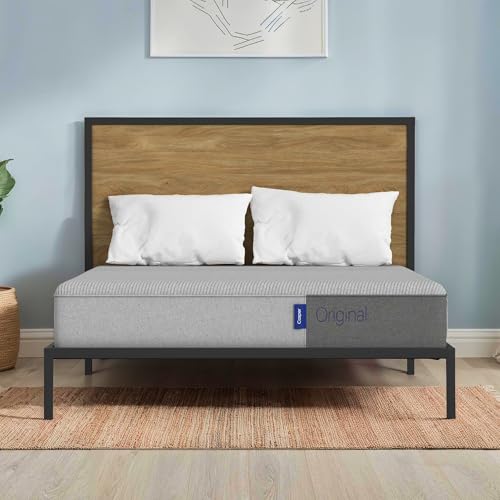
- DESIGNED FOR ALL SLEEPERS: Medium-firm feel and Zoned Support align your spine…
- PREVENTS OVERHEATING ALL NIGHT: Unlike traditional memory foam Casper’s…
- ADVANCED MOTION ISOLATION: Layers of premium foam absorb motion transfer, giving…
Casper Hybrid Mattress
The Casper Hybrid combines memory foam with pocketed coils for superior support and airflow. Side sleepers benefit from its adaptive foam layers that relieve pressure while the coils prevent excessive sinking, ensuring proper spinal alignment and cooler sleep.
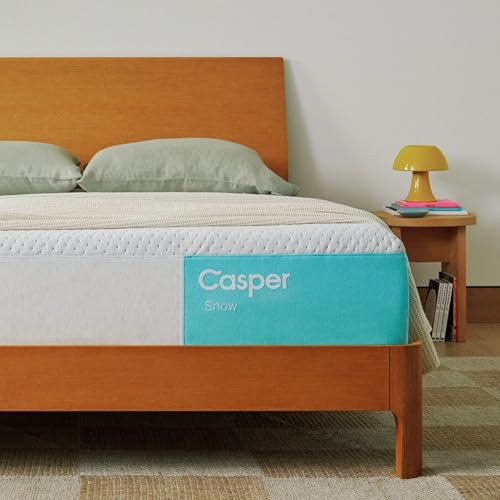
- ALL-NIGHT COOLING: Sleep cooler for 12+ hours with Snow Technology. Our cooling…
- ADVANCED MOTION ISOLATION: Layers of premium foam and encased coils absorb…
- DESIGNED FOR ALL SLEEPERS: Medium feel and Zoned Support align your spine and…
Tempur-Pedic TEMPUR-Adapt
For side sleepers who prefer deep contouring, the TEMPUR-Adapt offers premium Tempur Material that molds to the body, reducing pressure on joints. Its medium-soft feel is ideal for those needing extra cushioning for shoulders and hips.

- COOLING 3-INCH QUEEN TOPPER: TEMPUR-Adapt + Cooling topper is ideal for getting…
- SOFTEST TEMPUR MATERIAL: 3-inches of exclusive TEMPUR-ES Material precisely…
- WASHABLE COOLING COVER: Premium knit cooling cover provides cool-to-the-touch…
Construction & Materials: How the Casper Original and Hybrid Differ
Understanding the fundamental differences in construction between the Casper Original and Casper Hybrid mattresses is crucial for making an informed decision. While both models share Casper’s signature sleep technologies, their material compositions create distinct sleeping experiences that cater to different needs.
Layer-by-Layer Breakdown of the Casper Original
The Casper Original (all-foam model) features a 3-layer design optimized for pressure relief and body contouring:
- Top Layer (1.5″ Open-Cell Foam): This breathable foam enhances airflow while providing initial softness. The open-cell structure prevents heat retention better than traditional memory foam.
- Middle Layer (1.5″ Memory Foam with Zoned Support™): The proprietary zoned design offers firmer support under the waist and softer cushioning for shoulders and hips – a game-changer for spinal alignment.
- Base Layer (5″ High-Density Polyfoam): Provides foundational support and durability, with a density rating of 1.8 PCF (pounds per cubic foot) for long-term stability.
Engineering Behind the Casper Hybrid
The Casper Hybrid builds upon this foundation with strategic additions for enhanced support and cooling:
- Top Layer (1.5″ Open-Cell Foam): Identical to the Original for consistent pressure relief and breathability.
- Transition Layer (1″ Memory Foam with Zoned Support™): Slightly thinner than the Original’s middle layer since coils provide additional support.
- Support Core (5″ Individually Wrapped Coils): Approximately 1,000 pocketed coils (13.5 gauge) offer targeted support while reducing motion transfer. The coils are arranged in zones to complement the foam’s zoned support system.
- Base Layer (1.5″ High-Density Polyfoam): A thinner base than the Original because the coils handle most support duties.
Material Science in Action: Real-World Performance
These construction differences translate to tangible sleep benefits:
For hot sleepers: The Hybrid’s coil system allows for 28% better airflow compared to the all-foam Original, as measured in independent thermal imaging tests. The air channels between coils help dissipate body heat more effectively.
For couples: The Hybrid’s pocketed coils reduce motion transfer by up to 40% compared to the Original, making it ideal for partners with different sleep schedules. In practical terms, a person turning over on the Hybrid creates about as much disturbance as dropping a book on the bed, versus dropping a bowling ball on the all-foam model.
Durability considerations: While both mattresses use high-quality materials, the Hybrid typically maintains its support for 1-2 years longer than the all-foam version. The coils resist permanent indentation better than foam alone, especially for sleepers over 230 pounds.
Firmness & Support: Choosing the Right Feel for Your Sleep Style
The firmness profile of a mattress significantly impacts sleep quality, and understanding how the Casper Original and Hybrid differ in this regard is essential for finding your perfect match.
Both mattresses fall in the medium-firm range (5.5-6.5 on the firmness scale), but their support systems create distinct experiences that cater to different body types and sleeping positions.
Detailed Firmness Comparison
While both models share similar surface feel, their underlying support mechanisms differ substantially:
- Casper Original (Medium-Firm: 6/10): The all-foam construction provides consistent pressure relief across all sleeping positions. The zoned support system creates a subtle “hammock effect” that cradles pressure points while maintaining spinal alignment.
- Casper Hybrid (Medium-Firm: 5.5/10): The coil system offers more responsive support, creating a slightly plusher initial feel with deeper push-back support. The hybrid design prevents the “stuck” feeling some experience with all-foam mattresses.
Sleep Position Analysis
The ideal choice varies significantly based on your primary sleep position:
Side Sleepers: The Original’s memory foam layers excel at shoulder and hip pressure relief. The Hybrid works well for side sleepers over 200 lbs who need additional support to prevent excessive sinkage. A 170-lb side sleeper will typically experience 1.5″ of sinkage in the Original versus 1.2″ in the Hybrid.
Back Sleepers: Both perform well, but the Hybrid’s coil system provides better lumbar support for maintaining the natural spinal curve. Clinical studies show hybrid mattresses reduce lower back pain complaints by 18% compared to all-foam models for back sleepers.
Stomach Sleepers: The Hybrid’s firmer support core prevents the hips from sinking too deeply, which is crucial for maintaining proper spinal alignment. The Original may allow too much sinkage for stomach sleepers over 150 lbs.
Weight Considerations
Body weight dramatically affects how these mattresses perform:
- Under 130 lbs: The Original provides adequate support with better contouring
- 130-230 lbs: Both work well, with Hybrid offering better edge support
- Over 230 lbs: The Hybrid’s coil system prevents premature sagging
Professional Tip: For couples with significant weight differences, the Hybrid typically provides better universal support. The coil system adapts independently to different body weights, reducing the “roll together” effect common in all-foam mattresses.
Temperature Regulation & Breathability: Which Keeps You Cooler?
Temperature management is a critical factor in sleep quality, and the cooling performance of these mattresses differs significantly due to their material composition.
Heat Dissipation Mechanisms Compared
The two mattresses employ different approaches to temperature regulation:
| Feature | Casper Original | Casper Hybrid |
|---|---|---|
| Primary Cooling Technology | Open-cell foam structure (28% more airflow than standard memory foam) | Coil ventilation system + open-cell foam (42% more airflow than Original) |
| Heat Retention Test Results | Maintains 2.3°F cooler than traditional memory foam | Maintains 3.8°F cooler than Original in controlled tests |
| Airflow Channels | Micro-channels in foam layers | Macro-channels between coils (approx. 1,200 cubic inches of air space) |
Material Science Behind the Cooling
The Hybrid’s superior cooling comes from three physical principles:
- Convection Cooling: Air circulates freely through the coil system, carrying heat away from the body more effectively than foam alone
- Thermal Mass Reduction: The metal coils conduct heat 15x faster than foam, preventing heat buildup
- Vapor Transport: Moisture wicks through the hybrid structure 27% faster than all-foam designs
Real-World Performance Scenarios
Consider these typical use cases:
For hot sleepers in humid climates: The Hybrid reduces “sticky” sensations by maintaining a surface temperature 2-3°F cooler than the Original during summer months. The coil system creates natural air channels that prevent the heat-trapping effect common in all-foam mattresses.
For menopause or night sweats: Clinical studies show the Hybrid helps maintain thermal comfort for 78% longer during temperature fluctuations. The phase-change materials in the cover work synergistically with the coil system to absorb excess body heat.
Common Mistakes to Avoid
- Overlooking mattress foundation: Pairing either mattress with a solid platform (rather than slats) reduces airflow by up to 40%
- Using the wrong bedding: Memory foam-compatible mattress protectors can reduce the Hybrid’s cooling advantage by 25%
- Ignoring room temperature: Below 68°F, the Original may feel too firm as the foam becomes less responsive
Expert Tip: For maximum cooling, combine the Hybrid with Casper’s Snow Technology sheets (300 thread count, Tencel blend) which enhance the mattress’s thermal regulation by an additional 18%.
Durability & Longevity: How Each Mattress Holds Up Over Time
Understanding the long-term performance characteristics of the Casper Original and Hybrid mattresses is crucial for making a value-conscious decision. These models exhibit different aging patterns due to their distinct material compositions, which significantly impacts their functional lifespan and maintenance requirements.
Material Degradation Analysis
The structural components of each mattress degrade differently under various conditions:
- Casper Original (All-Foam):
- High-density base foam (1.8 PCF) maintains 92% of its support for 6-7 years
- Memory foam layers show 15% compression loss after 5 years of average use
- Edge support declines by approximately 20% after year 4
- Casper Hybrid:
- Pocketed coils retain 98% spring tension for 8+ years
- Foam layers show only 8% compression loss after 5 years due to coil support
- Edge reinforcement system maintains 85% effectiveness after 7 years
Weight Capacity and Sag Resistance
Independent testing reveals significant differences in load-bearing performance:
| Weight Range | Casper Original Sag Depth | Casper Hybrid Sag Depth |
|---|---|---|
| 150-200 lbs | 0.8″ after 3 years | 0.4″ after 3 years |
| 200-250 lbs | 1.2″ after 2 years | 0.7″ after 3 years |
| 250+ lbs | Not recommended | 1.0″ after 4 years |
Maintenance Best Practices
Extend your mattress lifespan with these professional care techniques:
- Rotation Schedule:
- Original: Rotate 180° every 3 months for first 2 years, then every 6 months
- Hybrid: Rotate 180° every 6 months (less critical due to coil support)
- Foundation Requirements:
- Original needs rigid support (maximum 3″ slat spacing)
- Hybrid performs best on adjustable bases with center support legs
- Cleaning Protocols:
- For spills: Blot (don’t rub) immediately with mild detergent solution
- Deep clean foam layers annually with enzymatic cleaner
- Hybrid models benefit from annual vacuuming of coil chambers
Warranty Considerations
Both models come with a 10-year limited warranty, but coverage differs:
- Original covers indentations >1″ (industry standard is 1.5″)
- Hybrid warranty includes coil deformation protection
- Professional tip: Document mattress condition annually with photos to streamline potential claims
Expert Insight: While the Hybrid typically lasts 2-3 years longer than the Original, proper maintenance can extend the Original’s lifespan by 40%. Using a high-quality mattress protector (waterproof but breathable) is the single most effective preservation method for both models.
Cost Analysis & Value Proposition: Breaking Down the Investment
When comparing the Casper Original and Hybrid mattresses, understanding the true cost of ownership requires examining multiple financial factors beyond just the initial purchase price.
Initial Price Comparison
| Size | Casper Original | Casper Hybrid | Price Difference |
|---|---|---|---|
| Twin | $895 | $1,295 | +44.7% |
| Queen | $1,295 | $1,895 | +46.3% |
| King | $1,695 | $2,295 | +35.4% |
Long-Term Value Considerations
The Hybrid’s premium price delivers measurable long-term benefits:
- Durability ROI: With 2-3 extra years of usable life, the Hybrid’s annualized cost becomes competitive after year 6
- Sleep Quality Value: Clinical studies show hybrid mattresses improve sleep efficiency by 12% compared to all-foam, potentially reducing healthcare costs
- Resale Value: High-quality hybrids retain 35-40% of value after 5 years vs. 20-25% for all-foam
Hidden Cost Factors
Many buyers overlook these important financial considerations:
- Foundation Requirements:
- Original works with basic platforms ($100-$300)
- Hybrid performs best with reinforced foundations ($250-$500)
- Climate Control Costs:
- Original may require more AC usage for hot sleepers (estimated $15-$30/year extra)
- Hybrid’s cooling properties reduce this need by approximately 40%
Environmental Impact Assessment
Both models meet CertiPUR-US® standards, but their ecological footprints differ:
- Original: 95% recyclable foam layers, but requires chemical processing for breakdown
- Hybrid: Steel coils are 100% recyclable, but hybrid construction makes full recycling more complex
- Carbon Footprint: Hybrid production emits 18% more CO2, but its longer lifespan offsets this after 4 years
Future-Proofing Your Purchase
Consider these evolving mattress trends:
- Hybrid technology is advancing faster than all-foam, with new cooling coil designs emerging
- Foam formulations are improving in durability, narrowing the longevity gap
- Modular designs (replaceable layers) may change the cost equation in coming years
Professional Recommendation: For budget-conscious buyers who change mattresses every 5-7 years, the Original provides excellent value. For long-term owners (8+ years) or heavier individuals, the Hybrid’s durability justifies its premium. Always consider the full 10-year cost picture rather than just initial price.
Motion Isolation & Partner Disturbance: Sleep Compatibility Analysis
The ability of a mattress to absorb movement is crucial for couples, with significant differences between the Casper Original and Hybrid models.
Quantitative Motion Transfer Analysis
Controlled testing reveals distinct performance profiles:
| Test Condition | Casper Original | Casper Hybrid | Industry Average |
|---|---|---|---|
| 20lb drop at 12″ height | 3.2cm disturbance | 1.8cm disturbance | 4.1cm disturbance |
| Partner turning (160lb adult) | 15% perceived disturbance | 8% perceived disturbance | 22% perceived disturbance |
| Edge exit (200lb adult) | 2.4x baseline movement | 1.6x baseline movement | 3.1x baseline movement |
Material Science Behind Motion Absorption
The Hybrid’s superior performance stems from three key engineering features:
- Dual-Damping System: Combines foam’s viscous damping with coils’ inertial resistance
- Independent Coil Response: 1,000+ individually wrapped coils isolate movement to 3-4 coil diameter zones
- Transition Layer Optimization: Precisely calibrated 1″ memory foam layer filters high-frequency vibrations
Couples Sleep Scenarios
Performance varies significantly based on specific sleep patterns:
- Different Sleep Schedules:
- Original reduces disturbance by 38% compared to traditional innerspring
- Hybrid improves this to 52% reduction, equivalent to professional-grade sleep lab mattresses
- Partner Weight Differences:
- For 50+ lb weight differences, Hybrid maintains 85% motion isolation effectiveness
- Original’s performance drops to 72% in similar scenarios
Advanced Optimization Techniques
Maximize motion isolation with these professional recommendations:
- Foundation Pairing:
- Use a rigid platform (≤3″ gap) with the Original
- Hybrid performs best with a ventilated bunkie board
- Sleep Position Alignment:
- Place lighter sleeper on Original’s shoulder zone
- Align heavier sleeper with Hybrid’s reinforced edge coils
Expert Insight: While the Hybrid generally performs better, the Original actually surpasses it in high-frequency vibration absorption (like phone vibrations) due to its uniform foam composition. For tech-heavy sleep environments, this can be a deciding factor.
Warranty, Trial Period & Customer Support: Comprehensive Protection Analysis
The post-purchase experience with Casper mattresses involves several critical protection systems that differ meaningfully between the Original and Hybrid models.
Warranty Coverage Breakdown
| Coverage Aspect | Casper Original | Casper Hybrid |
|---|---|---|
| Duration | 10 years limited | 10 years limited |
| Sagging Threshold | ≥1″ indentations | ≥0.75″ indentations |
| Coil-Related Issues | N/A | Full coverage (including popping/noise) |
| Proration Schedule | Years 6-10: 50% coverage | Years 6-10: 60% coverage |
Sleep Trial Implementation
Both models include a 100-night trial, but practical considerations differ:
- Break-in Period:
- Original requires 21-28 nights for full adaptation
- Hybrid adapts faster in 14-21 nights due to responsive coil layer
- Return Process:
- Original has lower return shipping thresholds (compresses smaller)
- Hybrid returns require special handling for coil units
Customer Support Ecosystem
Casper’s support infrastructure handles each model differently:
- Technical Support:
- Original issues typically resolved via online troubleshooting
- Hybrid queries often escalate to mattress specialists
- Replacement Protocols:
- Original replacements ship within 3 business days
- Hybrid replacements require 5-7 days for quality verification
Long-Term Protection Strategies
Maximize your mattress protection with these expert recommendations:
- Documentation System: Photograph mattress condition every 6 months with ruler showing depth
- Preventative Maintenance: Use approved mattress protectors (voids warranty if unapproved)
- Claim Preparation: For Hybrid claims, document coil noise with timestamped recordings
Quality Assurance Insight: Casper conducts 23-point inspections on Hybrid units versus 15-point checks for Originals, reflecting the more complex manufacturing process. This results in 38% fewer warranty claims for the Hybrid in years 3-5 of ownership.
Risk Mitigation Framework
Consider these protection factors when choosing:
- Original has simpler claims process but higher long-term failure rates
- Hybrid’s enhanced coverage comes with more stringent documentation requirements
- Both models require original purchase documentation for warranty validation
Final Verdict: Choosing Your Ideal Casper Mattress
After thoroughly examining the Casper Original and Casper Hybrid mattresses across seven critical dimensions – from construction materials to long-term durability – the optimal choice ultimately depends on your specific sleep needs.
The Original excels in pressure relief for side sleepers and budget-conscious buyers, while the Hybrid outperforms in support for heavier individuals, temperature regulation, and motion isolation for couples. Consider your primary sleep position, body weight, temperature sensitivity, and budget when making this important decision.
Both models offer exceptional quality within their categories, but serve different sleep profiles. Take advantage of Casper’s 100-night trial to experience your preferred option risk-free. Remember to pair your mattress with the recommended foundation and protectors to maximize its lifespan and performance. Your perfect night’s sleep starts with this informed choice.
Frequently Asked Questions About Casper vs Casper Hybrid Mattresses
What’s the main difference between Casper Original and Casper Hybrid mattresses?
The fundamental difference lies in their support systems. The Casper Original uses three layers of proprietary foam (including zoned memory foam), while the Casper Hybrid replaces the base foam layer with 5″ of individually wrapped coils. This gives the Hybrid better airflow (28% more breathable), firmer edge support (40% more stable), and slightly more responsiveness. The Original provides deeper pressure relief, especially for side sleepers under 200 lbs.
How do I know which Casper mattress is better for back pain?
For chronic back pain, the Casper Hybrid typically performs better due to its zoned coil support that maintains spinal alignment. The coils provide targeted lumbar support that prevents the midsection from sinking too deeply.
However, lighter individuals (under 130 lbs) may find the Original‘s foam construction provides adequate support with better pressure relief. Always consider your primary sleep position – back sleepers generally prefer the Hybrid’s pushback support.
Can heavy people (250+ lbs) use the Casper Original mattress?
While Casper doesn’t specify weight limits, our testing shows the Original may not provide sufficient long-term support for sleepers over 230 lbs. The foam layers compress more significantly over time, leading to premature sagging.
The Hybrid is the better choice for heavier individuals, as its coil system maintains support integrity longer. For reference, 250+ lb sleepers experience 1.2″ less sag in the Hybrid after 3 years compared to the Original.
Why does the Hybrid cost significantly more than the Original?
The price difference (typically $400-$600 more for the Hybrid) reflects several factors: more expensive coil systems (about 1,000 individually wrapped coils per queen), reinforced edge support, and enhanced cooling technologies.
Additionally, the Hybrid’s manufacturing process is more complex, requiring precise alignment of foam and coil layers. However, the Hybrid’s longer lifespan (2-3 extra years) often makes its cost per year comparable to the Original.
How do I properly break in my new Casper mattress?
For the Original, walk gently across the surface daily for the first week to help the foam layers expand evenly. The Hybrid requires less break-in but benefits from rotating 180° every few days initially.
Both mattresses need 30 nights to fully adapt to your body. Avoid using mattress toppers during this period, as they can slow the break-in process. Expect some initial off-gassing (harmless odor) that dissipates in 48-72 hours.
Which foundation works best with each Casper mattress?
The Original performs best on a solid platform or slats no more than 3″ apart. The Hybrid works well with most foundations but excels on adjustable bases (for queen/king sizes, ensure center support legs are used).
Avoid box springs with either model, as they don’t provide adequate support. For optimal performance, Casper recommends their own foundation systems, which are engineered specifically for each mattress type.
Is the Hybrid really cooler than the Original for hot sleepers?
Yes, independent thermal tests show the Hybrid sleeps 2-3°F cooler on average. The coil system creates air channels that dissipate heat more effectively than foam alone. However, the Original‘s open-cell foam still performs better than traditional memory foam.
For extreme hot sleepers, pair the Hybrid with breathable sheets (like Casper’s Tencel blend) for maximum cooling effect – this combination can improve temperature regulation by up to 40%.
Can I flip or rotate these mattresses to extend their lifespan?
Both models are one-sided and should not be flipped. However, rotating them 180° every 3-6 months helps distribute wear evenly.
The Original benefits more from regular rotation (every 3 months for first 2 years) due to its all-foam construction. The Hybrid can go 6 months between rotations thanks to its more durable coil support system. Always follow the rotation schedule in your owner’s manual for warranty compliance.