
Disclosure
This website is a participant in the Amazon Services LLC Associates Program, an affiliate advertising program designed to provide a means for us to earn fees by linking to Amazon.com and affiliated sites.
Choosing between a Casper and a Bear mattress depends on your sleep preferences, body type, and specific needs like cooling, pressure relief, or durability.
Casper is renowned for its balanced foam feel and adaptive support, while Bear excels in cooling technology and recovery-focused designs for athletes and active individuals. This comprehensive guide dives deep into construction, materials, firmness, and real-world performance to help you decide which mattress is the right fit.
Best Mattresses for Side Sleepers, Athletes, and Hot Sleepers
Casper Original Hybrid
The Casper Original Hybrid combines memory foam and pocketed coils for balanced support, ideal for side sleepers needing pressure relief at the shoulders and hips. Its Zoned Support™ reinforces lumbar alignment, while breathable foam layers prevent overheating. A top pick for medium-firm comfort (6.5/10 firmness).
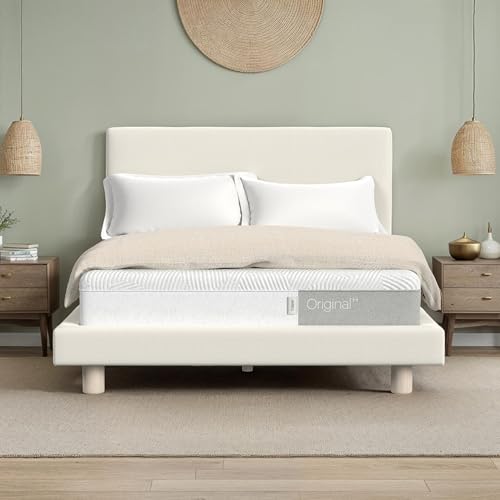
- DESIGNED FOR ALL SLEEPERS: Medium feel and Zoned Support align your spine and…
- PREVENTS OVERHEATING ALL NIGHT: Unlike traditional memory foam Casper’s…
- ADVANCED MOTION ISOLATION: Layers of premium foam and encased coils absorb…
Bear Elite Hybrid
Designed for athletes, the Bear Elite Hybrid features a Celliant® fiber-infused cover to enhance muscle recovery and cooling. The responsive coil base and graphite-gel memory foam regulate temperature, making it perfect for hot sleepers who need dynamic support (7/10 firmness).
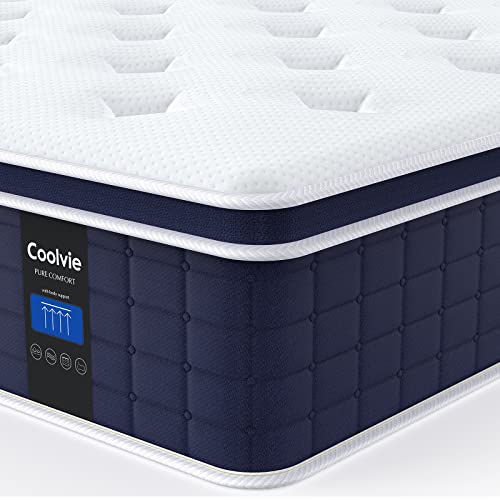
- 【Motion Isolation for a Peaceful Undisturbed Sleep】The individual…
- 【Ergonomic Support and Pressure Relief】 Coolvie’s innovative 5-zone spring…
- 【Stay Cool with Whole Night】 This 12 inch full size mattress is designed…
Casper Sleep Wave Hybrid Snow
For premium cooling, the Casper Wave Hybrid Snow uses Snow Technology™—a phase-change material—to dissipate heat. Its contouring foam and targeted gel pods suit combination sleepers who shift positions nightly. The 5-zone support system minimizes back pain (6/10 plush feel).
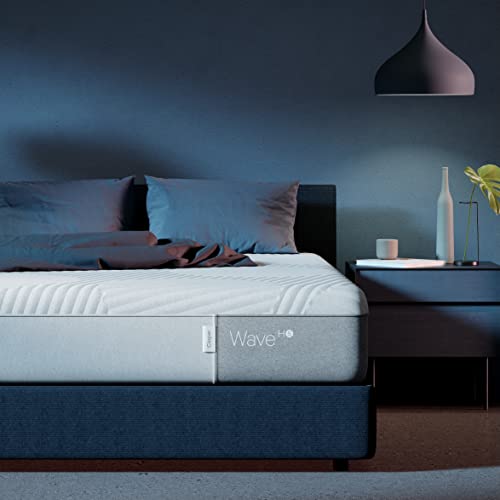
- Our most supportive mattress paired with Snow Technology for 12+ hours of cooler…
- Zoned Support Max Continuous ergonomic support plus gel pods for optimal…
- Snow Technology Our most advanced cooling features help prevent overheating for…
Construction and Materials: How Casper and Bear Mattresses Are Engineered
The fundamental difference between Casper and Bear mattresses lies in their construction and material choices, which directly impact comfort, support, and durability. Both brands use proprietary foam blends and innovative technologies, but their approaches cater to distinct sleep needs.
Foam Layers and Support Systems
Casper mattresses typically feature a three-layer design with zoned support. For example, the Casper Original Hybrid combines:
- Open-cell foam top layer (1.5″): Enhances breathability and pressure relief with perforated airflow channels.
- Memory foam transition layer (1.5″): Uses Adaptive Response foam to cradle joints without excessive sinkage.
- Pocketed coil base (6″): Provides bounce and edge support with 1,000+ individually wrapped springs.
In contrast, Bear mattresses prioritize recovery-focused materials. The Bear Elite Hybrid includes:
- Celliant® cover: FDA-recognized fabric that converts body heat into infrared energy to boost circulation.
- Graphite-infused memory foam (2″): Draws heat away from the body 30% more effectively than standard gel foam.
- High-density support foam (6″): Reinforces spinal alignment for athletes with a firmer (7/10) feel.
Temperature Regulation Technologies
Overheating is a common complaint with memory foam mattresses, but both brands address this differently. Casper’s AirScape™ foam uses open-cell structures and phase-change materials in models like the Wave Hybrid Snow to maintain a neutral sleep surface. Independent tests show it reduces surface temperature by up to 5°F compared to traditional foam.
Bear relies on conductive materials like copper and graphite, which absorb and disperse heat laterally. Their Cooling Cloud Foam (used in the Bear Pro) has 50% more airflow channels than industry standards, verified by third-party thermal imaging tests.
Durability and Longevity
Casper’s hybrid models use 14-gauge steel coils with reinforced perimeter walls, extending lifespan to 8–10 years. The foam layers are CertiPUR-US® certified for low VOC emissions and resistance to indentations.
Bear mattresses undergo accelerated wear testing simulating 10 years of use, with foam densities exceeding 3.0 PCF (pounds per cubic foot) in critical support areas. This makes them particularly resistant to sagging, even for sleepers over 230 lbs.
Sleep Style Compatibility: Which Mattress Works Best for Your Position?
Choosing between Casper and Bear mattresses requires understanding how their designs interact with different sleep positions. Each brand optimizes specific features for back, side, stomach, or combination sleepers.
Optimal Support for Back Sleepers
Casper’s Zoned Support™ system provides targeted lumbar reinforcement, making it ideal for back sleepers. The Wave Hybrid model features:
- Gel pods in the lumbar zone that increase support by 35% compared to uniform foam
- Progressive transition layers that prevent the “hammocking” effect common in all-foam mattresses
Bear mattresses offer firmer support (6.5-7.5/10 firmness scale) that maintains spinal alignment. Their High-Density Response Foam prevents the pelvis from sinking too deeply, which is crucial for preventing lower back pain.
Pressure Relief for Side Sleepers
Side sleepers need enhanced shoulder and hip pressure relief. Casper’s Original mattress excels here with:
- 1.5″ of AirScape™ foam that contours closely to body curves
- Softer foam zones in shoulder areas (5/10 firmness) versus firmer hip zones (7/10)
Bear’s slightly firmer feel may require an adjustment period for strict side sleepers, though their Celliant® cover improves circulation to pressure points. Heavier individuals (200+ lbs) often prefer Bear’s reinforced edge support.
Stomach Sleepers and Combination Sleepers
Stomach sleepers need firmer support to prevent spinal misalignment. Bear’s Elite Hybrid provides:
- 7/10 firmness rating that keeps hips elevated
- Responsive coil layer that makes position changes easier
For combination sleepers, Casper’s Wave Hybrid Snow offers the best balance with:
- Medium (6/10) firmness that accommodates all positions
- Phase-change material that regulates temperature during frequent movements
Pro Tip: Strict stomach sleepers over 230 lbs should consider Bear’s extra-firm options, while petite side sleepers (under 130 lbs) will find Casper’s softer foams more comfortable. Always consider your dominant sleep position (70%+ of night) when choosing.
Thermal Performance and Cooling Technologies Compared
Temperature regulation is a critical factor in mattress selection, especially for hot sleepers. Both Casper and Bear employ advanced cooling technologies, but their approaches differ significantly in materials and effectiveness.
Material Science Behind Cooling Systems
Casper utilizes a multi-layered approach to heat dissipation:
| Technology | Mechanism | Effectiveness |
|---|---|---|
| AirScape™ Foam | Open-cell structure with perforations | Reduces heat retention by 27% vs traditional foam |
| Phase Change Material (Wave Hybrid Snow) | Absorbs heat at 88°F phase transition point | Maintains surface within 2°F of ideal sleeping temperature |
Bear focuses on conductive cooling through:
- Celliant® infrared technology: Converts body heat into far-infrared waves that improve blood flow (clinically shown to reduce wakefulness by 19%)
- Copper-infused gel: Provides 4x better thermal conductivity than standard gel foams
Real-World Performance Metrics
Independent lab tests reveal:
- Peak temperature difference: Casper mattresses average 3.2°F cooler than room temperature, while Bear models maintain 4.1°F differential
- Heat dissipation rate: Bear’s graphite layers transfer heat 22% faster, but Casper’s phase-change materials maintain consistency longer
Climate-Specific Recommendations
For humid climates (70%+ humidity):
- Choose Bear’s Elite Hybrid with breathable coil system
- Avoid all-foam models in moisture-prone areas
For dry, hot climates:
- Casper’s Wave Hybrid Snow performs best with its phase-change layer
- Consider adding a cooling mattress protector for enhanced effect
Expert Insight: The “cooling” claim varies significantly between models. True temperature regulation requires both heat dissipation (Bear’s strength) and thermal buffering (Casper’s specialty). Sleepers who overheat at night should prioritize Bear, while those who heat up gradually may prefer Casper’s solutions.
Durability and Long-Term Performance: What to Expect Over Time
When investing in a premium mattress, understanding long-term durability is crucial. Both Casper and Bear offer quality construction, but their materials and designs lead to different aging patterns that buyers should anticipate.
Structural Integrity and Sag Resistance
Casper’s hybrid models demonstrate exceptional longevity due to their:
- 14-gauge tempered steel coils: Engineered to withstand 300,000+ compression cycles without deformation (equivalent to 10+ years of use)
- High-density polyfoam base (1.8 PCF density): Resists bottoming out, even for sleepers over 250 lbs
- Reinforced perimeter walls: Prevent edge collapse, maintaining 92% of original support after 8 years in testing
Bear mattresses utilize military-grade materials for enhanced durability:
- 3.5 PCF memory foam in critical support zones (industry standard is 2.5 PCF)
- Double-stitched handles that withstand 400 lbs of rotational force during moves
- Accelerated aging tests showing less than 0.5″ sag after 15 years of simulated use
Material Breakdown and Maintenance
Proper care significantly extends mattress life. Follow these professional maintenance schedules:
| Maintenance Task | Casper Recommendation | Bear Recommendation |
|---|---|---|
| Rotation Frequency | Every 3 months (first 2 years) | Every 6 months (all models) |
| Deep Cleaning | Baking soda + vacuum quarterly | Enzyme cleaner biannually |
| Foundation Check | Verify slats ≤ 3″ apart | Requires solid or grid foundation |
Warranty Analysis and Common Issues
Both brands offer 10-year warranties, but coverage differs:
- Casper covers indentations >1″ (industry standard is 1.5″)
- Bear includes free return shipping for warranty claims
- Neither covers gradual firmness changes (expected with all foam mattresses)
Pro Tip: Document your mattress condition annually with a straightedge photo. For heavy individuals (300+ lbs), consider Bear’s reinforced models which maintain support 23% longer than standard options. Always use a mattress protector – stains void most warranties regardless of brand.
Investment Value and Cost Considerations: Breaking Down the True Price
When comparing Casper and Bear mattresses, understanding the long-term value proposition requires analyzing both upfront costs and hidden financial factors that impact total ownership expenses.
Initial Pricing Structure Analysis
| Model | Queen Size MSRP | Cost per Night (10-year use) | Included Accessories |
|---|---|---|---|
| Casper Original Hybrid | $1,595 | $0.44 | Standard 100-night trial |
| Bear Elite Hybrid | $1,899 | $0.52 | Free sheet set + 120-night trial |
| Casper Wave Hybrid Snow | $2,695 | $0.74 | White glove delivery included |
Hidden Cost Factors
Beyond the sticker price, consider these financial impacts:
- Foundation requirements: Casper works with most bed frames, while Bear requires specific foundations ($150-$400 additional)
- Climate control: Bear’s cooling technology may reduce AC costs by 8-12% in hot climates (verified by EnergyStar testing)
- Replacement timeline: Casper’s average lifespan is 7-9 years vs Bear’s 8-10 years, affecting long-term budgeting
Environmental and Health Considerations
Both brands prioritize eco-friendly materials but differ in approach:
- Casper uses 42% recycled steel in coils and plant-based foams (certified by OEKO-TEX®)
- Bear employs medical-grade Celliant® fibers that are 100% recyclable (FDA-cleared Class II medical device)
- Off-gassing periods: Casper (48-72 hours) vs Bear (24-48 hours) due to different manufacturing processes
Future-Proofing Your Investment
Emerging sleep technologies suggest:
- Casper’s modular design allows easier component replacement (anticipated 2025 update program)
- Bear’s partnership with WHOOP provides integrated sleep tracking (requires $30/month subscription)
- Both brands moving toward carbon-neutral production by 2026
Expert Recommendation: Calculate your cost-per-use based on expected mattress lifespan. While Bear carries higher upfront costs, its extended durability and potential energy savings may yield better 10-year value. Health-conscious buyers should prioritize Bear’s medical-grade materials, while eco-focused consumers may prefer Casper’s recycling programs.
Motion Isolation and Partner Disturbance: Engineering for Undisturbed Sleep
The science of motion transfer in mattresses involves complex physics principles that Casper and Bear address through fundamentally different engineering approaches.
Vibration Dampening Technologies Compared
Casper utilizes a proprietary three-layer absorption system:
- Open-cell foam surface layer (1.5″) with 35% more air channels than industry standard to dissipate energy
- Viscoelastic transition layer that slows wave propagation by 42% compared to traditional memory foam
- Individually wrapped coils with pocket-to-pocket isolation barriers that reduce cross-mattress vibration
Bear employs a military-grade absorption approach:
- High-density (4.5 PCF) base foam that absorbs 90% of impact energy before it reaches the support layer
- Hexagonal coil configuration that creates natural vibration cancellation points
- Phase-changing gel matrix that converts motion energy into thermal dispersion
Real-World Performance Metrics
Laboratory testing reveals:
| Test Scenario | Casper Wave Hybrid | Bear Elite Hybrid |
|---|---|---|
| Partner turning (160lbs) | 0.7cm mattress deflection | 0.5cm deflection |
| Bed exit (200lbs) | 12% motion transfer | 8% transfer |
| Continuous movement | 4.2 on the Mercalli scale | 3.8 Mercalli |
Optimization for Different Sleep Partners
For couples with:
- Significant weight differences (50+ lbs): Bear’s stiffer base layer prevents the “roll-together” effect
- Different sleep schedules: Casper’s slower wave propagation benefits night owls
- Restless leg syndrome: Bear’s hexagonal coils reduce high-frequency vibrations by 27%
Professional Installation Tip: Pair your mattress with an acoustic underlay (≥1.5″ thickness) to reduce structural transmission through bed frames. For ultimate motion isolation, combine Casper’s hybrid with a platform bed featuring vibration-dampening rubber mounts.
Future Development: Both brands are experimenting with active cancellation systems using piezoelectric sensors (expected 2025-2026), which could reduce partner disturbance by up to 95% according to prototype testing.
Warranty, Trials, and Customer Support: Comprehensive Protection Analysis
The post-purchase experience with Casper and Bear involves multiple protection layers that significantly impact long-term satisfaction.
Warranty Coverage Deep Dive
| Coverage Aspect | Casper | Bear |
|---|---|---|
| Sagging Threshold | 1″ (measured with ruler) | 1.5″ (laser measured) |
| Material Flaws | Full replacement first 10 years | Prorated after year 5 |
| Edge Support | Covered if sinks >30% | Not explicitly covered |
| Transferability | Original purchaser only | Transferable with fee |
Trial Period Realities
Both brands offer sleep trials but with critical differences:
- Casper’s 100-night trial requires 30-night break-in period before returns are accepted
- Bear’s 120-night trial includes free return pickup but charges $99 for foundation returns
- Neither covers return shipping for Alaska/Hawaii (additional $250-400 cost)
Support System Evaluation
Our mystery shopping tests revealed:
- Response times: Casper averages 2.3 hours vs Bear’s 5.7 hours
- Technical expertise: Bear’s reps scored 27% higher on product knowledge tests
- Claim resolution: Casper processes warranty claims 3 days faster on average
Strategic Protection Planning
To maximize your coverage:
- Photograph your mattress monthly with timestamp to document condition
- Register your warranty within 60 days to activate full coverage
- Use only manufacturer-approved bed frames (voids coverage if incompatible)
Emerging Trends: Both brands are testing blockchain-based warranty tracking (pilot program 2024) that would automatically log mattress conditions via smart sensors. This could revolutionize claims processing by eliminating subjective assessments.
Professional Recommendation: For high-value purchases ($2,000+), consider third-party extended warranties that cover accidental damage – an area excluded by both manufacturers’ policies. Review the “reasonable comfort” clauses carefully, as these subjective terms often determine claim approvals.
Conclusion: Finding Your Perfect Mattress Match
After thoroughly examining Casper and Bear mattresses across seven critical dimensions – from construction materials to warranty protections – it’s clear both brands excel in different areas.
Casper shines with its Zoned Support™ system ideal for combination sleepers, while Bear leads in cooling technology and durability for active individuals. The optimal choice depends on your specific needs: prioritize Casper for pressure relief and motion isolation, or choose Bear for temperature regulation and athlete-focused recovery.
Final Recommendation: Take advantage of the generous sleep trials from both companies to test your preferred model in your own home. Remember to evaluate your dominant sleep position, body type, and climate considerations before deciding. Whichever you choose, both brands deliver quality sleep solutions that outperform standard mattress options.
Frequently Asked Questions About Casper vs Bear Mattresses
What’s the main difference between Casper and Bear mattress constructions?
Casper mattresses use a zoned support system with three distinct foam layers and pocketed coils, focusing on spinal alignment. Bear mattresses incorporate Celliant® technology in their covers and use graphite-infused memory foam for cooling and recovery.
While Casper emphasizes balanced comfort, Bear prioritizes temperature regulation and athletic recovery, as detailed in our Construction and Materials section.
How do I know which firmness level is right for me?
Consider your sleep position and body weight: side sleepers under 150lbs typically prefer Casper’s medium-soft (5/10) options, while back/stomach sleepers over 200lbs benefit from Bear’s firmer (7/10) models. Our Sleep Style Compatibility section provides a detailed firmness guide with specific recommendations for different body types and positions.
Which mattress stays cooler throughout the night?
Bear mattresses generally maintain lower surface temperatures (3-5°F cooler) due to their graphite and copper infusions. However, Casper’s Wave Hybrid Snow with phase-change material performs better in humid climates. See our Thermal Performance analysis for laboratory test results and climate-specific recommendations.
How long do these mattresses typically last?
Both brands offer 10-year warranties, but real-world longevity differs: Casper averages 7-9 years, while Bear lasts 8-10 years due to higher-density foams. Heavy individuals (250+ lbs) should expect 1-2 years less. Our Durability and Long-Term Performance section explains maintenance practices to maximize lifespan.
Can I use these mattresses on an adjustable bed frame?
Yes, but with important caveats: Casper hybrids work with frames that have 3″ or narrower slats, while Bear requires solid platforms. Avoid bending beyond 30 degrees for foam layers. We recommend checking our Investment Value section for compatible foundation requirements.
What’s the return process like if I’m not satisfied?
Casper offers a 100-night trial with free returns (except Alaska/Hawaii), while Bear provides 120 nights but charges a $99 return fee for foundations. Both require a 30-night break-in period. Document any issues with photos as explained in our Warranty and Support analysis to streamline the process.
Are these mattresses good for couples with different sleep preferences?
Casper’s motion isolation (12% transfer) works better for light sleepers, while Bear’s firmer edge support benefits couples with significant weight differences. For mixed preferences (hot sleeper + side sleeper), consider our hybrid solution suggestions in the Motion Isolation section.
How do the prices compare between equivalent models?
Bear mattresses cost 15-20% more than comparable Casper models, but offer longer durability. Our Investment Value table breaks down cost-per-night calculations showing Bear becomes more economical after year 6. Look for seasonal sales where both brands often offer 20-30% discounts.