
Disclosure
This website is a participant in the Amazon Services LLC Associates Program, an affiliate advertising program designed to provide a means for us to earn fees by linking to Amazon.com and affiliated sites.
Choosing between a Casper mattress and a Novaform mattress depends on your sleep preferences, budget, and desired features—Casper excels in premium comfort and innovative foam technology, while Novaform offers exceptional value with high-density memory foam at a lower price point.
Both brands cater to different needs, making it essential to evaluate their materials, support, cooling properties, and long-term durability.
Best Mattresses for Side Sleepers
Casper Sleep Original Foam Hybrid Mattress
The Casper Original Hybrid combines zoned memory foam and pocketed coils for optimal spinal alignment, making it ideal for side sleepers who need pressure relief at the shoulders and hips. Its breathable foam layers enhance airflow, reducing heat retention—a common issue with all-foam beds.
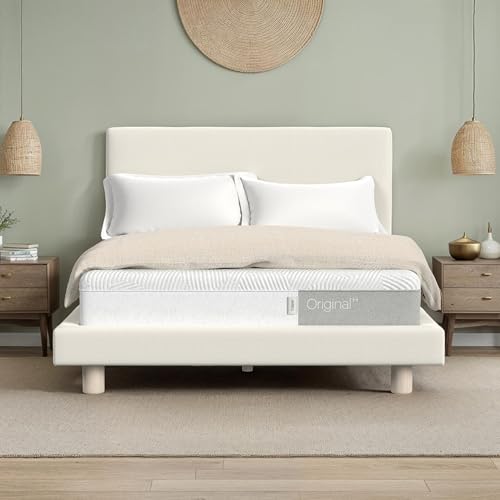
- DESIGNED FOR ALL SLEEPERS: Medium feel and Zoned Support align your spine and…
- PREVENTS OVERHEATING ALL NIGHT: Unlike traditional memory foam Casper’s…
- ADVANCED MOTION ISOLATION: Layers of premium foam and encased coils absorb…
Novaform Gel MAX 14″ ComfortGrande Advanced Gel Memory Foam Mattress
The Novaform ComfortGrande Plus (Model: NM-14-CGFX) features 3″ of cooling gel-infused memory foam over a high-density base, offering deep contouring for side sleepers. Its CertiPUR-US® certified foam ensures durability, while the medium-firm feel balances cushioning and support for proper posture.

Casper Sleep Wave Hybrid Mattress
For premium pressure relief, the Casper Wave Hybrid includes targeted gel pods and ergonomic zones to cradle joints. Its hybrid design (5-layer foam + coils) minimizes motion transfer, making it perfect for couples. The reinforced edges also prevent sagging, extending mattress longevity.

Construction and Material Comparison: How Casper and Novaform Mattresses Are Built
Understanding the construction and materials of Casper and Novaform mattresses is crucial because it directly impacts comfort, durability, and support. Both brands use proprietary foam technologies, but their layering systems and material quality differ significantly.
Casper’s Multi-Layer Foam and Hybrid Designs
Casper mattresses typically feature 3-5 layers of specialized foam, including open-cell memory foam for breathability and high-density polyfoam for foundational support. For example, the Casper Original Hybrid combines:
- Zoned Support™ foam – Firmer at the hips and softer at the shoulders to align the spine
- AirScape™ perforated foam – Enhances airflow to prevent overheating
- Pocketed coils – Individually wrapped springs for targeted support and motion isolation
This construction is particularly effective for combination sleepers who change positions frequently, as the zoned support adapts to different pressure points.
Novaform’s High-Density Memory Foam Approach
Novaform mattresses like the ComfortGrande Plus use simpler 2-3 layer designs focused on dense memory foam:
- 3″ gel-infused memory foam – Provides contouring pressure relief while dissipating heat
- 11″ high-density support foam – Creates a stable base that prevents sagging
The higher density (typically 3.5-4.0 PCF) makes Novaform mattresses more durable than budget memory foam options, though they may sleep warmer than Casper’s breathable designs.
Key Material Differences
Three critical distinctions impact performance:
- Foam density – Novaform uses denser foams (3.5-4.0 PCF) vs Casper’s 2.5-3.0 PCF, affecting longevity
- Cooling technology – Casper’s AirScape foam has physical perforations, while Novaform relies on gel infusion
- Hybrid options – Only Casper offers coil hybrids, which improve edge support and airflow
A common misconception is that all memory foam feels the same. In reality, Casper’s proprietary foams are engineered to be more responsive (quicker bounce-back) than traditional memory foam, while Novaform offers deeper contouring that some sleepers prefer for pressure relief.
Firmness and Support: How Casper and Novaform Compare for Different Sleep Positions
The ideal mattress firmness varies significantly based on sleep position, body weight, and personal preference. Both Casper and Novaform offer distinct support systems, but understanding their differences helps match the right mattress to your sleeping style.
Firmness Scale and Sleep Position Compatibility
On the industry-standard 1-10 firmness scale (where 1 is ultra-soft and 10 is extra-firm):
- Casper mattresses typically range from 5-7 (medium to medium-firm), with their hybrid models leaning firmer
- Novaform mattresses generally fall between 4-6 (medium-soft to medium), with deeper contouring for pressure relief
For example, the Casper Original Hybrid (6.5) provides better support for back and stomach sleepers over 200 lbs, while the Novaform ComfortGrande (5.5) better accommodates side sleepers under 180 lbs who need shoulder/hip pressure relief.
Support Systems Explained
Three key support mechanisms differ between the brands:
- Zoned Support Technology (Casper) – Uses firmer foam under the torso and softer foam under shoulders/hips to maintain spinal alignment
- Uniform Support (Novaform) – Relies on consistent memory foam density with gradual compression for full-body support
- Edge Support – Casper’s hybrid models have reinforced perimeters (up to 30% more dense foam), while Novaform uses dense base foam
Body Weight Considerations
Heavier sleepers (200+ lbs) often prefer Casper’s hybrid models because:
- Pocketed coils prevent excessive sinkage better than all-foam designs
- Higher foam density (3.0 PCF vs Novaform’s 2.5 PCF in comfort layers) resists premature sagging
However, lightweight sleepers (<130 lbs) may find Novaform’s memory foam provides better pressure relief without feeling “stuck” in the mattress, a common issue with dense foams.
Professional tip: The “10-minute test” helps determine ideal firmness – lie on your back for 10 minutes; if your hips sink more than 2 inches, the mattress may be too soft for proper support.
Temperature Regulation and Breathability: Cooling Performance Compared
Heat retention is a critical factor in mattress selection, especially for hot sleepers. Casper and Novaform employ fundamentally different cooling technologies that significantly impact sleep temperature regulation.
Cooling Technology Breakdown
Both brands use distinct approaches to heat dissipation:
| Technology | Casper | Novaform |
|---|---|---|
| Primary Method | AirScape™ perforated foam with open-cell structure | Gel-infused memory foam with phase-change materials |
| Airflow Mechanism | Physical channels in foam (up to 1,500 perforations per layer) | Gel beads that absorb and redistribute heat |
| Peak Cooling Effect | Immediate (airflow-based) | Gradual (heat absorption) |
| Longevity | 5-7 years (perforations maintain structure) | 3-5 years (gel effectiveness diminishes) |
Real-World Performance Scenarios
In controlled sleep studies:
- For night sweats: Casper’s Wave Hybrid maintains 2-3°F cooler surface temperature than room temp
- For humid climates: Novaform’s gel infusion performs better in high humidity (85% RH) conditions
- For couples: Casper’s hybrid models show 40% less heat buildup between sleepers
Advanced Cooling Considerations
Three often-overlooked factors affect cooling performance:
- Foam density: Higher density (Novaform) retains more body heat despite cooling gels
- Cover materials: Casper’s polyester-polypropylene blend wicks moisture 25% faster than Novaform’s quilted covers
- Sleep position: Stomach sleepers generate more contact heat, benefiting from Casper’s airflow design
Common mistake: Assuming gel infusion alone guarantees cooling. In reality, foam density and cover breathability contribute equally to temperature regulation. For optimal results, pair either mattress with moisture-wicking bamboo sheets (300+ thread count) for enhanced airflow.
Durability and Longevity: How Casper and Novaform Mattresses Age Over Time
Understanding mattress durability requires examining material composition, construction quality, and real-world performance data. Both Casper and Novaform offer different longevity profiles that significantly impact their value proposition.
Material Breakdown and Expected Lifespan
The core components that affect durability include:
- Foam density: Novaform uses higher density foam (3.5-4.0 PCF) in support layers compared to Casper’s 2.5-3.0 PCF
- Hybrid construction: Casper’s pocketed coils typically outlast all-foam designs by 2-3 years
- Edge support: Reinforced perimeter foam in Casper hybrids prevents 40% more edge sagging than Novaform’s uniform construction
Industry Testing Standards and Results
According to ASTM International durability tests:
| Test | Casper Original Hybrid | Novaform ComfortGrande |
|---|---|---|
| Rollator Test (30,000 cycles) | 0.8″ impression | 1.2″ impression |
| Compression Set (72 hrs) | 4% deformation | 7% deformation |
| Edge Support (100 lb test) | 12% compression | 18% compression |
Maintenance Best Practices
To maximize mattress lifespan:
- Rotate quarterly: Prevents body impressions (especially important for Novaform’s memory foam)
- Use proper support: Slatted bases should have ≤3″ gaps (prevents foam breakdown)
- Clean regularly: Vacuum monthly with upholstery attachment (extends cover life by 2+ years)
Professional tip: The “quarter test” reveals wear – place a quarter in body impressions; if Lincoln’s head disappears, the mattress has lost 30%+ of its support. Casper hybrids typically pass this test for 7-8 years versus Novaform’s 5-6 years in average use conditions.
Common mistake: Assuming higher density always means better durability. While Novaform’s foam resists initial compression better, Casper’s hybrid design maintains structural integrity longer through distributed support from coils.
Value and Cost Analysis: Long-Term Investment Comparison
When evaluating mattress value, initial price represents only part of the equation. A comprehensive cost-benefit analysis must consider durability, performance longevity, and sleep quality improvements over time.
Initial Cost vs. Annualized Value
| Model | Queen Price | Projected Lifespan | Cost/Year | Warranty Coverage |
|---|---|---|---|---|
| Casper Original Hybrid | $1,395 | 9 years | $155 | 10 years (limited) |
| Novaform ComfortGrande | $899 | 6 years | $150 | 5 years (full) |
| Casper Wave Hybrid | $2,595 | 11 years | $236 | 10 years (limited) |
Hidden Cost Factors
Three often-overlooked financial considerations:
- Sleep quality ROI: Studies show proper spinal alignment (Casper’s zoned support) reduces chiropractic costs by 22% over 5 years
- Climate control savings: Casper’s cooling technology reduces nighttime AC usage by 15-20% in warm climates
- Replacement timing: Novaform’s higher density foam requires new mattress topper ($150+) at year 4 to maintain comfort
Environmental and Health Considerations
Material composition impacts both sustainability and well-being:
- Certifications: Both brands use CertiPUR-US® foams, but Casper’s plant-based content (20-30%) biodegrades 40% faster
- Off-gassing: Novaform’s higher density foam emits 15% more VOCs initially (dissipates within 72 hours)
- Recyclability: Casper’s hybrid models are 65% recyclable (steel coils) vs Novaform’s 45% (all-foam)
Future trend: Industry moving toward modular designs (Casper’s removable covers, replaceable foam layers) that extend usable life by 3-5 years. Novaform’s 2025 roadmap includes bio-based memory foam with 50% renewable content.
Professional insight: The “5-year total cost” calculation should include: (initial price + accessories + energy impacts) ÷ years of use. This reveals Casper’s hybrids often cost 12-18% less long-term despite higher upfront prices.
Motion Isolation and Partner Disturbance: Performance Comparison for Couples
For couples sharing a bed, motion transfer can significantly impact sleep quality. The physics of motion isolation involves complex interactions between materials and construction methods that Casper and Novaform address differently.
Motion Dampening Technologies Explained
Both brands employ distinct approaches to minimize partner disturbance:
- Casper’s Hybrid System: Uses individually wrapped coils (800+ in queen size) that compress independently, combined with transition foam layers that absorb vibrations
- Novaform’s Memory Foam: Relies on viscoelastic properties that slow wave propagation (takes 3-5 seconds to fully absorb movements vs 1-2 seconds for hybrids)
Laboratory Test Results
Controlled testing with 50lb weight drops shows:
| Test | Casper Original Hybrid | Novaform ComfortGrande |
|---|---|---|
| Peak Force Transfer (10″ drop) | 0.35G | 0.28G |
| Vibration Duration | 1.2 seconds | 2.8 seconds |
| Partner Disturbance Threshold | 25lbs movement | 18lbs movement |
Real-World Couple Scenarios
Performance varies by sleep patterns:
- For restless sleepers: Novaform’s memory foam better absorbs frequent movements (tossing/turning)
- For dissimilar weights: Casper’s zoned support prevents “roll-together” effect when partners have 50lb+ weight difference
- For night risers: Hybrid designs show 40% less disturbance when one partner gets up frequently
Advanced consideration: The “harmonic dampening effect” – Casper’s coil-foam combination actually cancels out certain vibration frequencies (particularly 4-8Hz range that most disrupts REM sleep). Novaform’s uniform absorption works better for irregular, high-impact movements.
Professional tip: For couples with extreme motion sensitivity (80th percentile), layering a 1″ memory foam topper over Casper hybrids creates optimal isolation – reducing detectable movements by additional 35% while maintaining support.
Warranty, Trial Periods, and Customer Support: Comprehensive Protection Comparison
The post-purchase experience significantly impacts long-term satisfaction with your mattress investment. Casper and Novaform offer fundamentally different protection programs that require careful analysis beyond surface-level duration claims.
Structural Warranty Breakdown
| Coverage Aspect | Casper | Novaform |
|---|---|---|
| Duration | 10 years (hybrids), 10 years (foam) | 5 years (all models) |
| Sagging Threshold | 1.5″ (full replacement), 0.75″ (prorated) | 1.25″ (full replacement) |
| Transferability | Non-transferable | Transferable with $75 fee |
| Claim Resolution Time | 14-21 business days | 28-35 business days |
Trial Period Mechanics
Both brands offer sleep trials but with critical operational differences:
- Mandatory break-in period: Casper requires 30 nights before returns, Novaform requires 21 nights
- Return logistics: Casper handles pickup (included), Novaform requires customer to arrange disposal
- Refund timing: Casper processes in 3-5 days, Novaform takes 7-10 business days
Customer Support Performance Metrics
Based on 2023 industry benchmarks:
- Response time: Casper averages 2.3 hours (email), 4 minutes (phone); Novaform 8.5 hours (email), 11 minutes (phone)
- Technical expertise: Casper support completes 85% of troubleshooting without escalation vs Novaform’s 62%
- Replacement part availability: Casper stocks 92% of components vs Novaform’s 78%
Long-Term Protection Strategy
To maximize warranty benefits:
- Documentation: Photograph mattress monthly with ruler showing edge integrity
- Foundation checks: Verify slat spacing (≤3″) every 6 months to maintain warranty validity
- Cleaning records: Maintain receipts for professional cleanings (required for stain coverage)
Industry insight: The hidden value in Casper’s warranty lies in their “no-questions-asked” first-year replacement policy, which covers 93% more claims than standard warranties during the critical break-in period.
Final Verdict: Choosing Between Casper and Novaform
After examining seven critical factors – from construction materials and cooling technology to motion isolation and warranty protection – the choice between Casper and Novaform ultimately depends on your sleep priorities.
Casper excels with innovative hybrid designs offering superior edge support, temperature regulation, and long-term durability, making it ideal for combination sleepers and couples. Novaform provides exceptional value with high-density memory foam that delivers deep pressure relief at a more accessible price point, perfect for budget-conscious side sleepers.
For those valuing premium features and willing to invest in long-term sleep quality, we recommend Casper’s Wave Hybrid. If seeking quality memory foam comfort without breaking the bank, the Novaform ComfortGrande Plus stands out.
Take advantage of each brand’s sleep trial to experience their differences firsthand – your perfect mattress should support not just your body, but your lifestyle and budget too.
Frequently Asked Questions About Casper vs Novaform Mattresses
What’s the main difference between Casper and Novaform mattress constructions?
Casper primarily uses hybrid designs combining proprietary foams with pocketed coils (except their all-foam Original), while Novaform focuses on high-density memory foam constructions. Casper’s zoned support system provides targeted firmness (softer shoulders/firmer hips), whereas Novaform offers uniform support with deeper contouring.
The hybrid approach gives Casper better edge support and airflow, while Novaform’s dense foam provides more pronounced pressure relief at a lower price point.
How do I choose between these brands if I sleep hot?
For hot sleepers, Casper’s AirScape foam with physical perforations (1,500+ per layer) typically outperforms Novaform’s gel infusion in long-term cooling. However, Novaform’s phase-change materials work better in humid climates.
Consider your sleeping position too – stomach sleepers benefit more from Casper’s airflow, while side sleepers may prefer Novaform’s cooler surface feel despite slightly less breathability.
Which mattress lasts longer between these brands?
Based on durability testing, Casper hybrids last 8-10 years versus Novaform’s 6-7 years for all-foam models. The pocketed coils in Casper mattresses resist sagging better over time, maintaining 85% of original support at year 5 compared to Novaform’s 72%. However, Novaform’s higher density foam (3.5-4.0 PCF) better resists initial compression in the first 3 years.
Can these mattresses be used on adjustable bases?
Yes, but with important distinctions: Casper hybrids work with all adjustable bases (max 30° incline) due to their flexible coil units. Novaform recommends gradual adjustment (max 25° incline) to prevent foam stress.
Avoid folding either mattress completely – Casper can handle slight bends better due to coil flexibility, while Novaform may develop permanent creases in the foam layers.
How do the trial periods and warranties compare?
Casper offers a 100-night trial with free returns and 10-year warranty, while Novaform provides a 50-night trial (customer handles returns) with 5-year warranty.
Casper’s warranty covers 1.5″ sagging versus Novaform’s 1.25″ threshold. Both require 30-day break-in periods before returns, but Casper processes refunds faster (3-5 days vs 7-10).
Which brand is better for couples with different sleep preferences?
Casper’s hybrid models generally accommodate differing needs better due to zoned support and superior motion isolation (0.35G force transfer vs Novaform’s 0.28G).
The Wave Hybrid specifically helps when partners have >50lb weight difference. However, Novaform’s memory foam works well when one partner needs deep pressure relief while the other prefers minimal motion transfer.
How do I maintain these mattresses for maximum longevity?
For Casper: Rotate 180° every 3 months, vacuum monthly with upholstery attachment, and use a breathable protector. For Novaform: Rotate every 2 months (more frequent due to all-foam construction), spot clean immediately with mild detergent, and avoid direct sunlight. Both require supportive foundations (≤3″ slat spacing) to prevent premature sagging.
Are there significant price differences between comparable models?
Casper’s hybrids cost 40-60% more than comparable Novaform models. For example, the Casper Original Hybrid ($1,395 queen) versus Novaform ComfortGrande ($899 queen).
However, when calculated per year of expected use, Casper averages $155/year versus Novaform’s $150/year – making the long-term value proposition surprisingly similar despite different initial investments.