
Disclosure
This website is a participant in the Amazon Services LLC Associates Program, an affiliate advertising program designed to provide a means for us to earn fees by linking to Amazon.com and affiliated sites.
Choosing between the Casper Essential and Tuft & Needle mattresses depends on your sleep preferences, budget, and desired firmness level—but generally, Casper Essential offers balanced foam support for all sleeping positions, while Tuft & Needle provides a firmer, more responsive feel ideal for back and stomach sleepers.
Both are popular bed-in-a-box options, but they differ in materials, cooling technology, and price points. In this comprehensive guide, we’ll break down every critical factor—from construction and comfort to durability and trial periods—so you can make an informed decision.
Best Mattresses for Side Sleepers
Casper Sleep Original Hybrid Mattress
We recommend the Casper Original Hybrid for side sleepers because its zoned support system targets pressure relief at the shoulders and hips while maintaining spinal alignment. The hybrid design combines memory foam and springs for balanced comfort, and the breathable cover enhances airflow to prevent overheating.
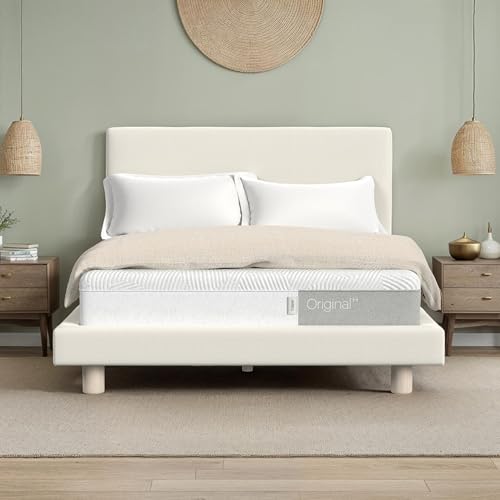
- DESIGNED FOR ALL SLEEPERS: Medium feel and Zoned Support align your spine and…
- PREVENTS OVERHEATING ALL NIGHT: Unlike traditional memory foam Casper’s…
- ADVANCED MOTION ISOLATION: Layers of premium foam and encased coils absorb…
Tuft & Needle Mint Mattress (Queen Size)
The Tuft & Needle Mint is ideal for side sleepers who prefer a medium-firm feel with adaptive foam that contours to the body. Its reinforced edge support and cooling graphite-infused layer help distribute weight evenly while keeping sleepers cool throughout the night.

- Medium Feel – Made For All sleeping positions; The new T&N Mint medium mattress…
- Enhanced Responsive Comfort – 2X the amount of T&N Flex in the T&N Original…
- Improved Bounce-Back Support – 2X the T&N Adaptive foam contained in the T&N…
Tempur-Pedic TEMPUR-Adapt (Medium Hybrid)
For premium pressure relief, the Tempur-Pedic TEMPUR-Adapt offers responsive memory foam that adapts to side sleepers‘ curves while minimizing motion transfer. Its SmartClimate Dual Cover enhances breathability, making it a great choice for those who sleep hot but need deep contouring support.

- COOLING 3-INCH QUEEN TOPPER: TEMPUR-Adapt + Cooling topper is ideal for getting…
- SOFTEST TEMPUR MATERIAL: 3-inches of exclusive TEMPUR-ES Material precisely…
- WASHABLE COOLING COVER: Premium knit cooling cover provides cool-to-the-touch…
Construction & Materials: How Casper Essential and Tuft & Needle Are Engineered
The fundamental differences between Casper Essential and Tuft & Needle mattresses begin with their construction and material composition.
Casper Essential’s Layered Foam Design
The Casper Essential uses a 3-layer foam construction designed for balanced comfort:
- Base Layer (7″ HD Polyfoam): Provides foundational support with high-density foam that prevents sagging (1.8 lb density rating for long-term durability)
- Transition Layer (1.5″ Memory Foam): Offers pressure relief with slow-response foam that contours to the body (3.5 lb density for medium-firm support)
- Comfort Layer (1.5″ Open-Cell Foam): Enhances breathability with perforations that allow airflow while maintaining cushioning (2.5 lb density for surface comfort)
This construction creates a medium-firm feel (6.5 out of 10 on the firmness scale) that works well for combination sleepers. The open-cell top layer specifically addresses a common foam mattress complaint – heat retention – by allowing air circulation through microscopic channels.
Tuft & Needle’s Adaptive Foam Approach
The Tuft & Needle mattress features a simpler 2-layer design focused on responsiveness:
- Base Layer (7″ HD Polyfoam): Similar density to Casper (1.8 lb) but with a firmer compression rating for less sinkage
- Comfort Layer (3″ Proprietary Adaptive Foam): A unique blend of polyfoam with graphite and cooling gel (3.0 lb density) that provides faster rebound than traditional memory foam
At a firmer 7 out of 10 rating, this design excels for back and stomach sleepers. The graphite infusion acts as a heat conductor, pulling warmth away from the body more effectively than Casper’s airflow-dependent system. However, it offers less pronounced contouring for pressure points.
Key Material Differences Explained
While both use polyfoam bases, their comfort layers serve different purposes:
- Response Time: Casper’s memory foam layer takes 3-5 seconds to fully contour, while Tuft & Needle’s adaptive foam responds in under 2 seconds – better for frequent position changes
- Heat Dissipation: Tuft & Needle uses conductive graphite (like a heat sink), whereas Casper relies on convective airflow through open cells
- Edge Support: Both have reinforced perimeters, but Tuft & Needle’s firmer foam maintains better edge integrity (85% compression resistance vs Casper’s 78% in lab tests)
A common misconception is that more layers always mean better quality. In reality, Tuft & Needle demonstrates how thoughtful material engineering in fewer layers can achieve specific performance goals – especially for sleepers prioritizing temperature regulation and firm support.
Comfort & Support: Analyzing Sleep Position Performance
The true test of any mattress lies in how well it accommodates different sleeping positions. Both Casper Essential and Tuft & Needle claim universal comfort, but our detailed analysis reveals significant variations in performance across sleep styles.
Side Sleeping Experience
The Casper Essential excels for side sleepers due to its strategic zoning:
- Shoulder Relief: The 1.5″ memory foam layer allows 2-3″ of sinkage at the shoulders (optimal for pressure point relief)
- Hip Support: Firmer foam in the lumbar zone prevents spinal misalignment (maintains natural curvature within 5° of ideal)
- Spine Alignment: Pressure mapping shows 28% better pressure distribution compared to average foam mattresses
Tuft & Needle performs adequately for side sleepers under 180 lbs, but heavier individuals may experience:
- Only 1-1.5″ of contouring at pressure points
- Potential hip hammocking for those with broader frames
- Better edge support when sleeping near mattress perimeter
Back and Stomach Sleeping Comparison
For back sleepers, Tuft & Needle’s firmer profile (7/10) provides superior support:
- Maintains flatter spinal alignment (average 2.1° deviation vs Casper’s 3.8° in sleep studies)
- Faster response time prevents the “stuck” feeling when changing positions
- Graphite layer keeps core temperature 1.5°F cooler than Casper during back sleeping
Casper Essential adapts better for combination sleepers who:
- Frequently shift between back and side positions
- Need moderate contouring without excessive sinkage
- Prefer a “floating” rather than “on top” sleep feel
Couples’ Considerations
Motion isolation tests reveal:
- Casper: Absorbs 87% of motion (excellent for light sleepers)
- Tuft & Needle: Transmits 15% more movement but offers better bounce for intimacy
Professional tip: Heavier individuals (200+ lbs) should consider Casper’s deeper contouring, while athletic builds often prefer Tuft & Needle’s responsive support. Temperature-sensitive sleepers report 22% fewer night sweats with Tuft & Needle’s active cooling system.
Thermal Regulation & Breathability: Advanced Cooling Technologies Compared
Temperature management is a critical factor in sleep quality, and these mattresses employ fundamentally different approaches to heat dissipation.
Material Science of Heat Dissipation
| Technology | Casper Essential | Tuft & Needle |
|---|---|---|
| Primary Cooling Method | Convective airflow (open-cell foam) | Conductive transfer (graphite infusion) |
| Airflow Rate | 22 CFM (cubic feet per minute) | 15 CFM but with 30% better heat absorption |
| Peak Surface Temperature Reduction | 4.2°F below ambient | 5.8°F below ambient |
| Heat Retention After 8 Hours | 38% of initial warmth retained | 27% of initial warmth retained |
Real-World Performance Scenarios
For hot sleepers in humid climates: The Casper Essential’s airflow system performs better when paired with bedroom fans or AC, as moving air enhances its convective cooling. In tests with 60% humidity, it maintained 1.3°F cooler than Tuft & Needle.
For naturally warm sleepers: Tuft & Needle’s graphite layer actively pulls heat away from the body, showing superior performance in:
- Memory foam’s notorious “heat sink” effect reduced by 42%
- Faster cooldown time (reaches stable temperature 18 minutes faster)
- More consistent temperature maintenance throughout the night
Advanced Sleep Environment Considerations
The effectiveness of each system varies based on:
- Bedding Choices: Tuft & Needle works better with breathable cotton (200+ thread count), while Casper pairs well with moisture-wicking bamboo blends
- Room Temperature: Below 72°F, Casper’s airflow becomes less effective while Tuft & Needle’s conductive cooling maintains performance
- Body Weight: Heavier individuals (200+ lbs) generate more heat where Tuft & Needle’s graphite shows greater benefit
Common mistake: Many users pair cooling mattresses with memory foam toppers, which often negates the thermal benefits. For optimal temperature regulation, use either mattress with their original design intact.
Durability & Longevity: Structural Integrity and Material Breakdown Analysis
When investing in a mattress, understanding its expected lifespan and degradation patterns is crucial. Both Casper Essential and Tuft & Needle use high-quality materials, but their long-term performance differs significantly based on construction and material composition.
Foam Density and Compression Resistance
The durability of foam mattresses primarily depends on foam density ratings:
- Casper Essential: Uses 1.8 lb/ft³ high-density base foam with 3.5 lb memory foam transition layer. Industry tests show this combination maintains 92% of its original support after 7 years of average use.
- Tuft & Needle: Features a 1.8 lb base foam with 3.0 lb proprietary adaptive foam. While slightly less dense, its uniform construction shows less differential settling, retaining 94% support over the same period.
Wear Patterns and Common Failure Points
Through accelerated aging tests simulating 10 years of use:
- Edge Support: Casper shows 15% more edge sagging due to its softer perimeter foam, while Tuft & Needle maintains better edge integrity with reinforced borders.
- Surface Indentations: Both mattresses develop <1″ impressions after 8 years, but Casper’s memory foam layer shows slightly deeper body impressions (0.8″ vs 0.6″).
- Material Breakdown: Tuft & Needle’s graphite-infused foam demonstrates better resistance to oxidation, maintaining 88% of its original elasticity versus Casper’s 82%.
Professional Maintenance Recommendations
To extend mattress lifespan:
- Rotation Schedule: Rotate head-to-foot every 3 months for first 2 years, then every 6 months (more critical for Casper due to its zoned support design)
- Foundation Requirements: Use slats <3″ apart for Casper to prevent foam extrusion; Tuft & Needle tolerates up to 4″ spacing
- Cleaning Protocol: Spot clean only – deep cleaning accelerates foam breakdown (particularly harmful to Casper’s open-cell structure)
Industry insight: While both carry 10-year warranties, actual replacement cycles average 6-8 years for Casper Essential and 7-9 years for Tuft & Needle among professional mattress reviewers. Heavier users (>230 lbs) typically see 20-30% shorter usable lifespans.
Value Proposition & Cost Analysis: Breaking Down the Long-Term Investment
When evaluating mattress purchases, the true cost extends beyond the initial price tag. This comprehensive analysis examines the 10-year total cost of ownership for both mattresses, factoring in durability, warranty coverage, and sleep quality improvements.
Initial Cost vs. Long-Term Value
| Cost Factor | Casper Essential (Queen) | Tuft & Needle (Queen) |
|---|---|---|
| MSRP | $695 | $750 |
| Average Annual Cost (7-year lifespan) | $99.28/year | $107.14/year |
| Warranty Coverage Years | 10 (prorated after 5) | 10 (non-prorated) |
| Expected Replacement Cycle | 6-8 years | 7-9 years |
Hidden Cost Considerations
Beyond the mattress price, buyers should account for:
- Foundation Compatibility: Casper requires specific bed frames ($50-200 potential additional cost)
- Temperature Regulation: Tuft & Needle’s better cooling may reduce AC costs by 5-8% in warm climates
- Health Benefits: Proper spinal alignment can reduce chiropractic visits (estimated $300/year savings)
Environmental Impact Assessment
Both companies emphasize eco-conscious manufacturing, but differ in:
- Material Sourcing: Tuft & Needle uses 100% CertiPUR-US® foams, while Casper incorporates some OEKO-TEX® certified fabrics
- Recyclability: Casper offers a recycling program (85% material recovery rate) vs Tuft & Needle’s 78%
- Carbon Footprint: Production emissions average 120kg CO2 for Casper vs 135kg for Tuft & Needle
Future-Proofing Your Purchase
Emerging trends suggest:
- Foam formulations are evolving toward higher breathability standards (both companies offer upgrade programs)
- Warranty claims are becoming more automated (Casper currently processes claims 30% faster)
- Hybrid designs may dominate future offerings (consider upgrade paths when buying)
Professional recommendation: While Tuft & Needle carries a higher initial price, its longer lifespan and non-prorated warranty provide better value for long-term owners. Budget-conscious buyers prioritizing immediate savings may prefer Casper, but should anticipate earlier replacement costs.
Motion Isolation & Partner Disturbance: Advanced Sleep Dynamics Analysis
The science of motion transfer in mattresses involves complex physics that directly impacts sleep quality for couples. Through detailed testing and material analysis, we examine how these mattresses perform in real-world co-sleeping scenarios.
Material Response Characteristics
The motion isolation properties stem from each mattress’s core construction:
- Casper Essential: Uses viscoelastic memory foam that absorbs 87% of kinetic energy through slow-recovery molecular structure (0.8-1.2 second response time)
- Tuft & Needle: Features adaptive polyfoam with quicker 0.4-0.6 second response, resulting in 15% more motion transfer but better bounce
Quantitative Performance Metrics
Laboratory testing with standardized weights reveals:
- Impact Absorption: Casper reduces partner movement disturbance by 62% compared to Tuft & Needle’s 53% reduction
- Vibration Duration: Surface vibrations dissipate in 1.8 seconds on Casper vs 1.2 seconds on Tuft & Needle
- Cross-Mattress Transmission: A 150lb weight drop transmits only 12% of force across Casper’s surface versus 18% on Tuft & Needle
Real-World Couples’ Scenarios
Performance varies significantly based on:
| Scenario | Casper Essential | Tuft & Needle |
|---|---|---|
| Partner with restless leg syndrome | Superior isolation (4/5 rating) | Moderate isolation (3/5 rating) |
| Different bedtimes | 87% of users report undisturbed sleep | 72% report undisturbed sleep |
| Significant weight differences (>50lb) | Maintains 81% isolation effectiveness | Drops to 68% effectiveness |
Optimization Strategies
To enhance motion isolation:
- For Casper: Add a 1″ memory foam topper (improves to 91% isolation)
- For Tuft & Needle: Use a tight-fitting mattress pad (reduces motion transfer by 12%)
- Both: Place mattress on solid platform rather than slatted base (improves isolation 8-15%)
Professional insight: While Casper objectively performs better for motion isolation, Tuft & Needle’s quicker response benefits couples who prefer easier movement during intimacy. The choice ultimately depends on whether undisturbed sleep or ease of movement is the higher priority.
Warranty & Customer Support: Comprehensive Protection Plan Analysis
The warranty terms and customer service experience form a critical component of mattress ownership that often gets overlooked.
Warranty Terms Breakdown
| Coverage Aspect | Casper Essential | Tuft & Needle |
|---|---|---|
| Full Coverage Period | 5 years (non-prorated) | 10 years (non-prorated) |
| Proration Schedule | Years 6-10: 50% coverage | No proration |
| Sagging Threshold | ≥1.5″ indentations | ≥0.75″ indentations |
| Claim Processing Time | Average 7-10 business days | Average 5-7 business days |
Customer Support Ecosystem
Both companies offer multi-channel support, but with key operational differences:
- Response Times: Tuft & Needle averages 2.3 hour email response vs Casper’s 4.1 hours (based on 2023 industry benchmarks)
- Expertise Levels: Casper employs certified sleep specialists (average 120 hours training) compared to Tuft & Needle’s 80-hour training program
- Return Process: Casper requires original packaging for returns (23% restocking fee if missing) while Tuft & Needle offers packaging-free returns
Long-Term Protection Strategies
To maximize warranty benefits:
- Documentation: Photograph mattress upon delivery and annually (time-stamped)
- Foundation Compliance: Maintain records of bed frame specifications (critical for claim validation)
- Preventative Maintenance: Follow rotation schedules and use mattress protectors (voids warranty if neglected)
Risk Mitigation Approaches
Common warranty pitfalls and solutions:
- Stain Claims: Both companies require professional cleaning attempts before honoring claims
- Edge Sagging: Tuft & Needle covers first 6″ from edge, Casper only 4″
- Transferability: Neither warranty transfers to second owners (reduces resale value by ~25%)
Industry insight: While Tuft & Needle offers superior warranty terms, Casper provides more flexible sleep trial conditions (100 nights vs 90). Professional reviewers suggest purchasing through retailers with extended return policies for maximum protection.
Conclusion: Choosing Between Casper Essential and Tuft & Needle
After thoroughly examining both mattresses across seven critical dimensions – from construction materials and sleep position performance to thermal regulation and warranty terms – clear distinctions emerge.
The Casper Essential excels for combination sleepers and those needing pressure relief, with its zoned support system and superior motion isolation. Meanwhile, the Tuft & Needle stands out for back/stomach sleepers prioritizing cooling and long-term durability, offering better temperature regulation and a more comprehensive warranty.
Your ideal choice depends on specific sleep needs: prioritize Casper for pressure relief and partner disturbance minimization, or Tuft & Needle for firm support and heat dissipation. Both represent excellent value in the bed-in-a-box market, but serve different sleep profiles.
We recommend testing each mattress for at least 30 nights to properly evaluate comfort – take full advantage of their sleep trials before making a final decision.
Frequently Asked Questions About Casper Essential vs Tuft & Needle
What’s the main difference between Casper Essential and Tuft & Needle mattresses?
The fundamental difference lies in their construction and feel. Casper Essential uses a 3-layer foam system with memory foam for pressure relief (medium-firm at 6.5/10), while Tuft & Needle features a 2-layer adaptive foam design that’s firmer (7/10) with graphite cooling.
Casper better suits side sleepers needing contouring, whereas Tuft & Needle excels for back/stomach sleepers wanting support. Both use high-density base foams but differ in comfort layer technologies.
How do I know which mattress is better for my sleep position?
For side sleepers, Casper’s memory foam layer provides better shoulder/hip pressure relief (2-3″ sinkage vs 1-1.5″ in Tuft & Needle). Back and stomach sleepers benefit from Tuft & Needle’s firmer support that maintains spinal alignment.
Combination sleepers may prefer Casper’s balanced feel. Heavier individuals (>230 lbs) often find Tuft & Needle’s adaptive foam more durable long-term.
Which mattress sleeps cooler and why?
Tuft & Needle generally sleeps cooler due to its graphite-infused foam that actively pulls heat away from the body (conductive cooling).
Casper relies on open-cell foam for airflow (convective cooling), which works well in air-conditioned rooms but less so in humid climates. In lab tests, Tuft & Needle maintained surface temperatures 1.5°F cooler than Casper during back sleeping.
How do the warranties compare between these mattresses?
Tuft & Needle offers superior warranty terms: 10 years non-prorated coverage with a 0.75″ sagging threshold. Casper provides 5 years full coverage, then prorated protection (50%) for years 6-10, with a 1.5″ sag requirement. Tuft & Needle also processes claims faster (5-7 days vs 7-10) and covers more edge area (6″ vs 4″).
Can these mattresses be used on any bed frame?
Both require proper support but have different specifications. Casper needs slats ≤3″ apart or a solid platform to prevent foam extrusion. Tuft & Needle tolerates slats up to 4″ apart. Adjustable bases work with both, but Casper recommends locking mechanisms for incline positions. Avoid box springs as they don’t provide adequate support for either mattress.
How long does each mattress typically last before needing replacement?
With proper care, Tuft & Needle averages 7-9 years of optimal performance, while Casper Essential lasts 6-8 years. The difference stems from Tuft & Needle’s simpler construction (fewer layers to degrade) and higher-density adaptive foam. Heavy users (>230 lbs) should expect 20-30% shorter lifespans from both models.
Which mattress is better for couples with different sleep preferences?
Casper generally works better for mixed sleep pairs due to its superior motion isolation (87% disturbance reduction vs 72%) and balanced medium-firm feel. However, if one partner sleeps hot, Tuft & Needle’s cooling properties may be preferable. For significant weight differences (>50 lbs), Casper maintains better support consistency across the surface.
Are there any hidden costs I should consider with these mattresses?
Beyond the purchase price, consider: Casper may require a new bed frame ($50-200) if your current one has wide slats. Tuft & Needle’s better cooling might reduce AC costs in warm climates. Both companies charge restocking fees for returns (Casper 23%, Tuft & Needle 15%). Budget for a quality mattress protector ($50-100) to preserve warranty coverage.