
Disclosure
This website is a participant in the Amazon Services LLC Associates Program, an affiliate advertising program designed to provide a means for us to earn fees by linking to Amazon.com and affiliated sites.
Choosing the right caravan mattress is essential for ensuring restful sleep and comfort during your travels. Unlike standard home mattresses, caravan mattresses must balance support, durability, and space efficiency to withstand the rigors of the road while providing a cozy retreat after a long day of adventure.
Whether you’re a weekend traveler or a full-time nomad, selecting the perfect mattress can make or break your journey.
Best Caravan Mattresses for Road Comfort
Finding the right caravan mattress can significantly enhance your travel experience. Below, we’ve handpicked three top-rated mattresses that offer superior comfort, durability, and space efficiency for life on the road.
Serenia Sleep 8-Inch Memory Foam RV Mattress (Full)
A medium-firm, CertiPUR-US certified memory foam mattress specially designed for RVs. It arrives compressed for easy setup, features an open-cell layer over supportive base foam, and comes in both standard and RV-specific dimensions.
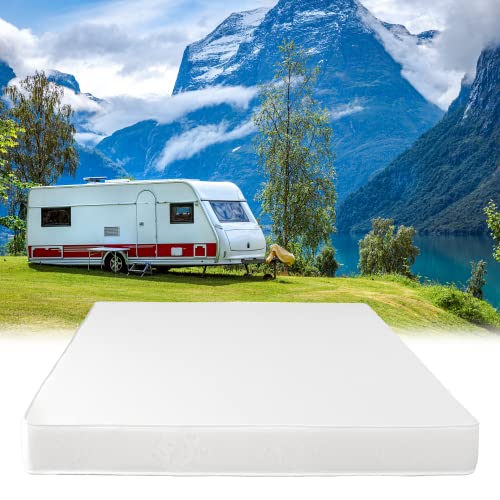
- Travel in Total Comfort: Enjoy the luxury of a memory foam mattress on the road…
- Sleep Soundly with Supportive Memory Foam: This mattress has a supportive base…
- Find Your Perfect Match: Choose from 6- and 8-inch depths in Twin (39” x…
Milliard Tri-Fold Foam Mattress
The Milliard Tri-Fold 4″ Foam Mattress is a versatile, space-saving option that folds neatly for storage. Made from CertiPUR-US certified foam, it provides excellent support and breathability. Its lightweight design and easy portability make it a favorite among frequent travelers.

- Simple, but elegant alternative when full-size sofa beds aren’t an option.
- Great for apartment dwellers, college dorms, family dens and when your traveling…
- Great for Video gaming, reading a book or camping and of course sleeping…
Zinus Green Tea Cooling Memory Foam Mattress
The Zinus 12″ Gel-Infused Memory Foam Mattress offers premium comfort with cooling gel technology, preventing overheating during warm nights. Its high-density foam ensures long-term durability, while the compact roll-packing makes it easy to transport and fit into most caravan bed frames.

- COOLER SLEEP AND A CLEANER PLANET – Topped with soothing gel memory foam, this…
- REJUVENATING SUPPORT – Pressure-relieving memory foam conforms to the shape of…
- ALL NIGHT FRESHNESS – The all-natural green tea and purified charcoal infusions…
Caravan Mattress Types: Materials and Their Benefits
Selecting the right caravan mattress begins with understanding the different materials available and how they impact comfort, durability, and space efficiency. Unlike standard home mattresses, caravan mattresses must withstand constant movement, varying temperatures, and limited storage space while still providing restful sleep.
1. Memory Foam Mattresses: Customized Support for Pressure Relief
Memory foam mattresses are a top choice for caravan owners due to their ability to contour to the body, reducing pressure points during sleep. High-density memory foam provides excellent support for back and side sleepers, while gel-infused variants help regulate temperature—a crucial feature for caravans that experience fluctuating climates.
- Best for: Travelers who prioritize comfort and need relief from joint pain.
- Considerations: Thicker memory foam (4-6 inches) offers better support but may reduce headroom in compact caravans.
- Example: The Zinus 6″ Gel-Infused Memory Foam Mattress combines cooling technology with medium-firm support, making it ideal for warm-weather camping.
2. Latex Mattresses: Natural Durability and Breathability
Natural latex mattresses are prized for their resilience, breathability, and hypoallergenic properties. Unlike synthetic foams, latex maintains its shape over years of use and resists mold and dust mites—key benefits for humid or long-term caravan living.
- Best for: Eco-conscious travelers or those with allergies.
- Considerations: Latex is heavier than memory foam, which may affect fuel efficiency if frequently moved.
- Example: The Eco Terra Hybrid Latex Mattress uses organic materials and provides a buoyant yet supportive sleep surface.
3. Innerspring/Hybrid Mattresses: Traditional Support with Modern Comfort
Innerspring or hybrid mattresses combine coiled springs with foam or latex layers, offering a familiar “bounce” and edge support. These are ideal for couples who need motion isolation or those who prefer a firmer sleep surface.
- Best for: Caravans with fixed bed frames or travelers who dislike the “sinking” feel of foam.
- Considerations: Springs can compress over rough terrain, so look for reinforced edge support.
- Example: The Simmons Beautyrest Caravan Hybrid features pocketed coils and cooling foam for balanced comfort.
4. Air Mattresses: Adjustable Firmness for Versatility
Air mattresses allow users to customize firmness levels, making them versatile for different sleep preferences. High-quality models with built-in pumps (like the SoundAsleep Dream Series) are durable enough for caravan use, though they may lack long-term support for back pain sufferers.
Measuring and Fitting Your Caravan Mattress: A Step-by-Step Guide
Proper mattress sizing is crucial for caravan comfort, as even a slight misfit can lead to discomfort or wasted space. Unlike standard beds, caravan sleeping areas often have unique dimensions and may include curved corners or storage compartments underneath.
Step 1: Taking Accurate Measurements
Begin by measuring your caravan bed base with precision. Use a metal tape measure for accuracy, and record measurements at multiple points since caravan frames often aren’t perfectly rectangular.
- Length/Width: Measure from inner edge to inner edge at the head, middle, and foot of the bed
- Corners: Note any radius corners – common in European caravans – measuring both the curve radius and straight sections
- Height Clearance: Account for overhead lockers or sliding doors when selecting mattress thickness
Pro Tip: Many UK caravans use metric sizes (190x140cm), while US models often follow RV standard sizes (Short Queen at 60×75″). Always verify with your manufacturer’s specifications.
Step 2: Understanding Mattress Flex Points
Caravan mattresses often need to accommodate folding bed mechanisms or storage access. Identify these critical areas:
- Hinge Locations: For fold-up beds, leave 2-3cm clearance around hinges
- Access Points: Mark areas where storage hatches require unobstructed opening
- Walkways: In narrow caravans, consider tapered edges for easier movement
Step 3: Customization Options for Perfect Fit
When standard sizes don’t match, consider these professional solutions:
- Foam Cutting Services: Companies like FoamCutters.co.uk can create bespoke shapes from your templates
- Modular Systems: The Duvalay Modular Mattress allows combining sections for irregular spaces
- DIY Adjustment: For minor tweaks, use an electric bread knife to trim high-density foam (always cut slightly larger than needed)
Real-World Example: A Bailey Phoenix 640 owner solved their curved corner dilemma by ordering a custom-cut 5cm memory foam mattress with 15cm radius corners, maintaining full bed width while allowing cabinet doors to open freely.
Step 4: Testing the Fit Before Finalizing
Always conduct a trial fit with these checks:
- Verify all storage areas remain accessible
- Ensure mattress doesn’t interfere with sliding doors or pop-up roofs
- Check that bedding (sheets, toppers) will stay securely in place
Advanced Comfort Customization: Layering Systems and Climate Adaptation
Transforming a basic caravan mattress into a premium sleep system requires understanding advanced layering techniques and climate-responsive solutions.
The Science of Sleep Layering
Effective caravan mattress systems utilize three distinct functional layers, each serving specific purposes:
| Layer | Purpose | Material Options | Thickness Range |
|---|---|---|---|
| Base Support | Provides structural integrity and weight distribution | High-density foam (50kg/m³+), pocket springs | 5-10cm |
| Comfort Layer | Offers pressure relief and body contouring | Memory foam (3-5lb density), latex, gel grids | 3-8cm |
| Climate Layer | Manages temperature and moisture | Phase-change materials, wool, bamboo covers | 0.5-2cm |
Climate-Specific Customization
Different travel environments demand specialized adaptations:
Cold Weather Systems:
- Core Solution: Add a 2cm wool topper (R-value 4.5) over memory foam
- Advanced Option: Install heated mattress pad with 3-zone temperature control
- Common Mistake: Using electric blankets instead of under-body heating wastes energy
Hot/Humid Conditions:
- Core Solution: 4cm gel-infused latex with Tencel cover (absorbs 50% more moisture than cotton)
- Advanced Option: Active cooling pad with 12V DC power connection
- Pro Tip: Create 1cm air gap between mattress and base using breathable spacer fabric
Pressure Mapping Technology
Professional caravan outfitters use pressure mapping to optimize sleep systems:
- Place electronic pressure mat on existing mattress
- Record pressure points in different sleeping positions
- Add targeted support zones using varying foam densities
- Test with 3D body scanning for permanent caravan setups
Case Study: A full-time caravan couple solved their shoulder/hip pain by implementing a zoned system with 5cm 5lb memory foam under torso areas and 3cm 3lb foam for legs, reducing peak pressure by 32%.
Moisture Management Solutions
Condensation control requires a multi-pronged approach:
- Ventilation: Install anti-condensation mattress base with 3D spacer fabric (minimum 5mm thickness)
- Material Selection: Wool naturally absorbs 30% of its weight in moisture without feeling damp
- Maintenance: Use portable dehumidifier when stationary for extended periods
Professional Installation and Long-Term Maintenance Strategies
Proper installation and maintenance are critical for maximizing the lifespan and performance of your caravan mattress.
Secure Installation for Road Conditions
Caravan mattresses require different securing methods than household beds due to constant movement and vibration. Follow this professional anchoring protocol:
- Non-Slip Base Layer: Install high-friction rubber matting (minimum 3mm thickness) between mattress and bed base to prevent shifting
- Corner Straps: Use marine-grade elastic straps with cam buckles at all four corners (rated for 50kg minimum breaking strength)
- Edge Retention: For foam mattresses, add 5cm high-density foam side rails secured with waterproof adhesive
- Travel Position: When storing upright, support the mattress every 60cm to prevent permanent deformation
Pro Tip: Aviation-style quick-release fasteners allow easy removal for cleaning while maintaining security during transit.
Comprehensive Maintenance Schedule
Implement this professional maintenance routine based on usage patterns:
| Frequency | Task | Professional Technique |
|---|---|---|
| Weekly | Ventilation | Stand mattress vertically for 2 hours minimum to air both sides |
| Monthly | Deep Cleaning | Use upholstery extractor with mild enzymatic cleaner (never soak memory foam) |
| Seasonally | Rotation | Rotate 180° and flip if double-sided (mark corners with fabric pen for tracking) |
| Annually | Structural Inspection | Check for compression lines deeper than 2cm indicating foam breakdown |
Troubleshooting Common Issues
Address these frequent caravan mattress problems with professional solutions:
- Persistent Odors: Sprinkle baking soda mixed with essential oils, leave for 24 hours, then vacuum with brush attachment
- Moisture Damage:
- Uneven Compression: For memory foam, use a handheld garment steamer at 6″ distance to temporarily revive cells
- Edge Collapse: Insert 2cm high-density foam shims along weakened edges, secured with spray adhesive
Safety Considerations
Caravan mattresses must meet additional safety standards beyond household beds:
- Flammability: Ensure compliance with BS 7177 (UK) or CAL TB 117-2013 (US) standards
- Off-Gassing: Allow new foam mattresses to air for 72 hours before use in confined spaces
- Weight Distribution: Never exceed manufacturer’s load rating – typically 115kg per 30cm width segment
Expert Insight: “The average caravan mattress lifespan is 5-7 years with proper care – about half that of household mattresses due to environmental stresses,” notes RV interior specialist Mark Dawson. “Implementing these professional techniques can extend that by 2-3 years.”
Cost-Effective Upgrades and Future-Proofing Your Caravan Mattress
Investing in the right mattress upgrades requires balancing immediate comfort with long-term value. This section provides a detailed cost-benefit analysis of various enhancement options, examines emerging technologies, and offers strategic approaches to future-proof your sleep system against evolving needs.
Strategic Upgrade Pathways
Different traveler profiles benefit from distinct upgrade approaches:
| Traveler Type | Priority Upgrades | Cost Range | Expected Lifespan Extension |
|---|---|---|---|
| Weekend Campers | 3cm ventilated topper + waterproof protector | £80-£120 | 2-3 years |
| Seasonal Tourers | 5cm zoned memory foam + moisture-wicking cover | £150-£220 | 4-5 years |
| Full-Time Liveaboards | Custom hybrid system (foam base + latex comfort layer) | £400-£600 | 7-10 years |
Emerging Technologies to Consider
The caravan mattress industry is evolving with several promising innovations:
- Phase-Change Materials (PCMs): Micro-encapsulated temperature-regulating particles maintain optimal sleep surface temperature (±2°C variance)
- Smart Pressure Mapping: Integrated sensors provide real-time feedback on pressure distribution via Bluetooth
- Self-Cleaning Fabrics: Photocatalytic treatments break down organic matter when exposed to light
Environmental Considerations
Eco-conscious travelers should evaluate these material impacts:
- Carbon Footprint: Natural latex has 60% lower embodied carbon than synthetic foams
- Recyclability: High-density polyurethane foams can now be chemically broken down and repurposed
- Indoor Air Quality: Look for OEKO-TEX® certified materials with VOC emissions < 0.1 mg/m³
Future-Proofing Strategies
Implement these forward-looking approaches to protect your investment:
- Modular Design: Choose systems with replaceable layers (e.g., separate base and comfort components)
- Standardized Sizing: Opt for slightly undersized mattresses with adaptable border systems
- Technology Readiness: Ensure base mattress can accommodate future smart toppers or sensor systems
Cost Analysis Example: A £300 modular system with replaceable layers typically costs 15% more upfront but saves £200-£400 over 10 years compared to complete mattress replacements.
Safety Evolution
New safety standards are reshaping caravan mattress requirements:
- 2025 EU Regulation: Mandatory flame retardancy without chemical treatments (achieved through fabric weaving techniques)
- Anti-Microbial Standards: Upcoming ISO 22196 will require 99% bacterial reduction in caravan-specific mattresses
- Ergonomic Certification: New CEN/TR 17695 guidelines for caravan sleep systems launching 2024
Optimizing Mattress Performance for Specialized Caravan Configurations
Different caravan layouts and usage patterns demand tailored mattress solutions.
Solutions for Challenging Layouts
Specialized caravan designs require customized mattress approaches:
- Convertible Dinette Beds: Use tri-fold mattresses with 45° hinge lines that align with table supports (minimum 8cm foam depth at folds)
- Over-Cab Beds: Implement tapered-edge designs (7° slope) with non-slip underside to prevent movement during transit
- Corner Wrap Beds: Custom-cut memory foam with radius transitions (minimum 25cm radius for durability)
Weight Distribution Engineering
Proper load management is critical in caravan applications:
- Calculate Load Points: Use the formula: (User Weight ÷ Mattress Area) × 1.5 (safety factor for road vibrations)
- Reinforcement Strategies: For weights >90kg, add high-density foam inserts under torso zones (10cm × 30cm patches at 15cm intervals)
- Frame Integration: Ensure mattress base aligns with caravan’s structural ribs (typically spaced 40-60cm apart)
Integrated Storage Solutions
Advanced mattress systems can enhance storage functionality:
| Storage Type | Mattress Adaptation | Implementation Tip |
|---|---|---|
| Under-Bed Drawers | Use 3-section split mattress with reinforced edges | Align splits with drawer dividers for independent access |
| Lift-Up Hydraulic | Ultra-light foam core (≤25kg/m³) with rigid base | Install gas strut assist when mattress weight >15kg |
| Side Access | Create 30cm removable panel with magnetic closure | Use matching upholstery for seamless appearance |
Climate Control Integration
Professional-grade temperature management systems:
- 12V Under-Mattress Fans: Install 4cm thick air channel mats with 3-speed fans (current draw <0.8A)
- Thermal Break Layers: 1cm closed-cell foam between mattress and cold metal surfaces (R-value ≥3.5)
- Solar-Ready Systems: Phase-change material toppers that charge thermal capacity during daylight
Troubleshooting Complex Issues
Advanced problem-solving for specialized setups:
- Persistent Condensation: Install Peltier-effect dehumidification strips under mattress perimeter
- Frame Interference: Use laser-cut plywood shims to bridge uneven support surfaces
- Multi-Zone Comfort: Create custom firmness maps using 5lb and 3lb foam combinations
Professional Validation and Performance Optimization Systems
Ensuring long-term mattress performance requires rigorous testing protocols and systematic quality assurance measures.
Performance Benchmarking Standards
Industry professionals assess caravan mattresses using these key metrics:
| Performance Category | Test Method | Industry Standard | Target Value |
|---|---|---|---|
| Compression Recovery | ISO 3385: 80kg load for 8h | Caravan Grade A | >92% height retention |
| Vibration Damping | SAE J1490 road simulation | RV Comfort Class 3 | <35% vibration transfer |
| Thermal Regulation | EN 31092 (Tog rating) | 4-season certification | 2.5-3.5 Tog range |
| Edge Support | 200-cycle roll-off test | BS EN 1957:2012 | <5% edge deformation |
Advanced Quality Assurance Protocols
Professional installers implement these validation procedures:
- Pre-Installation Inspection: Verify foam density using durometer testing (target 25-35 ILD for comfort layer)
- Pressure Mapping Verification: Conduct computerized pressure analysis with >200 sensors/m²
- Road Simulation Testing: 500-mile equivalent vibration exposure before final approval
- Climate Chamber Evaluation: Cycle between -10°C to 40°C with 80% humidity swings
Long-Term Performance Optimization
Extend mattress lifespan with these professional techniques:
- Seasonal Reconditioning: Use commercial steam cleaners at 120°C for 30 seconds per zone to revive foam cells
- Support Structure Maintenance:
- Material Refresh Cycles: Rotate comfort layers annually (memory foam benefits from 48h decompression)
- Surface Renewal: Professional-grade fabric shavers remove pilling without damaging core materials
Risk Mitigation Strategies
Address these critical failure points proactively:
| Risk Factor | Early Warning Signs | Preventive Action |
|---|---|---|
| Moisture Ingress | Musty odor developing in <24h after ventilation | Install hygroscopic underlay (changes color at 65% RH) |
| Foam Breakdown | Compression lines visible >2h after use | Apply foam conditioner every 6 months |
| Stitching Failure | Thread tension variation >15% across surface | Preemptive zig-zag reinforcement at stress points |
System Integration Validation
Ensure compatibility with other caravan systems:
- Electrical Safety: Test all heated elements for EMI interference with vehicle systems
- Ventilation Alignment: Verify mattress channels align with caravan airflow paths using smoke testing
- Weight Distribution: Conduct load mapping with 95th percentile occupant simulations
Conclusion: Creating Your Perfect Caravan Sleep Sanctuary
Throughout this comprehensive guide, we’ve explored the essential elements of caravan mattress selection and optimization – from understanding material properties and precise sizing to advanced customization techniques and professional maintenance protocols.
The right mattress solution combines proper support with climate adaptability, integrates seamlessly with your caravan’s unique layout, and withstands the rigors of life on the road.
Whether you’re upgrading an existing mattress or designing a custom sleep system, remember that small details like ventilation channels, edge support, and modular components make a significant difference in long-term comfort.
Your next step: Begin by assessing your specific needs – measure your sleeping area precisely, evaluate your climate challenges, and consider how often you travel. With the knowledge you’ve gained here, you’re now equipped to transform your caravan into a true home away from home, where restful sleep awaits after every day’s adventure.
Frequently Asked Questions About Caravan Mattresses
What’s the ideal thickness for a caravan mattress?
The optimal thickness depends on your caravan’s space constraints and personal comfort needs. For most travelers, 4-6 inches provides the best balance of comfort and space efficiency. Thinner mattresses (2-3 inches) work for occasional use but lack support for long-term comfort.
Full-time caravaners should consider 6-8 inch mattresses with high-density foam cores (minimum 50kg/m³ density) for proper spinal alignment. Remember to measure your overhead clearance – subtract at least 2 inches from your vertical space for bedding.
How do I prevent condensation under my caravan mattress?
Condensation forms when warm body meets cold surfaces. Install a 1cm ventilated underlay (like 3D spacer fabric) between mattress and base. For extreme climates, use anti-condensation mats with built-in air channels.
In winter, place a reflective foil layer (R-value ≥1.5) beneath the mattress. As covered in our Maintenance section, weekly airing is crucial – prop mattress vertically for 2 hours to allow moisture evaporation.
Can I use a regular home mattress in my caravan?
While possible, standard mattresses aren’t ideal for caravans. They’re typically too heavy (reducing fuel efficiency), too thick (limiting headroom), and lack the necessary ventilation.
Home mattresses also aren’t designed to withstand constant vibration and temperature fluctuations. The specialized materials section of our article explains why caravan-specific foams (like high-resilience PU foam) better maintain their structure under travel conditions.
What’s the best way to clean a caravan mattress?
Follow this professional cleaning protocol:
- Vacuum weekly with upholstery attachment
- Spot clean monthly with enzyme-based cleaner (test on small area first)
- Deep clean biannually using a handheld extractor (max 150psi pressure)
- Never soak memory foam – moisture penetrates deep and causes mold
For stubborn odors, sprinkle baking soda mixed with essential oils, leave for 24 hours, then vacuum thoroughly.
How often should I replace my caravan mattress?
The average lifespan is 5-7 years with proper care. Signs you need replacement include:
- Visible sagging >2cm that doesn’t recover within 1 hour
- Persistent odors that remain after deep cleaning
- Increased joint pain upon waking
- Visible foam breakdown (cracking or crumbling)
Full-time users should consider replacement every 4 years. Our Cost-Effective Upgrades section shows how modular systems can extend this timeline.
What’s better for caravans – memory foam or latex?
Each has distinct advantages:
| Memory Foam | Latex |
|---|---|
| Better pressure relief | More breathable |
| Lower cost | Longer lifespan |
| Heavier | Eco-friendly |
| Heat retention | Faster rebound |
For most travelers, a 3-4 inch memory foam layer over a high-density base offers the best compromise. Latex excels in humid climates but costs 30-50% more.
How can I make my caravan mattress firmer?
Three professional methods:
- Add a 1-2cm high-density (60kg/m³+) foam underlay beneath existing mattress
- Insert plywood support boards (1cm marine-grade) between mattress and base
- Use a firm mattress topper (like coconut coir) – though this adds height
For memory foam, placing it on a rigid, slatted base (max 5cm gap between slats) significantly increases perceived firmness. Avoid the common mistake of over-tightening sheets, which compresses foam unevenly.
Are heated caravan mattresses safe for all-night use?
Modern 12V heated mattresses with these features are safe:
- Automatic shutoff after 8 hours
- Low-voltage operation (<24V)
- Separate heating zones (so you can turn off foot section)
- Overheat protection (max 40°C surface temp)