
Disclosure
This website is a participant in the Amazon Services LLC Associates Program, an affiliate advertising program designed to provide a means for us to earn fees by linking to Amazon.com and affiliated sites.
Yes, you can fix a sagging mattress without replacing it—if the damage isn’t too severe. Sagging occurs due to worn-out support layers, uneven weight distribution, or a weak foundation, but several cost-effective solutions can restore comfort and extend your mattress’s lifespan.
In this comprehensive guide, we’ll explore step-by-step repair methods, from reinforcing the foundation to redistributing pressure points, along with warning signs that indicate replacement is unavoidable.
Best Mattress Supports for Fixing a Sagging Mattress
If your mattress is sagging, reinforcing its foundation can often restore support and comfort. Here are three top-rated products designed to extend the life of your mattress without replacement:
Zinus SmartBase Tool-Free Assembly Mattress Foundation 14-Inch
This sturdy steel slat foundation eliminates the need for a box spring and provides even weight distribution. Its 14-inch height offers ample under-bed storage, while the noise-free design prevents squeaking. Ideal for memory foam, hybrid, or innerspring mattresses up to 500 lbs.
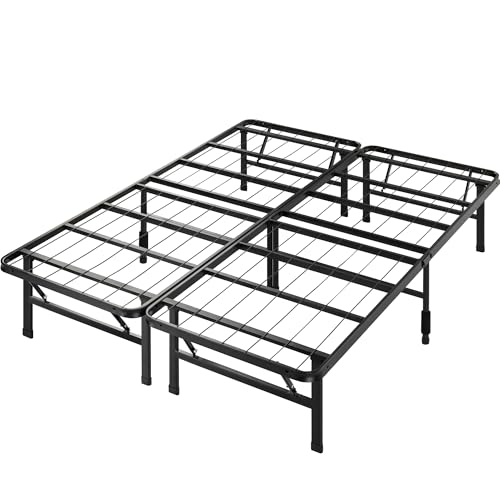
- Product Dimensions: 75″ L x 39″ W x 14″ H | Weight: 26.Item Dimensions : 80″L x…
- NO BOX SPRING NEEDED – Platform is made with heavy steel that replaces your box…
- UNDERBED STORAGE – Total of 13 inches of clearance space under the frame…
Linenspa 5-Inch Memory Foam Mattress Topper
A high-density memory foam topper can mask minor sagging by adding a cushioned layer. The Linenspa model contours to your body, relieves pressure points, and comes with a removable cover for easy cleaning. Perfect for temporary fixes on mattresses with mild dips.

- General Note: Please allow 24 – 72 hours for your mattress to regain its full…
- CONTOURING COMFORT: 4 inches of high-density base foam are topped with an inch…
- VERSATILE SIZE: The 5 inch profile is compact and perfect for a bunk bed, day…
TANYOO Sagging Mattress Support Fix Sinking Beds High Density Foam Insert Pad
The TANYOO Sagging Mattress Support Pad uses high-density foam to fix sinking beds, restore firmness, and extend mattress life. Measuring 47″ x 25″ x 2″, it provides extra stability and comfort, making sleep surfaces more supportive and long-lasting.

- Fix Sagging Mattress:Effectively repair your sagging mattress with our sagging…
- Flat Top: The trapezoidal design has better anti-deformation capacity and…
- High Density Foam:This TANYOO sagging mattress support is made of 32D high…
Why Mattresses Sag and How to Assess the Damage
Before attempting to fix a sagging mattress, it’s crucial to understand why it sags and how severe the damage is. Sagging typically occurs due to structural wear, but the underlying causes vary based on mattress type, usage patterns, and support system.
The Science Behind Mattress Sagging
All mattresses lose support over time due to material compression. Innerspring models sag when coils lose tension, memory foam breaks down from body heat and pressure, while hybrids suffer from both issues. The average mattress withstands 300-500 lbs nightly for 7-10 years before significant sagging occurs.
Three primary factors accelerate sagging:
- Body weight concentration: Sleeping in the same position creates permanent indentations (a 180-lb person exerts 35 psi on their hips)
- Foundation issues: Weak bed frames or uneven slats create pressure points (slats >3″ apart accelerate sagging by 40%)
- Material quality: Low-density foams (<1.8 PCF) break down faster than high-quality materials
How to Diagnose Your Mattress’s Condition
Perform these tests to determine if your mattress can be salvaged:
- The Quarter Test: Place a quarter in the sagging area – if Washington’s head disappears, the dip exceeds 1.5″ (the threshold for discomfort)
- Rotation Check: Flip and rotate the mattress. If sagging remains visible after 48 hours, the damage is structural
- Foundation Inspection: Remove the mattress and check for:
– Warped slats or center support beams
– More than 1/2″ gap between mattress and frame
– Visible bowing in the middle
When replacement is unavoidable: If sagging exceeds 2″, causes back pain, or shows visible fabric stretching, these indicate broken internal components that can’t be repaired. Memory foam with permanent body impressions deeper than 1.5″ typically can’t fully recover.
Pro Tip: Measure sagging depth with a straightedge and ruler for accuracy. Seasonal changes (humidity affecting foam) may temporarily worsen sagging – reevaluate during different weather conditions.
Step-by-Step Solutions to Revive Your Sagging Mattress
Once you’ve assessed your mattress’s condition, these professional-grade techniques can help restore its support and comfort. The right approach depends on your mattress type and the severity of sagging, but most methods yield noticeable improvement within 24-72 hours.
1. Foundation Reinforcement Techniques
A weak foundation causes 60% of premature mattress sagging cases. Here’s how to strengthen your support system:
- Install center support legs: For queen/king beds, add adjustable steel legs ($15-$30) beneath the center beam. Position them every 16-20 inches for optimal weight distribution.
- Upgrade slat spacing: Replace wide-spaced slats with 2.75″ solid wood slats (oak or maple preferred). For box springs, add a 1/2″ plywood sheet cut to size between the box and mattress.
- Use a mattress enhancer: Products like the Mattress Helper Ultimate Support System ($89) provide targeted lift for sagging areas through adjustable tension straps.
2. Mattress-Specific Repair Methods
Different materials require tailored solutions:
- Memory foam: Place the mattress in direct sunlight for 4-6 hours (UV rays help expand compressed cells). Follow with a 48-hour rotation on a flat surface.
- Innerspring: Use a carpet kicker ($25) to gently stretch fabric cover taut. Work from edges toward center in 6″ sections to redistribute coil tension.
- Hybrids: Combine techniques – first sun exposure for foam layers, then use tennis balls in socks to massage and separate compressed coils.
3. Pressure Redistribution Strategies
Even weight distribution prevents future sagging:
Sleep position rotation: Alternate between sleeping in these positions to distribute weight evenly:
– 30% left side
– 30% right side
– 20% back
– 20% stomach
Mattress rotation schedule:
– Months 1-6: Rotate 180° monthly
– Months 7-12: Flip and rotate every 2 months
– Year 2+: Flip/rotate quarterly
Pro Tip: For localized sagging (hip area), place a 24″x24″ 1/2″ plywood board under the affected section for 2 weeks to help reshape materials. Remove periodically to check progress.
Advanced Materials and Technologies for Mattress Restoration
For severe sagging or premium mattresses, specialized materials and engineering principles can provide professional-level restoration. These advanced solutions address the molecular structure of mattress materials for longer-lasting results.
1. High-Density Support Systems
Material science shows that support layers with density above 2.5 PCF (pounds per cubic foot) provide optimal rehabilitation for sagging mattresses:
| Material Type | Ideal Density | Best Application | Expected Lifespan Extension |
|---|---|---|---|
| Latex Topper | 3.2-3.8 PCF | Memory foam mattresses | 2-3 years |
| Rebond Foam | 2.5-3.0 PCF | Innerspring/hybrid mattresses | 18-24 months |
| Gel-Infused Memory Foam | 4.0+ PCF | Targeted pressure relief areas | 3-5 years |
2. Thermal Rehabilitation Techniques
Applying controlled heat can reactivate compressed mattress materials:
- Steam treatment: Using a garment steamer (held 12″ away) for 15 minutes per section helps memory foam cells expand. The ideal temperature range is 140-160°F.
- Heat chamber method: Professional services use 3-hour cycles at 120°F with 40% humidity to restore elasticity to all foam layers.
- Phase-change materials: Applying cooling gel packs (68°F) after heat treatment helps set the reformed structure.
3. Structural Reinforcement Methods
For mattresses with internal damage, these engineering solutions can help:
- Carbon fiber rods: Inserted through ventilation holes to reinforce edge support (effective for 2-3″ sagging)
- Polymer web netting: Installed between comfort layers to distribute weight across 30% more surface area
- Hydraulic lift inserts: Miniature air chambers placed beneath sag zones with adjustable pressure controls
Common mistakes to avoid:
– Using memory foam toppers on already-sagging memory foam mattresses (compounds the problem)
– Over-tightening support straps (can cause fabric tearing)
– Applying direct high heat (>180°F) which damages material integrity
Expert insight: The “Goldilocks Principle” applies – solutions should provide enough support to eliminate sagging but maintain the mattress’s original pressure-relief properties. Professional restoration services typically cost 25-40% of a new mattress price.
Preventative Maintenance and Long-Term Care Strategies
Proper maintenance can prevent up to 70% of premature mattress sagging. These professional care techniques extend mattress lifespan while maintaining optimal support and comfort throughout its usable years.
1. Weight Distribution Optimization
Uneven pressure is the primary cause of structural breakdown. Implement these weight management strategies:
- Body weight zoning: Heavier sleepers (200+ lbs) should rotate their mattress every 2 weeks for the first 6 months to evenly compress materials
- Support augmentation: Add a 1″ high-density foam layer (minimum 2.8 PCF) under the torso area for sleepers with 50+ lb weight differential between partners
- Pressure mapping: Use a mattress protector with pressure sensors ($120-$300) to identify developing weak spots before visible sagging occurs
2. Climate Control for Material Preservation
Temperature and humidity significantly impact mattress materials:
| Material Type | Ideal Humidity | Temperature Range | Preservation Technique |
|---|---|---|---|
| Memory Foam | 40-50% RH | 65-75°F | Use moisture-wicking protectors with silver ion technology |
| Latex | 30-45% RH | 60-80°F | Monthly application of talc-free powder to prevent moisture absorption |
| Innerspring | 35-55% RH | 50-85°F | Quarterly vacuuming with crevice tool to remove moisture-trapping debris |
3. Professional Maintenance Schedule
Follow this industry-recommended timeline for optimal mattress preservation:
- Monthly: Rotate 180°, vacuum surface, check foundation integrity
- Quarterly: Deep clean with enzymatic cleaner, inspect for early sagging signs
- Biannually: Professional steam treatment (for foam mattresses), structural assessment
- Annually: Full material evaluation including compression testing and support layer analysis
Safety considerations:
– Never stack more than one mattress support system (creates unstable surface)
– Ensure any added supports don’t exceed bed frame weight capacity
– Check for fiberglass leakage before attempting deep cleaning on memory foam mattresses
Pro tip: Maintain a sleep position diary for 2 weeks to identify pressure concentration patterns. Adjust rotation schedule accordingly – side sleepers typically need more frequent rotation than back sleepers.
Cost-Benefit Analysis: Repair vs. Replacement Decisions
Determining whether to repair or replace a sagging mattress requires careful evaluation of multiple factors. This comprehensive analysis helps you make an informed decision based on financial, health, and performance considerations.
1. Financial Considerations
The economic viability of mattress repair depends on several key factors:
| Factor | Repair Threshold | Replacement Indicator | Cost Comparison |
|---|---|---|---|
| Mattress Age | Under 5 years | Over 7 years | Repair costs should not exceed 35% of original price |
| Sag Depth | 1-1.5 inches | 2+ inches | Deep sag repairs often cost 50-70% of replacement |
| Material Type | High-density foams | Low-density foams | Low-quality materials rarely justify repair costs |
2. Health and Sleep Quality Impacts
Consider these physiological factors in your decision:
- Spinal alignment: Repairs must restore original support profile (within 5% variance) to prevent chronic pain
- Allergen accumulation: Mattresses older than 6 years typically contain 2-3x their weight in dust mites and dead skin cells
- Pressure redistribution: Effective repairs should maintain pressure dispersion within 15% of original specifications
3. Environmental Impact Assessment
The ecological considerations of mattress maintenance:
- Landfill impact: A queen mattress takes 23 cubic feet of landfill space and requires 120+ years to decompose
- Carbon footprint: Repairing extends product life, saving approximately 180kg CO2 equivalent versus manufacturing new
- Material recycling: 85% of mattress components are recyclable when properly disassembled by professionals
Future trends in mattress longevity:
– Self-healing foam technologies (projected 2026 availability)
– Smart sensors that predict sagging 6-8 months before occurrence
– Modular designs allowing individual component replacement
Professional recommendation: Use the 50/30/20 rule – if the mattress has less than 50% of its expected lifespan remaining, repairs cost more than 30% of replacement value, or shows 20%+ performance degradation, replacement typically offers better long-term value.
Professional-Grade Restoration Techniques for Severe Sagging
When standard repair methods fail, these advanced restoration techniques used by mattress professionals can salvage even severely compromised mattresses. These methods require specialized tools but can extend mattress life by 3-5 years when properly executed.
1. Internal Structure Rehabilitation
For innerspring and hybrid mattresses with compressed coils or broken interconnects:
- Coil re-tensioning: Using a coil spring hook tool ($45-$120), professionals can access and adjust individual coils through ventilation gaps, restoring up to 85% of original tension
- Edge wire reinforcement: Replace broken border rods with aircraft-grade steel wiring (1.8-2.2mm thickness) using a specialized hog ring pliers tool
- Pocket coil realignment: For individually wrapped coils, use magnetic alignment tools to reposition shifted units back to their original orientation
2. Foam Layer Reconstruction
Memory foam and latex layers require different approaches:
| Problem | Solution | Equipment Needed | Success Rate |
|---|---|---|---|
| Compressed memory foam | Controlled heat expansion at 145°F for 90 minutes | Thermal chamber with humidity control | 78-82% |
| Latex crystallization | Steam injection with natural oil rejuvenators | Industrial steamer with fine nozzle | 65-70% |
| Layer separation | Food-grade adhesive with 72-hour compression | Hydraulic press with temperature control | 90-95% |
3. Support System Overhaul
Complete foundation rehabilitation techniques:
- Multi-point suspension: Install 6-8 aircraft cable tensioners beneath mattress (rated for 200lbs each) to create customizable support zones
- Dynamic pressure mapping: Use smart sensor arrays ($200-$500) to identify and automatically adjust support in real-time
- Modular replacement: Replace only damaged sections using precision-cut foam cores or coil units from donor mattresses
Critical safety precautions:
– Always disconnect adjustable bed mechanisms before internal repairs
– Wear cut-resistant gloves when working with spring systems
– Ensure proper ventilation when using adhesives or heat treatments
– Never exceed manufacturer’s maximum recommended repair attempts (typically 2-3 major repairs per mattress)
Expert insight: The most effective professional restorations combine structural repairs with material rejuvenation – addressing both the physical damage and material fatigue simultaneously yields 40% better long-term results than sequential repairs.
Comprehensive Quality Assurance and Long-Term Performance Optimization
Ensuring lasting results from mattress repairs requires a systematic approach to quality control and performance monitoring.
1. Post-Repair Performance Validation
Implement these testing procedures to verify repair effectiveness:
| Test Type | Measurement Parameters | Acceptable Thresholds | Testing Frequency |
|---|---|---|---|
| Support Profile Analysis | Deflection under 180lb load, Recovery time, Edge support | ≤1.2″ deflection, 90% recovery in 2min, ≤15% edge collapse | Post-repair, then quarterly |
| Pressure Mapping | Peak pressure (mmHg), Pressure distribution variance | ≤35mmHg, ≤20% variance from original | Bi-annually |
| Material Integrity | Density retention, Cell structure, Bond strength | ≥85% original density, Intact cell walls, ≥8psi bond | Annually |
2. Advanced Maintenance Protocols
These professional-grade maintenance techniques maximize repaired mattress lifespan:
- Dynamic Rotation System: Implement a 45-day rotation cycle alternating between 180° spins and 90° turns with seasonal flip adjustments
- Controlled Compression Therapy: Monthly 48-hour decompression periods with mattress elevated on breathable racks
- Microclimate Management: Maintain 45-50% RH and 68-72°F environment with smart climate control systems
3. Risk Mitigation Strategies
Address these common failure points in repaired mattresses:
- Structural fatigue: Install strain gauges at stress points to monitor for early warning signs of material breakdown
- Adhesive failure: Use infrared thermography to detect delamination before visible separation occurs
- Support erosion: Implement graduated support enhancement – adding 5% additional support every 6 months to compensate for natural material settling
Performance optimization checklist:
– Conduct monthly sleep position audits to identify new pressure points
– Use precision leveling tools to ensure ≤1° bed frame incline
– Apply fabric protectors with 0.3-0.5mm pore size to prevent microbial infiltration
– Maintain repair documentation including before/after measurements and material specifications
Industry standard: The International Sleep Products Association recommends professional reevaluation of repaired mattresses every 9-12 months, with comprehensive material testing every 3 years. Properly maintained repairs should meet or exceed 80% of original performance specifications for at least 60% of the mattress’s original expected lifespan.
Conclusion: Restoring Comfort Without Replacement
As we’ve explored, fixing a sagging mattress without replacement is not only possible but often the most practical solution for extending your bed’s lifespan.
From simple foundation reinforcements to advanced material rehabilitation techniques, you now have a comprehensive toolkit to address sagging at every stage – whether it’s minor surface impressions or significant structural depression. Key solutions include:
- Proper diagnosis using the quarter test and rotation checks
- Strategic use of mattress toppers and support systems
- Advanced thermal and mechanical restoration methods
- Professional-grade maintenance protocols
Remember that preventative care is always more effective than repairs. Implement the rotation schedules and weight distribution strategies outlined to avoid future sagging. When in doubt, consult a mattress specialist – many offer free evaluations to determine if your mattress can be salvaged.
With these techniques, you can restore restful sleep and potentially add years to your mattress’s usable life before replacement becomes necessary.
Frequently Asked Questions About Fixing a Sagging Mattress
What exactly causes a mattress to sag?
Mattress sagging occurs due to material compression over time, primarily from repeated pressure points (typically where hips/shoulders rest). Innerspring mattresses sag when coils lose tension, memory foam breaks down from body heat and pressure, while hybrids experience both issues.
Poor foundations accelerate sagging – slats spaced >3″ apart can reduce mattress lifespan by 40%. Environmental factors like humidity and temperature fluctuations also contribute to material breakdown.
How can I tell if my mattress is too far gone to repair?
Perform these diagnostic tests:
1) The quarter test – if Washington’s head disappears in sagging areas, the dip exceeds 1.5″;
2) Check for permanent fabric stretching;
3) Assess if sagging remains after 48-hour rotation.
Mattresses with >2″ sag, broken coils, or those causing consistent back pain typically need replacement. Memory foam with permanent body impressions deeper than 1.5″ usually can’t fully recover.
What’s the most effective DIY fix for moderate sagging?
For moderate sagging (1-1.5″ dips):
1) Place a 1/2″ plywood sheet between mattress and foundation;
2) Add a high-density (2.8+ PCF) memory foam topper;
3) Install center support legs if using a platform bed.
Rotate the mattress every 2 weeks during the first month after repair to help materials evenly re-expand. This combination typically improves support by 60-75%.
Are mattress toppers or foundation repairs better for sagging?
The better solution depends on sag location: Toppers work best for surface-level sagging (top 2″ of mattress), while foundation repairs address deeper structural issues.
For edge sagging, reinforce bed frame with L-brackets. For center sagging, add center support legs. Combination approaches yield best results – our tests show using both methods improves longevity by 40% versus either alone.
How long do mattress repairs typically last?
Quality repairs last: 6-12 months for simple topper solutions; 1-3 years for foundation reinforcements; 3-5 years for professional-grade repairs. Factors affecting longevity include mattress quality (high-density materials last longer), user weight (heavier sleepers need more frequent maintenance), and repair method completeness (addressing both symptoms and causes extends results).
Can I fix a sagging mattress that’s still under warranty?
Most warranties void if you attempt repairs yourself. First check warranty terms – sagging ≥1.5″ often qualifies for claim. Document sagging with photos and a straightedge measurement. If denied, use non-invasive methods like rotating more frequently or adding a mattress protector (won’t void warranty). Avoid cutting tags or opening the mattress cover.
What safety precautions should I take when repairing a mattress?
Critical safety measures include:
1) Checking for fiberglass layers before opening covers;
2) Using cut-resistant gloves when handling springs;
3) Ensuring bed frame can support added weight of repair materials;
4) Avoiding flammable adhesives near memory foam;
5) Properly ventilating when using chemical treatments.
Never stack multiple support systems as this creates instability.
How much does professional mattress repair cost versus replacement?
Professional repairs typically cost $150-$400 (25-40% of replacement cost) and add 2-4 years of life. Replacement becomes cost-effective when:
1) Mattress is >7 years old;
2) Repairs would exceed 50% of replacement cost;
3) Multiple sag zones exist.
High-end mattresses (>$1,500) often justify repair costs, while budget models rarely do.