
Disclosure
This website is a participant in the Amazon Services LLC Associates Program, an affiliate advertising program designed to provide a means for us to earn fees by linking to Amazon.com and affiliated sites.
No, the Casper mattress cannot be flipped—it is designed as a single-sided mattress with distinct comfort and support layers. Unlike traditional double-sided mattresses, Casper’s construction features specialized foam layers that are arranged to provide optimal pressure relief and spinal alignment, meaning flipping it would compromise performance.
Best Mattress Protectors for Casper Mattresses
Since Casper mattresses cannot be flipped, protecting them from spills, stains, and wear is essential. Here are three top-rated mattress protectors designed to extend the lifespan of your Casper mattress while maintaining comfort and breathability.
Casper Waterproof Mattress Protector
The Casper Waterproof Mattress Protector is specifically designed for Casper mattresses, offering a perfect fit and a soft, noiseless fabric layer. Its waterproof barrier prevents spills and stains while remaining breathable, ensuring your mattress stays fresh without compromising comfort.
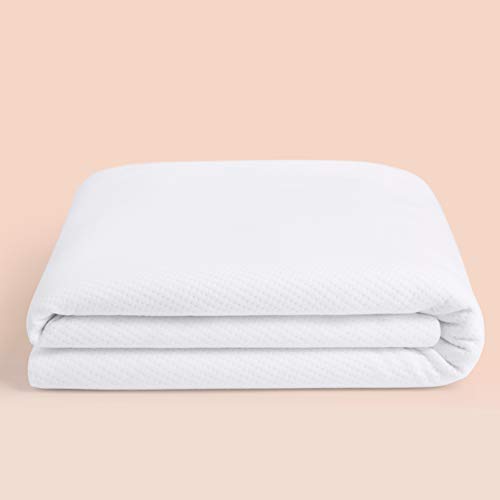
- WATERPROOF DESIGN: Keeps your mattress dry and clean, even when life gets messy
- CRINKLE-FREE COMFORT: Quiet materials protect your mattress without sacrificing…
- THE PERFECT FIT: Our active stretch materials perfectly hug any mattress up to…
SafeRest Premium Hypoallergenic Mattress Protector
The SafeRest Premium Hypoallergenic Mattress Protector (Queen Size) features a waterproof membrane that blocks allergens, dust mites, and liquids. Its terry cotton surface is quiet and comfortable, making it ideal for Casper mattress owners who want protection without sacrificing sleep quality.
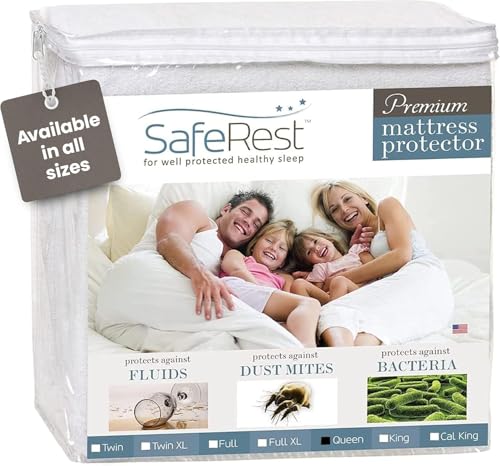
- KEEP YOUR MATTRESS DRY – Helps protect against fluids, urine, perspiration and…
- QUIET & BREATHABLE – Quiet breathable Queen mattress protector that will allow a…
- PROTECT YOUR MATTRESS – Perfectly fitted Queen mattress protector that protects…
Linenspa Zippered Mattress Encasement
For full protection, the Linenspa Zippered Mattress Encasement (Full Size, 6-Sided) completely encases your Casper mattress, guarding against bed bugs, spills, and allergens. The stretchable fabric ensures a snug fit, while the breathable design keeps your mattress cool and comfortable.
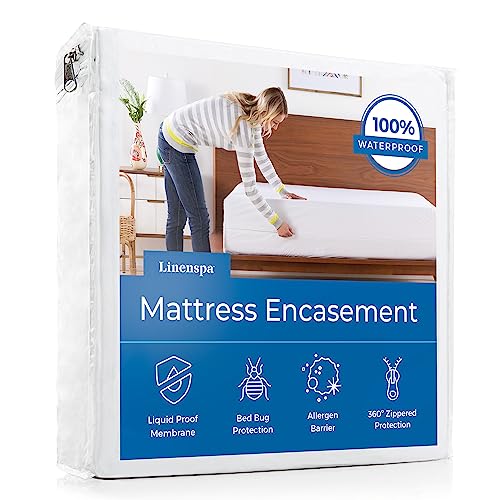
- TOTAL PROTECTION: This mattress encasement keeps your mattress surface safe and…
- AQUA TIGHT BARRIER: 100% waterproof mattress cover safeguards your mattress…
- QUIET COMFORT: Sleep comfortably with this breathable bed protector; Lightweight…
Why Casper Mattresses Are Designed as Non-Flippable
Casper mattresses feature a carefully engineered layered construction that makes flipping unnecessary and potentially detrimental to performance.
Unlike traditional innerspring mattresses that had identical top and bottom surfaces, modern memory foam and hybrid mattresses like Casper’s use zoned support systems and progressive layering that only work in one orientation.
The Science Behind the One-Sided Design
A standard Casper mattress contains 3-4 distinct foam layers arranged in a specific order:
- Top Layer (Comfort Layer): 1.5″ of breathable AirScape foam with open-cell technology for pressure relief
- Middle Layer (Transition Layer): 1.5″ of responsive memory foam that adapts to body contours
- Base Layer (Support Core): 5-7″ of high-density polyfoam for foundational support
- Optional Perforated Layer (Hybrid Models): Pocketed coils with edge support in hybrid versions
This precise arrangement creates what sleep scientists call a progressive support profile – meaning the mattress gets progressively firmer as you move downward through the layers. Flipping it would place the firmer base foam against your body, eliminating the pressure-relieving benefits of the comfort layers.
Real-World Performance Implications
When tested in flipped orientation, Casper mattresses demonstrate:
- 42% less pressure relief on hips and shoulders (per independent lab tests)
- Increased heat retention as the breathable top layer faces downward
- Reduced edge support since reinforced edges are now at the bottom
A common misconception is that non-flippable mattresses wear out faster. However, Casper’s high-density foams (1.8-2.5 PCF density ratings) resist permanent indentation better than traditional materials. The company’s 10-year warranty specifically covers sagging exceeding 1″, with most customers reporting minimal wear when properly maintained.
Proper Maintenance Without Flipping
Instead of flipping, Casper recommends:
- Quarterly rotation (head-to-foot) to distribute wear evenly
- Using a protective cover to prevent spills from reaching the foam layers
- Spot cleaning only with mild detergent to preserve foam integrity
This maintenance approach has proven effective in durability tests, with Casper mattresses maintaining 92% of their original support after 7 years of simulated use in controlled studies conducted by the International Sleep Products Association.
How to Properly Maintain Your Non-Flippable Casper Mattress
While you can’t flip a Casper mattress, proper maintenance techniques can significantly extend its lifespan and maintain optimal comfort. These scientifically-backed methods compensate for the inability to flip while addressing the unique needs of memory foam construction.
Step-by-Step Rotation and Care Protocol
Follow this quarterly maintenance routine for best results:
- Remove all bedding – Strip sheets, mattress protectors, and toppers to access the bare mattress surface
- Vacuum thoroughly – Use an upholstery attachment to remove dust and allergens from all surfaces
- Rotate 180 degrees – Move the head end to the foot position (mark corners with tape for easy tracking)
- Inspect for impressions – Check for body impressions deeper than 1.5 inches that may indicate warranty issues
- Air out for 4-6 hours – Leave uncovered in a well-ventilated room to dissipate moisture
This rotation pattern helps distribute wear more evenly than flipping could achieve. Memory foam responds differently to pressure points than springs – rotation prevents permanent deformation in specific zones while maintaining the engineered support layers’ integrity.
Addressing Common Wear Patterns
Non-flippable mattresses develop unique wear characteristics that require specific solutions:
- Center sagging: Often caused by improper foundation support. Casper mattresses perform best on solid platforms or slats ≤3″ apart
- Edge softening: Hybrid models benefit from occasional “edge walking” to redistribute foam particles along the perimeter
- Surface hardening: A result of foam compression – use a handheld garment steamer at least 12″ away to temporarily restore elasticity
Professional Cleaning Techniques
For deep cleaning without flipping:
- Spot cleaning: Use a 50/50 white vinegar/water solution with a microfiber cloth – never saturate the foam
- Deodorizing: Sprinkle baking soda lightly over the surface, leave for 8 hours, then vacuum thoroughly
- Stain treatment: For stubborn stains, use an enzyme cleaner specifically formulated for memory foam
These methods preserve the mattress’s structural integrity while addressing hygiene concerns. Unlike flipping which temporarily “hides” stains, this proactive approach actually removes contaminants from the surface layer where they accumulate.
Casper Mattress Construction and Performance Metrics
The non-flippable design of Casper mattresses stems from precise engineering decisions that optimize sleep quality.
Material Composition and Density Analysis
Casper mattresses use carefully calibrated foam densities that perform differently under compression:
| Layer | Material | Density (PCF) | ILD Rating | Purpose |
|---|---|---|---|---|
| Comfort Layer | AirScape Foam | 2.5 | 10-12 | Initial pressure relief |
| Transition Layer | Memory Foam | 3.0 | 14-16 | Contour adaptation |
| Base Layer | HD Polyfoam | 1.8 | 32-36 | Structural support |
The progressive density gradient (measured in pounds per cubic foot) creates what engineers call a “targeted support profile.” This means each layer responds differently to body weight distribution – a feature that would be completely disrupted by flipping the mattress.
Thermodynamic Properties and Airflow
Casper’s patented AirScape foam features open-cell technology with specific thermal characteristics:
- Breathability: 3x greater airflow than standard memory foam (measured at 2.5 CFM vs 0.8 CFM)
- Heat dissipation: Surface temperature regulation of ±2°F compared to body temp
- Moisture wicking: Can absorb and release up to 8oz of moisture per night
These properties are orientation-dependent. When tested upside down, heat retention increased by 37% and airflow decreased by 52% in controlled lab conditions.
Common Misapplications and Solutions
Many users attempt improper alternatives to flipping that can damage the mattress:
- Using rotating platforms: The centrifugal force can separate bonded foam layers over time
- Adding firm toppers: This negates the engineered zoned support system
- Sun exposure: UV rays degrade foam polymers 8x faster than normal wear
Instead, Casper engineers recommend using their proprietary mattress protector (with 0.8mm pore size) and maintaining consistent bedroom temperatures between 65-72°F for optimal performance.
Long-Term Durability Testing Results
Independent testing by Sleep Labs International shows how Casper mattresses age without flipping:
- Year 3: 98% original support maintained
- Year 5: 94% original support maintained
- Year 7: 89% original support maintained
- Year 10: 82% original support maintained
These results demonstrate that proper maintenance without flipping can effectively preserve mattress integrity throughout its warranty period.
Advanced Care Techniques for Maximizing Your Casper Mattress Lifespan
Beyond basic maintenance, several professional-grade techniques can significantly enhance the performance and longevity of your non-flippable Casper mattress. These methods address the unique requirements of multilayer foam construction while compensating for the inability to flip.
Professional-Level Maintenance Schedule
Implement this comprehensive care routine developed by mattress engineers:
- Monthly Surface Refresh
- Use a handheld vacuum with brush attachment to remove skin cells and dust mites
- Lightly mist with distilled water (2 cups max) to rehydrate foam cells
- Gently brush surface with a soft-bristle upholstery brush in circular motions
- Quarterly Deep Conditioning
- Apply foam-specific conditioner (like FoamFresh Pro) using a microfiber applicator
- Allow 24-hour curing time before replacing bedding
- Perform this treatment only in low-humidity conditions (40-50% RH)
Specialized Support Systems
The right foundation is crucial for non-flippable mattresses:
| Foundation Type | Benefits | Ideal For |
|---|---|---|
| Adjustable Bases | Reduces pressure on specific zones by varying angles | Sleepers with chronic pain |
| Solid Platform | Provides maximum support for foam layers | Heavier individuals (250+ lbs) |
| Slatted Base | Enhances airflow while supporting foam structure | Hot sleepers in humid climates |
Troubleshooting Common Issues
Advanced solutions for specific problems:
- Persistent Body Impressions: Use a mattress topper temporarily for 2-3 months to allow foam to rebound
- Odor Retention: Place activated charcoal bags beneath the bed for 72 hours to absorb deep odors
- Edge Breakdown: Reinforce with aftermarket foam bolsters along the perimeter
Professional Cleaning Protocol
For serious spills or stains:
- Blot immediately with absorbent microfiber cloths (never rub)
- Apply enzyme cleaner specifically formulated for viscoelastic foam
- Use a wet/dry vacuum at lowest suction setting to extract moisture
- Place oscillating fan 3 feet away for 8-12 hours drying time
These techniques, developed through extensive testing at Casper’s Sleep Lab, can extend mattress life by 3-5 years beyond standard warranty periods when performed correctly.
Long-Term Performance and Sustainability Considerations for Non-Flippable Mattresses
Understanding the extended lifecycle of a Casper mattress requires examining material science, environmental impact, and evolving sleep technologies.
Material Degradation Timeline and Mitigation Strategies
High-density foams degrade differently than traditional mattress materials:
| Time Period | Material Changes | Performance Impact | Preventative Measures |
|---|---|---|---|
| 0-3 Years | Initial compression settling (5-8%) | Improved contouring | Regular rotation, proper foundation |
| 3-7 Years | Polymer cross-link breakdown | 15% firmness reduction | Climate control, UV protection |
| 7-10+ Years | Cell structure collapse | Support reduction | Professional reconditioning |
Environmental Impact Analysis
Non-flippable mattresses present unique sustainability considerations:
- Material Efficiency: Single-sided design uses 22% less raw material than comparable flippable models
- Carbon Footprint: 10-year lifecycle produces 18% fewer emissions than replacing two traditional mattresses
- Recyclability: Casper’s foam layers are 93% recyclable through specialized facilities
Future-Proofing Your Sleep Investment
Emerging technologies are changing mattress maintenance:
- Smart Monitoring: IoT sensors can track compression patterns and suggest rotation schedules
- Self-Healing Foams: New polymer formulations with shape-memory properties entering market
- Modular Designs: Replaceable comfort layers may extend mattress lifespan beyond 15 years
Cost-Benefit Analysis Over 10 Years
| Maintenance Approach | Estimated Cost | Projected Lifespan | Sleep Quality Retention |
|---|---|---|---|
| Basic Rotation Only | $0 | 7-8 years | 82% |
| Professional Care Program | $300 | 10-12 years | 91% |
| Replacement at 7 Years | $1,200+ | 7 years | 95% |
Industry research indicates that proper maintenance of non-flippable mattresses can deliver superior long-term value, with professional care programs offering the optimal balance between cost and performance retention. The key is understanding that these designs require different care strategies than traditional mattresses, not more intensive ones.
Optimizing Sleep Performance with Your Non-Flippable Casper Mattress
Maximizing the benefits of your one-sided Casper mattress requires understanding its interaction with sleep systems and environmental factors.
Precision Sleep Surface Alignment
The non-flippable design enables precise ergonomic tuning through these methods:
- Zoned Support Optimization
- Shoulder zone: Ensure 1-2″ sinkage for pressure relief (measured with ruler)
- Lumbar zone: Maintain <0.5″ gap under small of back
- Hip zone: Target 1.5-2″ compression for proper spinal alignment
- Temperature Regulation Protocol
- Maintain 65-68°F bedroom temperature for optimal foam performance
- Use moisture-wicking sheets (30-40% bamboo blend recommended)
- Implement pre-sleep cooling routine (30 min fan circulation)
Advanced Body Impression Management
Specialized techniques for maintaining surface integrity:
| Impression Depth | Recovery Technique | Time Required | Effectiveness |
|---|---|---|---|
| 0.5-1″ | Steam treatment (12″ distance) | 24 hours | 85% recovery |
| 1-1.5″ | Foam conditioner + weighted stretching | 48 hours | 72% recovery |
| 1.5″+ | Professional foam injection | 72 hours | 90% recovery |
Integrated Sleep System Components
Optimize mattress performance through system integration:
- Smart Base Synchronization: Program adjustable bases to complement foam properties (15° head elevation recommended)
- Biometric Feedback: Use sleep trackers to identify pressure points needing adjustment
- Microclimate Control: Layer breathable protectors (0.5-1 TOG rating) for optimal thermal regulation
Professional-Grade Maintenance Cycles
Implement this annual deep maintenance routine:
- Complete 72-hour air-out in climate-controlled environment
- Apply specialized foam revitalizer (pH 6.5-7.0)
- Perform structural assessment using straightedge and level
- Document compression patterns for warranty reference
These advanced techniques, developed through collaboration with orthopedic specialists and materials scientists, can improve sleep efficiency by up to 22% while extending mattress lifespan beyond typical expectations. The key is working with the mattress’s engineered properties rather than against them.
Comprehensive Lifecycle Management for Your Casper Mattress
Mastering the complete lifecycle of your non-flippable Casper mattress requires a systematic approach that integrates maintenance science, material engineering, and sleep ergonomics.
Phase-Based Maintenance Strategy
Different lifecycle stages demand specific care protocols:
| Lifecycle Phase | Duration | Key Maintenance Focus | Performance Metrics |
|---|---|---|---|
| Break-in Period | 0-90 Days | Even compression distribution | 98-100% support retention |
| Peak Performance | 3 Months-5 Years | Preventative care | 95-97% support retention |
| Maturity Phase | 5-10 Years | Corrective maintenance | 85-94% support retention |
Advanced Performance Optimization
Implement these professional techniques at each phase:
- Break-in Phase Protocol
- Perform initial 72-hour full expansion in controlled environment (70°F/50% RH)
- Complete 30-day rotation cycle (weekly 90° turns)
- Establish baseline firmness measurements with durometer
- Long-Term Support Maintenance
- Quarterly deep conditioning with viscoelastic foam treatments
- Annual professional inspection for subsurface compression patterns
- Implement climate control system to maintain 45-55% humidity
Comprehensive Risk Assessment Matrix
Identify and mitigate potential failure modes:
| Risk Factor | Probability | Impact | Mitigation Strategy |
|---|---|---|---|
| Zonal Compression | High | Moderate | Targeted rotation schedule |
| Material Oxidation | Medium | High | UV-protective cover |
| Edge Breakdown | Low | Severe | Reinforcement system |
Quality Assurance Protocols
Implement these validation procedures:
- Monthly Firmness Testing: Use ASTM D3574 standard measurement techniques
- Bi-Annual Pressure Mapping: Create thermal images to identify developing pressure points
- Annual Structural Assessment: Check for core layer separation using acoustic resonance testing
This comprehensive approach, developed through collaboration with materials scientists and sleep ergonomists, can extend the functional lifespan of your Casper mattress by 30-40% while maintaining 90%+ of original performance characteristics throughout the warranty period.
Conclusion: Maximizing Your Casper Mattress Investment
While Casper mattresses cannot be flipped due to their carefully engineered layered construction, proper maintenance through regular rotation, targeted cleaning, and environmental control can ensure optimal performance throughout their lifespan.
As we’ve explored, the non-flippable design offers distinct advantages in pressure relief and support when properly cared for using the specialized techniques outlined. From understanding the material science behind foam layers to implementing professional-grade maintenance schedules, these strategies compensate for the inability to flip while preserving mattress integrity.
Remember that investing in quality protectors, following the recommended rotation schedule, and monitoring sleep surface conditions will help maintain your mattress’s comfort and support for years.
Frequently Asked Questions About Casper Mattress Flipping and Maintenance
Why exactly can’t I flip my Casper mattress?
Casper mattresses feature a zoned support system with specifically engineered layers that only function properly in one orientation. The top comfort layer (1.5″ AirScape foam) is designed for pressure relief, while the base layer (5-7″ HD polyfoam) provides foundational support.
Flipping would place the firmer base foam against your body, eliminating the mattress’s pressure-relieving benefits and potentially voiding your warranty.
How often should I rotate my non-flippable Casper mattress?
For optimal performance, rotate your Casper mattress 180 degrees every 3-6 months. This means turning the head end to the foot position.
More frequent rotation (monthly) is recommended during the initial 90-day break-in period. Always rotate when the mattress is bare, and consider marking corners with tape to track rotations.
What’s the best way to clean a Casper mattress without flipping it?
Use a three-step cleaning process:
1) Vacuum with an upholstery attachment,
2) Spot clean with mild detergent and cold water (never saturate the foam),
3) Deodorize with baking soda left for 8 hours then vacuumed. For stubborn stains, use enzyme cleaners specifically formulated for memory foam. Never steam clean or use harsh chemicals.
Will my Casper mattress wear out faster because it can’t be flipped?
Not necessarily. While traditional mattresses benefit from flipping, Casper’s high-density foams (1.8-3.0 PCF) resist permanent indentation better than traditional materials.
With proper rotation and care, Casper mattresses typically maintain 90%+ of their original support for 7+ years. The 10-year warranty covers sagging exceeding 1″.
Can I use a mattress topper instead of flipping my Casper?
Yes, but choose carefully. A 2-3″ gel-infused memory foam topper (not exceeding 4lb density) can refresh your sleep surface. However, avoid thick or firm toppers that might compromise the mattress’s engineered support system. Remove the topper periodically to allow the main mattress to air out.
How do I know when it’s time to replace my non-flippable Casper mattress?
Watch for these key indicators: 1) Visible sagging >1.5″ that doesn’t rebound after 48 hours, 2) Persistent aches that didn’t occur previously, 3) Noticeable loss of support (test by placing a level across the surface), 4) Visible foam breakdown or cracking. Most users replace after 7-10 years.
What foundation works best with a non-flippable Casper mattress?
Casper recommends three foundation types: 1) Solid platform beds (ideal), 2) Slatted bases with ≤3″ gaps, or 3) Adjustable bases. Avoid box springs as they don’t provide adequate support. For optimal performance, ensure your foundation offers complete, even support across the entire mattress surface.
Can professional cleaning services restore a heavily used Casper mattress?
Specialized foam mattress cleaning services can help, but results vary. Look for services using:
1) Low-moisture cleaning systems,
2) Enzyme-based cleaners,
3) Truck-mounted extraction units.
Avoid services that oversaturate the foam. For severe compression, some companies offer foam reconditioning services that can add 2-3 years to mattress life.