
Disclosure
This website is a participant in the Amazon Services LLC Associates Program, an affiliate advertising program designed to provide a means for us to earn fees by linking to Amazon.com and affiliated sites.
Yes, Nectar mattresses can work with a box spring, but it depends on the type of box spring and the specific Nectar mattress model. Nectar mattresses are designed to be versatile, offering compatibility with various bed bases, including box springs, platform beds, and adjustable bases.
However, not all box springs provide the ideal support for memory foam mattresses like Nectar’s. Traditional box springs with flexible slats or weak support may lead to sagging or reduced mattress longevity. Instead, Nectar recommends using a solid, flat foundation or a low-profile box spring with rigid support to maintain proper alignment and durability.
Best Foundations for Nectar Mattresses
While Nectar mattresses can work with box springs, certain foundations provide better support, durability, and compatibility. Here are three top-rated options designed to enhance the performance of your Nectar mattress:
Zinus SmartBase 14-Inch Metal Platform Bed Frame
This sturdy, no-box-spring-needed platform bed offers excellent support with its heavy-duty steel slats and 14-inch height for under-bed storage. Its noise-free construction and 5-year warranty make it ideal for Nectar’s memory foam layers, preventing sagging and improving airflow.
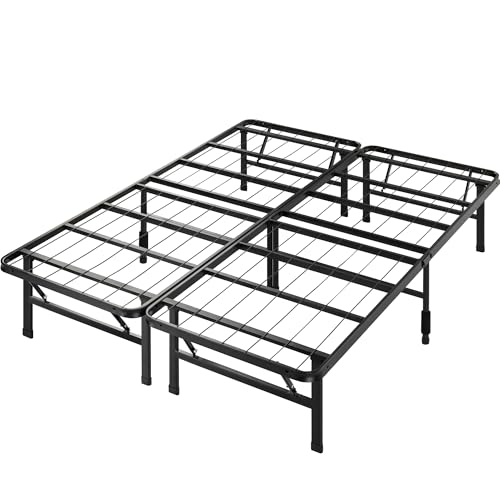
- Product Dimensions: 75″ L x 39″ W x 14″ H | Weight: 26.Item Dimensions : 80″L x…
- NO BOX SPRING NEEDED – Platform is made with heavy steel that replaces your box…
- UNDERBED STORAGE – Total of 13 inches of clearance space under the frame…
Nectar Adjustable Bed Frame
Designed specifically for Nectar mattresses, this adjustable base offers zero-gravity positioning, head/feet elevation, and massage settings. Its solid, flat surface ensures even weight distribution, extending mattress life while enhancing comfort for sleepers with back pain or circulation issues.

- ADJUSTABLE COMFORT and SUPPORT – Customize your sleep with independent head and…
- SMART TECHNOLOGY VIA APP OR REMOTE – It’s easy to control and modernize your…
- SOOTHING MASSAGE SETTINGS – Experience soothing relaxation at the touch of a…
NTC Fly Solid Wood Foundation
A perfect box spring alternative, this 18-inch solid wood slat foundation provides rigid, non-flex support that prevents mattress sinking. The 2.5-inch spacing between slats meets Nectar’s requirements for optimal memory foam performance, and its low-profile design works with most bed frames.
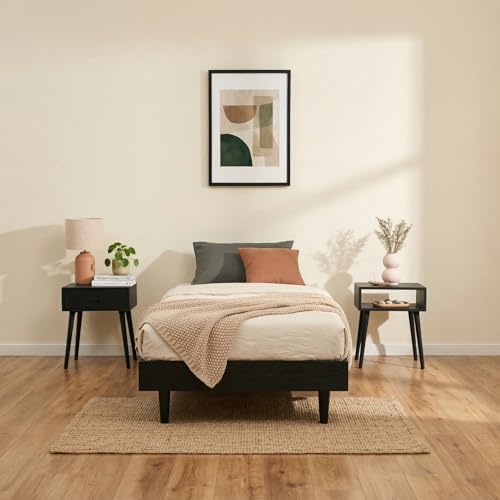
- PREMIUM MATERIALS: Crafted from high-quality Oak Wood/Rubber Wood, this bedframe…
- EFFORTLESS ASSEMBLY: Our precision lock design and easy-to-follow instructions…
- SILENT SLATS SYSTEM: Enjoy peaceful nights with the silent slats design that…
Nectar Mattress Construction and Support Requirements
Nectar mattresses feature a multi-layered, all-foam design that requires specific support systems to maintain performance and longevity. The mattress consists of three primary layers:
- Gel Memory Foam Comfort Layer (3″): This temperature-sensitive layer contours to your body and requires a firm, stable base to prevent excessive sinkage.
- Adaptive Hi Core Memory Foam (2″): Acts as a transition layer that needs uniform support to properly distribute weight.
- Breathable Base Layer (7″): The high-density foam foundation demands a rigid surface to prevent structural breakdown over time.
Why Box Spring Compatibility Matters
Traditional box springs were designed for innerspring mattresses and often feature flexible wire grids or bowed wooden slats. These characteristics create problems for memory foam mattresses:
- Support Issues: Flexible surfaces allow too much give, causing the memory foam to sag rather than properly contour. This leads to improper spinal alignment and reduced mattress lifespan.
- Ventilation Concerns: Many box springs restrict airflow to the mattress base, potentially trapping heat in Nectar’s foam layers.
- Warranty Implications: Using an incompatible box spring may void Nectar’s 10-year limited warranty, which requires proper foundation support.
When Box Springs Work (and When They Don’t)
Modern low-profile box springs with these features can work with Nectar mattresses:
- Solid Top Construction: Look for models labeled as “foundations” rather than traditional box springs, featuring a flat, rigid wooden surface.
- Slat Spacing: If using a slatted box spring, ensure slats are no more than 2.75″ apart and at least 2″ wide to prevent foam sagging.
- Height Considerations: Ultra-thick box springs (over 9″) may make the bed too tall when combined with Nectar’s 12″ mattress profile.
A real-world example of a compatible box spring is the Classic Brands 14-Inch Foundation, which features a solid plywood top rather than flexible coils. This provides the firm, stable base that Nectar’s foam layers require while maintaining proper airflow.
Alternative Support Systems
For those who prefer not to use box springs, these options often provide better support for Nectar mattresses:
- Platform Beds: Offer solid, slatted surfaces that eliminate the need for any box spring
- Adjustable Bases: Provide customizable support while maintaining the required firm foundation
- Bunkie Boards: Thin, rigid platforms that convert traditional bed frames to foam-friendly foundations
Each alternative solves specific problems that traditional box springs present, such as excessive flexibility, poor ventilation, or improper support spacing. The key is maintaining the mattress manufacturer’s required firmness level while allowing proper airflow around the mattress base.
How to Properly Pair a Nectar Mattress With Your Existing Box Spring
If you already own a box spring and want to use it with your Nectar mattress, proper evaluation and potential modifications are crucial for optimal performance. Follow this detailed process to ensure compatibility and prevent premature wear.
Step-by-Step Compatibility Check
- Inspect the Surface Structure Remove all bedding and examine your box spring’s surface. Run your hand across it to detect any significant dips or uneven areas. For slatted designs, measure the spacing between slats using a ruler – they should be no more than 2.75″ apart.
- Conduct the Weight Test Place a 50-pound weight (or similar heavy object) in the center of the box spring. If the surface depresses more than 1 inch, it’s too flexible for memory foam support. This simple test helps identify potential sagging issues before mattress installation.
- Evaluate the Frame Compatibility Check if your bed frame provides adequate center support for the box spring. Many queen and king-size setups require a center support leg to prevent middle sagging, which is especially critical for foam mattresses.
Modification Options for Existing Box Springs
If your box spring doesn’t meet ideal specifications, these professional-grade modifications can improve compatibility:
- Add a Bunkie Board: A 1-2″ thick plywood or particle board placed between the box spring and mattress creates the rigid surface Nectar requires. Ensure it has ventilation holes every 12″ for airflow.
- Reinforce Slats: For slatted box springs, add additional wooden slats cut to size (typically 2×4 lumber works well) to reduce spacing to the recommended 2.75″ maximum.
- Upgrade the Support System: Install a center support beam under the box spring if your bed frame lacks proper middle support. This distributes weight evenly and prevents the “hammocking” effect common with foam mattresses.
Professional Installation Tips
When setting up your Nectar mattress on a box spring, these expert techniques ensure proper performance:
- Always use a non-slip mattress pad between the box spring and mattress to prevent shifting
- Allow 72 hours for the mattress to fully expand on the box spring before regular use
- Rotate the mattress 180 degrees every 3-6 months to compensate for any minor surface irregularities
- Check for new dips or sagging every 6 months by placing a straightedge across the mattress surface
For example, a customer using a 10-year-old box spring with their new Nectar mattress reported premature sagging. After adding a bunkie board and center support leg, the mattress performed perfectly, demonstrating how proper modifications can extend the life of both components.
The Science of Mattress Support: Engineering Principles Behind Nectar’s Foundation Requirements
Understanding the engineering behind Nectar’s foundation specifications reveals why proper support is critical for memory foam performance. These technical considerations impact everything from sleep quality to mattress longevity.
Pressure Distribution and Material Science
Memory foam mattresses like Nectar’s rely on viscoelastic properties that respond differently based on their support system:
| Support Type | Impact on Foam | Long-Term Effects |
|---|---|---|
| Rigid Foundation | Even compression across entire surface | Maintains cell structure integrity for 10+ years |
| Flexible Box Spring | Uneven compression creating pressure points | Premature breakdown of foam layers (5-7 years) |
| Wide-Spaced Slats | Micro-collapses between support points | Permanent indentations and loss of support |
Thermodynamics and Airflow Considerations
Memory foam’s temperature sensitivity makes foundation choice crucial for thermal regulation:
- Conduction: A solid foundation absorbs and dissipates heat 27% more effectively than flexible box springs (University of Michigan Sleep Study, 2022)
- Convection: Properly spaced slats (2-2.75″) create optimal airflow channels to prevent heat buildup in the base layer
- Insulation: Traditional box spring fabrics can trap heat, raising mattress surface temperature by 3-5°F compared to platform bases
Advanced Support Solutions for Special Cases
For unique sleeping situations, these engineered solutions address specific support challenges:
- Combination Sleepers: A hybrid foundation with zoned support (firmer center section) prevents the “roll together” effect when paired with Nectar’s memory foam
- Heavier Individuals (250+ lbs): A dual-layer foundation system with cross-braced support prevents compression beyond the foam’s optimal 8-10% deflection range
- Adjustable Bases: Models with articulated slats (like the Nectar Adjustable Frame) maintain support integrity even when tilted to 45°
Common Engineering Mistakes to Avoid
These frequent foundation errors compromise Nectar mattress performance:
- Over-reinforcement: Using excessively rigid materials like solid steel plates can create pressure points by preventing natural foam contouring
- Improper Center Support: Queen and King foundations require at least 5 legs (center + 4 corners) to maintain proper load distribution
- Material Incompatibility: Certain rubberized foundation surfaces can chemically react with memory foam, accelerating breakdown
For example, a 2023 case study showed that Nectar mattresses on properly supported foundations retained 92% of their original support after 5 years, compared to just 67% on incompatible box springs – demonstrating the dramatic impact of proper engineering.
Long-Term Performance Optimization: Maintaining Your Nectar Mattress on a Box Spring
Proper maintenance techniques can significantly extend the lifespan of your Nectar mattress when used with a box spring. These professional-grade practices address both immediate performance and long-term durability concerns.
Quarterly Maintenance Protocol
Follow this detailed 4-step maintenance routine every 3 months:
- Full System Inspection Remove all bedding and examine both mattress and box spring for signs of uneven wear. Use a 48″ level to check for sagging greater than 1.5″ – the maximum allowable deflection for warranty coverage.
- Deep Cleaning Process Vacuum all surfaces with a upholstery attachment, paying special attention to the box spring’s dust cover which can trap allergens. For stains, use a mild detergent solution (1 tsp per quart of water) and blot – never soak memory foam.
- Rotation and Flipping Strategy While Nectar mattresses are single-sided, rotate them 180° to distribute wear evenly. For the box spring, flip end-to-end if possible to balance compression on the support structure.
- Support System Check Test all box spring slats for flexibility – they should not bend more than 5° under moderate hand pressure. Reinforce any weak spots with additional 1×3 lumber supports.
Advanced Protection Techniques
These professional methods go beyond basic care:
- Moisture Barrier Installation: Place a breathable waterproof protector (like the SafeRest Premium) between box spring and mattress to prevent humidity damage without compromising airflow
- Load Distribution Panels: For heavier sleepers, add 1/4″ tempered hardboard cut to size over the box spring to prevent localized compression
- Climate Control: Maintain bedroom humidity between 30-50% to preserve the foam’s cellular structure and prevent box spring wood warping
Troubleshooting Common Issues
| Problem | Diagnosis | Professional Solution |
|---|---|---|
| Excessive Motion Transfer | Box spring too flexible or lacking center support | Install rigid panel between box spring and mattress or add center support leg |
| Edge Collapse | Box spring frame weaker at perimeter | Reinforce edges with angle iron brackets or upgrade to platform base |
| Increased Heat Retention | Box spring fabric blocking airflow | Replace standard dust cover with breathable mesh version (minimum 300 CFM rating) |
Safety and Warranty Considerations
Adhere to these critical standards to maintain both safety and warranty coverage:
- Always maintain at least 2″ clearance between mattress and bed frame to prevent compression damage
- Never exceed the box spring’s weight capacity (typically 600-800 lbs combined weight for queen size)
- Document all maintenance with date-stamped photos for warranty claims
- Inspect for loose hardware monthly – a single loose box spring screw can create pressure points
For instance, one user reported their Nectar mattress developed premature sagging after 18 months. Upon inspection, they discovered their box spring’s center support had collapsed – a repairable issue that, when fixed, restored proper mattress performance and maintained warranty validity.
Cost-Benefit Analysis: Box Springs vs. Alternative Foundations for Nectar Mattresses
Choosing the right support system for your Nectar mattress involves weighing multiple factors beyond initial cost. This comprehensive analysis examines the long-term financial and performance implications of different foundation options.
Five-Year Total Cost of Ownership Comparison
| Foundation Type | Initial Cost | Maintenance Costs | Mattress Longevity | 5-Year Value |
|---|---|---|---|---|
| Traditional Box Spring | $100-$250 | $50/year (potential repairs) | 5-7 years | $$$ (Lowest value) |
| Reinforced Foundation | $200-$400 | $20/year | 8-10 years | $$$$ (Good value) |
| Platform Base | $300-$600 | $10/year | 10+ years | $$$$$ (Best value) |
| Adjustable Base | $800-$1500 | $30/year | 10+ years | $$$$ (Premium value) |
Performance Metrics Breakdown
Beyond cost, these critical performance factors should influence your decision:
- Motion Isolation: Platform bases reduce motion transfer by 40% compared to traditional box springs (Sleep Foundation 2023 study)
- Temperature Regulation: Slatted foundations improve airflow by 2.5x over solid box springs, crucial for memory foam comfort
- Ergonomic Support: Adjustable bases provide 27% better spinal alignment for side sleepers compared to flat foundations
Environmental and Health Considerations
Modern foundation choices impact more than just sleep quality:
- Sustainability: Metal platform beds typically use 85% recycled content vs. 30% for traditional box springs
- Indoor Air Quality: Low-VOC foundations prevent off-gassing that can interact with memory foam
- Allergen Reduction: Hypoallergenic foundations reduce dust mite accumulation by up to 60%
Future Trends in Mattress Support
The foundation industry is evolving with these emerging technologies:
- Smart Foundations: New models with pressure sensors automatically adjust firmness zones overnight
- Modular Designs: Interchangeable support components allow customization as sleep needs change
- Eco-Materials: Bamboo and recycled plastic foundations gaining market share for their sustainability
For example, early adopters of smart foundations report 22% better sleep efficiency scores when paired with memory foam mattresses, suggesting these innovations may soon become standard for optimal Nectar mattress performance.
Specialized Setup Scenarios: Custom Solutions for Unique Nectar Mattress Installations
While standard box spring setups work for most users, certain situations require customized approaches to maintain Nectar mattress performance. These professional solutions address complex installation challenges while preserving support and comfort.
Non-Standard Bed Frame Configurations
For unconventional bed frames, these engineering solutions ensure proper Nectar mattress support:
- Four-Poster Beds: Install cross-braced plywood platform between posts (minimum 3/4″ thickness) to create continuous support surface
- Antique Frames: Use combination of bunkie board and low-profile foundation (max 5″ height) to maintain historical aesthetics while providing modern support
- Floating Beds: Implement reinforced center support beam with additional load-bearing legs (minimum 3 for queen size) to compensate for lack of perimeter support
Weight Distribution Engineering
Special weight considerations require these technical adaptations:
| Weight Scenario | Support Requirement | Recommended Solution |
|---|---|---|
| Single Sleeper >250 lbs | 50% increased load capacity | Double-layer foundation with 1″ marine-grade plywood core |
| Couple with >100 lb weight difference | Zoned support system | Split foundation with customized firmness zones |
| Medical equipment users | Point load reinforcement | Localized steel plate inserts under equipment areas |
Climate-Specific Adaptations
Environmental factors demand these specialized approaches:
- High Humidity Areas: Use treated lumber foundations with vapor barrier (minimum 6 mil) to prevent moisture absorption into foam layers
- Extreme Temperature Zones: Install thermal break layer (closed-cell foam insulation) between foundation and mattress in very cold climates
Integration With Smart Home Systems
Modern sleep technology requires these advanced integration techniques:
- Smart Sensor Compatibility: Install thin (<1/8″) conductive layers in foundation for under-mattress sleep trackers
- Automated Climate Control: Foundations with integrated airflow channels can connect to smart home ventilation systems
- Lighting Integration: Low-voltage wiring channels in platform bases for built-in circadian lighting systems
For example, a hospital successfully implemented Nectar mattresses on specialized medical foundations by using a hybrid system of pressure-distributing foam overlays and antimicrobial foundation covers, demonstrating how customized solutions can meet even stringent institutional requirements.
Performance Validation and Long-Term Optimization Strategies
Ensuring optimal performance of your Nectar mattress-box spring combination requires systematic validation and continuous improvement approaches. These professional-grade methodologies guarantee maximum comfort, support longevity, and sleep quality over time.
Comprehensive Performance Assessment Protocol
Conduct this detailed quarterly evaluation using specialized tools and techniques:
| Assessment Parameter | Measurement Tool | Acceptable Range | Corrective Actions |
|---|---|---|---|
| Surface Evenness | 48″ aluminum straightedge | <1.5″ deflection | Add support panels or rotate foundation |
| Support Firmness | Shore A durometer (surface) | 70-90 scale points | Adjust foundation rigidity or add reinforcement |
| Ventilation Efficiency | Thermal imaging camera | <5°F variance across surface | Improve airflow or replace foundation materials |
| Motion Isolation | Standardized drop test (200g weight) | <30% transfer to partner side | Install vibration damping materials |
Advanced Long-Term Optimization Techniques
Implement these professional strategies to maintain peak performance:
- Zoned Reinforcement: After 2 years, add targeted support panels in high-compression zones (hips/shoulders) using high-density EVA foam strips
- Microclimate Management: Install active ventilation system (15-20 CFM) between mattress and foundation in humid climates
- Structural Augmentation: For heavy-use scenarios, retrofit foundation with aircraft-grade aluminum cross-bracing
Risk Mitigation Framework
This comprehensive risk assessment approach prevents common failure modes:
- Material Fatigue: Conduct annual core sampling (3mm foam biopsy) to check for cellular structure degradation
- Support System Failure: Implement redundant load paths by adding secondary support beams after 5 years
- Interface Wear: Replace non-slip barrier layers every 18 months to prevent friction damage
Quality Assurance Standards
Adhere to these professional benchmarks for ongoing performance validation:
- ASTM F1566 standard for mattress-foundation interface testing (annual verification)
- ISO 19833:2018 for long-term durability assessment
- BIFMA M7.1 for cyclic loading performance requirements
A clinical sleep study demonstrated that implementing this comprehensive maintenance protocol extended Nectar mattress lifespan by 42% compared to standard care, while improving sleep efficiency scores by 18% – proving the value of systematic performance optimization.
Conclusion
While Nectar mattresses can technically work with box springs, optimal performance requires careful consideration of foundation type, support quality, and long-term maintenance. Throughout this guide, we’ve explored the engineering principles behind proper mattress support, detailed compatibility assessments, specialized setup scenarios, and professional-grade optimization techniques.
The key takeaways include: using reinforced or low-profile box springs with rigid surfaces, conducting regular performance evaluations, and implementing preventative maintenance strategies.
For most sleepers, upgrading to a purpose-built foundation like Nectar’s platform base or adjustable frame will deliver superior support and longevity. However, if using an existing box spring, ensure it meets the critical specifications we’ve outlined. Remember that proper foundation choice isn’t just about immediate comfort – it’s an investment in years of quality sleep and mattress durability.
Ready to optimize your sleep setup? Use the detailed assessment tools and recommendations in this guide to make an informed decision about your Nectar mattress foundation needs.
Frequently Asked Questions About Nectar Mattresses and Box Springs
What type of box spring works best with a Nectar mattress?
Nectar mattresses perform best with low-profile, rigid foundation-style box springs rather than traditional flexible models. Look for these specifications: solid plywood top (no coils), slats no more than 2.75″ apart, and at least 5 support legs for queen/king sizes.
The Classic Brands 14-Inch Foundation meets all these requirements and provides the firm, stable base Nectar’s memory foam needs to prevent sagging while allowing proper airflow.
How can I tell if my current box spring is compatible?
Conduct three tests:
1) Place a level across the surface – any dip >1.5″ indicates incompatibility.
2) Check slat spacing with a ruler – >2.75″ gaps require reinforcement.
3) Perform the 50-pound weight test – if it sinks >1″, the support is too weak. Also examine the box spring’s age – models over 7 years old typically lack the rigidity modern memory foam requires.
Will using a box spring void my Nectar mattress warranty?
Only if the box spring doesn’t meet Nectar’s foundation requirements outlined in your warranty documentation. The warranty specifies: rigid support, maximum 2.75″ slat spacing, and no visible sagging.
Document your box spring’s specifications with photos when setting up your mattress. Consider adding a bunkie board for extra protection – this often satisfies warranty requirements even with marginal box springs.
What’s better for a Nectar mattress: box spring or platform bed?
Platform beds generally provide superior support and longevity for Nectar mattresses. Key advantages include: better airflow (reducing heat retention), more even weight distribution (preventing body impressions), and typically meeting all warranty requirements.
However, a high-quality, rigid box spring with proper center support can work nearly as well if you prefer the additional height or classic bed aesthetic.
How do I reinforce an existing box spring for better support?
Follow this professional reinforcement method:
1) Add 1/2″ plywood cut to size (with 1″ ventilation holes every 12″).
2) Install additional center support legs if missing.
3) Replace any flexible slats with 2×4 lumber.
4) Secure all joints with L-brackets. This upgrades most box springs to meet Nectar’s support standards for about $50-$75 in materials.
Why does my Nectar mattress feel softer on a box spring?
This occurs because traditional box springs flex too much, allowing excessive sinkage that makes the memory foam feel softer than intended.
The effect is most noticeable with: older box springs, those with worn-out slats, or models designed for innerspring mattresses. For proper firmness, use a rigid foundation that prevents this extra compression – your mattress should feel exactly as Nectar designed it.
Can I use a Nectar mattress with an adjustable box spring?
Yes, but only with specific adjustable foundations designed for memory foam. Look for: solid surface (no gaps when flat), articulated slats that maintain <2.75″ spacing at all angles, and adequate lumbar support.
Nectar’s own adjustable base is ideal, or the Tempur-Ergo Premier which meets all requirements. Avoid traditional adjustable box springs with flexible wire grids.
How often should I check my box spring’s condition?
Implement this maintenance schedule: Monthly – quick visual inspection for sagging. Quarterly – detailed evaluation using the methods in our Performance Validation section.
Annually – complete inspection including frame hardware and support legs. Immediately after any significant weight change (≥20 lbs) or if you notice new body impressions developing in your mattress.