
Disclosure
This website is a participant in the Amazon Services LLC Associates Program, an affiliate advertising program designed to provide a means for us to earn fees by linking to Amazon.com and affiliated sites.
Choosing between a mattress topper and a new mattress is a common dilemma for sleepers seeking better comfort. This decision impacts your sleep quality, health, and budget significantly.
A topper can refresh an otherwise good mattress, while a new mattress addresses core support issues. The right choice depends on the age and condition of your current bed.
Is Your Mattress So Uncomfortable That It’s Stealing Your Sleep?
That familiar ache and restless night signal a mattress that no longer supports you. Replacing it is costly and disruptive. The Niagara Sleep Solution Topper directly solves this by adding a plush, pressure-relieving layer that renews your bed’s comfort, transforming it into a soft, supportive sanctuary for a fraction of the price of a new mattress.
For instantly renewed comfort, we suggest: Niagara Sleep Solution Ultra Soft Mattress Topper

- ULTRA SOFT: Niagara Queen Mattress Topper is made from viscose made from bamboo...
- CLOUD-LIKE SLEEP: This queen mattress topper adds an extra cushion to...
- EASY TO USE: The cooling bed pad has a deep pocket, is easy to put on, and has...
When to Choose a Mattress Topper for Better Sleep
A mattress topper is an excellent solution for specific, surface-level sleep problems. It is a cost-effective layer that can modify the feel of your existing bed. This option is ideal when your mattress foundation is still in good condition.
Signs You Need a Mattress Topper
Your mattress is less than 7 years old but feels slightly uncomfortable. The core support is fine, but you want a softer, firmer, or cooler sleeping surface. A topper can address these precise needs without a major investment.
- Minor Comfort Issues: Your mattress is too firm or has developed slight pressure points. A memory foam or latex topper can add cushioning.
- Temperature Regulation: You sleep hot on a foam mattress. A breathable wool, latex, or gel-infused topper can improve airflow.
- Allergy Management: You need a hypoallergenic barrier. A dust-mite resistant topper encasement can protect your sleep surface.
Benefits of Adding a Mattress Topper
The primary advantage is significant cost savings compared to a new mattress. Toppers also allow for easy experimentation with different comfort levels. They are a low-commitment way to refresh your sleep experience.
For example, a plush featherbed topper can transform a firm innerspring into a cloud-like bed. Alternatively, a firm latex topper can add support to a slightly sagging mattress. This flexibility makes toppers a versatile tool for sleep customization.
| Scenario | Recommended Topper Type | Expected Outcome |
|---|---|---|
| Mattress is too firm | Memory Foam, Featherbed | Added pressure relief and softness |
| Mattress sleeps too hot | Wool, Latex, Gel-Infused Foam | Improved breathability and cooling |
| Mattress has minor sagging | Firm Latex | Added support and leveling |
When It’s Time to Invest in a New Mattress
While a topper offers a temporary fix, some mattress problems require a complete replacement. A new mattress is necessary when the core structure fails to provide proper support. This investment is crucial for long-term spinal health and sleep quality.
Clear Signs You Need a New Mattress
Your body will often tell you when your bed is past its prime. Waking up with stiffness or aches that fade during the day is a major red flag. Visible, permanent sagging or indentations deeper than 1.5 inches also indicate structural wear.
- Age Factor: Most mattresses last 7-10 years. Beyond this, materials degrade, reducing support and hygiene.
- Persistent Pain: You experience ongoing back or joint pain that improves when you sleep elsewhere, like a hotel.
- Noticeable Sagging: The mattress has permanent body impressions or sags in the middle, disrupting spinal alignment.
The Advantages of Buying a New Mattress
A new mattress provides a Complete solution for support, comfort, and hygiene. Modern mattresses offer advanced materials like pocketed coils and cooling gels not found in toppers. You also benefit from a full warranty and the latest sleep technology.
For instance, upgrading from an old innerspring to a hybrid model can improve both support and pressure relief. A new mattress also eliminates accumulated allergens, dust mites, and dead skin cells. This creates a healthier sleep environment from the foundation up.
| Scenario | Recommended Action | Reasoning |
|---|---|---|
| Mattress is 8+ years old | Replace | Materials break down, losing support and hygiene |
| Visible sagging or lumps | Replace | Foundation is compromised, affecting spinal alignment |
| Allergies or asthma have worsened | Replace | Old mattresses harbor allergens that toppers can’t fully seal |
Cost Comparison: Mattress Topper vs New Mattress Price
Budget is often the deciding factor in this choice. The true cost difference is essential for making a smart financial decision. This includes both the initial price and the long-term value each option provides.
Initial Purchase Price Breakdown
Mattress toppers are significantly less expensive upfront, typically ranging from $50 to $300. A quality new mattress represents a larger investment, usually starting around $500 and going up to $3000+. The price gap reflects the difference in materials, size, and construction complexity.
- Topper Cost: Depends on material (egg-crate foam is cheapest, natural latex is most expensive) and size (Queen is most common).
- Mattress Cost: Varies by type (innerspring, memory foam, hybrid, latex), brand, and special features like cooling technology.
- Hidden Costs: Remember to factor in delivery fees, old mattress removal, and potential new bedding for a full mattress replacement.
Evaluating Long-Term Value and ROI
While cheaper initially, a topper may only extend your mattress’s life by 1-3 years. A new mattress is a 7-10 year investment in nightly sleep quality and physical health. Consider cost per use: a $1000 mattress used for 7 years costs less than $0.40 per night.
For example, buying a $200 topper for a sagging 9-year-old mattress is poor value, as the core will fail soon. Conversely, investing in a $1500 mattress that improves sleep and eliminates pain for a decade offers excellent return on investment. Your health and daily energy are part of this calculation.
| Factor | Mattress Topper | New Mattress |
|---|---|---|
| Average Upfront Cost | $50 – $300 | $500 – $3000+ |
| Expected Lifespan | 1-5 years | 7-10 years |
| Best Financial Use Case | Refresh a newer, supportive mattress | Replace an old, unsupportive mattress |
How to Decide: A Step-by-Step Guide for Your Situation
Feeling stuck? This practical guide helps you diagnose your mattress’s condition and choose the right solution. Follow these steps to make a confident, informed decision based on your specific needs.
Step 1: Diagnose Your Current Mattress
Begin with a thorough evaluation of your existing bed. Check for visible sagging, lumps, or noisy springs. Most importantly, note how you feel upon waking—are you rested or in pain?
- Check the Age: Locate the law tag; if it’s over 7-8 years old, replacement is likely needed.
- Conduct the Foundation Test: Place the mattress on a firm, flat floor. If it still feels bad, the problem is the mattress itself.
- Identify the Pain Point: Is the issue overall support (sagging) or surface comfort (firmness, temperature)?
Step 2: Match the Solution to Your Diagnosis
Use your assessment from Step 1 to navigate this decision matrix. A topper addresses comfort, while a new mattress fixes support. Your sleep partner’s preferences are also a critical factor in this choice.
For instance, if your mattress is 5 years old, firm, and causes pressure points, a plush topper is ideal. If it’s 10 years old with a visible dip in the middle, no topper can correct that foundational failure—you need a replacement. Always consider both immediate relief and long-term value.
| Your Situation | Recommended Choice | Next Action |
|---|---|---|
| Mattress <7 yrs, good support, minor discomfort | Buy a Mattress Topper | Shop for toppers based on desired feel (cooling, soft, firm). |
| Mattress >7 yrs, sagging, morning pain | Buy a New Mattress | Research mattress types (hybrid, foam, innerspring) for your sleep style. |
| Unsure, or one partner has different needs | Test a Topper First | Use a topper as a low-risk trial; it can often be moved to a new mattress later. |
Mattress Topper Types and New Mattress Materials Explained
The materials available is key to selecting the right product. Toppers and mattresses use overlapping but distinct technologies to achieve comfort and support. Your choice of material directly impacts sleep temperature, feel, and durability.
Common Mattress Topper Materials and Benefits
Toppers are categorized by their primary material, each offering unique advantages. They are designed to be a top layer, so their properties focus on pressure relief and climate control. The right material can target a specific sleep issue effectively.
- Memory Foam: Excellent pressure relief and body contouring. Can sleep warm; look for gel-infused or open-cell versions for cooling.
- Latex (Natural or Synthetic): Responsive, buoyant support with good cooling and durability. Ideal for those who dislike the “sinking” feel of memory foam.
- Feather/Down: Provides a luxurious, soft, and fluffy hotel-like feel. Requires fluffing and may not offer significant support for alignment.
- Wool or Cotton: Natural, breathable fibers that regulate temperature well. Adds softness and moisture-wicking properties to the sleep surface.
Core Mattress Construction Types
New mattresses are defined by their support core, which determines their fundamental feel and performance. This core works in tandem with comfort layers to provide a complete sleep system. The construction dictates longevity, motion isolation, and support level.
For example, an innerspring mattress offers a traditional bouncy feel with strong edge support. A memory foam mattress provides superior motion isolation and contouring. A hybrid combines pocketed coils with foam or latex layers for balanced support and comfort.
| Material | Best For… | Consider for a Topper or Mattress? |
|---|---|---|
| Memory Foam | Pressure relief, motion isolation | Both: as a topper for comfort, or as a mattress core for support. |
| Latex | Cooling, responsiveness, eco-friendly options | Both: a latex topper adds bounce; a latex mattress is durable and supportive. |
| Innerspring/Hybrid Coils | Support, bounce, airflow | Mattress only: this is a core support system, not a topper material. |
Can a Mattress Topper Fix a Sagging Mattress?
No, a topper cannot fix structural sagging. It can only mask minor unevenness by adding a leveling layer on top. Significant body impressions or a dip in the middle indicate a failed support core.
Adding a firm latex topper may help slightly, but it does not address the root cause. The sagging base will continue to deteriorate, compromising spinal alignment. For any sagging deeper than 1.5 inches, a new mattress is required.
How Long Does a Mattress Topper Last Compared to a New Mattress?
A quality mattress topper typically lasts 1 to 5 years, depending on material and use. In contrast, a good new mattress should provide 7 to 10 years of optimal support. The shorter lifespan of a topper reflects its role as a wearable comfort layer.
- Topper Lifespan: Feather/down toppers compress fastest (1-2 years). High-density memory foam or latex can last 3-5 years.
- Mattress Lifespan: Influenced by type (latex lasts longest), quality, and proper foundation. Rotating the mattress regularly can extend its life.
Is a Mattress Topper a Good Temporary Solution?
Yes, a topper is an excellent temporary fix in specific scenarios. It is ideal for guest beds, dorm rooms, or while researching a new mattress purchase. It can also bridge the gap if you need immediate relief but aren’t ready to invest.
For example, using a cooling gel topper on a too-firm rental apartment mattress makes it instantly more comfortable. However, this is a short-term strategy. If your primary mattress is failing, view a topper as a brief stopgap, not a permanent solution.
Practical Tips for Shopping and Testing Your Choice
Making the right purchase requires more than just online research. Knowing how to test products and what to look for in policies ensures long-term satisfaction. These practical tips will guide you through the final steps of your buying journey.
How to Test a Mattress or Topper Before You Buy
If shopping in-store, spend at least 10-15 minutes lying on a mattress in your typical sleep position. Wear comfortable clothing and bring your pillow if possible. For toppers, ask if the store has samples or a similar mattress with that material to feel the surface.
- Test for Support: Lie on your back and slide your hand under your lower back. It should meet slight resistance, not a large gap.
- Test for Pressure Relief: Lie on your side. Your shoulder and hip should sink in comfortably without feeling jammed.
- Test with a Partner: Have them move around to check for motion transfer, especially important for memory foam or hybrid mattresses.
Warranties, Trials, and Return Policies
These policies are crucial for risk-free purchasing. A sleep trial allows you to test the product at home, while a warranty covers manufacturing defects. Read the fine print on both, as terms vary widely between brands and retailers.
For mattresses, look for a trial of at least 90 nights and a 10-year non-prorated warranty. For toppers, trials are rarer, but a 30-day return window is standard. Remember, most toppers come compressed in a box; allow 24-48 hours for full expansion before judging its feel.
| For Mattress Toppers | For New Mattresses |
|---|---|
| ✓ Confirm depth (2-3 inches standard) fits your sheets. | ✓ Verify the mattress type matches your sleep position (side, back, stomach). |
| ✓ Check care instructions (most are spot clean only). | ✓ Confirm foundation compatibility (platform bed, box spring, adjustable base). |
| ✓ Understand return shipping costs and process. | ✓ Clarify delivery, setup, and old mattress removal services and fees. |
Best Recommended Mattress Toppers for Different Needs
Based on value, features, and user feedback, these three toppers stand out for specific situations. Each offers a distinct approach to enhancing sleep comfort. Consider your primary need—cooling, plushness, or support—when choosing.
SINWEEK Mattress Topper Twin XL – Best for Dorm Beds & Guest Rooms
This affordable Twin XL topper is perfect for college dorms or temporary setups. It adds a comfortable layer to standard, often firm, dormitory mattresses. Easy to clean and store, it’s a practical solution for students or infrequently used beds.

- GEL MEMORY FOAM MATERIAL: Our memory foam mattress topper readily conforms to...
- MORE COMFORTABLE SLEEP: The gel memory foam material used in our mattresses...
- SOFT BUT NOT FOLDABLE: our mattress is soft, do not roll up and store too long...
Zalmureta 4 Inch Dual Layer Memory Foam Mattress Topper – Best for Plush Pressure Relief
This 4-inch dual-layer design combines a cooling gel-infused foam top with a supportive base foam. It is ideal for side sleepers needing deep contouring and pressure point relief on a firm mattress. The substantial thickness provides a noticeable comfort upgrade.
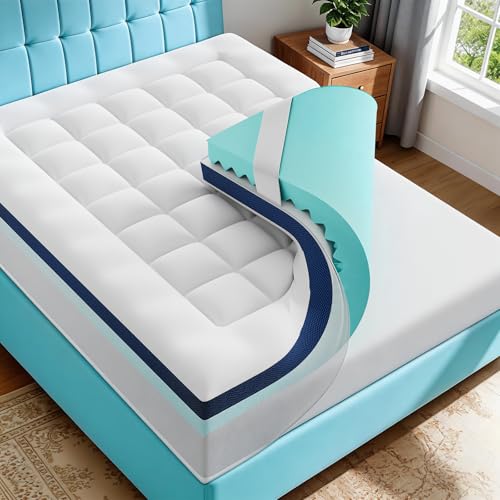
- 【4-Inch Dual-Layer Design】Our mattress topper features a 2-inch cooling...
- 【Breathable Design】This mattress topper is designed with Cold Gel Memory...
- 【Effective Body Support】Our mattress topper are ergonomically designed with...
OLANLY Dual-Layer 4 Inch Memory Foam Mattress Topper – Best for Cooling & Support
Featuring a ventilated bamboo cover and egg crate foam design, this topper excels at temperature regulation. The dual-layer memory foam construction offers both soft comfort and foundational support. It’s an excellent option for hot sleepers seeking a cooler, more cushioned surface.

- Dual-Layer Luxury for Supreme Comfort: Designed with a 2-inch gel-infused memory...
- Enhanced Pressure Relief & Body Alignment: Wake up refreshed and ache-free with...
- Snug Fit with Deep Pocket Skirt: The 360° elastic deep-pocket skirt hugs your...
Conclusion
Choosing between a mattress topper and a new mattress depends on your bed’s condition, your budget, and your sleep goals. A topper refreshes a structurally sound mattress, while a replacement addresses foundational wear and tear.
The most important factor is the integrity of your current mattress. Invest in a topper for comfort tweaks and a new mattress for long-term support and health. Your decision directly impacts your nightly rest and overall well-being.
Frequently Asked Questions about Buy A Topper Or A New Mattress?
Can a mattress topper make an old mattress feel new?
A topper can improve the surface feel of an older mattress, adding comfort and cushioning. It can mask minor imperfections and change the firmness level temporarily.
However, it cannot restore the structural support of a worn-out core. If the mattress is sagging or lumpy, a topper is only a short-term cosmetic fix, not a true renewal.
How do I know if my mattress is too old and needs replacing?
Check the age; most mattresses last 7-10 years. Visible sagging or body impressions deeper than 1.5 inches are clear signs. Waking up with stiffness or pain is a major indicator.
If your sleep improves on a different bed, like a hotel mattress, it’s likely time for a replacement. An old mattress loses support and can harbor allergens, affecting sleep quality and health.
Is it cheaper to buy a mattress topper or a new mattress?
A mattress topper is significantly cheaper upfront, with prices typically ranging from $50 to $300. This makes it a low-cost option for addressing specific comfort issues on a newer bed.
A new mattress is a larger investment but offers long-term value over 7-10 years. Consider cost per night; a topper on a failing mattress is poor value compared to the investment in proper support.
What type of mattress topper is best for back pain?
For back pain, a medium-firm memory foam or latex topper can provide good pressure relief and spinal alignment. These materials contour to your body, reducing pressure points.
Avoid overly soft toppers like featherbeds, as they may lack support. Importantly, if your mattress is sagging, a topper will not fix the underlying support issue causing the pain.
Can I use a mattress topper on a brand new mattress?
Yes, you can use a topper on a new mattress to customize its feel. For example, adding a soft topper can soften a firm new bed, or a cooling topper can regulate temperature.
It’s best to try the new mattress alone first for a few weeks. This allows you to assess its base feel before deciding if a topper is necessary for your comfort preferences.
Do mattress toppers help with sleeping hot?
Certain topper materials can significantly improve airflow and cooling. Look for natural options like wool or latex, or gel-infused and ventilated memory foam designs.
These materials wick moisture and promote breathability better than traditional solid foam. However, if your mattress itself retains heat, a cooling topper may only provide a partial solution.