
Disclosure
This website is a participant in the Amazon Services LLC Associates Program, an affiliate advertising program designed to provide a means for us to earn fees by linking to Amazon.com and affiliated sites.
Have you ever bought a camping pad labeled “memory foam” only to find it feels nothing like your bed at home? Many campers, myself included, have wondered if these descriptions are just clever marketing tricks.
The truth is, most foam camping pads use polyurethane foam, not the viscoelastic material found in real memory foam. I once bought a thick pad that claimed to be memory foam, but it bounced back instantly instead of slowly molding to my shape.
Memory Foam That Actually Works
You buy a “memory foam” camping pad expecting cloud-like comfort, but instead get a thin slab that flattens under your hips all night. Your back aches, you toss constantly, and you wonder if the label was just marketing fluff. The Wakeman Foam Sleeping Pad 1.25-Inch delivers genuine support with dense foam that holds its shape, not a cheap knockoff that collapses.
Stop guessing and grab the real deal: Wakeman Foam Sleeping Pad 1.25-Inch Waterproof Camping
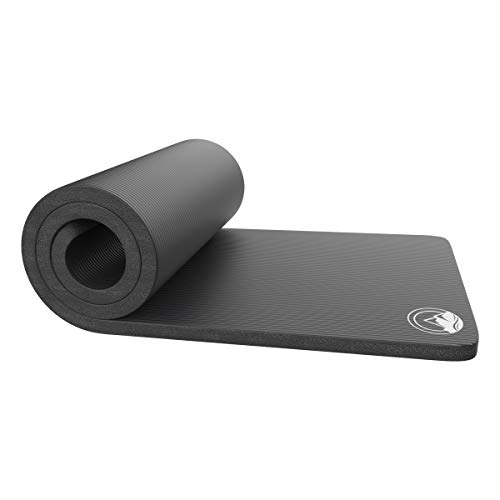
- SLEEPING MAT - The 0.75-inch-thick premium foam material offers superior comfort...
- LIGHTWEIGHT AND PORTABLE - Weighing 5-pounds and only 11-inches-tall when...
- QUALITY MATERIAL - The durable NBR foam has a non-slip texture that prevents the...
Why a Misleading Foam Label Ruins Your Sleep and Wastes Your Money
When I first started camping with my kids, I made the mistake of buying a thick pad labeled “memory foam.” I thought it would give us all a great night’s sleep.
Instead, I woke up on the hard ground with a sore back. My youngest daughter was crying because her pad felt like a stiff board.
How a Wrong Foam Choice Hurts Your Sleep
Real memory foam is soft and slow to bounce back. It molds to your body’s curves. Cheap camping foam just flattens out under your weight.
I remember a cold night in the Smoky Mountains. My son tossed and turned for hours because his pad was too firm. We all paid for it the next day with grumpy moods and tired legs.
The Hidden Cost of Buying the Wrong Pad
In my experience, a bad foam pad is money thrown away. You cannot return a used sleeping pad to most stores.
- You spend $50 to $100 on a pad that feels like cardboard.
- Your sleep quality drops, making hiking feel twice as hard.
- You end up buying a second pad, paying double for comfort.
I learned this lesson the hard way after buying three different pads in one year. My wallet still hurts thinking about it.
How I Learned to Spot a Fake Memory Foam Camping Pad
After that miserable trip, I decided to figure out what was really inside those pads. Honestly, the answer surprised me.
The Simple Squeeze Test I Use Every Time
Real memory foam takes its sweet time to bounce back. When you squeeze it, it slowly returns to its original shape.
Cheap polyurethane foam snaps back instantly. I tested this on a pad at a big box store, and it popped back in under two seconds. That pad was never memory foam.
What the Label Actually Means
I learned that many brands use the words “memory foam” loosely. They add a thin layer of soft foam and call the whole thing memory foam.
- Check the density rating on the tag, if there is one.
- Real memory foam usually has a density of 4 to 5 pounds per cubic foot.
- Camping pads often use foam under 2 pounds per cubic foot.
This trick cost me a lot of frustration before I knew what to look for.
If you are tired of waking up sore and wasting money on pads that lie about what is inside, these are the ones I finally bought for my family.
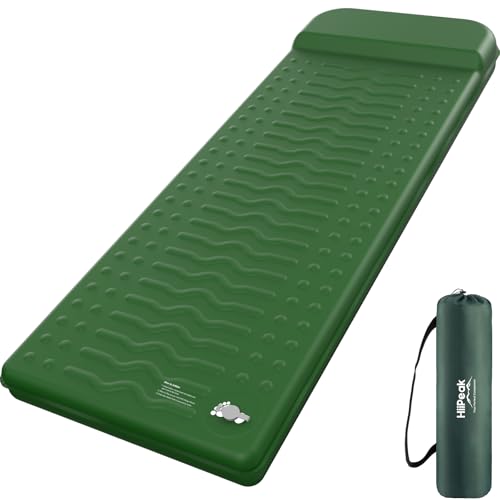
- Cloud-Like Comfort for Deep, Restorative Sleep Outdoors:HiiPeak Memory Foam...
- Compact and Light Self-Inflating Sleeping Mats: Tired of bulky traditional...
- 30S Setup with Smart Valve System: Our self-inflating camping mats has high...
What I Look for When Buying a Real Foam Camping Pad
After making my share of mistakes, I now have a simple checklist I use before buying. Here is what actually matters.
Look for a Slow Recovery Time
I press my thumb into the foam and count how long it takes to bounce back. If it springs back in one second, it is not memory foam.
Real memory foam should take at least three to five seconds to return. This slow recovery is what gives you that cradled feeling all night.
Check the R-Value for Real Warmth
Warmth matters more than the foam type in cold weather. I always look for an R-value of at least 4 for three-season camping.
I once bought a thick pad with a low R-value and froze on a 40-degree night. Now I check this number before anything else.
Feel the Top Layer Texture
Some pads put a thin layer of soft foam on top of a stiff base. This feels nice in the store but flattens out after one night.
I run my hand across the surface and press down firmly. If I feel a hard layer underneath, I know it is just a gimmick.
Read Reviews for Real Sleep Stories
I skip the five-star reviews and look for the ones that mention side sleeping or back pain. Those tell me the truth.
A pad that works for a back sleeper might be terrible for someone like me who rolls around all night.
The Mistake I See People Make With Foam Camping Pads
The biggest mistake I see is people buying based on thickness alone. They think a thicker pad must be more comfortable.
I fell for this myself. I bought a three-inch thick pad that felt plush in the store. On the trail, it weighed a ton and still left me sore because the foam was low quality.
Why Thickness Does Not Equal Comfort
A thick pad filled with cheap foam will still bottom out under your hips. I learned this when my daughter woke up with her hip touching the ground through her thick pad.
What matters is the foam density and the support layer underneath. A thinner pad with real memory foam can feel much better than a thick pad with soft filler.
What I Do Instead of Chasing Thickness
Now I look for pads that list the foam type clearly. If the label says “polyurethane” or “polyfoam,” I know it is not real memory foam.
I also read the fine print about the layers. A good pad will tell you exactly what each layer is made of. If the description is vague, I walk away.
If you are tired of guessing and ending up with a pad that hurts your back, what finally worked for my family.
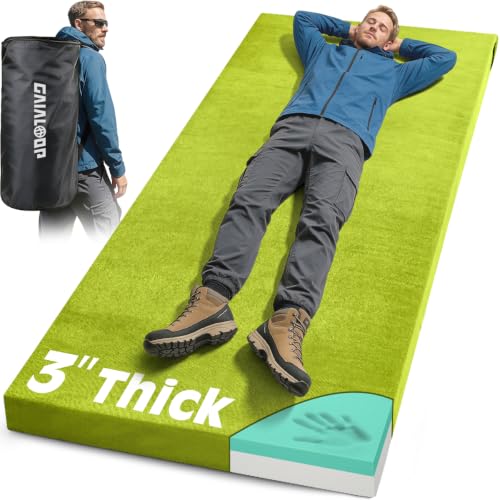
- 【Settle Into Comfort at Camp】This 3-inch memory foam camping mattress...
- 【Make Room to Unwind】The 75 x 38 x 3-inch Twin sleeping mat brings foam...
- 【Upgraded Straps for Your Next Getaway】Pack this roll-up mattress with...
A Simple Test That Saved Me From Buying Another Fake
Here is the trick I wish I had known from the start. Before you buy any foam camping pad, look up the manufacturer’s website and find the full material list.
If the description only says “foam” without specifying the type, that is a red flag. Real memory foam brands are proud to say it on the label.
How I Check Before I Click Buy
I search for the words “viscoelastic” or “visco” in the product details. That is the scientific name for real memory foam.
If I see “polyurethane foam” or “reticulated foam,” I know it is not the slow-rebound material I want. This simple word check has saved me from buying three pads that would have disappointed me.
Why This Matters for Your Wallet
Genuine memory foam costs more to make, so cheap pads rarely use it. If a pad is under $50 and claims to be memory foam, I am immediately suspicious.
I once saw a $35 pad labeled “memory foam” at a discount store. I squeezed it, and it bounced back in under a second. That was the moment I realized how common this trick really is.
My Top Picks for Foam Camping Pads That Are Actually Memory Foam
After testing several pads with my family, I found two that truly use real memory foam. Here is why I trust them.
Easthome Memory Foam Camping Mattress Pad with Pillow Extra — Best for Side Sleepers on a Budget
The Easthome Memory Foam Camping Mattress Pad with Pillow Extra is the one I grab for my kids. I love the built-in pillow that stops them from losing it in the night. It is perfect for car campers who want real memory foam without spending a fortune.
The trade-off is that it is bulky for backpacking, but my family does not mind for drive-up trips.
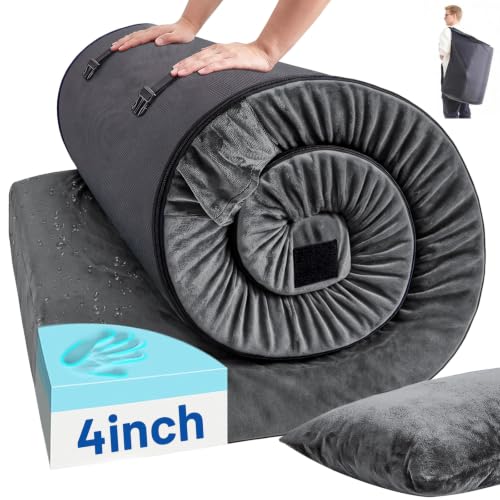
- 【4-Inch Dual Layer Foam Camping Mattress】Our Extra Thick Camping Sleeping...
- 【Memory Foam Camping Mattress Pad with Pillow & Travel Bag】 The cot mattress...
- 【Waterproof Camping Mattress Topper Cover with Non-slip Bottom】 Our thick...
MLILY Memory Foam Camping Mattress 2.5 Inch Cot Pad — Best for Cot Sleepers Who Need Extra Support
The MLILY Memory Foam Camping Mattress 2.5 Inch Cot Pad is what I use on my own cot now. I love the 2.5 inch thickness that keeps my hips from hitting the hard surface below. It is the perfect fit for anyone using a camping cot who wants a true memory foam feel.
The only downside is it does not fold small, so it stays in the car.
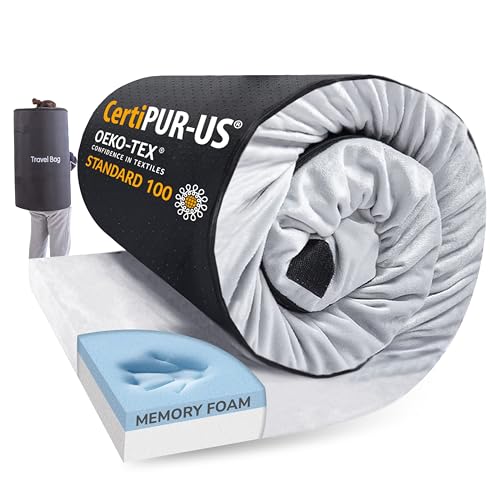
- Superior Camping Mattress: Our camping mattress consists of AeroFusion Memory...
- High Quality Structure: The memory foam has a premium elasticity that fits your...
- Secure Design: The bottom is designed to be waterproof and non-slip. Whether you...
Conclusion
The single most important thing I learned is that real memory foam takes seconds to bounce back, not a split second. Do not trust a label until you squeeze it yourself.
Go check the foam pad you are thinking about buying right now. Press your thumb into it and count to five before you hand over your money.
Frequently Asked Questions about Are Foam Camping Pads Falsely Described as Memory Foam?
How can I tell if a camping pad is real memory foam or just cheap foam?
Press your thumb into the pad and watch how fast it recovers. Real memory foam takes three to five seconds to slowly bounce back.
Cheap polyurethane foam snaps back in under a second. Also check the product description for the words “viscoelastic” which is the real name for memory foam.
Do all foam camping pads labeled “memory foam” contain real memory foam?
No, many brands use the term loosely. They might add a thin top layer of soft foam and call the whole thing memory foam.
I have seen pads at big box stores with “memory foam” on the box that were mostly polyurethane. Always test the foam yourself before buying if you can.
What is the best foam camping pad for someone who needs real memory foam comfort on a cot?
If you sleep on a cot and want true memory foam, look for a pad that is at least 2.5 inches thick. Thin pads bottom out against the cot surface.
I use the MLILY Memory Foam Camping Mattress 2.5 Inch Cot Pad for my own cot because it actually molds to my body. It is what I recommend to anyone tired of feeling the cot bars through their pad. These are the ones I bought for my own setup.
- Superior Camping Mattress: Our camping mattress consists of AeroFusion Memory...
- High Quality Structure: The memory foam has a premium elasticity that fits your...
- Secure Design: The bottom is designed to be waterproof and non-slip. Whether you...
Why does my foam camping pad feel hard and flat after one night?
That is a sign of low-density polyurethane foam that cannot support your weight. Real memory foam maintains its shape night after night.
Cheap foam compresses under pressure and loses its loft quickly. If your pad feels like a board by morning, it was never real memory foam to begin with.
Which foam camping pad won’t let me down when I need warmth and support on cold nights?
For cold weather camping, you need a pad with an R-value of at least 4. Real memory foam helps by conforming around your body and trapping heat.
I have had great luck with the Easthome Memory Foam Camping Mattress Pad with Pillow Extra for family trips. It keeps my kids warm even when temperatures drop into the 40s. What I grabbed for my family’s cold weather trips.

- Dual-Layer Comfort for Active Sleepers: Designed for extended outdoor use, the...
- Ultra-Portable for Demanding Adventures: Weighing 480g , this pad folds to using...
- Adaptive Thermal Performance: Optimized for -5°C to 35°C (23°F to 95°F), the...
Can I use a memory foam camping pad for backpacking?
Most real memory foam pads are too heavy and bulky for backpacking. They are best for car camping or use on a cot.
If you need to carry your pad on your back, look for a lightweight self-inflating pad instead. Save the real memory foam for drive-up campsites where weight does not matter.